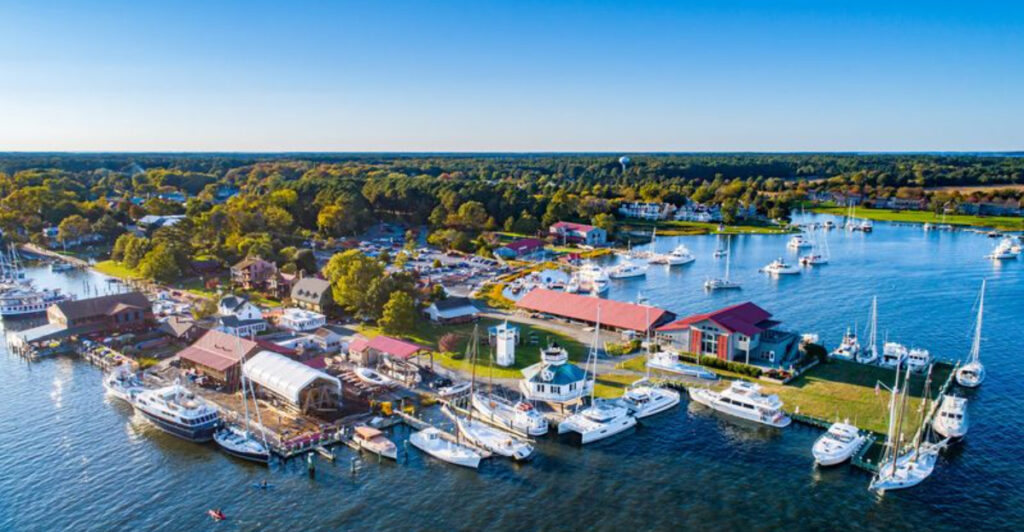
Maryland has more than 3,000 miles of shoreline, and tucked along those tidal creeks, rivers, and bay edges are museums that do something no textbook can quite pull off. They put you face to face with the real boats, tools, and stories of the people who built their lives on the Chesapeake Bay.
From skipjacks to soft-shell crabs, oyster dredges to decoy carvings, these places hold onto a way of life that shaped an entire region. Whether you are planning a road trip down the Eastern Shore, a weekend in Annapolis, or a ferry ride to Smith Island, this list covers the waterfront stops worth adding to your itinerary.
Each one offers something specific and genuine, and together they paint a full picture of what Chesapeake life has looked like for centuries.
Annapolis Maritime Museum & Park, Annapolis, Maryland
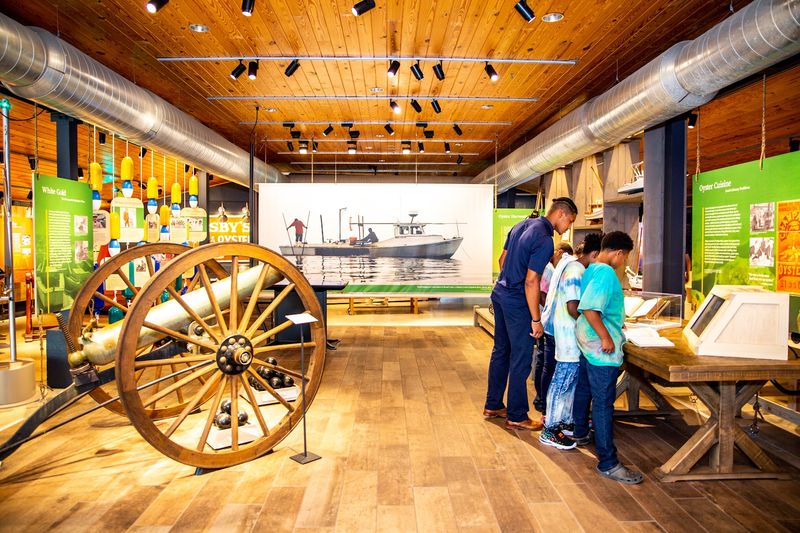
Sitting on the Eastport side of Annapolis, this museum gives you a waterfront perspective on Chesapeake Bay life that feels grounded and real. The museum campus runs Tuesday through Sunday, while the park campus stays open daily from dawn to dusk, making it flexible for different kinds of visitors.
The historic skipjack Wilma Lee is the centerpiece of the experience. Skipjacks were the traditional sail-powered boats used for oyster dredging on the Chesapeake, and seeing one in person makes the history click in a way that display cases alone cannot manage.
Exhibits and programs cover Annapolis maritime heritage, bay ecology, and community life along the water. Two waterfront campuses mean there is outdoor space to explore, not just indoor galleries.
For travelers who want bay views, local history, and a connection to the working water, this stop delivers on all three counts.
Chesapeake Bay Maritime Museum, St. Michaels, Maryland
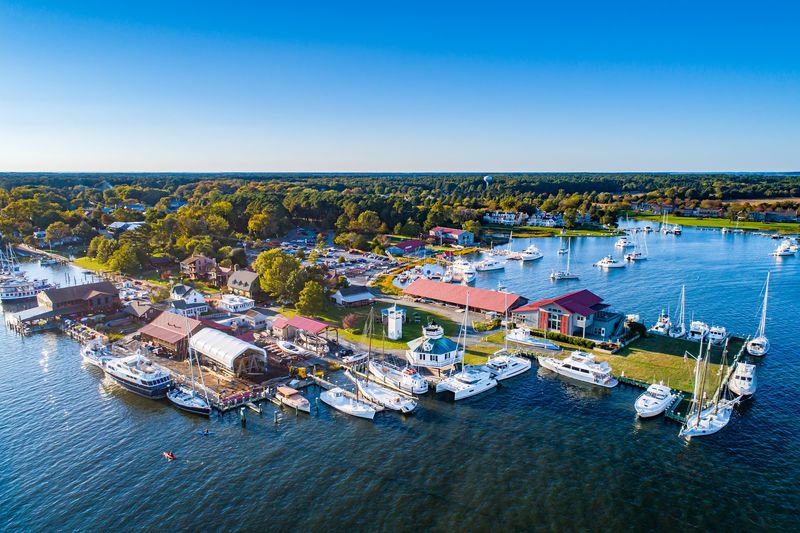
St. Michaels is already one of the most visited towns on the Eastern Shore, and the Chesapeake Bay Maritime Museum is a big reason why. Open daily April through October, with shorter hours in November, the campus covers more ground than most visitors expect on their first trip.
The working shipyard is one of the standout features. Watching skilled craftspeople restore wooden boats is a different kind of museum experience, and it connects directly to the Chesapeake boatbuilding traditions the museum was built to preserve.
The Historic Workboat Experience lets visitors try traditional crab and oyster harvesting tools aboard a vessel in the floating fleet on select dates. Beyond that, exhibits touch on decoy carving, crab picking, seafood harvesting, naval history, and bay recreation.
This is the kind of museum that earns a full afternoon, not a quick walk-through. It is the anchor stop for any serious Chesapeake history trip.
Calvert Marine Museum, Solomons, Maryland
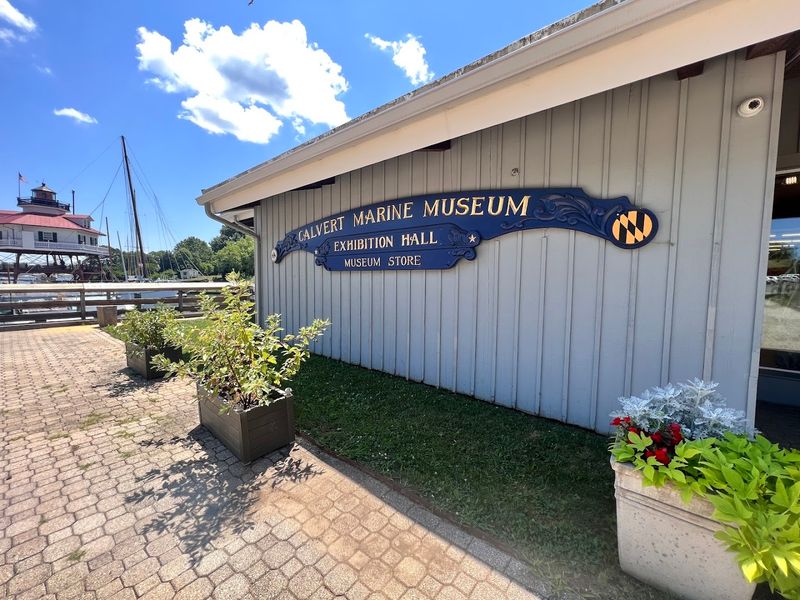
Few museums on the bay can match the variety at Calvert Marine Museum in Solomons. Open daily from 10 a.m. to 5 p.m., with closures on major holidays, it combines maritime history, river ecology, live animals, and prehistoric fossils under one broad umbrella.
The 37-foot megalodon recreation alone makes this a memorable stop, especially for younger visitors. River otters round out the live animal side of the experience, and the J.C.
Lore Oyster House provides a hands-on look at oyster harvesting history that is specific to the region.
The Drum Point screwpile lighthouse is another verified highlight. Screwpile lighthouses were built specifically for shallow Chesapeake waters, and the Drum Point example is one of only three surviving in Maryland.
Visitors can also sail on the William B. Tennison, a historic buyboat still in operation.
For families, this is one of the most complete single-stop experiences on the entire Chesapeake.
Havre de Grace Maritime Museum, Havre de Grace, Maryland
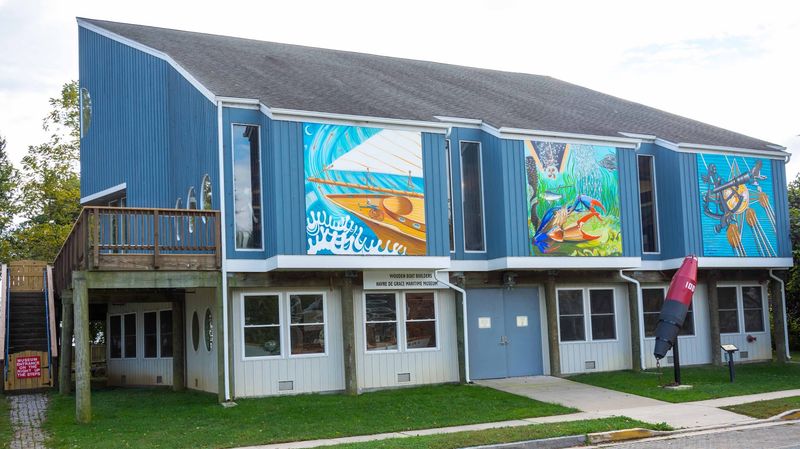
Most Chesapeake maritime stops cluster around the middle and lower bay, which makes Havre de Grace a genuinely different angle on the same broad story. Located where the Susquehanna River meets the northern Chesapeake, this museum covers a stretch of water that does not always get its fair share of attention.
Regular public hours run Wednesday through Sunday, with Monday and Tuesday closures, and the museum notes that weather can occasionally affect operations. Inside, a working boat shop, an environmental center, and exhibits on Upper Chesapeake Bay ecology and history give visitors a layered look at the region.
One specific detail that sets this museum apart is its interpretation of the canal that once connected the bay to central Pennsylvania. That canal was a significant piece of mid-Atlantic commerce history, and the museum treats it as part of the larger water story.
For readers who want northern bay history, this stop fills a gap that most other museums leave open.
Upper Bay Museum, North East, Maryland
Housed in the historic H.L. Harvey Fish Market building, Upper Bay Museum in North East has the kind of origin story that fits perfectly with what it preserves.
The National Park Service recognizes it as a Chesapeake Gateways Network Site, which puts it in a select group of locations tied directly to the bay’s cultural heritage.
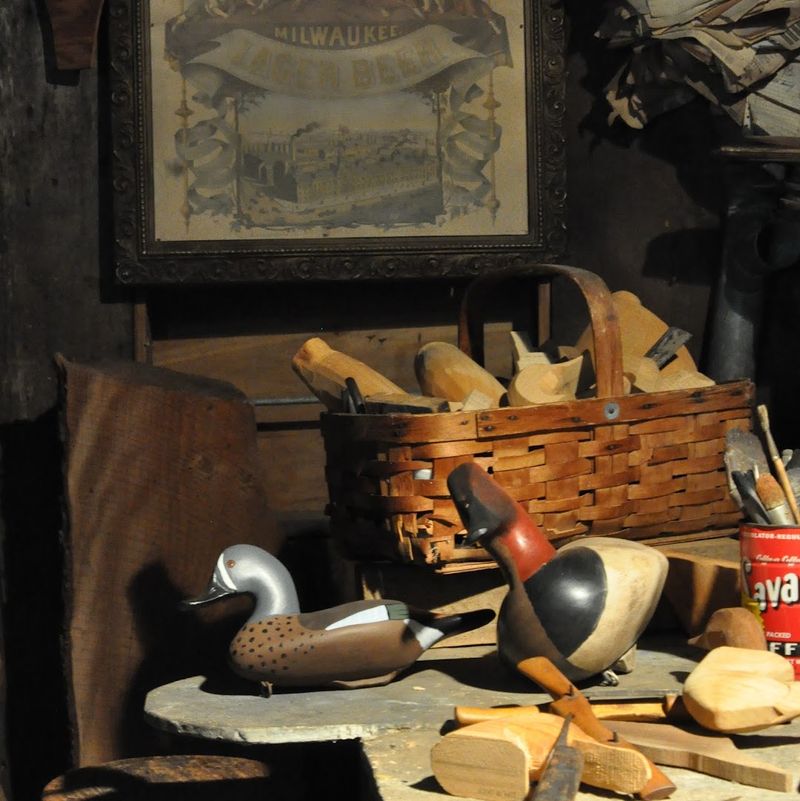
The collection focuses on watermen, hunters, boatbuilders, and the traditional life of the Upper Chesapeake. Artifacts include decoys, gunning rigs, and fishing gear that are described as one-of-a-kind, meaning some of what is here simply does not exist anywhere else.
The museum is seasonal, open from Memorial Day weekend through mid-October on Saturdays and most Sundays, with group visits available by arrangement. That limited window is worth planning around, because the specificity of this collection is rare.
If you want a direct look at the lifestyle of Chesapeake watermen rather than a broad overview, Upper Bay Museum delivers exactly that.
Rock Hall Waterman’s Museum, Rock Hall, Maryland
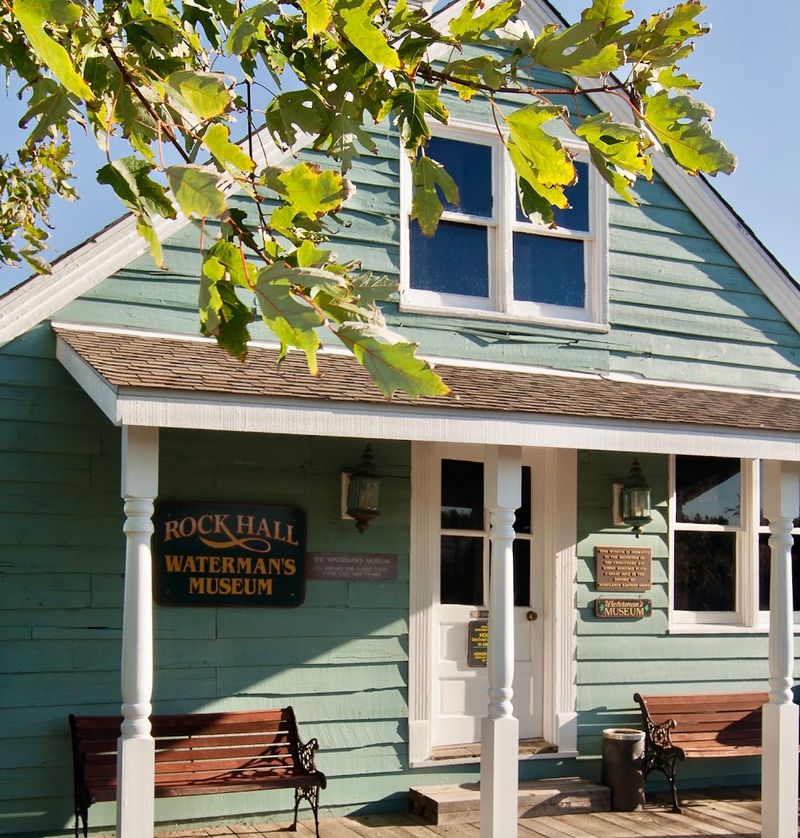
Rock Hall is a working waterfront town, and its Waterman’s Museum fits that identity without trying to be something bigger than it is. The museum traces its roots to 1990, when community members and Haven Harbour Marina employees decided the history of local watermen was worth preserving before it slipped away.
The result is a focused collection that includes oystering and crabbing exhibits, a reproduction fishing shanty, photographs, carvings, and traditional boats. Museums of Kent County describes the site in those terms, and the straightforward presentation is part of what makes it work.
There is no attempt to dress things up beyond what the history actually calls for.
Listed hours run daily from 10 a.m. to 4 p.m., though off-season hours may differ. For a Chesapeake trip, this stop pairs well with a walk around Rock Hall’s harbor, where working boats and charter vessels still share the same docks.
The town and the museum tell the same story, just in different formats.
Tilghman Watermen’s Museum, Tilghman Island, Maryland
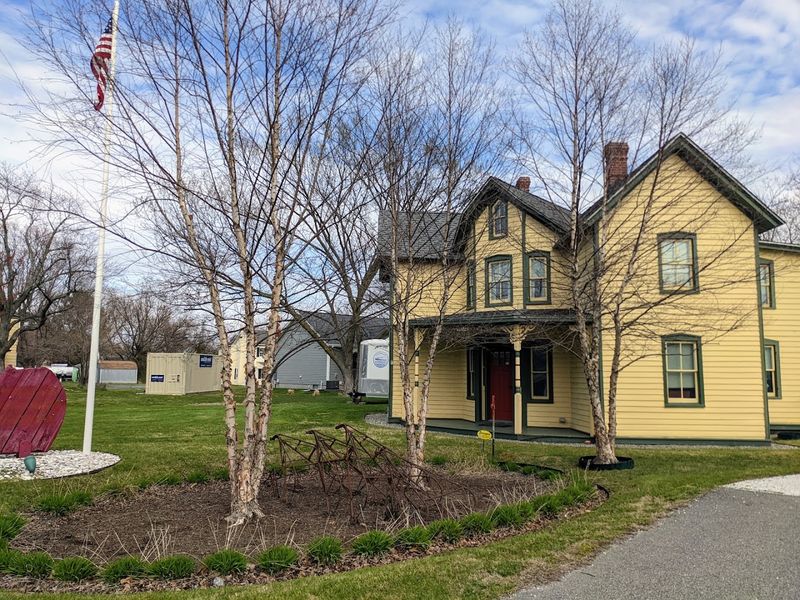
Tilghman Island has long been one of the most recognizable names in Chesapeake watermen culture, and this small museum treats that identity with genuine care. Open Saturdays and Sundays from May through October, it operates on island time, which means planning your visit in advance matters.
The building itself has local history baked in. It was once the island’s barbershop, which gives the space a community-rooted character that purpose-built museums sometimes lack.
Inside, Chesapeake art, boat models, watermen’s tools, and local materials document the lives of the families who made their living on the water.
What separates this museum from a standard maritime collection is its focus on people, not just objects. The exhibits center the island community, the working families, and the cultural traditions that shaped Tilghman over generations.
For anyone driving the Eastern Shore with an interest in bay life beyond the tourist highlights, this stop offers something quieter and more personal than most.
Richardson Maritime Museum & Ruark Boatworks, Cambridge, Maryland
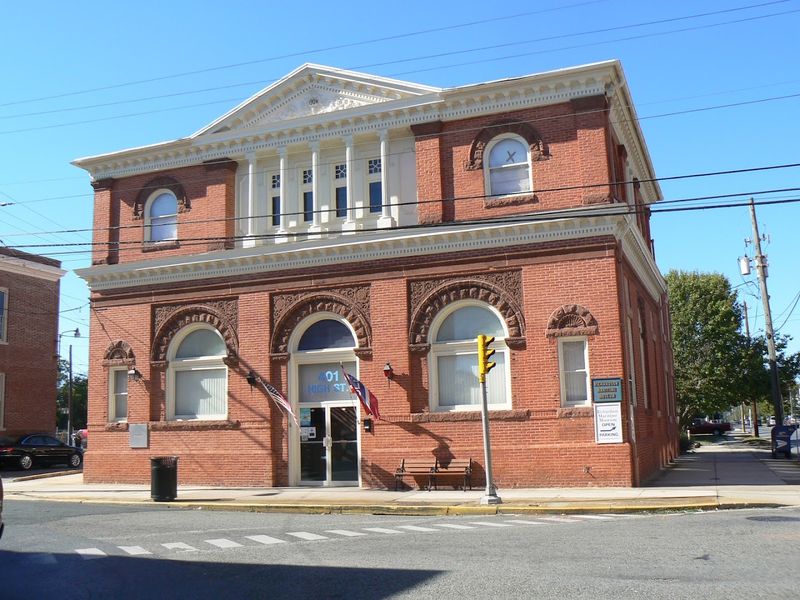
Cambridge sits at the edge of the Choptank River, and Richardson Maritime Museum fits right into that waterfront setting. The museum is open Wednesday through Saturday, with other visits available by appointment, while Ruark Boatworks next door offers personal tours by arrangement.
Ruark Boatworks is the detail that makes this stop worth a special mention. Volunteers and artisans actively work on wooden boats there, which means visitors can watch traditional Chesapeake boatbuilding and restoration in real time.
That is not something you can replicate with a display case.
The National Park Service recognizes the site for preserving Dorchester County and Chesapeake Bay maritime heritage through wooden boatbuilding, restoration, artifacts, historic vessels, and guided tours. The collection covers boatbuilding tools alongside watermen’s equipment used for oysters, crabs, eels, and fish.
For readers who want to see Chesapeake craftsmanship actively practiced rather than simply described, this combination of museum and working boatworks is a strong and specific reason to make the drive to Cambridge.
Governor J. Millard Tawes Historical Museum, Crisfield, Maryland
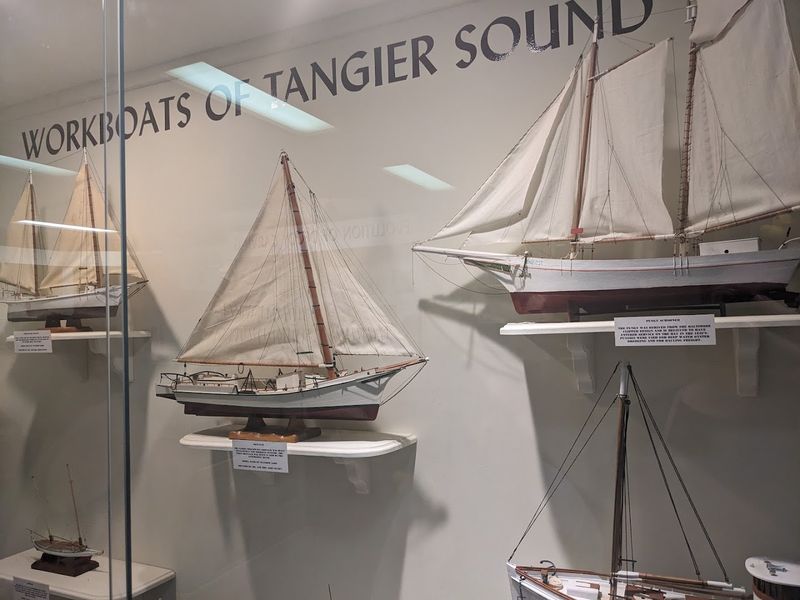
Crisfield has a bold claim attached to its history. At its peak, the town was known as the seafood capital of the world, built almost entirely on crab and oyster industries that drew workers, packers, and buyers from across the region.
The Tawes Historical Museum tells that story directly.
Open Tuesday through Saturday from 10 a.m. to 2 p.m. beginning May 7, the museum is operated by the Crisfield Heritage Foundation and covers Chesapeake life from early human history through the town’s seafood era and beyond. Exhibits include natural history, crab and oyster industries, shipbuilding, and decoys.
Crisfield is also the departure point for ferries to Smith Island, which means this museum can serve as a natural bookend to an island day trip. The combination of a seafood-industry town, working waterfront access, and a museum that takes the local story seriously makes this lower Eastern Shore stop one of the most regionally specific on the entire list.
Skipjack Heritage Museum, Chance, Maryland
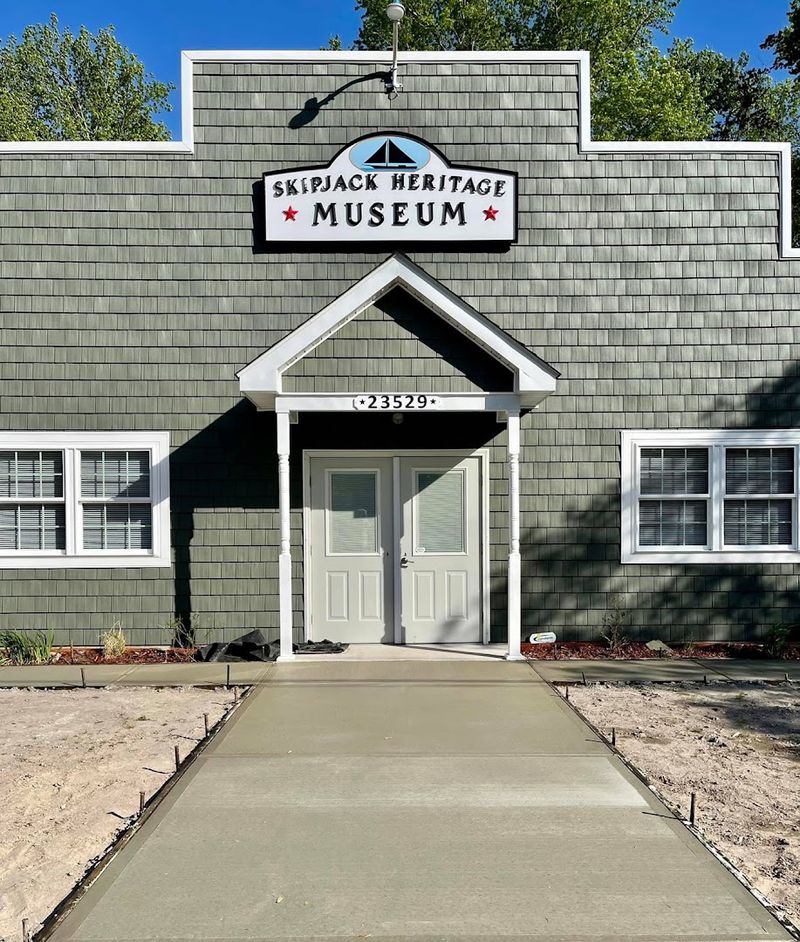
Maryland has a well-documented relationship with skipjacks, the iconic sail-powered workboats that once dominated Chesapeake oyster dredging. The Skipjack Heritage Museum in Chance is the one stop on this list built specifically around that single vessel type and the communities that depended on it.
Somerset County tourism lists the museum as open on summer weekends, with Skipjack Heritage, Inc. working to preserve not just the boats but the broader history of the Deal Island area. The collection includes local artifacts, historical photographs, vintage oystering gear, and models that document the lives of captains, crews, and their families.
What the museum does well is frame skipjacks as a community story, not just a nautical one. The organization’s mission specifically mentions preserving appreciation for skipjack owners, captains, crews, families, and the watermen’s way of life.
For a Chesapeake Bay article, this is the place where the skipjack gets its full due rather than a footnote mention in a larger exhibit.
Smith Island Cultural Center, Ewell, Maryland
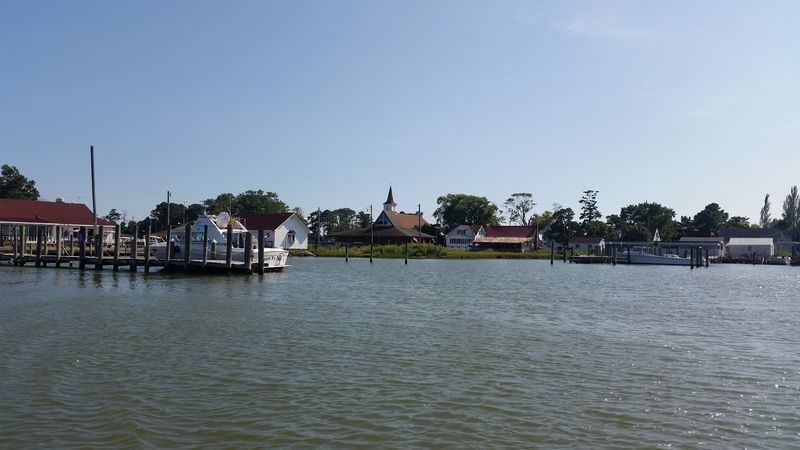
Getting to Smith Island requires a ferry, and that effort alone tells you something about the community waiting at the other end. Smith Island is one of the few inhabited islands in the Chesapeake with no bridge connection, and the Cultural Center in Ewell preserves the history of a place that has remained genuinely distinct for centuries.
The center’s official site lists daily hours from noon to 4 p.m., May through October, with visits outside that season available by contact. Exhibits explore island history, community traditions, and the lives of watermen who have worked these waters for generations.
Smith Island is tied to Maryland’s soft-shell crab industry and to Smith Island cake, which the state officially designated as the Maryland state dessert.
The island’s population descends largely from 17th-century English settlers, and that long, unbroken connection to the water gives the Cultural Center a depth that mainland museums can describe but cannot fully replicate. This is bay life in its most literal and enduring form.
Share this story