There is a place in Illinois where you can climb up into the cab of a combine that costs more than a million dollars, look out over the exhibit floor, and feel like you are operating the biggest machine you have ever seen. No tickets, no admission fee, just walk right in.
The John Deere Pavilion in Moline draws families, road trippers, farming fans, and curious city dwellers who never expected to spend an hour completely fascinated by tractors. From a vintage two-cylinder engine to a modern harvester the size of a small house, this place covers nearly two centuries of agricultural innovation in a way that is hands-on, approachable, and genuinely fun for all ages.
Where You Will Find It and What to Expect at the Door

Right on the banks of the Mississippi River in Moline, Illinois, the John Deere Pavilion sits at 1400 River Dr, Moline, IL 61265, and the first thing that strikes you is how easy it is to walk in. There are no ticket counters, no lines to wait in, and no admission fee at all.
The building is clean, modern, and welcoming from the moment you step through the front doors. Staff members greet visitors with a genuine friendliness that sets a relaxed tone right away.
The layout is open and well-organized, so even first-time visitors get their bearings quickly.
Hours run Tuesday through Saturday from 9 AM to 5 PM, and Monday from 1 to 5 PM. The pavilion is closed on Sundays.
Parking near the building is limited, so arriving a bit early on busy days is a smart move.
The location along the river also makes it a natural stop if you are traveling the Great River Road. Whether you are a farming enthusiast or just passing through the Quad Cities area, the pavilion earns its place on any itinerary without asking anything from your wallet.
The Story Behind the Green and Yellow Legacy
John Deere was a Vermont-born blacksmith who moved to Grand Detour, Illinois, in 1836 and changed farming forever when he crafted a self-scouring steel plow that could cut through the thick Midwest soil without clogging. That single invention launched one of the most recognized brands in the world.
The pavilion does a wonderful job of tracing that origin story through informative panels and carefully curated exhibits. You get a real sense of how one practical solution to a muddy problem grew into a company that now operates across six continents.
What makes the history section so engaging is how it connects old problems to modern solutions. Each era of innovation is presented with enough context that even visitors who know nothing about farming can follow the progression without feeling lost.
The brand’s signature green and yellow color scheme is everywhere, but it never feels like a sales pitch. The story is told with genuine pride and enough detail to satisfy history buffs and casual visitors alike.
By the time you move on to the equipment floor, you already feel invested in what you are about to see.
Antique Tractors That Shaped American Agriculture
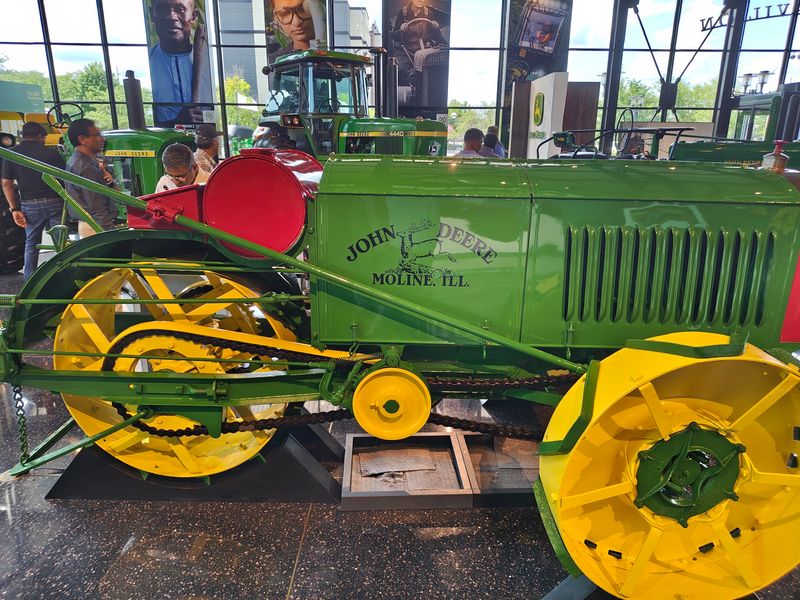
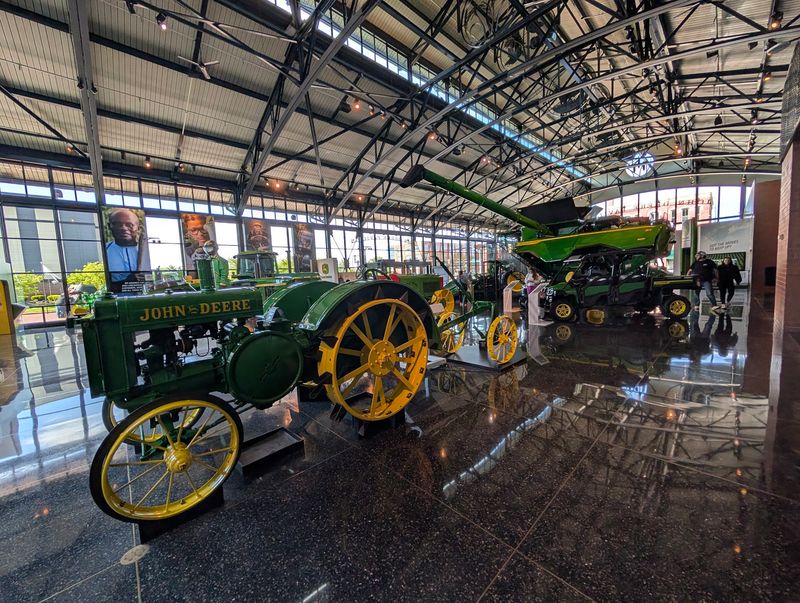
There is something almost poetic about standing next to a two-cylinder John Deere tractor that was built decades before your grandparents were born, knowing it once worked fields that fed entire communities. The antique tractor section of the pavilion is a quiet highlight that rewards anyone who slows down to read the signs.
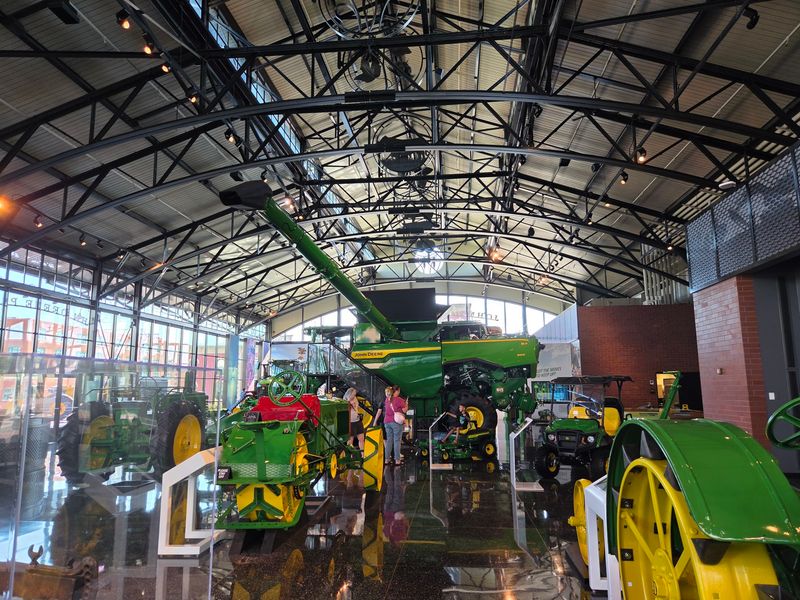
The collection spans multiple generations of tractor design, and the differences between models tell a story of constant refinement. Early machines look almost skeletal compared to the enclosed, air-conditioned cabs of today’s equipment, and that contrast is part of what makes the exhibit so compelling.
Collectors of stationary engines and two-cylinder models will find plenty to get excited about here. The pavilion has a well-rounded selection that appeals to serious enthusiasts without alienating newcomers who are seeing these machines up close for the very first time.
Interactive information panels next to each piece explain what made that particular model significant, what years it was produced, and what kind of work it was built to handle. Reading those panels turns a simple walk-through into a genuine learning experience that sticks with you long after you leave the building.
Modern Giants: The Combine That Costs More Than a House
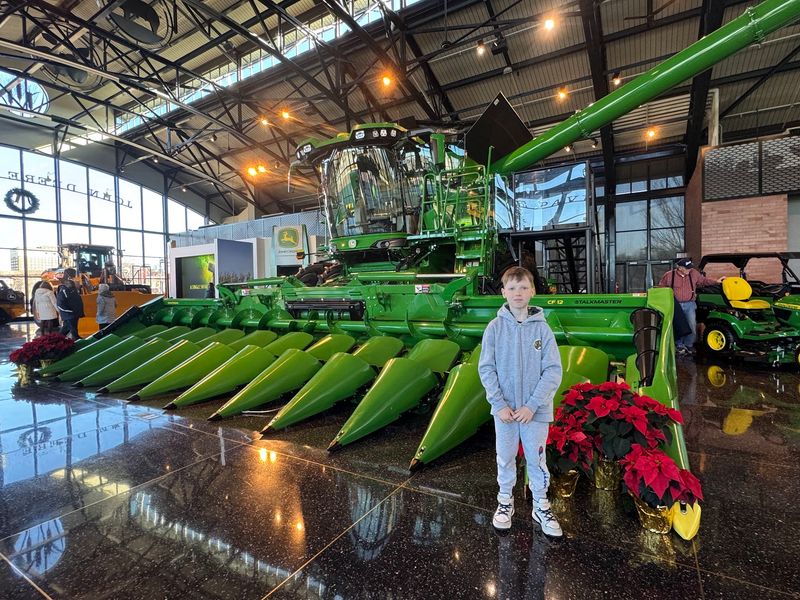
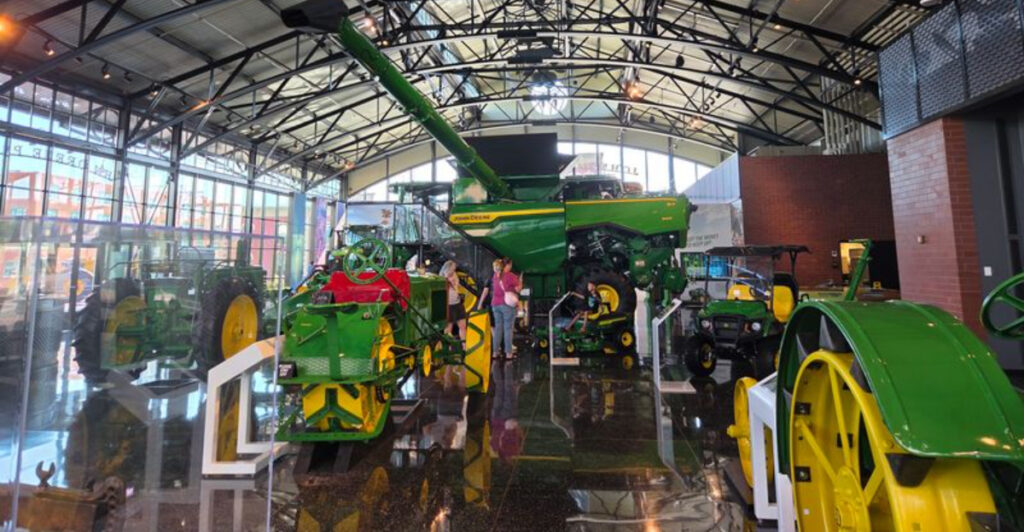
The combine sitting in the center of the pavilion floor is the kind of machine that stops people mid-conversation. It is enormous in a way that photographs simply cannot capture, and the first reaction most visitors have is to just stand there for a moment and take in the sheer scale of it.
This harvester retails for around 1.4 million dollars, and the pavilion does not shy away from that number. Knowing the price actually adds to the experience, because you start to understand just how much engineering, technology, and capability is packed into one machine.
The tractor tires alone are taller than most adults, which becomes a favorite photo moment for visitors of all ages. Kids especially love standing next to the wheels and realizing how small they look by comparison.
Steps are set up so visitors can climb up into the operator’s cab and sit behind the controls. The view from up there is genuinely surprising.
You can see the entire exhibit floor from a completely new angle, and the technology inside the cab, with its digital screens and precision controls, makes it feel more like a spacecraft than a farm machine.
Hands-On Fun for Kids and Grown-Ups Who Never Outgrew Curiosity
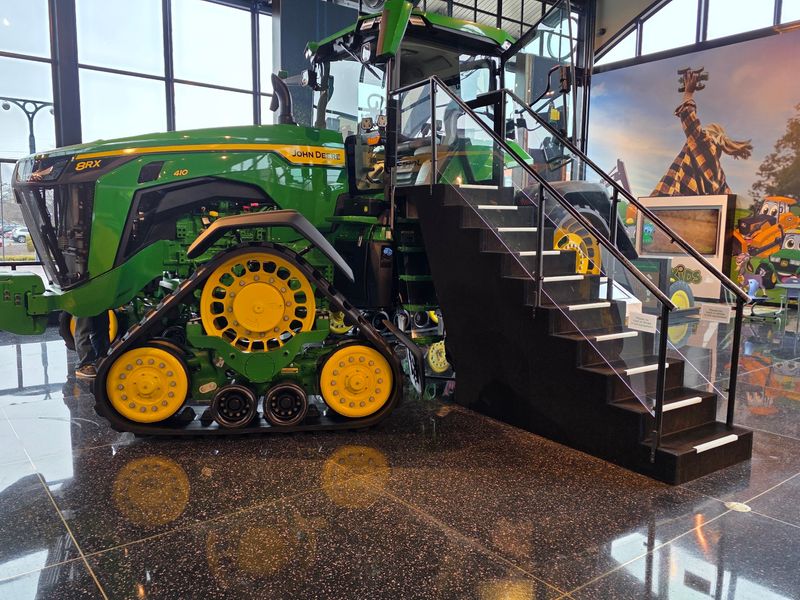
Not every museum lets you touch things, and that is exactly what makes this one so refreshing. The pavilion is built around the idea that you should be able to get up close, sit down, grab the steering wheel, and actually feel what these machines are like from the inside.
Several pieces of equipment have steps and platforms that make climbing up safe and accessible. Families with children find this setup especially appealing because kids who might otherwise lose interest in a traditional exhibit stay completely engaged when they get to pretend they are operating a real tractor.
Adults are just as enthusiastic, sometimes more so. There is a particular kind of joy in sitting in the cab of a modern 8RX tractor and looking out through the wide windshield at the room below.
It is the kind of experience that connects you to the equipment in a way that reading a brochure never could.
The interactive information panels scattered throughout the floor add an educational layer without feeling like homework. Each one is designed to be quick and clear, giving you just enough detail to appreciate what you are looking at before you move on to the next impressive machine.
Surprising Finds: Snowmobiles, Lawn Mowers, and Beyond
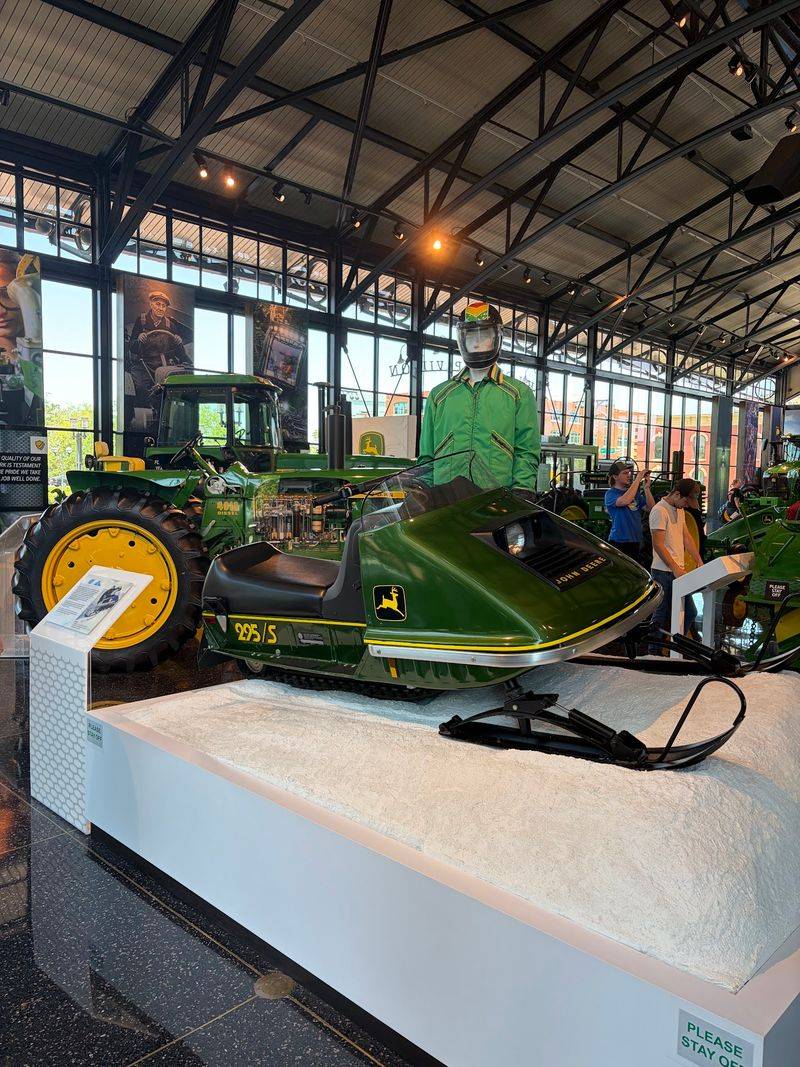
Most people walk into the pavilion expecting tractors, and tractors are definitely the main event. But the range of equipment on display goes well beyond the farm field, and those unexpected finds are often what visitors remember most fondly when they talk about their trip.
A vintage John Deere snowmobile from the 1970s sits among the exhibits like a quirky time capsule. It is the kind of thing that makes you do a double-take, because John Deere and snowmobiles are not a combination that comes up in everyday conversation, yet there it is, perfectly preserved and completely authentic.
Lawn mowers, bulldozers, and other heavy equipment round out a collection that shows just how broadly the company’s engineering reach extends. The diversity of machines keeps the exhibit floor interesting from start to finish, and there is always something that catches you off guard.
The display rotation adds another reason to visit more than once. The equipment lineup is updated annually, typically in the summer, so returning visitors can expect to find something new.
That kind of freshness keeps the pavilion relevant and worth revisiting even for people who have already made the trip before.
A Thoughtful Space for All Ages and Backgrounds
One of the genuinely pleasant surprises about this place is the mix of people you find there on any given day. Families with young children share the floor with retired couples, solo travelers, tour groups, and cruise ship passengers who dock nearby and make the pavilion one of their first stops ashore.
The atmosphere is relaxed and unhurried. Nobody is rushing you through, and the open floor plan means you can spend as much or as little time as you want with any particular exhibit.
That kind of flexibility makes the visit feel personal rather than scripted.
Staff members are knowledgeable and approachable, happy to answer questions about specific machines or share context about the company’s history. Their enthusiasm for the subject is genuine, and it adds warmth to an already welcoming environment.
For visitors who know nothing about farming or heavy machinery, the pavilion still delivers a satisfying experience. The clear signage, well-designed panels, and accessible layout mean you never feel lost or out of place.
City dwellers who consider themselves completely removed from agricultural life consistently leave with a new appreciation for the equipment and the people who use it every day.
The Gift Shop Worth Crossing the Walkway For
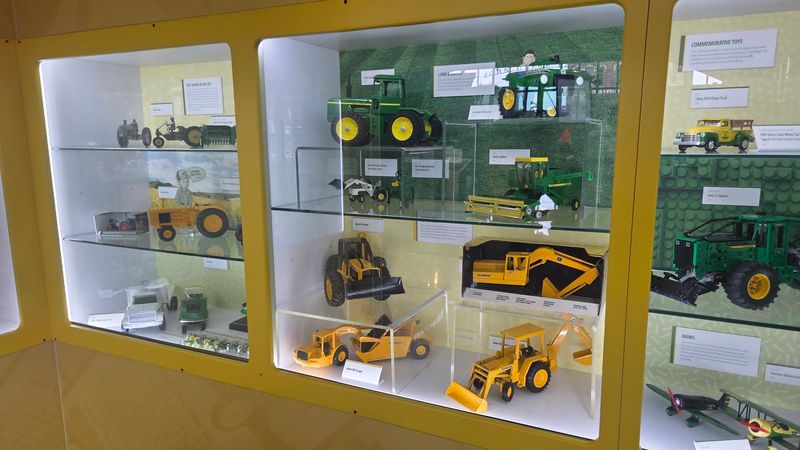
Right across the walkway from the main pavilion sits the John Deere store, and it is genuinely worth the short stroll. The shop carries an impressive range of merchandise, from baby clothes and t-shirts to die-cast toy tractors and collectible items that serious fans will appreciate.
The toy section alone could keep a kid occupied for a good stretch of time. Miniature versions of the very machines you just climbed on are lined up on the shelves, and the detail on some of them is remarkable.
They make for meaningful souvenirs because they connect directly to the experience you just had inside the pavilion.
Pricing at gift shops attached to attractions tends to run higher than retail, and this one is no exception on some items. That said, many visitors find the selection fair enough to justify a purchase or two, especially for unique John Deere branded goods that are not easy to find elsewhere.
The store is well-stocked and organized, making it easy to browse without feeling overwhelmed. Whether you are picking up a small token for yourself or hunting for the perfect gift for a tractor-obsessed friend back home, the shop has enough variety to make the decision a pleasant one.
Tips for Making the Most of Your Visit
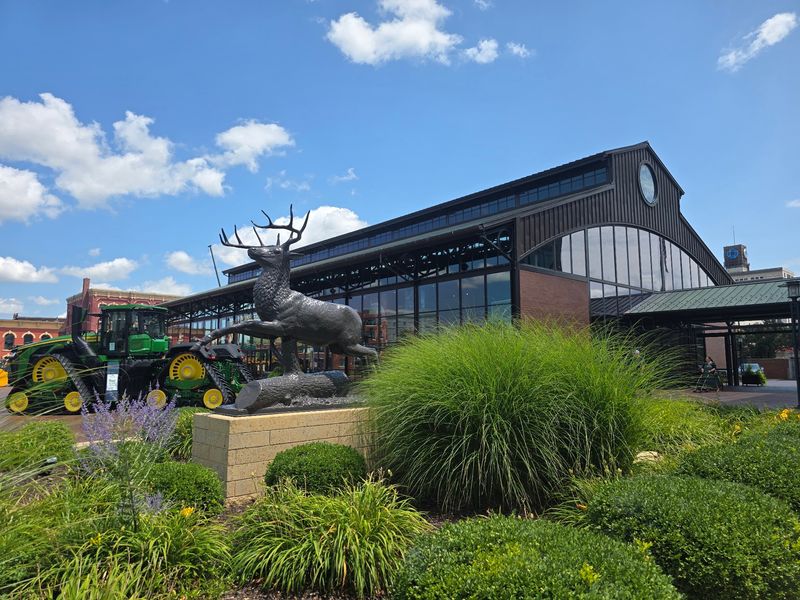
A few practical notes can make the difference between a good visit and a great one. Parking adjacent to the pavilion is limited, so arriving early on weekdays or during peak tourist season gives you a better chance of finding a spot close by.
Street parking and nearby lots are options if the main area fills up.
The pavilion is free to enter every day it is open, which makes it an easy add-on to a longer road trip without any budget pressure. Tuesday through Saturday from 9 AM to 5 PM are the most convenient hours, while Monday hours are shorter, running from 1 to 5 PM only.
The pavilion is closed on Sundays.
Families with very young toddlers should be aware that some areas of the exhibit have low clearance points near large equipment, so keeping an eye on little ones is important. Children around age three and older tend to get the most out of the experience.
Plan for about one to two hours to see everything comfortably, including time in the gift shop. The pavilion can be reached by calling 309-765-1000, and more details are available at the official website.
A visit here is the kind of low-effort, high-reward stop that road trips are made of.
Share this story