There is a Viking ship sitting in a suburb of Chicago, and most people have no idea it is there. Back in 1893, a crew of just 12 sailors crossed 3,674 miles of open Atlantic Ocean on a wooden vessel built to replicate a 9th-century Norse design, and they did it to prove a point at the World’s Columbian Exposition.
That ship still exists today, carefully preserved in Geneva, Illinois, where a passionate group of volunteers keeps its story alive. This article takes you through everything worth knowing about this extraordinary place, from the ship’s wild ocean crossing to what you can expect on your visit.
Where the Ship Lives Today
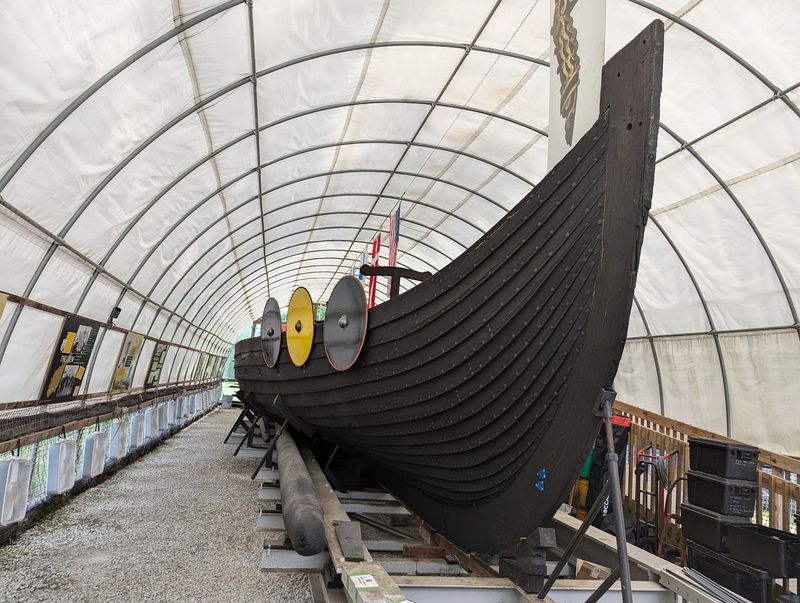
The address is Good Templar Park, 528 East Side Dr, Geneva, IL 60134, and the setting itself feels almost too peaceful for something this dramatic. The ship rests in a long, barn-style structure tucked inside a quiet park along the Fox River, about 35 miles west of downtown Chicago.
Geneva is a charming town known for its boutique shops and historic architecture, so stumbling onto a preserved Viking ship here genuinely catches you off guard. The park has a relaxed, neighborhood feel, with families strolling nearby and the river visible through the trees.
The building that houses the ship is modest from the outside, which somehow makes the reveal inside even better. You walk in expecting a small exhibit and instead find yourself face to face with a massive, ocean-going wooden vessel that has crossed an entire ocean.
Parking is easy, the area is walkable, and the whole site carries a low-key charm that big city museums rarely manage to pull off. It is the kind of place that rewards the curious traveler who is willing to drive a little off the main road to find something genuinely worth seeing.
The Ship That Started It All: The Gokstad Replica
In 1880, Norwegian archaeologists unearthed a remarkably well-preserved Viking ship from a burial mound near the Gokstad farm in Norway. That original ship, dating back to around 890 AD, became the blueprint for one of the boldest maritime stunts in history.
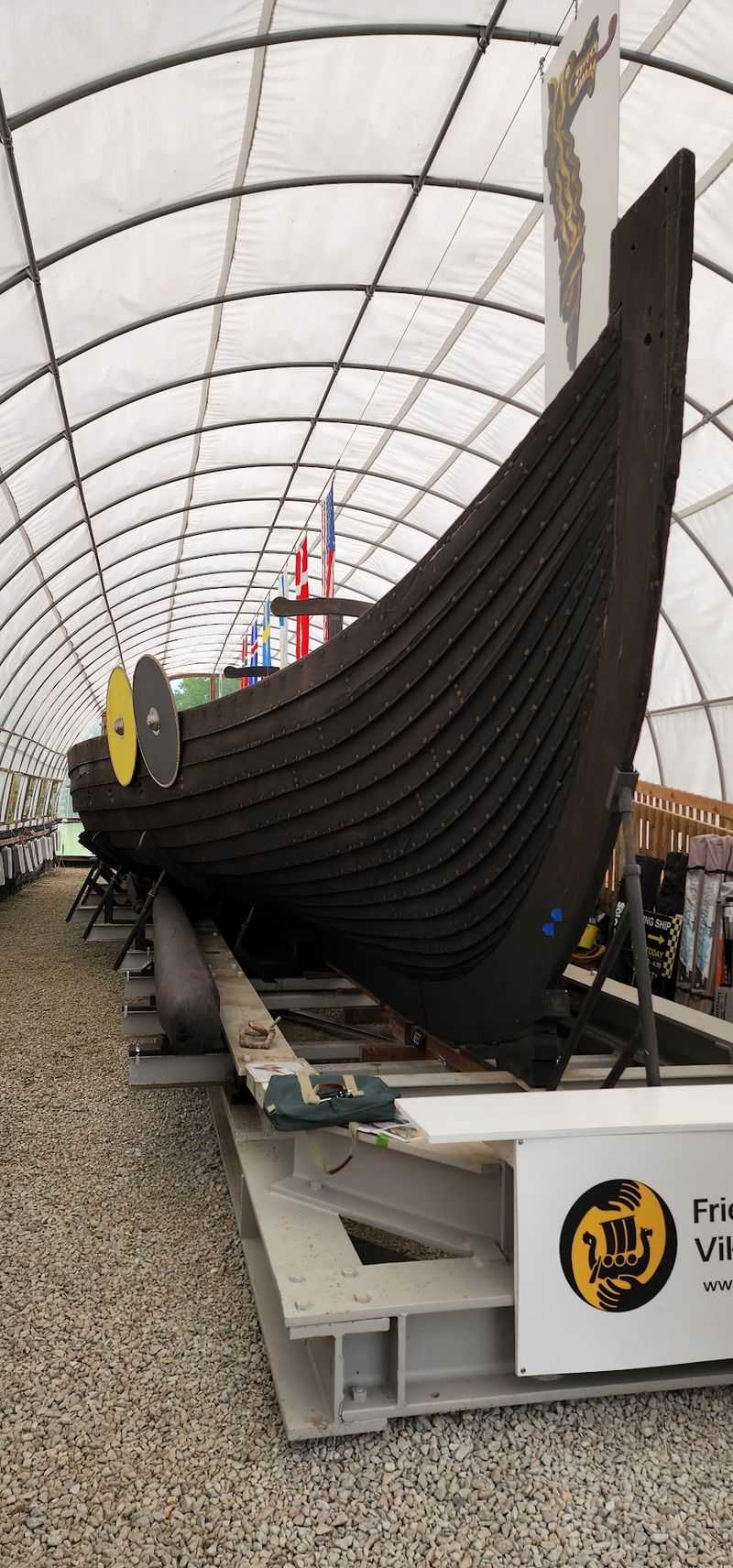
Norwegian shipbuilder Sigurd Aas constructed an exact replica of the Gokstad ship in 1892. The replica was built using traditional Norse techniques, with overlapping oak planks, iron rivets, and a flexible hull designed to bend with ocean waves rather than fight them.
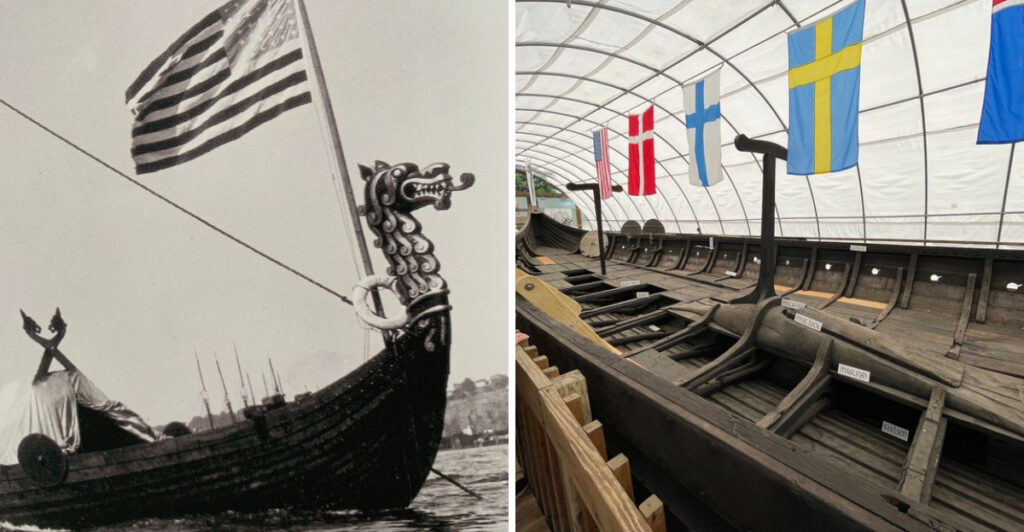
Named the Viking, the ship measures about 78 feet long and 17 feet wide, with a single large square sail. What makes the design so impressive is how deliberately engineered it was for open-water survival, not just coastal travel.
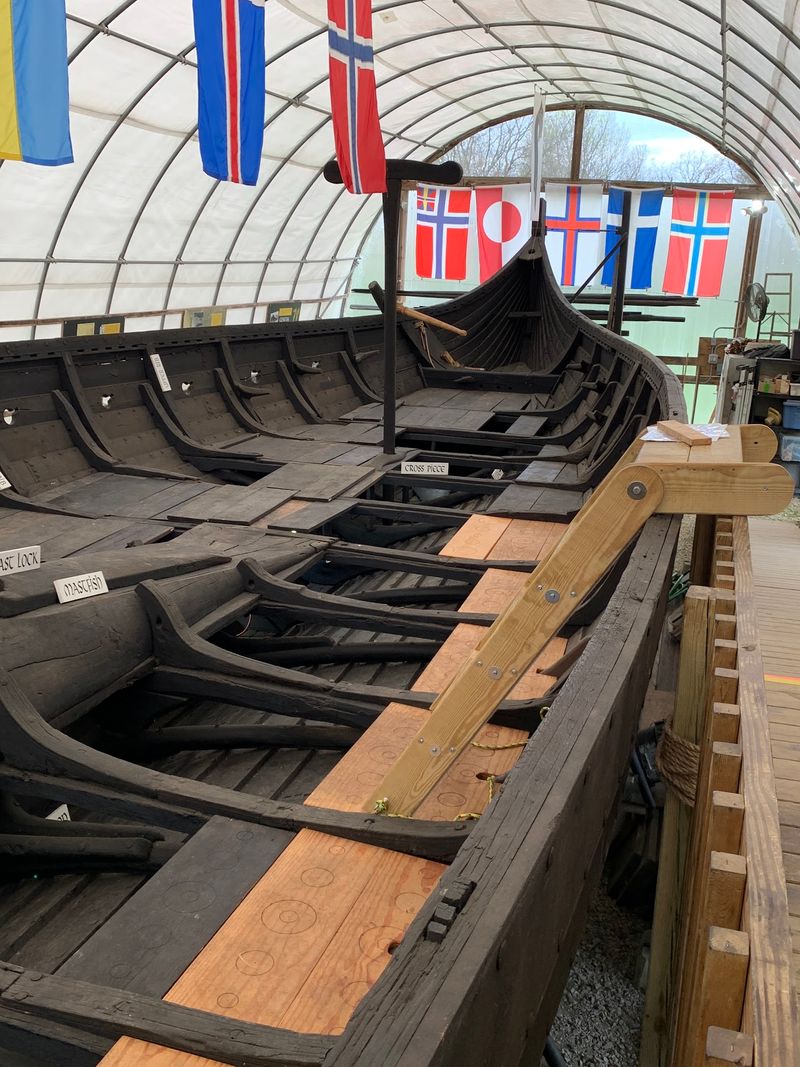
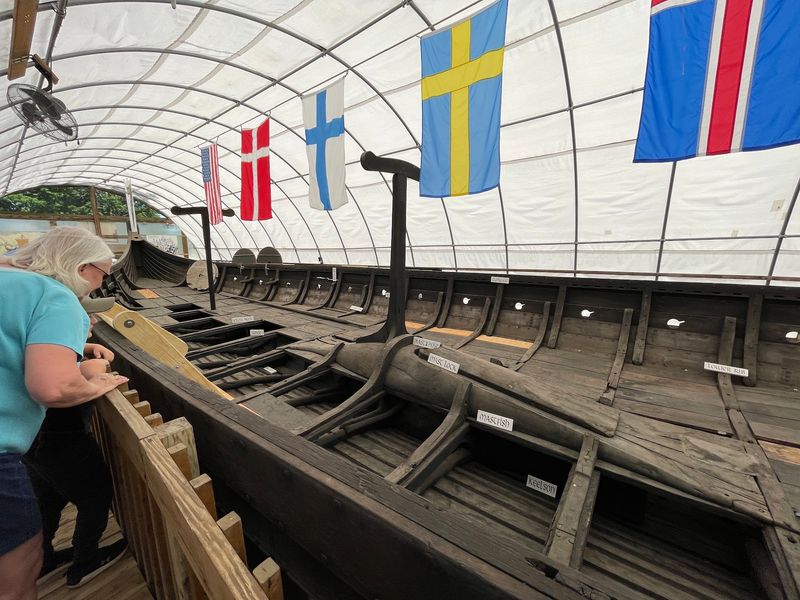
Today, the ship still shows off those construction details up close. Visitors can walk alongside it, look down into the hull from an elevated viewing platform, and get a real sense of just how compact and purposeful every inch of the vessel truly is.
The craftsmanship is stunning even after more than 130 years.
The 1893 Atlantic Crossing That Made History
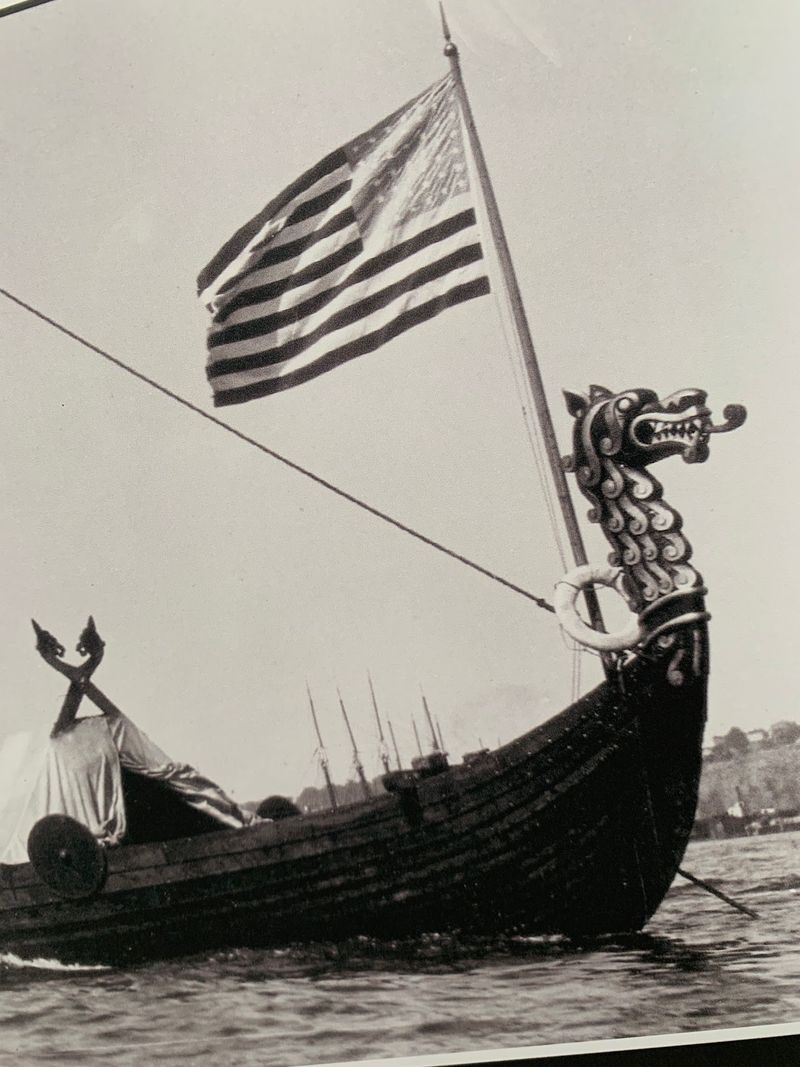
Captain Magnus Andersen led a crew of just 12 men across the Atlantic Ocean in the spring of 1893, departing from Bergen, Norway, on April 30 and arriving in Newfoundland, Canada, on May 27. The total distance covered was roughly 3,674 nautical miles, completed in 28 days.
The crossing was deliberately timed to arrive in the United States before the World’s Columbian Exposition opened in Chicago, where the ship was meant to serve as a statement about Norse seafaring skill. The message was pointed: if Vikings could cross the Atlantic in a ship like this, perhaps the story of who first reached the Americas needed a second look.
Captain Andersen later wrote that the ship performed beautifully in heavy seas. The flexible hull twisted and moved with the waves in a way that rigid modern ships could not replicate, and the crew reportedly felt safer in rough conditions than they expected.
That crossing turned the Viking into an international sensation. Newspapers across the United States covered the arrival extensively, and the ship drew enormous crowds when it eventually made its way through the Great Lakes and down to Chicago for the fair.
The World’s Columbian Exposition Connection
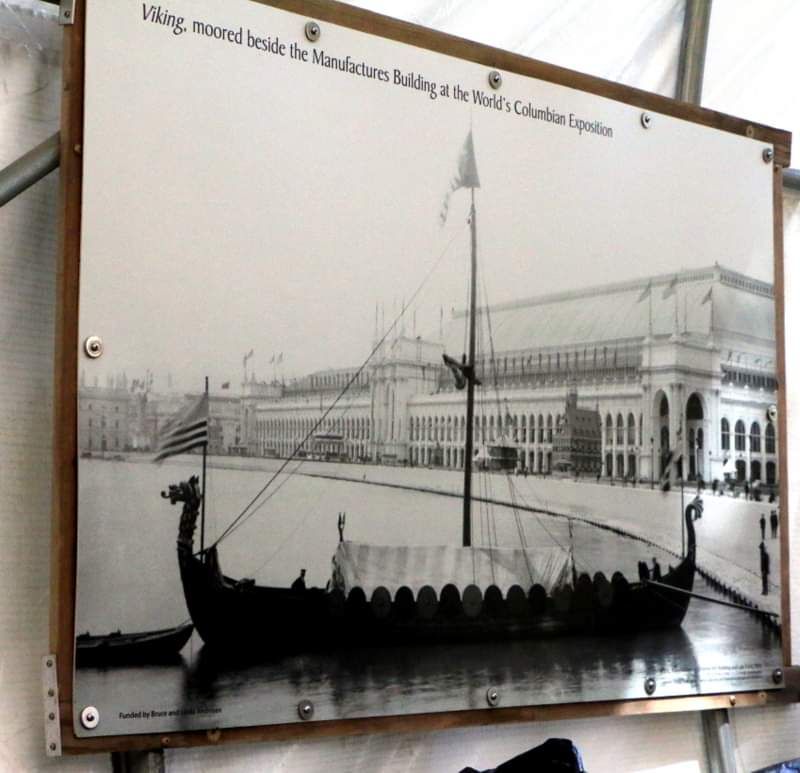
The World’s Columbian Exposition of 1893 was one of the most ambitious events in American history, held in Chicago to celebrate the 400th anniversary of Christopher Columbus’s arrival in the Americas. Over 27 million people attended during its six-month run.
The Norwegian government sent the Viking as part of its national exhibition, and the ship’s transatlantic arrival created a buzz that preceded the fair itself. The subtext was hard to miss: Norway was making a case that Norse explorers, specifically Leif Erikson, had reached North America roughly 500 years before Columbus ever set sail.
The ship was displayed on the lagoon at the fairgrounds, drawing visitors who had never seen anything like it. Period photographs show crowds gathered along the waterfront, craning for a better look at the vessel that had just crossed an ocean with a skeleton crew.
The exposition connection also ties the Viking to the broader story of Chicago’s golden era of innovation and spectacle. Fans of Erik Larson’s book about the 1893 fair will find visiting the ship adds a vivid, tangible layer to everything they already know about that remarkable summer.
The ship is a direct artifact of that world.
How the Ship Ended Up in Geneva, Illinois
After the exposition closed, the Viking’s future was uncertain for years. The ship eventually came into the care of the city of Chicago and was stored in Lincoln Park, where it sat exposed to the elements for decades with minimal protection or maintenance.
By the mid-20th century, the ship was in serious trouble. Wood rot, weather damage, and general neglect had taken a heavy toll on a vessel that had survived an Atlantic crossing in near-perfect condition just decades earlier.
Community advocates began pushing for a proper rescue effort.
The ship was eventually moved to Geneva, Illinois, where a dedicated group of volunteers formed the organization now known as Friends of the Viking Ship. They took on the enormous task of stabilizing, restoring, and properly housing the vessel so future generations could see it.
The move to Geneva gave the ship a second life. The town embraced it as a point of local pride, and the volunteer organization grew into a passionate community of historians, craftspeople, and Norse heritage enthusiasts.
What could have become a footnote in Chicago’s history instead became a living, breathing piece of it, cared for by people who genuinely love what it represents.
The Volunteer-Driven Mission Behind the Museum
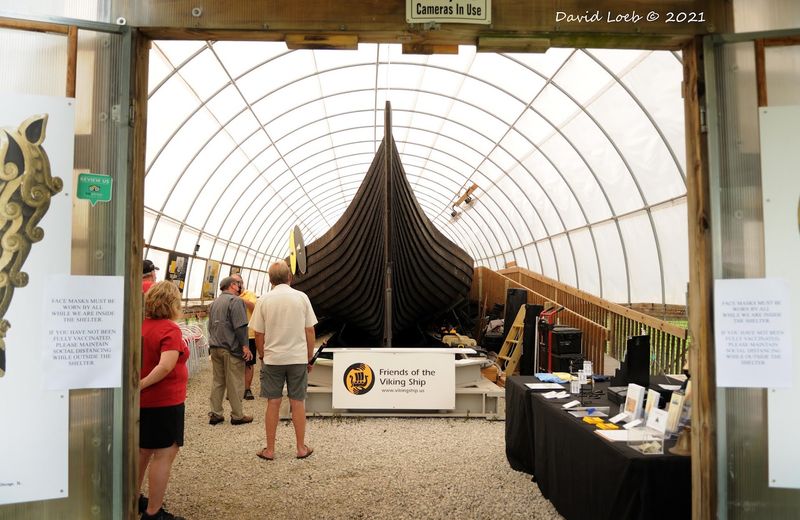
Friends of the Viking Ship is entirely volunteer-run, and that fact shapes every single aspect of the visitor experience in the best possible way. The people who give tours here are not reading from a script.
They are enthusiasts who have spent years researching this ship, its history, and its place in the broader story of Norse culture.
The depth of knowledge on display is remarkable. Guides can walk you through the technical details of how the ship was built, explain the political motivations behind the 1893 voyage, and share personal stories about the ongoing restoration work that keeps the vessel stable.
Many of the volunteers have personal connections to Scandinavian heritage, and that enthusiasm comes through clearly. Conversations with the gift shop staff have been known to run 15 to 20 minutes as visitors and volunteers swap stories about trips to Norway, Viking festivals, and related history groups in the region.
The admission fee is just $7 per adult, which feels almost comically reasonable given the quality of the experience. That money goes directly toward the organization’s goal of building a permanent, climate-controlled museum facility to protect the ship long-term.
Every dollar counts for a group this dedicated.
What the Tour Actually Looks Like
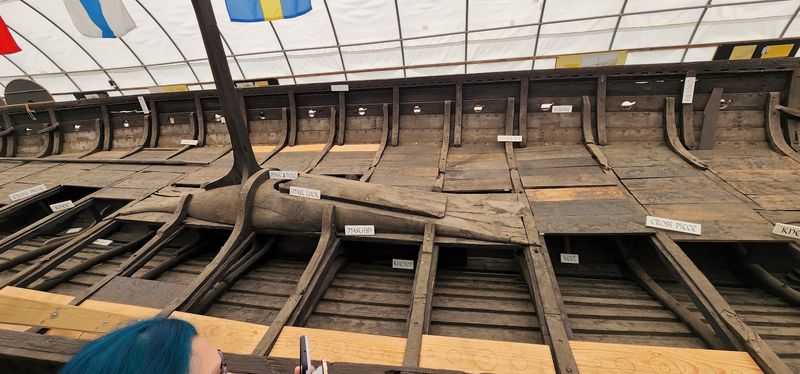
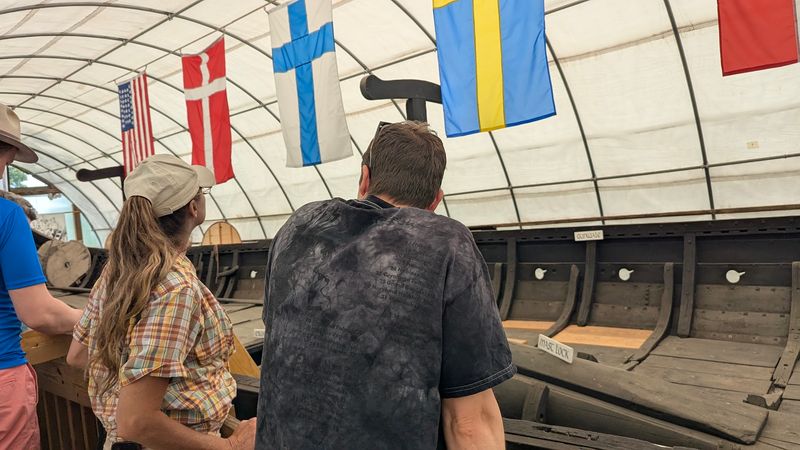
Tours at Friends of the Viking Ship are personal and unhurried, which is a refreshing change from the crowded, rush-through-the-exhibit pace of larger institutions. Guides walk you around the ship and explain each element as you go, from the construction of the hull to the rigging of the sail.
An elevated walkway lets visitors look down directly into the open hull of the ship, giving a clear sense of just how much open space the crew of 12 had to share during a month-long Atlantic crossing. The answer is: not much at all.
Videos, photographs, and period artifacts are displayed throughout the exhibit space, filling in the historical context around the ship itself. These displays cover the Gokstad discovery in Norway, the construction of the replica, the 1893 voyage, and the ship’s long journey through Chicago’s history before landing in Geneva.
Private tours can also be arranged for groups or families who want a more focused experience. The guides bring genuine enthusiasm to every session, and the storytelling quality is consistently high.
Visitors who take the time to ask questions and engage with the guides consistently walk away feeling like they got far more than they paid for. The tour rewards curiosity generously.
Viking Life Demonstrations and Living History
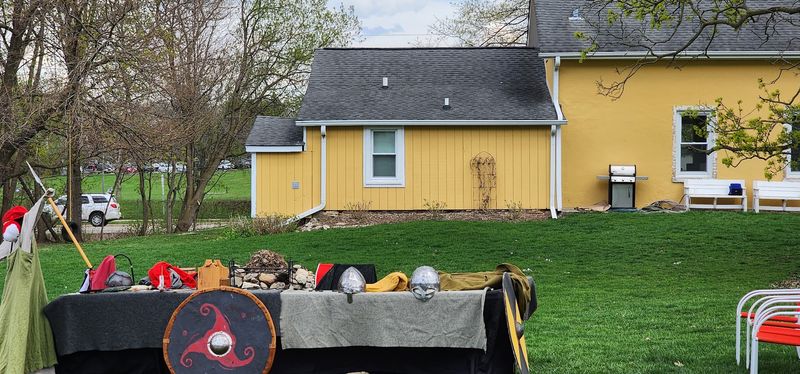
On select open days, Friends of the Viking Ship brings in living history presenters who set up around the exhibit to demonstrate various aspects of Viking daily life. These are not actors in costumes reading from cue cards.
They are dedicated hobbyists and historians with deep knowledge of Norse culture.
Demonstrations have covered topics including traditional cooking methods, armor construction, hand-to-hand combat techniques, and the tools Vikings used for navigation and trade. The presenters are happy to answer questions, let visitors handle replica tools, and explain the reasoning behind various Norse customs.
These sessions are especially popular with kids, who tend to light up when they get to examine a replica sword or ask questions about what Vikings actually ate on a long sea voyage. The answers are historically accurate and genuinely interesting, not watered-down for a young audience.
The living history component also creates natural conversations about broader topics, including local military history reenactment groups, upcoming Viking festivals in the Midwest, and other events where Norse heritage is celebrated. Visitors often leave with a reading list, a festival date circled on their calendar, and a new appreciation for a culture that is far more nuanced than pop culture usually suggests.
The Ongoing Restoration and Preservation Effort
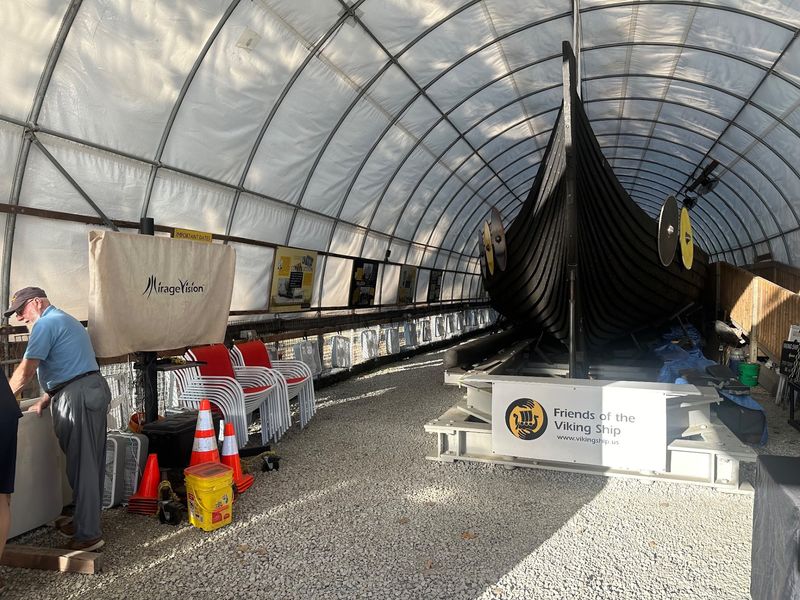
The ship that visitors see today is in remarkably good shape for its age, but keeping it that way requires constant attention. Wood this old needs careful monitoring for moisture levels, structural shifts, and signs of continued deterioration, all of which the Friends of the Viking Ship team manages with limited resources and maximum dedication.
The current building provides reasonable protection, but it is not climate-controlled, which means the ship is still vulnerable to seasonal temperature and humidity changes. The organization’s long-term goal is to raise enough funds to construct a purpose-built, climate-controlled facility that will give the ship the stable environment it needs to survive another century.
Restoration work has been ongoing for years, with volunteers and specialists carefully addressing problem areas in the hull and structure. The process requires both traditional woodworking knowledge and modern conservation science, and the team takes both seriously.
Visitors who ask about the restoration often get detailed, candid answers about the challenges involved. The transparency is refreshing and makes the fundraising mission feel genuinely urgent rather than like a routine pitch.
Every admission fee, gift shop purchase, and donation contributes directly to the goal of securing this ship’s future for the next generation of curious visitors who deserve to see it.
Planning Your Visit: Hours, Seasons, and Tips
Friends of the Viking Ship is not open every day, and that is one of the most important things to know before making the trip. The museum operates on a seasonal schedule with specific open weekends, so checking the website at vikingship.us before you go is absolutely essential.
The open season generally runs from late spring through early fall, with weekend hours that typically cover Saturday and Sunday afternoons. Special events, private tours, and group visits can sometimes be arranged outside the regular schedule by contacting the organization directly at their listed phone number.
The $7 per adult admission is one of the best value tickets in the Chicago suburbs. Children’s pricing is available as well, making this a genuinely affordable family outing that does not require a full day of planning or a long drive from the city.
Arriving with a little background knowledge makes the tour even richer. Reading up on the 1893 World’s Fair, the original Gokstad ship in Oslo, or basic Norse history before your visit gives you better questions to ask and helps the guides go deeper on the details.
Wear comfortable shoes, bring your curiosity, and plan to stay longer than you think you will need to.
The Geneva Library Connection You Should Not Miss
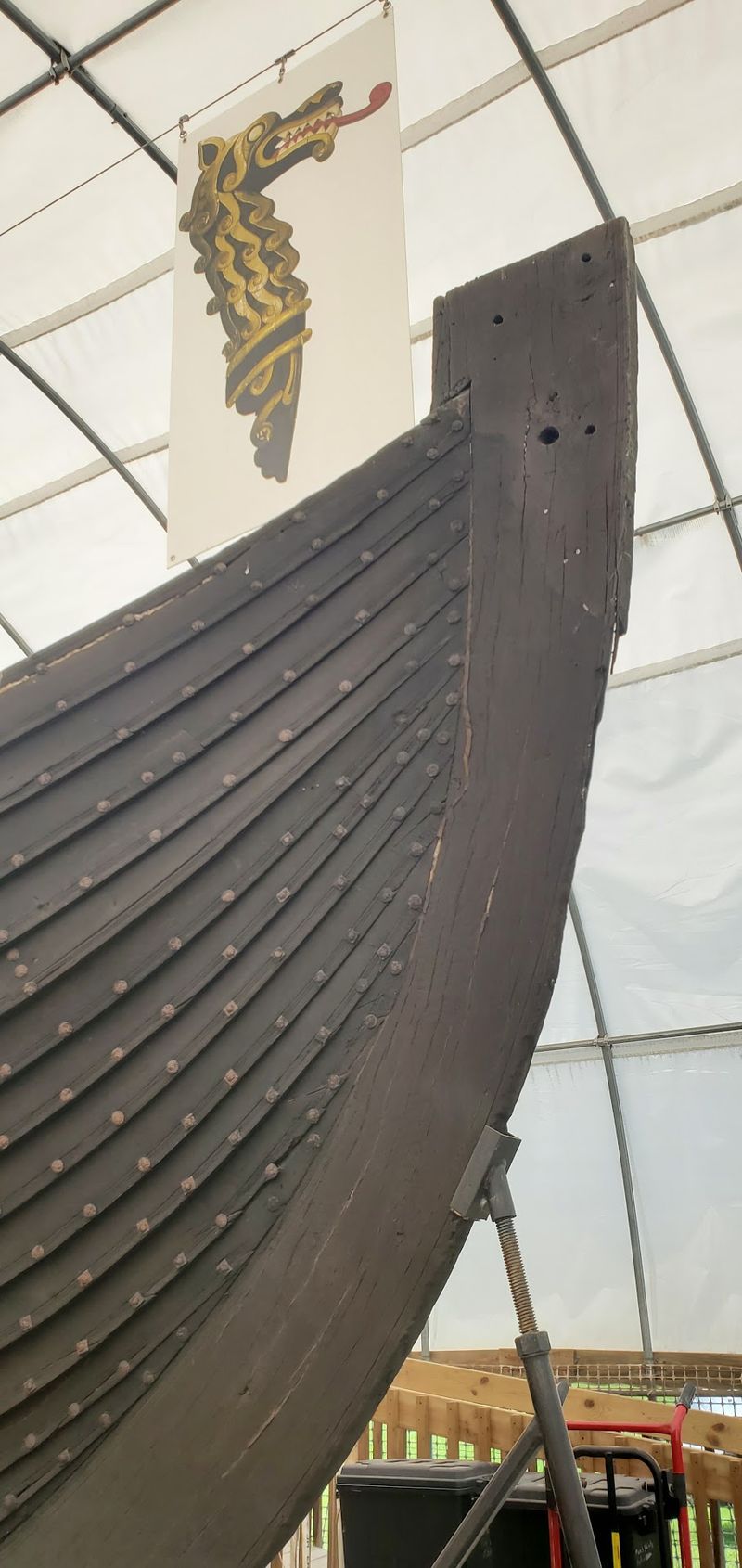
Here is a detail that most visitors only learn about during the tour itself: the Geneva Public Library, just a few minutes away from the ship, currently has the original carved figurehead from the vessel on display. The figurehead is a striking piece of Norse craftsmanship, and seeing it separately from the ship adds another dimension to the whole experience.
Tour guides at Friends of the Viking Ship often mention the library connection at the end of the tour, turning a single afternoon stop into a two-part Viking adventure through downtown Geneva. The library is easy to reach, free to enter, and worth the short detour.
Geneva itself has a lot to offer beyond the ship. The downtown area along the Fox River has independent shops, cafes, and historic buildings that make for a pleasant stroll before or after the museum visit.
Swedish Days, an annual festival celebrating the town’s Scandinavian heritage, is another event worth timing a visit around.
The combination of the ship, the library figurehead, and the surrounding town creates a surprisingly rich day trip that covers history, architecture, and local culture in a way that feels organic rather than forced. Geneva rewards the visitor who takes their time and pays attention to the details hiding in plain sight.
Why This Place Deserves Far More Attention
A 130-year-old Viking ship that crossed the Atlantic Ocean, starred at one of the greatest world’s fairs in history, and survived decades of neglect to be lovingly restored by a group of dedicated volunteers in a small Illinois town is, by any measure, an extraordinary story. The fact that most people have never heard of it is genuinely baffling.
Part of what makes Friends of the Viking Ship so special is precisely that it has not been polished into a corporate museum experience. The rough edges, the volunteer energy, the personal conversations, and the modest admission price all contribute to an atmosphere that feels honest and human in a way that larger institutions rarely achieve.
The ship itself is the star, but the people who care for it are the heart of the place. Their commitment to preserving this artifact and sharing its story freely and enthusiastically is the kind of community effort that deserves recognition and support from anyone who values history.
If you are anywhere near the Chicago suburbs and have even a passing interest in Norse culture, maritime history, or the 1893 World’s Fair, this is a trip worth making. The Viking crossed an ocean to get here.
The least you can do is drive a few miles down the highway to say hello.
Share this story