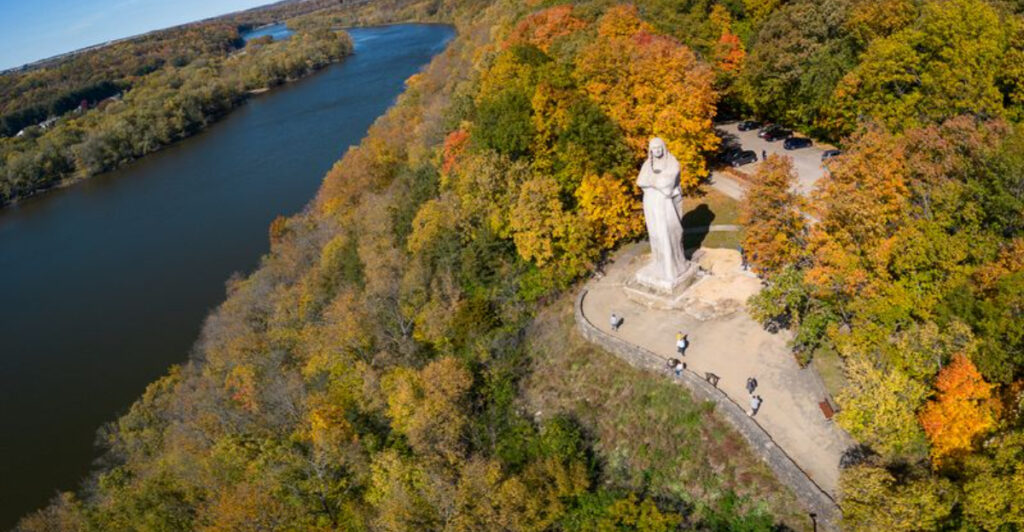
There is a concrete giant standing on a bluff above the Rock River in northern Illinois, and it has been watching over the valley for more than a century. At 48 feet tall and tipping the scales at over 536,000 pounds, this is not a statue you glance at and move on from quickly.
The figure gazes out across the water with a quiet authority that stops people mid-step. Known formally as the Eternal Indian, and affectionately called the Black Hawk Statue by locals, this landmark in Oregon, Illinois, draws visitors from across the Midwest who want to see something genuinely extraordinary.
What makes it worth the drive is not just the size, but the story, the setting, and the surprising depth of history packed into one riverside bluff.
The Eternal Indian: Address, Location, and First Impressions
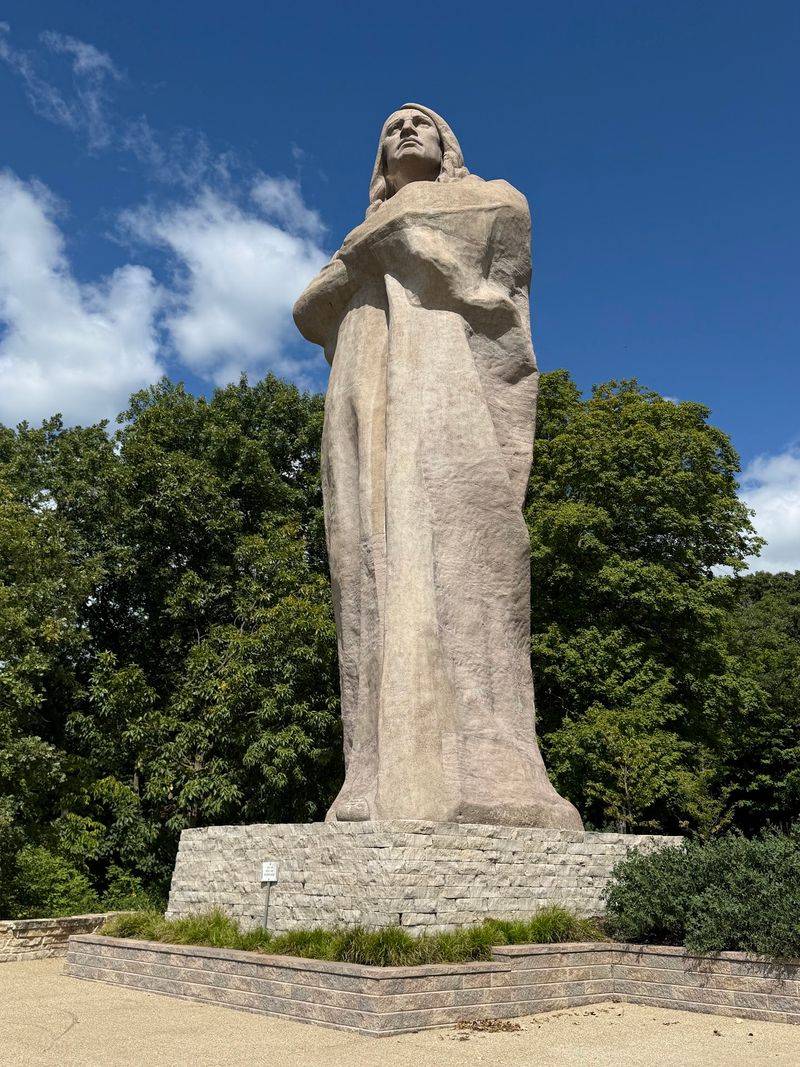
The road to 1411 N River Rd, Oregon, IL 61061 winds through rolling countryside before the bluff rises ahead of you and the statue suddenly comes into view above the tree line. That first glimpse is genuinely startling.
Nothing quite prepares you for the sheer scale of the figure standing there, arms folded, chin raised, eyes fixed on the horizon.
The Eternal Indian sits inside Lowden State Park, and the drive into the park feels like a slow build-up to a reveal. The parking lot places you almost face-to-face with the statue, and from that vantage point, elevated high above the Rock River, the surrounding landscape opens up beautifully.
You can see the river curving through the valley below, framed by dense trees on both banks.
There is no admission fee to enter the park, which makes this stop feel like a gift. The grounds are well-maintained, the signage is clear, and the accessibility for visitors with mobility challenges is genuinely thoughtful.
A paved path near the parking lot gets you close to the base without requiring a strenuous hike.
The Man Behind the Monument: Sculptor Lorado Taft
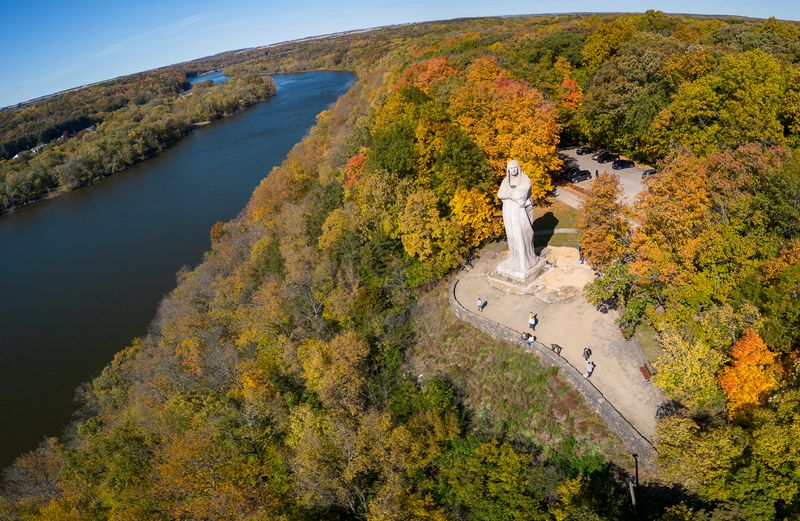
Not every massive public sculpture has a fascinating creator behind it, but the Eternal Indian does. Lorado Taft, a celebrated American sculptor born in Elmwood, Illinois, in 1860, designed this figure and oversaw its construction in the early twentieth century.
Taft was already well-known by the time this project began, and his work can still be seen at the Art Institute of Chicago, where a striking fountain sculpture he created stands outside.
Taft had a deep interest in Native American history and culture, and the Eternal Indian was his way of creating a permanent, monumental tribute. He wanted the figure to feel timeless rather than tied to any single historical moment.
The posture, with arms crossed and gaze fixed outward, communicates dignity and calm strength rather than aggression or defeat.
The statue was completed in 1911, making it well over a century old. Knowing that a single artist conceived and built something this physically massive, using the technology available in that era, makes standing in front of it feel even more remarkable.
Taft left behind something that genuinely earns its place on that bluff.
The Numbers That Make Your Jaw Drop: Size and Weight
Some landmarks earn their reputation through beauty alone. This one earns it through sheer, almost incomprehensible physical presence.
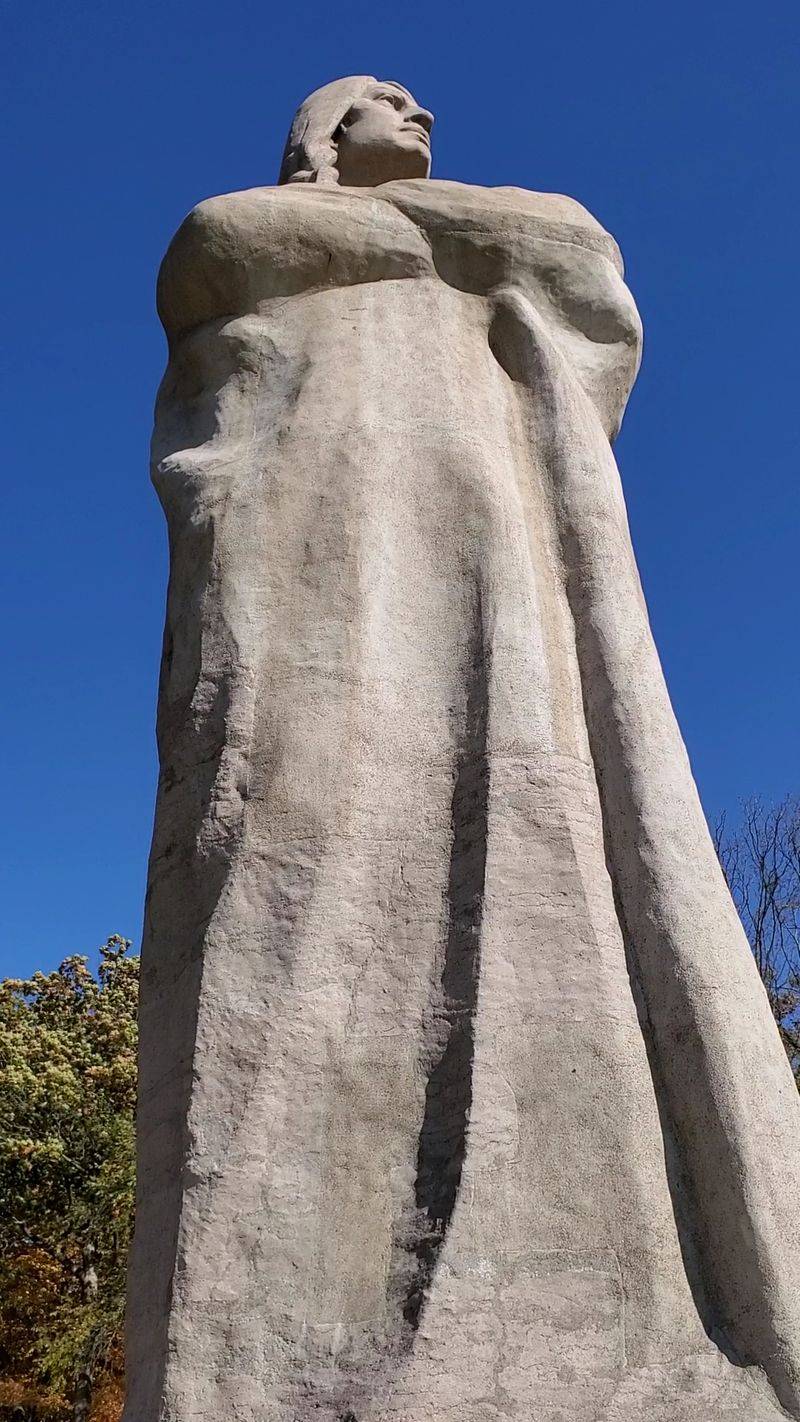
The Eternal Indian stands 48 feet tall from base to the top of the figure, and the total weight of the structure exceeds 536,000 pounds. That is roughly the weight of 40 full-grown African elephants stacked together.
The statue is constructed from poured concrete mixed with a specific blend of materials that gives it a warm, sand-colored tone rather than the cold gray you might expect. The texture up close is rough and detailed, with facial features, hair, and clothing folds that are surprisingly expressive at this scale.
The craftsmanship involved in achieving that level of detail in concrete is something worth pausing to appreciate.
Standing at the base and craning your neck upward gives you a real sense of the engineering challenge this project represented in 1911. There were no modern cranes or digital modeling tools.
Workers built wooden scaffolding and poured concrete in sections, a process that took years to complete. The result has now endured more than a century of Midwestern weather without losing its commanding presence on the bluff.
The Rock River Views From the Bluff
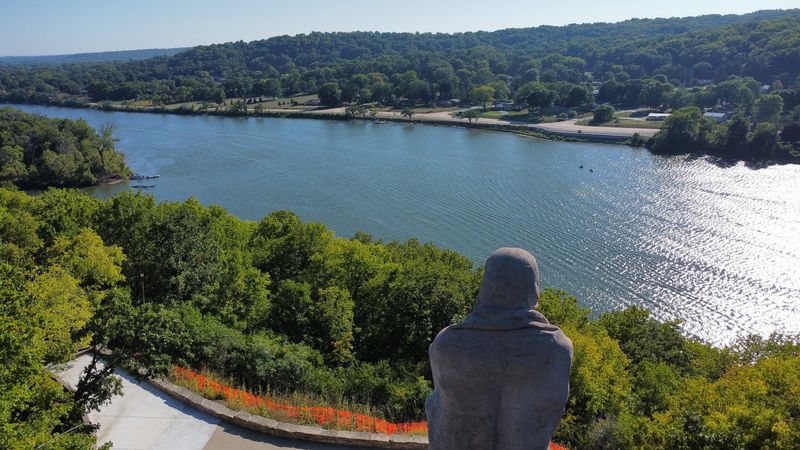
The statue gets most of the attention, but the view from that bluff is something you will think about on the drive home. The Rock River stretches out below in a broad, calm curve, and the forested banks on either side create a rich green frame around the water.
On a clear day, the reflections on the river surface are almost mirror-sharp.
Sunsets from this spot have a particular quality that regular visitors tend to rave about. The light hits the river at a low angle and turns the water a deep amber, while the silhouette of the statue becomes even more dramatic against the orange sky.
Arriving in the late afternoon specifically for that light is a strategy worth considering.
Spring and fall both offer exceptional views, but for different reasons. In spring, the river often runs high and full after snowmelt, giving it an energetic, powerful character.
In fall, the surrounding trees shift into reds and golds that make the whole valley look like a painting. The view in summer is lush and green, but the foliage can partially block distant sightlines, so earlier or later in the season tends to reward visitors with cleaner vistas.
The 204-Step Staircase Down to the River
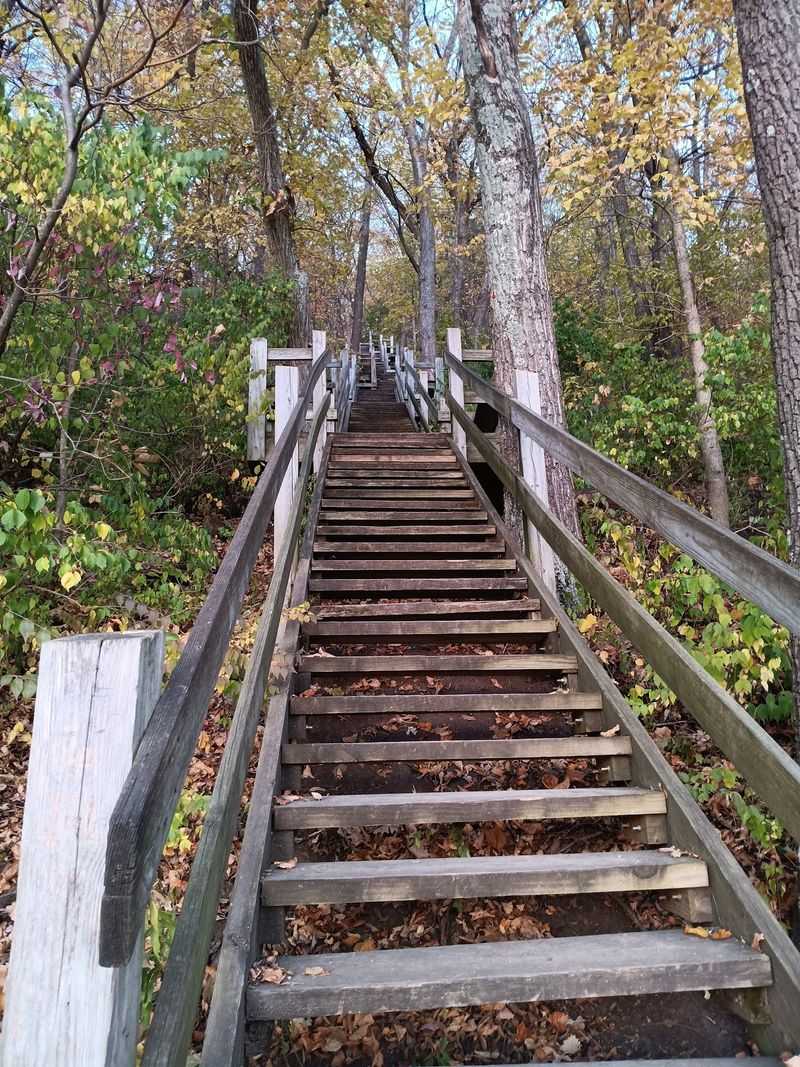
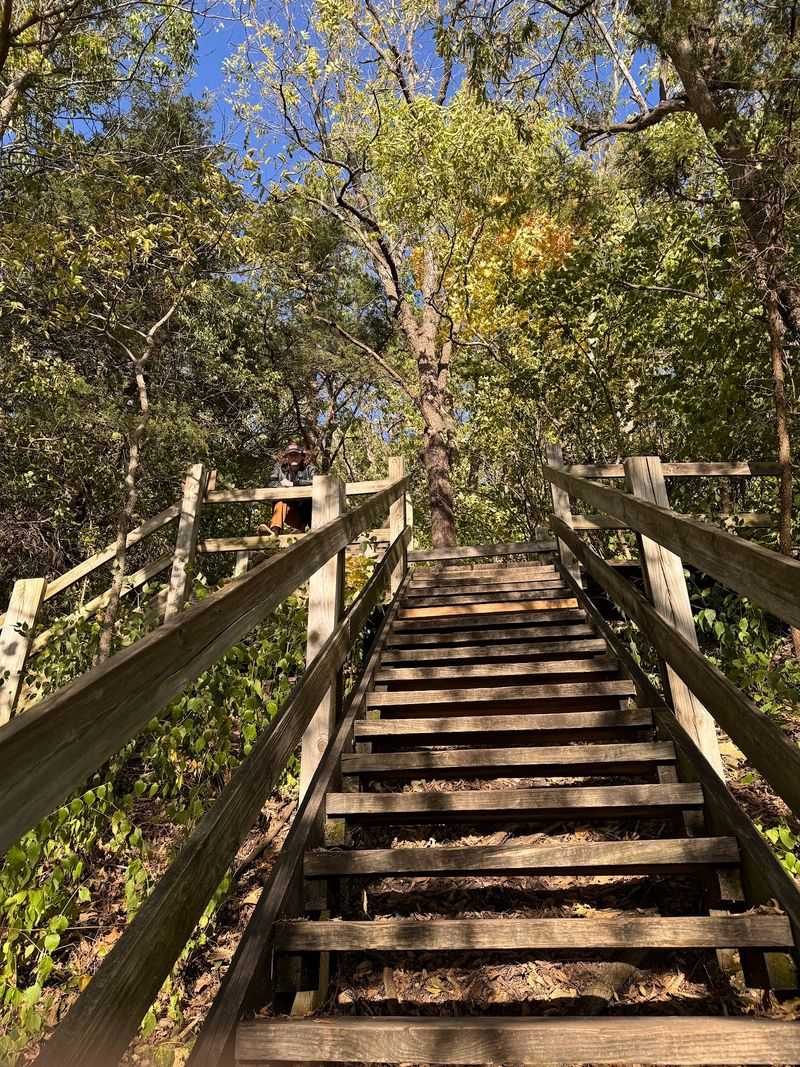
One of the more memorable physical experiences at this site is the wooden staircase that descends from the bluff down to the riverbank. The count, confirmed by visitors who have taken the time to tally each step, comes to 204 stairs.
The descent is steep and the steps are narrow in places, so sturdy footwear is genuinely helpful here rather than just recommended.
Going down feels adventurous in the best way. The trees close in around the staircase as you descend, and the sound of the river grows louder with each level.
At the bottom, the Rock River is right there, close enough to feel the cool air rising off the water. The riverbank itself can be muddy depending on recent rainfall, so checking conditions before committing to the full descent is a practical idea.
The climb back up is the part that gets people. Those 204 steps feel considerably longer on the return trip, and the incline does not forgive a casual pace.
That said, reaching the top again and turning back to see the statue above the trees makes the effort feel completely worth it. The staircase is one of those small physical challenges that turns a sightseeing stop into an actual memory.
Trails, Nature, and Wildlife Around the Statue
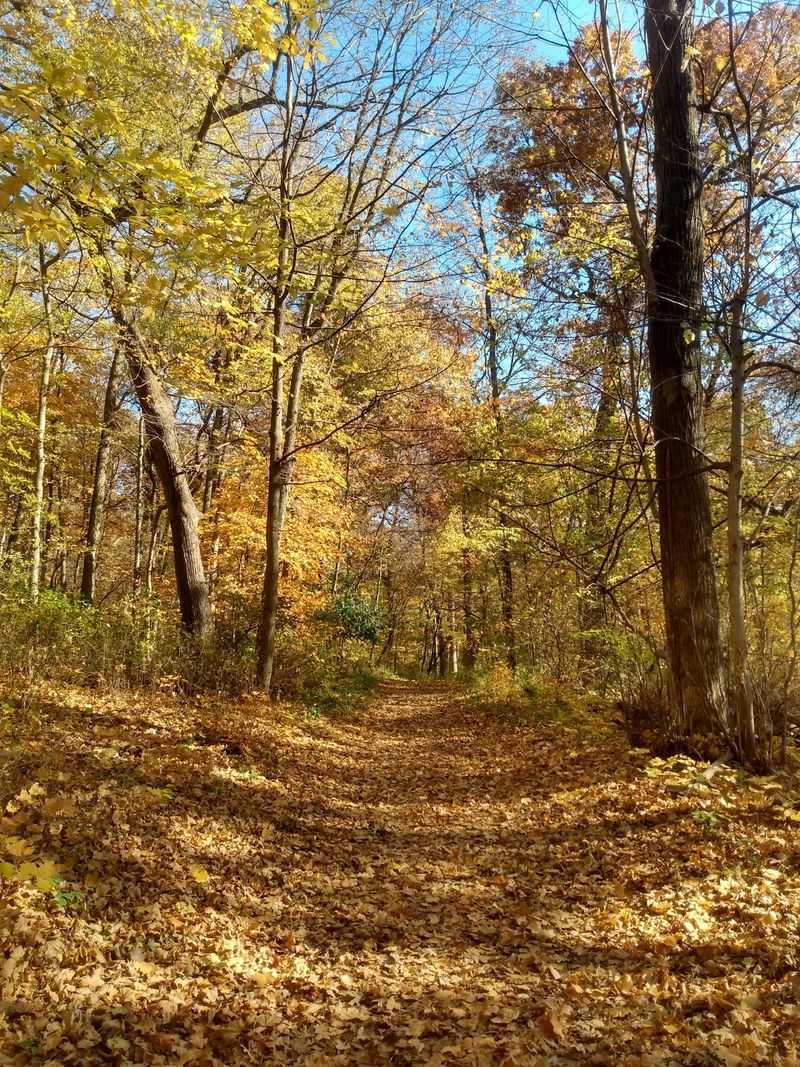
Beyond the statue and the staircase, Lowden State Park offers a network of trails that range from easy walks to more demanding hikes along the bluff edge. The forest trail that loops through the park is easy to follow and well-kept, with a surface that holds up reasonably well even after light rain.
It makes for a satisfying short hike that adds real depth to the visit.
The natural environment around the statue is genuinely rich. Large birds, including hawks and herons, are commonly spotted soaring above the river valley, and the tree canopy along the trails provides excellent habitat for songbirds.
Bringing binoculars is worth the small extra effort, especially during spring migration season when bird activity peaks.
One practical tip worth mentioning: tick activity in this area can be significant during warmer months. Applying bug spray before heading onto the trails is a sensible step, and checking yourself afterward is just as important.
The trails themselves are not overgrown or difficult to navigate, but the surrounding vegetation is thick enough that ticks are a genuine consideration from late spring through early fall. The wildlife and scenery make the precaution more than worthwhile.
Picnic Areas, Camping, and Family-Friendly Facilities
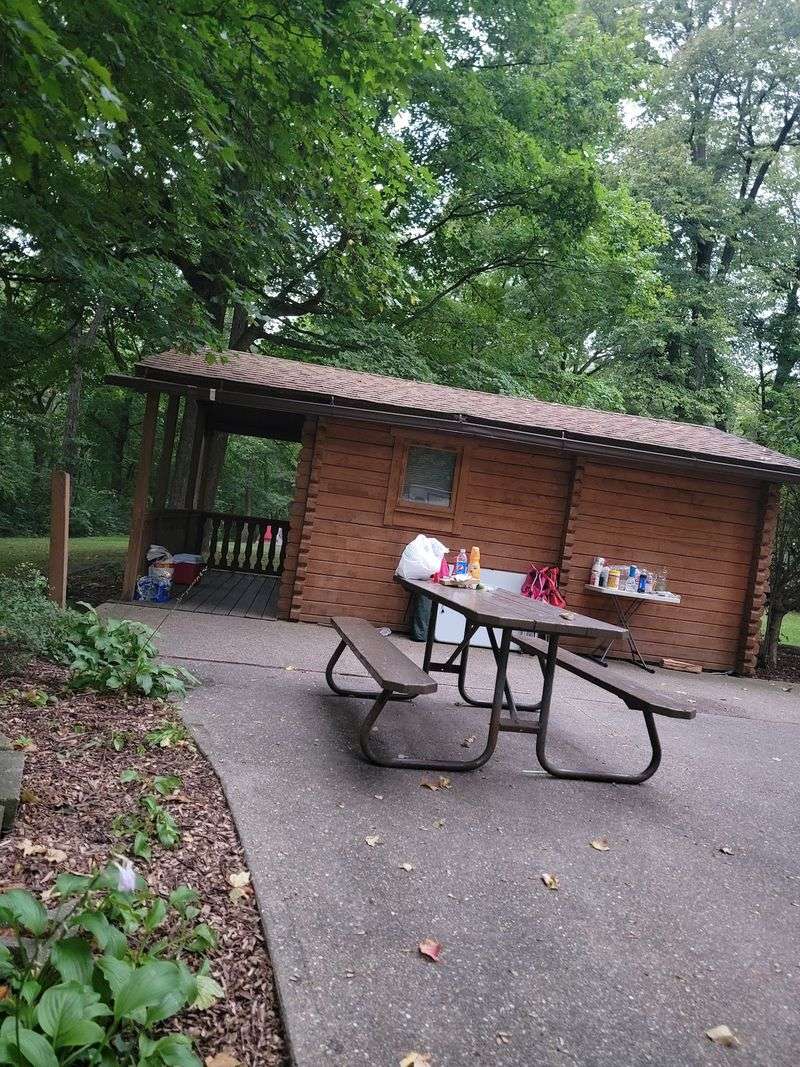
Lowden State Park is set up in a way that encourages visitors to stay longer than a quick photo stop. Wide open grassy areas near the parking lot are dotted with picnic tables, and the setting, elevated above the river with trees on all sides, makes a picnic here feel genuinely special rather than like a rest-stop lunch.
Restrooms are available at the park, which sounds like a minor detail but matters a great deal when you are planning a day trip with kids or elderly family members. The accessibility of the main statue area is also worth noting.
The parking lot sits close to the base of the statue, and the paved path nearby means visitors who cannot manage steep trails can still get a full, close-up experience of the monument.
A campground within the park adds an overnight dimension to the visit. Staying on-site means you can catch the statue at golden hour in the evening and again in the early morning light, when the park is quiet and the river valley below is still wrapped in mist.
For families looking for a low-key outdoor weekend, this park covers a lot of ground without requiring elaborate planning or significant expense.
The History of the Black Hawk Connection
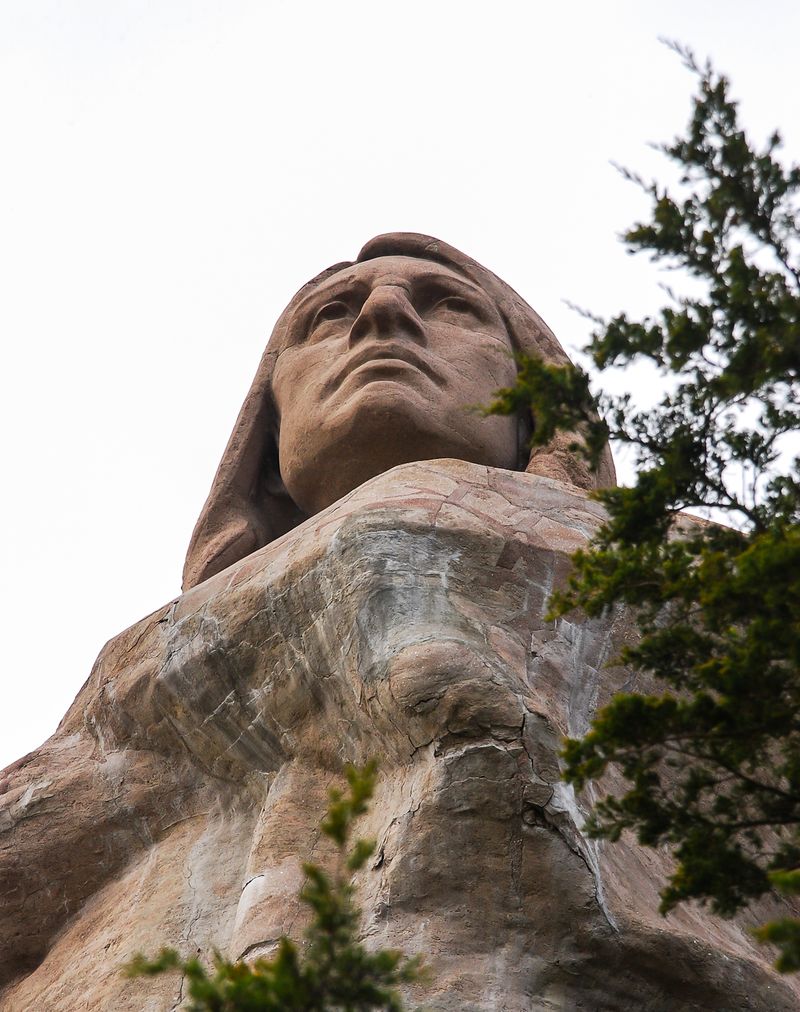
The statue is formally titled the Eternal Indian, but the connection to Black Hawk, the Sauk war leader, is deeply woven into the site’s identity. Black Hawk was born around 1767 and spent much of his life in the Rock River valley region, which was central territory for the Sauk and Fox peoples.
The area around Oregon, Illinois, was land his community knew intimately before the forced relocations of the nineteenth century.
Lorado Taft designed the figure as a universal representation of Indigenous peoples rather than a strict portrait of Black Hawk specifically. The statue’s name, the Eternal Indian, reflects that broader intention.
Still, the geographic connection to Black Hawk’s homeland makes the placement on this particular bluff feel meaningful rather than arbitrary.
Historical markers and informational panels around the park fill in much of this context for visitors who want to understand what they are looking at beyond the spectacle of the size. The site is treated as a cultural landmark, and the information available on-site does a respectable job of honoring that designation.
Reading through the panels before or after seeing the statue adds a layer to the experience that turns a sightseeing stop into something more thoughtful.
Best Times to Visit and Seasonal Tips
Every season brings something different to this site, and none of them are truly bad. That said, fall is widely considered the standout season for a visit.
The bluff and surrounding forest transform into a tapestry of orange, red, and gold from mid-October onward, and the contrast between the warm foliage and the concrete statue is visually striking in a way that photographs well and looks even better in person.
Spring is the second-best option, particularly for visitors interested in the river. Snowmelt from further north often fills the Rock River to impressive levels in April and May, and the freshly leafed trees give the valley a vivid, clean quality.
The trails are at their most pleasant before summer heat and humidity settle in.
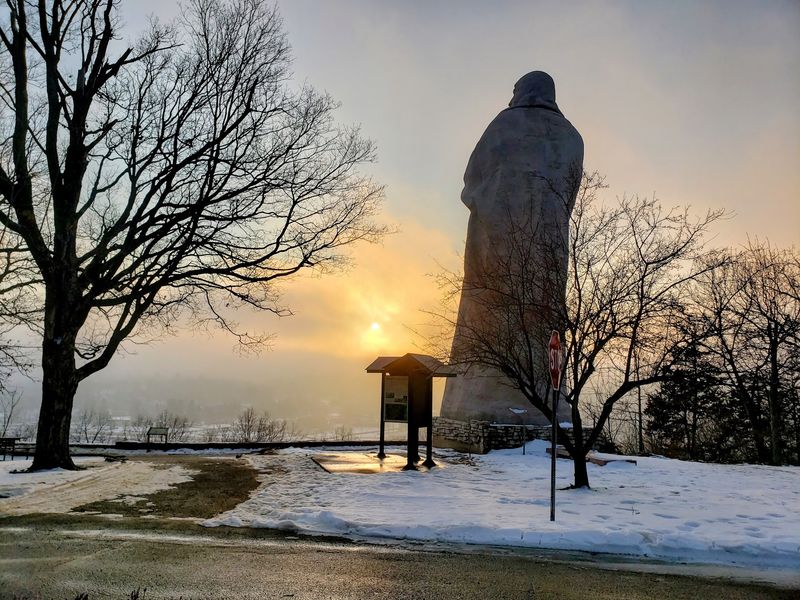
Summer visits work well for families with young children who want the full picnic and camping experience, but the dense foliage does reduce some of the longer river views from the bluff. Winter visits are quiet and atmospheric, with bare trees opening up sightlines that are hidden in warmer months.
The park is accessible year-round, and the statue itself looks particularly stark and powerful against a gray winter sky. Each season offers a genuinely different version of the same remarkable place.
Practical Tips Before You Go
A few practical details can make a real difference in how smoothly a visit goes. The park entrance and parking lot are free to use, which is a genuine perk for a landmark of this caliber.
The main parking area is close to the statue, so even a short visit requires minimal walking if that is a concern.
The park phone number is 1-815-732-6828, and the official city visitor page at cityoforegon.org/visitor-information/blackhawk-statue/ has updated hours and any seasonal closure information. Calling ahead during late fall or early spring is a smart move, since trail conditions and facility availability can vary.
The park is listed as open, but conditions on the staircase and riverside trail can change after heavy rain.
Cell service in the area can be inconsistent, so downloading a map or the park information before leaving home is a sensible precaution. Wear comfortable, closed-toe shoes if you plan to tackle the staircase, and pack water if you intend to hike the trails.
The park has restrooms, but no food vendors on-site, so bringing snacks for a longer visit is worth the small amount of planning it takes. The Eternal Indian rewards visitors who show up prepared to spend real time there rather than just a quick glance from the parking lot.
Share this story