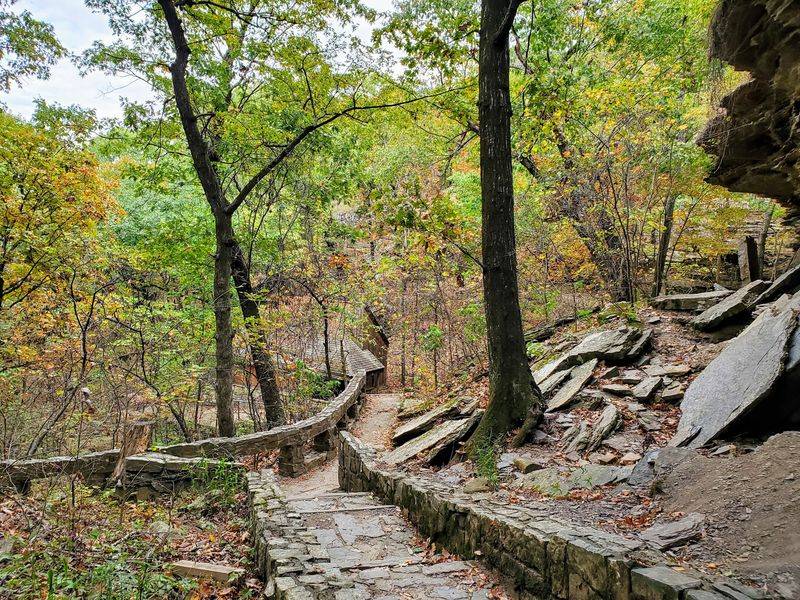
Deep in the forested hills of eastern Oklahoma, a short trail winds through towering trees and rocky terrain toward something that has puzzled historians, archaeologists, and curious travelers for generations. Carved into a massive sandstone slab resting inside a natural canyon, a series of ancient runic symbols sits quietly, waiting to be explained.
Some researchers believe Norse explorers etched these marks over a thousand years ago, long before Columbus ever set sail. Whether you come for the mystery, the hiking, or simply the chance to witness something genuinely unexplained, Heavener Runestone Park delivers one of the most quietly remarkable experiences in the entire state.
Where the Mystery Lives: Heavener Runestone Park
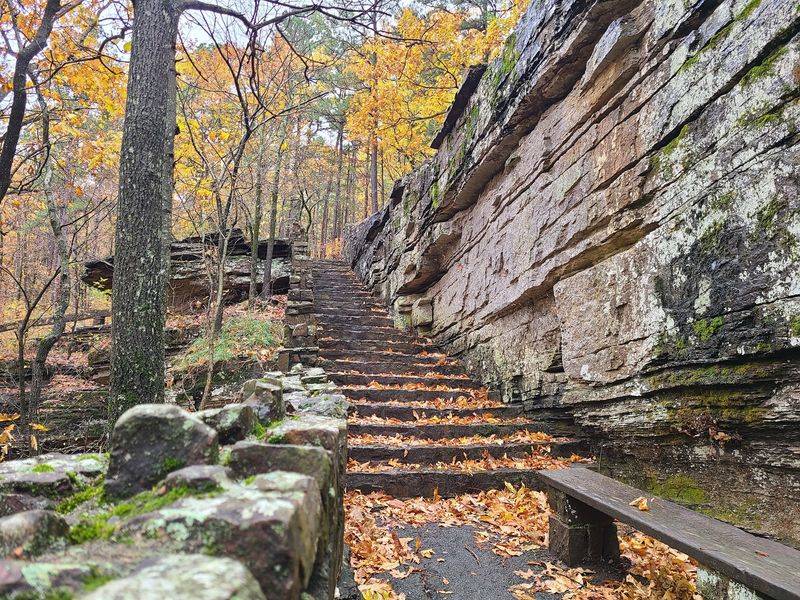
Heavener Runestone Park sits at 18365 Runestone Rd, Heavener, OK 74937, tucked into the Ouachita Mountain foothills of eastern Oklahoma. The town of Heavener itself is a small, unhurried community in LeFlore County, positioned near the Arkansas border where the landscape shifts dramatically into dense woodland and rugged ridgelines.
The park is managed by a nonprofit organization after the state pulled its funding years ago, yet the grounds remain impressively well-kept. Volunteers and dedicated staff have kept the trails clear, the facilities clean, and the visitor experience genuinely welcoming.
Getting here requires a drive through some of Oklahoma’s most scenic back roads, which honestly feels like part of the journey. The surrounding forest closes in around you as you near the park entrance, creating a sense of arrival that few Oklahoma destinations can match.
A small gift shop greets visitors right at the trailhead, stocked with Norse rune-related items and staffed by knowledgeable, friendly attendants who are happy to walk you through the competing theories surrounding the stone. The park earns a 4.7-star rating across more than 1,100 reviews, a number that speaks for itself before you even lace up your hiking boots.
The Stone Itself: Eight Runic Characters Nobody Can Fully Decode
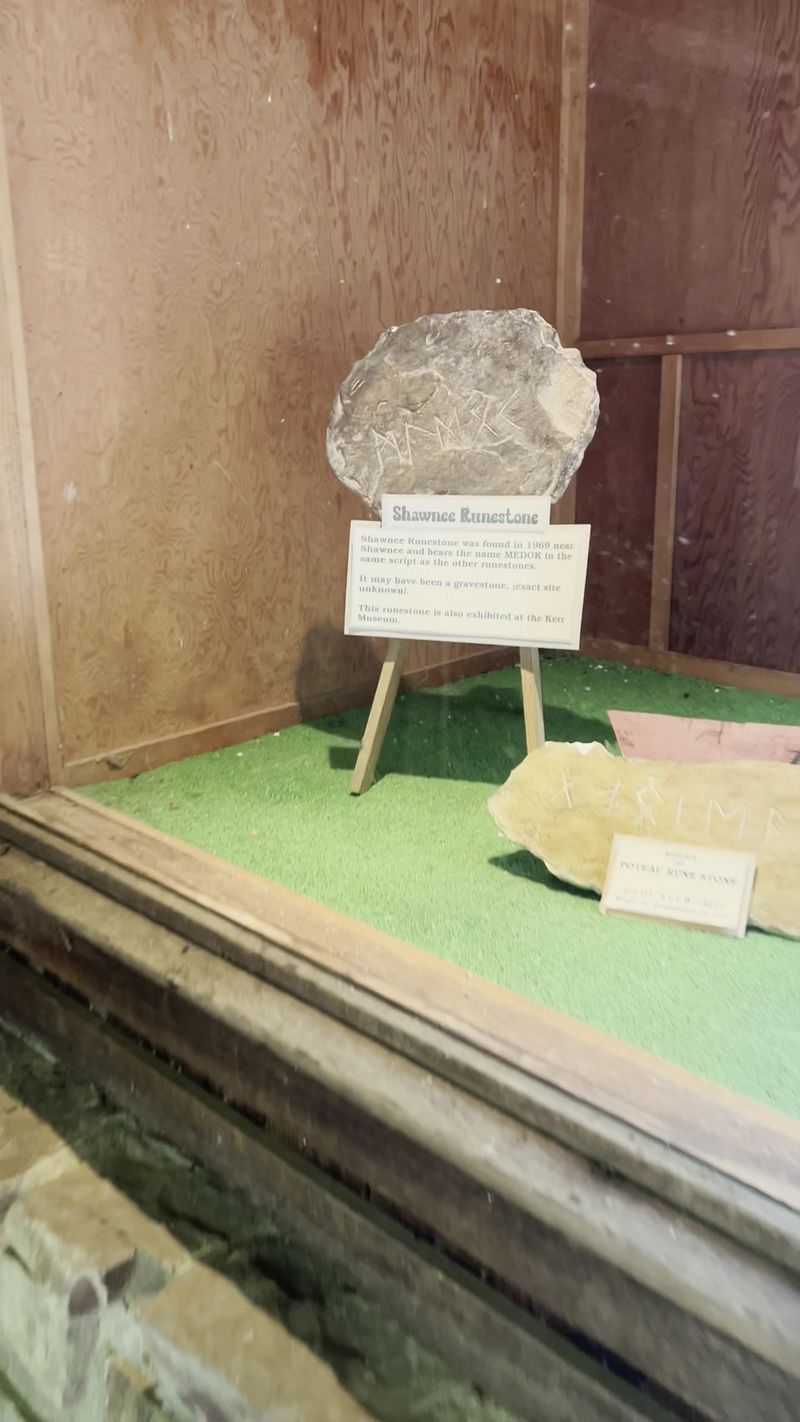
The centerpiece of the entire park is a towering sandstone slab measuring roughly 12 feet tall, 10 feet wide, and 16 inches thick. Carved across its face are eight runic characters that researchers have studied, debated, and argued over for well over a century without reaching a definitive conclusion.
The characters are Elder Futhark runes, the oldest form of the runic alphabet used by Germanic and Norse peoples. Most interpretations read the inscription as a personal name, possibly “GNOMEDAL” or a variation of it, though interpretations vary widely depending on the scholar doing the reading.
What makes the stone so compelling is not just what it says but how it got here. Elder Futhark runes were in common use roughly between 150 AD and 800 AD, which places the potential carving period squarely in an era long before European contact with the Americas is officially recognized.
The stone rests naturally inside a small canyon, sheltered by rock walls on multiple sides. That protected position is likely what preserved the carvings so well across the centuries.
Standing in front of it, you get the distinct feeling that whoever carved it intended for it to last, and somehow, against all odds, it did.
Viking Theories and the Question of Pre-Columbian Exploration
One of the most popular and enduring theories surrounding the Heavener Runestone is that Norse explorers carved it sometime around 600 to 900 AD. Researcher Gloria Farley, who dedicated decades of her life to studying the stone and other Oklahoma runestones, championed this interpretation passionately throughout the mid-to-late 20th century.
Farley believed that Norse voyagers traveled inland via river systems from the Gulf of Mexico, eventually reaching what is now eastern Oklahoma. Her research pointed to the Poteau River as a possible route, and she documented several other runic inscriptions found elsewhere in Oklahoma that she argued supported the same conclusion.
Academic reception to these theories has ranged from cautious interest to outright skepticism. Mainstream archaeology generally holds that verifiable Norse presence in North America extended only as far as L’Anse aux Meadows in Newfoundland, Canada, which dates to around 1000 AD.
Still, the stone is one of five runestone-style inscriptions found in Oklahoma, a cluster that feels too concentrated to dismiss entirely. Park staff and volunteers walk visitors through multiple competing theories without pushing a single narrative, which keeps the experience refreshingly honest and genuinely thought-provoking rather than sensationalized.
The Forest Setting That Frames the Whole Experience
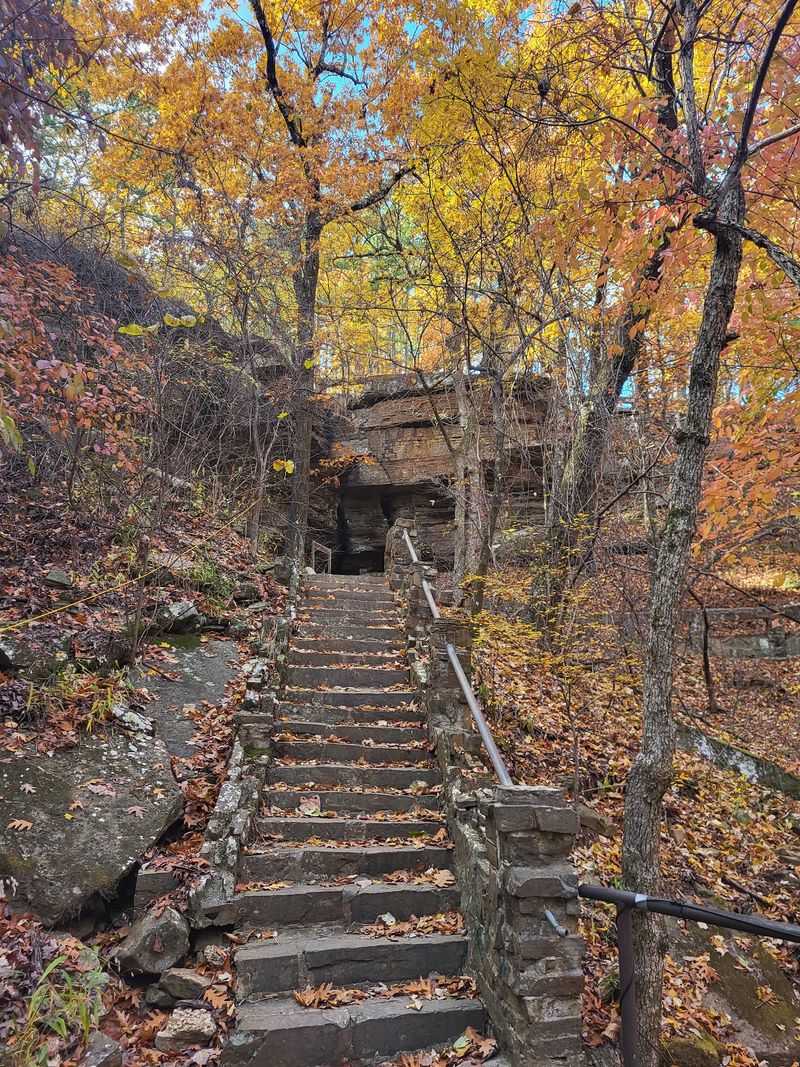
Even if you arrived here knowing nothing about runes or Norse history, the natural setting alone would make the trip worthwhile. The park occupies a stretch of the Ouachita Mountain foothills where hardwood forest covers everything in thick, layered green during spring and summer, then explodes into warm amber and rust tones come fall.
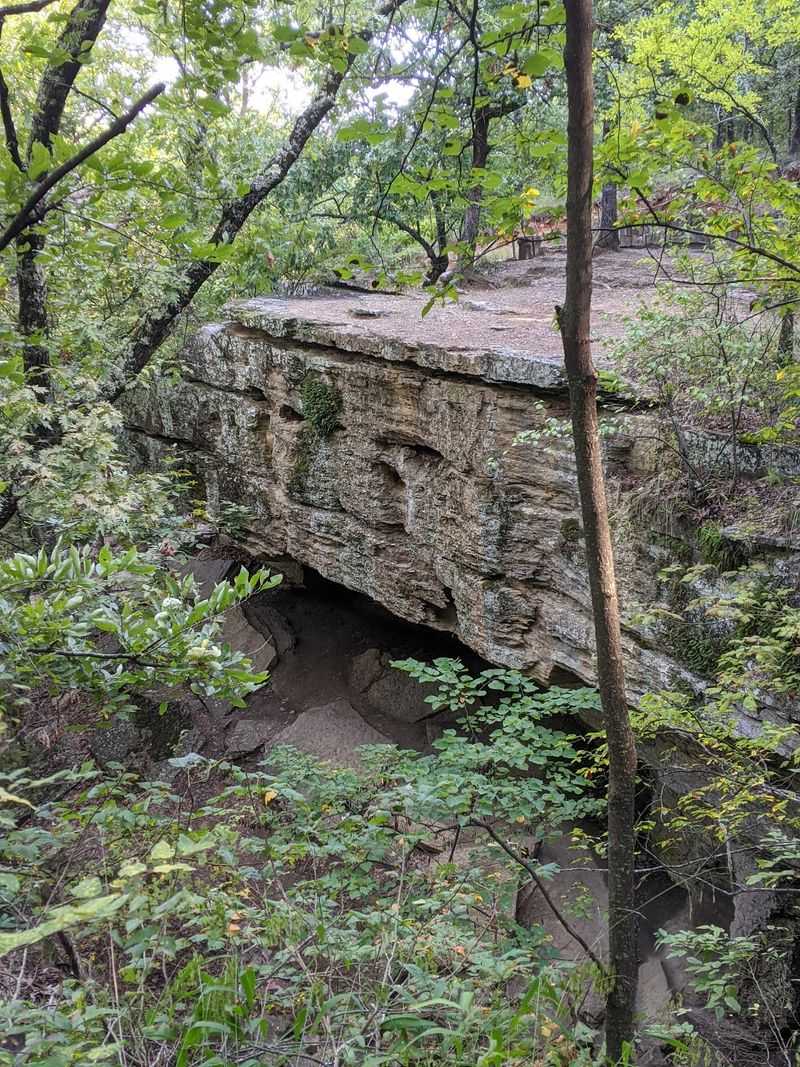
The canyon where the runestone sits feels genuinely ancient. Massive rock formations rise around the stone, and the air inside the canyon carries a cool, slightly earthy quality that contrasts nicely with the warmth of the surrounding forest.
Birds are audible everywhere along the trail, and the general soundscape is the kind of quiet that city dwellers rarely encounter.
A small waterfall runs through the park during wetter months, adding another layer of charm to the overall experience. Visitors who have come in winter report that the waterfall was still flowing even in near-freezing temperatures, which adds an unexpected reward for off-season hikers.
Rock formations and slab walls appear throughout the trail, creating natural photo opportunities that feel organic rather than staged. The terrain has a raw, unpolished character that gives the whole park an authenticity missing from more heavily developed attractions across the state.
Three Trails and the Terrain They Cover
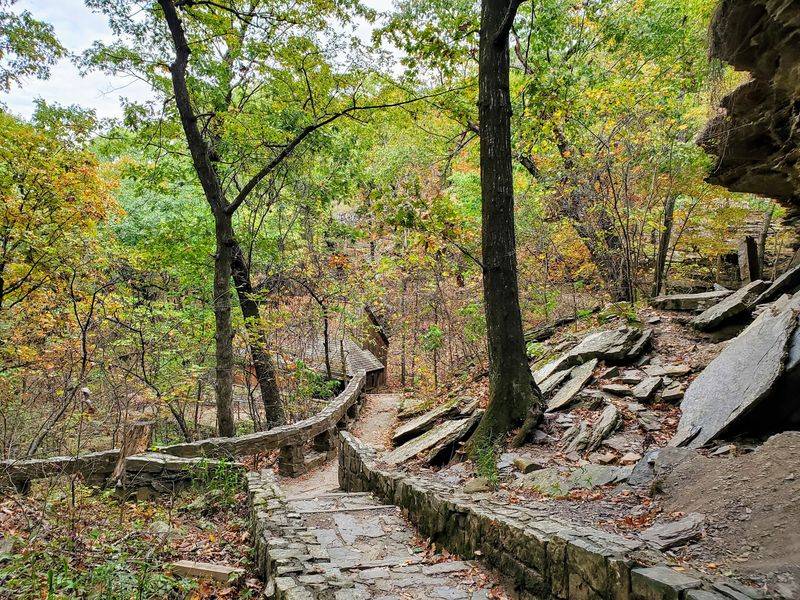
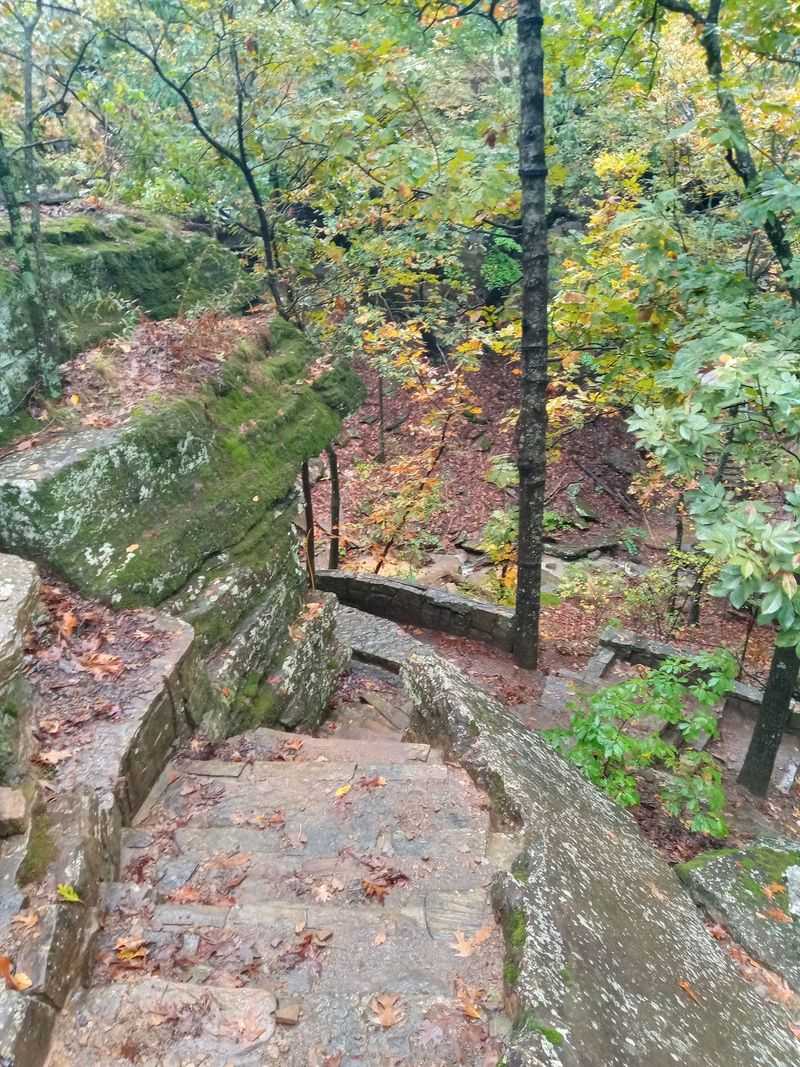
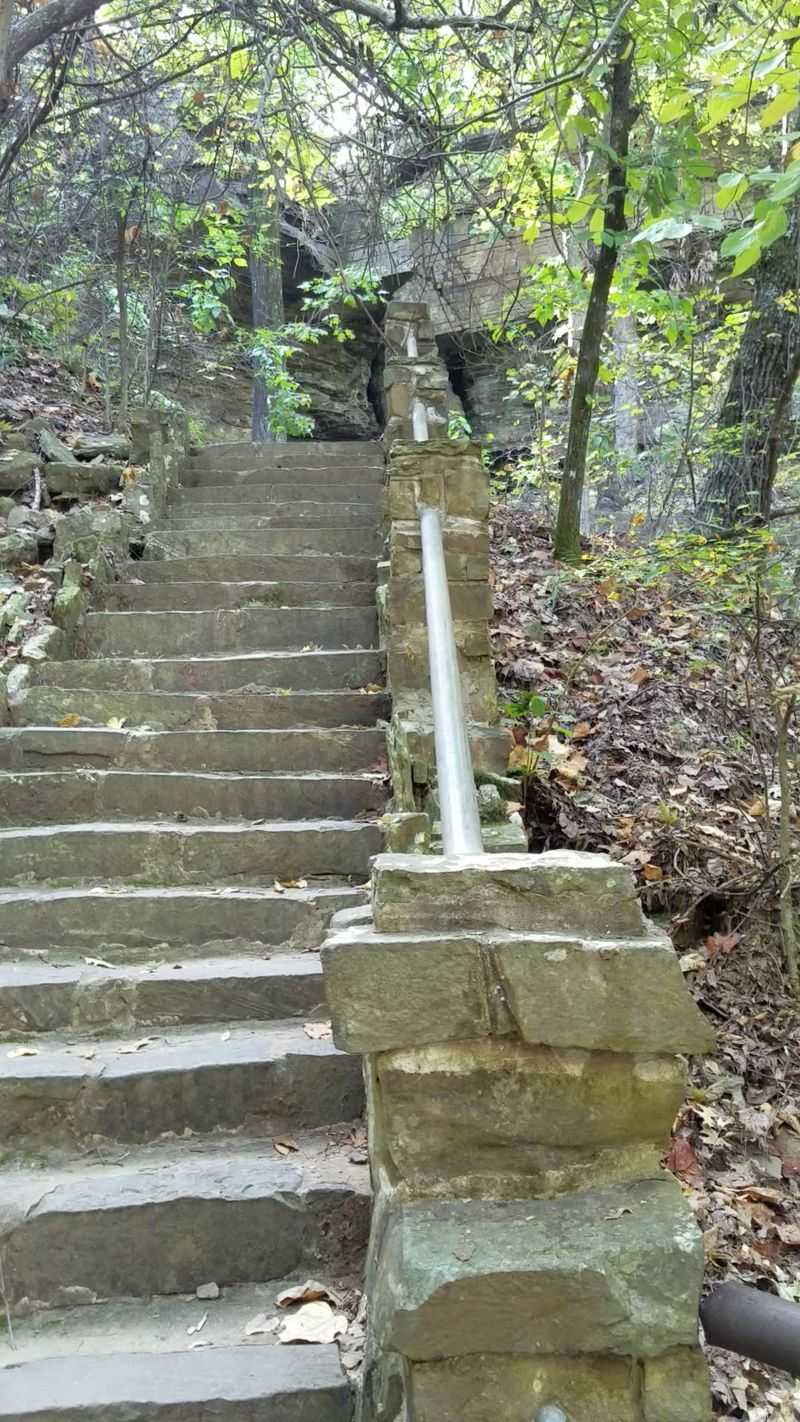
The park offers three walking trails of varying length and difficulty, giving visitors the flexibility to tailor the outing to their fitness level and available time. The main trail leading to the runestone is short but involves a moderately challenging set of stairs carved into the hillside, so comfortable footwear is genuinely worth thinking about before you arrive.
Beyond the primary runestone trail, the additional paths wind through rock formations, past small waterfalls, and along ridgelines that open up into surprisingly broad views of the surrounding forest. A few visitors have stumbled onto all three trails accidentally and reported that the happy mistake turned into the best part of the visit.
Trail surfaces are well-maintained throughout, with clear paths that are easy to follow even for first-time visitors. Dogs are welcome on the trails, which makes this a solid option for hikers who prefer four-legged company on their outdoor adventures.
The overall difficulty level sits in the moderate range rather than strenuous, making it accessible to most age groups. Kids who can handle stairs and uneven ground will find plenty to explore, and the natural cave-like rock formations along the route tend to capture younger imaginations in a way that no interpretive sign ever could.
Admission, Hours, and the Nonprofit Model Behind It All
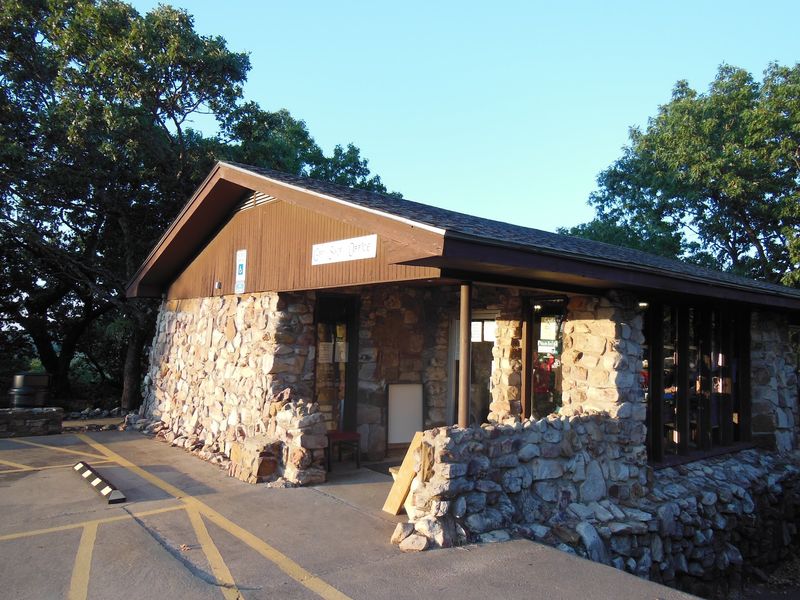
One of the most pleasant surprises at Heavener Runestone Park is the admission structure: trail access is completely free. The park operates as a nonprofit, relying on donations, gift shop sales, and community support to keep the grounds maintained and the lights on.
The park is open every day of the week from 9 AM to 5 PM, which gives visitors a solid window for a half-day outing without needing to rush. Arriving earlier in the day tends to mean cooler temperatures and quieter trails, especially during summer months when eastern Oklahoma humidity can make afternoon hikes feel more demanding than they look on paper.
The nonprofit status means the experience depends heavily on community goodwill, and that spirit shows up in small but meaningful ways throughout the park. Volunteers greet visitors warmly, share history freely, and genuinely seem invested in making every visit worthwhile.
Supporting the gift shop is a natural and easy way to contribute to the park’s continued operation. Purchases there go directly back into maintaining the facilities, and the shop stocks enough interesting Norse-themed items and local keepsakes to make browsing genuinely enjoyable rather than obligatory.
The phone number for the park is +1 918-653-2241 if you want to confirm conditions before making the drive.
The Gift Shop: Small Space, Big Personality
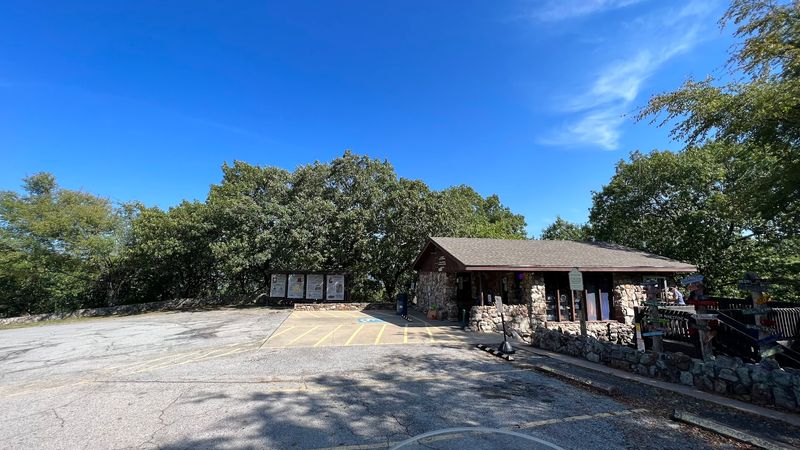
Right at the trailhead entrance, a compact gift shop serves as both the park’s welcome center and its most immediately charming feature. The shelves are stocked with Norse rune-related merchandise, books about Viking history and exploration, locally made keepsakes, and a handful of items that skew younger, including action figures that have delighted more than a few visiting kids.
The staff running the shop tend to be among the highlights of the visit for many people. Knowledgeable and unhurried, they share theories about the runestone freely and seem genuinely happy to talk history with anyone who lingers long enough to ask a question.
That kind of informal expertise is rare and worth appreciating.
Snacks and cold drinks are available at reasonable prices, which is a practical detail worth noting if you are arriving after a long drive through rural LeFlore County. The shop is small enough to browse in ten minutes but interesting enough to hold your attention longer if you let it.
For visitors who want to take a piece of the mystery home, the Norse rune merchandise offers a tangible connection to the story the stone tells, or at least the story it might be telling, depending on which theory you find most convincing by the time you leave.
Camping, Picnics, and Staying Overnight
Spending a single afternoon at Heavener Runestone Park is rewarding, but staying overnight turns the visit into something more memorable. The park offers primitive camping with no electricity or water hookups, which suits the rugged, off-the-beaten-path character of the place well.
RV sites are also available near the park grounds, giving travelers with larger rigs a workable option. Bathrooms and shower facilities are on-site and reported to be clean and well-maintained, which is not a guarantee at every primitive camping destination and genuinely appreciated when you find it.
Covered pavilions are scattered throughout the park, making them ideal for picnic lunches before or after hitting the trails. Fire pits add another layer of appeal for evening campers, and the surrounding forest creates a natural sound buffer that keeps the overnight experience genuinely peaceful.
A playground on the grounds means families with younger children have an additional reason to extend their stay beyond the runestone trail. The combination of hiking, camping, picnicking, and historical exploration in one location makes the park a surprisingly complete destination for a weekend trip rather than just a quick roadside stop.
The Overlook: Views That Earn the Climb
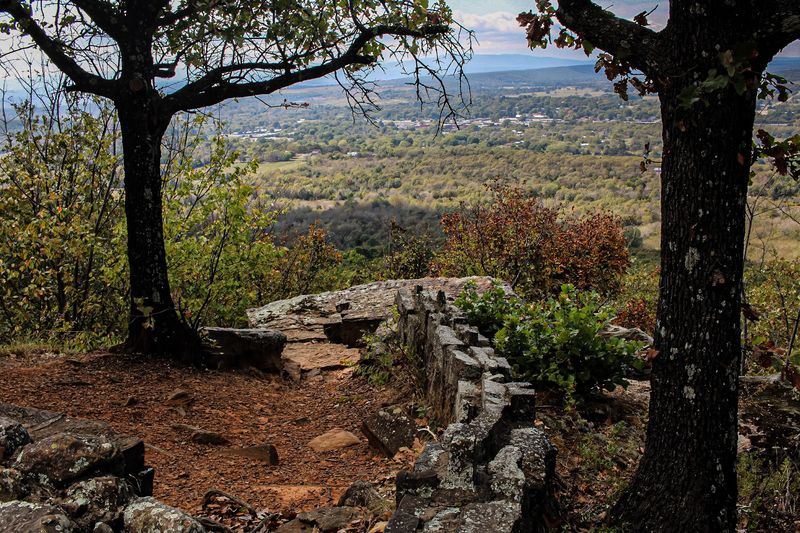
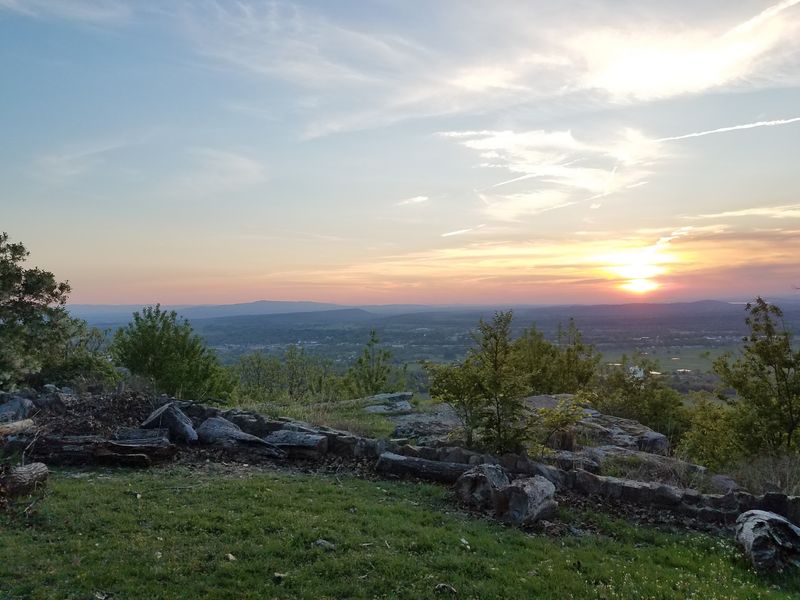
Near the upper parking area, a viewpoint rewards visitors who make the climb with a broad, unobstructed look across the forested hillsides of eastern Oklahoma. The Ouachita Mountain foothills roll out in every direction, covered in tree canopy that shifts color dramatically depending on the season.
Fall is widely considered the peak season for this view. When the hardwoods turn, the ridgelines above Heavener become a patchwork of deep red, orange, and gold that feels almost disproportionately beautiful for a state that does not always get credit for its foliage.
Spring brings a similarly lush but greener version of the same panorama.
A meditation bench positioned near the trail offers a quiet place to pause and absorb the surroundings without needing to justify the stop as anything other than enjoyment. That small, thoughtful addition says something about the character of the people who maintain this park.
Even in winter, the views carry their own appeal. Bare trees reveal rock formations and terrain contours that denser summer foliage hides completely, giving cold-weather visitors a different but equally valid version of the landscape.
The overlook alone would justify a return visit in a different season just to compare the two experiences side by side.
Wildlife and the Living Forest Around the Trail
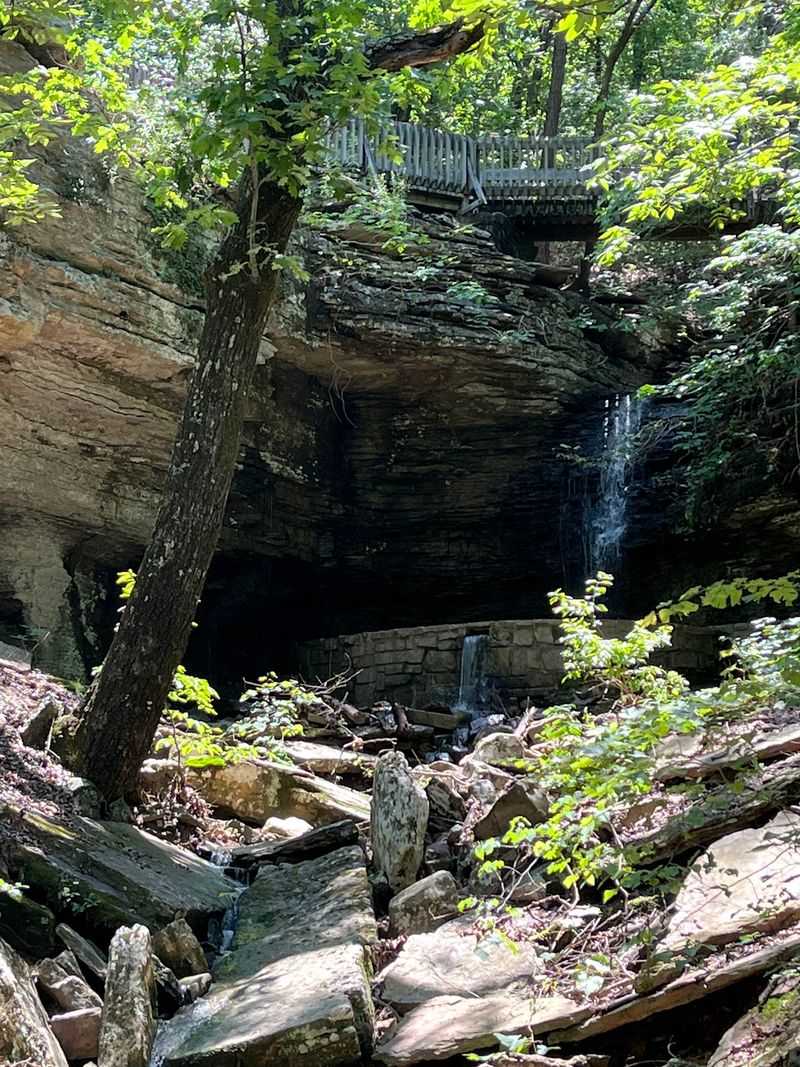
The trails at Heavener Runestone Park run through active, living woodland where wildlife encounters are a genuine possibility rather than a marketing promise. Armadillos are surprisingly common along the forest floor, and at least one visitor has photographed a baby armadillo on the trail, which is the kind of unexpected delight that turns a good outing into a great story.
Birds are audible throughout the park from the moment you step out of your car. The mix of hardwood forest, rocky canyon terrain, and open hillside creates a layered habitat that supports a wide variety of species.
Spring migration brings additional activity, and the birdsong during peak season gives the park an almost orchestral background quality.
The natural cave-like rock formations along the trails provide shelter for smaller animals and add visual texture to the hiking experience. Children seem particularly drawn to these features, and the combination of geology and wildlife keeps younger visitors engaged in ways that strictly historical sites sometimes struggle to achieve.
Eastern Oklahoma’s biodiversity tends to surprise visitors who associate the state primarily with flat plains and open prairie. The Ouachita foothills region around Heavener sits in a genuinely different ecological zone, and the trail through this park offers a solid introduction to what that difference actually looks and feels like.
The Annual Viking Festival and Seasonal Programming
Beyond the everyday trail experience, Heavener Runestone Park hosts an annual Viking festival that draws visitors from across the region. The event brings together vendors, costumed participants, and programming centered on Norse history and culture, turning the park into a lively gathering point for history enthusiasts and curious day-trippers alike.
The festival atmosphere tends to be communal and enthusiastic, with park staff and vendors creating a welcoming environment for attendees of all ages. Shuttle service from parking areas to the park grounds has been part of the festival logistics, which helps manage the larger crowds the event attracts.
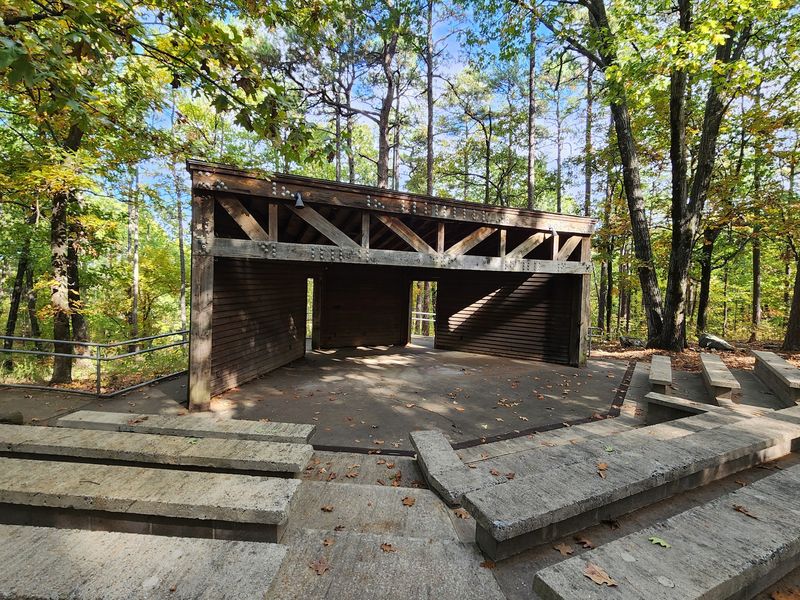
Programming at the park also extends to the amphitheater, an open-air structure on the grounds that provides a natural venue for presentations, performances, and community gatherings throughout the year. The amphitheater adds a versatility to the park that pure hiking destinations lack.
The gift shop stocks How to Train Your Dragon action figures alongside more traditional Norse merchandise, a detail that hints at the park’s willingness to engage younger visitors through pop culture connections to Viking history. That kind of playful accessibility keeps the park from feeling overly academic, which is exactly the right balance for a destination built around a genuinely unexplained mystery.
Who This Park Suits Best and Why It Travels Well
Heavener Runestone Park has an unusually broad appeal for a destination built around a single archaeological object. History buffs and archaeology enthusiasts will find the runestone and its interpretive signage genuinely satisfying, but the park also works just as well for casual hikers, families with kids, and road-trippers looking for something off the standard Oklahoma itinerary.
The free admission removes any hesitation about whether the stop is worth the detour, and the relatively short main trail means even visitors with limited time or mobility can reach the stone without a major physical commitment. Families with young children report that kids enjoy the climbing, the rock formations, and the general sense of outdoor adventure the park provides.
Solo travelers and couples also find the park rewarding. The quiet trails and meditative atmosphere make it an easy place to slow down and spend an hour or two without feeling rushed.
The meditation bench near the overlook suggests the park staff understands that not every visitor needs to be moving at all times.
Pet owners appreciate that dogs are welcome on the trails, which makes this a practical choice for travelers who bring their animals along on road trips. The combination of natural beauty, historical intrigue, and genuine accessibility gives this park a versatility that most single-attraction destinations simply cannot match.
Planning Your Visit: What to Know Before You Go
Heavener is located in LeFlore County in southeastern Oklahoma, roughly two hours southeast of Tulsa and about two and a half hours from Oklahoma City. The drive down is scenic, particularly once you enter the Ouachita foothills, so building in a little extra time to enjoy the approach is worth considering.
The park is open daily from 9 AM to 5 PM every day of the week. Arriving before noon gives you the best combination of cooler temperatures, good light for photography, and a less crowded trail.
Fall and spring are the most popular seasons, with fall offering the added bonus of peak foliage color across the surrounding hillsides.
Wear closed-toe shoes with good grip. The main trail to the runestone involves stairs and uneven stone surfaces that reward proper footwear and penalize flip-flops decisively.
Bringing water is a smart call regardless of season, especially if you plan to explore all three trails.
The park website at heavenerrunestonepark.com carries current information on events and conditions, and the staff can be reached at +1 918-653-2241 for specific questions. Whether you are a dedicated history traveler or simply looking for a genuinely different kind of Oklahoma afternoon, this small park in the Ouachita foothills delivers something that sticks with you long after the drive home.
Share this story