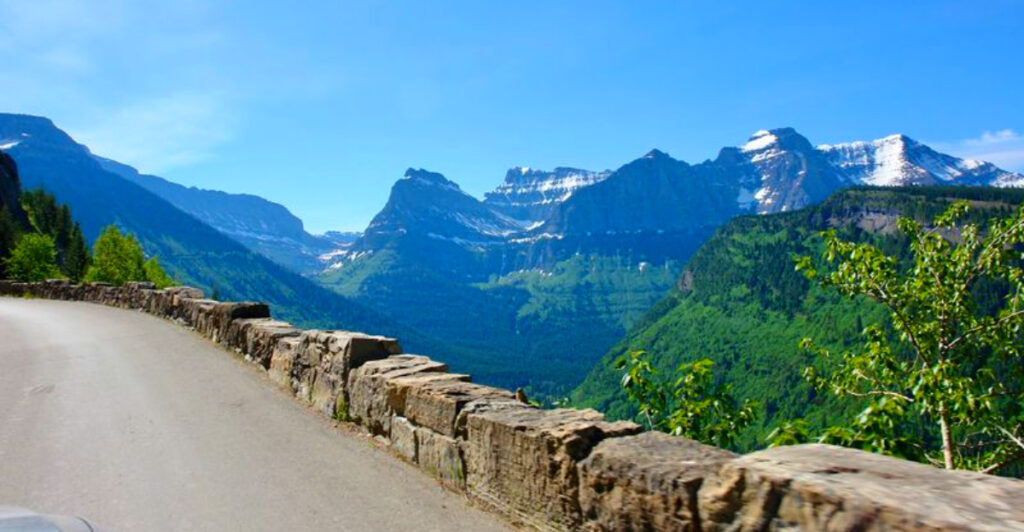
Montana has a secret that most people outside the American West have never fully appreciated: its mountains, lakes, and valleys look so much like Switzerland that even seasoned European travelers do a double-take. We are talking about turquoise glacial lakes, jagged alpine peaks, historic lodges built in Swiss chalet style, and mountain passes that belong on a postcard from Zurich. No passport required, no transatlantic flight, and no currency conversion headaches. The Treasure State packs an astonishing amount of European-style grandeur into one landlocked corner of the American Northwest.
Some of the places on this list were literally designed to look Swiss, while others just happened to grow that way naturally over millions of years of glacial activity. Whether you are a seasoned traveler or planning your first big mountain adventure, these 11 Montana destinations will make you question whether you really need to book that flight to Europe after all.
1. Whitefish, Montana
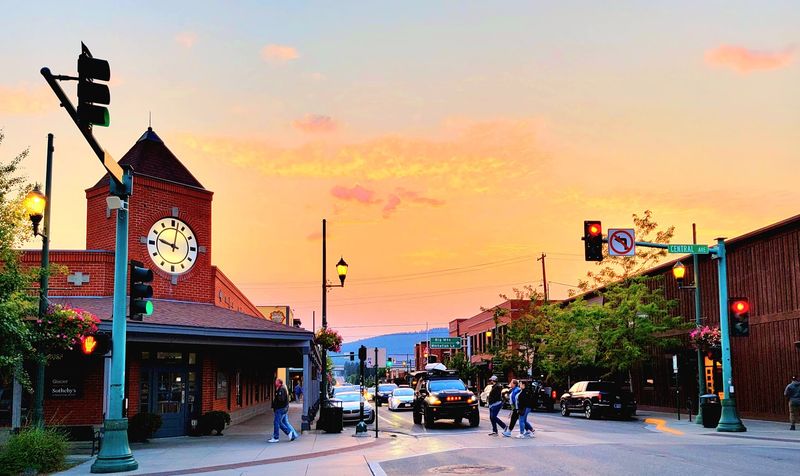
Long before Whitefish became a bucket-list mountain town, it earned its keep as a working logging community, and that blue-collar backbone still gives the place an authenticity that fancy resort towns often lack.
The Great Northern Railway Depot, with its meticulously restored chalet-style exterior, sits at the heart of downtown and looks like it was airlifted straight from the Swiss countryside. Victorian-era storefronts line the walkable main street, where independent cafes and local shops fill in the gaps between historic buildings.
Whitefish Lake stretches out just north of town, offering boating and paddleboarding in summer against a backdrop of forested peaks. The annual Whitefish Winter Carnival draws crowds with parades and community events that carry a distinctly festive, old-world energy. Few American towns this size pack this much mountain charm into such a compact, strollable package.
2. Whitefish Mountain Resort, Whitefish, Montana
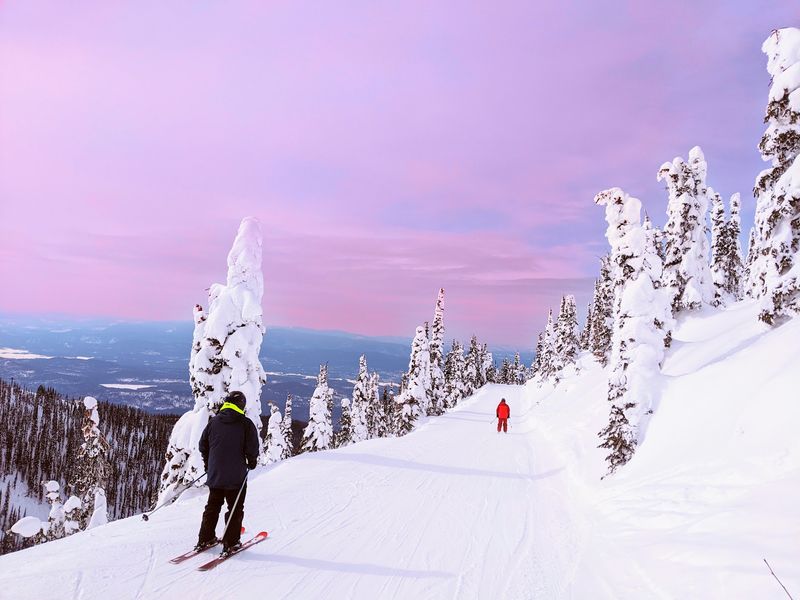
At 6,817 feet above sea level, the summit of Whitefish Mountain Resort delivers the kind of panoramic mountain views that make people forget what state they are in.
Winter turns the resort into a world-class ski destination with diverse terrain spread across 3,000 acres, covering everything from gentle beginner runs to steep expert chutes. The mountain receives an average of 300 inches of snowfall per year, which keeps conditions reliable throughout the season.
Summer brings a completely different crowd. Scenic chairlift rides reveal sweeping views of Glacier National Park’s distant peaks, while mountain biking trails and the Walk in the Treetops aerial adventure keep visitors busy from June through September. An alpine slide adds a playful twist for families. The resort’s high elevation and surrounding ridgelines create a genuinely alpine atmosphere that earns every Swiss comparison it receives.
3. Lake McDonald, West Glacier, Montana
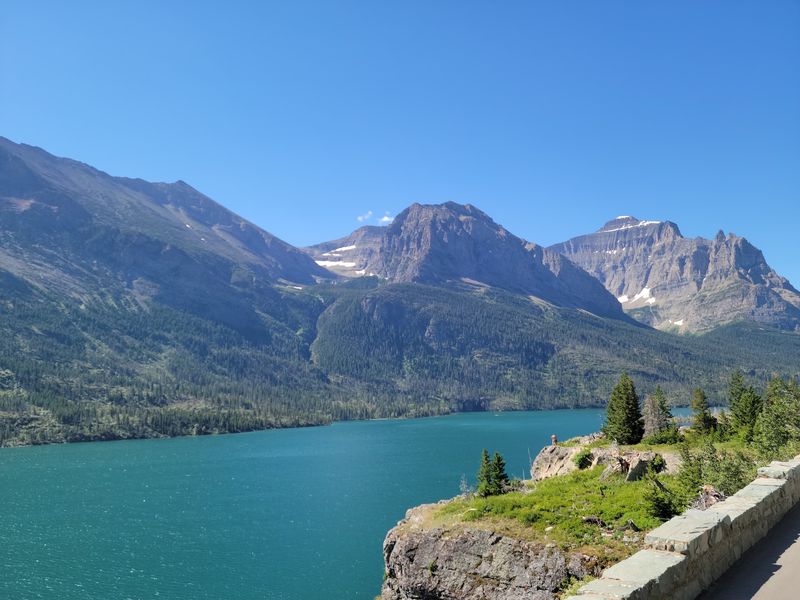
Beneath the surface of Lake McDonald lies one of North America’s most unusual geological displays: thousands of colorful pebbles in deep reds, vivid greens, and rich blues, formed from ancient argillite and siltite over 1.5 billion years ago.
The lake itself is the largest and deepest in Glacier National Park, stretching more than 10 miles in length, with visibility sometimes reaching 30 feet below the surface. On calm days, the surrounding forested mountains reflect across the water with such clarity that photographs look almost artificially symmetrical.
Kayaking along the shoreline offers an up-close look at the lake’s famous pebble beds, while scenic drives along the Going-to-the-Sun Road provide elevated perspectives of the whole valley. The combination of glacially clear water, colorful geology, and towering peaks creates a setting that Swiss alpine lake fans will find immediately familiar.
4. Logan Pass, Glacier National Park, Montana
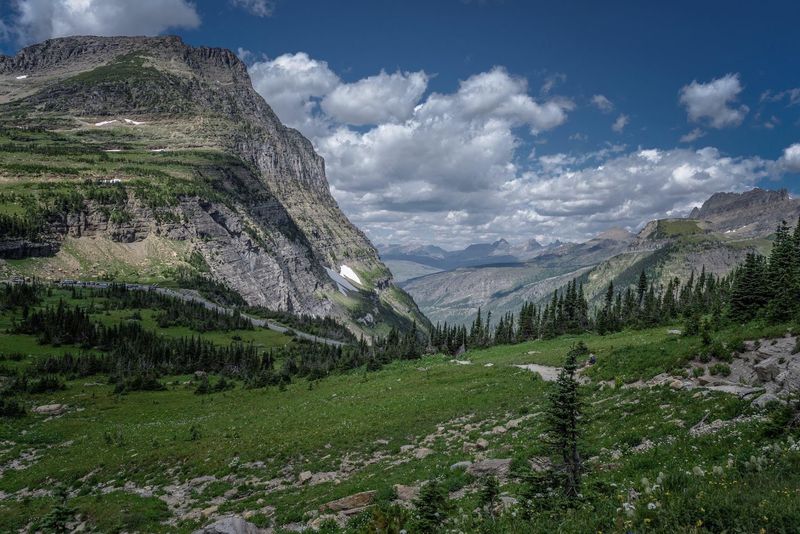
At 6,646 feet above sea level, Logan Pass marks the highest point on Going-to-the-Sun Road and sits directly on the Continental Divide, where the geology, wildlife, and weather all tell a dramatic story.
Mountain goats and bighorn sheep graze in the open meadows with a casual confidence that suggests they have absolutely no interest in making way for tourists. During summer, wildflowers blanket the slopes along the Garden Wall section of the Highline Trail, creating a natural display that photographers travel from across the world to capture.
The Hidden Lake Overlook Trail offers a boardwalk-assisted route accessible to most visitors, while the Highline Trail pushes along a cliff-side route with views that require a steady nerve and a charged camera battery. A geological quirk known as the Big Drift, located just east of the pass, can accumulate more than 100 feet of snow in a single winter, making the road’s opening each spring a genuine annual event.
5. Going-to-the-Sun Road, Glacier National Park, Montana
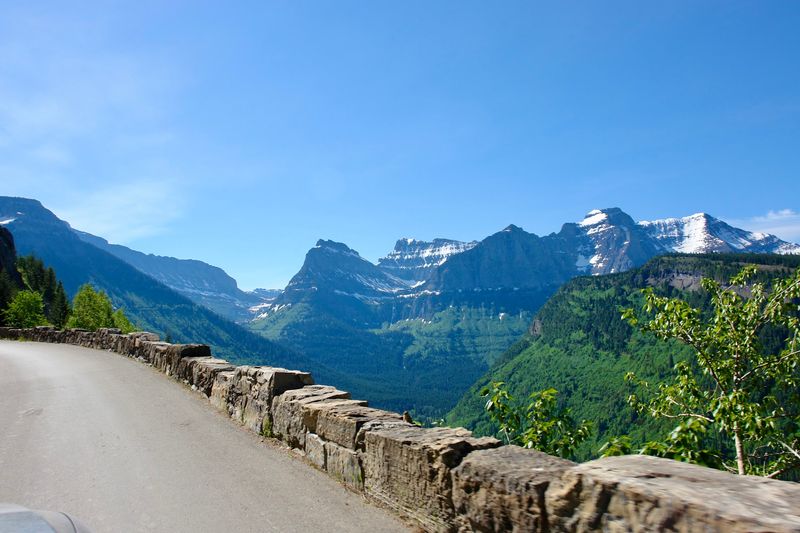
Fifty miles of pavement, twelve of which were literally blasted and chiseled into near-vertical mountainsides by hand crews using minimal powered equipment, makes Going-to-the-Sun Road one of the most impressive feats of early twentieth-century engineering in the country.
The road climbs from lush cedar groves near Lake McDonald all the way to the windswept ridgeline at Logan Pass, crossing the Continental Divide along the way. Waterfalls like Bird Woman Falls and the Weeping Wall appear at regular intervals, and alpine meadows open up as the elevation rises.
Recognized as both a National Historic Landmark and a Historic Civil Engineering Landmark, the road packs an extraordinary variety of mountain scenery into a single drive. European visitors who have toured famous Alpine routes consistently rank it among the world’s great scenic highways, and for good reason. Every overlook offers a different reason to stop the car and stare.
6. Many Glacier, Babb, Montana
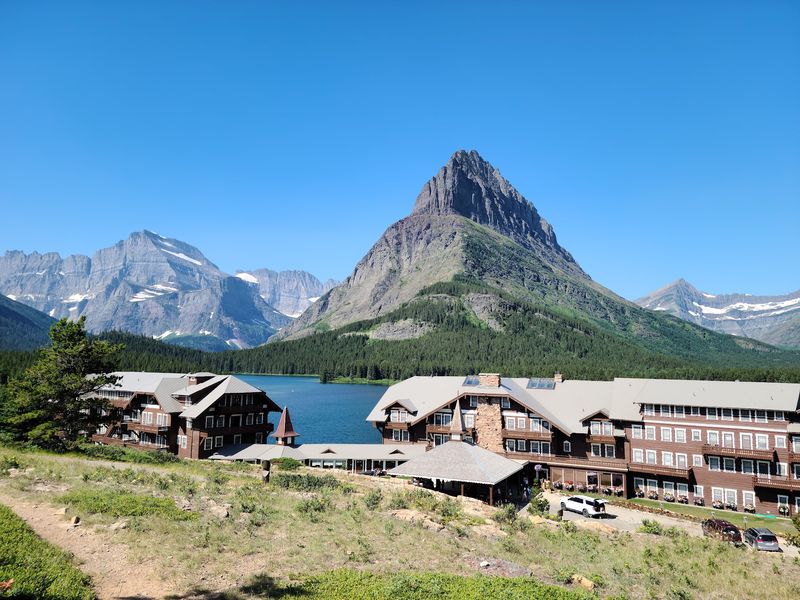
The Many Glacier area sits north of Going-to-the-Sun Road and requires a dedicated detour to reach, which is exactly why the crowds thin out and the scenery rewards those who make the effort.
Sharp peaks from the Lewis Mountain Range tower over turquoise lakes including Swiftcurrent Lake and Lake Josephine, where visitors can rent rowboats and canoes or join guided boat tours. The valley holds more than a dozen trailheads, including the Grinnell Glacier Trail, the Iceberg Lake Trail, and the Ptarmigan Tunnel Trail, each offering a distinct perspective on the area’s glacially carved terrain.
Wildlife sightings here are genuinely common, with grizzly bears, moose, mountain goats, and bighorn sheep all regularly spotted along the trails and on the surrounding slopes. Photographers and repeat visitors consistently rank Many Glacier as one of the most spectacular corners of any American national park, and the Alpine comparison comes up almost every time.
7. East Glacier Park Village, East Glacier Park, Montana
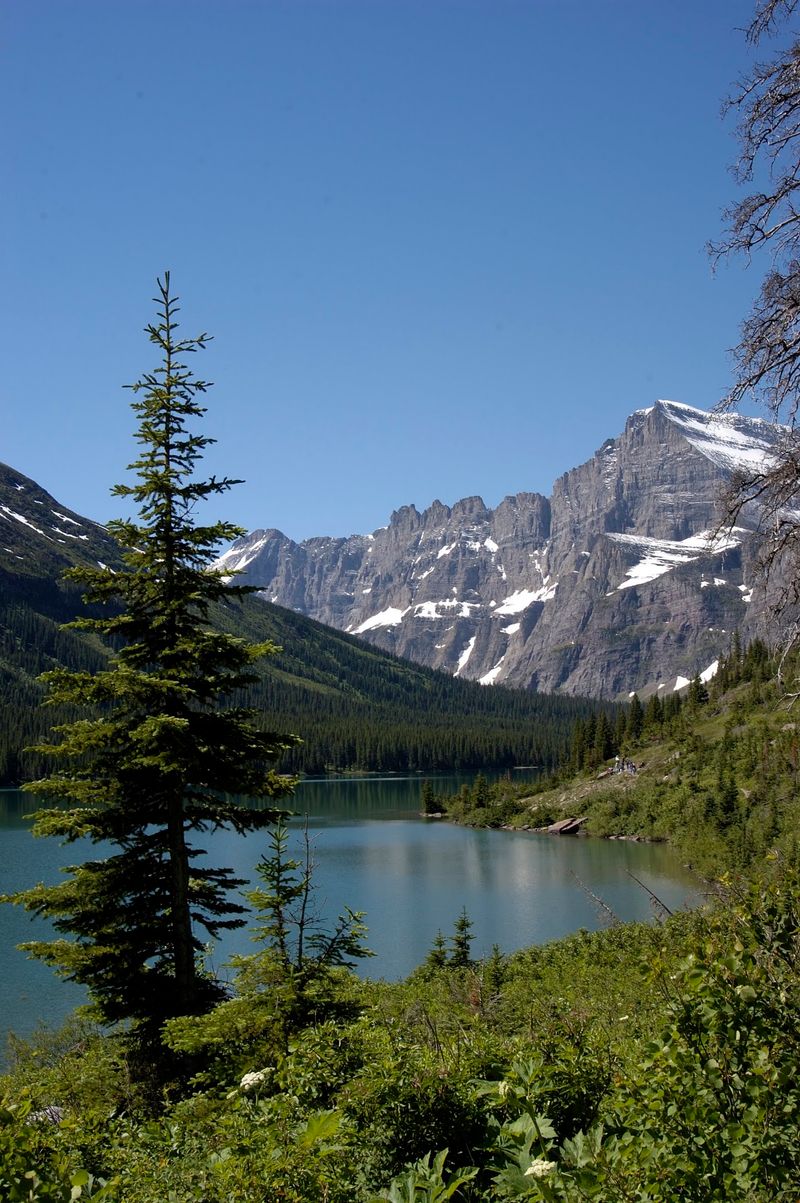
Glacier Park Lodge greets arriving train passengers directly across from the Amtrak station, a deliberate design choice by the Great Northern Railway that turned the act of arriving into an experience all by itself.
The lodge’s massive Douglas fir timber lobby, anchored by an immense stone fireplace, sets a tone of rugged grandeur that has welcomed mountain-bound travelers for over a century. The surrounding village operates at a pace that feels pleasantly unhurried, with locally run restaurants and outfitters providing a grounded, community-focused alternative to larger resort towns.
Open meadows stretch around the village, and the eastern face of the Rocky Mountains rises abruptly just beyond, creating a dramatic visual boundary between the Great Plains and the high alpine world. The area also carries deep cultural significance for the Blackfeet Nation, whose ancestral territory borders the park’s eastern edge. East Glacier serves as a natural base for exploring Two Medicine Valley and the park’s quieter eastern trails.
8. Two Medicine, East Glacier Park, Montana
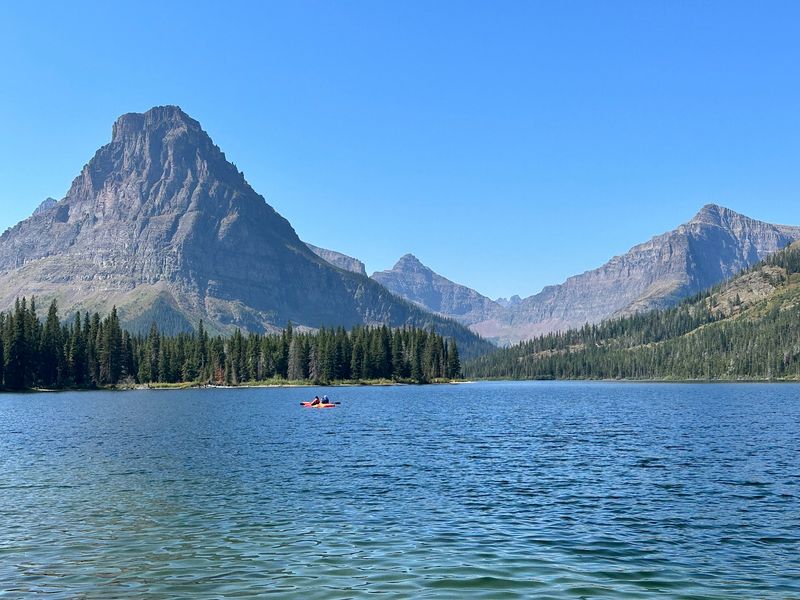
Two Medicine occupies the southeast corner of Glacier National Park and consistently flies under the radar compared to busier areas of the park, which is precisely what makes it worth the trip.
Two Medicine Lake stretches roughly two miles through a valley flanked by Rising Wolf Mountain and Sinopah Mountain, both of which reflect sharply in the water on calm mornings. Visitors can rent rowboats, kayaks, and canoes or join scenic boat tours that provide a relaxed way to take in the surrounding peaks.
Hiking options range from an easy walk to Running Eagle Falls, also called Trick Falls for its unusual dual-level cascade, to more demanding treks toward Upper Two Medicine Lake and Twin Falls. Bighorn sheep, mountain goats, and bears are regularly spotted along the trails. The overall atmosphere carries a quiet, unhurried elegance that brings to mind Switzerland’s less-visited alpine valleys, where the scenery does all the talking.
9. St. Mary Lake, St. Mary, Montana
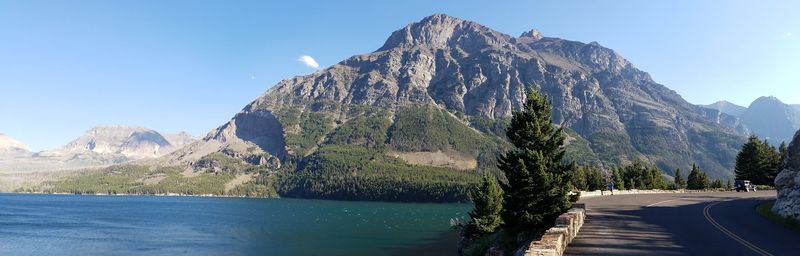
St. Mary Lake sits nearly 1,500 feet higher in elevation than Lake McDonald, and that altitude difference shows up immediately in the landscape, where the Great Plains abruptly give way to vertical Rocky Mountain terrain on the park’s eastern side.
The lake’s turquoise color comes from glacial flour suspended in the water, a fine sediment ground down by glacial movement that gives the surface a vivid, almost painted appearance. Wild Goose Island, a small rocky landmass rising from the center of the lake, has become one of Montana’s most photographed viewpoints and appears on countless park publications.
Going-to-the-Sun Road runs along the lake’s north shore, offering a series of pullouts where visitors can stop and take in views of Little Chief Mountain and the surrounding ridgelines. The lake rarely exceeds 50 degrees Fahrenheit, supporting healthy trout populations throughout the year. The combination of glacial color, dramatic peaks, and open water creates a scene that consistently draws comparisons to Switzerland’s most celebrated alpine lakes.
10. Big Sky, Montana
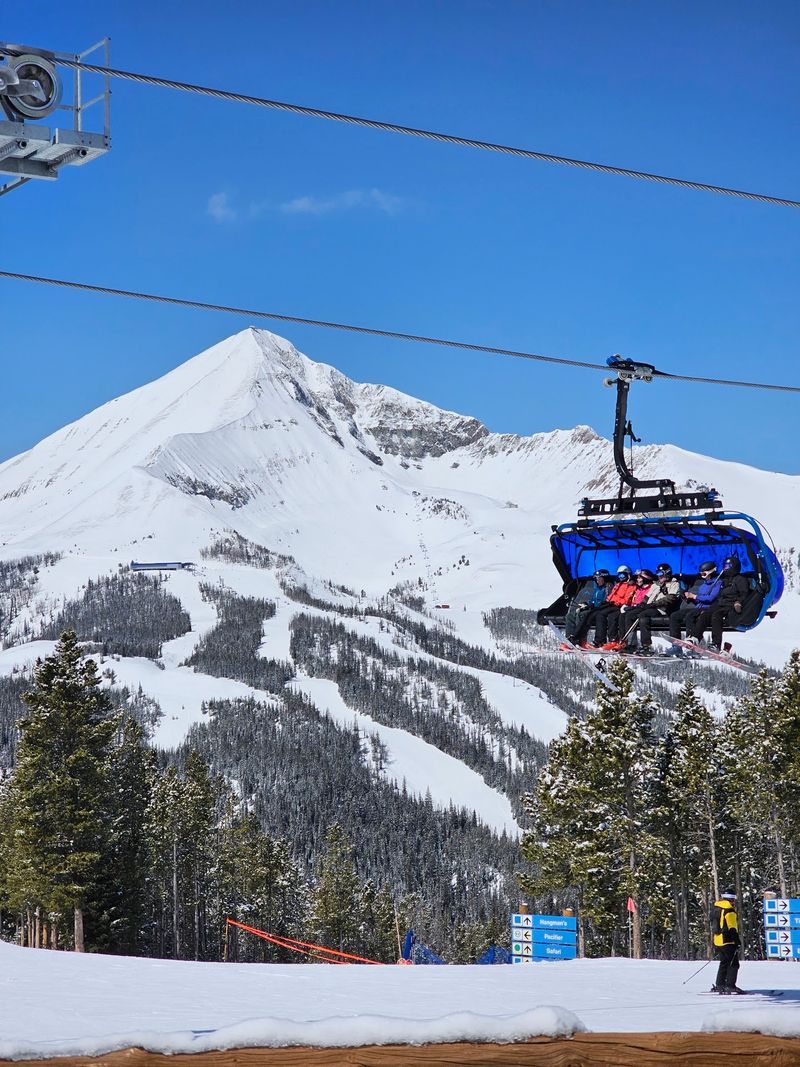
About an hour’s drive south of Bozeman, the road to Big Sky follows the Gallatin River through a winding canyon, and by the time the valley opens up, the Madison Range fills the horizon in a way that stops first-time visitors mid-sentence.
Snow covers the surrounding peaks through much of the year, and the combination of dense forests, clear rivers, and open mountain terrain gives the community a year-round alpine character that holds up across every season. Big Sky has grown into a full-service mountain community with restaurants, shops, and lodging options spread across several distinct neighborhoods connected by the surrounding landscape.
Summer brings hikers and mountain bikers out in force, while the Gallatin River attracts fly fishing enthusiasts from across the region. The pace of life here is genuinely relaxed, and the town’s layout encourages exploration rather than rushing. Travelers who have visited both consistently note that the landscape carries an effortless resemblance to Switzerland’s mountain valleys.
11. Sperry Chalet, Glacier National Park, Montana
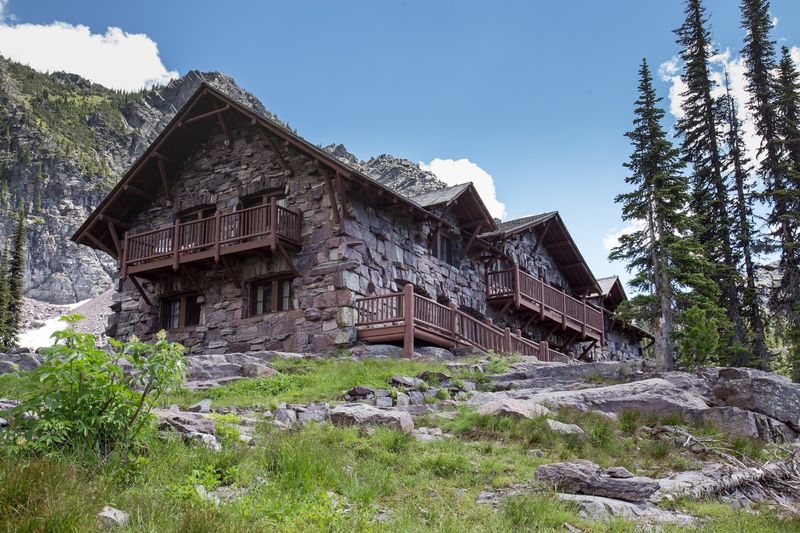
Getting to Sperry Chalet requires either a 6.5-mile hike from Lake McDonald Lodge or a longer 12.1-mile trek via the Gunsight Trail, and that journey through backcountry Glacier National Park is very much part of the experience.
Originally built in 1913 and 1914 by the Great Northern Railway, the chalet used stone quarried directly from nearby talus slopes and timber sourced from surrounding forests, giving it a construction character that feels rooted in its specific location rather than dropped in from elsewhere. Perched at 6,500 feet on the edge of a glacier-carved cirque, the two-story dormitory and separate kitchen and dining room buildings carry the unmistakable look of a classic European mountain refuge.
A wildfire in 2017 severely damaged the structure, but an ambitious reconstruction effort preserved the original design and historic materials, with the chalet reopening in 2020. Guests today enjoy comfortable lodging and hearty meals in the same rustic backcountry style that early visitors experienced over a century ago.
Share this story