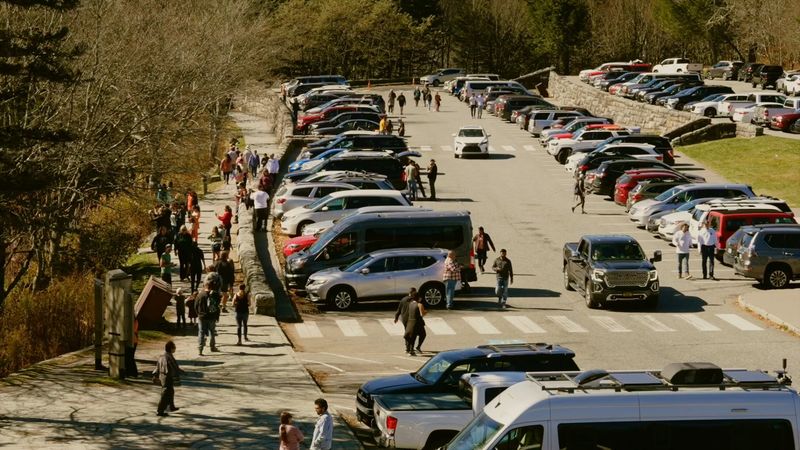
Mountain towns in western North Carolina draw big crowds during summer and fall, and one compact village keeps showing up at the center of resident parking complaints. Blowing Rock, a small community perched along the Blue Ridge, has documented parking strain backed by planning data and resident surveys – not just word of mouth.
Visitors and neighbors alike deserve a straight answer about when the pressure is real, what the numbers actually say, and how to plan a smarter trip.
Blowing Rock, Not Boone, Has the Clearest Documented Parking Pressure
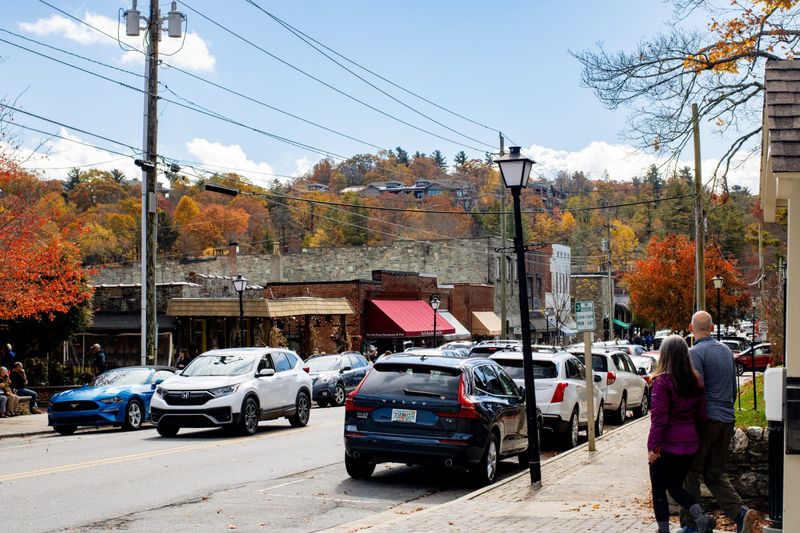
Every summer, the same argument plays out across western North Carolina: which mountain town has the worst parking? The short answer, backed by actual town research, is Blowing Rock – not Boone, not Asheville, and not some unnamed village your neighbor swears by.
A resident-sentiment study released in early 2026 found that Blowing Rock residents ranked parking, traffic, and congestion as their top tourism-related complaints, with many saying they simply avoid downtown on peak weekends, holidays, and during leaf season.
That finding matters because it comes directly from the people who live there year-round, not from a travel blogger passing through on a Tuesday. Residents described a pattern of peak-period overload rather than a constant, all-day, every-day gridlock.
The frustration is real and documented, but the evidence does not show that Blowing Rock is overwhelmed on a random Wednesday in February.
What the research does show is a town whose compact geography magnifies every surge in visitor activity. Blowing Rock’s walkable downtown sits on a relatively small footprint, which means even a moderate increase in cars can feel significant to someone trying to run a quick errand.
The tourism authority commissioned a sustainable tourism management plan specifically in response to resident concerns about over-tourism, including parking, pedestrian movement, traffic flow, and strain on local and natural resources.
The original headline framing – that locals are rushing there and neighbors can barely park – misreads the situation. Visitors are driving the surge, not residents.
And the parking difficulty is concentrated in documented high-demand periods, not spread evenly across the calendar. Blowing Rock is popular, tourism-dependent, and genuinely strained during its busiest stretches.
That is a fair and honest description of the problem.
The Downtown Parking Math Explains the Strain
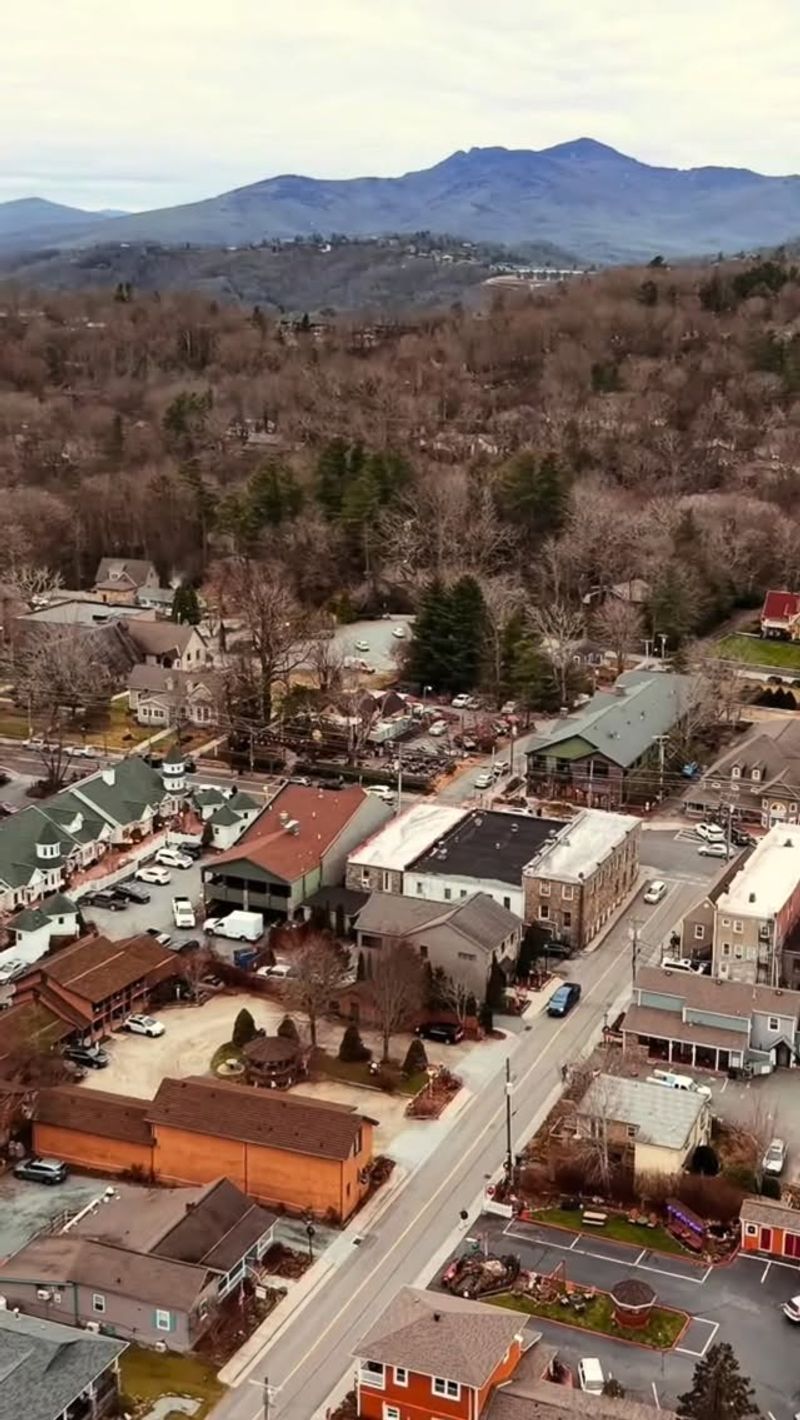
Numbers tell the clearest story about why downtown Blowing Rock can feel impossibly full on a busy Saturday. According to the town’s comprehensive plan, the downtown area has approximately 428 public parking spaces.
That sounds like a reasonable supply until you read the next line: employee-related demand alone was estimated at roughly 413 spaces before a single customer, visitor, delivery driver, or service worker is counted.
Run that math and the gap becomes obvious. The plan describes an estimated deficit of about 600 public parking spaces during periods of high demand.
Before anyone panics, that figure needs some unpacking. It is a modeled planning deficit, meaning it reflects a projected gap between supply and demand under high-load conditions – not a count of spaces that are physically unavailable to every visitor who shows up.
The 428-space figure also refers specifically to downtown public parking in the plan’s analysis, not every parking space throughout the wider town.
Think of it this way: the plan is essentially saying that on the busiest days, even if every employee found a space first, there would still be a substantial shortfall for everyone else. That is a meaningful infrastructure signal, not a guarantee that you will circle the block for an hour every time you visit.
Real-world outcomes depend on timing, how many people arrive at once, and whether you are visiting on a peak weekend or a quiet midweek morning.
The planning deficit figure is best understood as a flag that the town’s physical layout was not built for the volume of activity it now attracts during peak periods. Blowing Rock’s streets and lots were designed for a smaller, slower era of mountain tourism.
The math has simply outpaced the infrastructure during the town’s busiest stretches, and that gap is what residents experience firsthand when they cannot find a spot near their favorite shop in October.
Tourism Brings Revenue Along With Resident Frustration
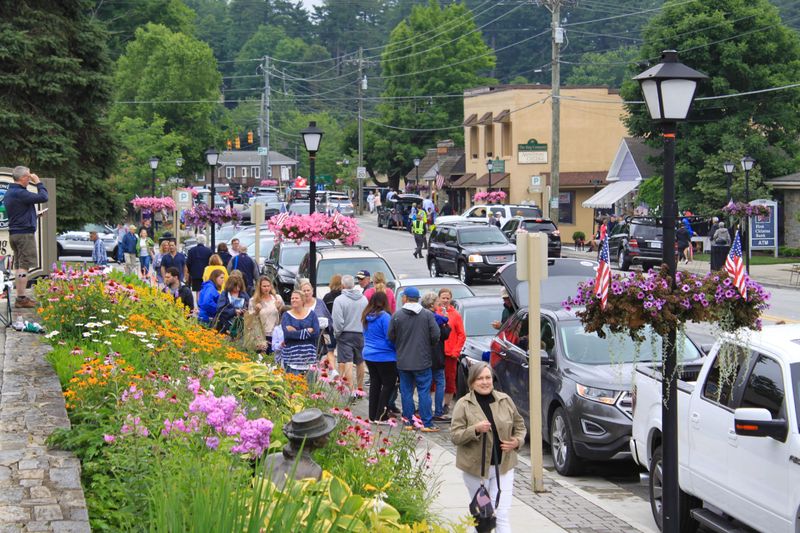
Parking complaints and economic prosperity are not opposites in Blowing Rock – they coexist, and understanding both is the only honest way to talk about the town’s situation. During fiscal year 2024-25, Blowing Rock reported $29.06 million in lodging sales and $1.74 million in occupancy-tax collections, according to the town’s local data and research page.
The broader overnight visitor-spending figure is estimated at approximately $87.2 million, using lodging as roughly one-third of total trip spending – but that is an estimate, not a directly measured total, and it should be treated as such.
Those numbers represent real jobs, real tax revenue, and real support for the restaurants, galleries, and outfitters that make Blowing Rock worth visiting in the first place. A town that loses its tourism base does not simply gain back its parking spaces – it loses the economic engine that keeps its downtown alive.
That tradeoff is exactly why local officials have moved carefully rather than simply capping visitor numbers or closing lots to day-trippers.
At the same time, the tourism authority’s decision to commission a sustainable tourism management plan signals that the town recognizes the friction is real. The plan was a direct response to resident concerns about parking, traffic flow, pedestrian movement, and pressure on local and natural resources – language that acknowledges congestion without declaring tourism a failure or visitors unwelcome.
The honest picture is a community that depends on visitors to fund its quality of life while also feeling the cost of that dependence most acutely on crowded fall weekends. Neither side of that equation cancels the other out.
Tourism is not destroying Blowing Rock, and residents are not uniformly opposed to visitors. They are navigating a genuine tradeoff that many beloved small towns along the Blue Ridge know well.
Peak Season Creates the Worst Parking Scramble
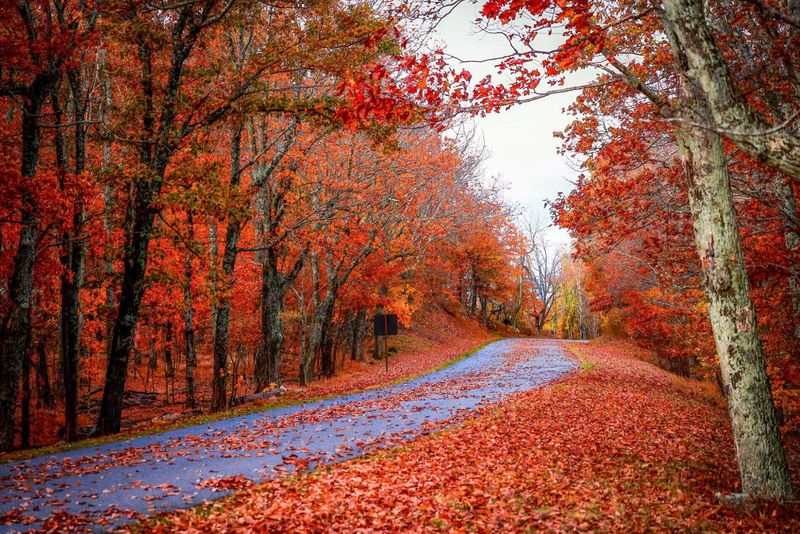
Knowing when to visit makes an enormous difference in Blowing Rock. The town’s own guidance is specific: summer and fall weekends, major holidays, and the height of leaf season are the periods when parking pressure is most acute.
A Saturday in mid-October during peak foliage is a fundamentally different experience from a Tuesday morning in early June, and treating those two days as equivalent sets visitors up for frustration.
According to Blowing Rock’s official parking guidance, arriving before 11 a.m. or after 5 p.m. significantly improves your chances of finding a space downtown. Weekdays are generally easier across the board for both parking and overall crowd levels.
That advice is practical, not just filler – the town is essentially telling you that the morning and evening windows are when supply and demand are most balanced.
Downtown public parking in Blowing Rock is generally free, which is genuinely unusual for a mountain destination of its profile. Some lots operated by local organizations during major event weekends may charge a small fee, so carrying a few dollars is a reasonable precaution.
Free park-and-ride shuttle service is available for selected major events, including Art in the Park, the July 4th weekend, and Christmas in the Park – but that service is event-specific.
Before building a shuttle into your travel plan, verify whether an official shuttle is actually operating for the specific date and event you intend to attend. The town does not run a continuous shuttle throughout the tourist season.
If you arrive expecting a park-and-ride and it is not scheduled that weekend, you will need a backup plan. Checking the town’s official parking page before you leave home takes about two minutes and can save a lot of circling.
Boone Offers a Comparison, Not Proof of the Headline
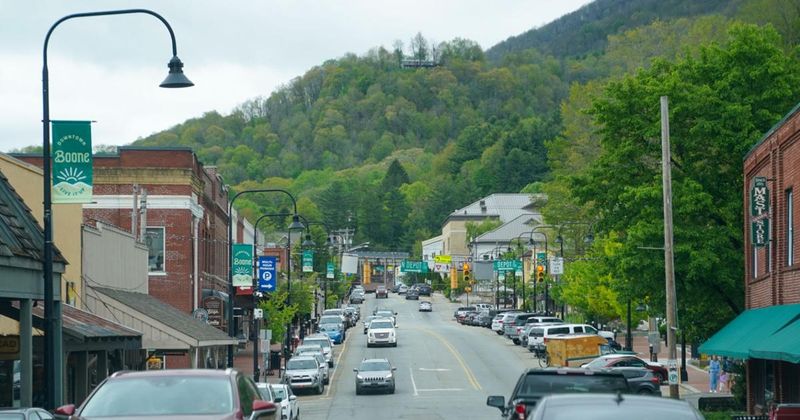
Boone gets named in mountain-town parking conversations almost as often as Blowing Rock, and for good reason – it is the region’s largest High Country city and home to Appalachian State University, which generates its own traffic patterns. But the parking evidence for Boone tells a different story than the one documented for Blowing Rock.
Boone’s official parking pages list 200 smart-meter spaces, 150 prepaid spaces, and 220 permitted spaces in the downtown area. Enforcement runs Monday through Saturday from 8 a.m. to 5 p.m., with posted rates generally at $1.50 per hour and some free short-term spaces available.
That is a structured, metered system with defined rules and enforcement hours – a sign of a town that has built formal parking management into its downtown operations. What Boone’s parking pages do not provide is the kind of resident-sentiment data or planning-deficit analysis that Blowing Rock has published.
The resident study identifying parking as Blowing Rock’s leading tourism complaint and the comprehensive plan’s estimated high-demand deficit give Blowing Rock a more concrete evidentiary foundation for the parking-pressure premise.
That does not make Boone uncrowded or guarantee an easy parking experience on a busy Mountaineer football weekend. Boone has its own peak-period pressures, especially around university events and summer tourism.
The comparison simply supports Blowing Rock as the better-documented answer to the original headline’s premise – not a declaration that Blowing Rock is North Carolina’s most congested mountain town overall, because no statewide comparative dataset exists to support that ranking.
Alternative Mountain Towns Deserve a Look—Without Uncrowded Promises
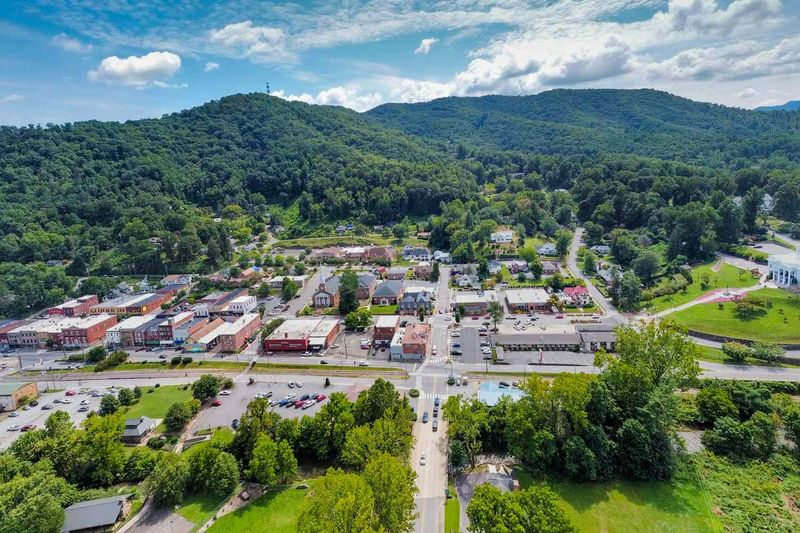
When Blowing Rock’s peak-season crowds feel like too much, the natural question is where else to go. Visit North Carolina has highlighted communities including West Jefferson, Burnsville, Spruce Pine, Sparta, Banner Elk, Sylva, Waynesville, and Brevard as alternatives or additional destinations beyond the region’s most heavily promoted mountain hubs.
Each of those towns has a distinct character, scale, and set of attractions worth exploring on their own terms.
West Jefferson, for instance, is known for its murals and Ashe County arts scene. Spruce Pine sits near gem mines and the North Carolina Museum of Minerals.
Waynesville has a well-developed Main Street with galleries and independent restaurants. Brevard is a gateway to Pisgah National Forest and carries a strong music culture.
None of those descriptions come with a guarantee of easy parking or thin crowds, especially during their own local festivals and peak fall weekends.
Burnsville offers the most measurable parking context of any town on that list. A planning document counted 508 downtown parking spaces and found peak demand generally between about 9 a.m. and 2 p.m., with average weekend occupancy in the study area running below full capacity.
That sounds reassuring, but the Burnsville comprehensive land use plan parking study was conducted during the COVID-19 period, when travel patterns were significantly altered. Using it as a direct, current comparison with Blowing Rock would be a stretch.
The most useful way to think about these alternatives is as different experiences rather than guaranteed escapes. A smaller town with a quieter main street may feel less overwhelming on a random weekend, but it can also fill up quickly during its own signature events.
Researching local festival calendars before you go is just as valuable for Sylva or Sparta as it is for Blowing Rock. Different scale, different vibe, and worth the drive – but approach each one with realistic expectations rather than a promise of solitude.
Plan for Legal Parking and Changing Parkway Conditions
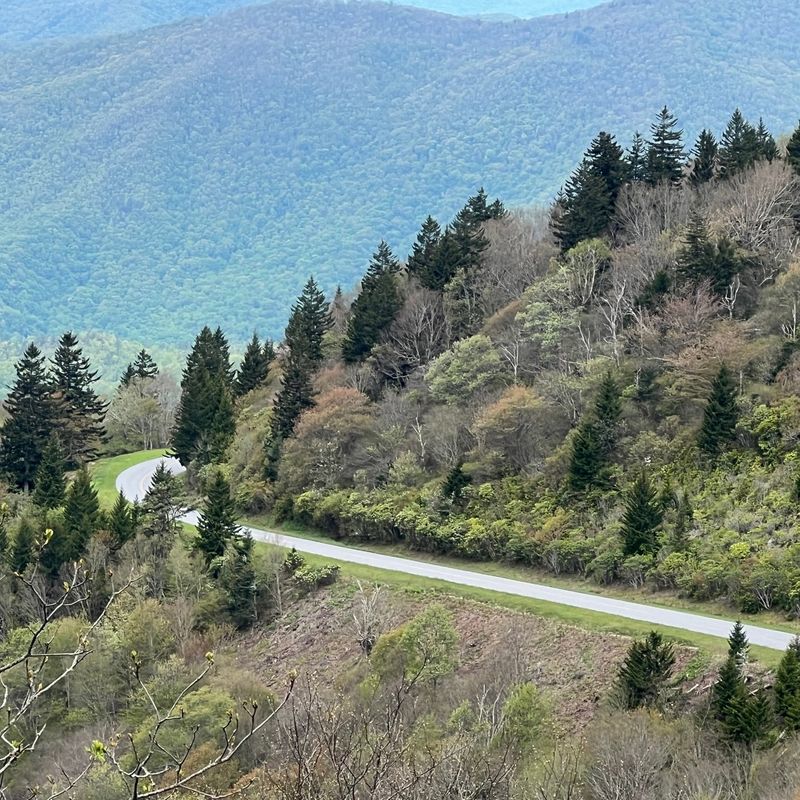
Good intentions do not substitute for a legal parking space. When downtown Blowing Rock fills up on a busy weekend, the temptation to pull onto a road shoulder or squeeze into an unmarked turnout can feel reasonable in the moment.
NCDOT is clear that parking on highways is prohibited, and North Carolina State Parks prohibit parking on roads or outside designated areas. Shoulder parking on a narrow mountain road also creates genuine safety hazards for cyclists, emergency vehicles, and other drivers navigating tight curves.
Stick to documented public lots, designated event lots, and officially announced shuttle services. The town’s parking and maps page is the right starting point for confirmed public options.
If you are counting on a park-and-ride shuttle, call ahead or check the town’s event calendar to confirm that service is running for your specific date – do not assume it operates every weekend throughout the season.
Before heading out on the Blue Ridge Parkway, check current conditions. The National Park Service road-status page lists active closures, and 2026 construction and hurricane-recovery projects remain active in parts of western North Carolina.
Weather, landslides, and ongoing recovery work can close sections without much advance notice, so verifying conditions the morning of your trip is a practical habit, not an overreaction.
On trails and at overlooks, follow NC State Parks Leave No Trace guidance: stay on designated trails, prepare for rapidly changing mountain weather, keep clear of cliff edges, and avoid unstable terrain. Planning ahead improves your experience and reduces pressure on the places that make a Blue Ridge trip worth the drive.
The Best Escape May Be Better Timing, Not Total Avoidance
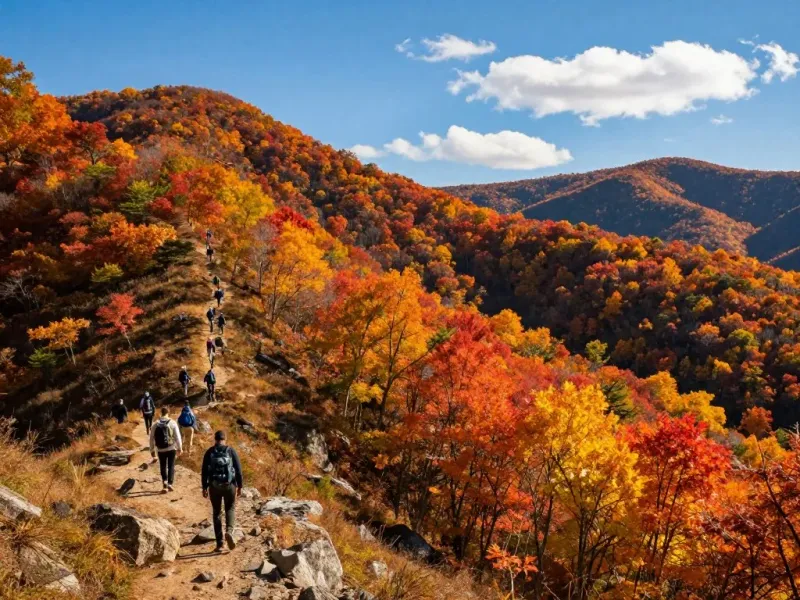
Blowing Rock faces documented, seasonal parking pressure during its busiest periods – that is a fair and honest conclusion supported by planning data and resident surveys. What the evidence does not support is writing the town off entirely or treating every visit as a guaranteed ordeal.
Tourism generates roughly $29 million in annual lodging sales for this small community, and the businesses, restaurants, and character that make Blowing Rock worth visiting depend on that activity continuing.
Two practical paths forward exist. The first is simply adjusting when you go: a weekday morning in late spring or early summer, or a visit timed before 11 a.m. or after 5 p.m. on a shoulder-season weekend, puts the odds of finding a legal downtown space much more in your favor.
The second is exploring one of the alternative mountain communities covered earlier – not because any of them are guaranteed to be quieter, but because North Carolina’s High Country has enough distinct small towns that spreading visits around is genuinely rewarding on its own terms.
Neither choice comes with a parking guarantee, and no amount of planning eliminates the possibility of a crowded lot on a beautiful October Saturday. The town’s own data shows the pressure is real but seasonal – which means the window for a manageable visit is wider than the busiest weekends suggest.
If you know a quieter corner of the High Country that still has open spots on a fall weekend, your neighbors would probably love to hear about it.
Share this story