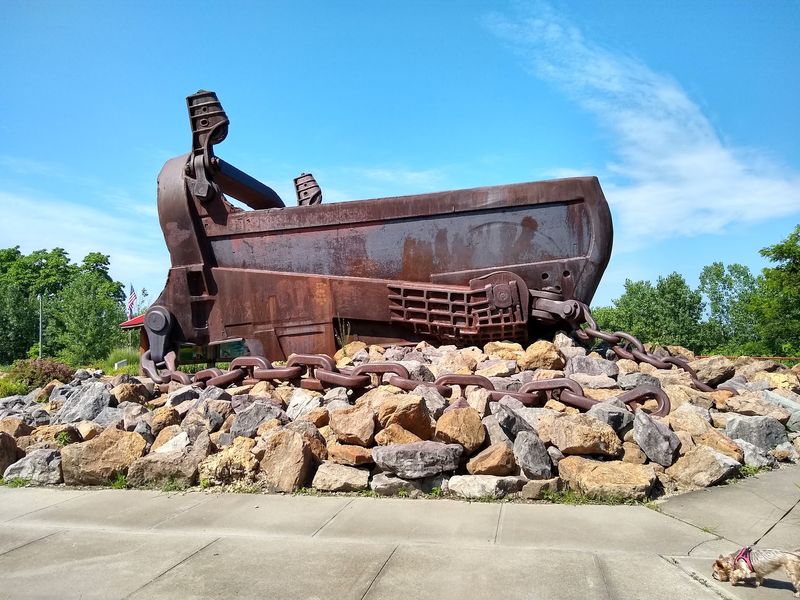
Somewhere along the winding curves of OH-78 in Morgan County, a rusted steel giant sits quietly in a meadow, waiting to stop you cold. The Big Muskie Bucket is the sole surviving piece of what was once the largest earth-moving machine ever built, and it is so enormous that a full marching band once performed inside it.
Ohio has no shortage of roadside surprises, but few carry the weight of industrial history the way this one does. Whether you are a history buff, a heavy-equipment enthusiast, or simply someone who loves a good “wait, that is really in Ohio?” moment, this stop delivers every time.
Where the Bucket Lives and What It Actually Is
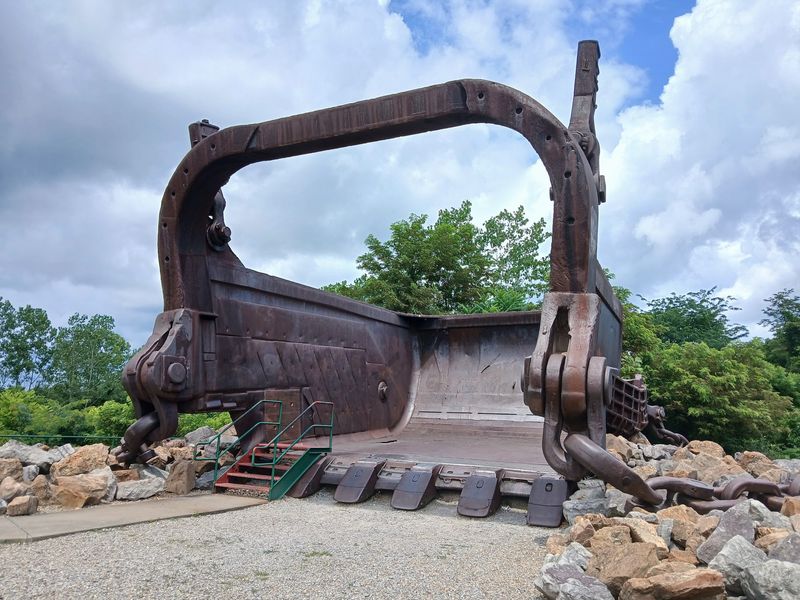
Miner’s Memorial Park sits at 4470 OH-78, McConnelsville, OH 43756, tucked inside the broader Jesse Owens State Park area in Morgan County. The address is easy to plug into a GPS, but no coordinates quite prepare you for what you see when the tree line breaks and that enormous steel structure comes into view.
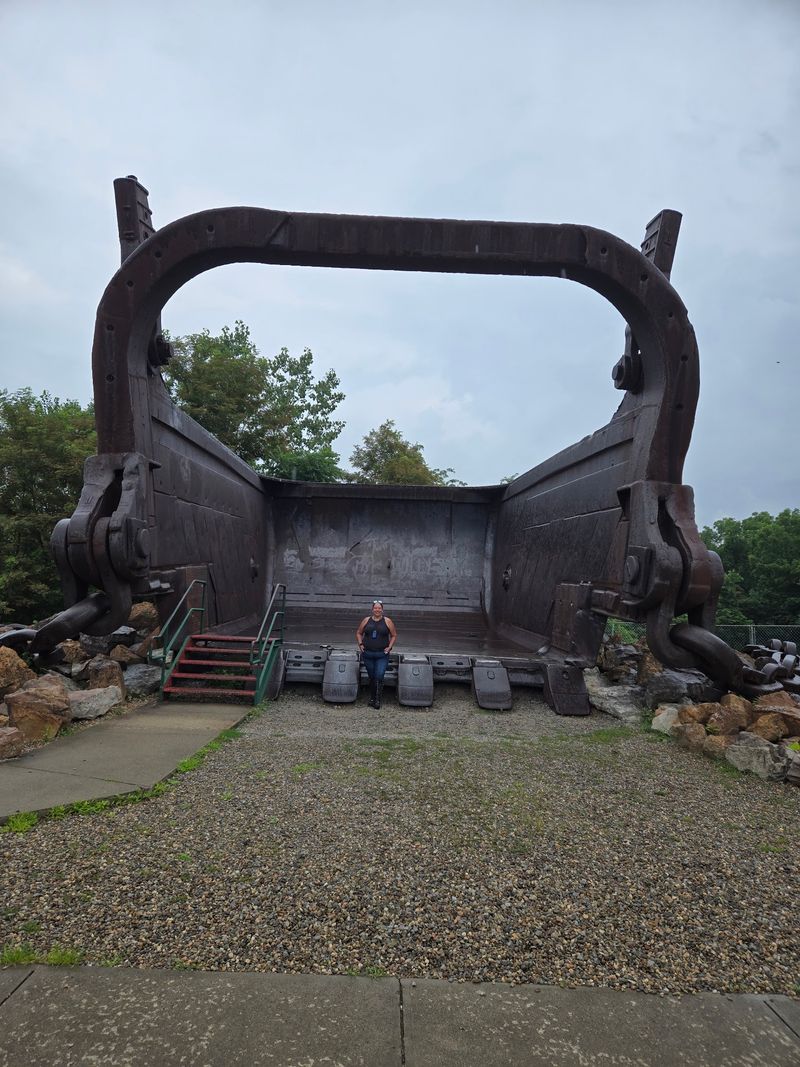
The Big Muskie Bucket is the only remaining piece of the Big Muskie, a walking dragline excavator that the Muskingum Mining Company operated from 1969 to 1991 in the coal fields of southeastern Ohio. When the machine was still intact, it held the record as the largest land vehicle ever built.
The rest of the machine was scrapped in 1999, but the bucket was saved and placed here as a permanent monument to the region’s coal-mining heritage.
Managed by the Ohio Department of Natural Resources, the park is free to enter and open to the public year-round. Parking pulls right up next to the bucket, making it accessible to visitors of every age and mobility level.
You do not have to hike a trail or climb a hill to get your first look at this thing.
The Road Getting There Is Half the Adventure
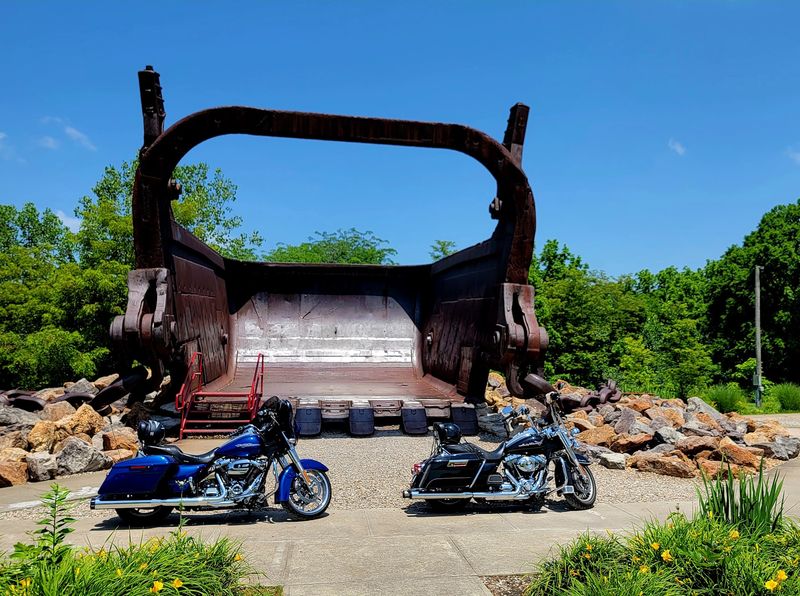
OH-78 through Morgan County is the kind of road that makes you forget you ever owned a highway. The pavement rises and dips through forested ridges, curves around creek hollows, and delivers long views of open farmland before plunging back into the trees.
Motorcyclists have caught on in a big way, with the route earning a devoted following among riders who treat it as a destination in its own right.
Driving it in a car is its own reward. Families with kids often compare the rolling hills to a slow-motion roller coaster, the kind where the scenery does the work.
The road demands your attention, which is actually a feature rather than a flaw. You stay present, you notice things, and by the time you arrive at the park, you already feel like you have been somewhere.
The surrounding landscape is southeastern Ohio at its most honest: wooded, hilly, and quietly beautiful. Cambridge sits roughly 30 miles to the northwest, making the bucket a natural add-on to any drive through the region.
Budget time for the road itself, not just the destination.
The Machine Behind the Myth
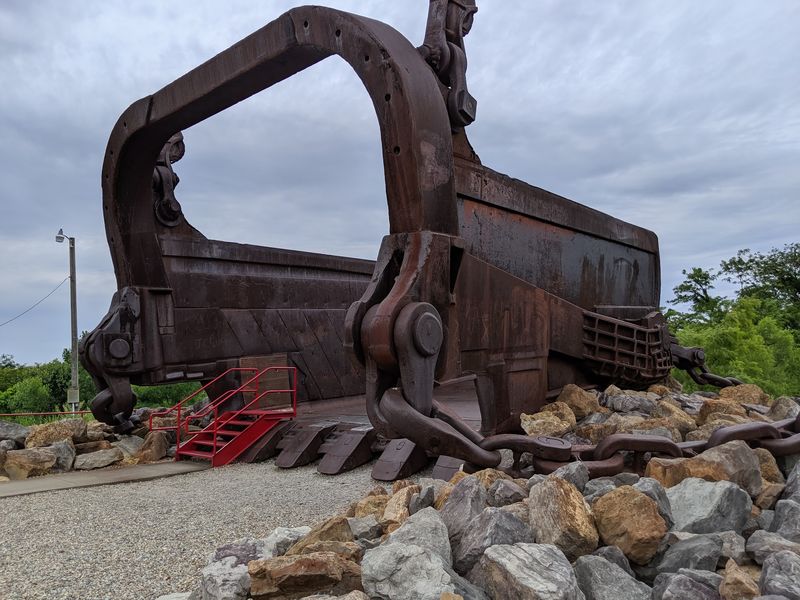
The Big Muskie was not just large. At peak operation, it weighed roughly 27 million pounds and stood about 22 stories tall.
The boom alone stretched 310 feet. Moving under its own power on giant steel “feet” that walked it across the landscape, the machine consumed a staggering amount of electricity and required a crew of trained operators to run around the clock.
Muskingum Mining Company commissioned the excavator to strip-mine coal from the rolling terrain of Morgan and Muskingum counties. The machine worked the Muskingum Mine for over two decades, removing overburden, the layers of earth and rock sitting above coal seams, so that the coal could be extracted below.
The scale of what it moved is genuinely difficult to process.
When coal prices softened and the economics of strip mining shifted in the early 1990s, the Big Muskie was idled. Efforts to find a buyer or preserve the whole machine fell short, and most of it was sold for scrap.
The bucket survived only because a coalition of local historians and preservationists pushed hard enough to keep it. Standing next to it today, you feel the weight of that decision.
The Bucket’s Numbers, and Why They Stun You
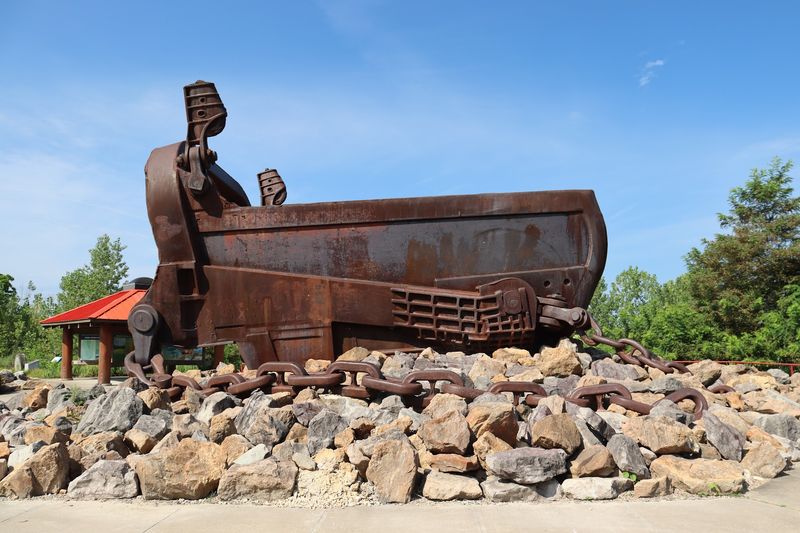
Raw dimensions do more work here than any photograph can. The Big Muskie Bucket measures 220 tons empty and holds approximately 325 cubic yards of material when full.
To put that into everyday language, a single scoop could swallow two Greyhound buses side by side with room to spare. A full marching band performed inside it, and that fact never gets old no matter how many times you hear it.
The chain links attached to the bucket are themselves the size of small cars. Standing at the base of the bucket and looking up at those links is the moment most visitors go quiet.
The scale stops being a statistic and becomes something physical, something you feel in your chest rather than calculate in your head.
Photos genuinely fail this place. Every review, every social media post, every travel write-up circles back to the same observation: you have to stand next to it.
The camera flattens the perspective and strips the experience of the thing that makes it worth the drive. Plan to spend real time here rather than a quick snapshot and a U-turn.
Walking Inside a Piece of Industrial History
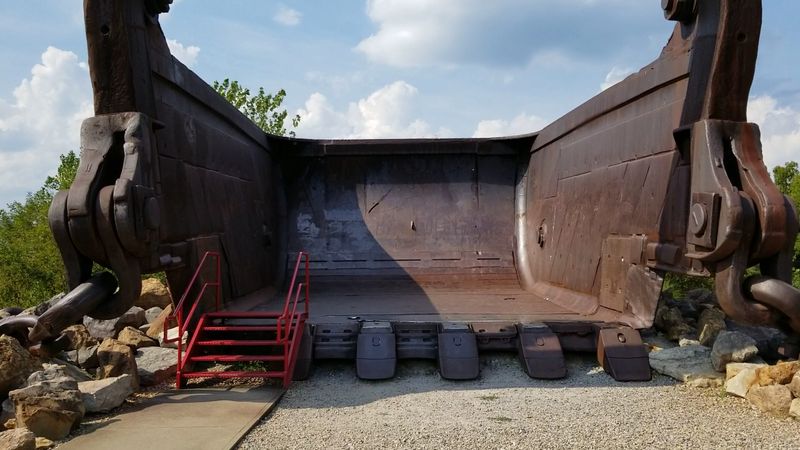
One of the quieter surprises of the visit is that you can walk inside the bucket. There is no velvet rope, no timed entry, no ticket window.
You simply walk up and step through the opening. The steel walls close in around you and the sound of the park drops away, replaced by a low metallic resonance that reminds you exactly what this thing is made of.
Inside, the scale shifts again. The curved steel floor and towering walls give the interior the feel of a small industrial cathedral.
Kids tend to go wide-eyed. Adults tend to go quiet.
Heavy-equipment operators and anyone who has ever worked around large machinery often linger the longest, running hands along the welds and trying to reconstruct in their minds how something this size actually functioned.
The experience is completely free and requires nothing more than comfortable shoes and a willingness to look up. Some visitors have noted graffiti and carving on the interior walls, which is a genuine shame for a structure this historically significant.
The surrounding park and bucket exterior remain well maintained, and the Ohio DNR has been working on improvements including a new visitor center near the site.
Educational Displays and the Story They Tell
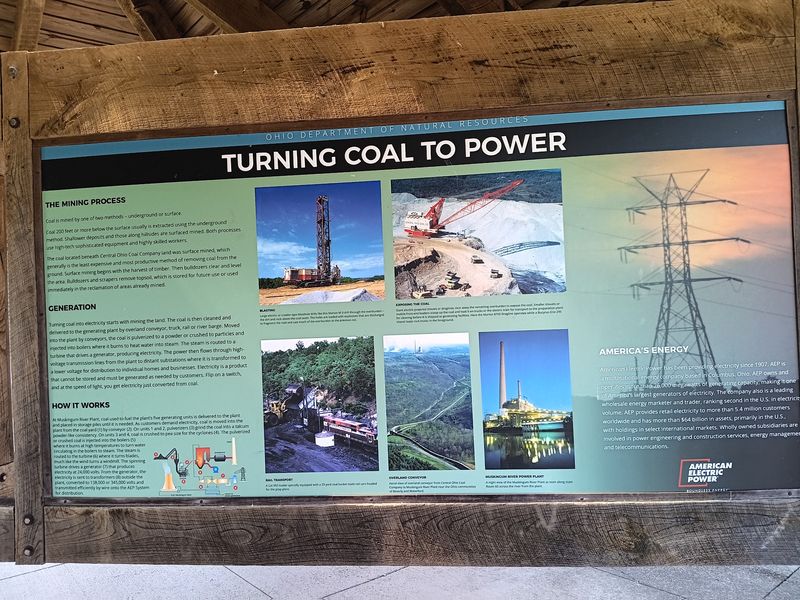
The park does not just drop a giant bucket in a field and wish you luck. A series of educational boards surrounds the site, walking visitors through the history of coal mining in southeastern Ohio, the engineering behind the Big Muskie, and the lives of the workers who operated and maintained it.
The writing is accessible without being dumbed down, and the photographs are genuinely arresting.
One of the recurring themes across the displays is reclamation. After strip mining operations ended, the land was carefully restored.
What looks today like rolling wooded hills and open meadows was once an industrial moonscape. The transformation is remarkable, and the displays give enough context to appreciate just how much work went into returning the landscape to something livable and beautiful.
There is also a dedicated tribute to the miners themselves, acknowledging the skill, labor, and community that powered this industry for generations. For families visiting with children, the boards offer natural conversation starters about energy, land use, and industrial history.
For adults who grew up in coal country, the displays carry a more personal resonance. Either way, they reward the time it takes to read them.
Reclaimed Land and the Landscape Around It
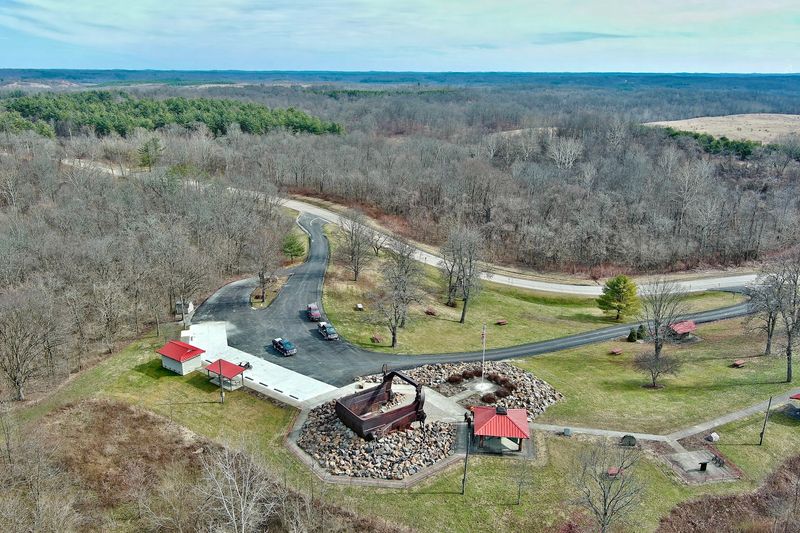
One of the most quietly powerful aspects of the visit is looking out at the surrounding terrain and knowing what it used to be. The land around the Big Muskie Bucket was part of an active strip mine for decades.
Today it is green, wooded, and genuinely peaceful, part of the broader Jesse Owens State Park system that covers thousands of acres in Morgan County.
The reclamation work here stands as one of Ohio’s more impressive environmental turnarounds. Regulations passed in the late 1970s required mining companies to restore stripped land to its approximate original contour, and the results in this part of the state are striking.
Lakes formed in old mining pits now support fishing and wildlife. Forests have grown back.
The land breathes again.
Standing at the bucket and scanning the horizon, you get a layered sense of time: the industrial past embedded in the steel structure in front of you, the restored present spreading out in every direction, and a future that has largely erased the visual evidence of what happened here. The bucket is the one thing that refuses to let you forget.
Wildlife, Wildness, and What Else You Might See
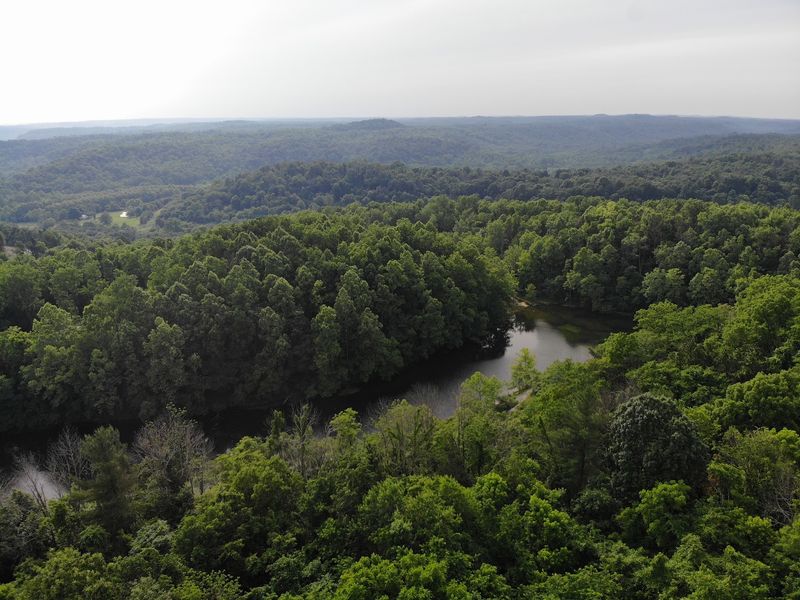
The park’s setting in southeastern Ohio means the wildlife is not shy. Visitors have spotted bobcats crossing the park road, a reminder that the restored land around the bucket has become genuine habitat rather than just scenery.
White-tailed deer are a regular presence, particularly in early morning and late afternoon hours.
Birding around the park is quietly rewarding. The mix of open meadow, forest edge, and reclaimed grassland creates the kind of habitat diversity that draws a wide range of species.
Bringing binoculars is never a bad idea in this part of Morgan County.
The drive in and out along OH-78 adds to the wildlife experience. The road passes through undeveloped stretches of Morgan County where you are more likely to see a hawk on a fence post than another car.
The whole corridor feels wilder than most people expect from a state this settled and agricultural. That sense of genuine remoteness is part of what makes the stop feel like a real discovery rather than a managed tourist experience.
Picnic Areas, Pavilions, and Slowing Down
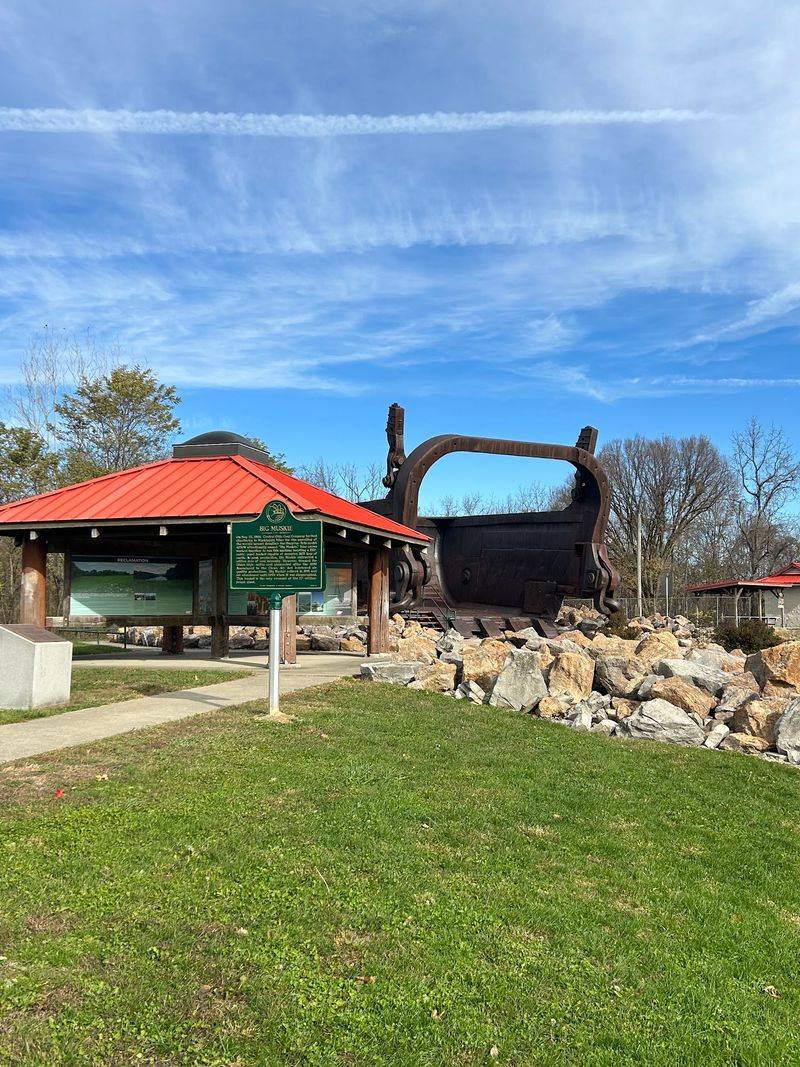
Miner’s Memorial Park is genuinely set up for a leisurely visit rather than a quick photo stop. Multiple picnic tables are scattered around the grounds, and several covered pavilions provide shade and shelter even on rainy days.
Visitors who bring a lunch report that eating within sight of the bucket is a surprisingly pleasant experience, the kind of afternoon that does not cost much and lingers in memory longer than it has any right to.
The park is quiet in a way that feels earned. There are no concession stands, no admission booths, and no recorded audio tours looping in the background.
Just the bucket, the boards, the tables, and the sound of wind moving through the surrounding trees. For families who want to give kids room to move around without a schedule, the open grounds work well.
A camera stand is available on site specifically set up for group photos with the bucket in the background, a thoughtful detail that makes it easy to get everyone in the frame. Parking accommodates everything from motorcycles to campers and large rigs, so there is no need to worry about whether your vehicle will fit.
The Atmosphere and Who It Pulls In
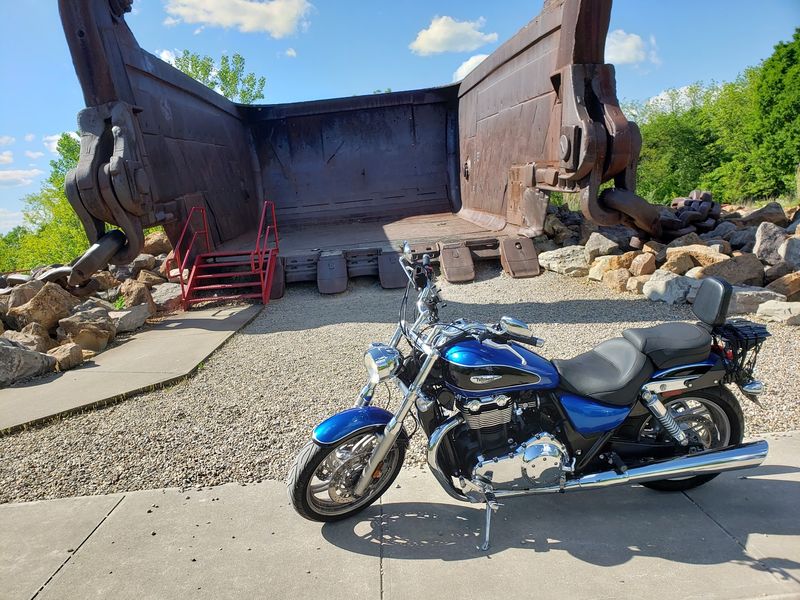
Few roadside attractions draw such a genuinely mixed crowd. On any given afternoon at the Big Muskie Bucket, you might find a pack of motorcyclists cooling off after a run on OH-78, a family with young kids trying to count the chain links, a retired couple reading every educational board with careful attention, and a heavy-equipment operator who drove two hours just to stand next to something that makes his daily machinery look like a toy.
The shared experience of scale is the great equalizer here. Whatever brought you to Morgan County, whatever you expected, the bucket resets the conversation.
People who have never given coal mining a second thought find themselves genuinely curious. Kids who arrived bored from the car ride suddenly want to know everything about how it worked.
The atmosphere is relaxed and unhurried. There is no pressure to move along, no timed entry, no gift shop pulling you toward an exit.
The park simply holds space for people to take their time. Rainy days have their own appeal, with covered pavilions keeping visitors comfortable and the overcast light giving the rusted steel a particularly dramatic quality.
Practical Notes for Planning Your Visit
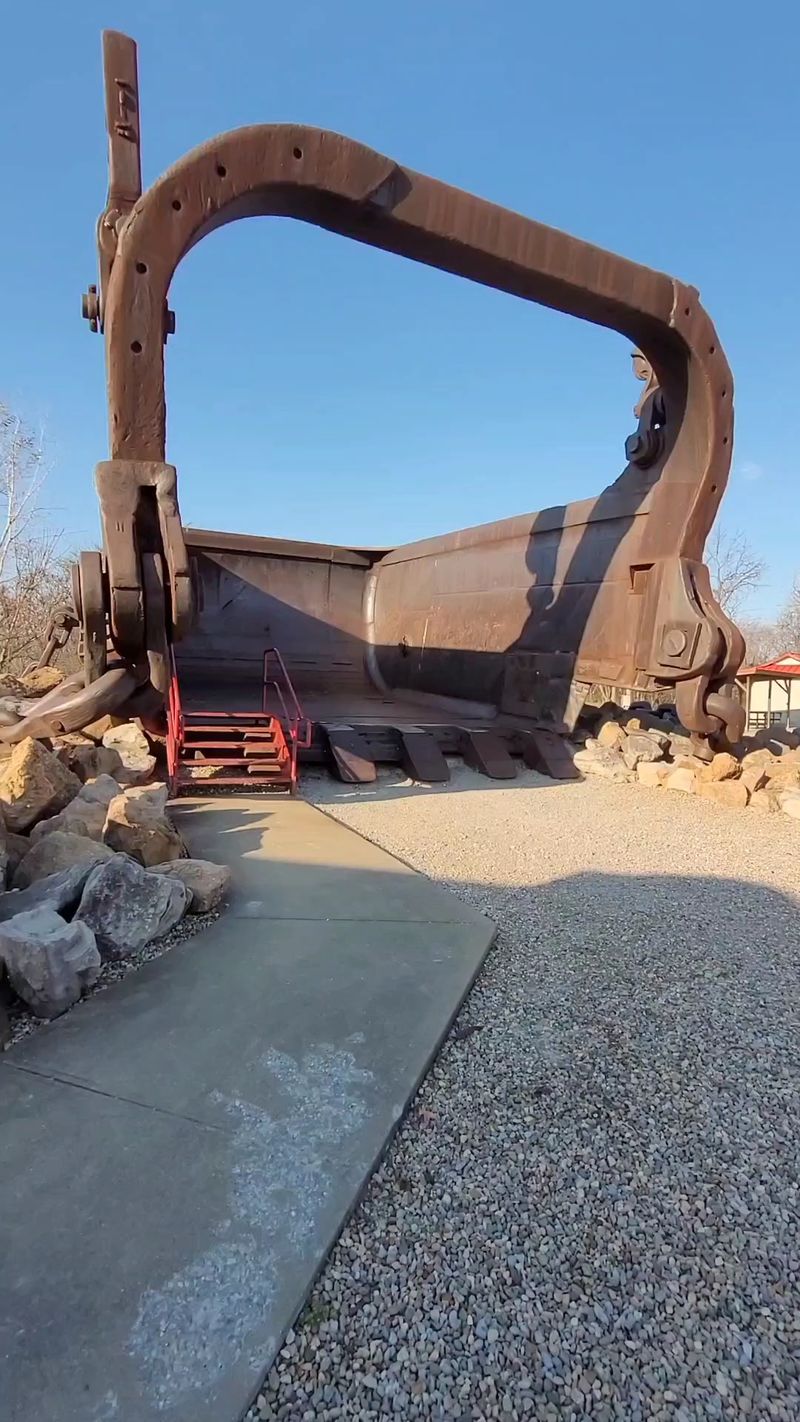
The Big Muskie Bucket is free to visit, which is one of the better deals in Ohio travel. No admission, no parking fee, no reservation required.
The Ohio DNR manages the site, and more information is available at ohiodnr.gov. The park sits at 4470 OH-78, McConnelsville, OH 43756, and standard GPS navigation handles the address without trouble.
Restrooms are available on site in latrine style rather than plumbed facilities. They are generally reported as clean and well maintained, though they are not air-conditioned.
During warmer months, flies can be present around the site in noticeable numbers, particularly on humid days, so that is worth factoring into your timing if bugs are a concern for your group.
The park is open year-round, and the surrounding Jesse Owens State Park system offers free camping nearby, making an overnight trip entirely viable. The Wilds, a conservation center and safari experience, sits about ten minutes away and pairs well with a bucket visit.
Cambridge, Ohio, with its glass heritage and small-town dining options, is roughly half an hour to the northwest and rounds out a full day in the region comfortably.
Why the Bucket Still Earns the Drive
The bucket represents a specific chapter of Ohio’s industrial identity, one that shaped communities, landscapes, and livelihoods across a wide stretch of the state’s southeast corner. Preserving it was the right call, and visiting it feels like an act of acknowledgment rather than mere sightseeing.
You are not just looking at a big piece of metal. You are looking at the reason entire towns existed, the reason families settled in Morgan County, and the reason the land around you looks the way it does today.
Ohio is full of places that reward curiosity, and this is one of the most honest of them. It costs nothing, asks nothing of you except a willingness to show up, and gives back something genuinely hard to find: a sense of awe that does not need a screen or a speaker or a curated experience to land.
Just steel, history, and a lot of sky.
Share this story