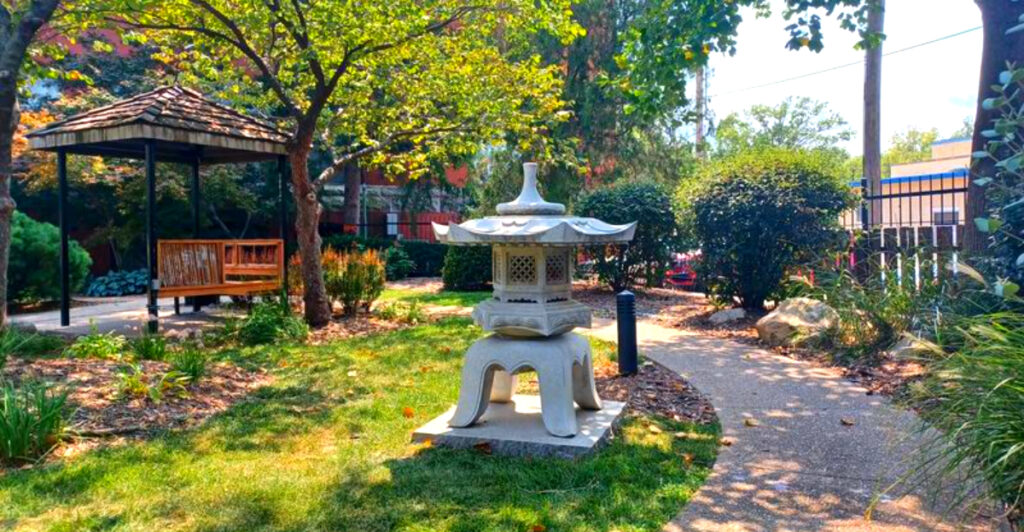
Just steps from one of the busiest shopping streets in Kansas, there is a free garden most passersby could easily miss. Inside its compact 90-by-92-foot footprint are a 15-foot Japanese pagoda, a wisteria-covered walkway, a stone bridge, and quiet places to sit away from the downtown activity.
Some of its most distinctive pieces were shipped directly from Japan, and the garden itself grew from a decades-long friendship between a Kansas city and its sister city across the Pacific.
It is free to enter and open nearly all day, yet its small size hides far more history and careful design than you might expect from a quick downtown detour.
Where Exactly You Will Find This Peaceful Corner of Lawrence
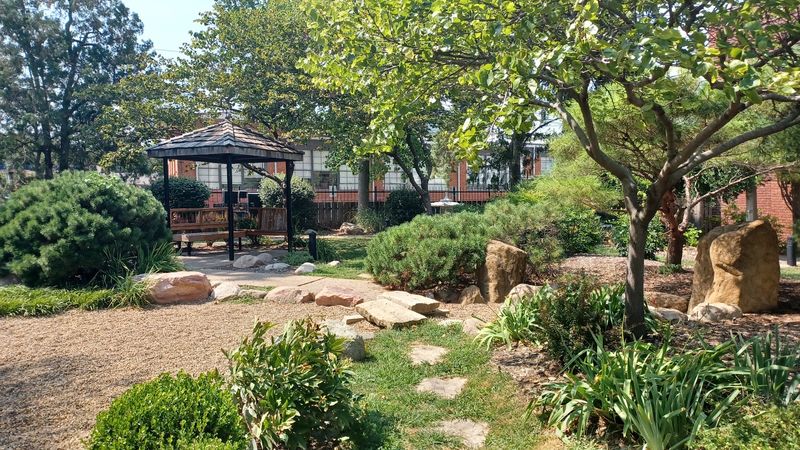
Right in the thick of downtown Lawrence, Kansas, the Japanese Friendship Garden sits on the north side of the Watkins Community Museum at 1045 Massachusetts St, Lawrence, KS 66044. That address might sound purely commercial, but the moment you step off the sidewalk and into the garden, the noise of Massachusetts Street softens almost instantly.
The garden is open every day of the week, from 6 AM to 11:30 PM, and there is no admission fee. Lawrence Parks and Recreation maintains the grounds, keeping the paths tidy and the plantings healthy year-round.
The entrance features a wheelchair-accessible ramp with a smooth, gently graded path, so the garden genuinely welcomes everyone. You can reach the garden by phone at 785-832-3485 if you need details before your visit. Its central location means you can combine a stop here with a stroll along the famous Massachusetts Street shopping strip, making it one of the easiest detours you will ever take in Kansas.
The Friendship Story That Grew Into a Garden
Two cities that share almost nothing geographically managed to build something genuinely meaningful together. Lawrence, Kansas, and Hiratsuka, Japan, have been sister cities since 1990, and the garden you see today grew directly out of that bond.
In 1995, Hiratsuka presented Lawrence with a $5,000 gift to mark their five-year anniversary. The City of Lawrence matched that contribution, and volunteers then raised an additional $15,000 through a fundraising event called the Sister City Garden Gala. That combined pool of resources made the garden possible.
Representatives from Hiratsuka were involved in the design, planning, and construction, so the result feels authentically collaborative rather than decorative. The dedication ceremony took place on October 26, 2000, and approximately 50 delegates from Hiratsuka attended, including Mayor Itsuo Yoshino. A stone inscription in the garden reads, “The sisterhood of cities leads to the brotherhood of man,” which is a quiet but powerful reminder that this small green space carries a genuinely big idea at its heart.
How Japanese Garden Philosophy Shaped Every Rock and Path
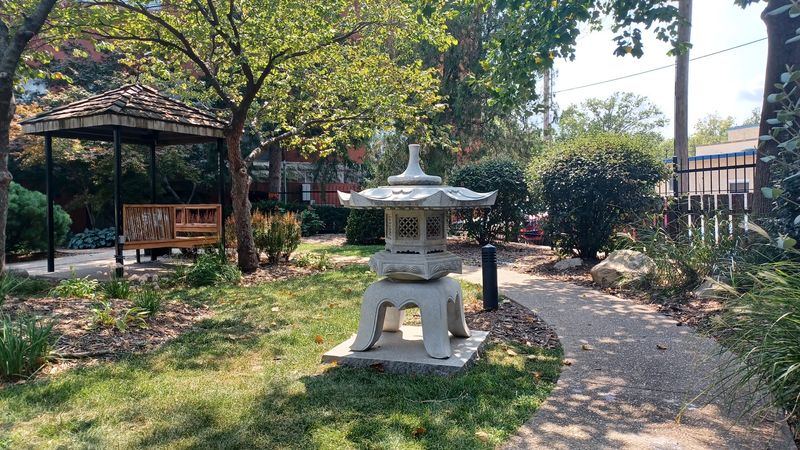
Every element of this garden was placed with intention. The design follows three core principles of Japanese gardening: nature, environment, and culture. That framework guided decisions about plant selection, stone placement, and the overall layout of the space.
Dr. Andrew Tsubaki led the stone placement process, choosing colorful glacial rocks from a quarry near Marysville, Kansas. City staff moved the large boulders using a custom-built tripod made from cedar log poles and a 4-ton chain hoist, a technique borrowed from ancient Japanese construction methods.
The garden uses asymmetry and berm forms to create varied viewing angles throughout its 90-by-92-foot footprint. A circular path winds past different compositions of rock, water, and plant material, so the scenery shifts with each step. The design avoids straight lines and predictable symmetry on purpose, because Japanese garden philosophy holds that nature itself rarely arranges things in perfect rows. That principle gives the garden a sense of organic calm that is hard to manufacture but easy to feel once you are inside it.
The Art Pieces Shipped Directly From Japan
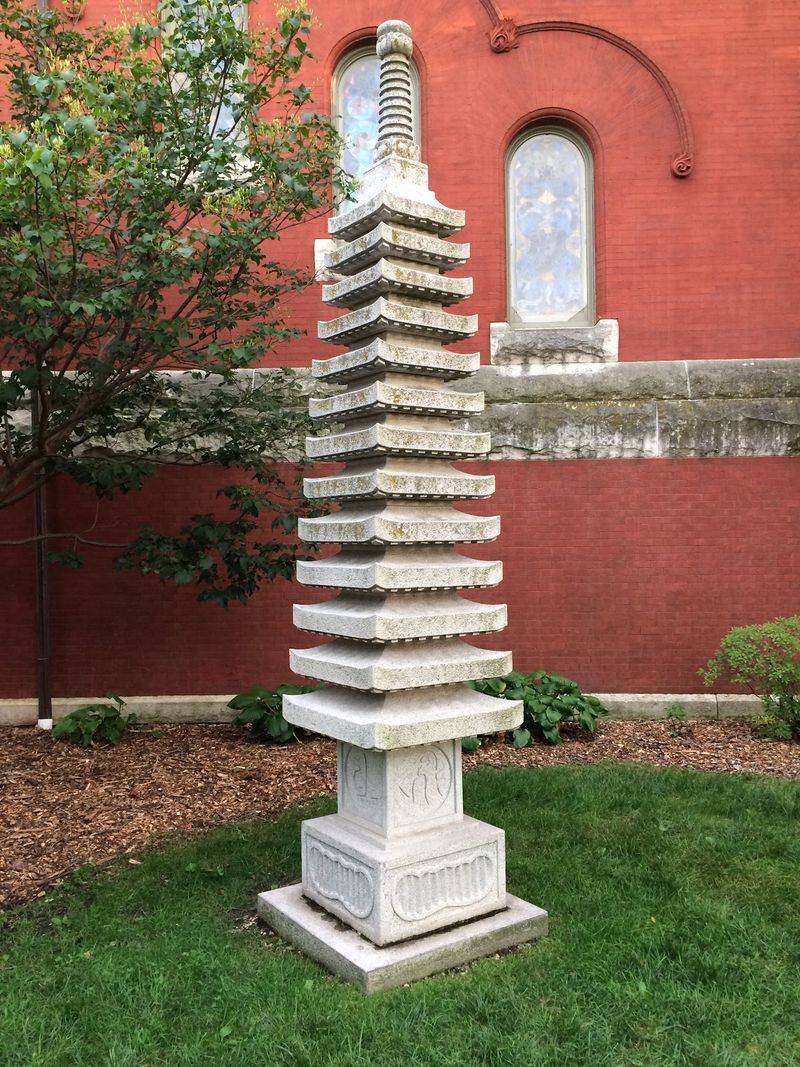
Not everything in this garden was sourced locally. Two significant artistic elements were shipped directly from Japan, and they give the space a visual authority that no locally carved replica could replicate.
The first is a Yukimi doro stone lantern, a classic Japanese garden feature traditionally designed to reflect light on snow or water. The second is a 13-tiered stone pagoda tower standing approximately 15 feet tall. Both pieces anchor the garden visually and serve as reminders that the cultural exchange behind this project was genuine and material, not just symbolic.
A sandhill crane sculpture also stands within the garden, chosen because the crane is a traditional Japanese symbol of happiness and longevity. The combination of imported stonework and locally sourced glacial boulders creates an interesting visual conversation between two places. If you have a camera or even just a curious eye, these pieces reward slow, close attention far more than a quick glance while passing through ever could.
The Wisteria Arbor and the Garden’s Most Photogenic Corners
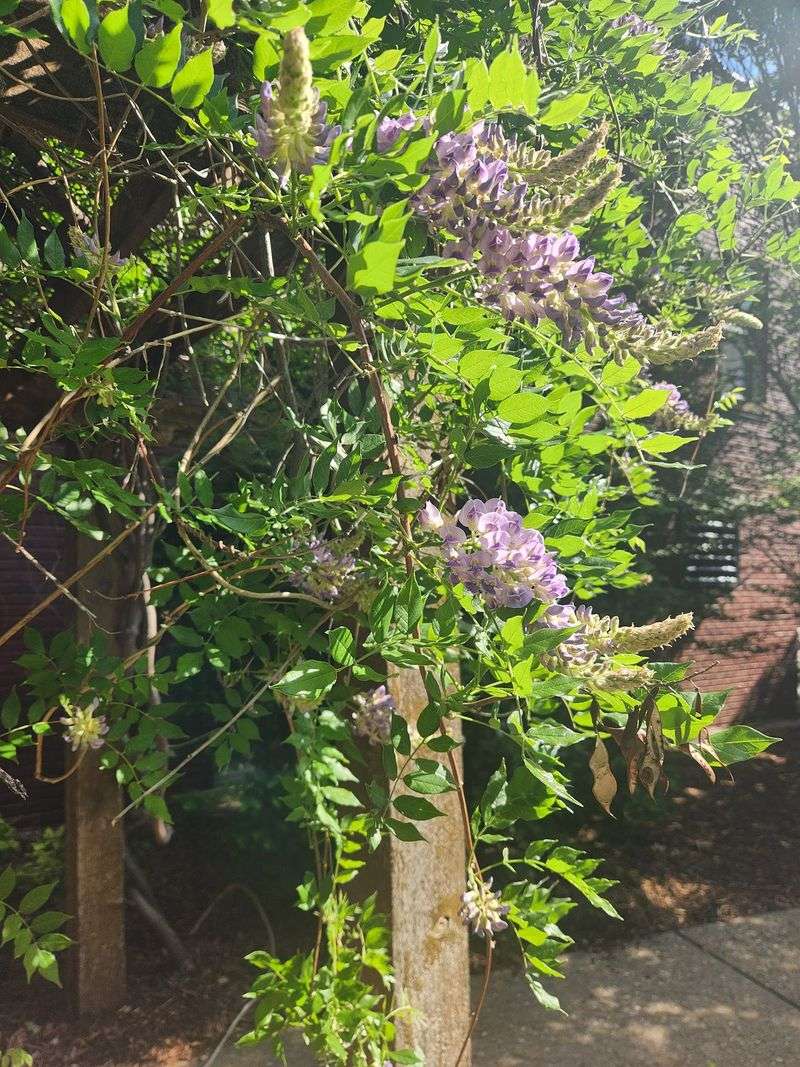
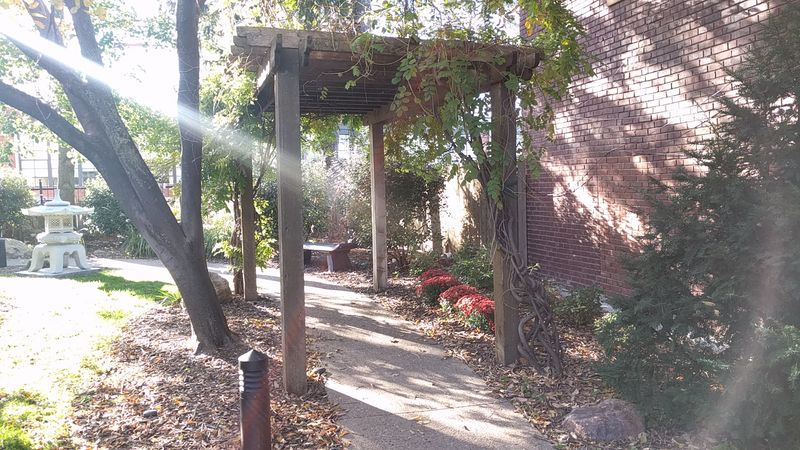
One of the most visually striking features of the garden is a wisteria-covered arbor walkway that frames the path with cascading purple blooms in spring. Walking beneath it when the wisteria is in full flower is the kind of experience that makes people stop mid-step just to look up.
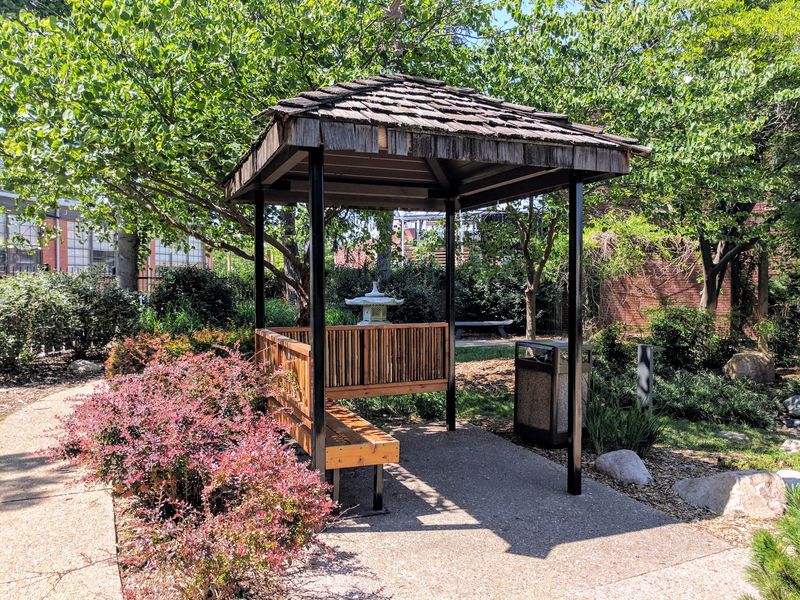
Alongside the arbor walkway, an arbor house provides a sheltered seating spot that visitors have used for everything from packed lunches to quiet reading sessions. The tucked-away benches throughout the garden have a way of feeling private even when other people are nearby.
A gracefully arching stone bridge adds another photogenic element, spanning a section of the garden’s water feature with the kind of gentle curve that photographers tend to gravitate toward naturally. There is also a unique hourglass-shaped pea-gravel pool designed to suggest the movement and texture of ocean water without using a single drop of it. That creative substitution is a neat example of how Japanese garden design turns constraint into artistry.
What Blooms When, and Why Timing Your Visit Pays Off
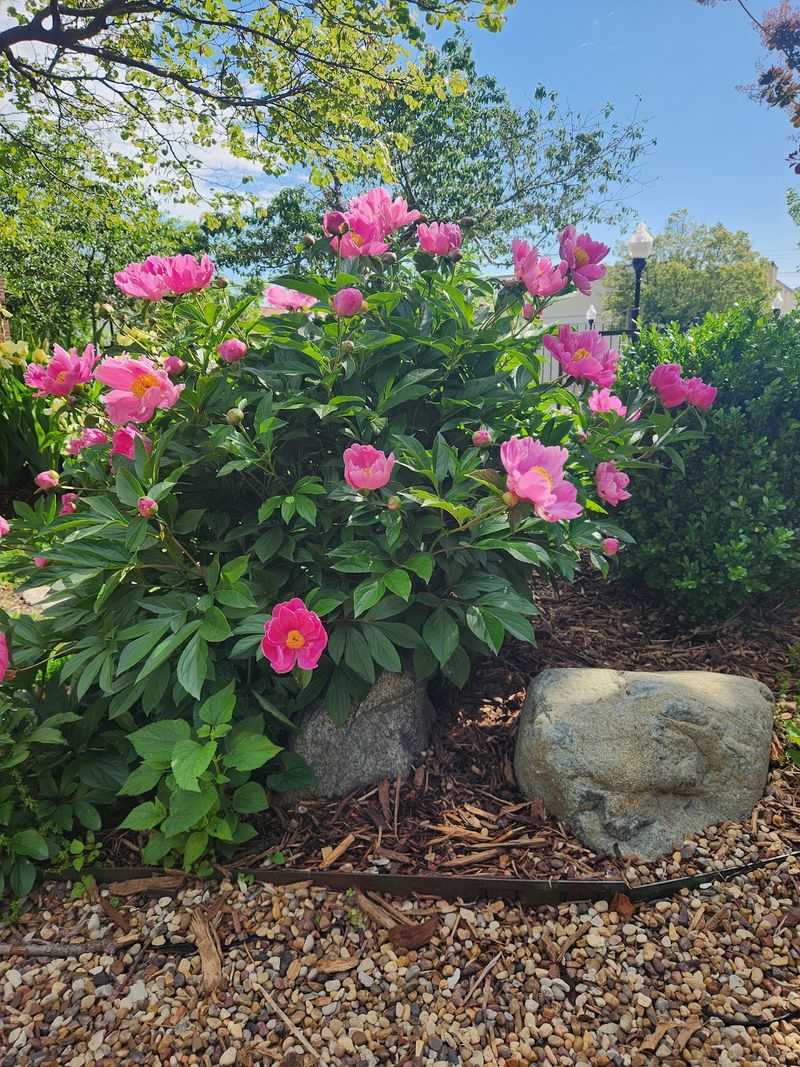
The garden shifts its personality with the seasons, and knowing what to expect at different times of year makes the visit noticeably richer. Spring is the showstopper season, when Yoshino cherry trees release a sweet, lightly floral scent that drifts across the entire garden.
Korean Spice Viburnum bushes add their own heady fragrance to the spring mix, making early April through May a particularly rewarding time to visit. Azaleas, spirea, Siberian iris, peonies, and Japanese irises all contribute color throughout the warmer months, while Japanese maples, bamboo, juniper, and mugho pines keep the space looking structured and green through summer.
Autumn brings a fiery shift in the maple foliage that contrasts beautifully against the stone elements. Winter strips the garden down to its bare architectural bones, and the clean lines of the rocks and pagoda against fresh snow have their own spare kind of beauty. Each season offers something genuinely different, which is why repeat visitors often say they keep finding new things to notice every time they return.
The Quiet Atmosphere That Downtown Lawrence Rarely Offers
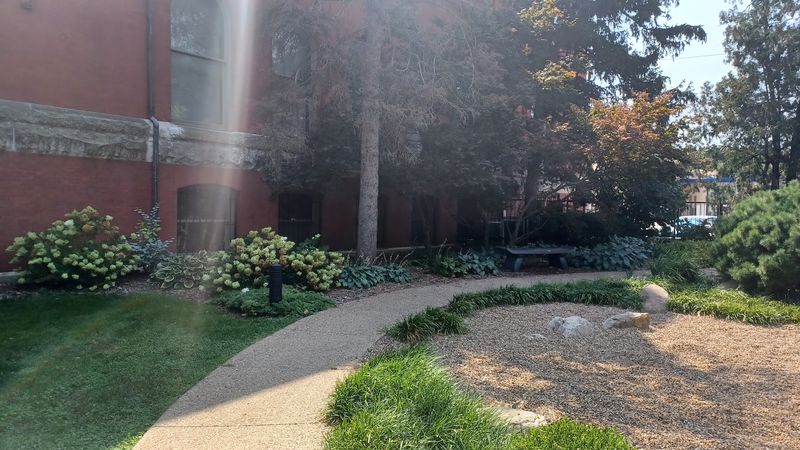
Massachusetts Street is one of the liveliest commercial strips in Kansas, packed with shops, restaurants, and foot traffic on most days. The Japanese Friendship Garden sits just off that strip and somehow maintains a completely different energy from everything around it.
The garden was intentionally designed as a strolling garden for busy downtown pedestrians, a place where the sensory pace drops several notches from the moment you enter. The plantings and berm forms act as soft barriers that muffle street noise and create a sense of enclosure without making the space feel cramped.
People come here to read, sketch, eat a packed lunch, meditate, or simply sit on one of the benches without any particular agenda. Baby bunnies are a surprisingly frequent sight in the garden, and they have earned their own fan base among regular visitors. The combination of intentional quiet design and unexpected wildlife gives the garden a warmth that purely ornamental spaces rarely achieve, and that warmth is the main reason people return.
Family Visits and Picnics
Bringing younger visitors to the garden works well as long as you match expectations to the space. The garden is compact and calm by design, which means it suits children who enjoy close observation rather than running around on open grass.
The stone bridge, the pagoda tower, and the sandhill crane sculpture tend to spark questions and conversations that make the visit feel educational without being formal.
Picnics under the arbor house are a popular option for families, and the wheelchair-accessible paths mean strollers and mobility aids move through the space without difficulty. The garden does not have its own shelter structures, so bringing a blanket to spread on the grass near the benches is a practical move on warm days. A stop here pairs naturally with a meal or snack from one of the restaurants just steps away on Massachusetts Street.
Bird Watching, Bunnies, and the Unexpected Wildlife Scene
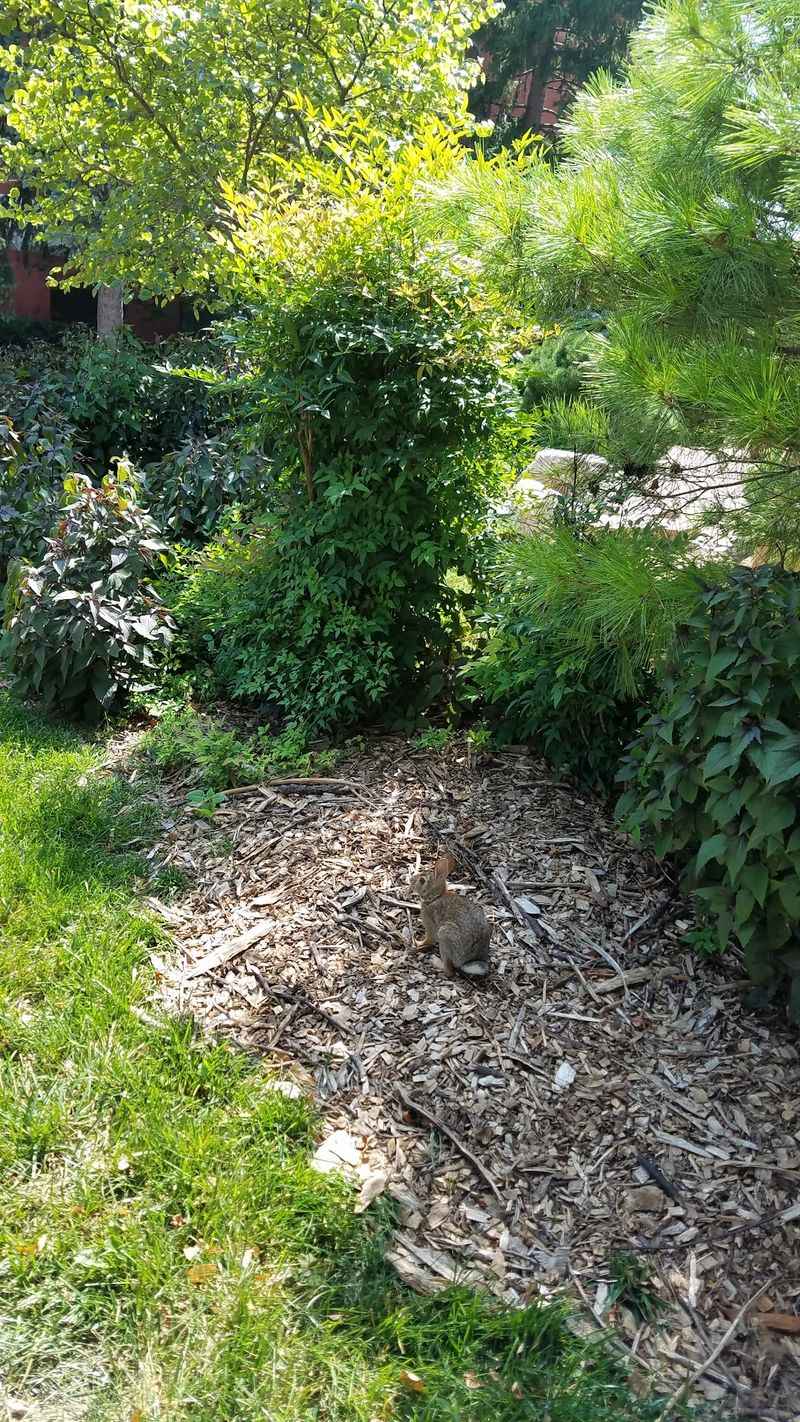
A Japanese garden in the middle of downtown Kansas is not the first place most people would think to look for wildlife, but the Japanese Friendship Garden has developed a small reputation for exactly that. The plantings, the water features, and the relatively sheltered layout create a surprisingly hospitable environment for local creatures.
Cottontail rabbits appear regularly, especially in the early morning and late afternoon, and they seem remarkably unbothered by human visitors sitting quietly on the benches. The garden’s mix of bamboo, juniper, hostas, and flowering shrubs gives small animals plenty of cover, which encourages them to stick around.
Bird watching is another low-key activity that fits naturally into a visit here. The variety of plants attracts different species throughout the year, and the garden’s relative quiet compared to the street outside makes it easier to hear and spot birds that might otherwise go unnoticed. Bringing a pair of binoculars would not be overkill, and a sketchbook fits the atmosphere perfectly, especially if you find a bench near the stone lantern and settle in for a while.
Practical Tips for Getting the Most Out of Your Visit
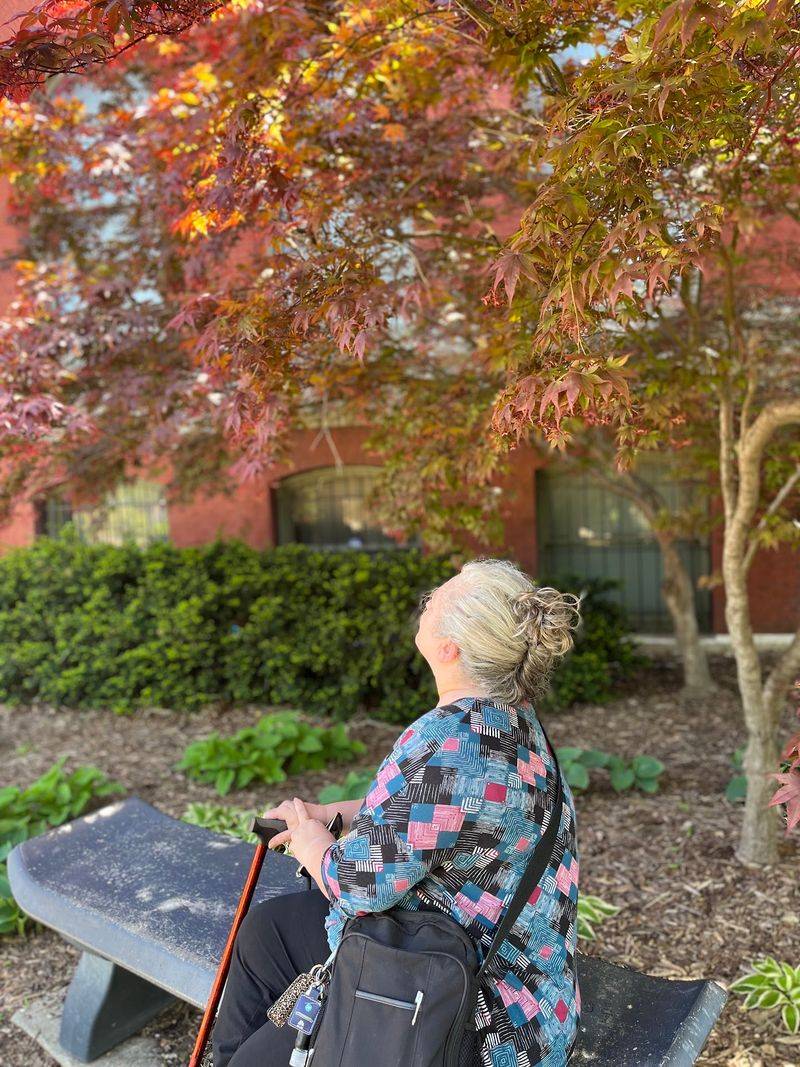
The garden is free to enter and open daily from 6 AM to 11:30 PM, which gives you a wide window to visit at whatever time suits you best. Early morning visits tend to be the quietest, with soft light filtering through the Japanese maples and the street traffic still minimal.
There is no parking lot attached to the garden itself, but Massachusetts Street and the surrounding downtown blocks have metered street parking and nearby public lots. The garden is also very walkable from many points along the main strip, so it integrates easily into a longer downtown itinerary.
Wear comfortable shoes, because the path surfaces include stone and pea gravel in places. There is no outdoor heater in the garden, so a warm layer is worth packing if you plan to linger during cooler months. The garden rewards slow visits more than quick ones, so give yourself at least 20 to 30 minutes to actually sit, observe, and let the design do what it was built to do: slow you down just enough to notice something new every single time.
Share this story