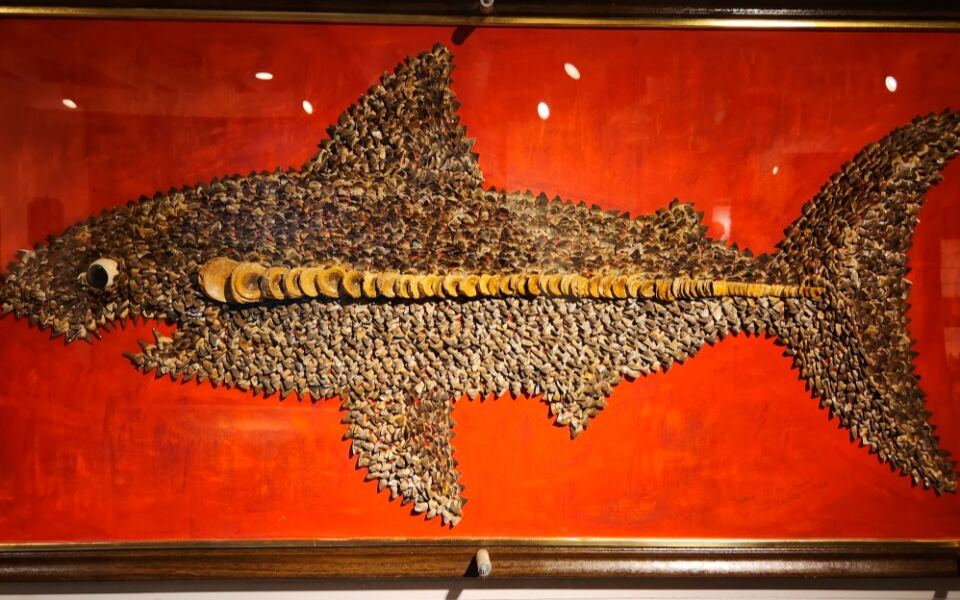
A small museum in Oakley, Kansas, holds a 15-foot prehistoric fish, more than 11,000 fossil shark teeth, and the remains of ancient marine reptiles. Even more surprising, admission is completely free.
The Fick Fossil & History Museum tells the story of a time when much of Kansas lay beneath the Western Interior Seaway. Its collection includes rare fossils discovered in the region, along with unusual artwork created by Vi Fick using shark teeth, shells, and other fossil materials.
Located near Interstate 70, the museum is an easy stop for travelers crossing western Kansas. But the story behind its collection, which began with a local ranching family’s discoveries, makes it worth more than a quick visit.
A Free Fossil Stop Right Off the Prairie
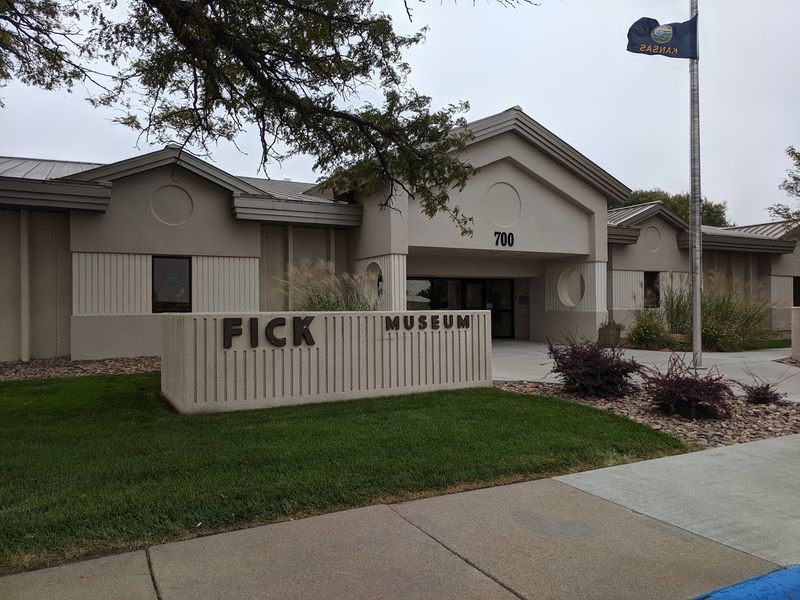
Plenty of people find this place by accident after spotting a road sign. That happy surprise is part of the fun.
The Fick Fossil & History Museum sits at 700 W 3rd St in Oakley, Kansas, a small town in the western part of the state.
Admission is free, which feels almost unfair given how much is packed inside. The museum shares its building with the Oakley public library.
That setup makes it easy to spend a relaxed afternoon reading, looking, and learning in one stop.
Oakley is close to Interstate 70, so travelers crossing Kansas can reach it without a long detour. I like that a cross-country drive can include sea fossils without anyone needing a ticket.
It turns a long, flat stretch of highway into a lesson about ancient oceans.
The museum is open on weekdays and part of Saturday, and it closes on Sundays. Staff also take a lunch break, so it helps to check current hours before you arrive.
A little planning keeps you from staring at a locked door.
Once inside, the first big question is simple: why are there ocean fossils in the middle of Kansas?
Sharks Swam Where Wheat Grows Now
About 85 million years ago, western Kansas was underwater. Scientists call that body of water the Western Interior Seaway.
It stretched across the middle of North America, splitting the continent in two.
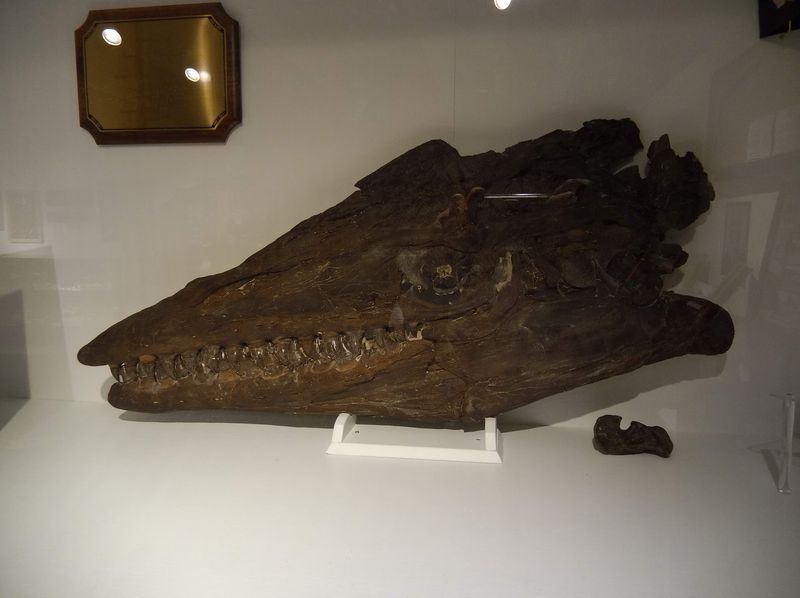
That sea was warm and shallow, and it was full of life. Sharks, huge bony fish, flying reptiles, and sea creatures called mosasaurs all lived there.
When they sank to the bottom, tiny shells and mud slowly buried them.
Over time, that mud hardened into the chalk you can still see around Logan and Gove counties. The chalk kept bones, teeth, and shells in great shape.
That is why western Kansas is famous among fossil hunters.
The museum explains this ocean story in a way that is easy to follow. Even if science class was never your favorite, the displays make the timeline click.
Seeing real fossils next to the explanations helps a lot.
Fun fact: the chalk is made mostly from the shells of tiny ocean organisms too small to see without a microscope. Billions of them piled up to form whole landscapes.
Knowing that makes the big fossils inside feel even more impressive, especially the largest fish on display.
A Fossil Fish Bigger Than You
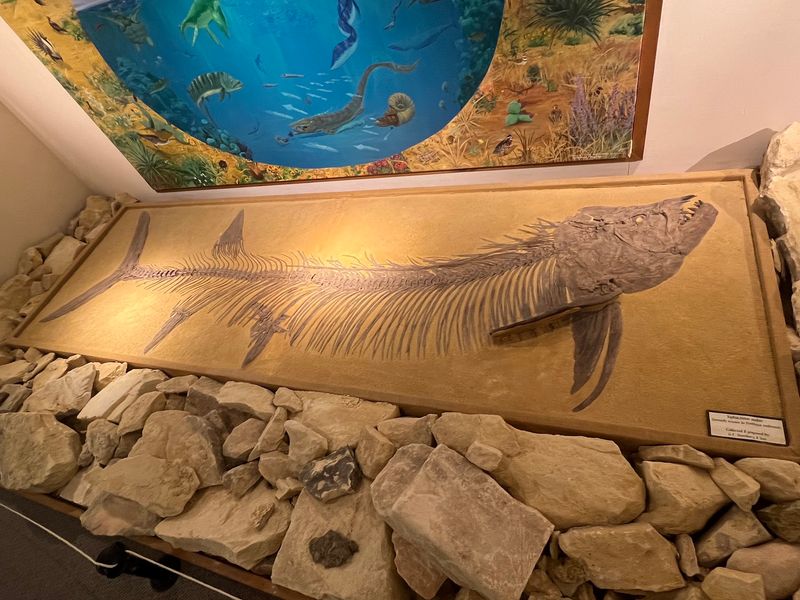
Size matters here, and the museum has the proof. One of the most talked-about pieces is a large fossilized fish from the Kansas chalk.
Its length surprises people who expected only tiny shells.
Big predatory fish ruled the ancient seaway. Some, like Xiphactinus, grew longer than a car and had sharp, fang-like teeth.
Fossils of these giants have been found in the same chalk that surrounds Oakley.
Standing near a fish that big is a great reality check. It helps you understand that this ocean was not a calm swimming pool.
It was a busy, hungry place where only the strong or fast lasted long.
I would spend a few extra minutes studying the skeleton up close. Look at the shape of the jaw, the curve of the spine, and the fins.
Each part tells a small story about how the fish moved and hunted.
Kids especially tend to stop in their tracks at the large fossils. Asking them to guess the fish’s length before reading the sign makes a fun game.
Most guesses end up too small, which is part of the charm. Next comes the family who found so much of this.
The Ranch Family Behind the Collection
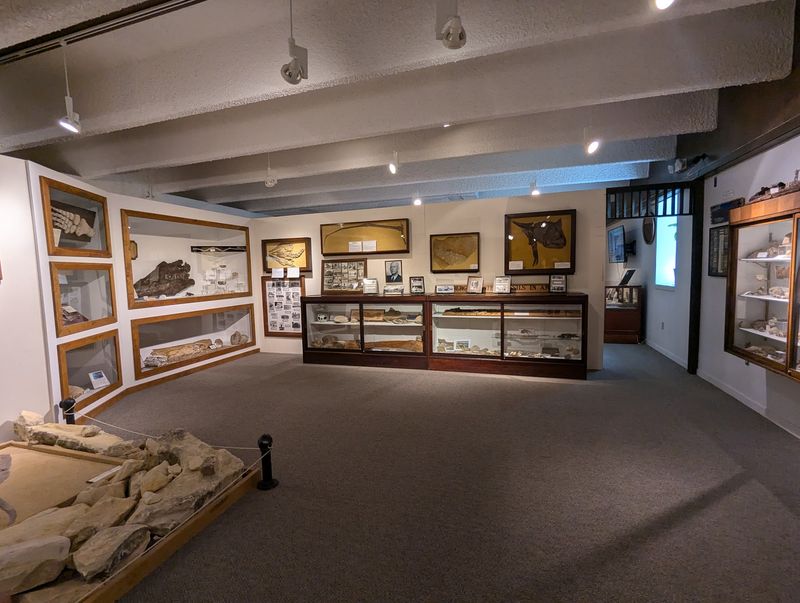
Every great collection starts with someone who keeps picking things up. For this museum, that someone was the Fick family.
Ferrell and Vi Fick gathered fossils from land in the chalk country near Oakley.
Their property was close to Monument Rocks, the towering chalk formations south of town. That area is full of ancient sea remains.
Over the years, the Ficks found far more than a few souvenirs.
Their finds became the heart of the museum that carries their name. Local donors and other discoveries have added to it since.
The result mixes hometown pride with real scientific interest.
I find it meaningful that a family hobby became a public treasure. Plenty of rock collections stay in garages forever.
This one ended up teaching thousands of visitors about Kansas history.
A smart travel tip is to stop at the museum before driving out to Monument Rocks. Learning the background first makes the chalk spires feel much more exciting.
You’ll know you’re looking at an old seafloor, not just pretty rocks.
Among everything the Ficks gathered, one type of fossil showed up in staggering numbers. Those small, sharp finds inspired something nobody expected.
Artwork Made From Shark Teeth
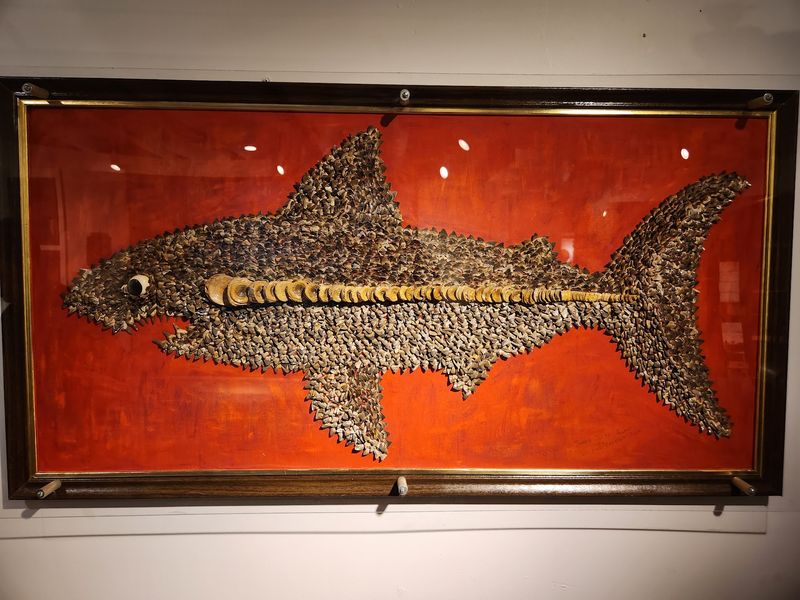
What do you do with thousands of fossil shark teeth? Vi Fick had a creative answer.
She turned them into art.
Her pieces use shark teeth and tiny fossil shells as building blocks. She arranged them into pictures with texture and depth.
Some look almost three-dimensional when you stand at an angle.
This part of the museum often catches people off guard. They come for bones and leave talking about fossil art.
It shows how one person’s patience can turn science into something personal.
Take your time with each piece. Look closely and you can spot individual teeth lined up in careful rows.
It’s easy to forget that every tiny point once belonged to a shark swimming over Kansas.
I like how this collection mixes two worlds that rarely meet. Art museums and fossil museums usually live in separate buildings.
Here, they share the same walls and the same story.
If you have young artists in your group, this room can spark ideas. Collecting shells or pebbles at home and making a picture is an easy follow-up project.
Of course, these ancient materials make the originals hard to top, and the rocks nearby add more color.
Gemstones and Minerals That Sparkle
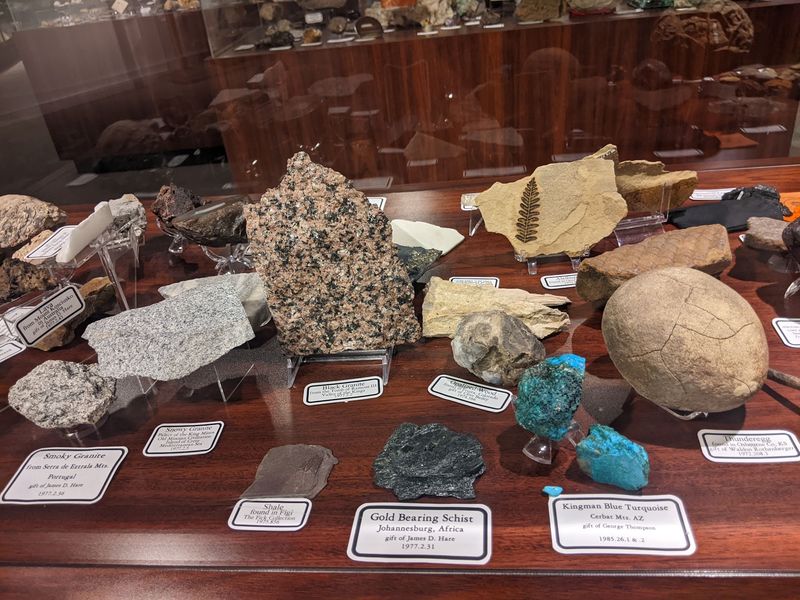
Rockhounds, this section is your happy place. Beyond the sea fossils, the museum shows off a colorful mix of rocks, minerals, and gemstones.
Some glitter, some glow with bright color, and some just look wonderfully strange.
Geodes are a favorite with many visitors. From the outside, they look like plain lumpy stones.
Cracked open, they reveal crystals packed inside like a secret room.
The mineral displays also include pieces from beyond Kansas. That variety helps you compare how different places create different stones.
It’s a quick geology lesson without any homework.
I’d encourage kids to pick a favorite stone and read about it. Learning one mineral’s name and color makes the whole case more fun to explore.
It also turns looking into a little treasure hunt.
Bring a phone for photos, since some of these colors are hard to describe later. Good lighting makes the crystals easy to capture.
Just avoid flash if signs ask you to skip it.
After so much shine, the museum shifts gears in an interesting way. The next rooms move from ancient stone to the people who settled this windy stretch of prairie.
Pioneer Life on the High Plains
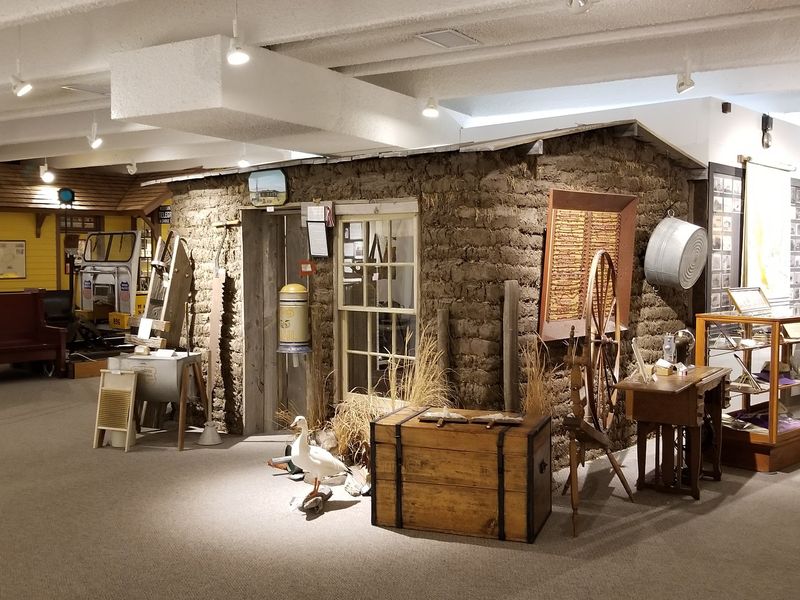
Life on the western Kansas prairie was tough, and the museum doesn’t pretend otherwise. Its local history exhibits show how early settlers built homes and made a living.
The fossils explain the land, while these rooms explain the people.
Historic building displays feature mannequins dressed for the period. They help you picture daily routines in a time before electricity was common.
Seeing clothing and furniture side by side makes the past feel closer.
Old tools are part of the story too. Sod cutters remind visitors that many homes here were built from blocks of prairie earth.
Ice saws show how people kept food cold long before freezers.
I find these everyday objects surprisingly fascinating. They answer simple questions like how people stayed warm or cool.
Those questions matter more than famous dates.
Telegraph equipment and military clothing also appear in the collection. Each item ties Oakley to bigger moments in American history.
Together they show a small town connected to a much larger world.
Parents might ask kids which tool they would least want to use. The answers can be funny and thoughtful.
And just around the corner waits something big and bright red.
A Shiny Old Fire Engine and Odd Collections
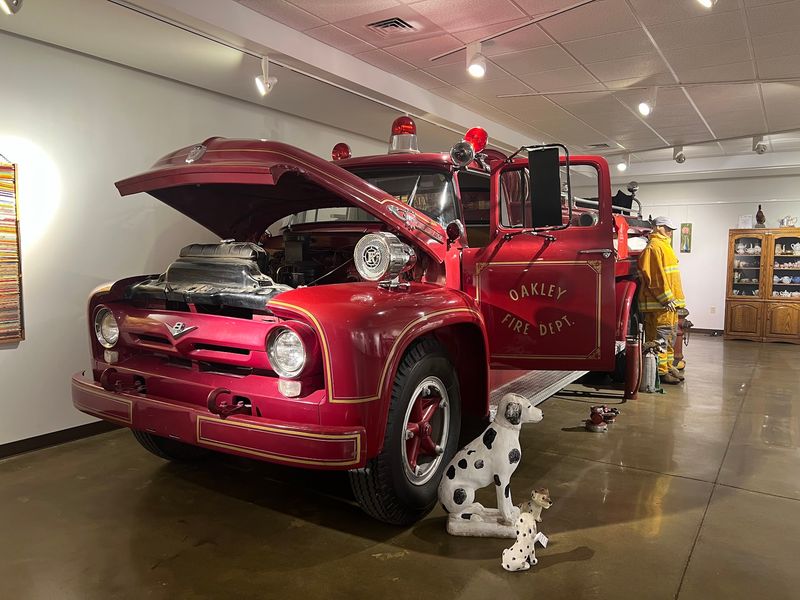
Nobody expects a fire truck in a fossil museum. Yet there it is, parked inside one of the rooms.
The old engine is a crowd-pleaser for kids and grown-ups alike.
Its polished look makes it a fun photo spot. Small-town fire trucks carry a lot of community pride.
This one reminds visitors that local history includes the people who kept neighbors safe.
Then there’s the pencil collection. Yes, pencils.
The display gathers a surprisingly large number of them, and it’s oddly fun to browse.
I enjoy quirky displays like this because they show personality. Big city museums rarely make room for something so ordinary.
Here, a humble pencil gets its moment.
These unexpected pieces keep the visit from feeling like one long science lecture. You move from ancient sharks to settlers to fire safety without getting bored.
The variety keeps energy up, especially for younger visitors.
Little touches like these explain why the museum feels homegrown. It reflects what this town valued and saved over the years.
Speaking of saving things, many visitors want to take a small piece of history home with them.
Take Home a Shark Tooth
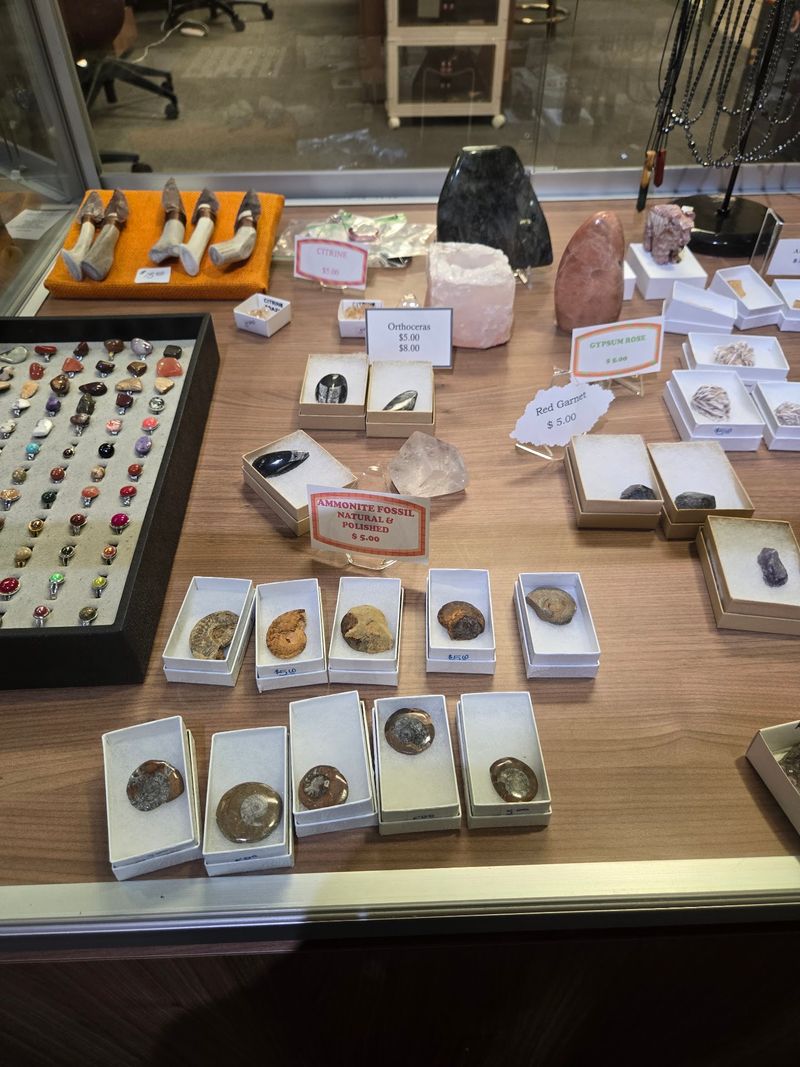
Leaving with a real fossil in your pocket is a great feeling. The museum’s gift shop makes that possible.
It sells fossils, minerals, and other souvenirs at friendly prices.
Shark teeth are a popular pick, which makes sense given the museum’s story. Polished ammonites, with their swirling shell shapes, are another eye-catching option.
Gemstones such as garnets also show up on the shelves.
Families may like the fossil discovery bags. They let kids sort through material and find their own treasures.
It’s a hands-on way to keep the excitement going after the tour.
Shopping here also helps support the museum. Since admission is free, souvenir sales and donations matter.
A small purchase can help keep the doors open for the next traveler.
I’d suggest setting a small budget before walking in. With so many shiny options, decisions can take longer than expected.
Kids especially may need time to choose just one.
A shark tooth makes a great show-and-tell item too. It’s small, sturdy, and comes with a wild story.
Telling friends it came from an ancient Kansas sea always gets attention, and the next stop helps with that story.
Tips for an Easy, Kid-Friendly Visit
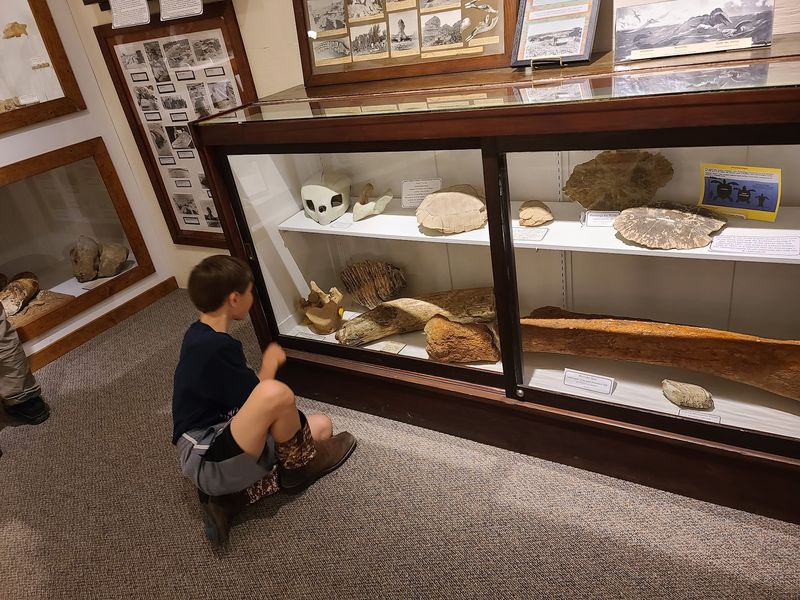
A little planning goes a long way in Oakley. The museum works well for a short stop or a slower look.
Many people spend about an hour, though fossil fans may linger longer.
Check hours before heading over. The museum closes on Sundays and takes a break around lunchtime.
Saturdays have shorter hours, so weekday visits give you more room.
Kids of many ages tend to enjoy it. The library next door offers books and a quieter space.
A playground outside gives restless little legs a chance to burn off energy.
The museum is usually calm and uncrowded. That makes it a good choice for anyone who dislikes busy attractions.
It’s easier to read signs and ask questions without feeling rushed.
Friendly front desk staff can share background on the exhibits. Don’t be shy about asking where certain fossils came from.
Those little stories often stick with you longest.
Finally, pair this stop with nearby chalk landmarks like Monument Rocks. Seeing the fossils first and the old seafloor second makes the day feel complete.
It’s a simple way to turn a Kansas road trip into a real adventure.
Share this story