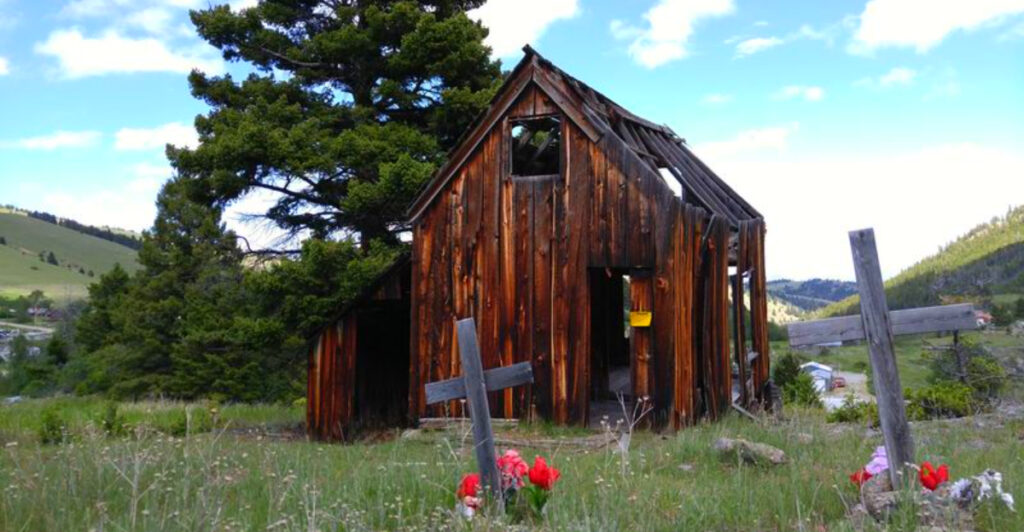
Montana has a habit of leaving things behind. When the gold and silver ran out, entire towns were abandoned almost overnight, leaving behind wooden storefronts, crumbling stone walls, and stories that nobody bothered to pack up on the way out. Some of these places have been carefully preserved as state parks, while others are barely a rumor on a dirt road. A few have even stubbornly refused to fully disappear, holding on with a handful of residents who seem to like the quiet.
Whether you are a history fan, an outdoor explorer, or just someone who finds old buildings more interesting than new ones, Montana’s ghost towns deliver something genuinely hard to find elsewhere. This list covers 11 towns you can actually visit, from polished historic parks to off-the-beaten-path ruins that reward a little extra effort to reach.
1. Bannack, Dillon, Montana
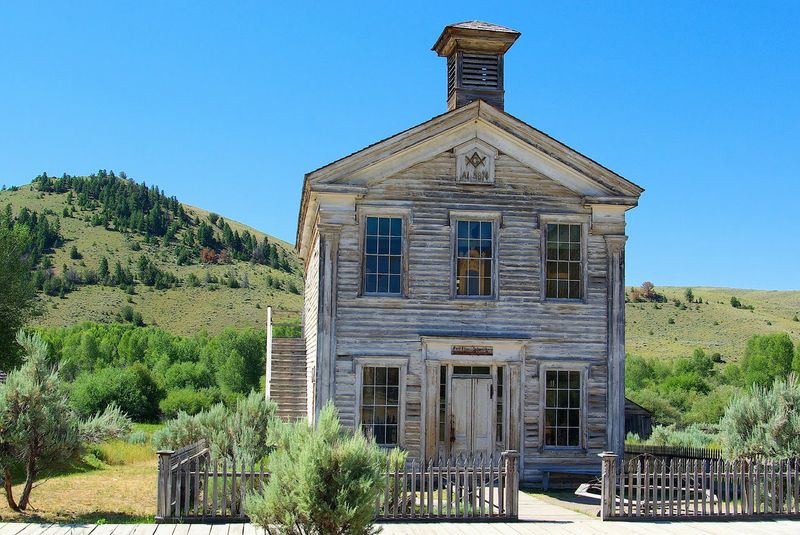
Montana’s gold rush started here on July 28, 1862, and Bannack went from nothing to a town of over 3,000 people in roughly a year. That kind of fast growth left behind a remarkable collection of buildings, and more than 50 of them are still standing today within Bannack State Park. Bannack even served briefly as the first territorial capital of Montana in 1864, before the capital moved to Virginia City. Unlike many former mining settlements, the town was never completely destroyed or heavily redeveloped, helping preserve much of its frontier character.
The park is open year-round, and visitors can walk inside many of the historic structures, including the Hotel Meade, the Methodist Church, and the old Masonic Lodge that doubled as a schoolhouse for over 70 years.
Every third weekend in July, Bannack Days brings the settlement back to life with historical displays and re-enactors. In winter, a frozen dredge pond becomes an ice skating rink, with free loaner skates and a warming house available on site.
2. Garnet Ghost Town, Drummond, Montana
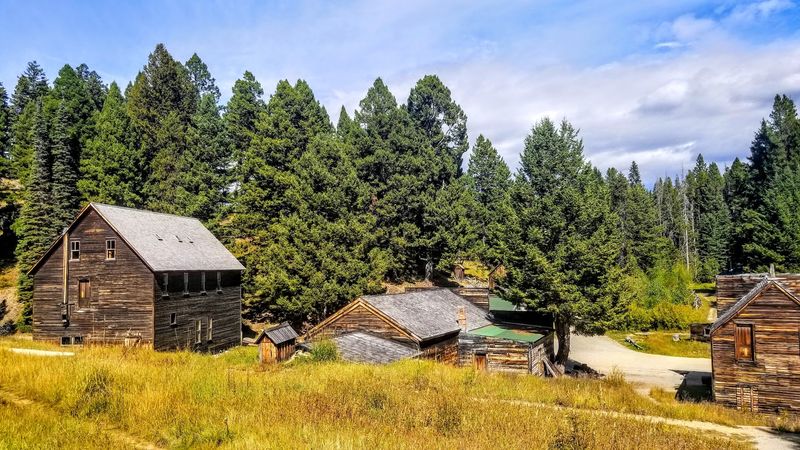
Gold brought more than 1,000 miners and their families to Garnet in the late 1890s, making it one of the busiest corners of the Garnet Range. Today, more than 30 buildings survive, and the Bureau of Land Management has preserved them well enough that self-guided exploration feels genuinely rewarding. Unlike many boomtowns, Garnet faded gradually after its richest gold deposits began running out rather than disappearing in a single disaster. By the mid-20th century, only a handful of residents remained, leaving much of the settlement remarkably undisturbed.
Highlights include the J.R. Wells Hotel, old miner cabins, and a handful of structures that still have their original contents scattered inside. A visitor center is open daily from June through September, with limited hours for the rest of the year.
Winter access is one of Garnet’s quirkiest features. From January through April, wheeled vehicles cannot reach the site, so snowmobiles, skis, and snowshoes take over. For those who want a longer stay, cabin rentals are available year-round.
3. Granite Ghost Town State Park, Philipsburg, Montana
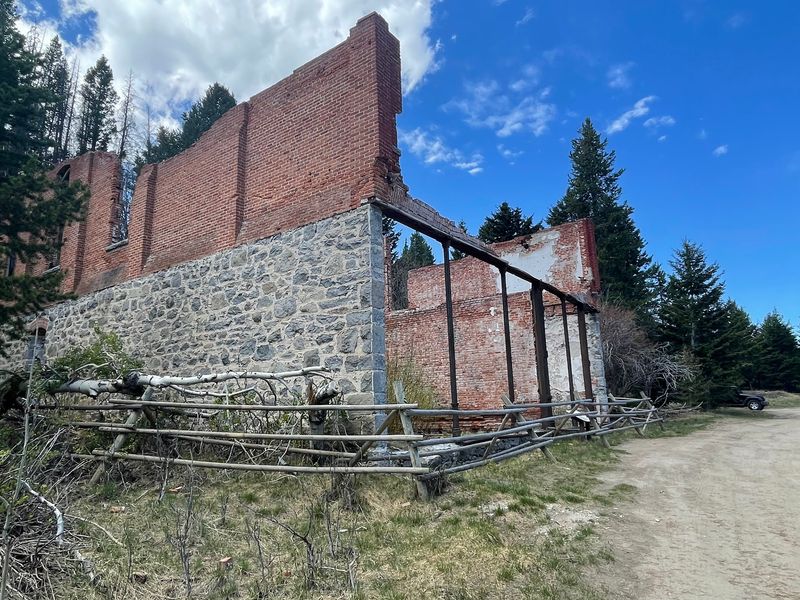
At its peak in the 1890s, Granite was called the richest silver mine on Earth, pulling out an estimated $40,000,000 worth of ore before the Silver Panic of 1893 brought everything to a halt. The population crashed from over 3,000 to essentially zero in a matter of months. Before the collapse, Granite had grown into a surprisingly sophisticated mountain community, complete with businesses, schools, churches, and social organizations. Its sudden abandonment left substantial pieces of that boomtown behind, creating one of Montana’s most atmospheric mining ghost towns.
What the park preserves today is genuinely dramatic. The ruins of Union Hall, which once held a dance hall, union offices, and a cafe, still stand on the mountainside alongside the old mine superintendent’s house. Trails lead past additional ruins scattered across the surrounding slopes.
Getting there requires navigating a narrow, steep road that gains 1,280 feet in elevation from Philipsburg. The park is typically open from late spring through early fall, and dogs are welcome on a leash.
4. Coolidge, Polaris, Montana
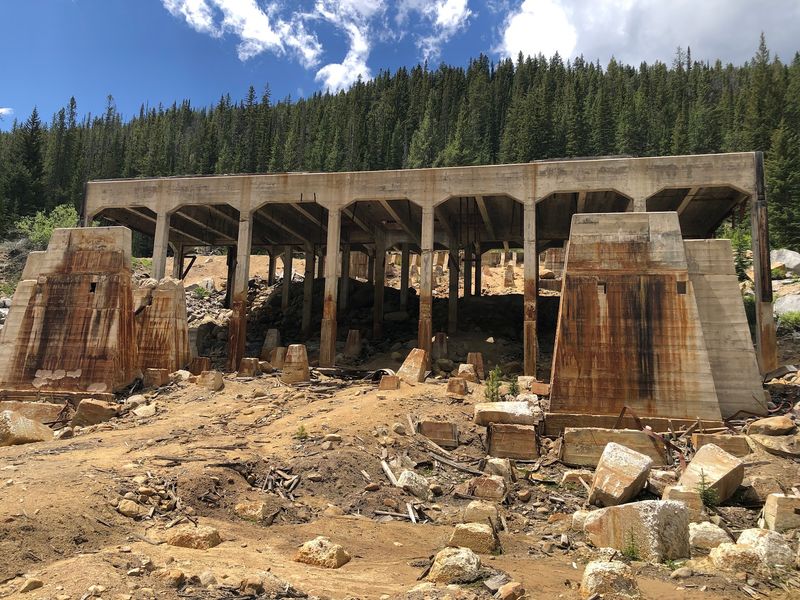
Named after a president and built around silver, Coolidge had about 1,000 residents at its boom-era peak in the 1920s before the Great Depression and falling metal prices shut the whole operation down by 1932. The Boston-Montana Development Corporation ran the show, operating several mines including the Elkhorn, Wolverine, and Little Bonanza.
Reaching the site today requires a 1.5-mile hike from a trailhead near the Pioneer Mountains Scenic Byway, which is part of the appeal. The trail is manageable during warmer months and delivers visitors to a surprisingly substantial set of remains.
A large concentrator mill, ore bins, railroad infrastructure, and numerous foundations are all visible on site. The wooded mountain setting gives Coolidge a quieter, more secluded character than many of Montana’s better-known ghost towns, making the short hike feel worth every step.
5. Elkhorn, Boulder, Montana
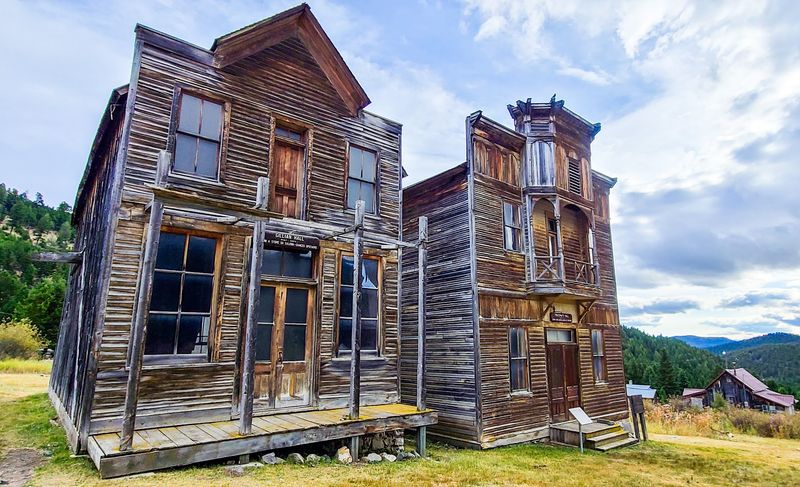
Swiss miner Peter Wys discovered silver in the Elkhorn Mountains in 1868, and by 1888 the mine was producing $30,000 worth of ore every single month. At its height, Elkhorn had about 2,500 residents, and unusually for a mining camp, most of them were married miners raising families, which kept three school buildings busy.
The two standout structures today are Fraternity Hall and Gillian Hall, both preserved within Elkhorn State Park. Fraternity Hall, built in 1893, hosted Masonic meetings, dances, graduations, and even prize fights, and its Greek Revival balcony makes it one of Montana’s most photographed buildings.
Much of the surrounding townsite is privately owned, so property boundaries deserve careful attention. The site has no services and minimal cell coverage, but seasonal picnic tables and a portable latrine are available for visitors.
6. Virginia City, Virginia City, Montana
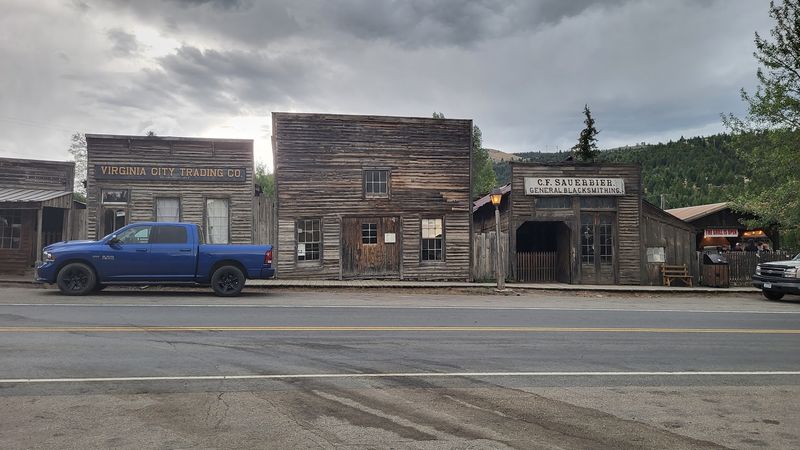
Gold found in Alder Gulch on May 26, 1863, set off one of the most dramatic population explosions in Montana history, pushing Virginia City past 10,000 residents and into its role as Montana’s territorial capital from 1865 to 1875. The town also witnessed some famously rough frontier justice, with vigilantes targeting road agents including the notorious Sheriff Henry Plummer.
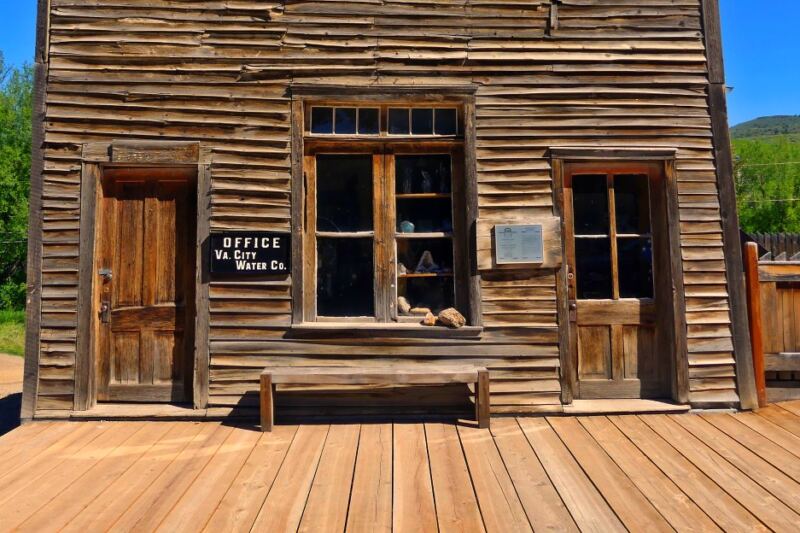
Virginia City was designated a National Historic Landmark District in 1961, and it currently preserves nearly 300 structures, with almost half dating to before 1900. Unlike many mining towns, it was never dredged, so its original layout survived intact.
As of the 2020 census, 219 people still call it home, making this a living community rather than a frozen museum. Wooden boardwalks, period artifacts, and summer living history performances give it an energy that purely abandoned ghost towns simply cannot match.
7. Nevada City, Nevada City, Montana
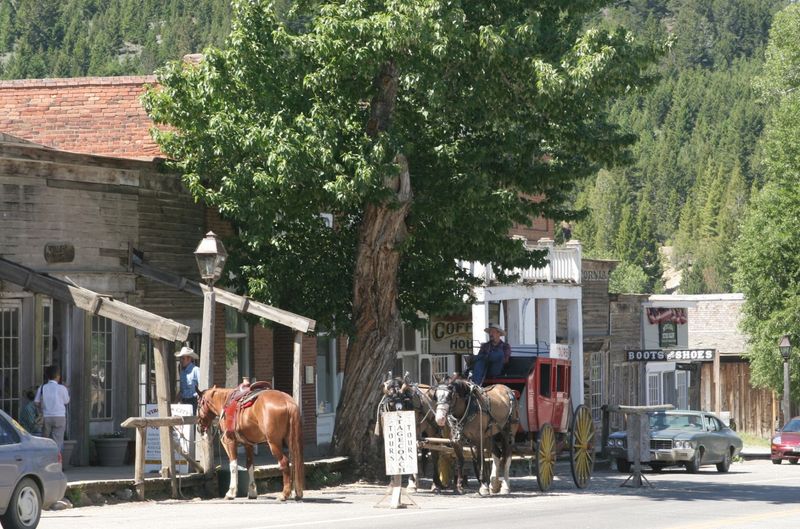
Just a mile down the road from Virginia City, Nevada City tells a different version of the Alder Gulch story. Much of the original townsite west of the highway was wiped out by early 1900s dredging operations, so what exists today is a thoughtfully assembled open-air museum combining surviving local structures with period buildings relocated from across Montana.
Visitors can walk through a Chinese laundry, a general store, and several residential cabins, all stocked with period artifacts that give the site a genuine time-capsule quality. On summer weekends, the Nevada City Museum runs Living History programs that recreate daily life from the 1860s.
Pairing Nevada City with Virginia City makes for one of the easiest and most historically rich day trips in southwestern Montana. Both sites are close enough to cover comfortably in a single afternoon without feeling rushed.
8. Pony, Montana
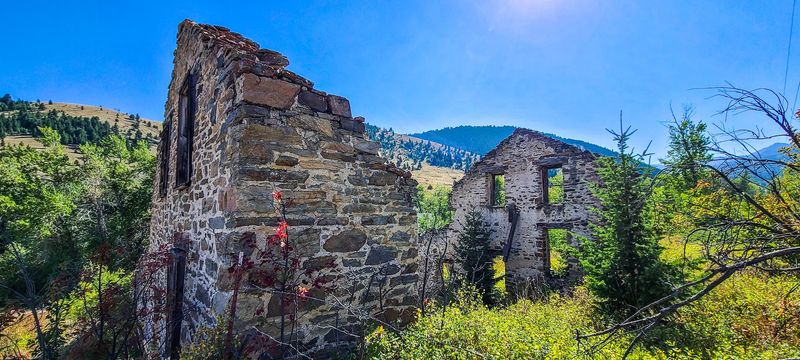
The town got its name from an early miner nicknamed Pony, a man whose real name was Tecumseth Smith, which honestly explains why the nickname stuck. Settled in the 1860s beneath the Tobacco Root Mountains, Pony grew into a legitimate gold-mining community with a population that fluctuated between 2,500 and 5,000 residents during its most productive years.
A major fire in 1920 wiped out a large portion of the business district, and mining wrapped up entirely by 1922. Still, Pony never fully vanished. The 2020 census counted 127 residents, and the Pony Historic District, listed on the National Register of Historic Places in 1987, encompasses 192 acres and 95 contributing buildings.
Historic structures include the Morris State Bank, Pony School, Pony Jail, and Fraternity Hall. A local park displays mining artifacts and machinery, and the Pony Homecoming Club maintains major public buildings as a volunteer effort.
9. Marysville, Montana
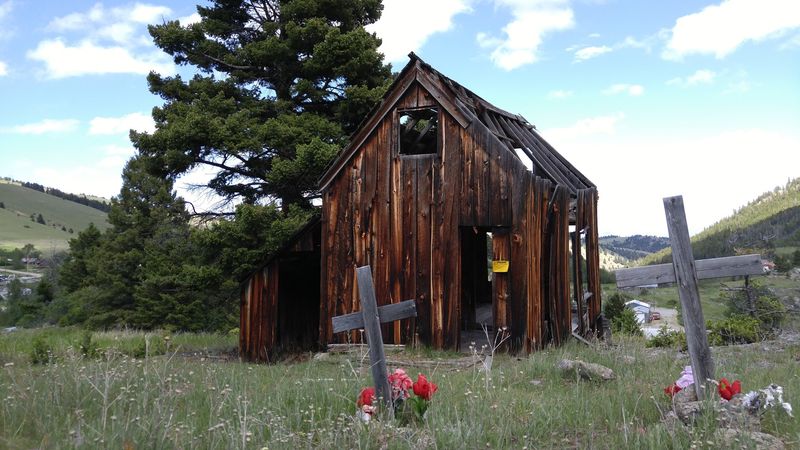
Irishman Tommy Cruse discovered gold in Silver Creek in 1876 and named the resulting settlement Marysville, though historians still argue about which Mary he had in mind. What is not disputed is the scale of what followed: the Drumlummon Mine became one of Montana’s richest and longest-operating gold mines, and the district ultimately produced between $50 million and $60 million in gold total.
At its peak, Marysville supported roughly 60 businesses and a population between 3,000 and 4,000 residents. Two churches built in 1886 still stand in town, and the Methodist-Episcopal Church is listed on the National Register of Historic Places.
Today, 82 people call Marysville home according to the 2020 census. The Great Divide Ski Area sits nearby, giving the area a bit of modern life to go alongside its well-preserved historic character.
10. Coloma Ghost Town, Drummond, Montana
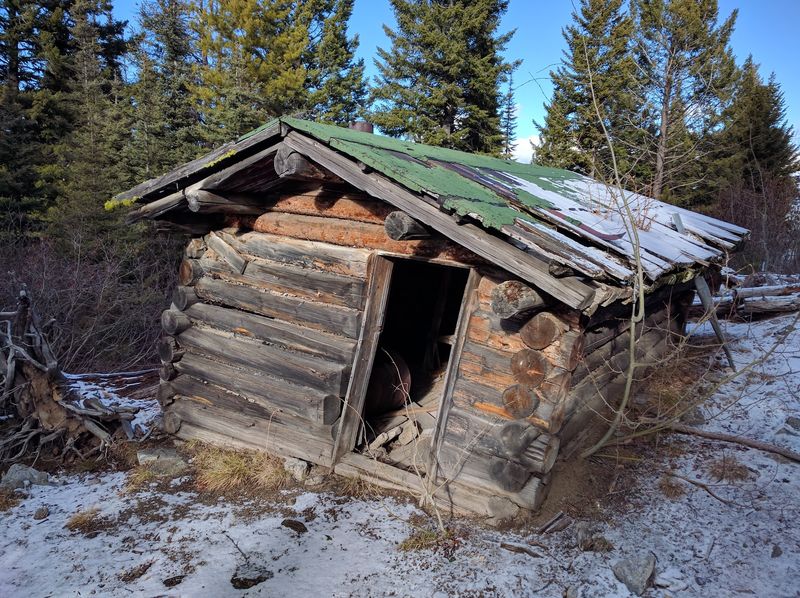
Coloma goes by the nickname Mystery Camp, and that label was earned honestly. Detailed historical records for the settlement are scarce, which gives the site an air of genuine uncertainty that more documented ghost towns cannot replicate. It was established in 1893, with significant gold mining activity recorded from 1896 onward.
More than 20 structures remain standing, and some of them still contain old newspapers and mail from the 1920s and 1930s that were used as wall insulation. Rusting ventilation systems, pumping machines, old mining shafts, and traces of narrow-gauge railroad tracks are all visible across the site.
Coloma is part of the Garnet Range Back Country Byway and is accessible from Montana Highway 200 via Garnet Range Road, though the final stretch can be challenging. The University of Montana has conducted archaeological studies here since 2009, adding a layer of ongoing scholarly interest to the site.
11. Wickes, Jefferson City, Montana
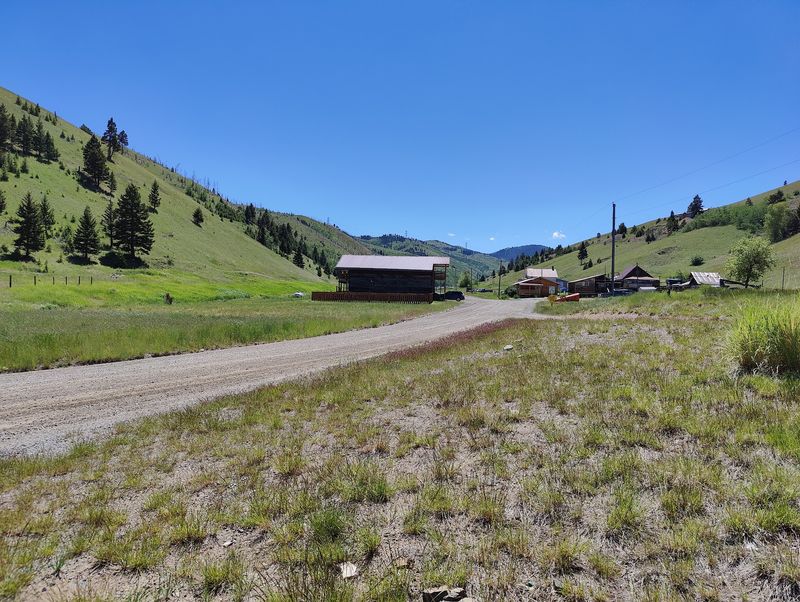
Silver deposits discovered at the Alta Mine in 1869 set Wickes on its path, and by the time a Northern Pacific Railroad branch line arrived in December 1883, the town was booming. At its peak, Wickes had around 1,500 residents and a business district that included two hotels, nine saloons, five dance halls, blacksmith shops, and a drug store.
The mines of the Wickes area are credited with producing over $50,000,000 before 1900, a figure that puts the settlement firmly in the top tier of Montana’s silver producers. The repeal of the Sherman Silver Purchase Act in 1893 and a fire that destroyed the reduction works the same year ended the boom almost immediately.
Additional fires in 1900 and 1902 took out much of what remained. Today, scattered ruins of smelters and other structures survive along local roads west of Jefferson City. Visitors should exercise caution around unstable ruins and respect all posted property boundaries.
Share this story