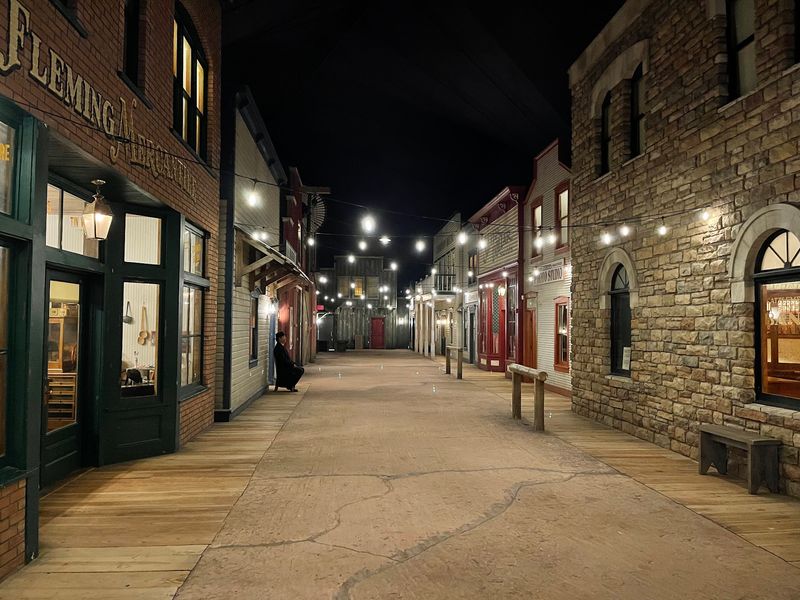
Somewhere in northeast Oklahoma City, a full 19th-century cattle town sits frozen in time, tucked inside a building most people drive past without a second glance. The National Cowboy and Western Heritage Museum is not your average history stop, and the moment you set foot inside Prosperity Junction, its life-sized indoor frontier town replica, that becomes obvious fast.
With 40-foot ceilings overhead and the faint smell of a barn in the air, the place feels less like a museum and more like a portal. Whether you grew up watching westerns or you just love a good hidden gem, this Oklahoma City landmark earns every bit of its 4.8-star reputation.
Where the Frontier Comes Back to Life
Right in the heart of northeast Oklahoma City, the National Cowboy and Western Heritage Museum sits at 1700 NE 63rd St, Oklahoma City, OK 73111. From the outside, the low-profile building and sprawling grounds give little away about what waits inside.
That mystery is part of the appeal.
The museum is dedicated to documenting and interpreting the history of the American West, covering everything from early frontier life to cowboy culture, Native American heritage, and the mythology of the West as shaped by Hollywood. The scope is genuinely impressive.
Few places in the country manage to pack this much authentic material under one roof.
A massive free parking lot wraps around the property, and overflow shuttles run when the main lot fills up. The sheer size of the complex signals immediately that you are not dealing with a quick hour-long stop.
Plan your visit accordingly, because the museum rewards people who take their time and wander without a rigid agenda.
Prosperity Junction and the Ghost Town That Never Left
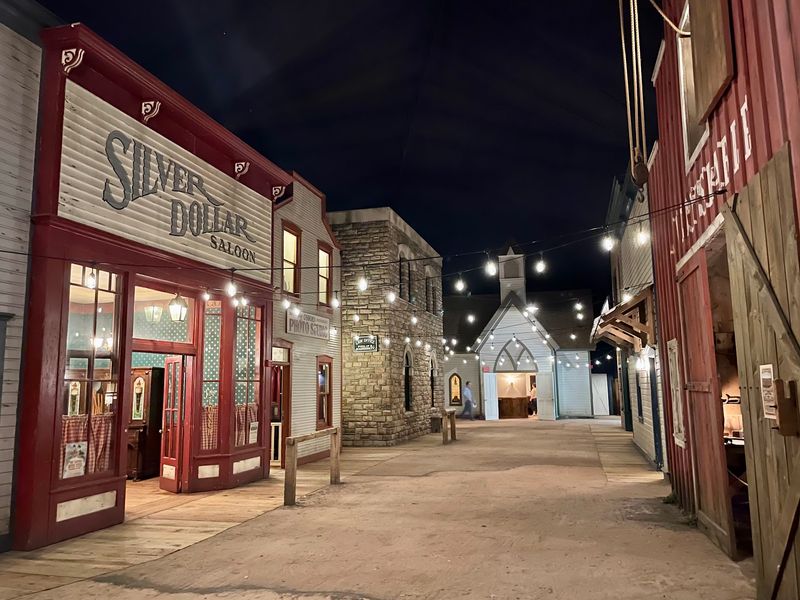
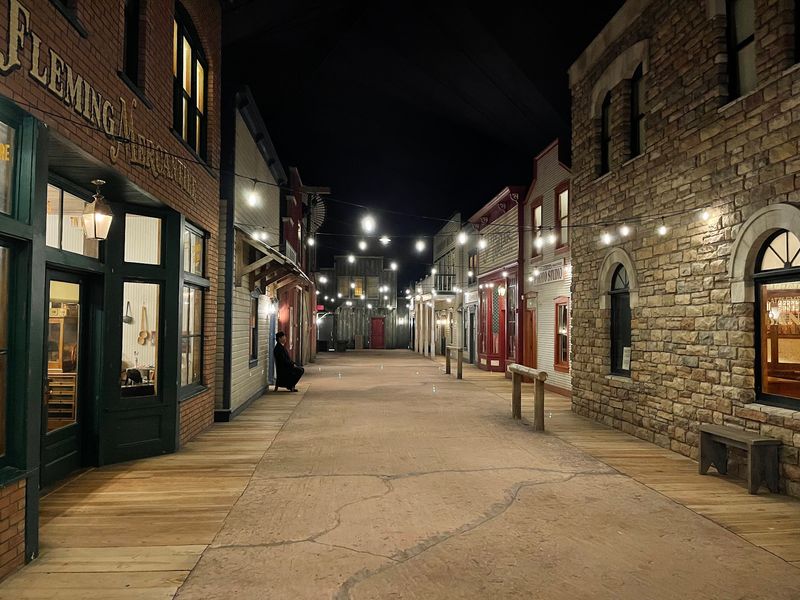
Of all the things the museum contains, Prosperity Junction is the one that stops people mid-step. It is a full-scale, life-sized recreation of a late 1800s cattle town built entirely indoors, complete with a saloon, a blacksmith shop, a church, and a general store lining a dusty main street.
The ceilings soar to 40 feet, which gives the space a genuinely open-sky feeling even though you never leave the building. The construction is detailed enough that one visitor noted the place actually smells like a barn inside, which is either a design triumph or a very committed accident.
Either way, it works.
Walking through Prosperity Junction feels less like reading about history and more like wandering into it. Kids tend to go wide-eyed here, and adults often find themselves slowing down to examine storefronts they almost walked past.
The town anchors the entire museum experience and gives the frontier era a tangible weight that photographs and artifacts alone cannot deliver.
Western Fine Art That Commands the Room
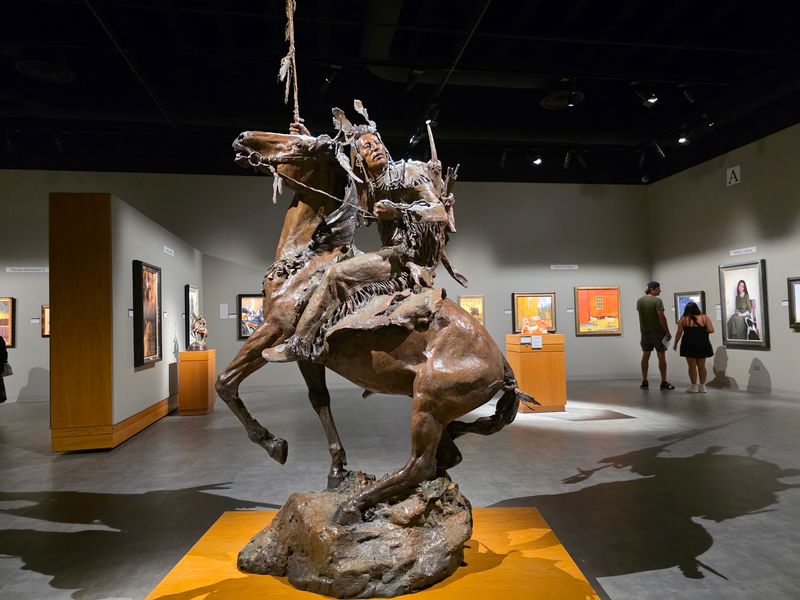
Art lovers who wander in expecting a dusty collection of saddles tend to leave genuinely surprised. The museum holds one of the most significant collections of Western fine art in the United States, featuring works by celebrated artists including Frederic Remington, whose large-scale bronzes and paintings carry a raw energy that photographs simply cannot capture.
The End of the Trail, a massive sculpture depicting a slumped warrior on an exhausted horse, greets visitors in the main gallery and sets the emotional tone for everything that follows. The piece is striking in its scale and quiet in its message, and most people stop in front of it longer than they expect to.
Beyond the signature works, the galleries rotate through a broad range of Western-themed paintings, sculptures, and mixed-media pieces that span generations of American art. The curation keeps things moving without feeling rushed.
Each room introduces a different chapter of the West’s visual story, making the art collection feel like a journey rather than a checklist.
The Horse and Tack Collection
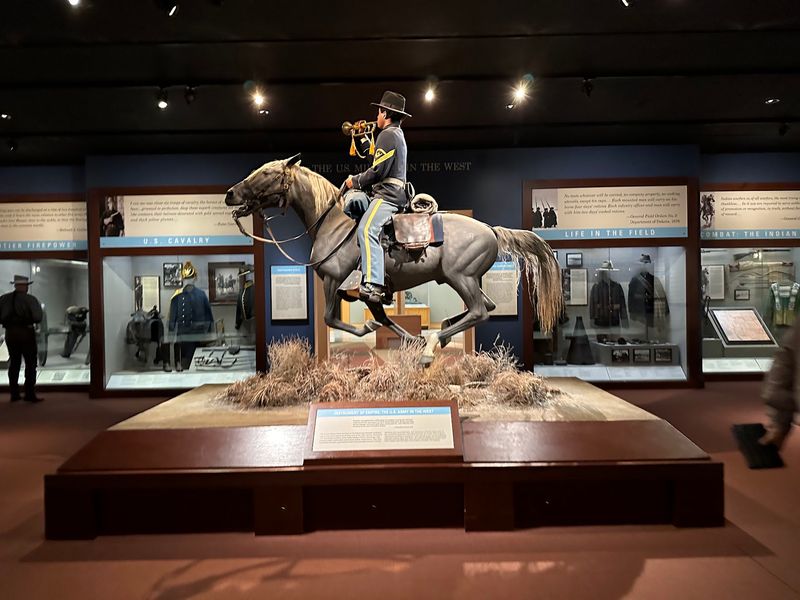
Dedicated entirely to the relationship between cowboys and their horses, this section of the museum goes deeper than most people anticipate. The collection traces the evolution of saddles, bridles, spurs, and other tack across decades of frontier history, showing how both function and craftsmanship shifted as the West changed around them.
For anyone with a background in riding or horsemanship, the display reads almost like a personal timeline. The leather work alone is worth examining up close, with intricate tooling on saddles that represent serious artistry alongside serious utility.
These were not decorative objects. They were the tools that made the cattle industry possible.
The horses themselves are represented through paintings, sculptures, and detailed dioramas that capture everything from trail drives to rodeo arenas. One visitor who described herself as an avid horse person spent considerable time in this section alone.
The museum clearly understands that the American cowboy story cannot be told without giving equal weight to the animals that made it all possible. That respect for the full picture is one of the things that sets this place apart.
Native American Artifacts and the Full Story
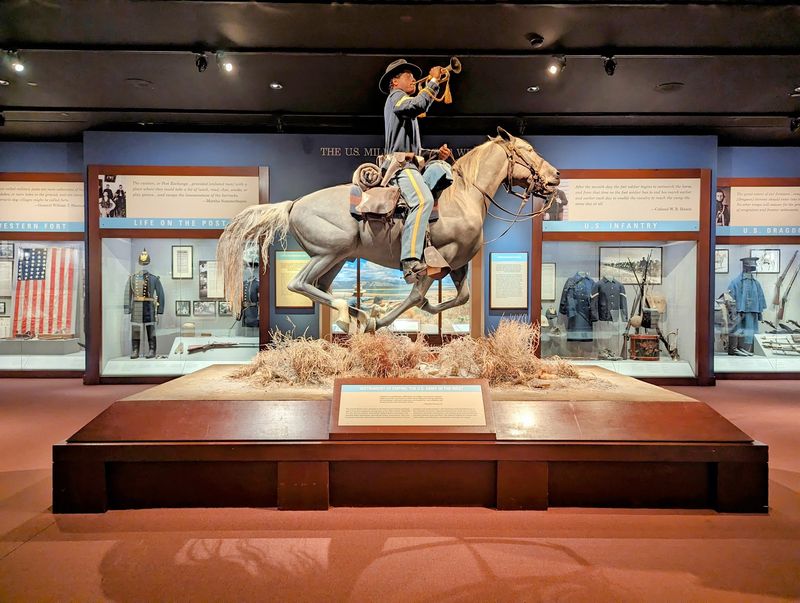
One of the museum’s most meaningful qualities is its commitment to telling the complete history of the American West rather than a polished, simplified version of it. The Native American artifact collection reflects that honesty directly, presenting clothing, pottery, beadwork, tools, and ceremonial objects with context and care.
The exhibits do not treat Indigenous culture as a footnote to the cowboy narrative. Instead, they position Native American history as foundational to understanding the West itself.
That framing makes a real difference in how the overall museum experience lands, and it is something visitors consistently notice and appreciate.
The collection spans multiple nations and time periods, showing cultural diversity that often gets flattened in popular Western mythology. Each display is accompanied by enough historical context to make the objects meaningful rather than simply visually interesting.
The museum’s approach here reflects a broader institutional commitment to accuracy over comfort, which gives the entire experience a credibility that more selective history museums tend to lack. That commitment is evident throughout the building, but it is especially clear in this section.
The Barbed Wire Display Nobody Expects to Love
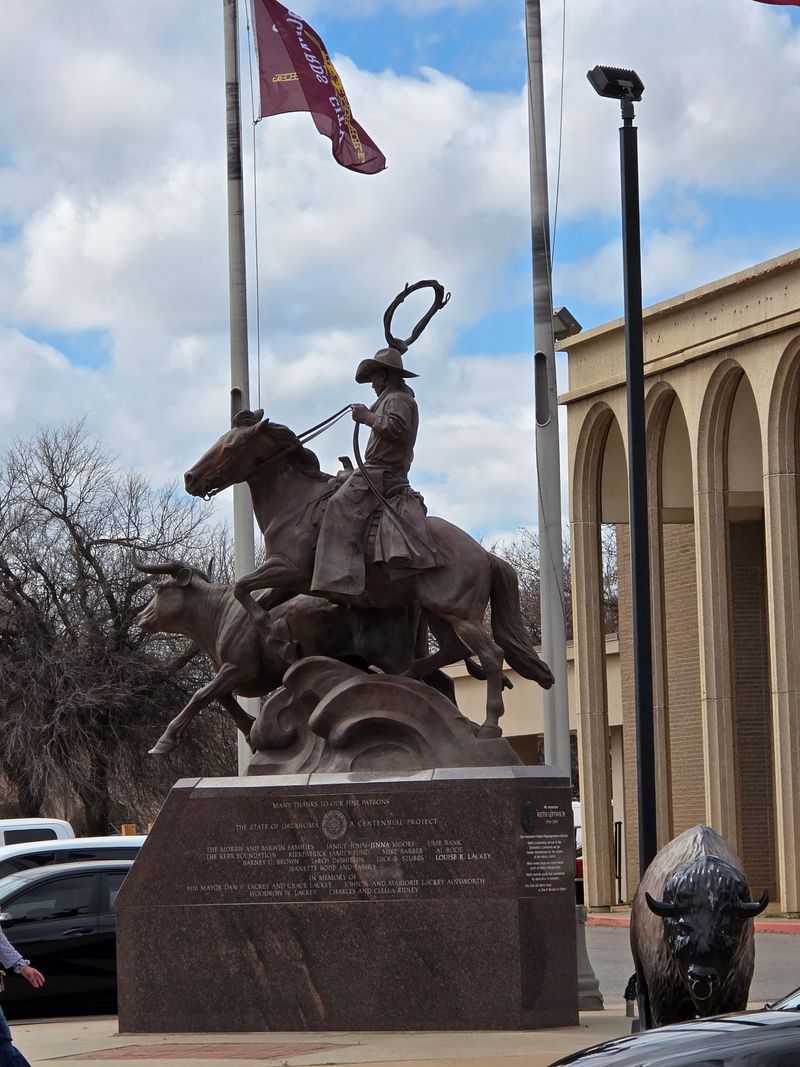
Few exhibits in any museum generate the kind of unexpected enthusiasm that the barbed wire collection does here. It sounds like an odd thing to get excited about, but the display manages to turn what seems like a mundane industrial product into a genuinely fascinating chapter of American history.
The collection shows the remarkable variety of barbed wire designs patented during the late 1800s, a period when the technology was actively reshaping the open range and triggering real conflict between ranchers, farmers, and cattle drivers. Each style has its own origin story, its own geography, and its own role in the transformation of the frontier landscape.
Visitors who almost skip this section often end up lingering the longest. The display works because it connects a physical object to enormous social and economic change in a way that clicks immediately.
One visitor specifically mentioned the barbed wire displays as a personal highlight, noting the history behind the various styles throughout history. That reaction captures something true about the museum’s approach: even the unexpected corners reward attention.
The curators clearly trusted that the real story is interesting enough to stand on its own.
Hollywood Cowboys and the Movie Section
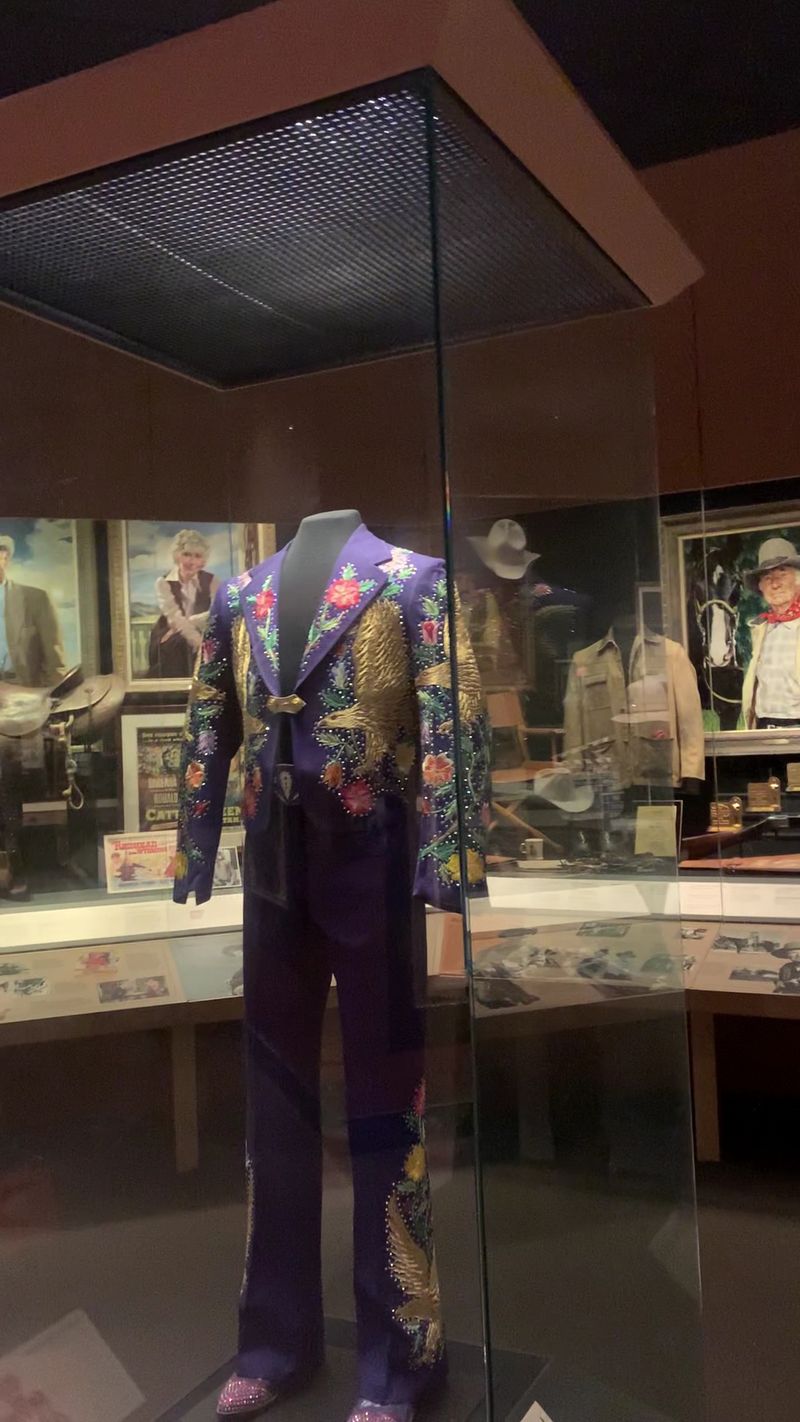
The American West was shaped by reality, but it was defined in the popular imagination by film and television. The museum acknowledges that cultural layer directly with a dedicated section covering Western movies and the actors who embodied the genre across several decades.
Gunsmoke fans will find a familiar corner here, along with memorabilia and displays covering other landmark Western productions. The section traces how Hollywood translated frontier mythology into a shared national identity, for better and sometimes for worse.
The curation is honest about that complexity without turning the exhibit into a lecture.
Costumes, props, photographs, and production artifacts fill the displays with a warmth that feels genuinely celebratory rather than purely academic. The section works particularly well for older visitors who grew up watching these shows and films, and it gives younger visitors a clear window into why the cowboy became such a durable cultural symbol.
One visitor specifically mentioned the movie section as a personal highlight, which tracks, because this part of the museum connects history to storytelling in a way that feels immediate and personal rather than distant and textbook-dry.
The AI Photo Booth and Interactive Surprises
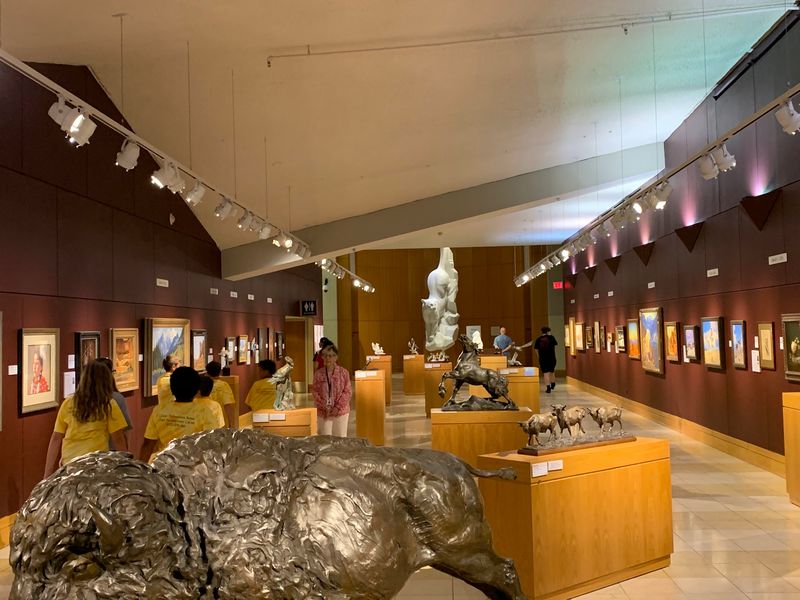
Tucked among the historical exhibits is one of the most genuinely fun surprises in the building: a self-service AI photo booth that digitally dresses visitors in authentic cowboy gear, adjusting pose and styling to match the classic Western aesthetic. It is free to use, takes only a few minutes, and produces photos that visitors consistently describe as impressive.
The booth is not a gimmick tacked on to seem modern. It fits naturally into a museum that understands its audience includes people who want to connect with history personally, not just observe it from behind glass.
Families tend to cluster around the booth, and the resulting photos have a way of becoming the souvenir people actually keep.
Beyond the photo booth, the museum offers hands-on activities throughout the building, including interactive stations at the Annie Oakley Center that work particularly well for younger visitors. A Wells Fargo stagecoach replica allows visitors to actually sit inside, which is a detail that transforms a historical object from something to look at into something to experience.
The interactive elements are woven throughout the museum rather than corralled into a single kids-only zone, which makes the whole place feel more alive.
Outdoor Gardens and the Space Beyond the Walls
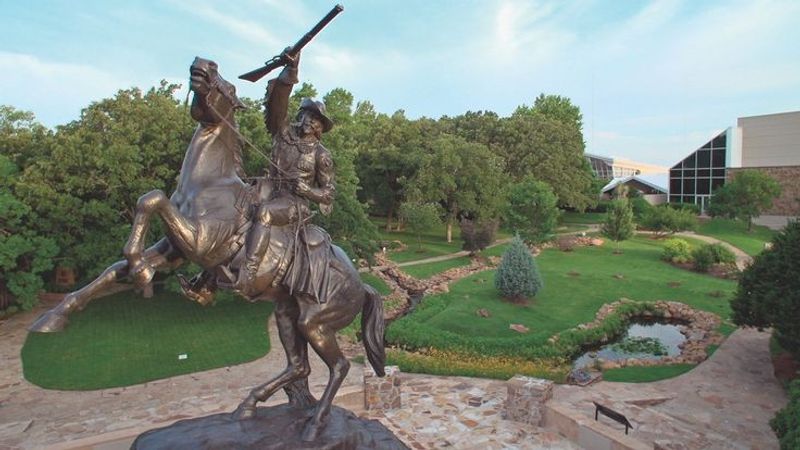
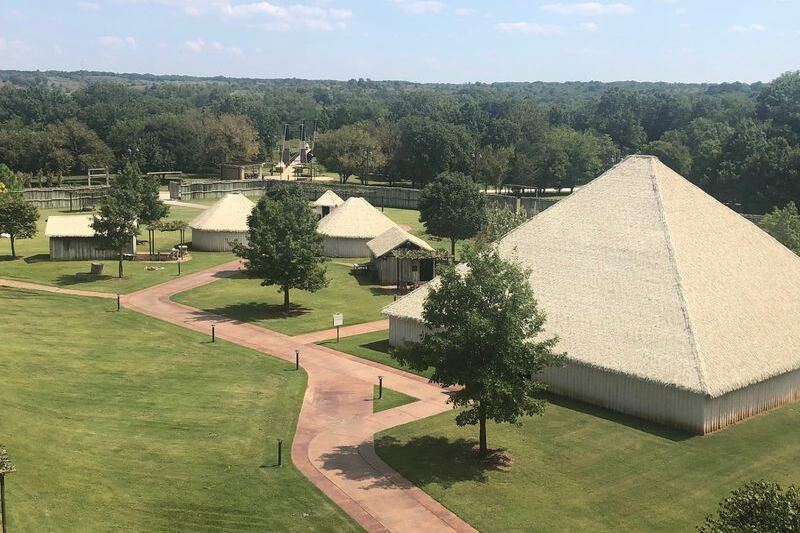
Most visitors focus on the interior galleries, but the outdoor areas at the National Cowboy and Western Heritage Museum add a full additional chapter to the experience. The grounds feature a landscaped garden with sculptures and additional exhibits spread across open-air spaces that feel like a natural extension of the indoor collection.
A playground for younger children sits within the outdoor area, making the museum genuinely family-friendly in a practical sense rather than just a marketing sense. Families can let kids burn some energy outside without losing the thread of the visit.
The garden paths invite slower exploration, and the sculptures placed throughout the grounds carry the same quality as the pieces inside.
One visitor expressed regret at not having enough time to properly explore the gardens and gift shop, which suggests the outdoor section earns more attention than it sometimes gets. The Route 66 exhibit, accessible inside the museum, adds another layer of regional history that connects the cowboy story to Oklahoma’s broader cultural identity.
Visitors who only tackle the interior are genuinely missing part of what makes this place worth the trip, so building extra time into your visit pays off.
Hours, Admission, and Planning Your Visit
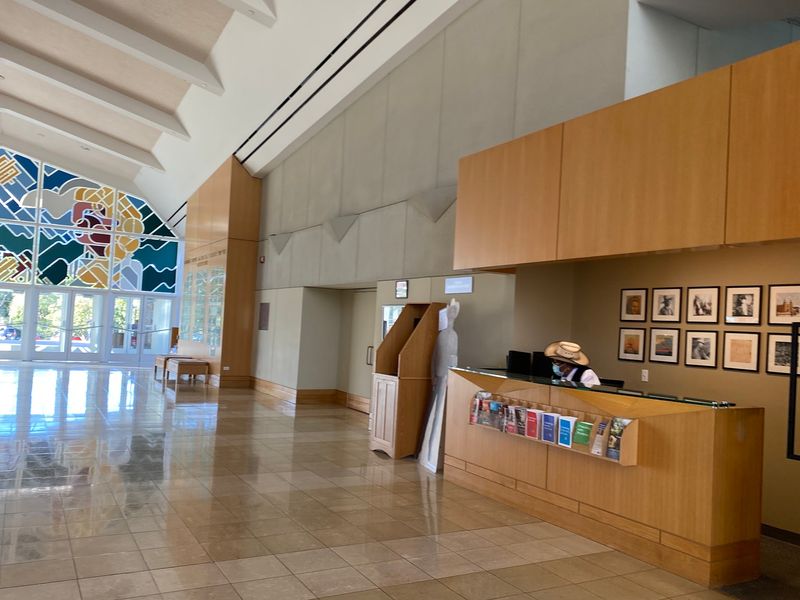
Getting the logistics right makes a real difference at a museum this size. The National Cowboy and Western Heritage Museum is open Monday through Thursday from 10 AM to 5 PM, and stays open until 8 PM on Fridays and Saturdays, which gives evening visitors a real option.
Sunday hours run from noon to 5 PM, so plan accordingly if Sunday is your only available day.
Parking is free and plentiful, with a large lot directly outside the museum and overflow lots served by shuttle buses when the main area fills up. The museum phone number is 405-478-2250, and the website at nationalcowboymuseum.org carries updated information on special events, temporary exhibits, and seasonal programming like the Chuck Wagon Festival.
Most visitors recommend budgeting at least two to three hours for a thorough visit, and some find that half a day disappears faster than expected. The museum also offers memberships for families who want to return without feeling rushed, which several visitors have taken advantage of after realizing one trip is not enough.
The admission price draws occasional mention in reviews, but the consistent response is that it is worth every penny given what the museum delivers.
Share this story