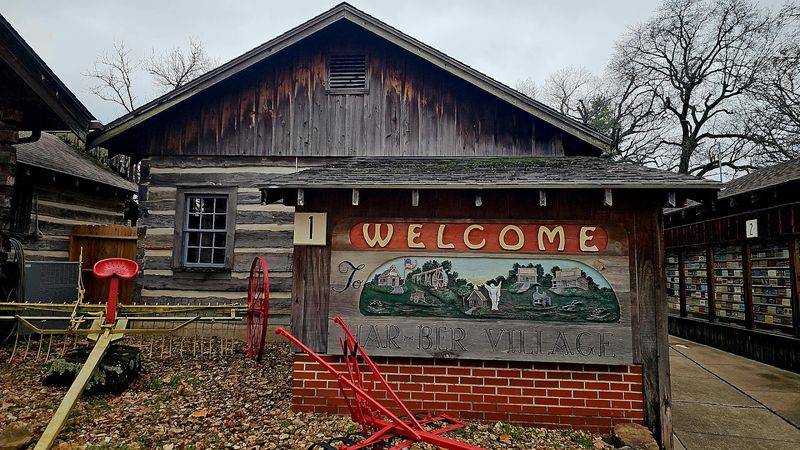
Tucked along the shores of Grand Lake in northeastern Oklahoma, Har-Ber Village Museum is one of those rare places that genuinely surprises you. More than 100 full-size structures recreate a 19th-century frontier settlement, and every cabin, courthouse, and blacksmith shop is packed with real artifacts from pioneer life.
The museum sits at 4404 W 20th Rd in Grove, Oklahoma, and has earned a 4.8-star rating from nearly 600 visitors. Whether you grew up in the Sooner State or you are just passing through on a road trip, this open-air landmark delivers a hands-on history lesson that feels nothing like a classroom.
A Pioneer Settlement on the Edge of Grand Lake
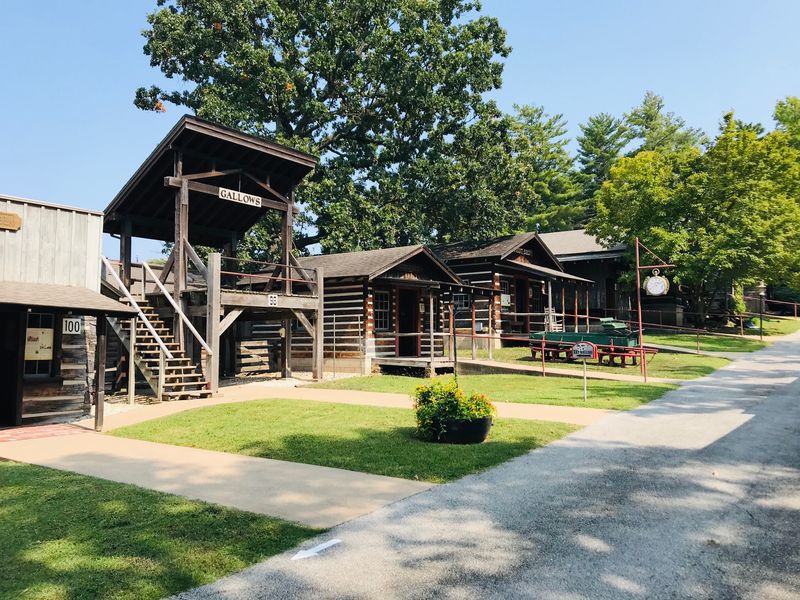
Grand Lake glitters just beyond the treeline, and the first thing you notice at Har-Ber Village Museum is how the water and the history seem to belong together. The museum is located at 4404 W 20th Rd, Grove, Oklahoma 74344, in the northeastern corner of the state, right where the Ozark foothills begin to soften into the plains.
Grove is a small lakeside city in Delaware County, and it sits within easy driving distance of both Tulsa and the Arkansas border. The location alone gives the museum a scenic backdrop that most history attractions can only dream about.
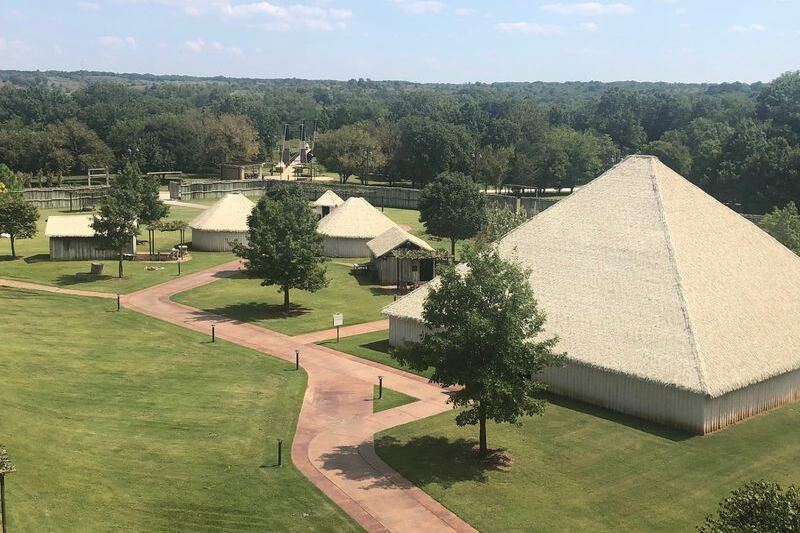
What makes Har-Ber Village stand apart from a typical museum is its sheer physical scale. Rather than displaying artifacts behind glass in a single building, the founders constructed an entire town from the ground up.
Over 100 structures spread across beautifully landscaped grounds, each one housing collections that reflect pioneer and Native American life in the four-states region. The numbered map handed out at the visitor center helps you pace the experience without backtracking, which is a small but genuinely thoughtful touch that sets the tone for the whole visit.
The Vision Behind the Village
Behind every great landmark is a story worth knowing, and Har-Ber Village has a compelling one. The museum was founded by Harvey and Bernice Jones, a couple whose combined first names gave the place its distinctive title.
Harvey Jones built a successful trucking business, and rather than simply accumulating wealth, the couple channeled their resources into preserving the material culture of the American frontier.
Their goal was not to build a theme park or a Hollywood set. They wanted a living record of how ordinary people worked, worshipped, cooked, and survived during the 1800s in this part of North America.
Every building and every artifact was selected with that educational mission in mind.
The museum opened to the public and has grown steadily ever since, with new updates and cabin restorations continuing to this day. Reading the biographical displays about the founders inside the village adds a personal layer to the experience.
You also encounter fascinating profiles of historical figures from the region, including Cherokee lawyers, a federal judge known for handing down firm sentences, and a woman who worked her way from teaching school to holding a controlling interest in a bank. The human stories here run surprisingly deep.
Over 100 Buildings and What Lives Inside Them
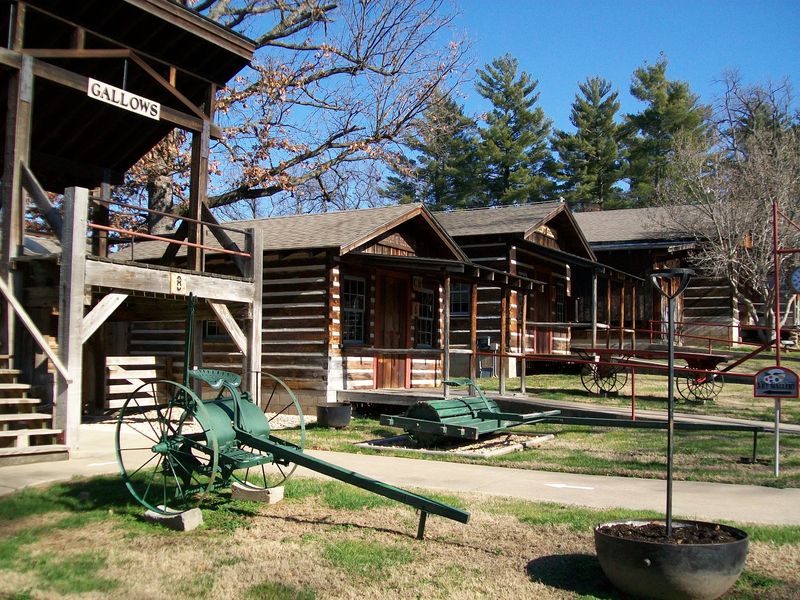
Walking the numbered path at Har-Ber Village feels a little like flipping through a very large, very three-dimensional history book. Each structure represents a different facet of 1800s life, and the variety keeps the experience from ever feeling repetitive.
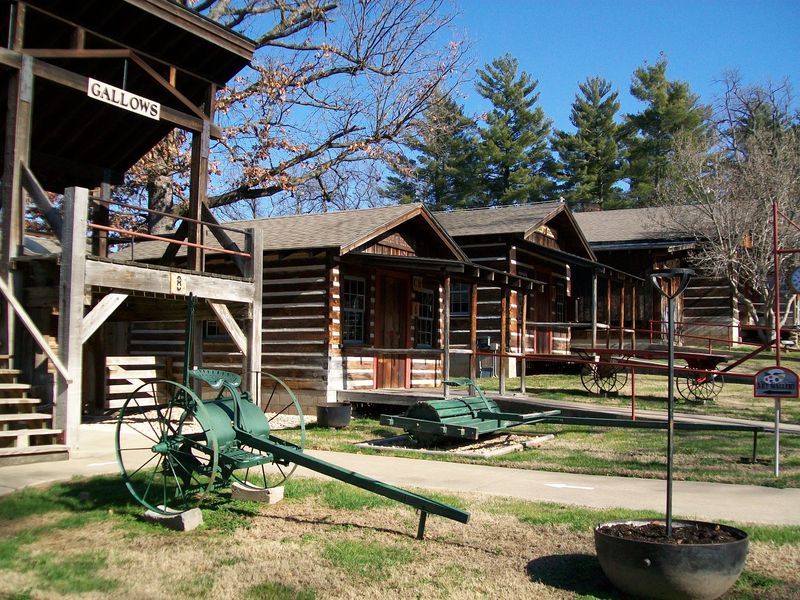
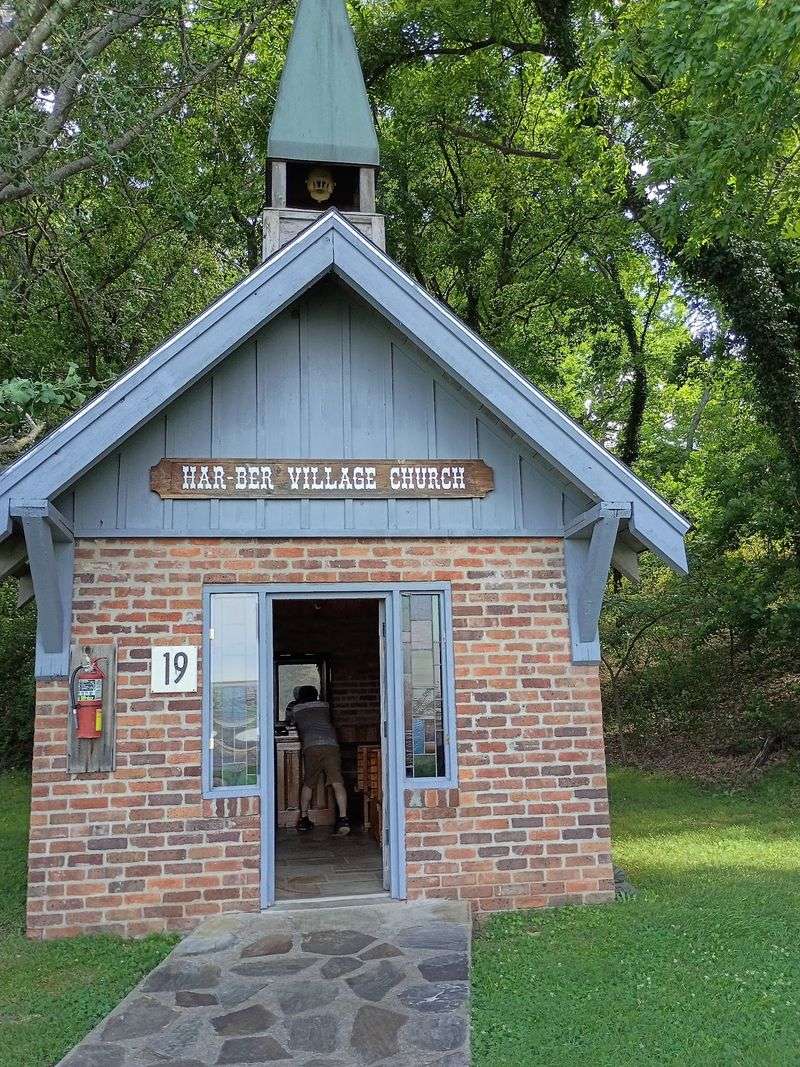
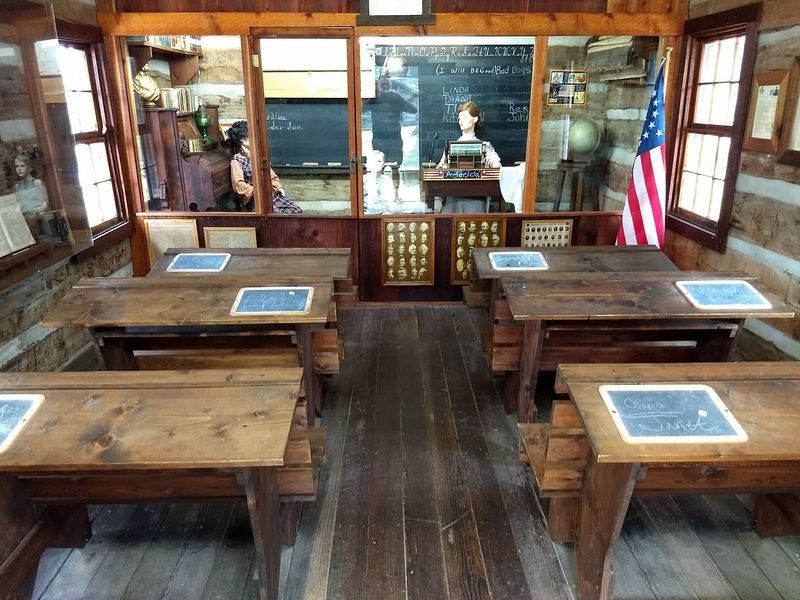
A log schoolhouse sits near a working blacksmith shop. A tiny frontier church with a working bell stands just a short walk from a full courthouse and a jail cell that looks exactly as stern as it should.
The taxidermy collection inside one building includes a giant polar bear that stops most visitors in their tracks. Elsewhere, rooms are dedicated entirely to antique glassware, vintage dolls, marbles, spoons, Boy Scout and Girl Scout memorabilia, and military artifacts.
The diversity of the collections is genuinely impressive. Whether you are a serious antiques enthusiast or a casual visitor who just appreciates old things, there is something in nearly every building that earns a second look.
Many visitors note that even after spending several hours on the grounds, they did not manage to see everything. Plan for at least two to three hours at a minimum, and consider a full day if you want to take it all in without rushing.
The Grounds Themselves Are Half the Experience
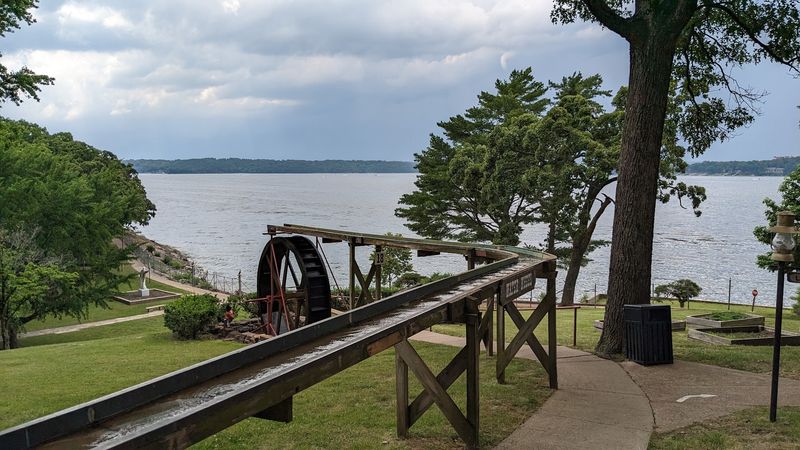
Some outdoor museums treat their grounds as an afterthought, but at Har-Ber Village, the landscape is a genuine attraction. The property rolls gently up and down with the natural terrain of the Ozark foothills, so the path through the village has real elevation changes that give each new building a slightly different vantage point.
The views of Grand Lake appear at several points along the route, and they are legitimately beautiful. A working water wheel adds a bit of old-world charm near the town square area, and the bell visible from the central path is the kind of detail that makes the whole setting feel cohesive rather than scattered.
The grounds are well-maintained, with plenty of shade from mature trees and multiple spots to sit and rest along the way. That matters more than you might expect, because the terrain does involve some uphill and downhill stretches.
Comfortable shoes are a practical necessity rather than a casual suggestion. The overall aesthetic of the property, with its mix of historic structures, lake views, and green landscaping, creates an atmosphere that feels genuinely peaceful and removed from the everyday.
It is the kind of place where time seems to move at a slower, more deliberate pace.
Hands-On Activities That Bring History to Life
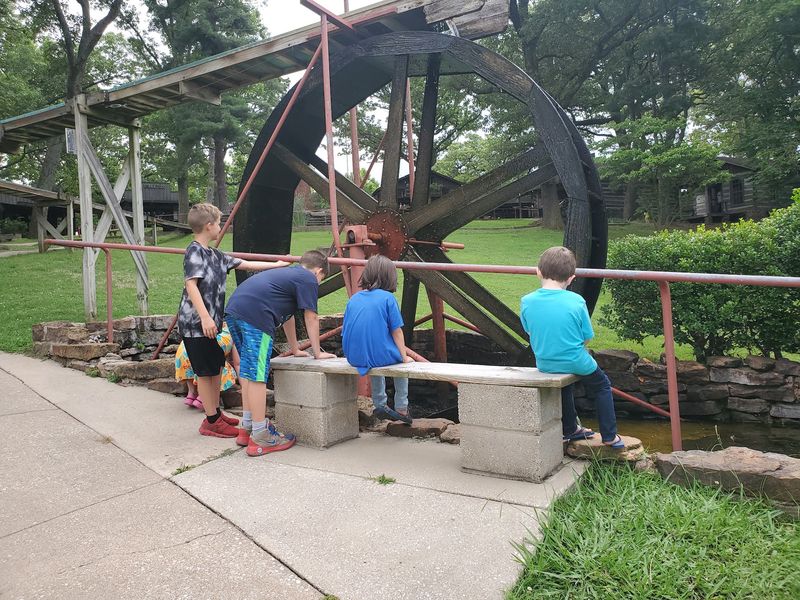
History lands differently when you can touch it, and Har-Ber Village understands that better than most museums its size. Several of the buildings offer hands-on activities that pull visitors out of passive observation and into active participation.
A live weaving demonstration lets you watch a traditional loom in action, and the staff members running it are genuinely enthusiastic about explaining the craft. Kids can try washing laundry with an old-fashioned washboard, which sounds simple but turns out to be a surprisingly effective way to appreciate how much labor went into everyday household tasks before modern appliances existed.
One of the more popular stations lets children carve their own soap bars, which taps into the same woodcarving skills that pioneers used to shape tools and decorative objects. Staff members at these stations are described by many visitors as eager to share what they know, making the demonstrations feel conversational rather than scripted.
There is also a children’s play area on the grounds for younger visitors who need a break from structured learning. The combination of interactive stations and free exploration gives families the flexibility to customize the visit based on age and interest level, which is one of the museum’s real strengths.
The Nature Trail and Wildlife Along the Lake
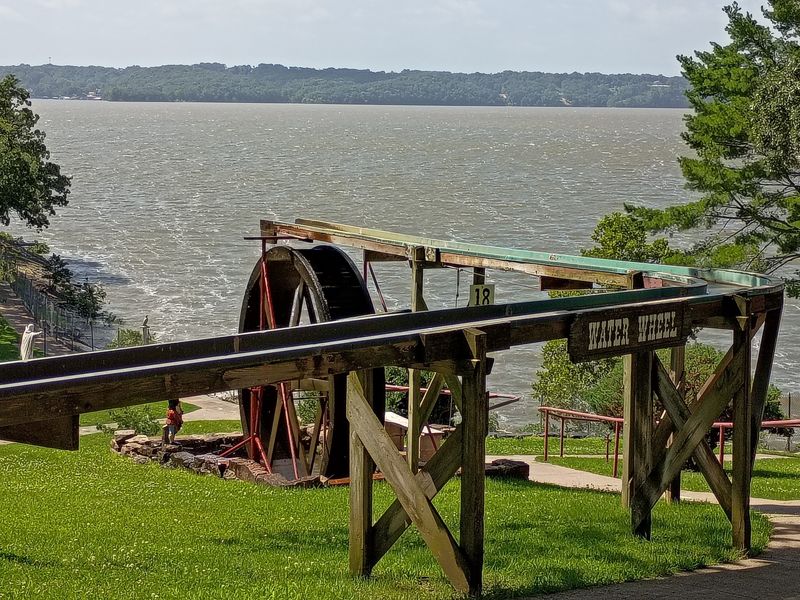
Beyond the village buildings, Har-Ber Village offers something that catches many first-time visitors off guard: a two-mile nature trail that is free to explore. The trail runs partly along the lakeside, with both paved and unpaved sections, making portions of it accessible for visitors with limited mobility.
For birders, the trail is a legitimate draw on its own. Sitting along the water’s edge, you might watch pelicans or cranes swoop down toward the lake surface, and the woodland sections attract a solid variety of songbirds throughout the year.
Bald eagles have been spotted on the property as well, which is the kind of wildlife sighting that tends to become the highlight of an entire trip.
Even the drive in and out of the property has delivered up-close deer sightings for some visitors, so it is worth slowing down and keeping your eyes open from the moment you turn off the road. The nature trail gives the museum a dual identity that works surprisingly well: part frontier history lesson, part quiet outdoor escape.
Families with young children who need to burn energy between exhibits will find the trail especially useful as a natural reset between the more structured parts of the visit.
Collections That Reward the Curious

Part of what makes Har-Ber Village so rewarding is the sheer breadth of its collections. The museum does not focus narrowly on a single era or theme.
Instead, it casts a wide net across the material culture of the 1800s and early 1900s, and the result is a series of rooms that feel genuinely curated rather than randomly assembled.
The doll collection fills an entire dedicated area and draws visitors of all ages, from grandparents who recognize specific styles from their own childhoods to younger kids encountering antique toys for the first time. A room devoted to antique glassware rewards anyone with an eye for craftsmanship, while the marble collection is the kind of unexpected specialty that makes you realize how much history can hide inside something small.
Military artifacts, Boy Scout and Girl Scout memorabilia, vintage furniture, and pioneer farming equipment round out the experience across multiple buildings. The farm machinery on the grounds gives a sense of the physical scale of 19th-century agricultural work that photographs simply cannot replicate.
For anyone who finds standard museum displays a little too tidy and detached, the density and variety of collections at Har-Ber Village offer a more immersive and genuinely surprising alternative.
Who Enjoys It Most and Why
Har-Ber Village has a reputation for working well across a surprisingly wide age range, which is not something every history museum can honestly claim. Families with children find that the mix of hands-on activities, open outdoor spaces, and visually interesting buildings holds attention far better than a traditional indoor exhibit hall would.
Senior visitors and history enthusiasts tend to appreciate the depth of the collections and the biographical displays that connect individual human stories to the broader sweep of frontier history. Groups of senior citizens have made organized day trips to the museum from as far as Van Buren, Arkansas, and consistently come away impressed by both the setting and the extent of the exhibits.
Dog owners will be happy to know that the museum is dog-friendly, and staff members extend that welcome to four-legged visitors as genuinely as they do to their human companions. Birders, antique collectors, history teachers, and casual road-trippers all seem to find something that speaks specifically to their interests.
The museum also hosts events throughout the year, including crafting workshops, reenactments, and seasonal festivals, which gives repeat visitors a reason to come back and discover something new each time they make the drive to Grove.
The Cafe and Gift Shop
After a few hours of walking the grounds, the on-site cafe becomes a genuinely welcome sight. The museum has a small cafe where visitors can grab lunch without having to leave the property and drive into Grove, which makes it easier to keep the day’s momentum going rather than breaking the spell of the experience entirely.
The food is straightforward and satisfying rather than elaborate, which suits the setting well. A pioneer village probably should not be serving fusion cuisine, and the cafe leans into its role as a practical, comfortable rest stop between exhibits.
The gift shop is compact but thoughtfully stocked, and the staff there tend to know their inventory well. One visitor noted that the shop associate was personally familiar with the artisan who made a particular set of decorative angels being sold there, which is exactly the kind of small-town connection that makes shopping at a place like this feel different from browsing an online store.
The gift shop carries items that reflect the museum’s historical focus, making it a reasonable stop for anyone looking for a souvenir that actually connects to what they just spent the day learning about rather than a generic keepsake.
Accessibility and Terrain Notes
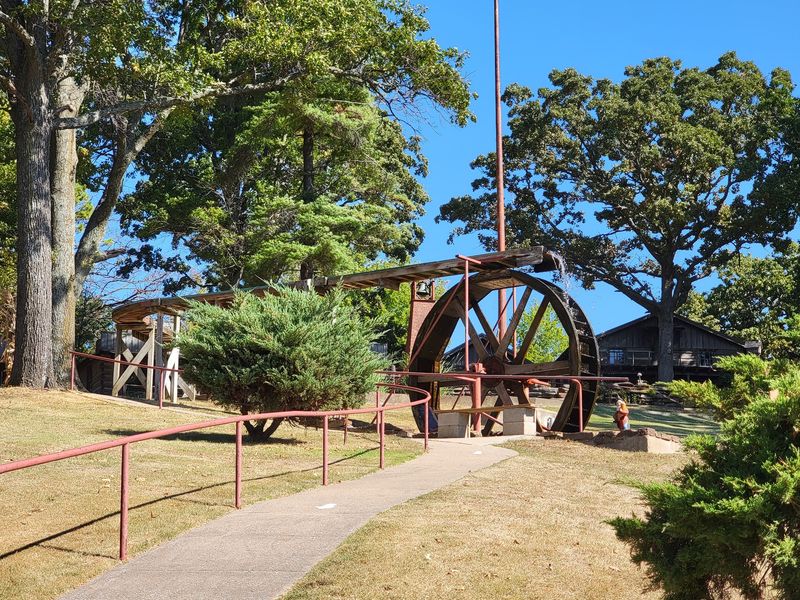
Har-Ber Village is honest about its terrain, and that honesty is worth passing along before you plan your visit. The grounds include some genuinely steep inclines in certain sections, which can be challenging for visitors using wheelchairs or mobility scooters.
Parts of the path are paved and navigable, but others involve unpaved surfaces and elevation changes that require a degree of physical comfort with uphill walking.
The museum does have a small number of wheelchairs available for visitors who need them, which is a helpful option for those who might need occasional assistance rather than full-time mobility support. If you are visiting with someone who has significant mobility limitations, it is worth calling ahead at 918-786-6446 to get a clearer picture of which sections of the grounds are most accessible on a given day.
The hilly terrain also means that comfortable, supportive footwear is genuinely important rather than just a polite suggestion. The upside of the elevation changes is that they provide better views of Grand Lake from certain points along the route, so the hills do earn their place in the experience.
Bringing water bottles and sunscreen is also strongly recommended, particularly during Oklahoma’s warmer months when the sun can be relentless even with shade available.
Hours, Admission, and Getting There
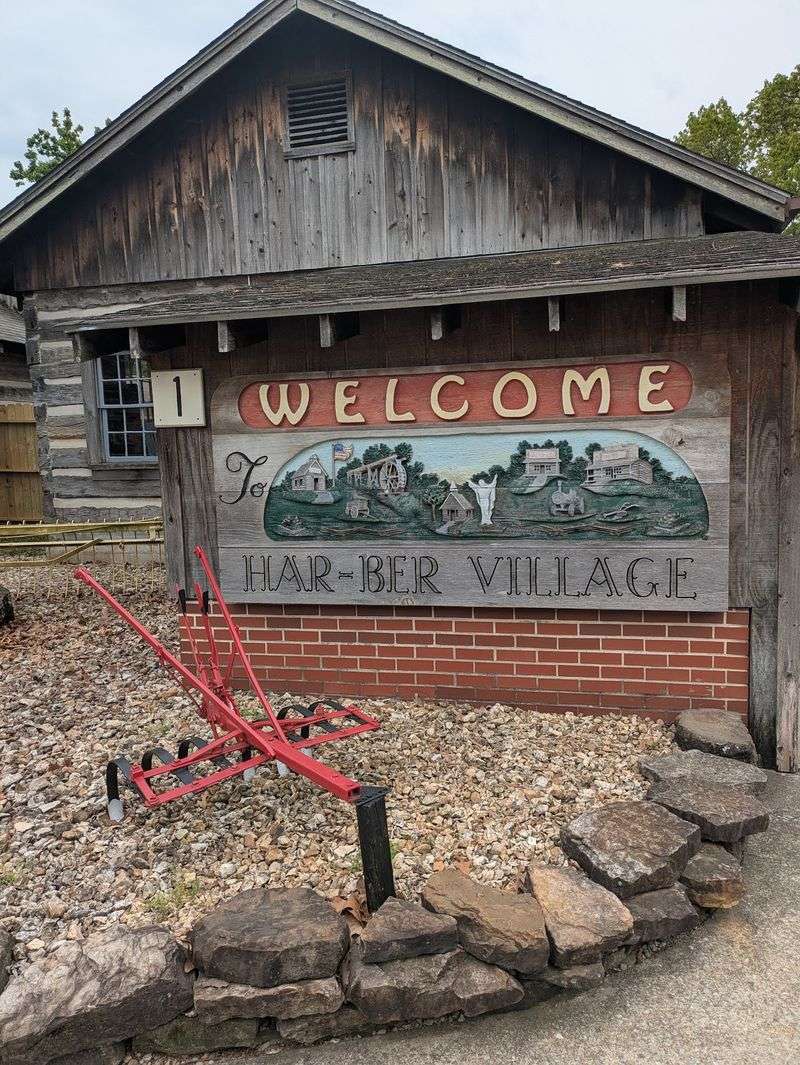
Planning your visit to Har-Ber Village requires a bit of attention to the schedule, because the museum keeps a specific weekly calendar that catches some visitors off guard. The museum is open Thursday through Monday from 9 AM to 3:30 PM, and it is closed on Tuesdays and Wednesdays.
That Wednesday and Thursday closure pattern is easy to overlook if you are booking a spontaneous road trip, so it is worth double-checking before you make the drive.
Admission is currently $15 per person, which brings the total to $45 or more for a family of three before adding food or drinks. Some visitors feel that price point is on the higher end for a regional attraction, while others consider it a fair exchange for a full day of exploration across more than 100 buildings.
The museum’s website at har-bervillage.com has current pricing and event information if you want to plan around a specific workshop or seasonal festival.
Getting there is straightforward. The museum is located at 4404 W 20th Rd in Grove, Oklahoma, just off the shores of Grand Lake.
Grove is accessible from Tulsa via US-412 East, and the drive through the northeastern Oklahoma landscape is pleasant enough to be part of the experience rather than just a means to an end.
Why Har-Ber Village Deserves a Spot on Your Oklahoma List
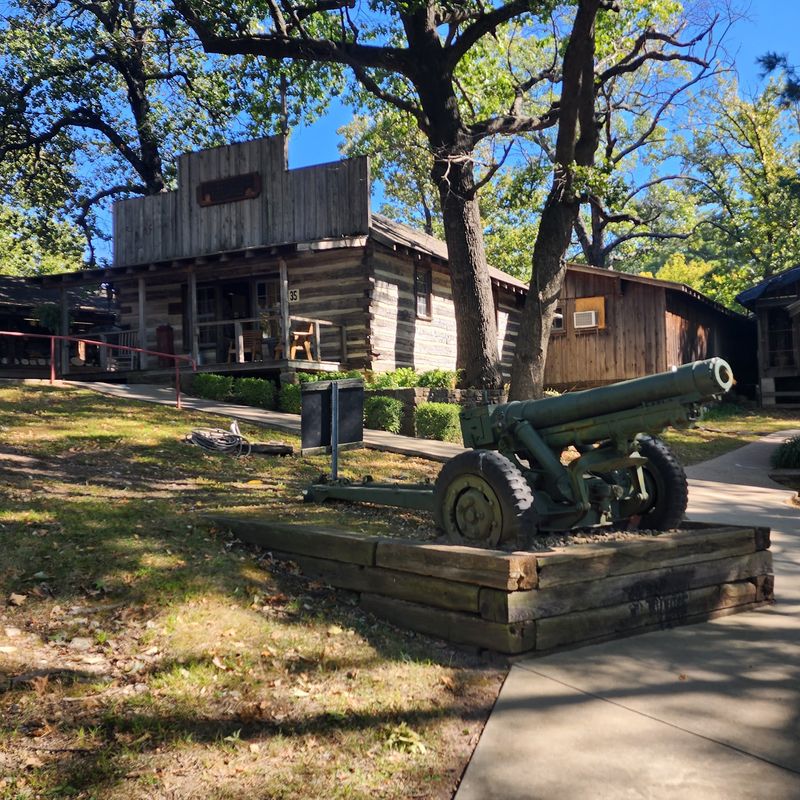
A 4.8-star rating from nearly 600 visitors is not something a place earns by accident. Har-Ber Village Museum has built that reputation through a combination of genuine historical depth, a spectacular natural setting, and a staff that seems to actually care about the experience each visitor takes home with them.
The museum occupies a unique position in Oklahoma’s travel landscape. It is not a theme park, and it does not try to be.
It is a carefully assembled record of frontier life, displayed in a format that invites you to slow down, wander, and pay attention to details that most modern life does not leave room for. The lake views, the wildlife, the hands-on crafts, and the sheer variety of the collections all reinforce each other in a way that feels organic rather than manufactured.
Whether you are a lifelong Oklahoma resident who somehow has never made the trip to Grove, or a traveler cutting through the region on a longer journey, Har-Ber Village rewards the detour. Pack comfortable shoes, bring more water than you think you need, and give yourself more time than you think the admission price justifies.
Chances are, you will leave wishing you had arrived an hour earlier.
Share this story