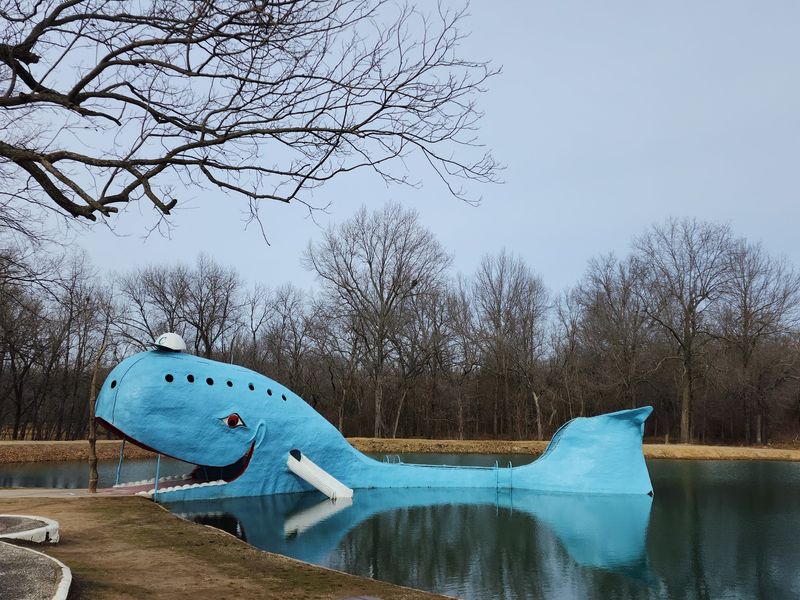
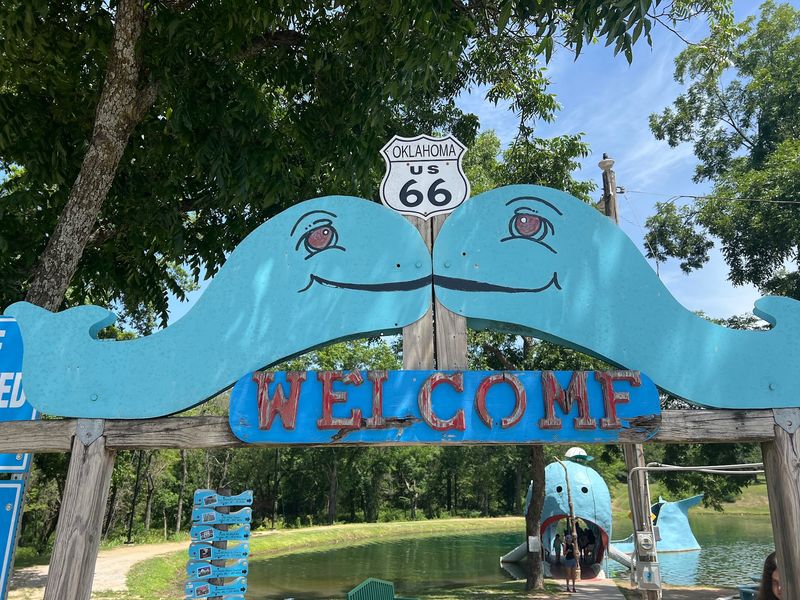
Somewhere along the storied stretch of Route 66 in northeastern Oklahoma, a giant smiling blue whale rises from a quiet pond, and it has been doing so since 1972. Built by hand as an anniversary gift, this 80-foot concrete creature became one of the most beloved roadside oddities in the entire country.
After years of restoration work and a brand-new visitor center, the Blue Whale of Catoosa is better than ever and drawing road-trippers from hundreds of miles away. Whether you are a die-hard Route 66 pilgrim or just someone who appreciates the wonderfully weird, this is one Oklahoma stop you will not forget.
The Blue Whale of Catoosa and Where to Find It
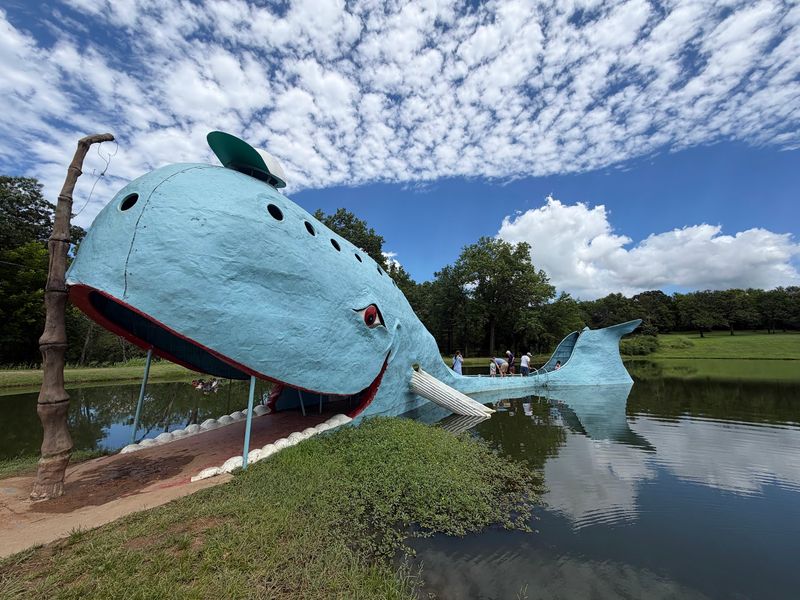
An 80-foot concrete whale with a wide, cheerful grin sits beside a peaceful pond just off a two-lane highway in small-town Oklahoma. That is the Blue Whale of Catoosa, located at 2600 OK-66, Catoosa, OK 74015, in Rogers County, about 15 miles northeast of Tulsa.
The attraction sits right on Historic Route 66, making it one of the easiest and most rewarding detours on the entire Mother Road. You can reach it by following the original Route 66 alignment through Catoosa rather than taking the interstate, and the whale is hard to miss once you round the bend.
Admission is completely free, parking is plentiful and easy, and the grounds are well maintained and open to the public during regular hours. The Blue Whale holds a 4.5-star rating across more than 4,500 Google reviews, which says plenty about how much road-trippers genuinely love the place.
Getting here feels like a reward in itself. The drive through Catoosa is classic Route 66 territory, all flat Oklahoma sky and small-town charm, and the moment that blue tail fin pokes above the tree line, the anticipation builds fast.
Hugh Davis and the Anniversary Gift That Became a Legend
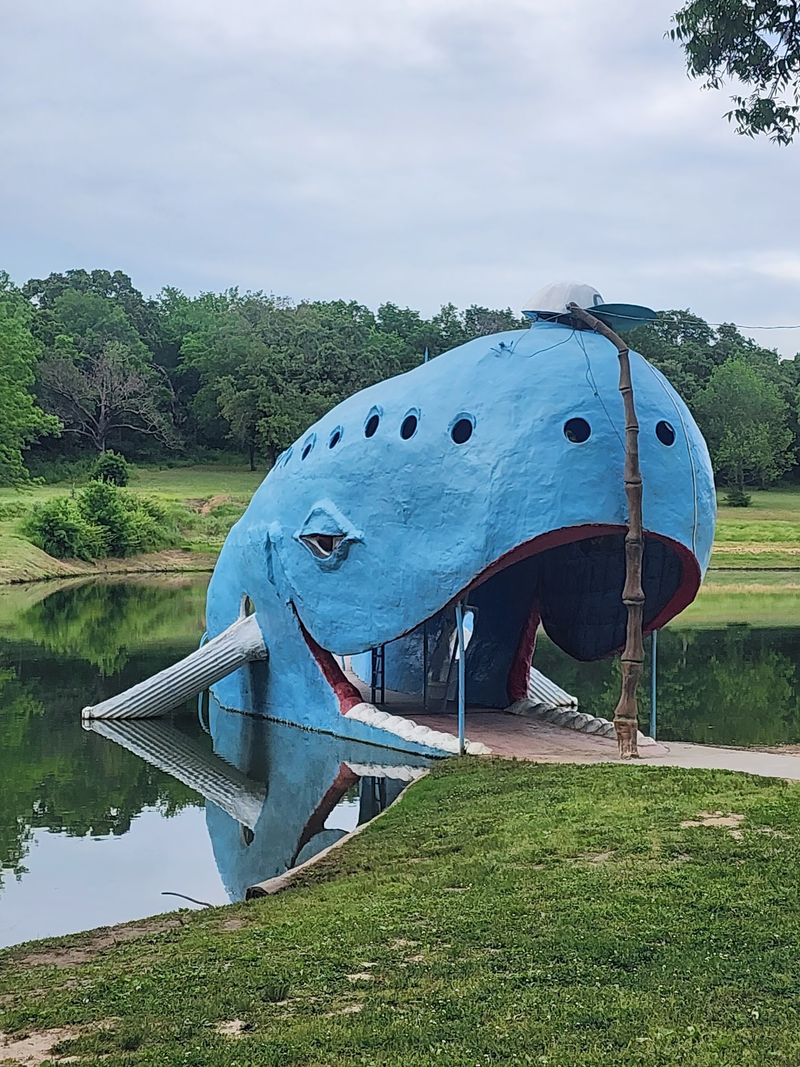
Few roadside attractions in America have an origin story as genuinely heartwarming as this one. Hugh Davis, a naturalist and animal lover from Catoosa, built the Blue Whale during the early 1970s as an anniversary gift for his wife, Zelta, who had long collected whale figurines and trinkets.
Hugh constructed the massive concrete sculpture by hand on the family’s private pond, and over time it grew into something far bigger than a personal keepsake. The pond became a neighborhood swimming hole, and the surrounding property eventually hosted a small reptile park, drawing visitors from across the region throughout the 1970s.
Vintage postcards from that era, now available in the gift shop, show what the place looked like when it doubled as a reptile attraction. Kids would splash around the whale, climb through its mouth, and shoot down slides into the pond below.
After Hugh passed away in the 1990s, the site fell into disrepair and the swimming area closed. But the whale endured, and the story of a man who built an 80-foot monument to his wife’s favorite animal kept people coming back, decade after decade, just to see it for themselves.
The Restoration That Brought the Whale Back to Life
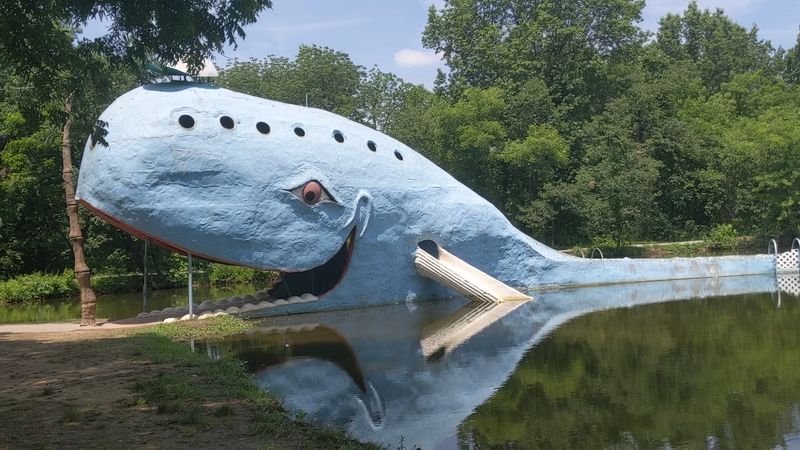
Years of Oklahoma weather and neglect had taken a real toll on the Blue Whale by the time community efforts to save it gained serious momentum. Gradually, through local dedication and growing Route 66 enthusiasm, the whale was cleaned up, repainted, and stabilized.
The most dramatic transformation came in preparation for the Route 66 Centennial celebration. A brand-new visitor center opened on the grounds, giving the site a proper home base for the first time in its history.
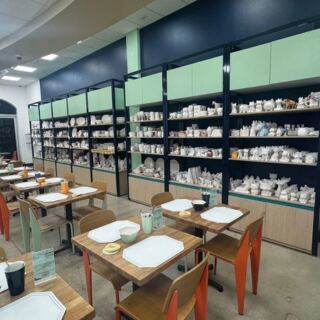
The building features a gift shop, clean restrooms, indoor seating with tables and chairs, and cold water fountains for visitors to use.
The exterior of the new structure tells the whale’s story through signage and displays, making the grounds feel educational as well as fun. Visitors who returned after years away have described the transformation as remarkable, noting that the whale itself looks better than it has in decades.
The renovation was not without some debate. A portion of the new building serves as a conference and meeting space, which surprised some visitors who expected more exhibit space.
Still, the overall consensus is that the restoration effort reflects genuine care for a piece of American roadside history that deserved better than slow decay.
Walking Inside the Whale Itself
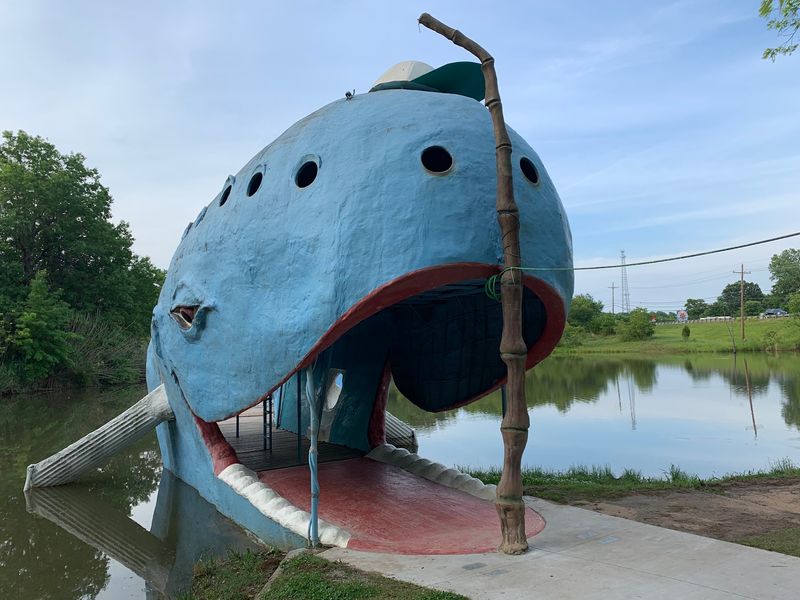
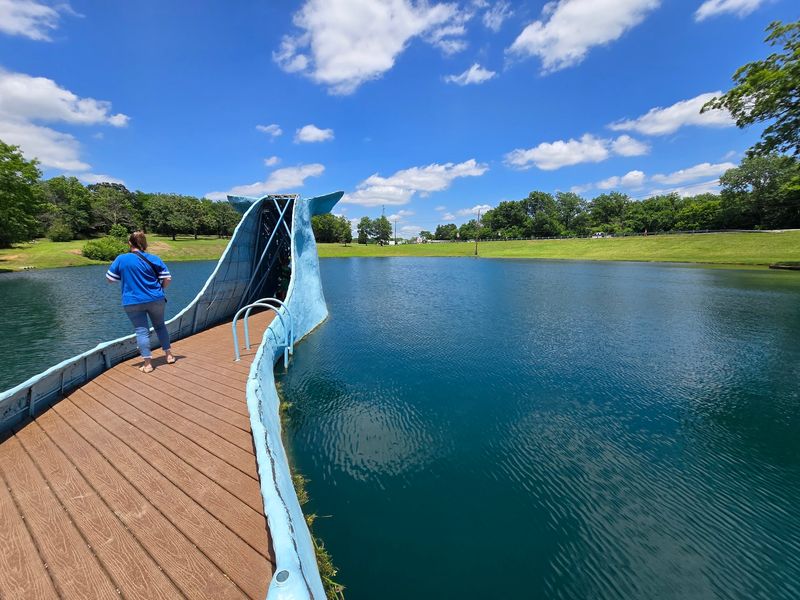
The whole point of making the drive is getting up close to the whale, and the experience delivers in a way that photographs simply cannot capture. You can walk right through the whale’s open mouth, stand inside the structure, and look out at the surrounding pond from within the belly of this concrete beast.
The scale hits differently once you are standing next to it. At 80 feet long, the Blue Whale is not just a novelty sign or a painted mural.
It is a three-dimensional sculpture with enough room inside for groups of people to gather, take photos, and marvel at the fact that one man built this by hand.
A middle section of the whale extends over the pond on a dock-like platform, and visitors have been known to fish from that spot. The connection between the sculpture and the water gives the whole attraction a playful, lived-in quality that purely decorative roadside art rarely achieves.
One section of the upper structure that once allowed visitors to climb to a top viewing area has been closed off for safety reasons in recent years. Many longtime fans hope a future restoration phase might reopen that feature, but even without it, the whale remains an undeniably fun place to explore up close.
The Pond, the Turtles, and the Catch-and-Release Fishing
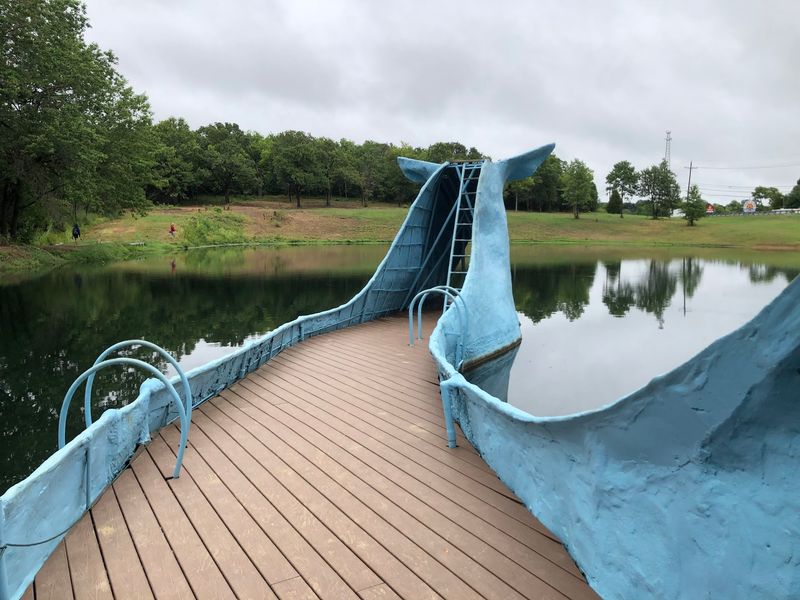
The blue whale does not sit alone. It shares its setting with a small, genuinely charming pond that adds a layer of calm to what could otherwise be a quick photo-and-go stop.
Spend a few minutes by the water and you will likely spot turtles sunning themselves near the bank, a detail that delights kids and adults alike.
Feeding the turtles has become something of an unofficial tradition at the site, and it ranks among the more frequently mentioned highlights in visitor accounts. The pond also supports a healthy fish population, and catch-and-release fishing is permitted from the dock area near the whale.
Picnic tables are available both inside the visitor center and outside on the grounds, making the pond a pleasant place to unpack a lunch and sit for a while. The combination of water, wildlife, and shade gives the spot a genuinely peaceful quality that sets it apart from purely roadside attractions with nothing to do beyond snapping a selfie.
The surroundings feel unhurried and easy, a rare thing on a highway corridor as well-traveled as Route 66. There is no pressure to move on quickly, and the natural setting rewards those who slow down long enough to actually take it all in.
The Gift Shop and Visitor Center Experience
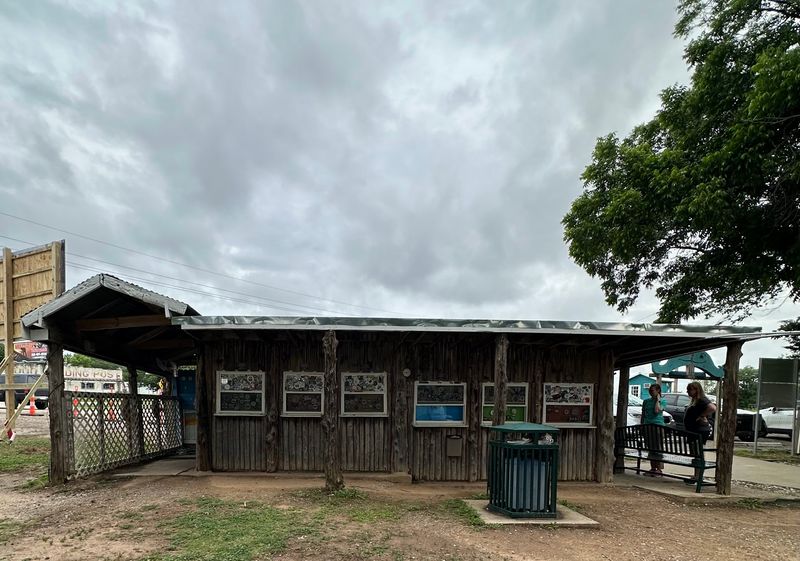
Road-trip souvenir hunters will find the gift shop worth a dedicated browse. The space stocks Route 66 merchandise, Blue Whale-branded keepsakes, and a selection of vintage-style postcards that connect back to the attraction’s earlier days as a reptile park in the 1970s.
The building itself opened fresh as part of the centennial renovation, and the interior is clean, well-organized, and genuinely pleasant to spend time in. Indoor picnic tables make it a convenient lunch spot, especially welcome on hot Oklahoma summer days when the shade and cool air inside feel like a genuine relief.
Restrooms are available in the visitor center, which matters more than it sounds when you are deep into a long Route 66 road trip. The facility also features cold water fountains, though no food or beverages are sold on site, so plan accordingly and bring your own snacks and drinks.
One practical note worth knowing before you go: hours for the gift shop have occasionally been inconsistent, and some visitors have arrived to find it closed despite posted hours suggesting otherwise. Checking the official city of Catoosa website or calling ahead at 918-857-0676 before your visit is a smart move if shopping is a priority for your stop.
The Route 66 Passport Stamp and Centennial Connections
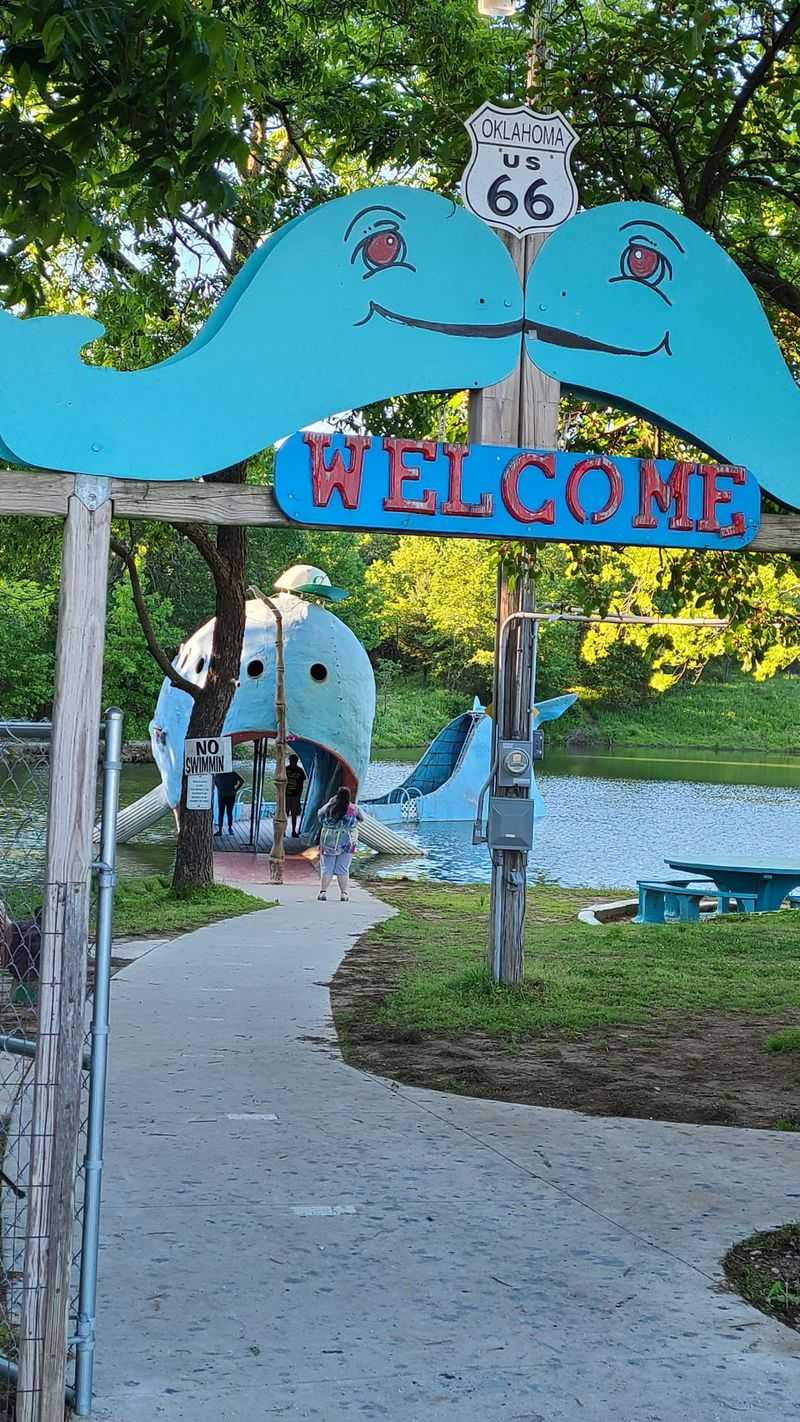
For travelers working through the Oklahoma Route 66 Passport program, the Blue Whale of Catoosa is one of the essential stamp stops along the corridor. The passport program encourages road-trippers to collect stamps at designated landmarks, and the whale’s visitor center is one of the official locations.
The Route 66 Centennial celebration gave the site a fresh wave of attention and drove the renovation effort that produced the new building and updated grounds. The centennial framed the whale not just as a quirky novelty but as a genuine piece of American highway history worth preserving with care and intention.
Some visitors who collected stamps at other stops along the route have noted that the whale’s combination of history, free admission, and hands-on accessibility makes it one of the most satisfying passport stops on the Oklahoma stretch. The experience feels complete rather than superficial, which is not always the case at roadside landmarks.
One word of advice passed along by enthusiastic stamp collectors: do not get so caught up exploring the whale and the pond that you forget to actually get your stamp before leaving. It has happened to more than a few distracted visitors who had to circle back or simply miss out on the official record of their visit.
What the Atmosphere Actually Feels Like on the Ground
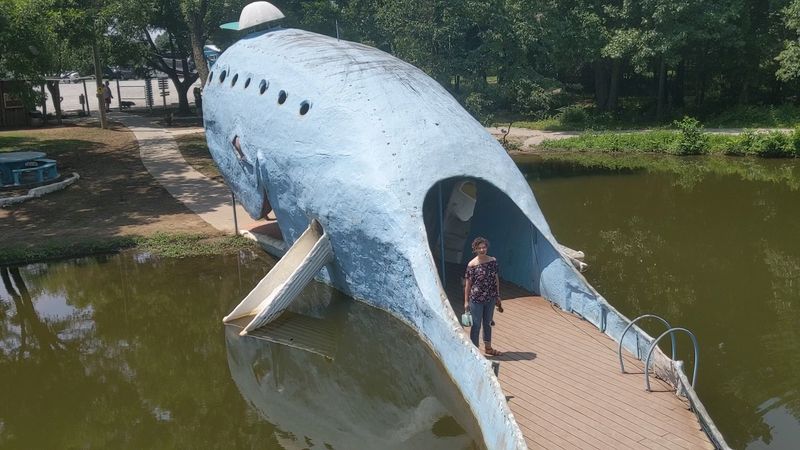
On a warm weekend afternoon, the Blue Whale of Catoosa buzzes with a steady rotation of visitors who have clearly been looking forward to this stop. Families arrive with cameras ready, road-trippers roll in with out-of-state plates, and kids sprint toward the pond the moment they spot the whale’s grin above the grass.
The energy is relaxed and good-natured, the kind of atmosphere that comes naturally to free attractions with no ticket lines or timed entry windows. People wander at their own pace, linger by the water, poke their heads through the whale’s mouth, and generally seem happy just to be somewhere this genuinely odd and wonderful.
Hot days bring crowds, and the open Oklahoma sun can be intense in summer. Arriving early, closer to the 9 AM opening time, tends to mean shorter lines for photos and a more peaceful experience overall.
The grounds are compact enough that even a busy day does not feel overwhelming.
The vibe suits just about everyone, from young children chasing turtles along the bank to older travelers revisiting a stop they remember from decades ago. Few roadside attractions manage to feel this inclusive without trying too hard, and the Blue Whale pulls it off effortlessly.
How Long to Budget and Who Should Make the Trip
Most visitors spend somewhere between 20 and 45 minutes at the Blue Whale, which makes it a near-perfect road-trip stop. Long enough to feel worthwhile, short enough to fit comfortably into a day packed with other Route 66 highlights without blowing your schedule.
Families with young children tend to linger a bit longer, especially if the kids discover the turtles or talk someone into a fishing session from the dock. Serious Route 66 enthusiasts who want to explore the visitor center displays and browse the gift shop thoroughly might push closer to an hour.
The attraction works beautifully for solo travelers, couples, families with kids of all ages, and older visitors on nostalgic road trips. The free admission removes any pressure to make the stop justify a cost, which keeps the whole experience feeling easy and low-stakes.
Anyone driving Route 66 through Oklahoma who skips this stop is genuinely missing something. The combination of an unusual origin story, a walkable sculpture at real scale, a peaceful pond setting, and completely free access makes it one of the strongest value-to-effort ratios on the entire highway.
It is the kind of place that earns a spot in your road-trip highlight reel without asking for much in return.
Hours, Practical Tips, and Getting the Most from Your Visit
Planning ahead makes the visit smoother, and a few practical details are worth knowing before you hit the road. The Blue Whale of Catoosa is open most days starting at 9 AM, with closing times varying by day.
Monday through Wednesday, Friday, and Saturday hours run from 9 AM to 4:30 PM. Thursday hours extend to 7 PM, giving that day a slight edge for afternoon arrivals.
Sunday hours run from 11 AM to 4:30 PM.
Admission is free, parking is free, and the restrooms inside the visitor center are clean and accessible. No food or drinks are sold on site, so bringing water and snacks is a practical move, particularly in summer when the Oklahoma heat can be relentless on an open outdoor site.
The guest book inside the visitor center is a charming detail worth seeking out before you leave. Signing it connects you to the long line of travelers who have passed through and felt compelled to leave a mark on the place.
For the best photos of the whale, morning light from the east side of the pond tends to produce the most flattering angles. Arriving early on weekdays also means fewer people clustering around the whale’s face, giving you a cleaner shot of that iconic smiling snout without negotiating around other visitors.
Share this story