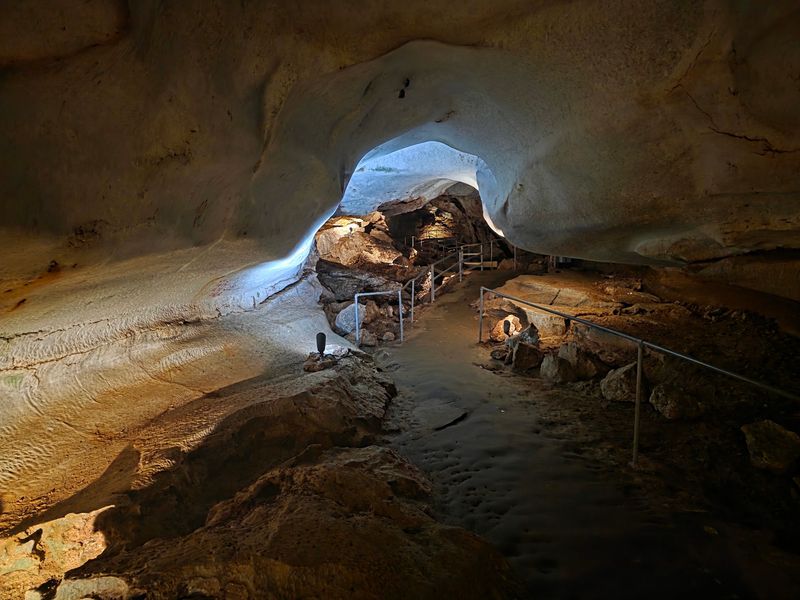
Tucked into the red-dirt plains of northwestern Oklahoma, a cave sits quietly beneath the surface, holding a record most people have never heard of. Alabaster Caverns is recognized as the world’s largest publicly accessible natural gypsum cave, and it draws curious visitors from across the region every single week.
The cave stretches three-quarters of a mile underground, lined with shimmering alabaster formations that glow softly under a guide’s light. Whether you’re a geology fan, a road-tripper chasing something genuinely different, or a parent looking for an adventure the kids will talk about for years, this place delivers.
Where on Earth This Cave Actually Is
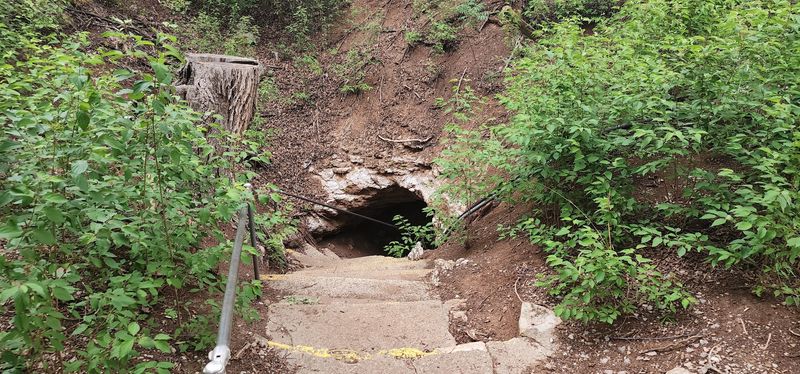
About six miles south of Freedom, Oklahoma, a small state park sits along OK-50A in Woods County, holding something most Oklahomans don’t even know exists. The address is OK-50A, Freedom, OK 73842, and while Freedom itself is a blink-and-miss-it town in the far northwestern corner of the state, the cave beneath it earns every mile of the drive out there.
Freedom sits in an area known for its rugged, windswept terrain. The landscape above ground is classic western Oklahoma: open skies, rolling red hills, and scrubby prairie stretching to the horizon.
Nothing about the surface hints at the extraordinary geological feature hiding just below it.
Alabaster Caverns State Park manages the site, and the park is open seven days a week from 8 AM to 5 PM year-round. Getting there requires a deliberate road trip through some genuinely scenic Oklahoma countryside, which honestly makes the arrival feel even more rewarding.
Plan the route ahead of time, because cell service can be spotty in this part of the state.
A Record Worth Driving For
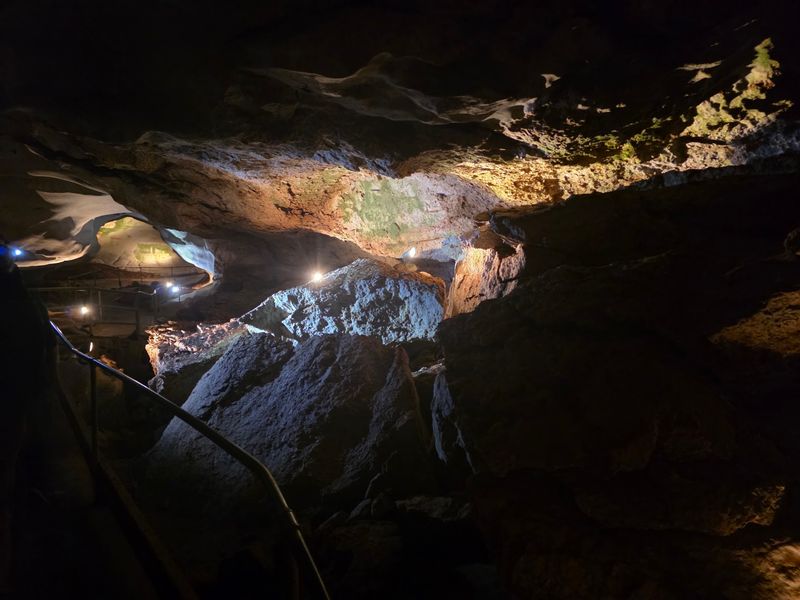
Gypsum caves are far less common than the limestone caverns most people picture when they think of underground tours. Gypsum is a softer mineral, and when it forms the massive alabaster variety found here, the results are visually striking in a way that sets this cave apart from anything else in the region.
Alabaster Caverns holds the title of the world’s largest publicly accessible natural gypsum cave. That’s not a local tourism board boast.
The cave runs three-quarters of a mile in length, and the variety of alabaster found along its walls includes rare colors and formations that geologists find genuinely fascinating.
Unlike many famous caves that keep visitors behind ropes at a distance, this one allows people to actually touch the walls. The gypsum rock is smooth and cool under your fingertips, and that tactile connection makes the experience feel far more personal than a typical cavern tour.
Kids especially respond to the freedom to reach out and feel the geology rather than just observe it from a distance.
The Geology Behind the Glow
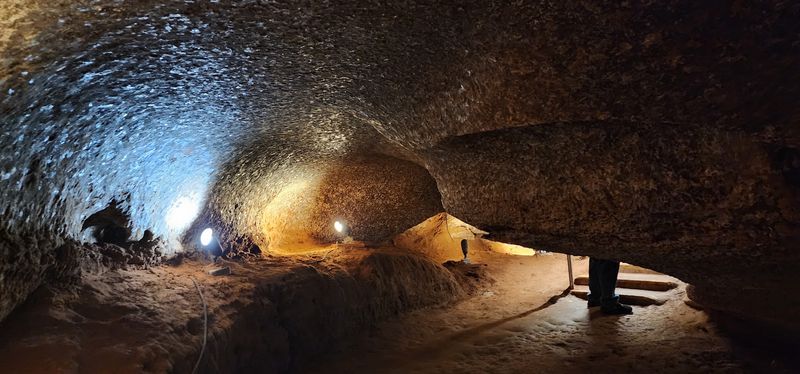
Gypsum caves form differently than the more famous limestone caverns of the Ozarks or the Appalachians. Rather than being carved by slightly acidic water dissolving rock over millennia, gypsum caves develop through a combination of mineral dissolution and structural shifting that produces a very different kind of underground environment.
The alabaster found inside this cave comes in several natural color variations, including white, pink, and even some rare black alabaster. Each color reflects different mineral impurities present when the gypsum formed, and the guide typically points out these variations during the tour, explaining what caused each one.
The cave also contains selenite, another form of gypsum that forms transparent or translucent crystals. Seeing these crystals catch the light inside the cave is one of those small moments that tends to stop people mid-stride.
The sheer variety of gypsum forms packed into three-quarters of a mile underground gives the cave a sense of geological richness that genuinely surprises first-time visitors who expected something simpler.
The Guided Tour Experience
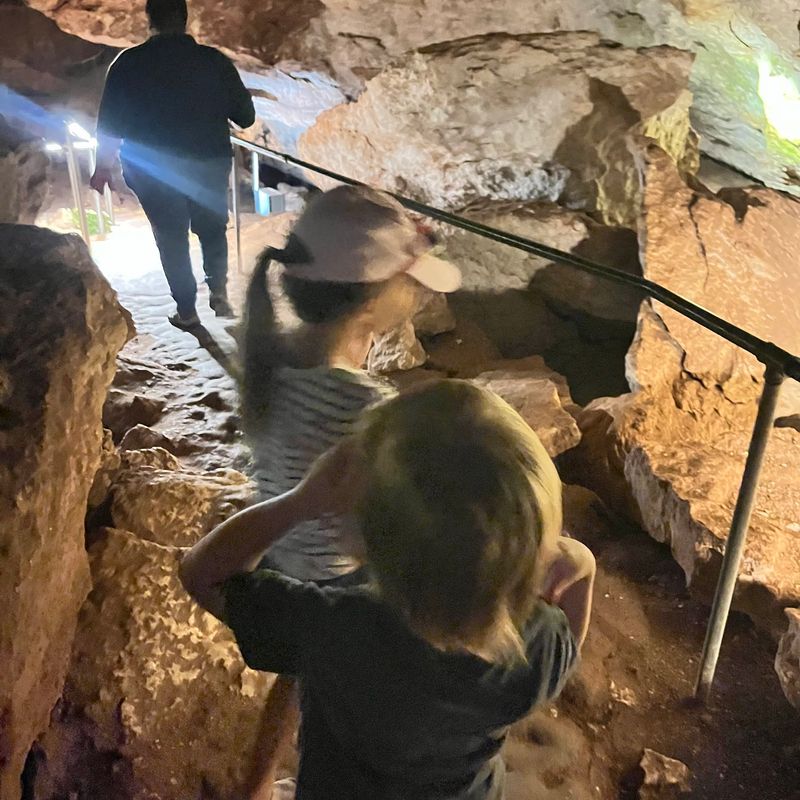
Tours at Alabaster Caverns run on the hour, and that schedule is taken seriously. Missing the start time means waiting for the next tour, so arriving a few minutes early is genuinely worth it.
The tours last roughly an hour and cover the cave’s geology, history, and ecology in a way that keeps both adults and children engaged from start to finish.
The guides here have earned real praise from visitors. Staff members come across as knowledgeable, enthusiastic, and patient with questions, including the relentless curiosity of younger visitors who seem to generate questions at an impressive rate.
One tour guide reportedly handled over a hundred questions from a single child without losing a beat.
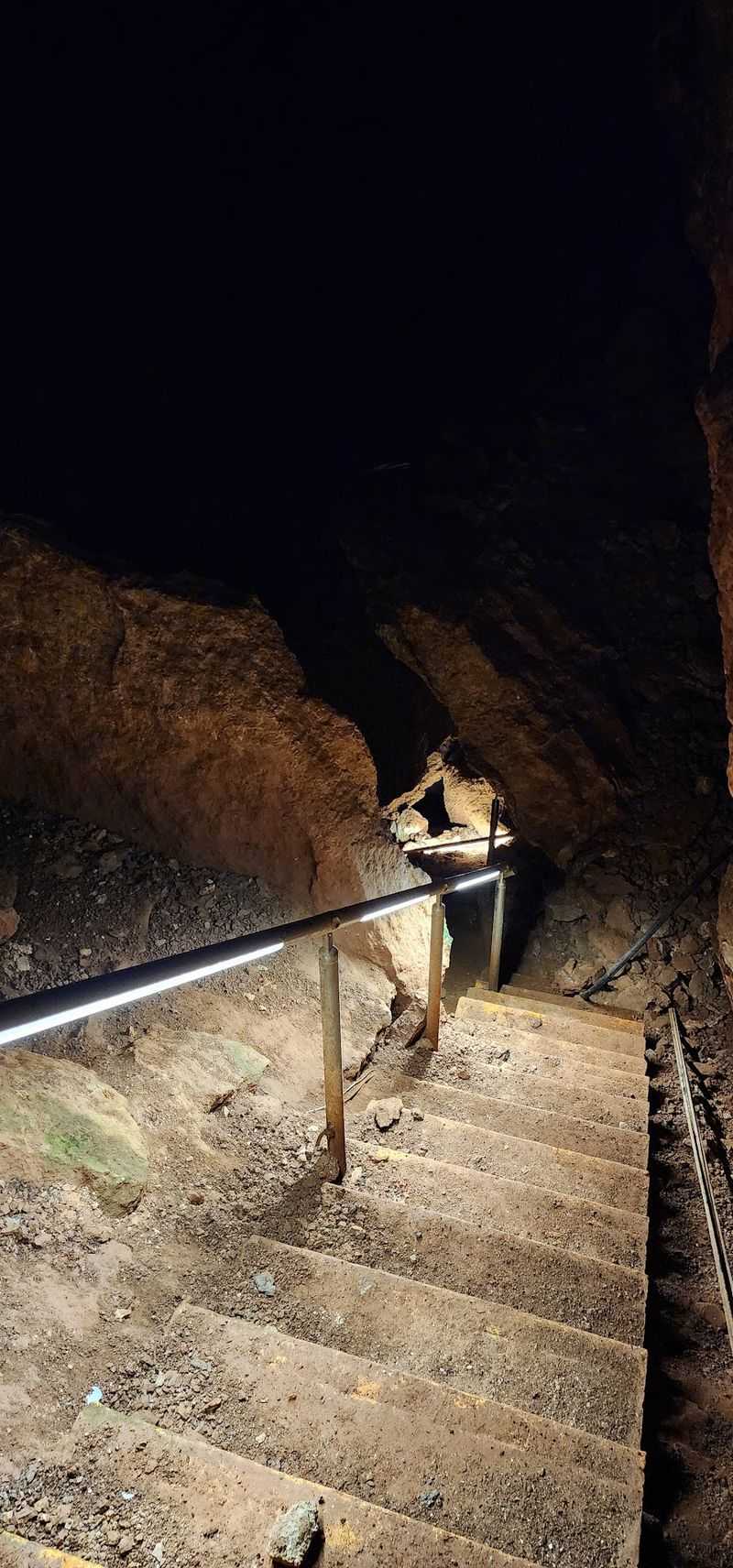
Photography is allowed inside the cave, though using flash is discouraged since it can disturb the wildlife that calls the cave home. The tour covers a mix of flat walking sections, stairs, and a couple of spots where the footing gets a little slippery, but handrails are in place throughout to keep things safe.
The overall physical difficulty sits at a moderate level, accessible to most ages and fitness levels.
Wild Caving for the Adventurous Visitor
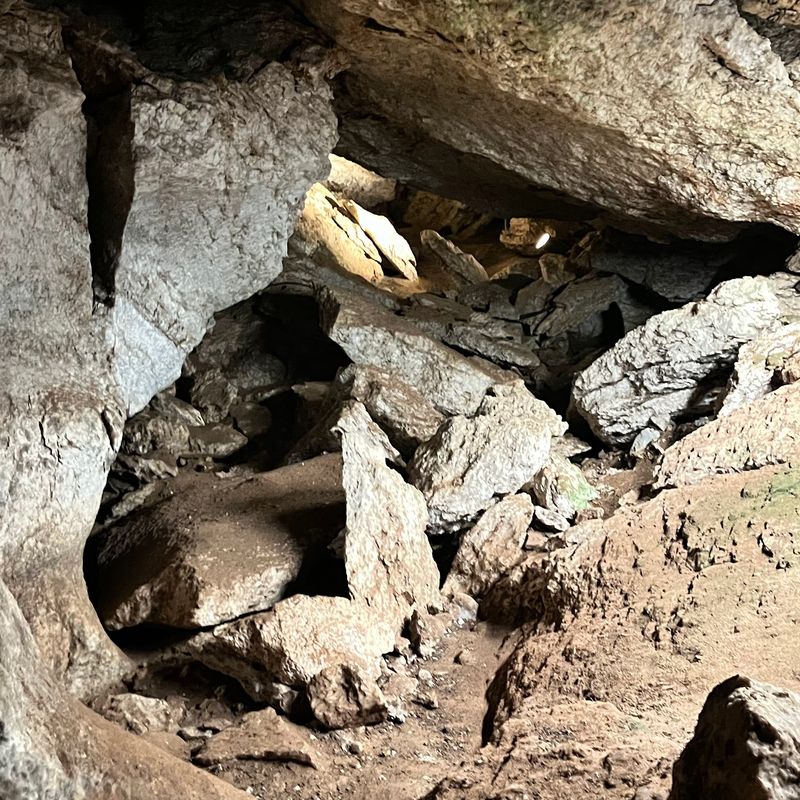
Beyond the standard guided tour, Alabaster Caverns offers something that most publicly accessible caves simply do not: a wild caving option. Adventurous visitors can explore less-developed sections of the cave that haven’t been smoothed out or lit up for casual tourism.
Wild caving means crawling, squeezing, and navigating passages in a much more raw and unpolished environment. The experience is a stark contrast to the guided tour path, and it appeals to visitors who want a more physical and exploratory connection with the underground space.
It’s the kind of activity that leaves mud on your clothes and a grin on your face.
If you’re planning to try wild caving, wear clothes you don’t mind getting dirty and bring sturdy footwear with solid ankle support. The park staff can provide details on what to expect and what gear makes the experience more comfortable.
It’s worth noting that this option suits older kids and adults rather than very young children, given the physical demands of navigating unimproved cave passages in the dark.
Bats, Crawdads, and Cave Residents
Alabaster Caverns isn’t just a geology story. The cave supports a genuine ecosystem, and the wildlife living inside adds an unexpected layer of fascination to the visit.
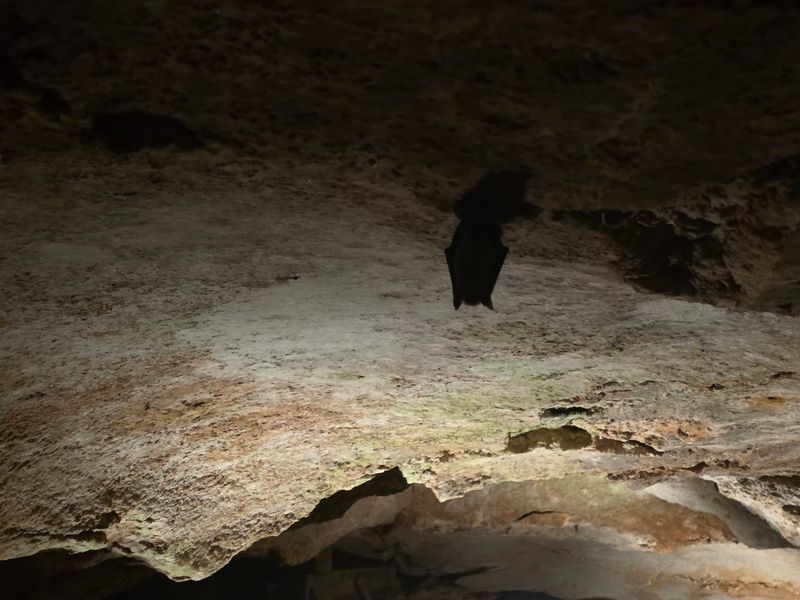
Bats are the most famous residents, and the colony living in the cave draws particular attention from visitors who weren’t expecting to encounter them.
During daytime tours, the bats are typically roosting and not actively flying, so the experience is more about spotting them clustered overhead than watching aerial acrobatics. Still, seeing a real bat colony up close is the kind of thing that makes a lasting impression, especially for younger visitors who have only ever seen bats in pictures.
Beyond the bats, the cave is also home to crawdads and raccoons have been spotted near the cave entrance and surrounding park area. The presence of multiple animal species living in and around the cave gives the site a sense of being a genuinely alive natural system rather than a static geological display.
It shifts the experience from sightseeing into something closer to wildlife observation, which adds real depth to an already compelling visit.
Temperature, Clothing, and What to Expect Underground
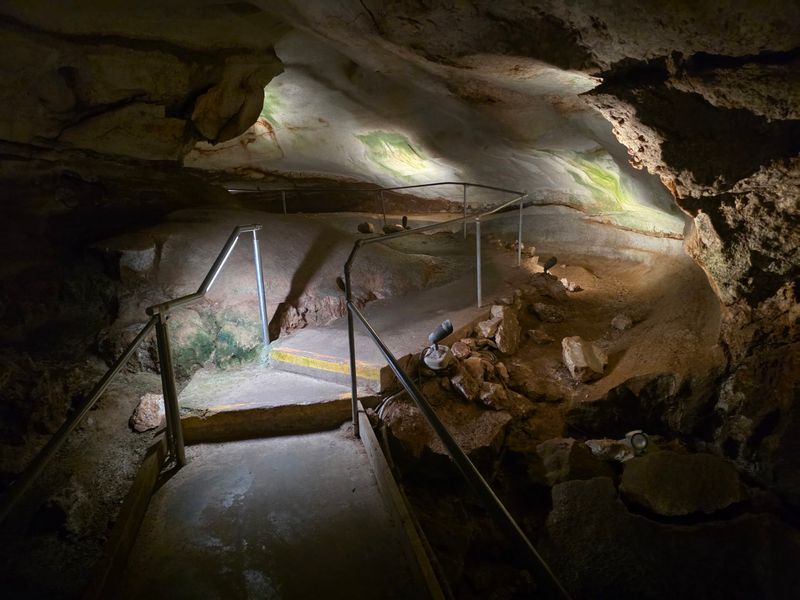
The cave holds a steady temperature of around 55 degrees Fahrenheit year-round. That’s refreshingly cool during a sweltering Oklahoma summer, but it can feel genuinely cold if you walk in wearing shorts and a tank top without thinking ahead.
Multiple visitors have specifically flagged this as something to prepare for before arrival.
A light jacket is the minimum recommendation, and if you run cold naturally, a hoodie or heavier layer will serve you better. Pants are a smarter choice than shorts, especially if you plan to try the wild caving option where you’ll be in contact with the rock walls and floor more directly.
Footwear matters more than most people initially think. The cave has stairs and a few slippery sections, and handrails are installed throughout to help with balance, but sturdy shoes with good grip make the walk considerably more comfortable and safe.
Sandals and flat-soled shoes aren’t the right call here. Arriving prepared means you spend the whole tour focused on the cave itself rather than being distracted by cold or awkward footing.
The Rock Slide Closure and Current Access
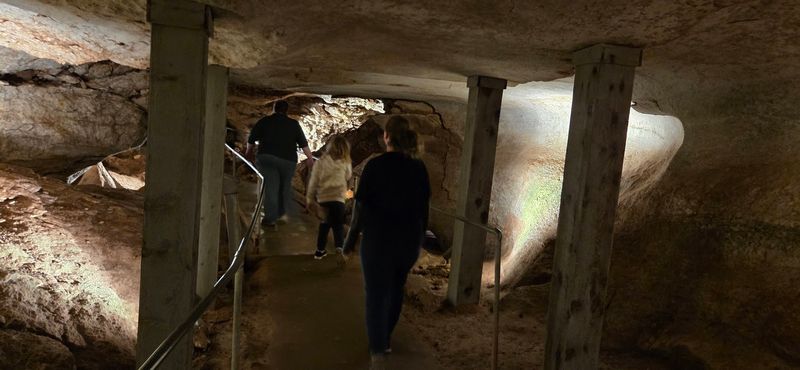
Honesty matters when planning a trip to a remote destination, and there’s something visitors should know before making the drive. A rock slide in 2018 closed a significant portion of the cave, and as of recent visits, roughly half of the cavern remains inaccessible to tours.
The park does not always communicate this closure upfront before tours begin, which has frustrated some visitors who delayed their departure specifically to catch a later tour without knowing the full experience wasn’t available. If you’re visiting with the expectation of seeing the entire three-quarter-mile length of the cave, it’s worth calling ahead to confirm exactly how much of the cave is currently open.
That said, the portion of the cave that remains accessible is still genuinely impressive and worth the visit. The geological features, the bat colony, and the quality of the guided experience haven’t diminished because of the closure.
The park staff work hard with limited state funding to maintain and improve conditions, and the care they bring to the job comes through clearly during every tour. A partial cave still beats no cave by a considerable margin.
A Park Built for More Than Just the Cave
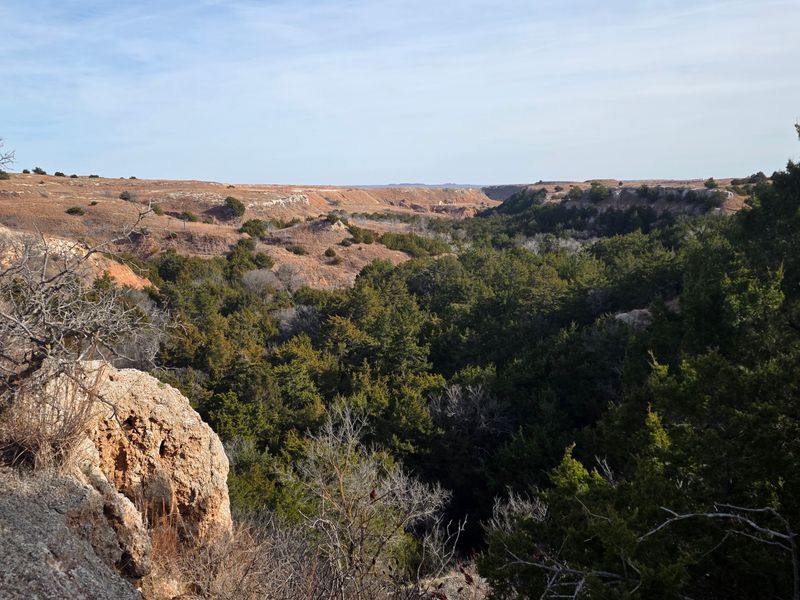
Alabaster Caverns State Park offers more than just the underground experience. Above ground, the park provides hiking trails, picnic areas, and camping facilities that make it a reasonable destination for a full day or even an overnight trip rather than a quick stop.
The hiking trails wind through the Oklahoma red dirt landscape surrounding the cave, giving visitors a chance to stretch their legs and take in the surface scenery before or after the underground tour. The terrain is characteristically western Oklahoma, with open sky and sparse vegetation that feels genuinely different from the wooded parks found in eastern parts of the state.
Camping is available within the park, which opens up the possibility of a proper weekend getaway rather than a rushed day trip. Reservations for both tours and camping are recommended, particularly during peak seasons when demand picks up.
The park also includes a visitor center, restrooms, and a gift shop, so the basic infrastructure for a comfortable visit is in place. For families or groups wanting to make a real adventure of the trip, the combination of cave tour, hiking, and overnight camping creates a well-rounded outdoor experience.
Who This Place Is Really Built For
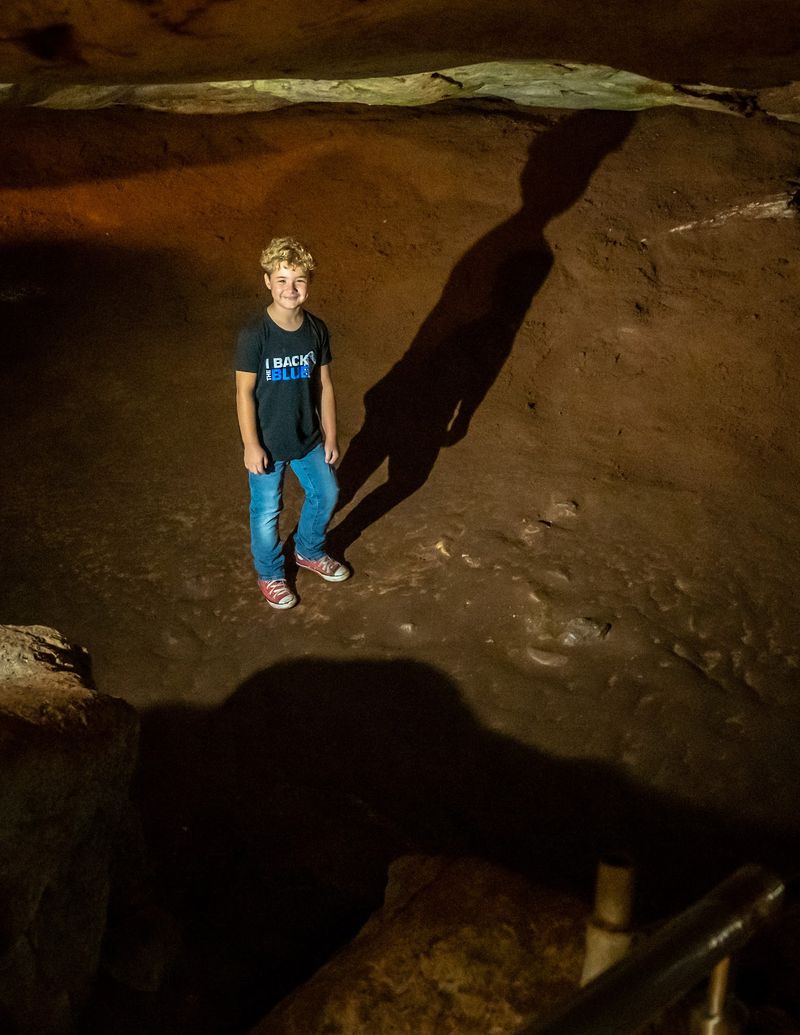
Few Oklahoma attractions manage to genuinely work for multiple generations at once, but Alabaster Caverns pulls it off. The guided tour format keeps things organized and informative without feeling like a classroom lecture, and the knowledgeable guides adjust their delivery based on who’s in the group.
Families with children are particularly well-suited to this experience. The cave is described as touch-friendly, which is a rare quality in a publicly accessible natural cave, and kids respond enthusiastically to being allowed to feel the smooth alabaster walls rather than being told repeatedly not to touch anything.
Some tours have even allowed children to explore a small side tunnel that loops back to the main path, which adds a sense of discovery that makes the experience feel genuinely adventurous.
Grandparents bringing grandchildren have highlighted the cave’s relatively moderate physical demands as a positive factor. The tour involves walking, stairs, and a few careful steps, but it doesn’t require serious fitness or agility.
History enthusiasts, geology fans, and road-trippers who collect offbeat Oklahoma experiences all find something to appreciate here. The cave doesn’t cater to a narrow audience; it simply rewards curiosity in whatever form it arrives.
The History Embedded in the Rock
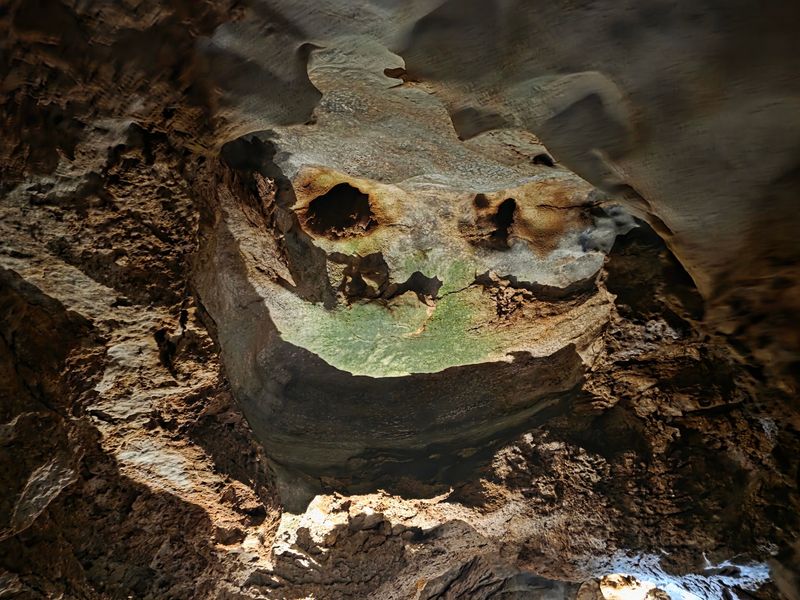
Gypsum has been mined and used by humans for thousands of years, valued for its workability and its distinctive appearance when polished. Alabaster, the fine-grained variety of gypsum found throughout this cave, has historically been used in sculpture and decorative objects across multiple ancient cultures.
The cave itself carries a local history that the guides weave into the tour naturally. Woods County and the surrounding region of northwestern Oklahoma have their own layered past tied to the land rush era, Native American history, and the agricultural settlement of the Oklahoma Territory.
The cave existed long before any of that human history unfolded above it, but it has become part of the regional identity in a way that feels earned rather than manufactured.
The visitor center holds information about both the geological history and the human history connected to the site, giving visitors context that enriches the underground experience. Understanding how the cave formed and how long it has sat beneath the Oklahoma plains gives the tour a sense of scale that’s hard to shake.
Standing inside something that took millions of years to build has a way of putting an ordinary Tuesday afternoon in perspective.
The 55-Degree Summer Secret
Northwestern Oklahoma summers are serious business. Temperatures regularly push past 100 degrees Fahrenheit across the region, and spending time outdoors in mid-July requires either determination or a solid plan for finding shade and cool air.
Alabaster Caverns quietly solves that problem in the most satisfying way possible.
The cave holds steady at around 55 degrees year-round regardless of what the thermometer says on the surface. Walking underground on a blazing summer afternoon and feeling the temperature drop with each step is a genuinely physical pleasure that’s hard to overstate.
More than one visitor has specifically mentioned the cave’s coolness as a welcome relief from the Oklahoma heat.
That consistent temperature also makes the cave an appealing destination during shoulder seasons when outdoor activities in the region can be hit-or-miss depending on weather. Spring and fall visits work beautifully, and even winter trips carry their own appeal since the cave stays at the same comfortable cool temperature regardless of what’s happening above ground.
The underground environment essentially offers its own climate, completely indifferent to Oklahoma’s famously unpredictable surface weather patterns.
Hours, Pricing, and Planning the Trip

Alabaster Caverns State Park is open seven days a week from 8 AM to 5 PM, which makes it accessible across any day of the week without needing to plan around a weekend-only schedule. Tours run on the hour, so timing your arrival to give yourself a few minutes of buffer before the next tour starts is genuinely important given that the schedule is maintained strictly.
The cave is described by visitors as priced right, making it one of the more affordable outdoor experiences in the state. Specific pricing should be confirmed directly with the park before your visit, as fees can be adjusted by the state park system.
Reservations for tours and camping are recommended during peak seasons to avoid arriving without a guaranteed spot.
Getting to Freedom, Oklahoma requires planning since the town sits well off the main interstate corridors. The drive through northwestern Oklahoma is scenic and unhurried, passing through small towns and open ranch land that feels genuinely remote.
Cell service can be limited in the area, so downloading an offline map before departure is a practical move. The park has a visitor center, gift shop, restrooms, and picnic areas, so basic needs are covered once you arrive.
The Honest Verdict on Making the Drive
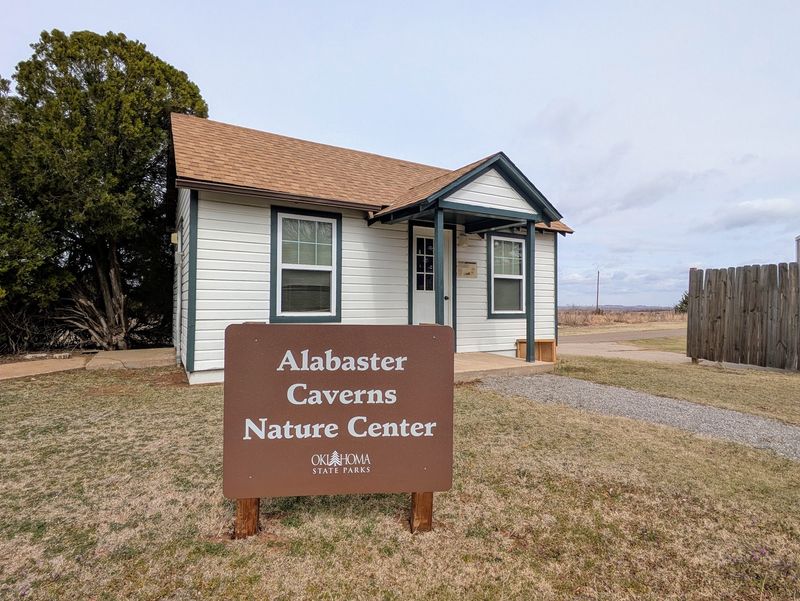
Remote destinations ask something of visitors before they even arrive. The drive to Freedom, Oklahoma is long by most people’s standards, and the town itself offers very little beyond the cave.
That isolation is exactly what makes the experience feel like a genuine discovery rather than a packaged tourist attraction.
The cave has a 4.5-star rating from visitors who made the trip, and the consistent praise for guides, the touch-friendly rock, and the overall atmosphere suggests the experience holds up well across different types of visitors. The partial closure due to the 2018 rock slide is a real limitation worth knowing about in advance, and calling ahead to confirm current conditions is a smart step before planning the day around it.
What Alabaster Caverns offers that’s genuinely hard to find elsewhere is a world-record natural feature that hasn’t been over-commercialized or turned into a theme park attraction. The guides are real people who care about the place, the geology is legitimate and rare, and the sense of being underground inside something ancient and enormous stays with you long after you’ve driven back out onto the Oklahoma plains.
That combination is worth the mileage.
Share this story