Illinois has a reputation for being flat and featureless, but the state is hiding some genuinely jaw-dropping scenery behind short, manageable trails. From ancient sandstone formations and canyon waterfalls to Mississippi River overlooks and quaking bogs, the variety is surprising.
You don’t need to be an experienced hiker or spend hours on the trail to see the best of it. These ten hikes are perfect for beginners looking for big rewards without the brutal mileage.
Observation Trail at Garden of the Gods

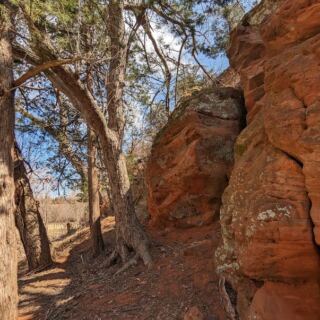
Standing on a sandstone rock that formed 320 million years ago has a way of making everyday problems feel pretty small. Garden of the Gods sits inside Shawnee National Forest in Southern Illinois, and it looks more like something from the American Southwest than a Midwestern state park.
The Observation Trail is only one-quarter mile long, so even the most reluctant hikers have no excuse to skip it.
The U.S. Forest Service rates the flagstone-surfaced loop as easy to moderate, with the whole thing taking roughly 30 minutes.
But those 30 minutes include sweeping views over the Shawnee Hills and up-close encounters with enormous weathered rock formations that look like something out of a fantasy novel. Steps, uneven stone, and some steep grades mean this isn’t a casual sidewalk stroll.
Wear shoes with a decent grip and watch your footing near the drop-offs. Sunrise and late afternoon visits are especially rewarding because the low light turns the sandstone a rich amber color.
For the sheer amount of scenery packed into a quarter mile, Garden of the Gods might offer the best return on effort of any trail in Illinois.
Big Rocky Hollow Trail at Ferne Clyffe State Park
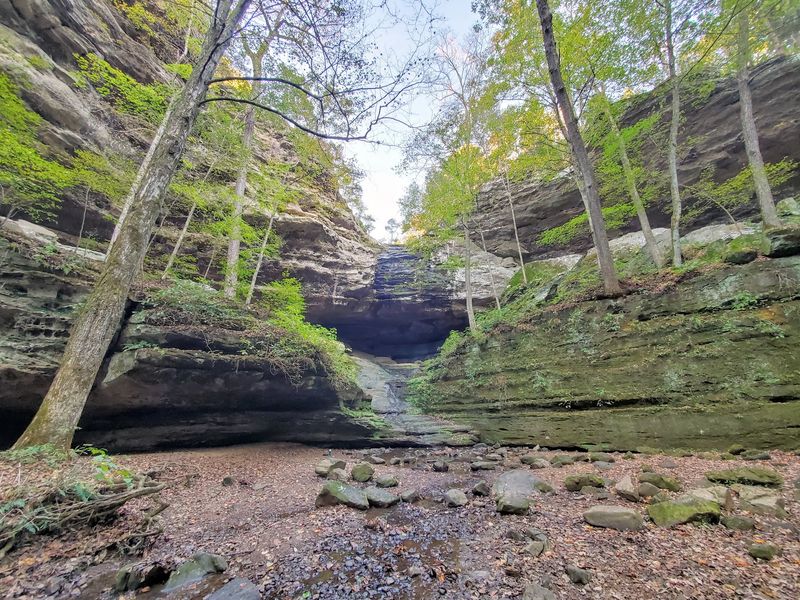
Few things motivate a beginner hiker quite like knowing a waterfall is waiting at the end of the trail. Big Rocky Hollow Trail at Ferne Clyffe State Park delivers exactly that promise, tucked inside a beautiful Southern Illinois canyon draped in moss, ferns, and sandstone.
Illinois DNR rates it easy, and the round trip clocks in at just 0.75 mile.
The destination is an intermittent waterfall that reaches approximately 100 feet tall. That word “intermittent” is doing some heavy lifting here.
The waterfall depends on recent rainfall, so a dry summer visit might leave you staring at a damp rock face rather than a roaring cascade. After good rain, though, the canyon transforms into something genuinely spectacular.
Even on quieter days, the enclosed canyon walls and lush vegetation make the short walk worth every step. Ferne Clyffe has 18 trails in total, which is great news for beginners who finish Big Rocky Hollow feeling energized.
Tacking on another short route is easy. Fair warning: this park has a habit of turning one-time visitors into regular hikers, so plan your schedule accordingly.
Giant City Nature Trail at Giant City State Park
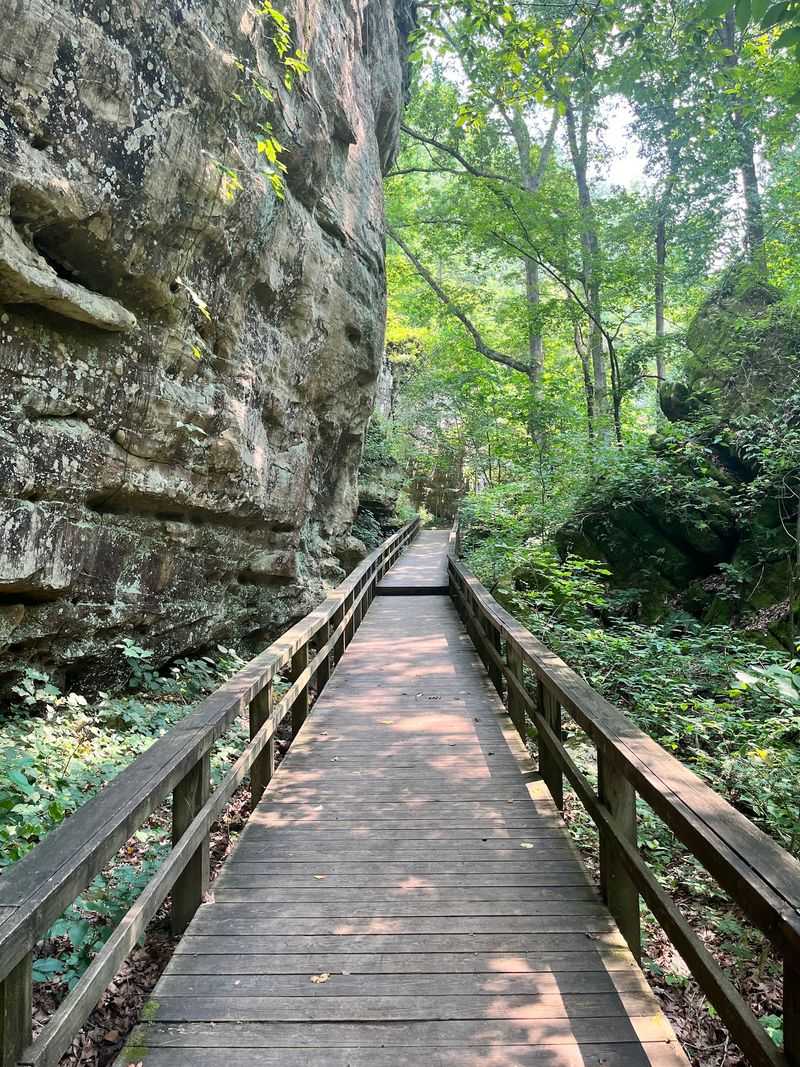
Wandering through passages between 12,000-year-old sandstone bluffs is not a typical Tuesday afternoon activity, but Giant City State Park makes it surprisingly accessible. Early visitors to this Southern Illinois park thought the massive rock formations separated by narrow corridors looked like the streets of a stone city built for giants.
The name stuck, and the scenery absolutely lives up to it.
The Giant City Nature Trail is the park’s most popular hike according to Illinois DNR, and it’s easy to understand why. Instead of walking toward one distant payoff at the end of a long trail, you’re surrounded by interesting geology almost immediately.
Moss creeps along rock walls, boulders create hidden corners, and massive trees rise overhead as you move through the passages.
The trail works especially well for families because it feels more like exploring a strange landscape than completing a fitness challenge. Kids tend to stop asking “are we there yet?” when there are giant rocks to investigate around every corner.
The park also has a lodge and restaurant on-site, which makes planning a full day trip straightforward and gives you a solid reward waiting after the hike.
Pomona Natural Bridge Trail Near Pomona
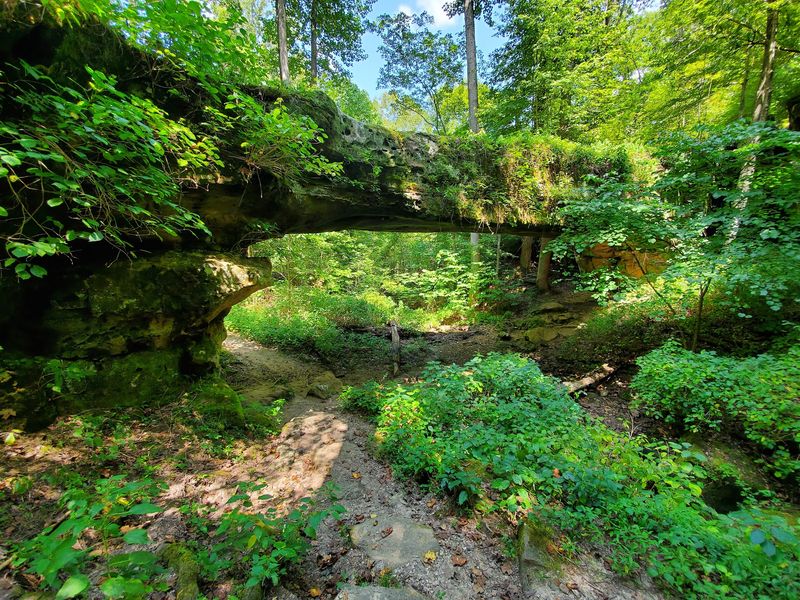
Most people don’t expect Southern Illinois to contain a 90-foot natural sandstone arch hiding in the forest, but Pomona Natural Bridge is exactly that. The U.S.
Forest Service lists this trail as a 0.3-mile loop, typically taking 30 to 45 minutes to complete. That’s a remarkably short distance for such an unusual geological reward.
The route descends through mature oak-hickory and beech woodland before delivering a view of the sandstone formation from an overlook. The Forest Service rates the trail moderate rather than easy, which is worth noting before you lace up your sneakers.
Short mileage doesn’t automatically equal flat ground, and the descent requires some attention, especially on wet days.
Shoes with decent traction make a real difference here. Take your time going down, enjoy the forest as you go, and the payoff at the end is one of the more unusual natural features in the entire state.
Pomona Natural Bridge is a satisfying reminder that a hike doesn’t need to stretch for miles to feel like a genuine adventure. Thirty minutes in the woods and a sandstone arch the size of a small building is a pretty solid way to spend a morning.
Starved Rock Overlook at Starved Rock State Park
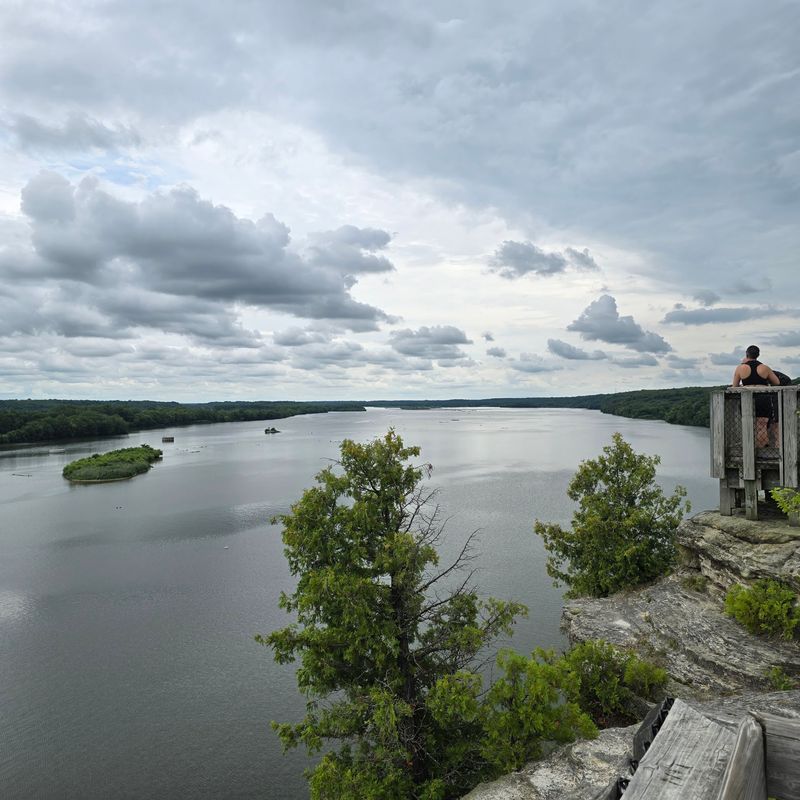
Starved Rock is Illinois’ most visited state park, and its reputation is completely deserved. The park has 13 miles of trails, but beginners don’t need to tackle most of them to get a genuinely impressive view.
Illinois DNR currently recommends the hike to Starved Rock itself as a 0.6-mile round trip, and the overlook delivers a sweeping view over the Illinois River that feels far more dramatic than the short distance suggests.
There’s a catch worth knowing before you arrive. Starved Rock’s terrain involves substantial staircases, and DNR specifically warns visitors to factor stairs into their difficulty assessment.
There are no ADA-accessible routes into the canyons or overlooks due to the natural terrain, so “short” doesn’t mean effortless. If the Starved Rock overlook leaves you wanting more, French Canyon is another solid beginner option at just 0.8 mile round trip.
One practical note for 2026 visitors: trail-improvement work is affecting some areas of the park, including routes around LaSalle and Tonti Canyon. Check the park’s official update page before choosing a longer route to avoid any unexpected closures.
The scenery is worth the extra planning step.
Upper Bluff Trails at Matthiessen State Park
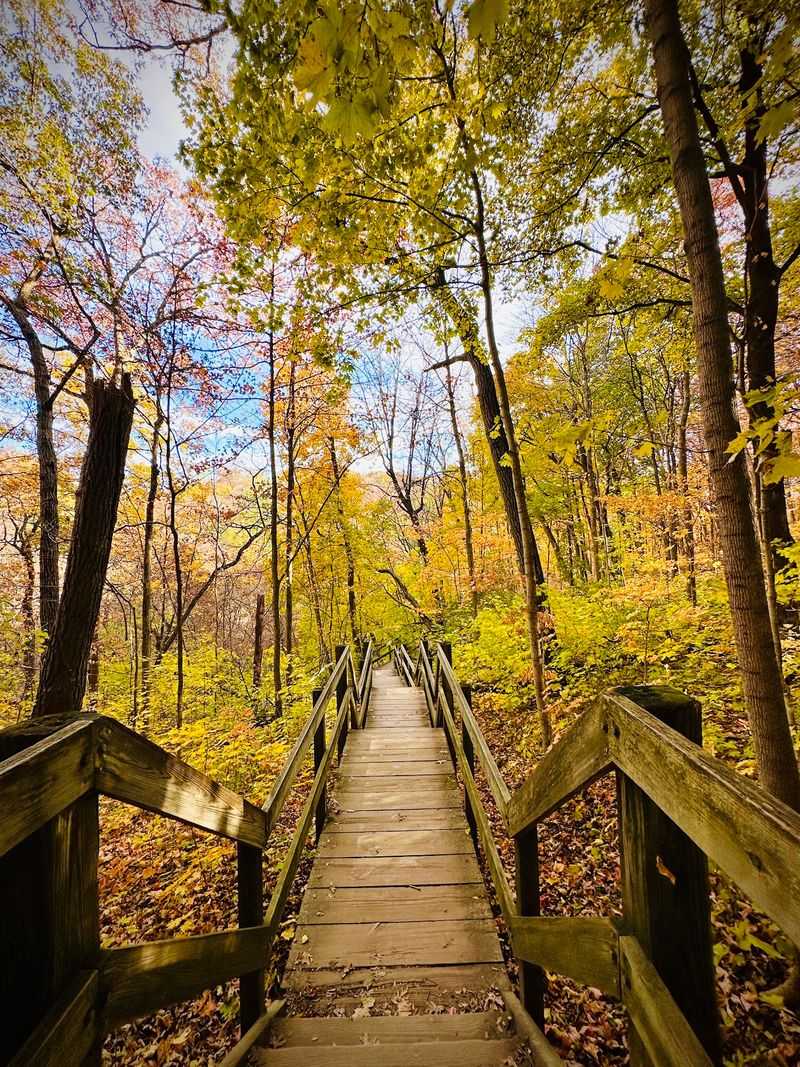
Matthiessen State Park looks like somewhere you’d expect to find in a completely different region of the country. Canyons slice through layered sandstone, mineral-stained walls rise above narrow streams, and waterfalls appear after decent rainfall.
Located near Starved Rock, Matthiessen gets less attention than its famous neighbor but rewards visitors with scenery that’s just as striking.
Illinois DNR describes the upper area and bluff tops as easy hiking paths well suited to novice hikers. That’s the key entry point for beginners.
The upper trails let you experience the park’s dramatic landscape without descending into the more demanding canyon interiors, which DNR notes can be significantly harder to navigate, particularly during wetter periods.
Before visiting in 2026, check the park’s current conditions page. The Lake Falls bridge and trail are closed until further notice, and storm waters have affected access to interior areas around Lake Falls, Middle Falls, and Cascade Falls.
Stick to currently open marked trails and respect any closure signs you encounter. The park’s scenery is genuinely worth visiting, but the open upper bluff trails deliver plenty of beauty without requiring you to push past any barriers.
Developed Overlooks at Mississippi Palisades State Park
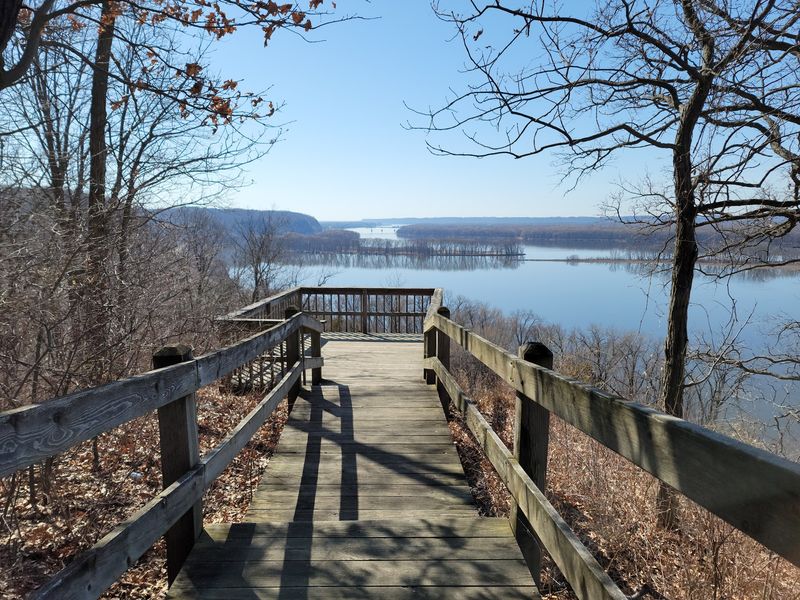
Seeing the Mississippi River from a bluff hundreds of feet above it is the kind of view that makes you stop mid-sentence and just stare. Mississippi Palisades State Park sits near Savanna in northwestern Illinois, rising dramatically above one of North America’s most iconic rivers.
The full 15-mile trail system can get rugged, but beginners don’t need to touch most of it.
Illinois DNR identifies Ozzie’s Point, Louis’ Point, and Lookout Point as developed overlooks reached by short walks on surfaced trails. Oak Point offers a surface suitable for visitors with physical limitations.
That setup is genuinely useful for new hikers because you can drive through the park, stop at multiple overlooks, and connect short walks rather than locking yourself into one long route.
If you feel like exploring beyond the overlooks, choose your trail carefully. DNR notes that the northern trail system is generally wider and less strenuous, while southern trails run close to bluff edges and become hazardous in wet conditions.
Beginners should stay north until they’ve built up some trail confidence. The river views from the overlooks alone make the drive to Savanna completely worthwhile, regardless of how far you end up walking.
Volo Bog Interpretive Trail in Ingleside

Walking into a quaking bog on a wooden boardwalk while knowing the ground around you would swallow your boots whole is a peculiar and wonderful experience. Volo Bog in northern Illinois protects the state’s best-known example of this rare wetland type, and the interpretive trail lets visitors walk directly into the landscape in a way that’s both safe and genuinely fascinating.
Illinois DNR describes the trail as a half-mile loop built from wood dock sections, boardwalks, and wood-chipped paths. The route moves through successive stages of bog development, from open water at the center to tamaracks, sphagnum moss, and shrubby wetland vegetation at the edges.
Songbirds, waterfowl, and other wildlife make regular appearances along the way.
For beginners who aren’t interested in climbing hills or navigating rocky terrain, Volo Bog proves that scenic payoff doesn’t require elevation. The boardwalk itself adds to the experience because there’s something genuinely thrilling about walking through an environment that would be completely inaccessible without the constructed path beneath your feet.
The visitor center near the trailhead also offers helpful context about bog ecology that makes the walk even more interesting before you head out.
Shorter Trails at Waterfall Glen Forest Preserve in Darien
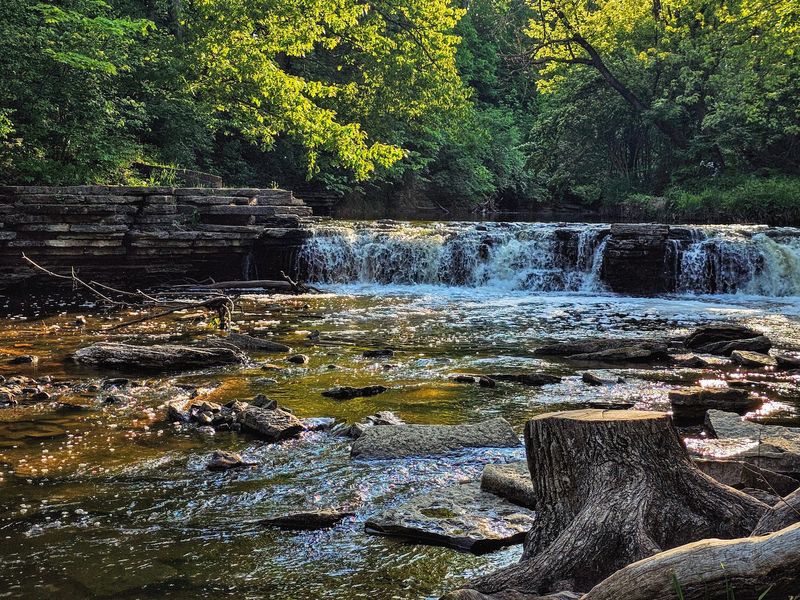
Waterfall Glen Forest Preserve near Darien carries a slightly misleading reputation among Chicago-area outdoor enthusiasts. Most people associate it with the full 11-mile loop, which is a solid workout but a lot to ask of a first-time hiker.
The preserve’s shorter internal trails offer a smarter entry point for beginners who want scenery without committing to a half-day endurance session.
Enjoy Illinois recommends the 2-mile Poverty Prairie Trail as a shorter alternative that showcases the preserve’s restored grassland habitat. That’s a manageable distance for most beginners, and the prairie landscape is genuinely beautiful, especially during late summer when wildflowers peak.
The preserve also includes oak-maple woodland, savanna sections, and the well-known Rocky Glen waterfall area.
Starting with a shorter route is actually a smart long-term strategy. You get a real sense of what Waterfall Glen offers, build some trail confidence, and leave knowing there’s more to explore on future visits.
Chicago-area hikers are lucky to have a preserve this varied within reasonable driving distance of the city. You don’t need to see everything on the first trip.
That’s what return visits are for, and Waterfall Glen gives you plenty of reasons to come back.
Easy Lakeside Trails at Rock Cut State Park near Rockford
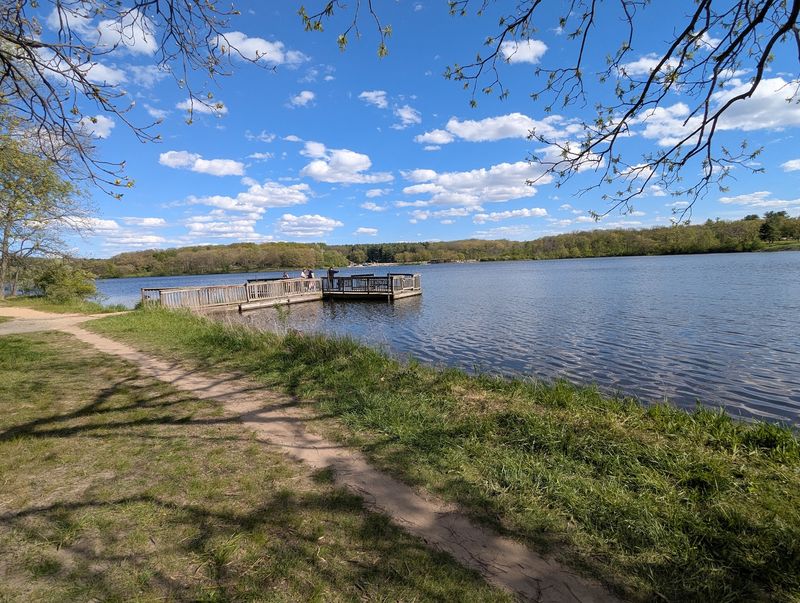
Rock Cut State Park near Rockford offers a beginner experience that feels completely different from the sandstone canyons of Southern Illinois. Water and woodland are the main attractions here, centered around Pierce Lake, which forms the recreational heart of the park.
An extensive network of intersecting trails passes through forest, meadow, and gently rolling terrain.
That trail network is actually a major advantage for beginners. When you have multiple intersecting paths rather than one long out-and-back route, you can adjust the day based on how you’re feeling.
If two miles feels like plenty, you can loop back. If you’re still feeling good, you can extend the walk without any pressure to reach a specific destination.
A relaxed walk along the lake shoreline, a few wildlife sightings, and a peaceful hour in the woods counts as a completely successful first hike. Nobody is keeping score.
The goal of beginner hiking isn’t to push yourself to exhaustion or complete the longest route the park offers. It’s to finish the day feeling good about being outside and curious about where the next trail might lead.
Rock Cut makes that kind of low-stakes, high-enjoyment outing very easy to pull off.
Share this story