Germany and beer go together like pretzels and mustard. From ancient monastery breweries to lively city beer halls, this country has been shaping beer culture for over a thousand years.
Whether you prefer dark and smoky, crisp and golden, or rich and amber, Germany has a destination that was practically built for your glass. This list covers 12 places across the country where the brewing history runs deep, the pours are proper, and the settings are worth traveling for.
Some are world-famous, others are quieter regional stops that serious beer travelers seek out specifically. All of them offer something genuine and worth the trip.
Hofbräuhaus München, Munich
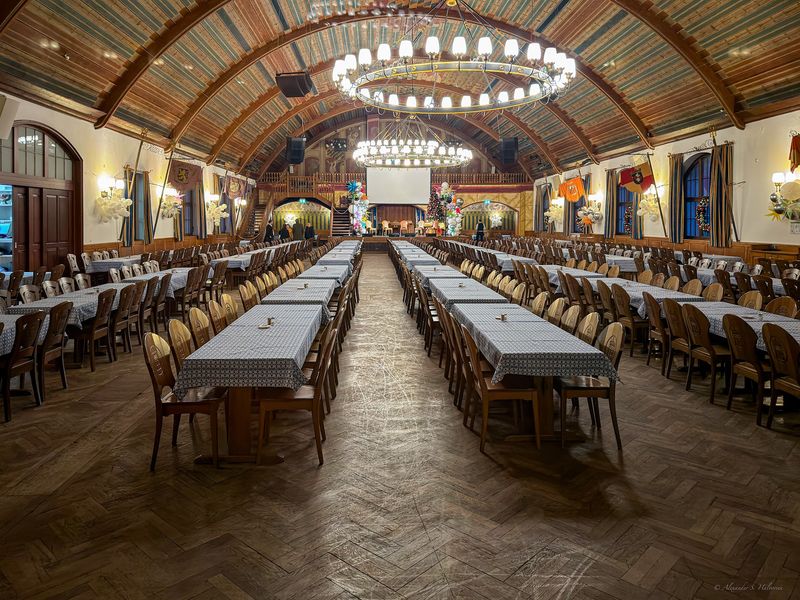
Walking into Hofbräuhaus München is like stepping into a piece of living German history. The building sits in central Munich and has been connected to Bavarian brewing since the 16th century, making it one of the most storied beer halls anywhere in Europe.
It is loud, busy, and unapologetically traditional.
The hall serves Hofbräu beer alongside classic Bavarian dishes, and traditional live music fills the main hall on most days. Long wooden benches and painted ceilings give the space a character that photographs cannot fully capture.
It is open daily until midnight, so there is plenty of time to settle in.
Visitors from across the world pass through its doors, but the experience still feels rooted in Bavarian culture rather than pure tourism. Ordering a full liter stein and sharing a table with strangers is exactly how the place is meant to be enjoyed.
Few beer hall experiences in Germany match its scale.
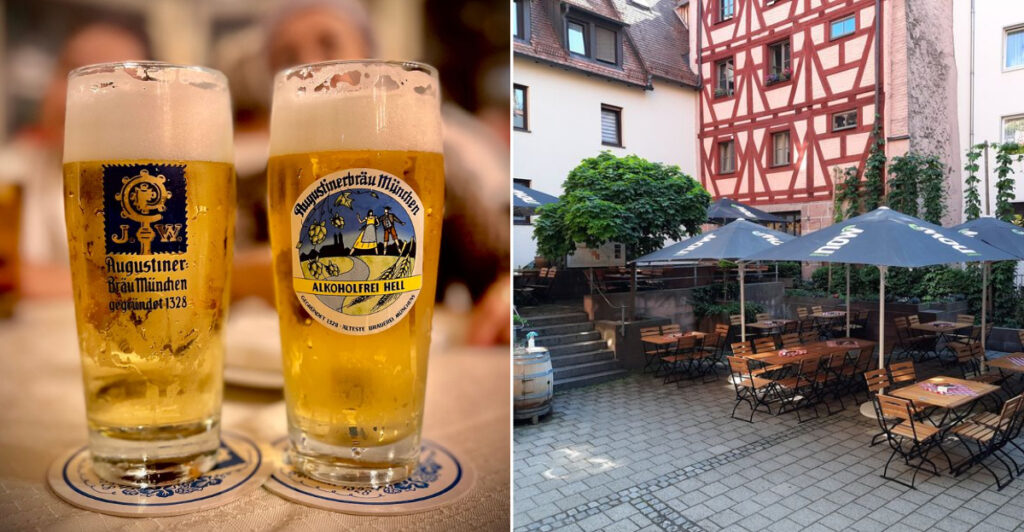
Augustiner-Keller, Munich
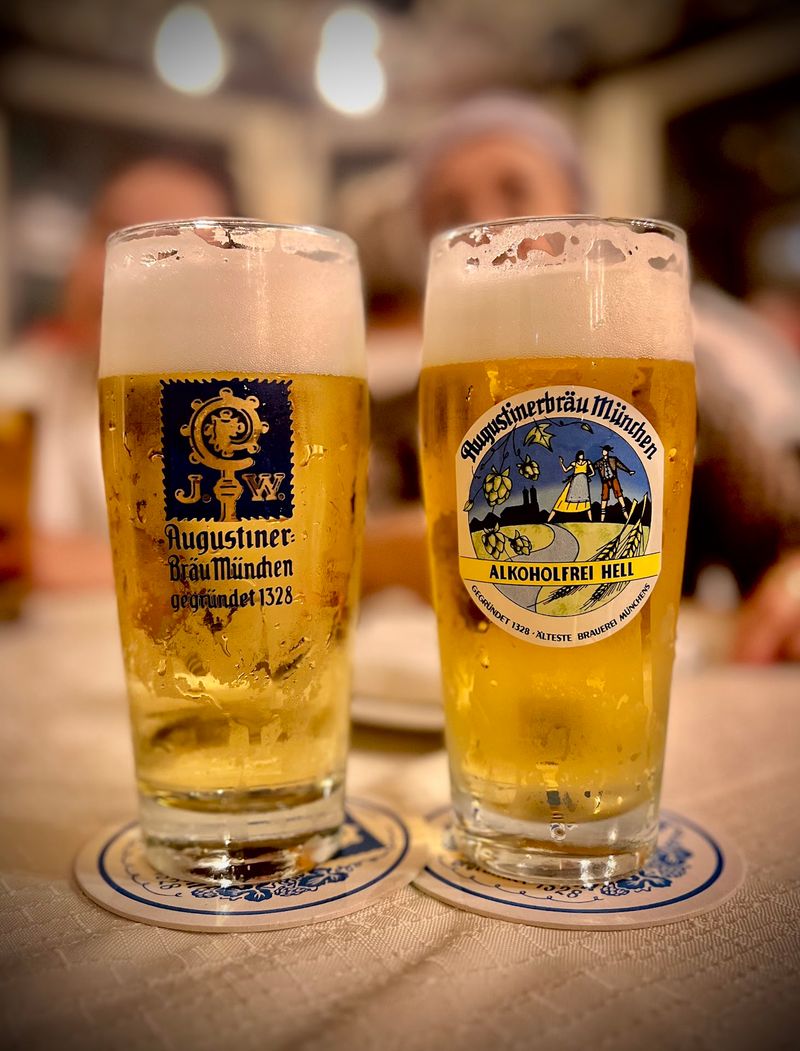
Munich has no shortage of beer gardens, but Augustiner-Keller carries a reputation that sets it apart from the more tourist-heavy spots in the city center. Tucked near the Stiglmaierplatz area, its sprawling outdoor garden is shaded by old chestnut trees and draws a loyal crowd of locals and well-informed visitors alike.
The standout feature here is the wooden barrel service. Augustiner beer tapped directly from traditional wooden barrels has a texture and freshness that fans of the brewery specifically travel to experience.
It is the kind of detail that makes a real difference in the glass.
Hearty Bavarian food rounds out the visit, with classics like roasted chicken and pretzels available to order alongside your beer. The garden typically stays open until midnight during the warmer months.
If you visit Munich and only have time for one beer garden stop, Augustiner-Keller makes a strong case for being that stop.
Schlenkerla, Bamberg
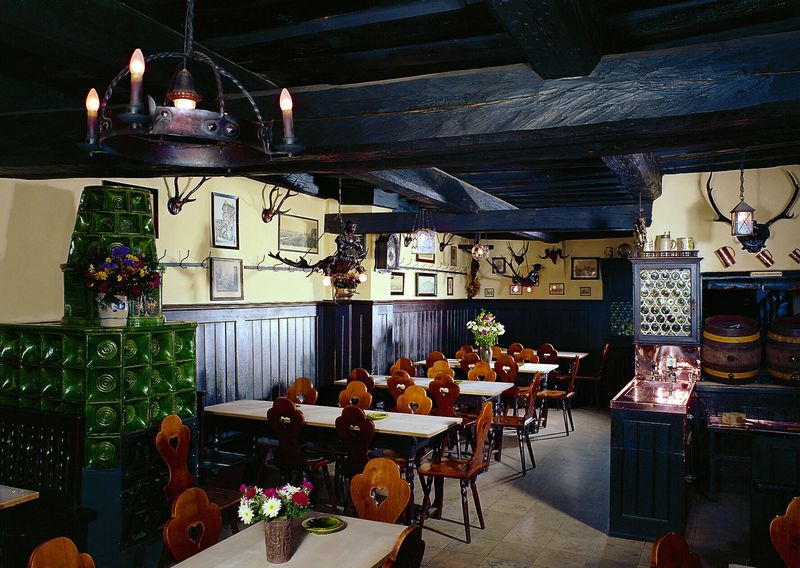
Bamberg is one of Germany’s great beer cities, and Schlenkerla is the reason most beer travelers make the trip. Rauchbier, the distinctive smoked beer style that Bamberg is known for, gets its character from malt dried over beechwood fire, and Schlenkerla has been producing and serving it for centuries at its location in the old town.
The tavern itself sits inside a building that dates back to the 14th century, and the atmosphere inside matches the age of the place. Stone floors, dark wood, and low ceilings create a setting that feels genuinely historic rather than staged.
The Rauchbier is poured directly from wooden casks at the bar.
First-time drinkers often find the smoky flavor surprising, but it tends to grow on people quickly. Schlenkerla is open year-round and welcomes guests daily.
Bamberg also offers several other excellent breweries nearby, making it an easy destination to spend a full day exploring on foot.
Uerige, Düsseldorf
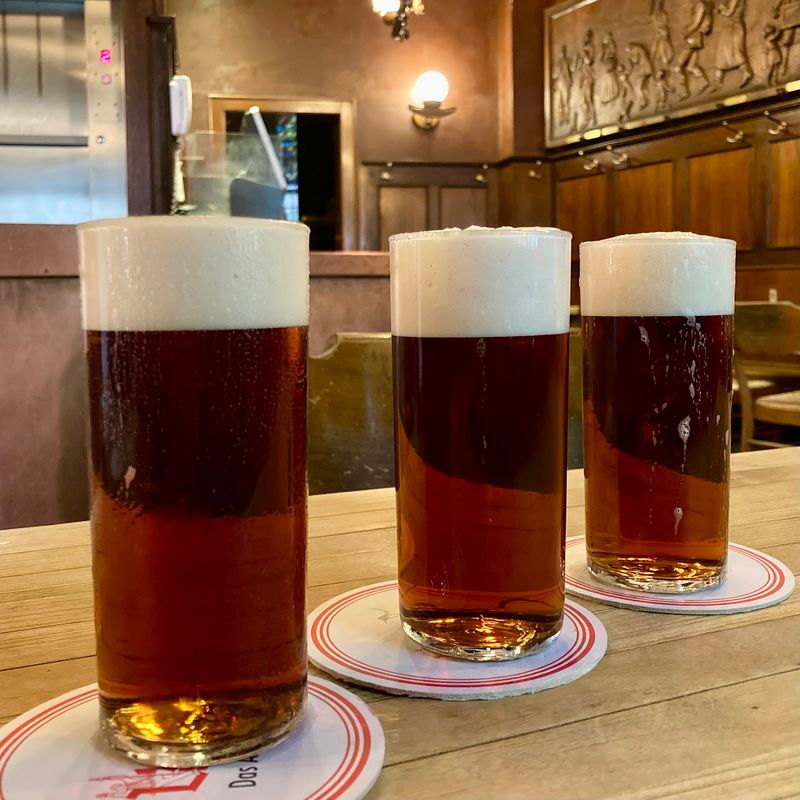
Altbier is Düsseldorf’s answer to the question of what a great German beer should taste like. Dark amber, smooth, and brewed using top fermentation, it is a style tied almost entirely to this city on the Rhine.
Uerige is one of the breweries that defines what authentic Altbier is supposed to be.
The brewery pub sits in the Altstadt, Düsseldorf’s compact old town district, which is packed with traditional pubs and restaurants along narrow streets close to the river. Uerige brews its beer on-site and serves it in the classic small cylindrical glasses that Altbier drinkers expect.
The servers, known as Köbes, move quickly and refill glasses without being asked until you signal you are done.
That direct, no-fuss service style is part of what makes a visit here feel different from a generic bar experience. Uerige is a functioning brewery, a neighborhood pub, and a piece of Düsseldorf culture all at once.
It is the kind of stop that stays with you.
Früh am Dom, Cologne
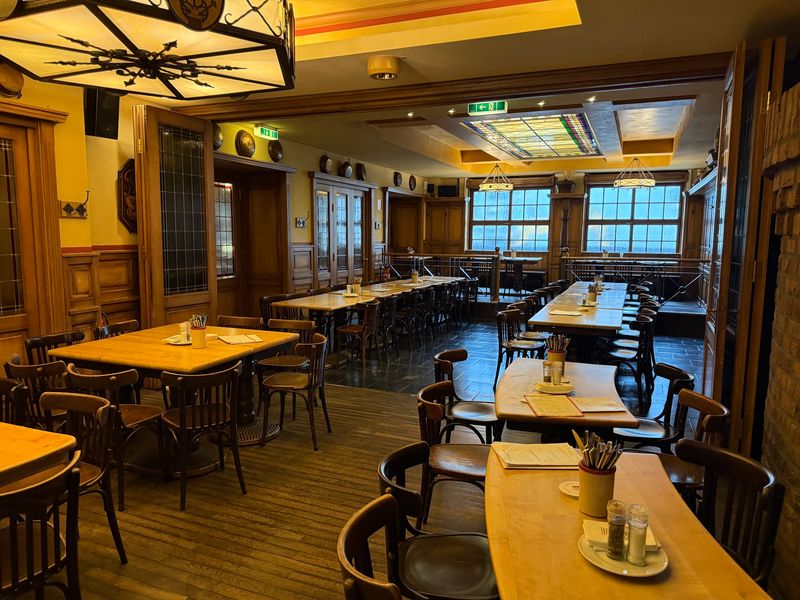
Cologne takes its beer seriously, and Kölsch is the style that defines the city. Pale, light-bodied, and served in narrow 0.2-liter glasses called Stangen, it is a beer format that belongs to Cologne the way Champagne belongs to a specific region of France.
Früh am Dom sits just steps from the famous Cologne Cathedral, making it one of the most well-placed traditional brewhouses in the city.
The pub covers multiple floors and can fill up quickly, especially on weekends and during busy tourist seasons. Kölsch is brought to the table continuously by servers carrying circular trays, and the tradition is to keep drinking until you place a coaster over your glass.
It is a small ritual that regulars enjoy and first-timers quickly learn.
Beyond the beer, the kitchen serves solid Cologne classics including Himmel un Ääd and Halver Hahn. Früh is one of the city’s older Kölsch brands, and the location near the cathedral makes it a natural first stop for anyone arriving in Cologne.
Bayerische Staatsbrauerei Weihenstephan, Freising
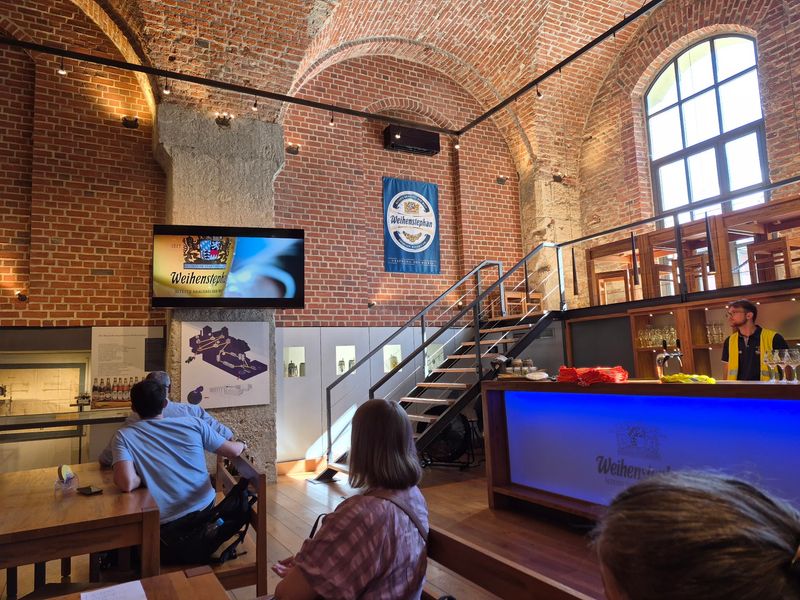
The claim attached to Weihenstephan is hard to ignore. The brewery traces its documented brewing rights on Weihenstephan Hill to 1040, which would make it the oldest continuously operating brewery in the world.
Whether or not every detail of that history holds up to strict scrutiny, the site in Freising is genuinely ancient and worth visiting for its setting alone.
Freising sits about 40 kilometers north of Munich and is easily reachable by train, making Weihenstephan a practical day trip from the city. Guided brewery tours are available and take visitors through the historic museum, production areas, and a tasting session at the end.
The brewery produces a full range of styles, and its Hefeweizen is among the most recognized in Bavaria.
The hilltop location also gives the site a calm, almost contemplative atmosphere that contrasts nicely with the busier beer halls of central Munich. It is a stop that appeals to curious travelers and dedicated beer history fans equally.
Kloster Andechs Bräustüberl, Andechs
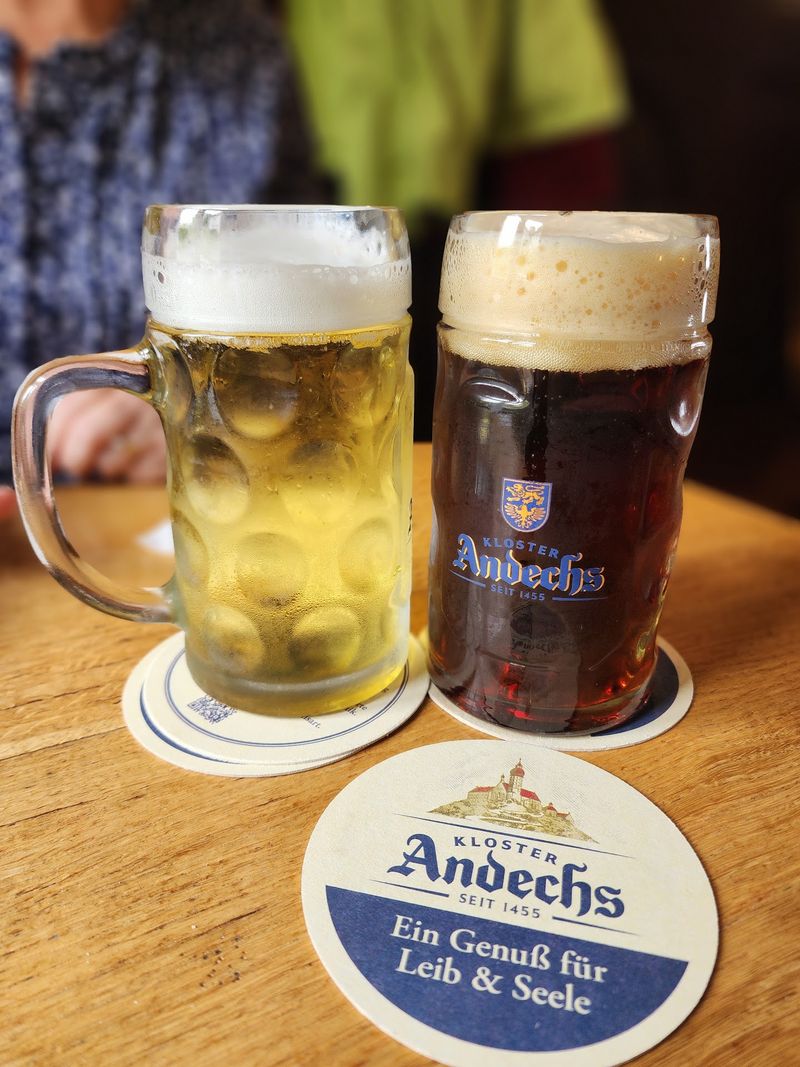
Andechs sits on a hill about 40 kilometers southwest of Munich, and the Benedictine monastery perched at the top has been brewing beer since the 15th century. The combination of pilgrimage site and working brewery makes Andechs one of the more unusual beer destinations in Bavaria, and that unusual mix is exactly what draws people here.
The Bräustüberl at the monastery serves the brewery’s own beer alongside traditional Bavarian food, and the terrace offers a view over the surrounding lake and forest landscape that is hard to beat on a clear day. Brewery tours are available by reservation for those who want to go beyond the pub experience and see how the monastic brewing tradition actually works.
The Bräustüberl is open throughout the week, and the monastery church above it is worth a short visit before or after eating. Getting to Andechs typically involves a short hike up the hill from the nearest bus stop, which adds a bit of an adventure to the outing.
Hausbrauerei Altstadthof, Nuremberg
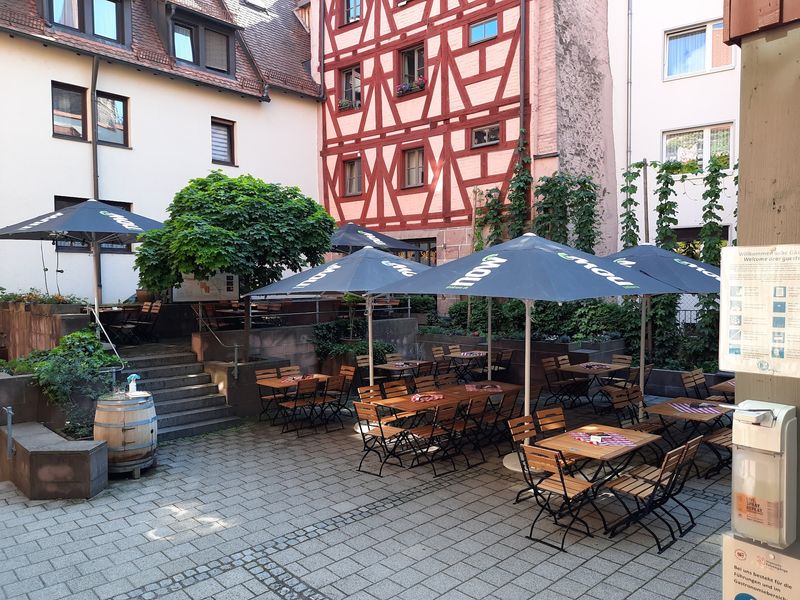
Nuremberg has a brewing history that stretches back to the medieval period, and Rotbier, the city’s traditional red beer, is a style that nearly disappeared before breweries like Altstadthof helped bring it back. The brewery began reviving Nürnberger Rotbier in the 1980s and remains one of the most interesting small breweries in the city today.
What makes a visit to Altstadthof stand out beyond the beer itself is the access to the rock-cut sandstone cellars beneath the old town. These tunnels were historically used to store beer at cool temperatures before modern refrigeration existed, and guided tours take visitors down into the network below the streets.
The combination of a working brewery above and centuries-old cellars below gives the stop a depth that is genuinely hard to find elsewhere.
Rotbier is the beer to order here, but the brewery also produces other styles. Nuremberg’s old town surroundings make Altstadthof an easy stop to fit into a broader walking tour of the city.
Radeberger Exportbierbrauerei, Radeberg
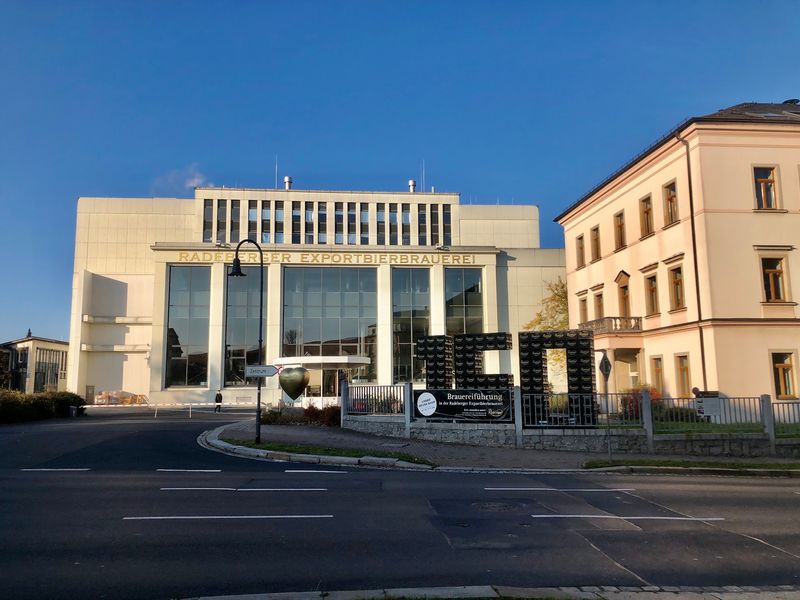
Radeberg is a small Saxon town that most people outside Germany have probably never heard of, but Radeberger Pilsner has traveled far beyond its borders. The brewery has been producing its signature Pilsner here since 1872, and its pale, clean lager style helped establish a reputation that reached well beyond regional borders during the 20th century.
Guided tours of the brewery run approximately two hours and cover the full brewing process from raw ingredients to finished product. The tour ends with a tasting that includes both the classic Radeberger Pilsner and the unfiltered Zwickel version, which gives visitors a chance to compare the two side by side.
Tours currently run Tuesday through Saturday and require advance registration.
Radeberg itself is a short drive from Dresden, making it a practical add-on to a trip to Saxony’s capital. For Pilsner fans specifically, seeing the production facility behind one of Germany’s most recognizable lager brands adds real context to what is in the glass.
Einbecker Brauhaus, Einbeck
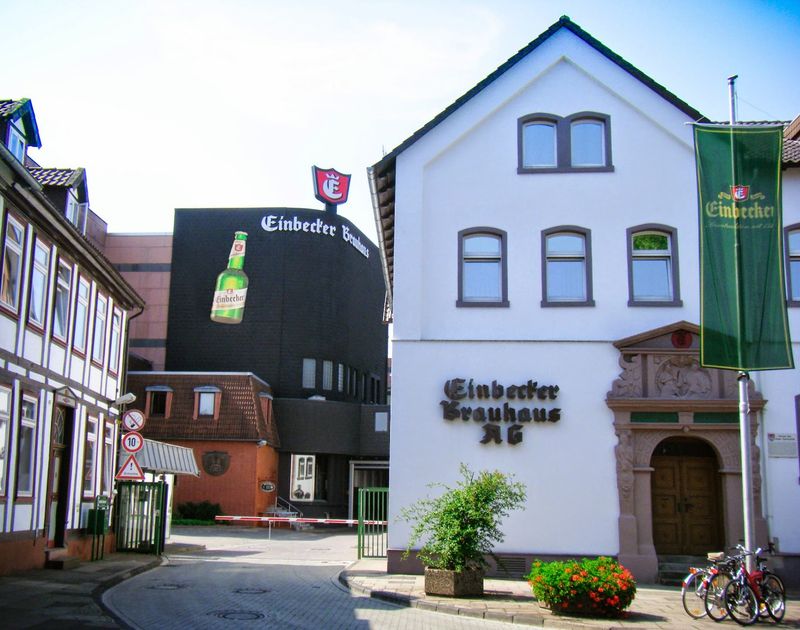
Bock beer has a history, and Einbeck is where a significant part of that history began. The town in Lower Saxony was exporting strong beer across northern Europe during the medieval period, and its brewing reputation eventually influenced the development of the Bock style that Bavaria later adopted and made famous.
That origin story alone makes Einbeck worth a look.
Einbecker Brauhaus keeps that tradition active today and offers structured brewery tours for visitors who want to follow the process from start to finish. The classic tour covers the brewhouse, fermentation cellars, filtration facilities, and the bottling operation before wrapping up with a tasting in the Ur-Bock-Keller.
It is a thorough experience that gives real context to what is in the glass.
Einbeck’s old town is also genuinely attractive, with preserved half-timbered buildings that reflect the town’s prosperous brewing past. Visiting the brewery and then walking the old town together makes for a complete and satisfying afternoon in Lower Saxony.
Köstritzer Schwarzbierbrauerei, Bad Köstritz
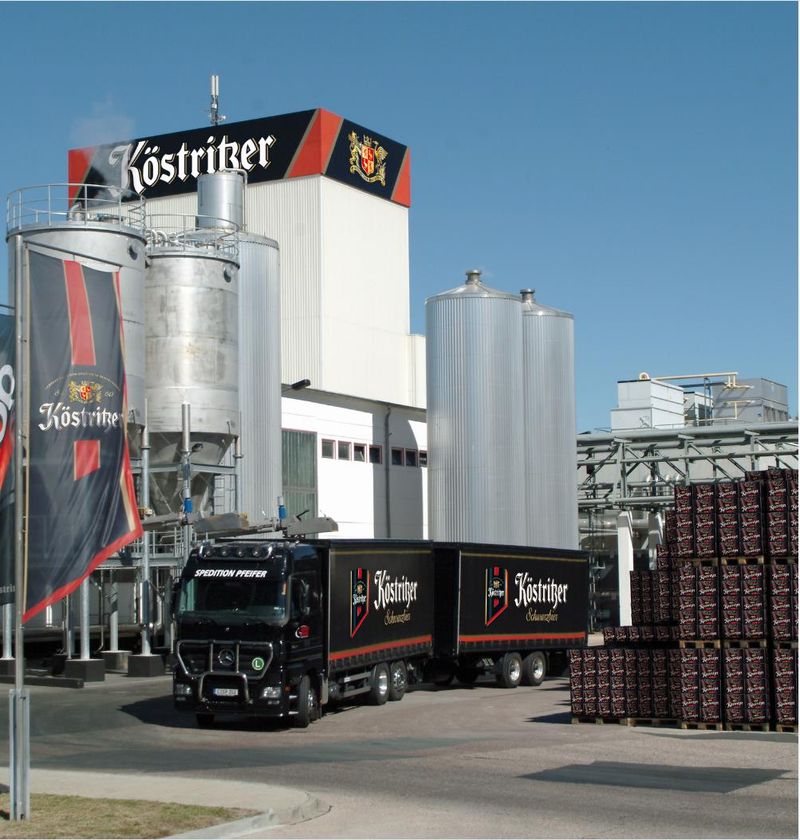
Dark beer fans often overlook Schwarzbier when building a German beer itinerary, and that is a missed opportunity. Köstritzer Schwarzbier is one of the most recognized examples of the style, a smooth, dark lager with a roasted character that is less aggressive than a stout but more complex than a standard lager.
The brewery in Bad Köstritz, Thuringia, has been producing it for centuries.
Guided tours with tastings are currently offered Monday through Friday and walk visitors through the production process while covering the history of the brewery and the Schwarzbier style. It is a focused, informative experience rather than a large-scale tourist operation, which gives it a more personal feel than some of the bigger brewery tours in Germany.
Bad Köstritz is a small town, so the brewery is essentially the main draw, but that makes the visit feel purposeful. Schwarzbier drinkers who have enjoyed the style in bottles will find it genuinely interesting to see where the original version comes from and how it is made.
Schanzenbräu, Nuremberg
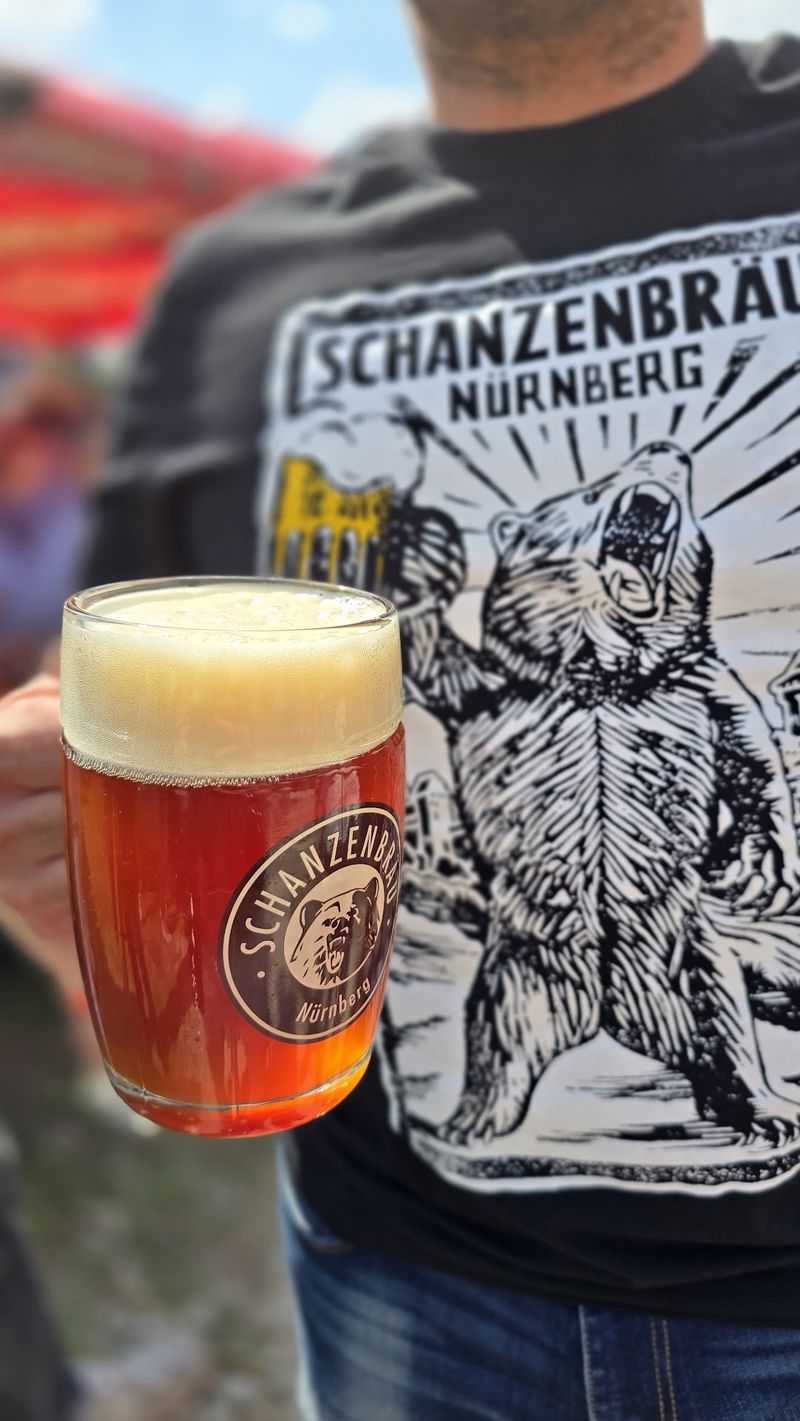
Not every great German beer destination is centuries old. Schanzenbräu started in 2004 as a small-scale brewing project in Nuremberg and has grown steadily into one of the city’s notable independent breweries.
It represents a newer chapter in a city that already has deep medieval brewing roots, and the contrast between old and new is part of what makes Nuremberg interesting as a beer destination.
The brewery produces a range of styles including Rotbier, Helles, Pils, Kehlengold, and rotating seasonal options. Rotbier is the most historically significant choice given Nuremberg’s long association with the style, but the full lineup gives visitors a chance to explore what a modern Franconian brewery looks like when it is working with both tradition and creativity.
Schanzenbräu is not a museum piece or a tourist landmark. It is a working brewery that reflects how Germany’s beer culture keeps evolving beyond its famous institutions.
For anyone who wants to see that side of Nuremberg alongside the historic stops, it is a practical and enjoyable addition to the itinerary.
Share this story