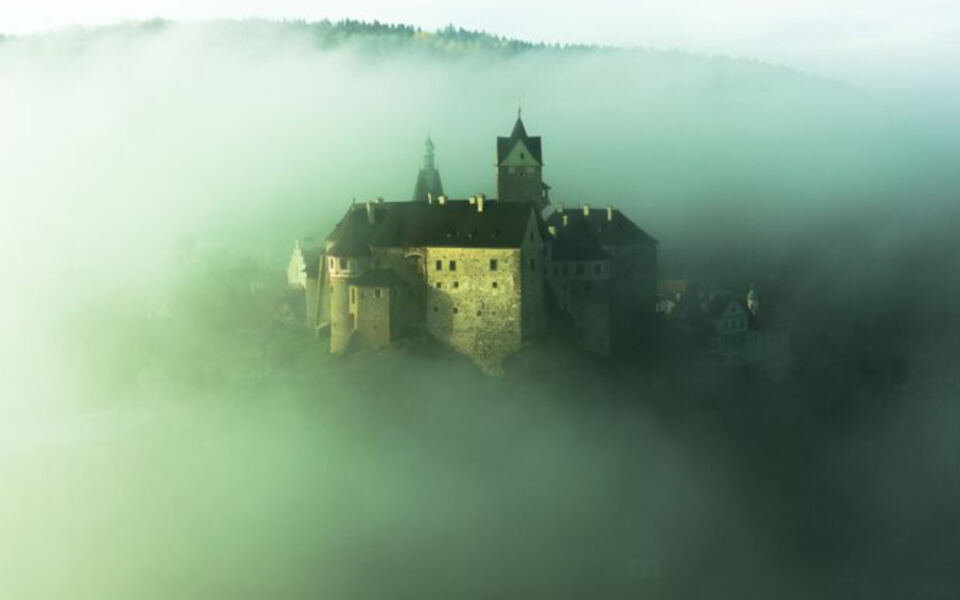
Czechia is home to some of the most dramatic castle landscapes in all of Europe, and the best ones are not found in museums or history books. They are perched on rocky hilltops, rising above red-tiled rooftops, and visible from miles away.
The country has hundreds of castles, but a select group of towns are completely defined by the fortress towering above them. Whether you are planning a road trip through Bohemia and Moravia or simply building a wish list for a future trip, these 13 towns offer something genuinely rare: the feeling that history never really left.
Each castle on this list is real, open to visitors, and worth the journey on its own terms.
Karlštejn Castle, Karlštejn
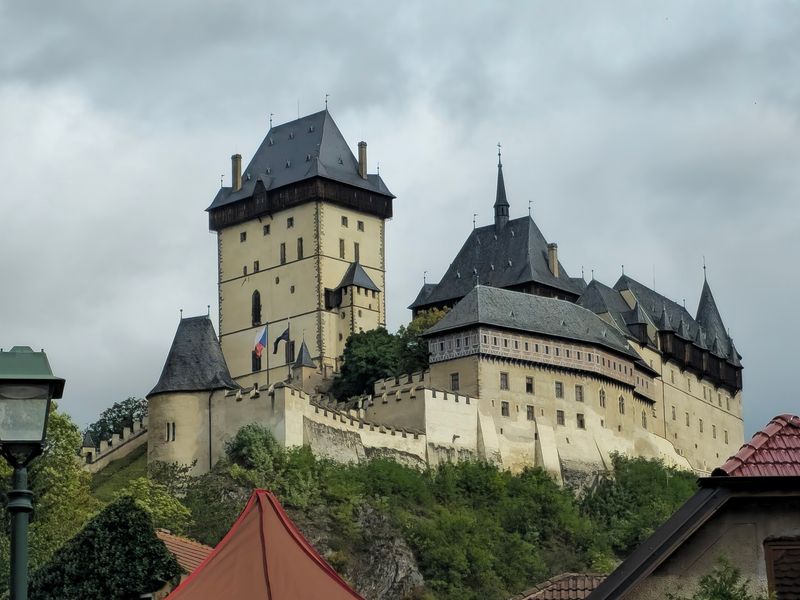
Charles IV built Karlštejn in 1348 not just as a royal residence, but as a vault for the Imperial Crown Jewels and sacred relics of the Holy Roman Empire. That origin story alone sets this castle apart from almost every other fortress in the country.
The towers climb so steeply above the trees that the first glimpse from the trail below genuinely stops people mid-step.
The small town of Karlštejn sits along the Berounka River, and the walk up to the castle gates delivers increasingly impressive views with every turn. Visitors can tour the Imperial Residence, while specialized tours cover the castle’s most sacred interior spaces.
The approach on foot through the village is part of the experience, with the towers appearing dramatically above the rooftops as you climb.
Karlštejn remains one of the most visited castles in Czechia, with official tours running through much of 2026. Getting there early in the day makes a real difference.
Loket Castle, Loket
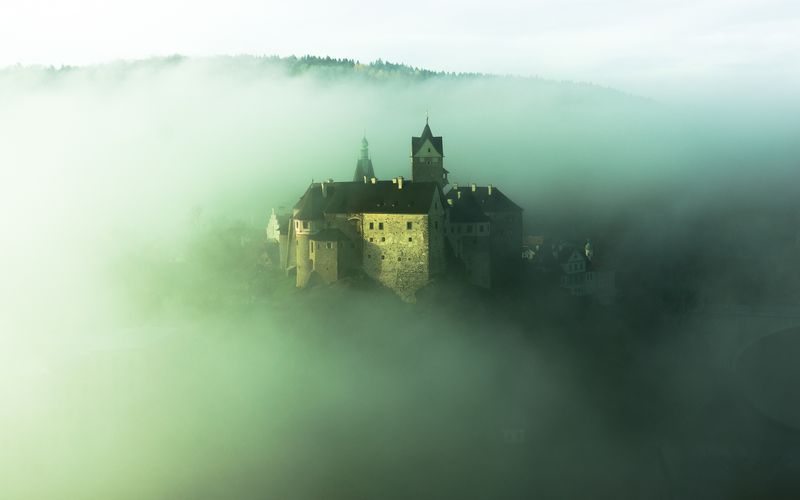
The town of Loket looks like it was drawn by someone who had never seen anything ugly. Its compact historic center wraps around the base of a rocky promontory, and the castle sits on top like a crown the town never took off.
The Ohre River curves around much of the settlement below, adding to the sense that this place was deliberately designed to be memorable.
Loket Castle is open to visitors year-round and runs exhibitions and guided tours throughout the season. During summer 2026, daily opening hours run from 9 a.m. to 6:30 p.m., making it easy to fit into a longer day trip from Karlovy Vary.
There are some ongoing restoration works affecting parts of the courtyard and parking area, but the castle itself continues welcoming visitors without interruption.
The thick defensive walls and multiple towers reinforce how seriously the original builders took this location. Few towns in western Bohemia pack this much visual impact into such a small footprint.
Cesky Krumlov Castle, Cesky Krumlov
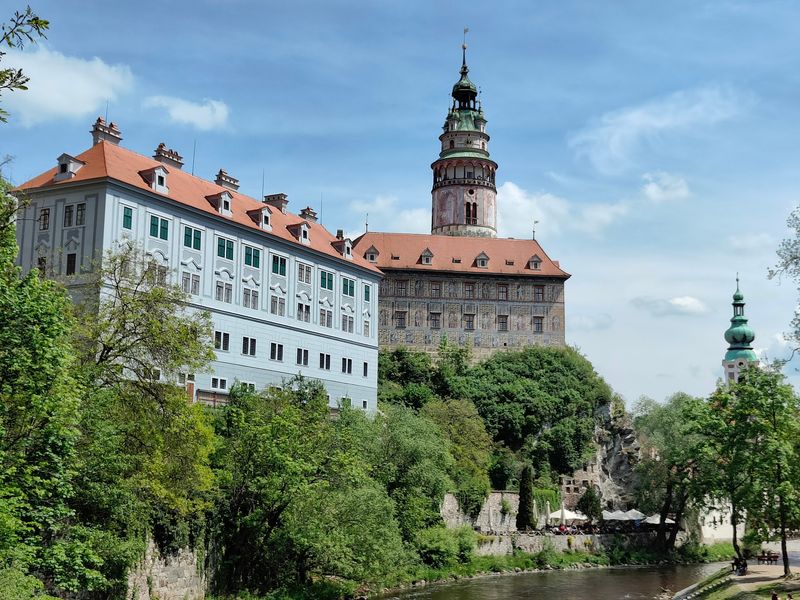
Cesky Krumlov is the kind of place that makes people question why they did not come sooner. The castle and chateau complex above the Vltava River is one of the largest in Central Europe, and its colorful tower has appeared on more Czech travel photographs than almost anything else in the country.
The UNESCO-listed historic center below is extraordinary, but the castle gives it an entirely different scale.
Visitors during the 2026 season can explore Renaissance and Baroque state apartments, the Castle Museum, the tower, formal gardens, and one of the most remarkably preserved Baroque castle theatres anywhere in Europe. Different sections follow their own schedules, so checking ahead saves confusion on arrival.
The main guided routes and Castle Museum are operating through the primary season.
The visual relationship between the town and the castle is something that photographs genuinely struggle to capture. Standing on the river bend and looking up at the complex overhead is a moment that tends to stay with visitors for a long time.
Mikulov Castle, Mikulov
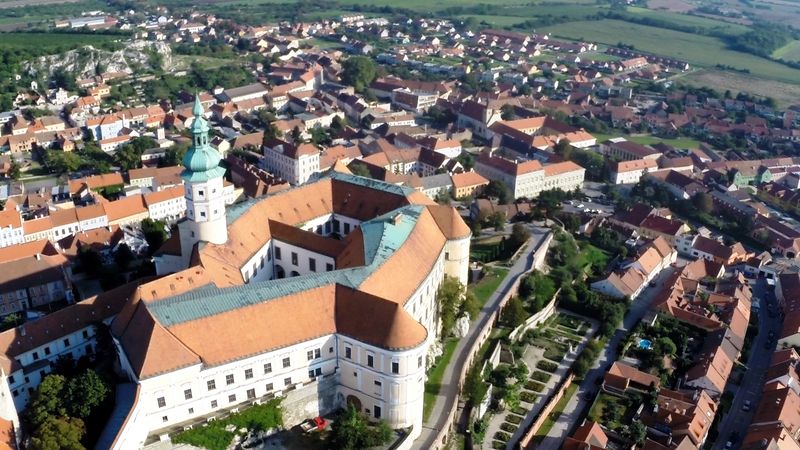
Mikulov sits near the Austrian border in South Moravia, and its castle makes sure you never forget which building is in charge of the skyline. The enormous pale complex occupies Castle Hill directly above the historic center, visible from vineyards, roads, and viewpoints scattered across the surrounding countryside.
It is one of those landmarks that seems to follow you wherever you go in town.
Technically a chateau that evolved from an earlier medieval stronghold, Mikulov Castle hosts exhibitions covering regional history, art, and culture. The 2026 season runs from April 2 through November 29, with opening days varying by month, so checking the official schedule before visiting is a practical step.
Beyond the castle, Mikulov’s streets, limestone hills, and vineyard-covered slopes create one of the most distinctive townscapes in the entire country.
South Moravia is already popular for its wine country character, and Mikulov pulls that identity together with a castle backdrop that few comparable wine towns anywhere can match. The combination is genuinely hard to beat.
Bezdez Castle, Bezdez
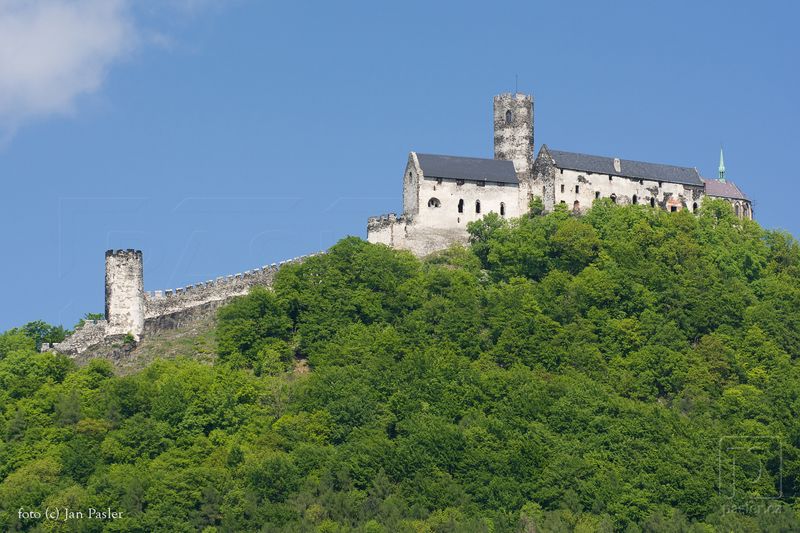
Bezdez is not trying to impress you with polished interiors or manicured gardens. This is a medieval fortress in the truest sense, sitting on a steep hill above the tiny community of Bezdez and visible from miles across the surrounding landscape.
Reaching the castle requires an uphill walk, and that effort is part of what makes arriving at the top feel earned.
The castle retains its early Gothic chapel, royal palace, defensive buildings, and tower in a state that feels genuinely historic rather than restored into something glossy. The elevated position rewards the climb with wide views across northern Bohemia.
Bezdez operates through its 2026 season generally from spring through the end of October, with more limited schedules during the shoulder months.
For visitors who feel that many Czech castles have been softened by renovation, Bezdez offers a rawer and more atmospheric alternative. The silhouette from the road below is striking enough that the castle has a way of making its own case before you even start walking.
Pernstejn Castle, Nedvedice
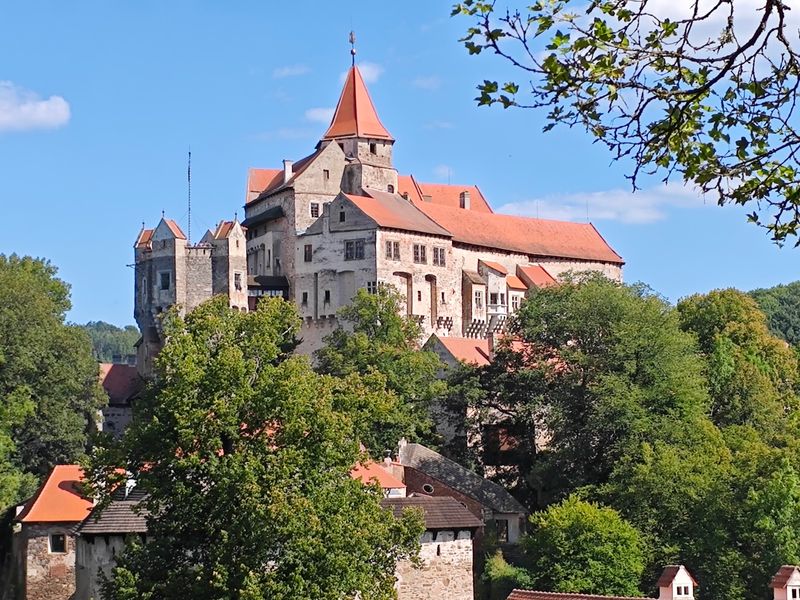
Pernstejn Castle near Nedvedice has the kind of profile that Gothic castle enthusiasts specifically travel across Europe to find. Towers, walls, narrow passages, and successive courtyards create a layered complex that developed over centuries while somehow retaining a cohesive medieval character.
From the valley below, the fortress looks exactly as imposing as its builders intended.
The official castle administration describes Pernstejn as a remarkably well-preserved High Gothic castle, with later interior modifications stretching through the Baroque period and into the 19th century. Visitors can choose between tours of the historic interiors or exploration of the castle courtyards depending on the selected route.
Regular seasonal operation is confirmed for 2026, including tours throughout the summer and early autumn months.
The approach uphill from the village below adds a sense of gradual discovery, with the castle revealing more of its complexity as you get closer. Nedvedice itself is a quiet community, which makes the scale of the fortress above it all the more surprising on arrival.
Bouzov Castle, Bouzov
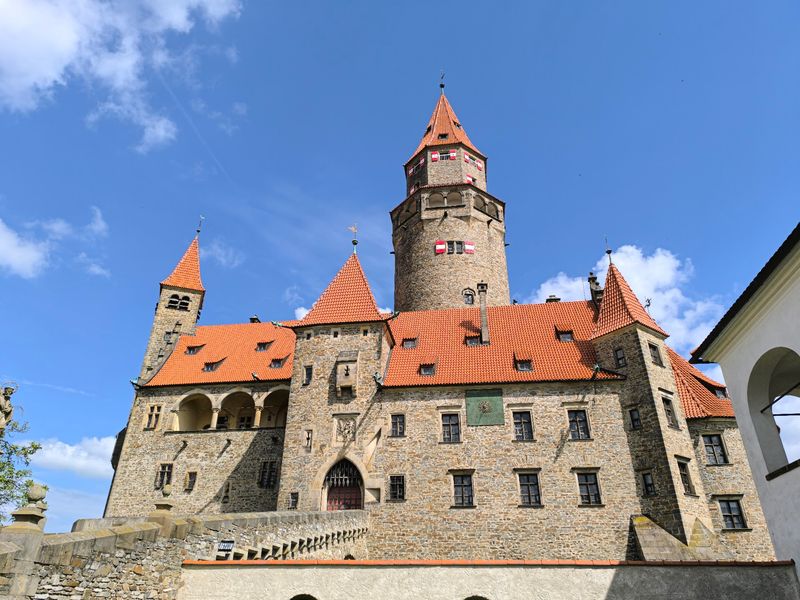
Bouzov Castle is the kind of place that makes first-time visitors do a double-take. The towers, battlements, steep roofs, stone walls, and wooded hilltop position give it an appearance so close to a storybook fortress that it can feel slightly unreal on arrival.
The village of Bouzov sits below, and the contrast in scale between the two is remarkable.
The castle originated around the turn of the 13th and 14th centuries and underwent major changes over the years, including extensive Romantic-era reconstruction that shaped much of its current dramatic silhouette. Among its more unusual surviving features are functioning drawbridges and a portcullis, which are genuinely rare in a working visitor attraction.
Several different tour routes are scheduled throughout 2026.
During July and August, the main tour route operates every day, making summer the most accessible time to visit. The interiors are furnished, which adds a layer of lived-in atmosphere that purely ruined castles cannot provide.
Bouzov rewards visitors who take the time to explore more than one route.
Krivoklat Castle, Krivoklat
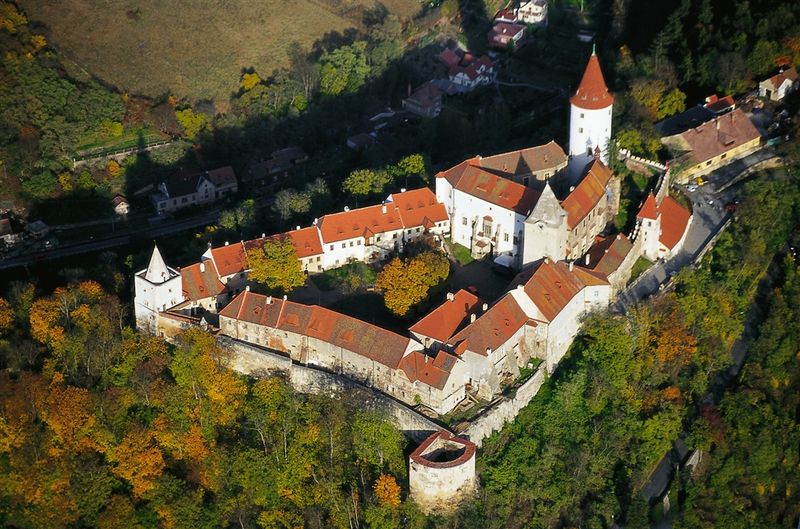
West of Prague, where the forests thicken and the roads narrow, Krivoklat Castle rises above the small settlement sharing its name. The location feels deliberately remote, which makes more sense when you learn that Czech rulers used this place as a hunting base as far back as the 12th century.
Its origins predate most of the other castles on this list.
Significant expansions came under rulers including Premysl Otakar II, Wenceslas IV, and Vladislaus II, each leaving visible marks on the architecture. The castle later gained a grimmer reputation as a prison, a chapter in its history that tour guides do not skip over.
Modern visitors can see Gothic halls, the castle chapel, medieval art collections, historic library rooms, and defensive towers depending on the chosen route.
Krivoklat has extensive published visitor hours for 2026, including regular tours through the main season and selected winter opening periods. The forested setting around the castle is part of a protected landscape area, which keeps the approach feeling genuinely unspoiled.
Sternberk Castle, Sternberk
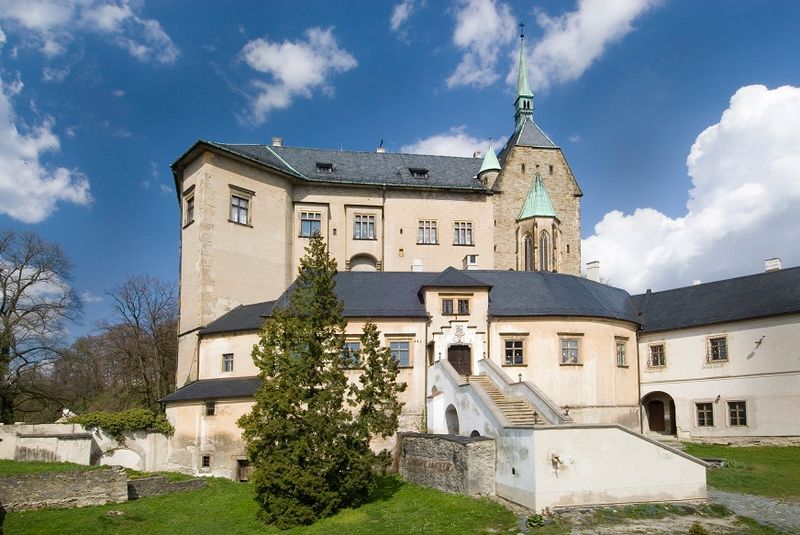
Sternberk Castle does not sit near the town as a distant landmark. The castle’s own official history describes it as the dominant feature of Sternberk, and that description is accurate.
Rising immediately above the historic center, it gives this Moravian town an unmistakable medieval focal point that shapes the character of the streets below it.
The castle was established during the second half of the 13th century by Zdeslav of Sternberk. Renaissance alterations followed over the centuries, and another significant transformation came around the end of the 19th century under the Liechtenstein family.
Collections preserved inside include medieval and Renaissance artworks, historic furnishings, and items connected with the castle’s final aristocratic owners.
The site is actively operating in 2026, with summer opening hours and multiple tour routes available. Sternberk is sometimes overlooked in favor of more famous Moravian destinations, which means the castle can feel refreshingly uncrowded compared to its better-known counterparts.
That relative quiet is its own kind of draw.
Vranov Castle, Vranov nad Dyji
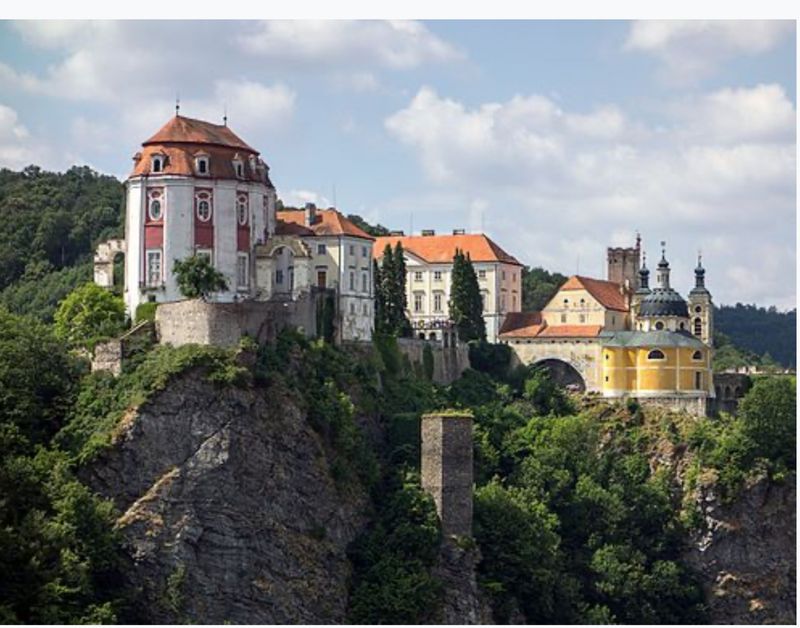
Vranov nad Dyji is a small South Moravian town, but its castle makes it one of the most visually dramatic spots in the entire country. The immense chateau rises from a rocky height above the Dyje River, with portions of the building appearing to balance directly above the steep valley walls.
From certain angles along the river road, the complex looks almost impossibly positioned.
The original medieval fortress was substantially transformed during the Baroque and Neoclassical periods, particularly under the Althann family, resulting in grand state rooms and private apartments that feel far more palatial than the rugged setting below would suggest. A newly accessible herb garden also opened for the 2026 season, adding another element to the visit.
Vranov has a full published visitor schedule running through the main tourist months.
The combination of theatrical natural setting, Baroque architecture, and river scenery gives Vranov a character that is genuinely different from other castle towns in Moravia. A drive along the valley road before heading up to the entrance is a good way to appreciate the full scale of the complex.
Nachod Castle, Nachod
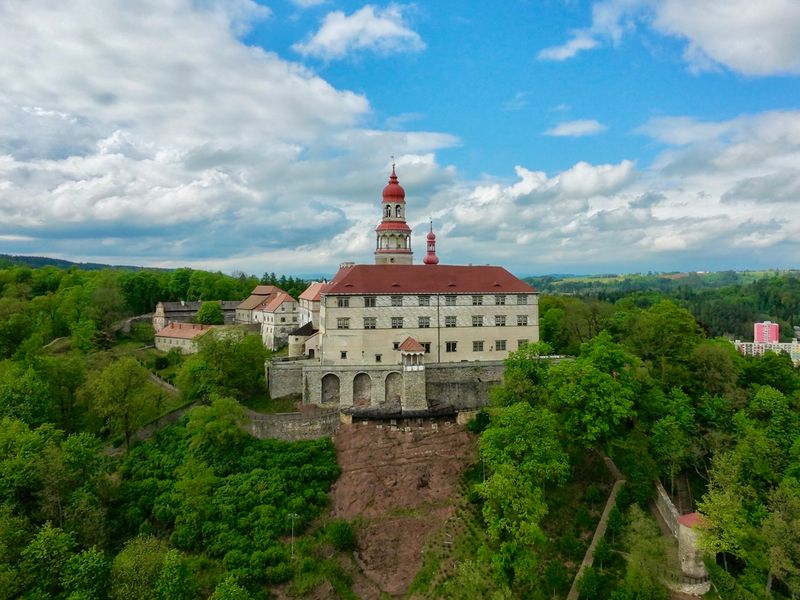
Arriving in Nachod by road, the castle announces itself before the town has a chance to. The enormous complex of five connected courtyards, towers, fortifications, and sprawling buildings occupies the hill above the city in a way that makes it feel less like an addition to Nachod and more like the reason the city exists at all.
That instinct is not far from the historical truth.
Nachod began as a Gothic castle in the mid-13th century and was later transformed through Renaissance and Baroque rebuilding. Its oldest surviving sections still include a massive cylindrical tower and substantial defensive fortifications, reminders that the elegant residence that exists today grew from a strategic stronghold.
The surrounding park occupies Castle Hill above the city, offering additional space to explore beyond the formal tour routes.
The complex remains an active visitor attraction in 2026, with official tours and opening information published by the National Heritage Institute. Northeastern Bohemia does not always appear at the top of Czech travel itineraries, which makes Nachod a genuinely rewarding detour for visitors willing to go slightly off the main tourist circuit.
Frydlant Castle, Frydlant
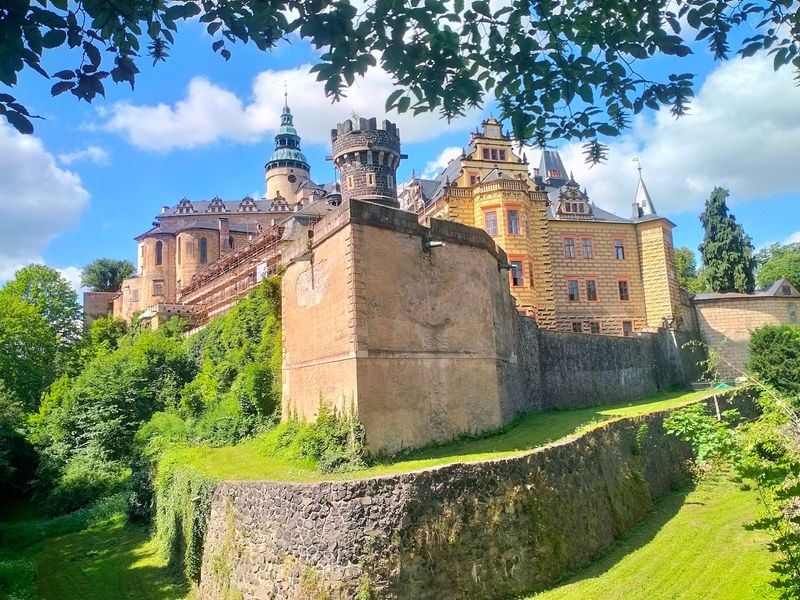
Frydlant offers something unusual even by Czech standards: two historic residences essentially combined into one architectural complex. A medieval castle and a later Renaissance chateau rise together above the town, creating a landmark that developed across multiple centuries and still shows the layers clearly.
The visual contrast between the older stone tower and the more refined chateau sections is part of what makes the site interesting to walk through.
The site was founded in the 13th century and later associated with notable owners including Albrecht von Wallenstein and the Clam-Gallas family. Remarkably, Frydlant opened to the public as early as 1801 and is officially described by its administration as the oldest castle museum in Central Europe.
That is a claim that tends to get people’s attention.
Several visitor routes cover the medieval castle, chateau interiors, historic armoury, and additional rooms, all with published operating schedules for 2026. Frydlant sits in the far northern corner of Bohemia near the Polish and German borders, which makes it a natural anchor for a longer regional road trip.
Helfstyn Castle, Tyn nad Becvou
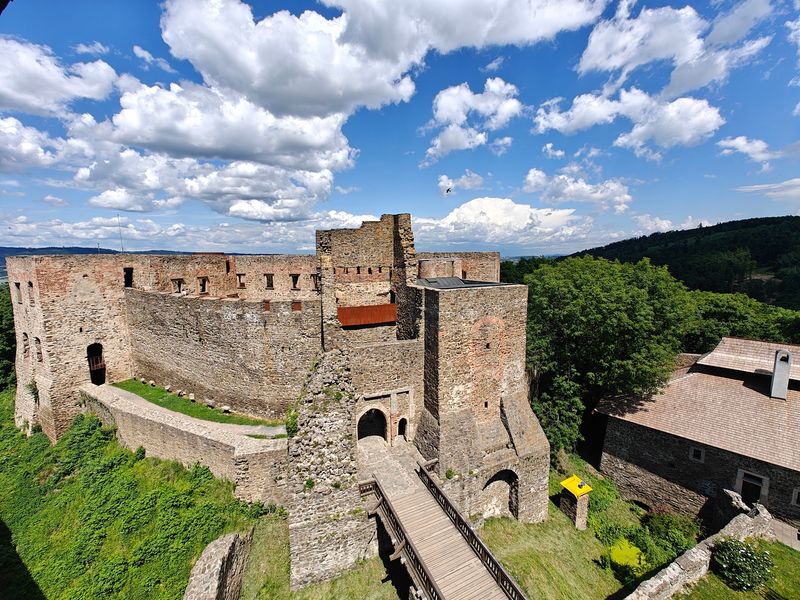
Helfstyn is not a compact hilltop palace. It is an extensive fortified complex that spreads across a wooded hill above Tyn nad Becvou, and its sheer scale sets it apart from most other castle experiences in Moravia.
Visitors expecting a quick walk-through tend to revise their schedule once they see how much ground the site actually covers.
The elevated position once gave the fortress a clear defensive advantage over the valley below, and today it provides sweeping views across the surrounding Moravian landscape. Helfstyn has also become particularly associated with artistic blacksmithing, with permanent and rotating exhibitions of ironwork complementing the medieval architecture in an unexpected but fitting combination.
The castle is actively operating throughout much of 2026.
From May through August, the castle is open every day except Mondays, with shorter seasonal schedules during spring and autumn. Outdoor portions of the complex can be explored independently, while guided services are also offered during the main season.
For visitors who want a castle experience that goes beyond standard room-to-room tours, Helfstyn delivers something genuinely different.
Share this story