Europe has a long history of building walls, towers, and gates to protect its towns, and some of those structures are still standing today in remarkable condition. Walking through a medieval city gate feels different from looking at a photograph.
You can touch the stone, look up at the arch, and actually pass through the same entrance that merchants, soldiers, and royalty used centuries ago. From Roman-era gateways in Germany to Baroque entrances in Malta, these 15 European towns have held onto their historic city gates in ways that make history feel completely real and surprisingly close.
Porta Nigra, Trier, Germany
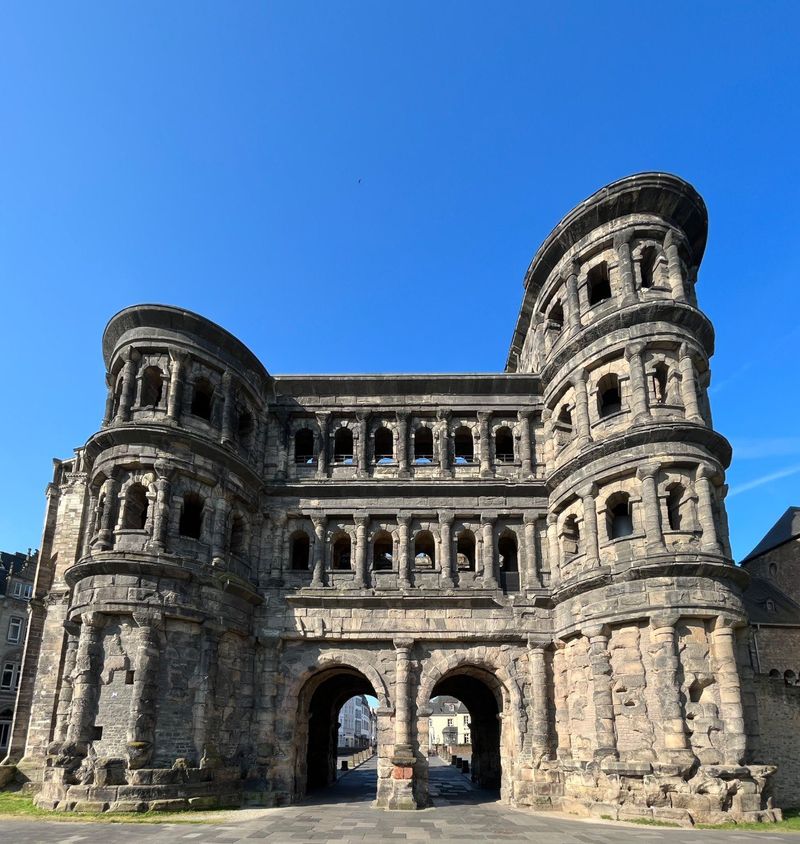
Standing roughly 30 meters tall and built without mortar, the Porta Nigra is one of the most extraordinary things left behind by the Roman Empire. Constructed around the second century, it is widely considered the best-preserved Roman city gate north of the Alps.
The name translates to “Black Gate,” a reference to the dark patina the sandstone developed over centuries of exposure.
Unlike many ancient monuments that exist only as ruins, Porta Nigra is substantial enough to walk inside and explore across multiple levels. Visitors can move through the interior galleries and get a genuine sense of how massive this structure really is from the inside out.
Trier itself is Germany’s oldest city, and the Porta Nigra anchors a UNESCO World Heritage Site that includes several other Roman monuments. The gate is open daily with seasonal hours, making it an accessible stop for anyone traveling through the Moselle region.
Holstentor, Lübeck, Germany
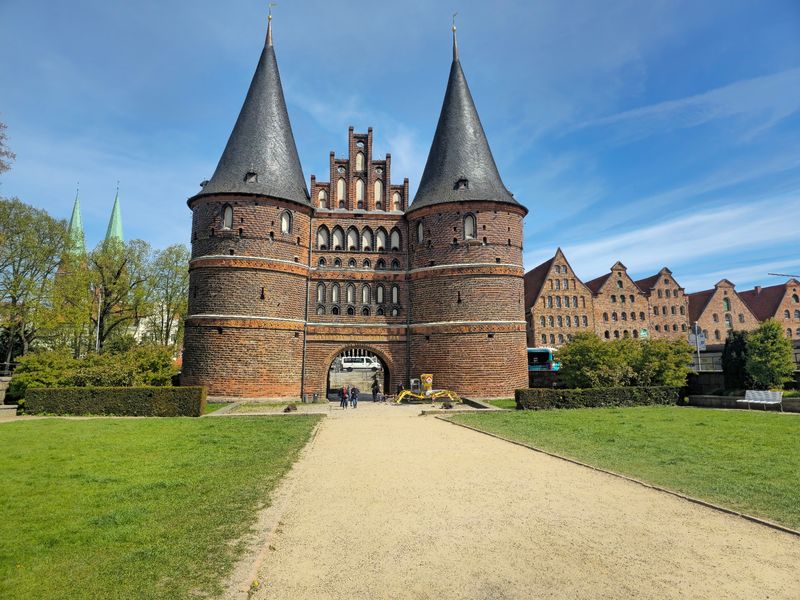
Few city gates in Europe are as immediately recognizable as the Holstentor in Lübeck. Its two round brick towers lean slightly toward each other, giving the structure a look that is both sturdy and oddly charming.
For decades, this gate appeared on the German 50-mark banknote, which tells you something about how deeply it is tied to national identity.
Built in the 15th century as part of Lübeck’s western defenses, the Holstentor now houses the Museum Holstentor, which covers the city’s Hanseatic trading history. The museum is open daily from 10 a.m. to 6 p.m., with the exception of certain holidays.
Lübeck’s Old Town is a UNESCO World Heritage Site, and the Holstentor functions as its most photographed landmark. The surrounding area near the Trave River makes for a pleasant walk, and the gate is visible from multiple angles as you approach the historic center on foot.
Spitaltor, Rothenburg ob der Tauber, Germany
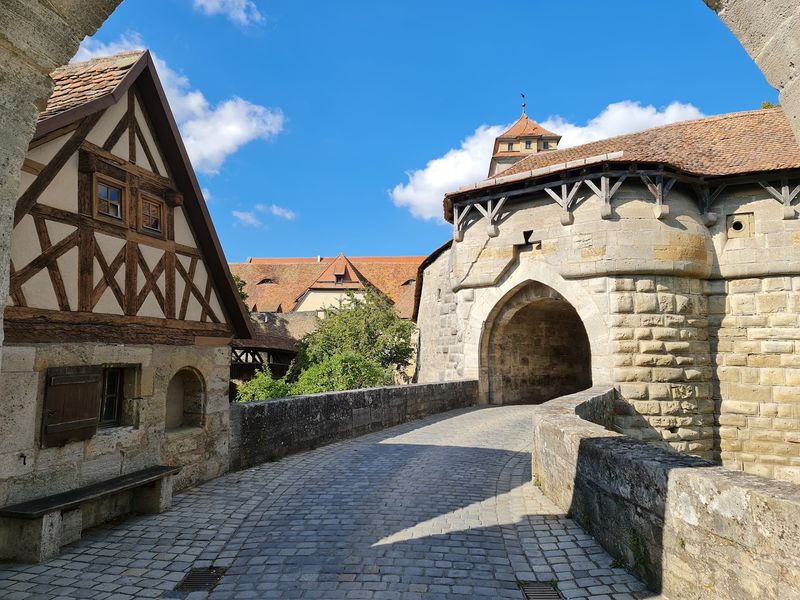
Rothenburg ob der Tauber is one of the most completely preserved medieval towns in Germany, and its ring of fortifications is a major reason why. The Spitaltor, located at the southern end of the old town, is the most elaborate of the surviving gateways.
It was built as part of a later defensive expansion and features a complex of towers, walls, and a barbican that made it genuinely difficult to breach.
Unlike the town’s more centrally visited spots, the Spitaltor area feels a little quieter, which gives you more room to look around and take it in at your own pace. The gate connects to the town’s famous walkable wall circuit, so you can easily continue your exploration from there.
Rothenburg draws visitors year-round, but the fortifications are especially atmospheric in the early morning before the main crowds arrive. The Spitaltor is freely accessible from the exterior and represents the town’s serious medieval defensive planning at its most visible.
St. Florian’s Gate, Krakow, Poland
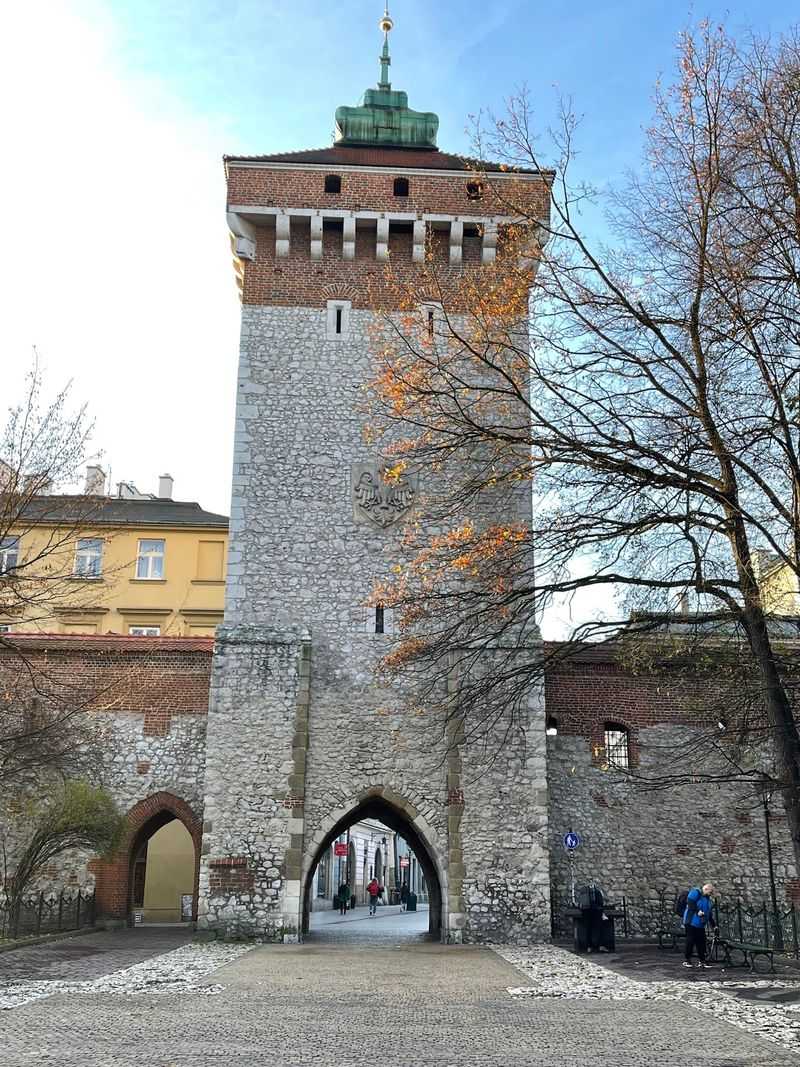
Krakow’s medieval fortifications were largely dismantled in the 19th century to make way for a green ring road called the Planty, but a short stretch of the old defensive wall survived along with St. Florian’s Gate. That surviving section, including the gate itself, is one of the most complete examples of medieval urban defense remaining in Central Europe.
St. Florian’s Gate served as the principal northern entrance into the city and was the starting point for the Royal Road that led to Wawel Castle. Royal processions, foreign ambassadors, and trade caravans all passed through here for centuries.
The gate’s Gothic stonework and flanking towers still carry that sense of ceremony.
Krakow Museum manages the site, and the 2026 visitor program includes access to the defensive walls and a ceremonial procession through the gate during the tourism season. The surrounding Barbican, connected by a short passage, adds further context to how the full defensive system once worked.
Krakowska Gate, Lublin, Poland
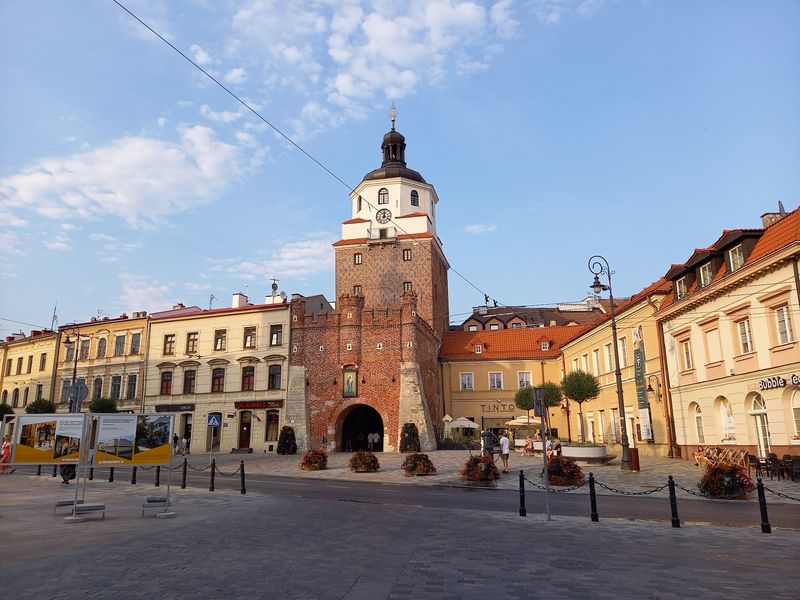
Krakowska Gate in Lublin is an architectural time capsule built across several centuries. Its foundations are Gothic, dating to the 14th century when the city reinforced its walls following a Tatar invasion.
Renaissance details were added later, and a Baroque dome was placed on top in the 17th century, making the gate a layered record of changing tastes and defensive priorities.
The gate once formed the main entry point into Lublin’s Old Town from the south, and it still marks that boundary today. It now houses the Lublin History Museum, which uses the tower’s multiple levels to trace the city’s past through maps, models, and historical objects.
Lublin is often overlooked in favor of Krakow or Warsaw, but its Old Town is genuinely worth the visit. The Krakowska Gate stands at the base of the old hill town and frames the view upward toward the castle and cathedral in a way that rewards a slow, unhurried approach.
Powder Gate Tower, Prague, Czechia
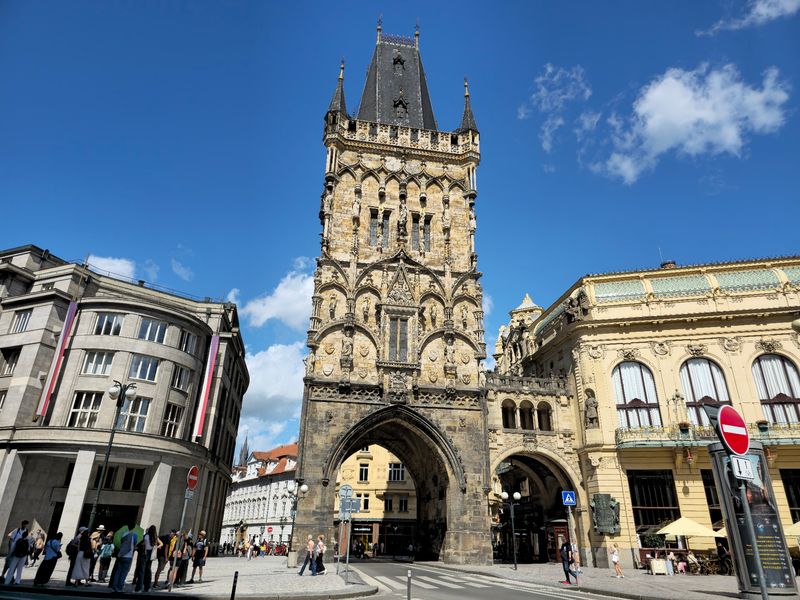
Begun in 1475, the Powder Gate is one of the original 13 entrances into Prague’s Old Town, and it is the only medieval gateway that still stands in anything close to its original form. The name comes from its 17th-century use as a storage place for gunpowder, though its original purpose was ceremonial as much as defensive.
Kings entering Prague for their coronation would pass through this gate before proceeding along the Royal Route.
The tower rises 44 meters and is decorated with late-Gothic stone carvings that were restored in the 19th century. Visitors can climb to the viewing gallery for a perspective over the surrounding Josefov and Old Town neighborhoods.
Prague City Tourism lists daily opening hours throughout the year, making it one of the more accessible historic towers in the city.
The gate sits next to the Municipal House, a stunning Art Nouveau building, so the two structures together make a strong starting point for exploring the historic center on foot.
Michael’s Gate, Bratislava, Slovakia
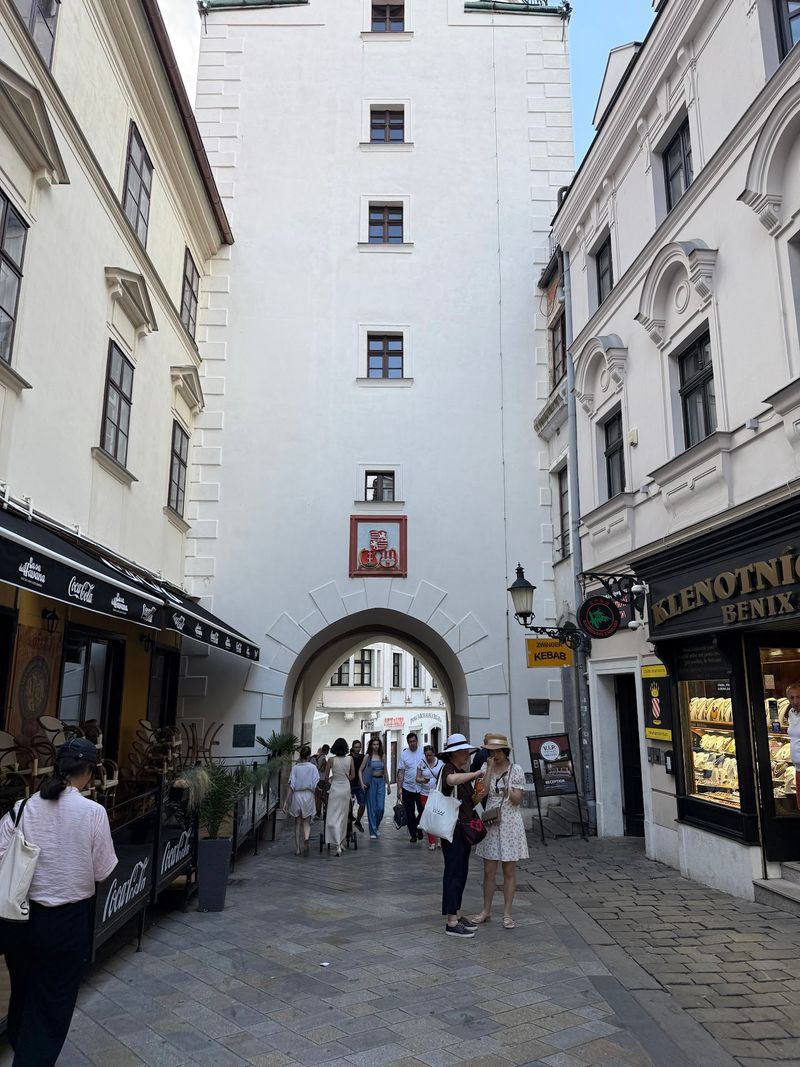
Out of all the gates that once surrounded Bratislava’s medieval city, Michael’s Gate is the only one that survived. That alone makes it worth seeking out, but the structure itself adds to the appeal.
The lower portion dates to the 14th century, while the green Baroque cupola on top was added in the 18th century, giving the tower an unusual silhouette that stands out clearly against the sky.
The gate straddles Michalska Street, one of the most photographed lanes in the Old Town. Visitors can enter the tower and climb to the upper balcony, which offers views across the rooftops toward Bratislava Castle and the Danube beyond.
The interior also holds a small museum of arms and city fortifications.
Bratislava’s Old Town is compact and walkable, and Michael’s Gate is essentially the northern anchor of the main pedestrian zone. Arriving from this direction gives you a genuine sense of entering a historic city, which is not something every European capital can still offer.
Pile Gate, Dubrovnik, Croatia
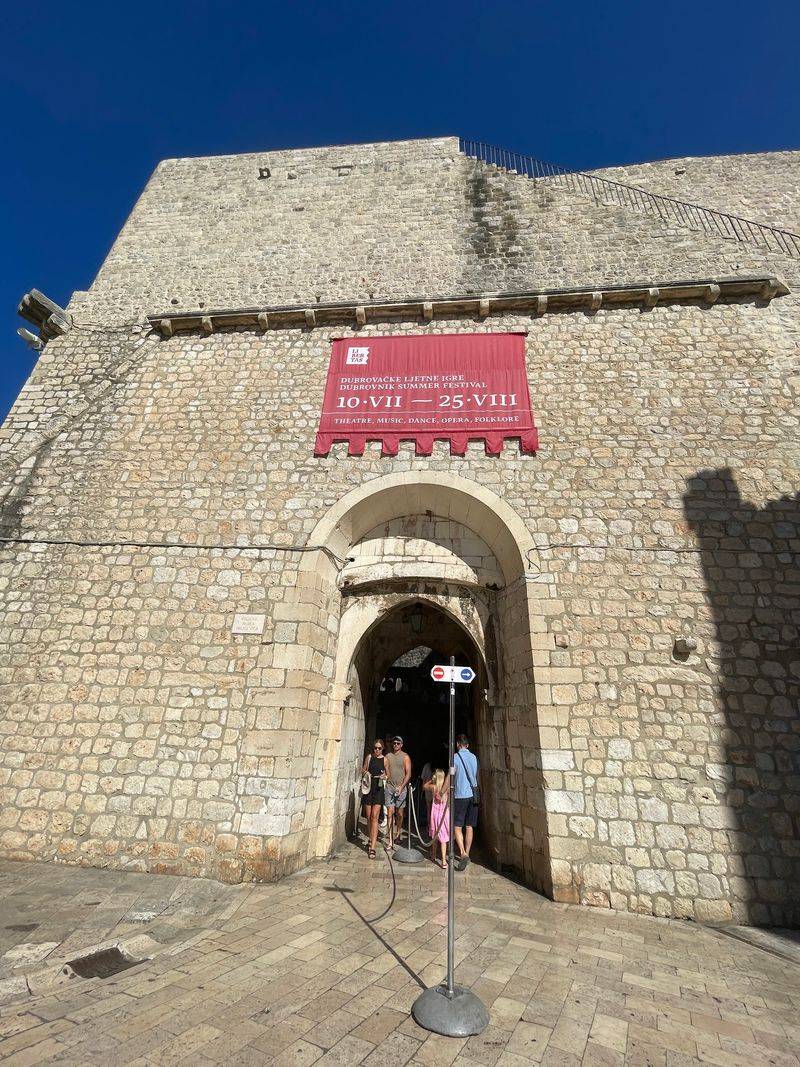
Pile Gate is not a relic you visit on the way to something else. It is the way in.
The western entrance to Dubrovnik’s walled Old Town is still the main point of arrival for most visitors, and passing through its double-gate complex onto the limestone pavement of Stradun is one of the more satisfying entrances you can make into any historic city in Europe.
The outer gate dates to 1537 and features a statue of St. Blaise, Dubrovnik’s patron, carved into the arch above the passage. A wooden drawbridge crosses the dry moat before the first arch, and a second inner gate leads directly into the city.
The two-stage design was a deliberate defensive strategy.
Dubrovnik’s walls are among the most complete in Europe, and Pile Gate is where that circuit begins for most walkers. The area just outside the gate has practical amenities, including luggage storage, which makes it a useful orientation point before heading into the Old Town.
Porte Cailhau, Bordeaux, France
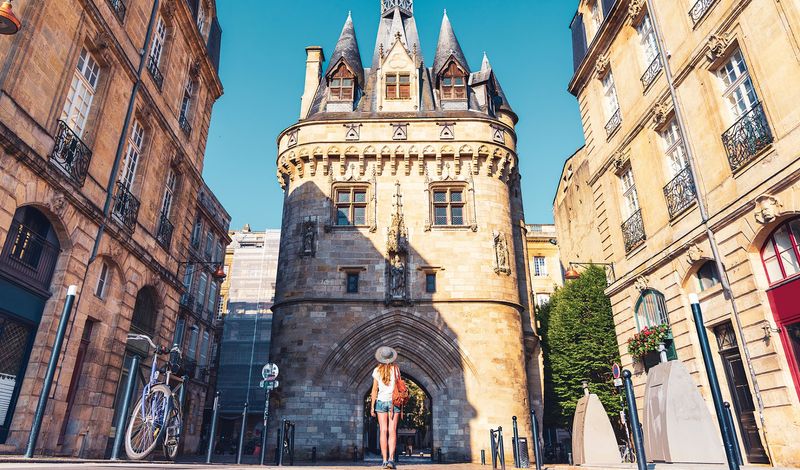
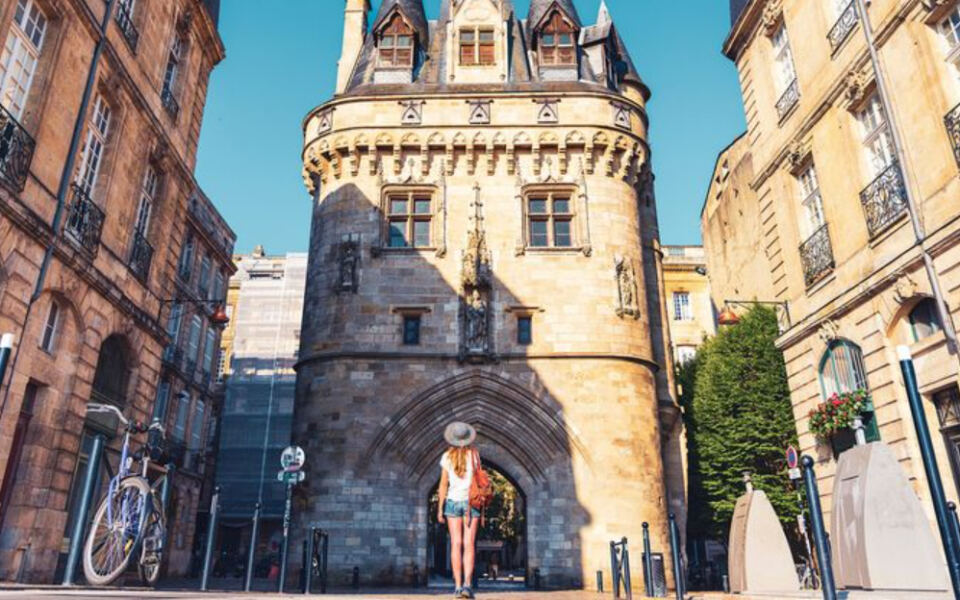
Built in 1495 to celebrate Charles VIII’s victory at the Battle of Fornovo, Porte Cailhau was designed to impress as much as to defend. Standing 35 meters tall with a cluster of pointed turrets at its crown, it is one of the most visually distinctive city gates in France.
For centuries it served as the main gateway from the Garonne River into the city, meaning virtually everyone arriving by water passed under it.
Today the gate is open to visitors who can explore an interior exhibition about the history of Bordeaux and climb to the top for views over the Garonne and toward the Pont de Pierre. The surrounding Place du Palais is a lively square that gives you a good vantage point for looking up at the full height of the tower.
Bordeaux is a major destination in its own right, and the Porte Cailhau is easy to combine with a walk along the riverfront quays. The gate is typically open during the day with published seasonal hours.
Porte de la Craffe, Nancy, France
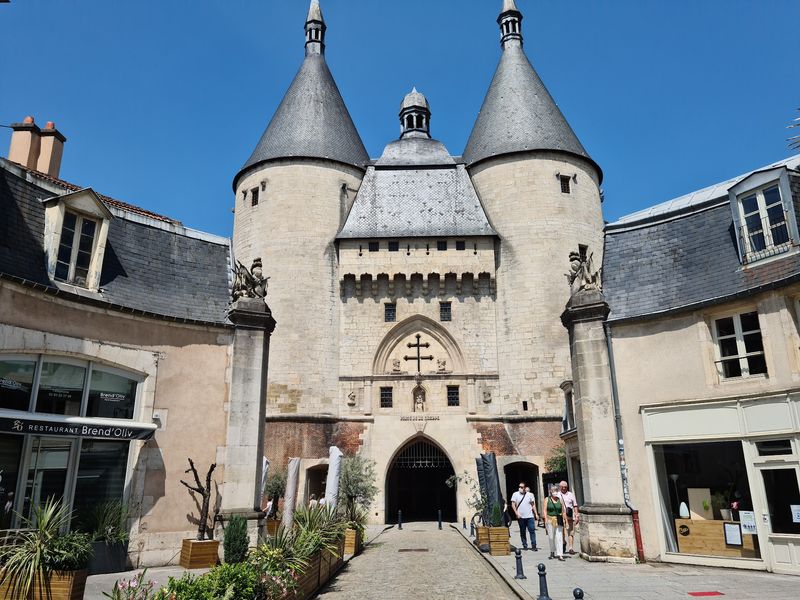
Nancy is best known for its stunning Place Stanislas, a UNESCO World Heritage square from the 18th century, but the city has an older layer that most visitors overlook. Porte de la Craffe, built primarily in the 14th and 15th centuries, is the oldest surviving monument in Nancy’s historic center and the most significant remnant of its medieval fortifications.
The gate consists of two round towers connected by a central passage, with crenellated tops that give it a distinctly martial look. It served as the northern entrance to the old city and, at various points in its history, was used as a prison.
The stonework has held up remarkably well, and the exterior can be viewed freely from the surrounding streets.
Regular independent interior access is not consistently offered, so the main experience here is architectural rather than museum-style. That said, the gate is photogenic from multiple angles and pairs well with a walk through Nancy’s medieval quarter, which sits apart from the more visited Baroque center.
Puerta de Bisagra, Toledo, Spain
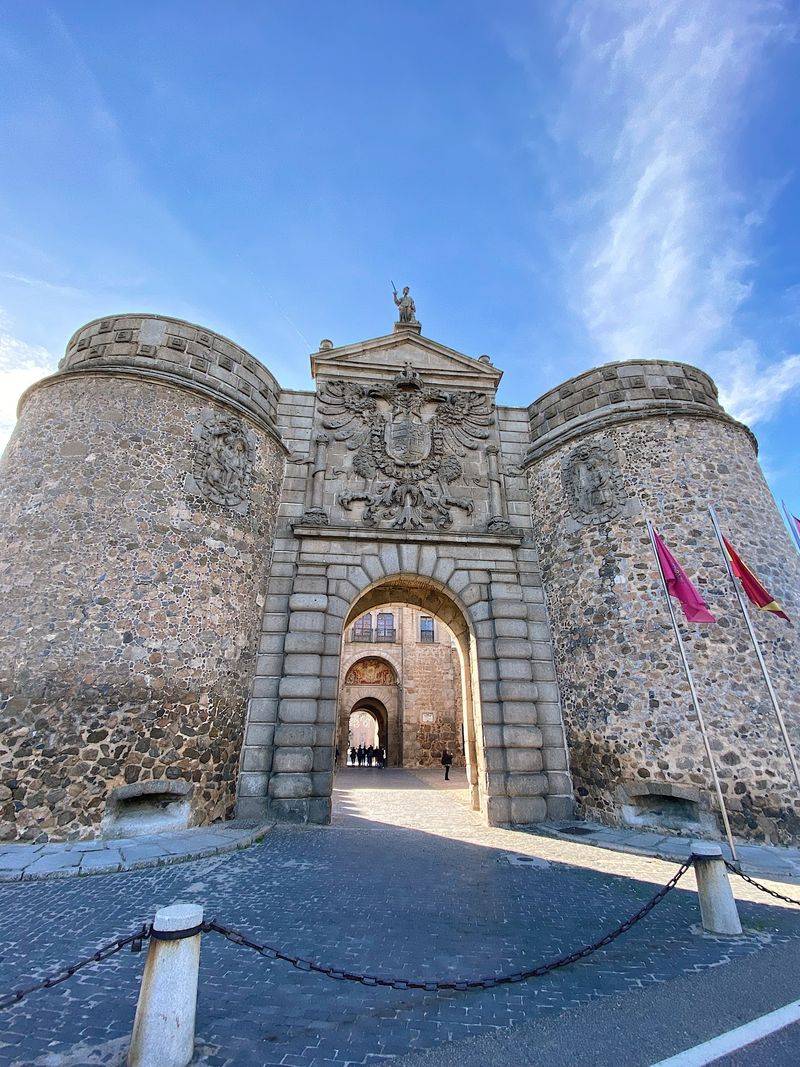
Toledo sits on a rocky hill surrounded on three sides by the Tagus River, which made it naturally defensible, but the city still built serious gates to control who entered. Puerta de Bisagra is the grandest of them all.
The current structure incorporates older Islamic-era foundations but took on its imposing Renaissance appearance during the reigns of Charles V and Philip II in the 16th century.
The gate features two massive round towers flanking a central arch, with a large imperial eagle and coat of arms displayed prominently above the passage. An inner courtyard with a second archway adds to the ceremonial quality of the approach.
This is the main northern entrance to the city and the one most visitors use when arriving from the modern town.
Because Toledo’s historic center is a UNESCO World Heritage Site, the gate functions as both a practical entrance and a landmark. The surrounding area has parking and bus access, making Puerta de Bisagra a natural starting point for exploring the city on foot.
Torres de Serranos, Valencia, Spain
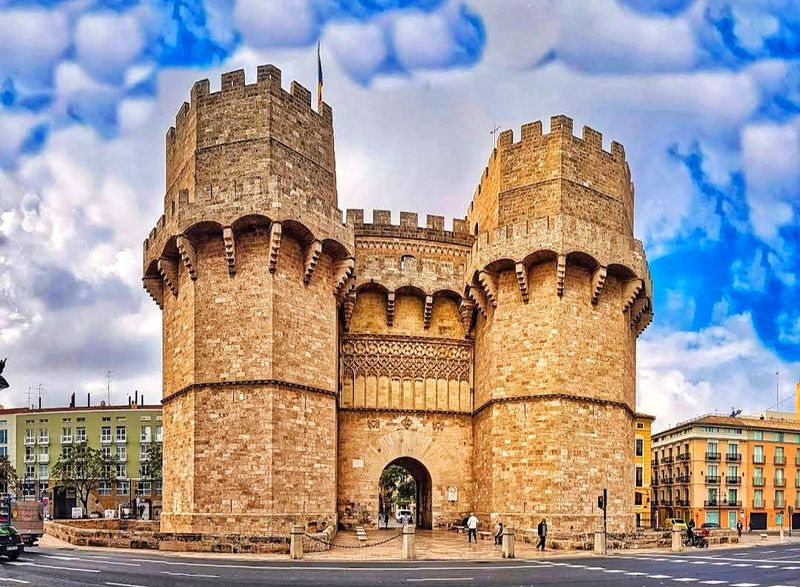
The Serranos Towers are large enough that first-time visitors sometimes mistake them for a castle. Built in 1392 as one of the principal entrances through Valencia’s medieval walls, the twin Gothic towers rise dramatically above the Turia Gardens, the green park that now occupies the old riverbed.
The gate was designed by Pere Balaguer and is considered one of the finest examples of Gothic civil architecture in Spain.
For a period during the 19th and early 20th centuries, the towers served as a prison, which is a chapter of their history that tends to surprise people. Today the interior is open to visitors during published hours, and climbing to the upper battlements gives you a broad view over the old city and the Turia park below.
Admission is affordable, and the gate is centrally located near the historic center, making it easy to include in a walking tour. Valencia’s other major medieval gate, the Torres de Quart, is also nearby for those who want to compare the two.
Porta San Pietro, Lucca, Italy
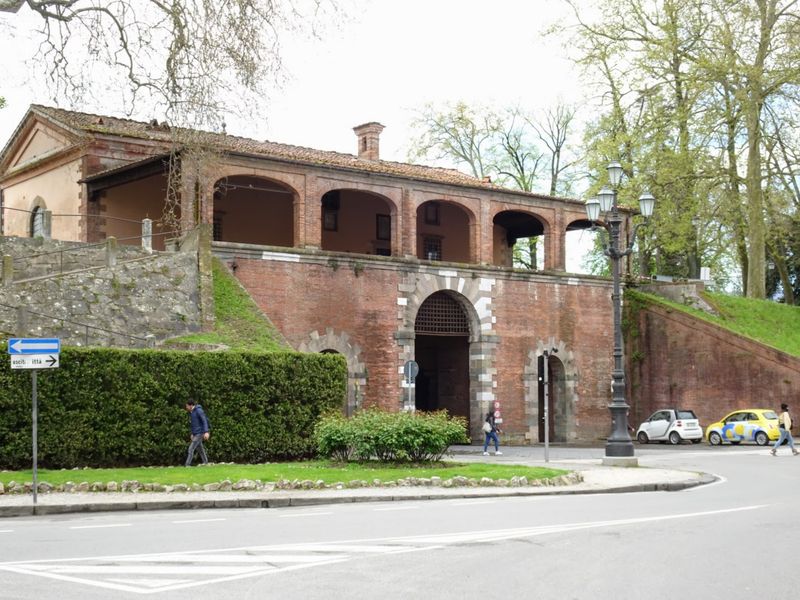
Lucca’s Renaissance walls are among the best-preserved in Europe, stretching nearly four kilometers in a complete circuit around the old city. Porta San Pietro is one of the main gateways through those walls and has a particular practical significance: it sits close to the train station, making it the first point of entry for many visitors arriving by rail from Florence or Pisa.
The gate itself is a solid Renaissance structure with a rusticated stone facade and a wide arched passage. Pedestrians still use it as a working entrance into the historic center, which gives it a lively, everyday quality that purely museum-style monuments lack.
Lucca’s tourism office confirms that the gate remains actively used by both residents and visitors.
The walls above and around Porta San Pietro are open for walking and cycling, and the tree-lined promenade on top of the ramparts is one of Lucca’s most enjoyable features. Arriving through the gate on foot from the train station takes only a few minutes and sets the tone for the whole visit nicely.
Mdina Gate, Mdina, Malta
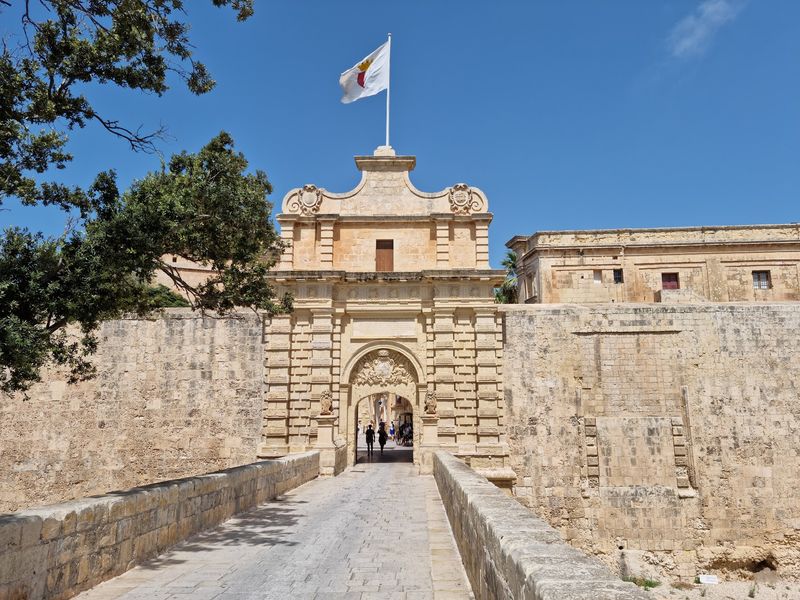
Mdina is sometimes called the Silent City, a reference to the near-total absence of vehicle traffic and the hushed quality of its narrow limestone streets. The main gate into the city was rebuilt in 1724 under Grand Master António Manoel de Vilhena, and it reflects the Baroque confidence of the Knights of St. John at the height of their influence in Malta.
The gate is built from the warm golden limestone that defines almost every structure in Mdina and the surrounding area. Above the central arch, carved decorative elements and the coat of arms of Vilhena give the entrance a formal, ceremonial weight.
A stone bridge crosses the dry moat in front of the gate, completing the approach.
Mdina sits on a ridge in the center of the island and was Malta’s capital before Valletta was built. Visitors still enter through this gate today, and the contrast between the Baroque entrance and the medieval streets just inside it is one of those small travel moments that tends to stay with you.
Bootham Bar, York, United Kingdom
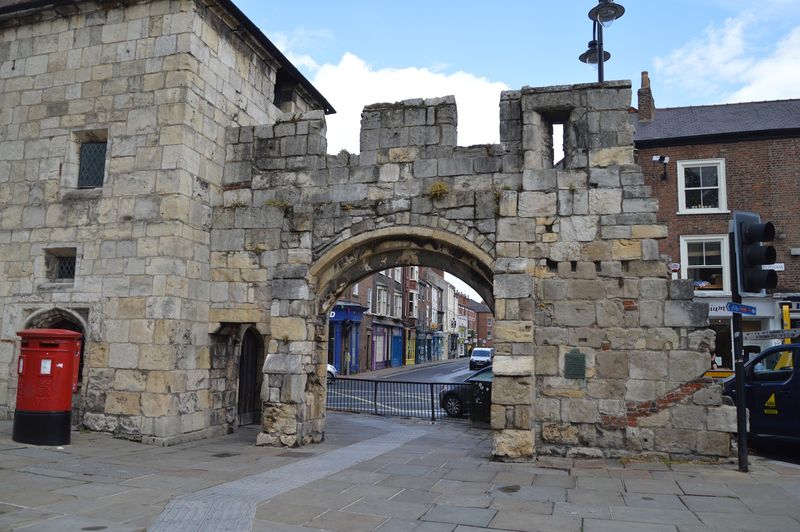
York’s famous “bars” are its medieval gateways, and Bootham Bar is the most historically layered of the four that survive. The site traces back to Roman York, when the main road north left the fortress through this point.
Parts of the existing stonework date to the 11th and 12th centuries, with later additions building up the structure over time into the fortified gatehouse visible today.
The bar sits at the entrance to Gillygate and still carries road traffic through its central arch, which makes it one of the few medieval city gates in England that functions as an active road junction. The portcullis grooves are still visible, and the upper chamber has historically been used for various civic purposes over the centuries.
Bootham Bar connects directly to York’s city walls, which are freely accessible to walkers throughout the year. Heading east from the bar along the wall walk toward Monk Bar gives a clear sense of how the full defensive circuit once enclosed and protected the city.
Share this story