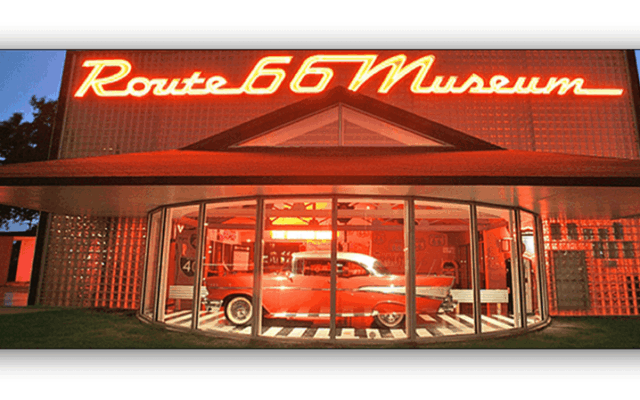
Somewhere along the old highway in Oklahoma, there is a building that stops road-trippers in their tracks before they even walk through the door. Inside, vintage neon glows, classic signs crowd the walls, and the full story of America’s most legendary road unfolds room by room.
Few places manage to pack this much history, personality, and genuine road-trip spirit into one stop. Once you step inside, it becomes very clear why travelers keep coming back.
Clinton, Oklahoma and the Museum That Calls Route 66 Home
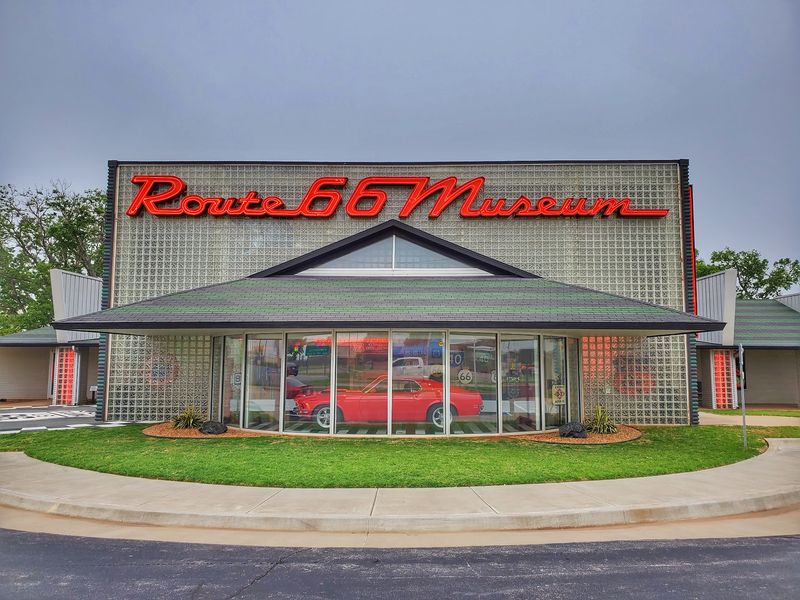
Tucked along West Gary Boulevard in Clinton, Oklahoma, the Oklahoma Route 66 Museum sits right where it belongs: on the very highway it celebrates. Clinton is a small city with a big role in road-trip history, positioned roughly at the midpoint of Oklahoma’s stretch of the Mother Road.
That geography alone makes it a natural anchor for a museum dedicated to the route.
Oklahoma’s portion of Route 66 runs about 400 miles from the Kansas border to the Texas Panhandle, passing through towns that built their identities around the road. Clinton grew up alongside that traffic, and the museum here reflects that deep local connection without limiting itself to just one state’s story.
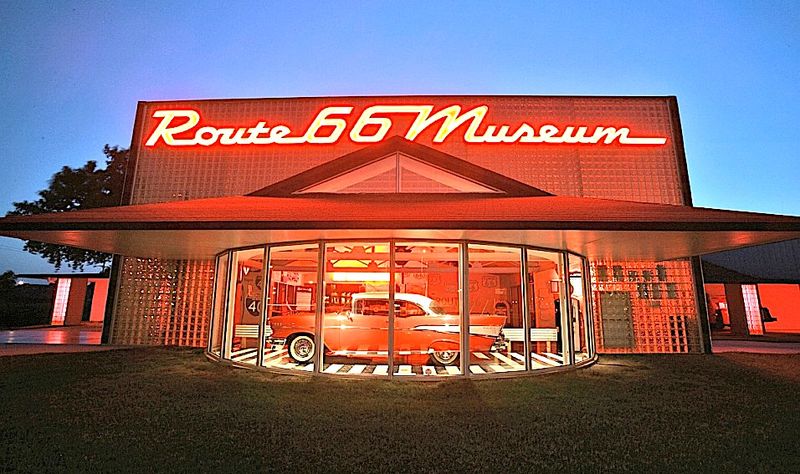
Visitors coming from either direction on the highway can spot the museum easily. The building carries that unmistakable mid-century roadside character that feels completely at home on this stretch of Oklahoma.
Pulling into the parking lot already feels like stepping back in time, and that sense of discovery only deepens once you head inside.
Oklahoma’s Largest Route 66 Museum
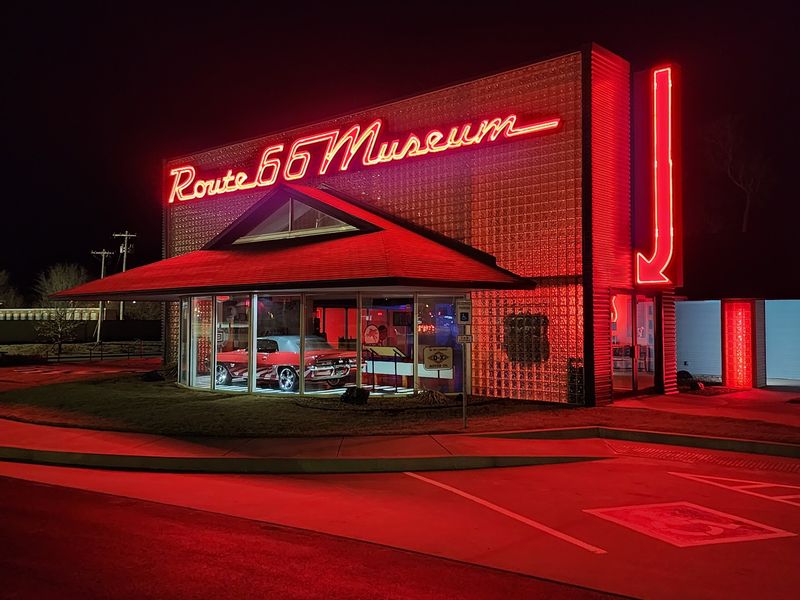
Size matters when you are trying to tell the full story of a 2,400-mile highway, and this museum does not shortchange the subject. Known as Oklahoma’s largest Route 66 museum, the facility covers the road’s entire arc from its creation in 1926 through its golden era, its slow decline, and the preservation efforts that keep its spirit alive today.
Visitors who walk in expecting a small-town exhibit with a handful of framed photos tend to come out genuinely surprised. The displays are layered, the artifacts are plentiful, and the overall layout guides you through the story in a way that feels intentional rather than haphazard.
Regulars mention that the exhibits feel world-class, which is a bold claim for a museum in a small Oklahoma city but one that holds up under a visit.
The museum does not just cover Oklahoma’s slice of the route. It incorporates the whole highway, from Chicago to Santa Monica, giving travelers a broader perspective on why Route 66 captured the American imagination the way it did.
That scope is part of what sets it apart from smaller roadside stops along the same corridor.
Vintage Signs and Neon That Set the Mood Immediately
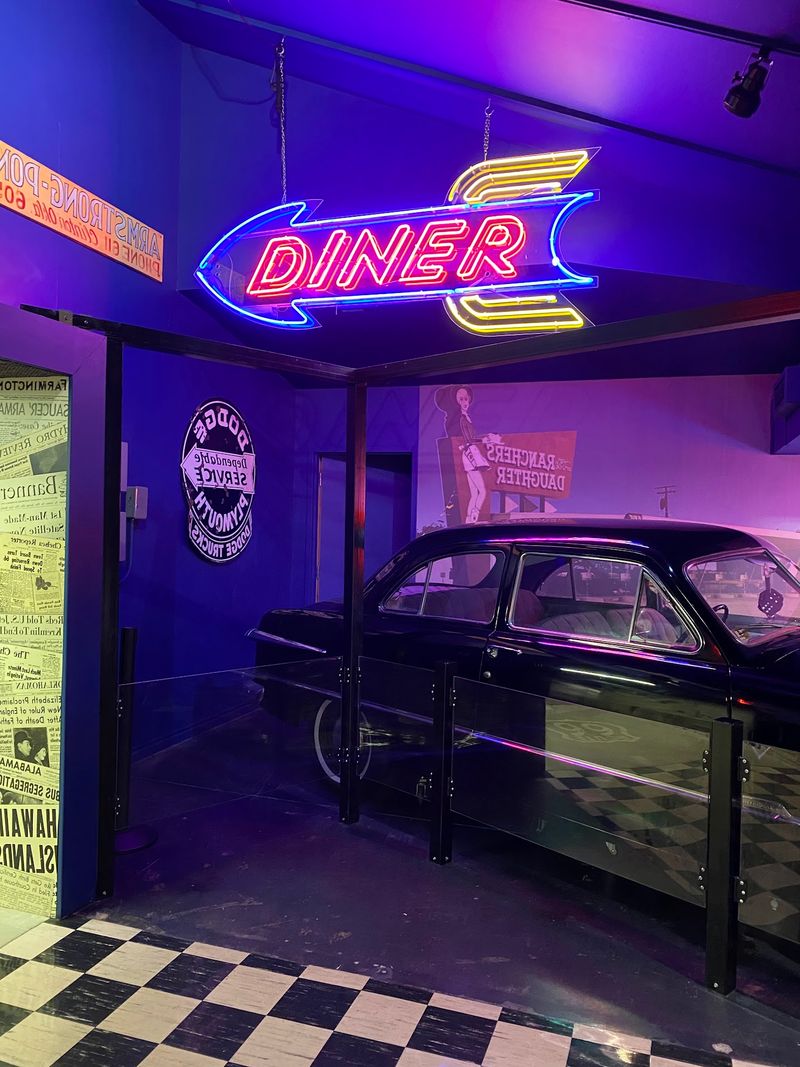
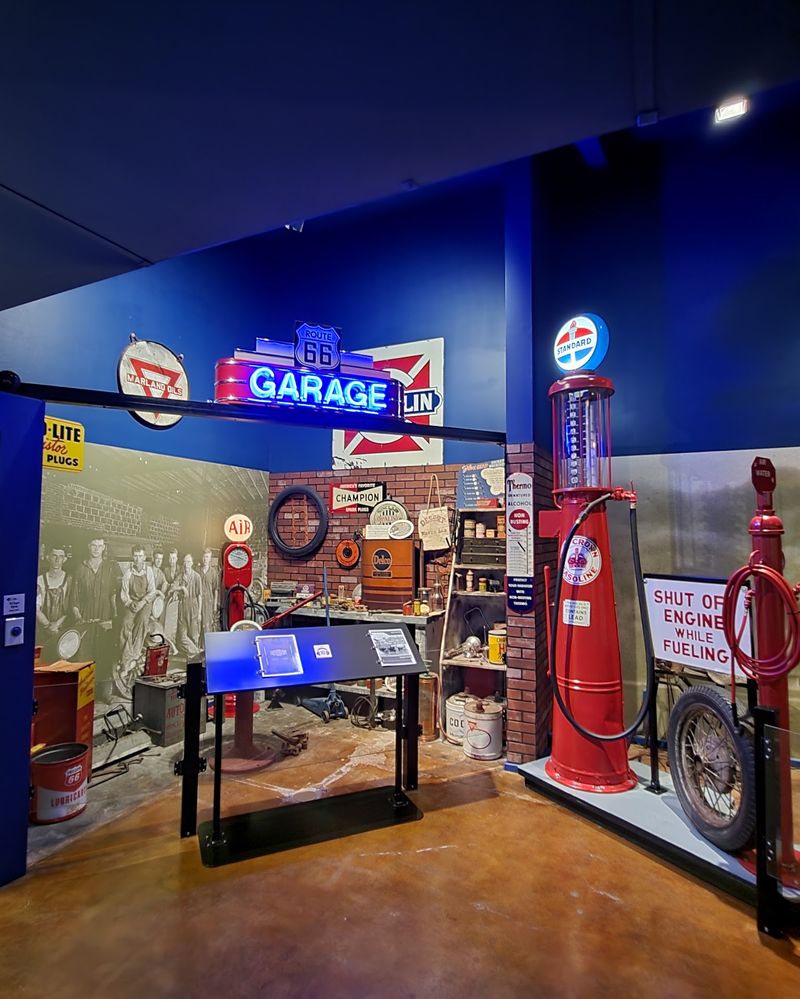
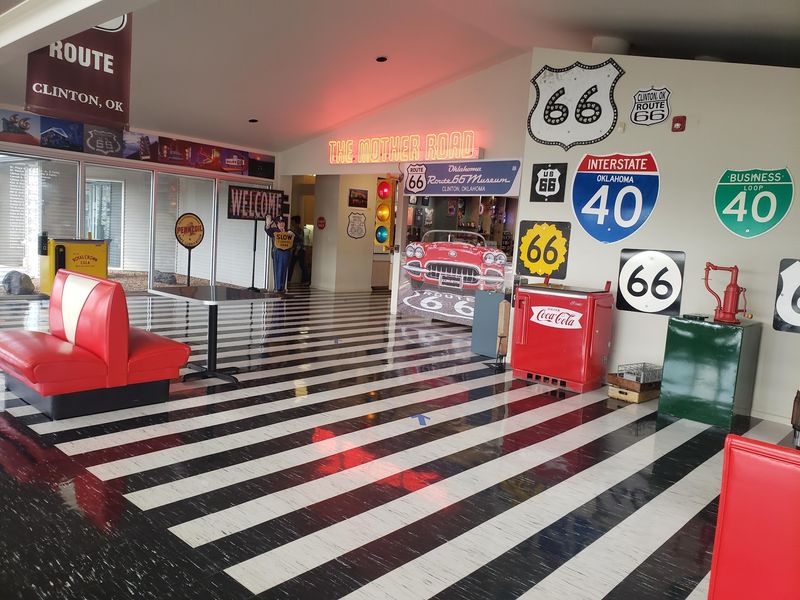
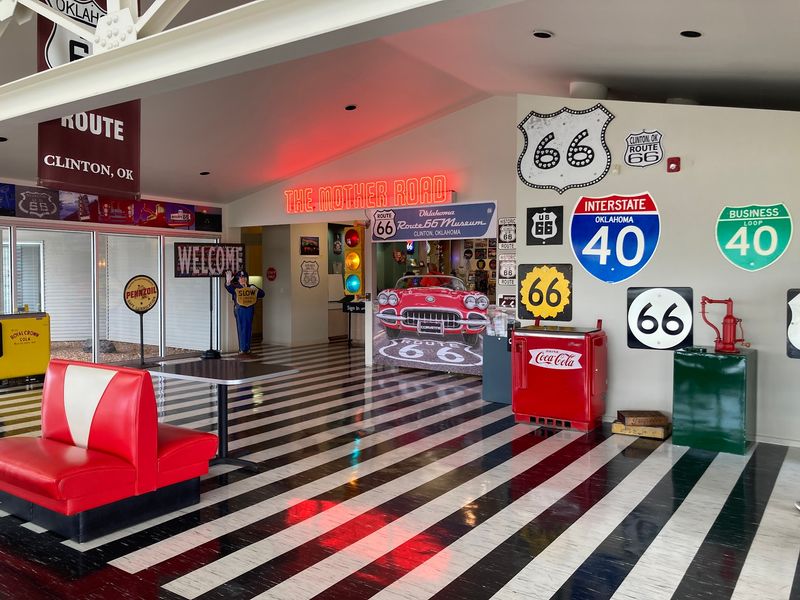
Walking into this museum, the first thing that grabs your attention is the visual energy of the place. Neon signs glow in rich reds, blues, and greens, while vintage road signs and advertising boards crowd the walls in a way that feels curated rather than cluttered.
The effect is genuinely striking, like stepping into a time capsule built by someone with excellent taste.
Neon was the language of Route 66. Motels, diners, gas stations, and roadside attractions all competed for the attention of passing drivers using hand-crafted neon tubing in bold colors and playful shapes.
Seeing those signs collected and lit in one place communicates something that no photograph in a textbook ever quite captures. The glow itself tells the story.
Visitors consistently mention the visual impact of the museum’s signage as one of the highlights of their stop. Some pieces are rare survivors from businesses that no longer exist, making them historical artifacts as much as decorative objects.
The combination of neon light and retro signage creates an atmosphere that road-trip fans find deeply satisfying, the kind of setting that makes you want to slow down and look at everything carefully before moving on.
The Decade-by-Decade Story of the Mother Road
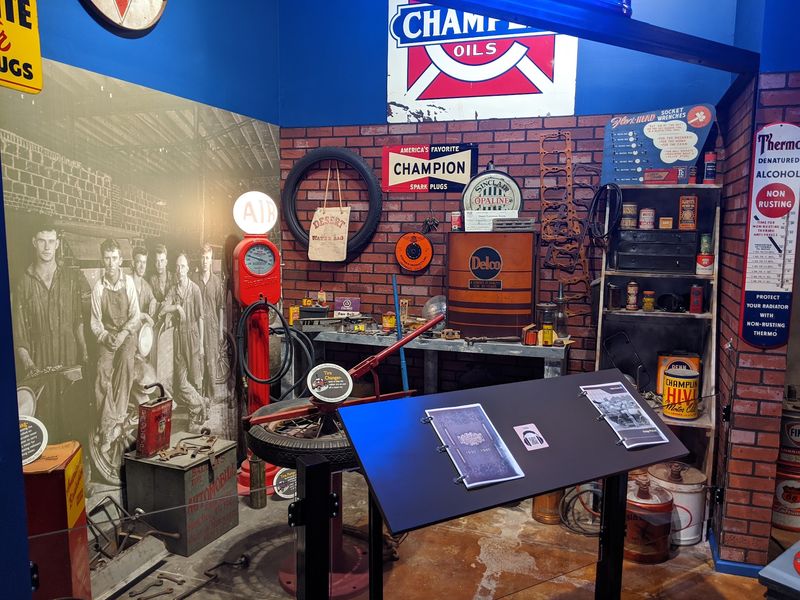
One of the most thoughtful elements of the museum’s design is how it structures the Route 66 story by decade. Rather than throwing everything into one crowded room, the exhibits move chronologically, giving each era its own space and character.
You travel through the highway’s early years, its wartime role, the postwar boom, and eventually its gradual replacement by the interstate system.
Each room carries the feel of its period. Artifacts, photographs, and printed information work together to paint a picture of what the road meant to the people who depended on it during each chapter of American history.
Visitors who push the button at the entrance of each room are treated to period-specific music, a small but effective touch that adds real atmosphere to the experience.
The Dust Bowl exhibit stands out as particularly powerful. Thousands of Oklahomans and other Plains residents used Route 66 as their escape route westward during the 1930s drought and economic collapse.
Seeing that chapter represented here, in a museum sitting on the very road those families traveled, gives the story a weight that is hard to shake. The decade rooms transform what could be a dry history lesson into something genuinely moving.
The Dust Bowl Exhibit and the Weight of Migration
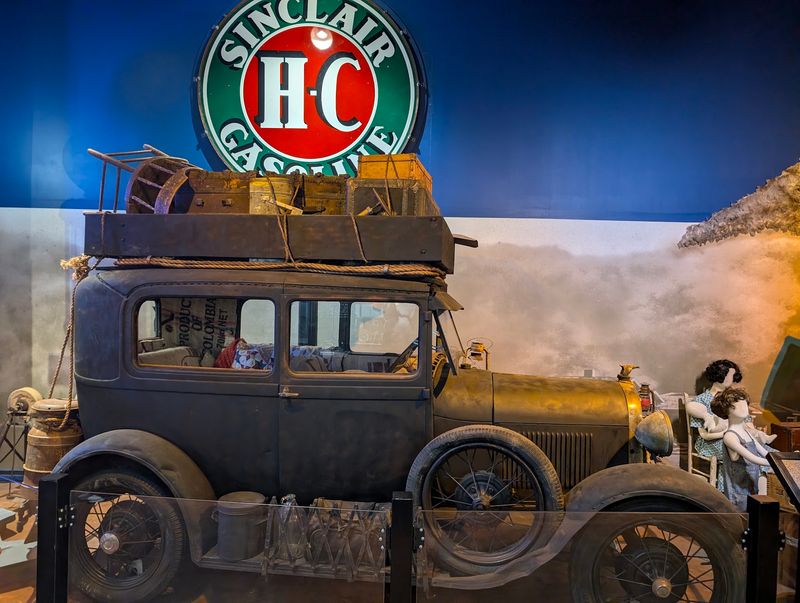
Few moments in American history carry as much raw human weight as the Dust Bowl migration of the 1930s. When drought and economic collapse hit the Southern Plains, hundreds of thousands of people packed what they could carry and headed west on Route 66, hoping for a better life in California.
The museum’s Dust Bowl exhibit brings that chapter to life with photographs, artifacts, and storytelling that respect the difficulty of that journey.
Oklahoma was ground zero for much of that displacement. Families from across the state joined the westward flow on the very highway that runs past this museum, which gives the exhibit a local resonance that deepens the emotional impact.
Standing in Clinton and reading about those travelers feels different than reading the same history in a book, because the road outside is the same road they drove.
Visitors who spend time with this section of the museum often describe it as the moment the experience shifted from interesting to genuinely affecting. Seeing old film reels of cars loaded with belongings, combined with firsthand accounts and period objects, makes the migration feel real rather than abstract.
The exhibit handles a difficult subject with care and clarity, which is exactly what good museum storytelling should do.
Replica Diner Booths and the Roadside Eating Experience
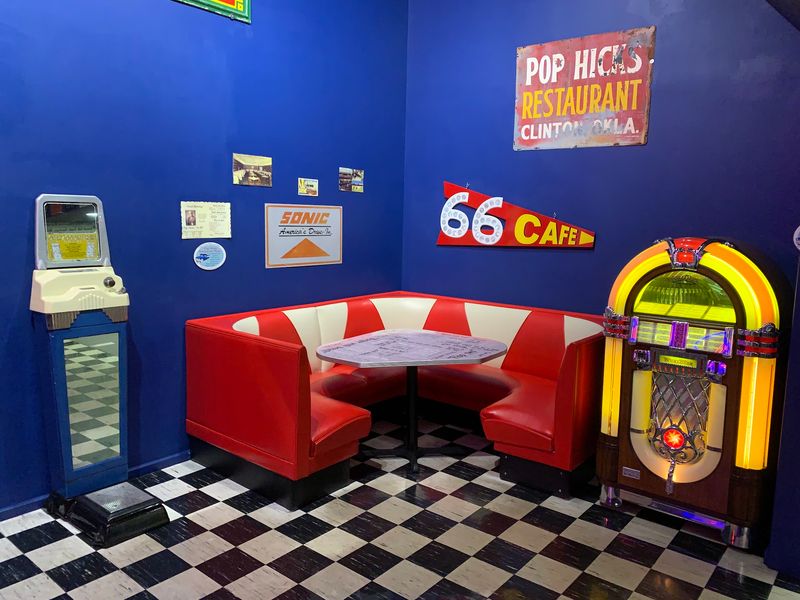
Roadside diners were as essential to Route 66 as the asphalt itself. Travelers needed places to eat, rest, and swap stories, and the diner became the social hub of highway culture across every state the road passed through.
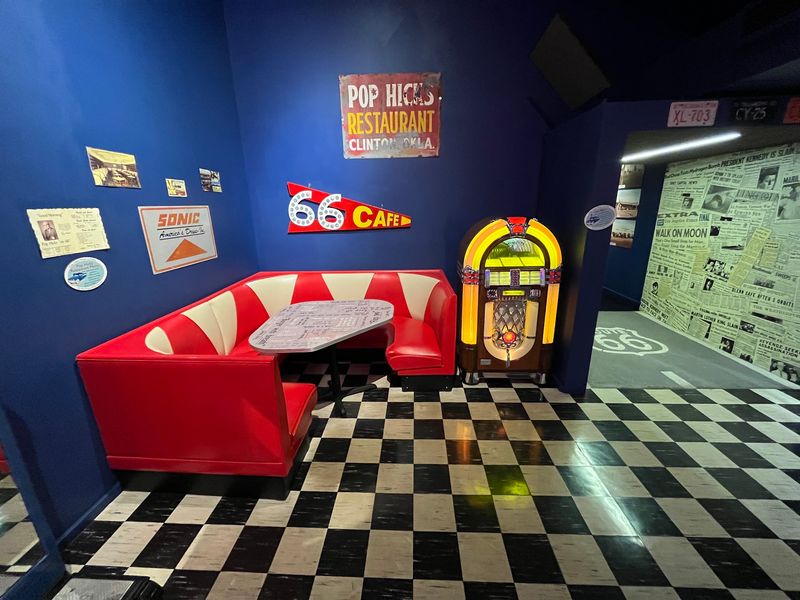
The museum honors that tradition with a replica diner space that captures the look and feel of those mid-century stops with impressive attention to detail.
Sitting in one of the diner booths feels like a genuine moment of time travel. The design pulls from the classic elements: vinyl seating, counter stools, period signage, and the kind of warm, slightly worn atmosphere that made roadside diners feel welcoming to tired travelers.
It is a clever way to make history tangible rather than just visual.
Visitors with kids especially appreciate this section, because it gives younger travelers something interactive to experience rather than just observe. Even adults who remember actual diners from their own childhoods tend to linger here longer than they planned.
The replica diner is a small feature in the overall museum footprint, but it punches well above its size in terms of the emotional connection it creates. It is a reminder that the best road-trip memories often happen over a meal.
Cars, Artifacts, and Memorabilia That Fill Every Corner
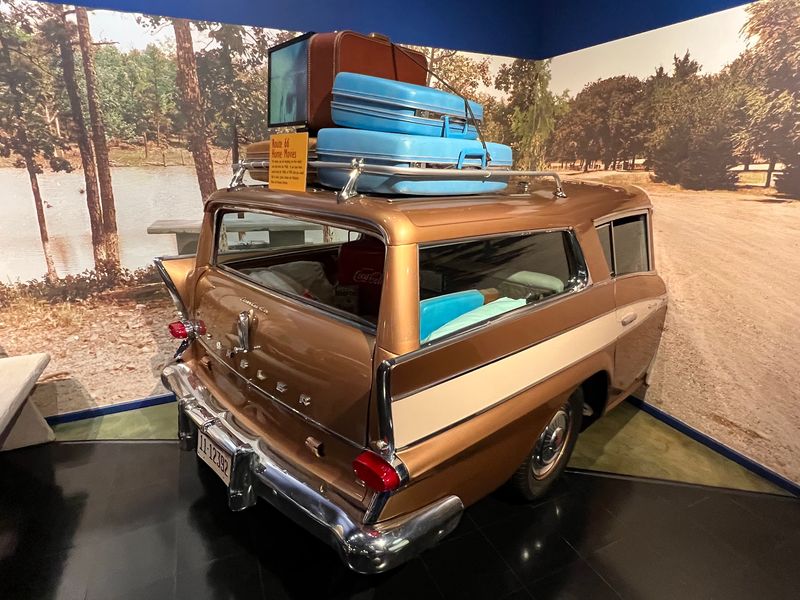
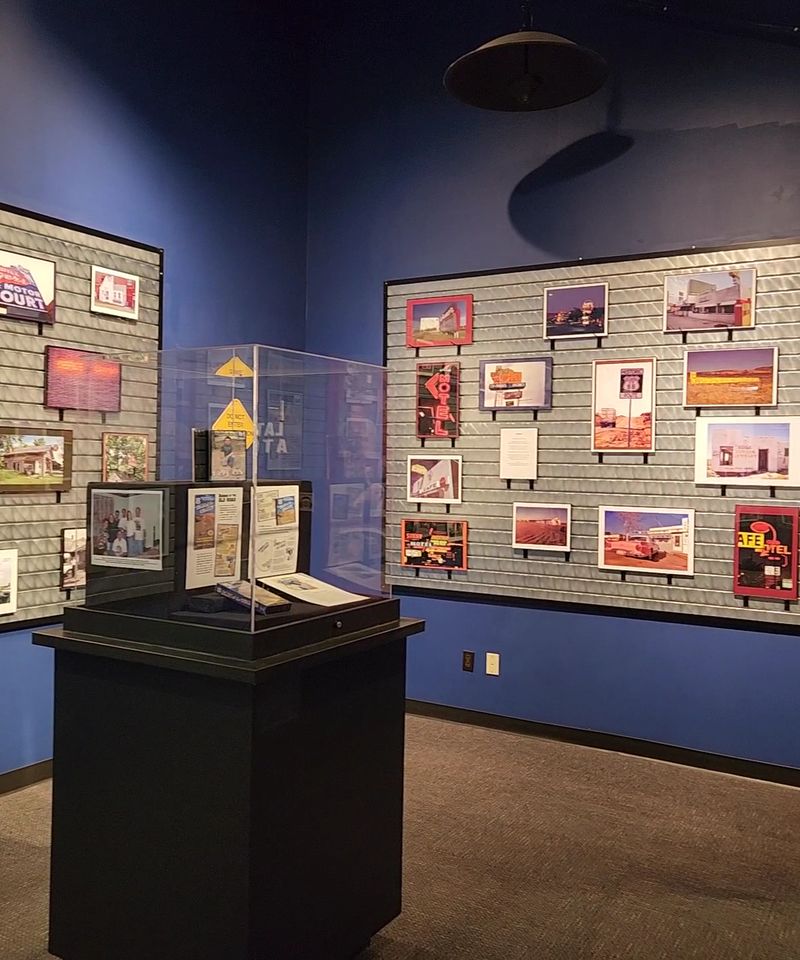
Beyond the signage and the diner, the museum houses a broad collection of physical objects that connect visitors to the highway’s material culture. Classic cars sit alongside road artifacts, vintage photographs, and the kind of memorabilia that collectors spend years hunting down at swap meets and estate sales.
Seeing it all gathered in one place creates a sense of abundance that visitors frequently comment on.
The cars are a particular draw. A few well-chosen vehicles from different eras of the highway’s history give the collection a three-dimensional quality that flat exhibits cannot match.
Standing next to a car that might have actually rolled down this stretch of pavement decades ago is a different experience from simply reading about it.
Artifacts range from gas station pump nozzles and motel keys to original road maps and period clothing. Each object carries a story, and the museum does a solid job of providing context so visitors understand what they are looking at and why it matters.
Regulars mention that the collection feels intricate and carefully assembled rather than randomly gathered. That curatorial intentionality is what separates a memorable museum from a glorified storage room, and this collection clearly falls on the right side of that line.
Interactive Exhibits and the Videos That Bring It All to Life
Some museums ask you to read everything from behind a velvet rope. This one takes a different approach.
Interactive elements throughout the building invite visitors to engage with the material rather than just observe it, and the video stations add a layer of storytelling that photographs and text alone cannot provide.
Old film reels showing cars cruising down the Mother Road play on screens throughout the exhibits, and visitors can sit in comfortable spots to watch. Seeing actual footage from the highway’s peak years, with the cars, fashions, and roadside businesses of the era visible in motion, makes the history feel alive in a way that static displays rarely achieve.
The period-specific music that plays when you enter each decade room adds to this immersive quality.
Visitors who enjoy a slower, more thorough pace through the museum can easily spend two to three hours here, working through every interactive station and video segment. Those who prefer a quicker tour can move through in around thirty minutes without feeling like they missed the essential story.
That flexibility is genuinely useful, especially for road-trippers working against a schedule. The museum manages to reward both the curious and the time-pressed without shortchanging either group.
The Gift Shop That Deserves Its Own Reputation
Ask anyone who has visited the Oklahoma Route 66 Museum what they remember about the stop, and a large number of them will mention the gift shop. That is not a backhanded observation.
The shop has genuinely earned its reputation as one of the better souvenir destinations on this stretch of highway, with a selection that goes well beyond the generic fridge magnets and keychains found at typical tourist stops.
T-shirts are a particular highlight. Visitors mention the selection specifically, noting that the designs are creative and the prices are reasonable.
The shop also carries books, maps, road-trip guides, and collectibles that appeal to serious Route 66 enthusiasts as well as casual travelers looking for a memento of the drive.
The museum team has clearly invested in expanding and improving the gift shop over time, and that effort shows in the variety and quality of what is on offer. Some visitors joke that the shop is almost a destination in its own right, and while the museum’s exhibits are the real draw, the gift shop provides a satisfying final chapter to the visit.
Picking up something tangible to take home extends the experience beyond the building itself, which is exactly what a good museum shop should do.
Friendly Staff Who Make the Visit Feel Personal
A museum’s staff can make or break the experience, and the team at the Oklahoma Route 66 Museum consistently earns high marks from visitors. Friendliness is mentioned so frequently in visitor feedback that it reads less like a pleasant surprise and more like a reliable feature of the place.
The staff treat guests like people rather than ticket numbers, which sounds basic but is rarer than it should be.
Stories of staff going out of their way for visitors pop up regularly. One account describes the team allowing guests to enter just twenty minutes before closing and then patiently waiting while those visitors took their time moving through the exhibits at their own pace.
That kind of hospitality reflects a genuine commitment to the museum’s purpose rather than just its operating hours.
The staff also bring a personal knowledge of the collection that enhances the visit for anyone who wants to ask questions or hear more context. Having knowledgeable, enthusiastic people available to talk about the exhibits adds a layer to the experience that no printed label can replicate.
For solo travelers especially, a conversation with a staff member can turn a good museum stop into a genuinely memorable one. The human element here is a real asset.
Who Will Love This Museum Most
Road-trip enthusiasts are the obvious audience for a Route 66 museum, but the appeal here extends well beyond that core group. History buffs who care about American migration, mid-century culture, and the social history of the automobile era will find plenty to engage with.
The exhibits are rich enough to satisfy people who arrive knowing a lot and accessible enough to hook those who arrive knowing very little.
Families with children get real value from the visit. The combination of visual displays, interactive elements, the replica diner, and the cars gives younger visitors multiple ways to engage with the material.
Kids who would normally lose interest in a history exhibit tend to stay engaged here because the museum does a good job of making the past feel tangible and exciting rather than distant and dry.
Solo travelers working their way along the Mother Road will find this stop particularly rewarding. The self-guided format means you can move at whatever pace suits you, lingering over the sections that capture your attention and moving quickly through the ones that do not.
Groups and couples also fit comfortably into the experience. Practically speaking, there is very little about this museum that would leave a curious, open-minded visitor feeling like the stop was not worth their time.
Admission Prices and Discounts Worth Knowing About
At ten dollars for a general adult admission, the Oklahoma Route 66 Museum sits comfortably in the category of attractions that feel like a genuine bargain once you are inside. Visitors who arrive expecting a small roadside novelty and find a full-scale, carefully assembled museum almost universally agree that the price is easy to justify.
For a road trip that might already be stretching a travel budget, a ten-dollar stop with this much content is a welcome find.
Military discounts are available, and active-duty service members and veterans can get in for free. That policy earns consistent appreciation in visitor feedback and reflects a community-minded approach to running the museum.
Senior and youth pricing also differs from the standard adult rate, so it is worth checking the current fee schedule before your visit to understand exactly what applies to your group.
The gift shop does lean toward higher price points for some items, which a few visitors have noted. That said, the shop also carries affordable options like the well-regarded t-shirts, so there is something for every budget.
The museum’s overall value proposition holds up well even for travelers who are watching their spending carefully. Ten dollars for a couple of hours of genuinely engaging history is hard to argue with on any stretch of highway.
Hours, Location, and Planning Your Visit
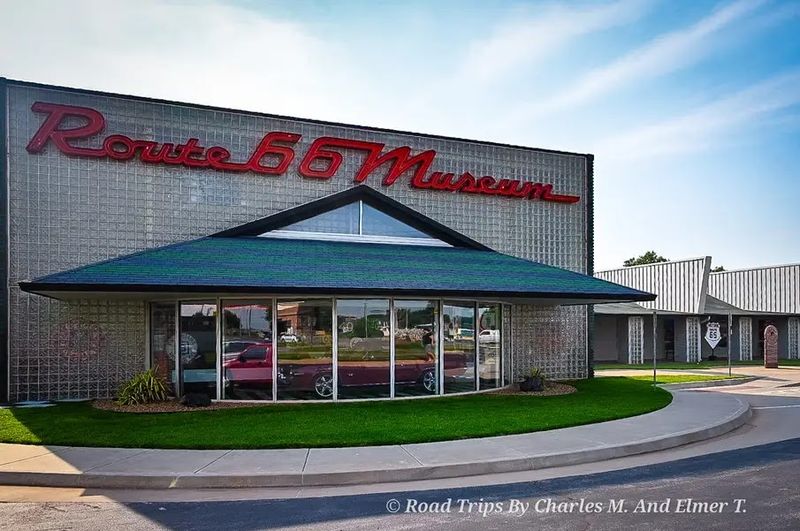
Planning a stop at the Oklahoma Route 66 Museum is straightforward, which is exactly how it should be for a road-trip destination. The museum is located at 2229 West Gary Boulevard in Clinton, Oklahoma, right along the Route 66 corridor, making it easy to incorporate into any drive through the state.
The address puts it within comfortable reach of travelers heading in either direction on the highway.
Operating hours run from 9 AM to 5 PM, Monday through Friday and on Saturdays. The museum is closed on Sundays, so that is the one day to plan around if your itinerary gives you flexibility.
Arriving with enough time before the 5 PM close matters, since the museum rewards a slower pace. Rushing through in the final fifteen minutes would shortchange the experience.
For questions or to check on any special events related to Route 66’s centennial year, the museum can be reached by phone at 580-323-7866, and additional information is available through the Oklahoma Historical Society’s website. Given that 2026 marks the 100th anniversary of Route 66, the museum may be hosting special programming throughout the year, making this an especially good time to check their calendar before making the drive out to Clinton.
Why This Stop Earns a Place on Every Route 66 Itinerary
Some roadside stops feel like obligations, boxes you check because they appeared on a list someone else made. The Oklahoma Route 66 Museum in Clinton is not that kind of stop.
Visitors who arrive without strong expectations tend to leave genuinely glad they pulled off the highway, and those who arrive as dedicated Route 66 fans often call it one of the best museums on the entire route.
What makes it work is the combination of elements that all hit at the same time: the visual atmosphere of neon and vintage signage, the depth of the exhibits, the quality of the artifacts, the interactive touches, and the human warmth of the staff. No single one of those things would be enough on its own, but together they create an experience that feels complete rather than partial.
The museum also benefits from its position in the Route 66 story. Oklahoma sits at the emotional heart of the highway’s history, connected to the Dust Bowl migration, the postwar road-trip culture, and the preservation movement that keeps the route alive today.
A museum in Clinton gets to tell all of that, and it does so with real skill. For anyone driving this highway, this stop is not a detour.
It is the destination.
Share this story