Some places carry a weight that you can feel the moment you arrive. Harpers Ferry, West Virginia is one of those places, a quiet river town that became the unlikely stage for one of the most daring and consequential acts in American history.
At the center of it all stands a modest museum on Shenandoah Street that tells the story of a man whose radical conviction helped push a divided nation toward a reckoning it could no longer avoid. John Brown’s raid on the federal arsenal here in 1859 shocked the country, and the museum dedicated to his life and legacy does something remarkable: it makes you feel that shock all over again.
Through films, artifacts, and thoughtfully curated exhibits, this small but powerful institution asks visitors a question that still echoes today. What would you have done?
Keep reading, and you might just find yourself reconsidering everything you thought you knew about this pivotal chapter in American history.
Where the Story Begins: Address, Location, and Setting
The John Brown Museum sits at Shenandoah Street, Harpers Ferry, WV 25425, tucked inside the sprawling Harpers Ferry National Historical Park in the Eastern Panhandle of West Virginia. The building blends naturally into the preserved 19th-century streetscape of Lower Town, so much so that first-time visitors sometimes walk right past the entrance before doubling back.
The entrance is on the side of the building, a small door that opens into one of the most thought-provoking spaces in the entire national park. Once inside, the modest size of the museum quickly becomes irrelevant, because the depth of what it contains more than compensates for the square footage.
The museum is managed by the National Park Service and earns a well-deserved 4.8-star rating from visitors. Its location in the heart of Lower Town means you are surrounded by history the moment you step outside, with the Potomac and Shenandoah rivers just a short walk away, framing the whole experience beautifully.
The Three-Part Film That Puts You in the Room
One of the first things that pulls you in at the John Brown Museum is the three-part film series that anchors the interpretive experience. Each segment covers a distinct phase of Brown’s story: his life before the raid, the dramatic events of October 1859, and the far-reaching consequences that followed.
Watching all three back to back feels less like a documentary screening and more like sitting inside the story itself.
The films are designed to be absorbed in stages, with interactive exhibits placed between each segment so visitors can explore additional context before moving on. This pacing is deliberate and effective, giving you just enough time to process one chapter before the next one begins.
Comfortable bench seating and low-pile carpet make the screening areas easy to settle into, which matters when the content is as heavy as this. A word of advice: some video displays have experienced technical issues during renovation periods, so check with staff on arrival to confirm which segments are currently running.
John Brown’s Fort: The Brick Walls That Witnessed History
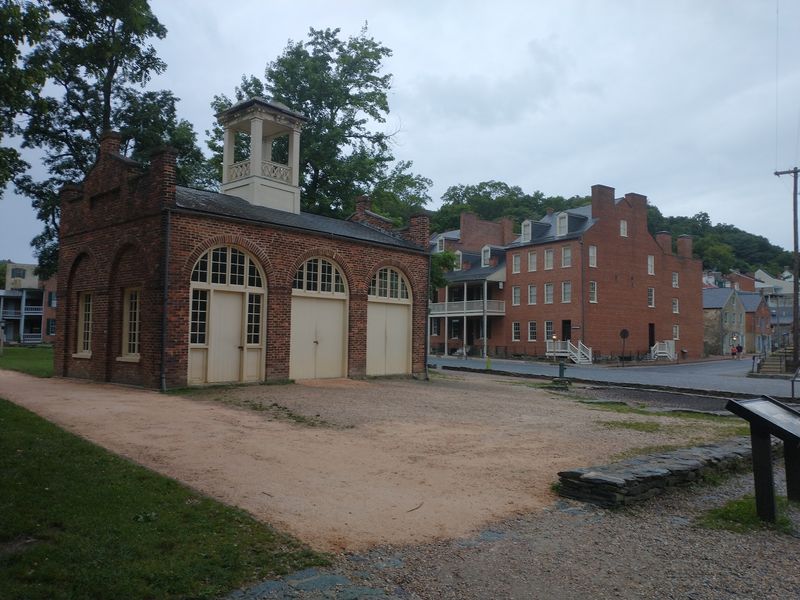
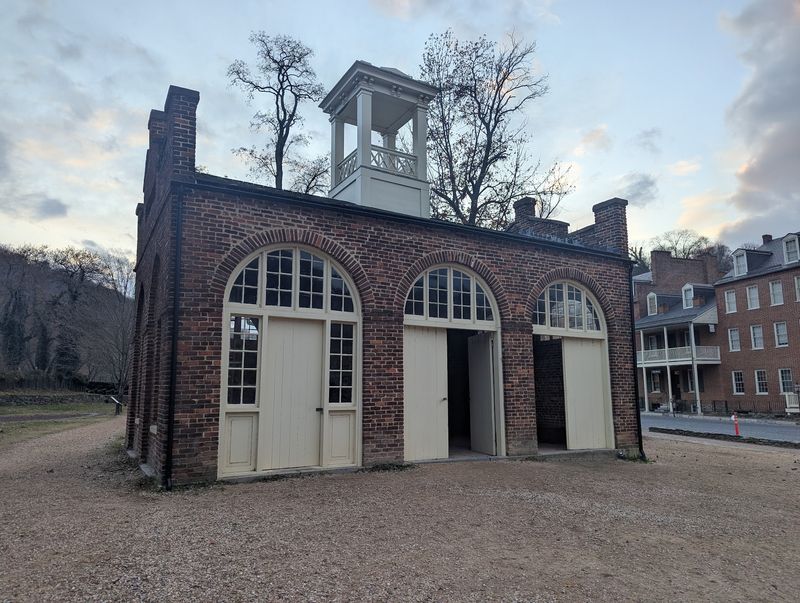
Just a short walk from the museum stands the most famous structure in Harpers Ferry: John Brown’s Fort. Originally built in 1848 as the Armory’s fire engine and guard house, this compact brick building became the site of Brown’s desperate final stand on October 18, 1859, when U.S.
Marines under Colonel Robert E. Lee stormed it to end the raid.
What makes the fort’s history especially remarkable is how much it traveled after that. The structure was moved to Chicago for the 1893 World’s Columbian Exposition, then relocated to the Murphy Farm, then to the campus of Storer College, and finally returned to Lower Town by the National Park Service in 1968.
It now stands about 150 feet east of its original position due to railroad track changes.
The fort is the only surviving structure from the original Armory complex, which gives it a singular, almost defiant presence in the landscape. Standing in front of it, knowing what unfolded inside those walls, is a genuinely arresting moment that no photograph fully prepares you for.
The Raid Itself: Audacity, Strategy, and a Plan That Unraveled
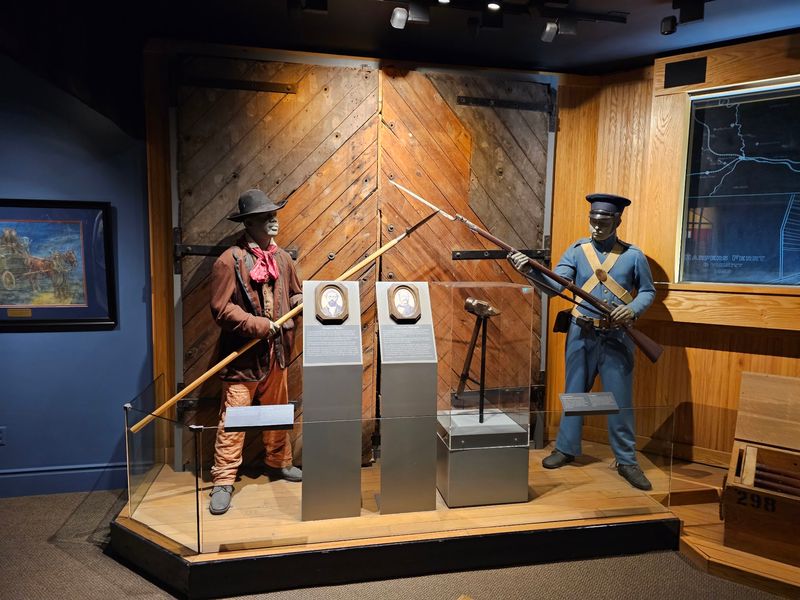
On the night of October 16, 1859, John Brown led 21 men, including his own sons and several Black men, into Harpers Ferry with a plan that was equal parts visionary and reckless. The goal was to seize the federal arsenal, arm enslaved people with the captured weapons, and ignite a widespread rebellion using the Blue Ridge Mountains as a base for guerrilla operations.
Brown’s group successfully captured the Armory and several other strategic points in the town. They even seized Lewis Washington, a descendant of George Washington, freeing his enslaved people and taking items from Washington’s estate that Brown believed carried symbolic power for the mission.
But the uprising Brown anticipated never arrived. The hundreds of people he expected to join the cause did not appear, and within 36 hours the raid had collapsed entirely.
Most of his men were killed or captured, and Brown himself was taken in the engine house. The museum walks visitors through each phase of this timeline with a clarity that makes the entire sequence feel both inevitable and heartbreaking.
Allies for Freedom: The People Behind the Cause
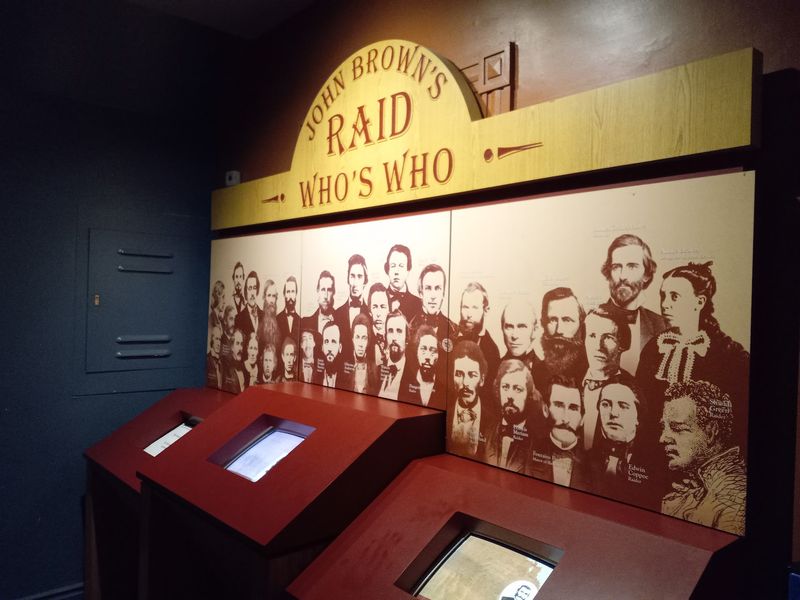
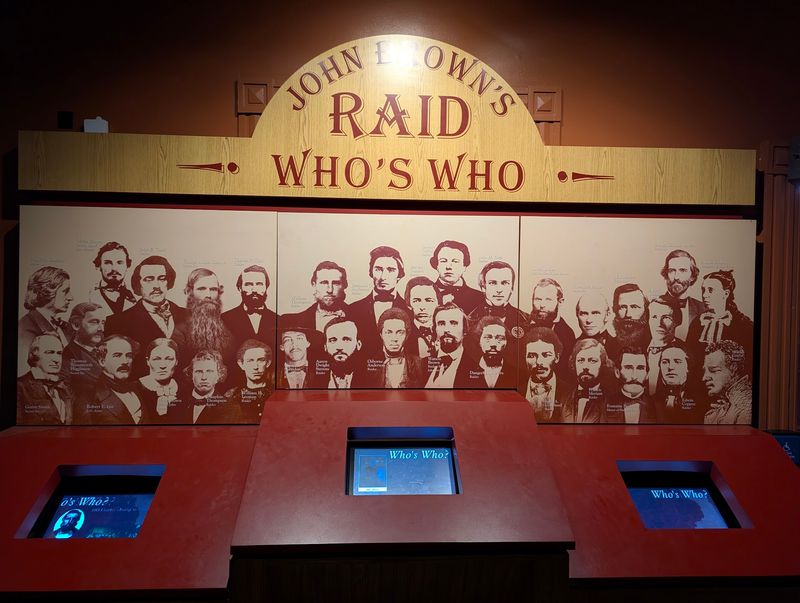
Head upstairs in the museum and you will find one of its most quietly powerful spaces: the Allies for Freedom exhibit. This section shifts the narrative focus away from Brown as a solitary figure and toward the broader network of individuals who supported his cause and the wider abolitionist movement.
The exhibit highlights people who provided financial backing, safe passage, and moral solidarity to those fighting against slavery. Their stories add texture and depth to a historical moment that is often reduced to a single dramatic event.
Seeing the range of individuals involved, from different backgrounds and with different roles, reframes the raid as a collective act rather than the work of one determined man acting alone.
The second floor is accessible by elevator, making the exhibit reachable for all visitors. The careful presentation here encourages a kind of reflection that the ground floor, with its more action-oriented narrative, does not always allow for.
This quieter, more intimate space may well be the part of the museum that stays with you longest after you leave.
The Trial, the Sentence, and the Making of a Martyr
After his capture, Brown was taken to Charles Town, the county seat, where he faced charges of treason against Virginia, murder, and inciting a slave rebellion. The trial moved quickly.
Brown defended himself with a calm conviction that surprised many observers, using the proceedings as a platform to articulate the moral case against slavery with unusual force.
He was found guilty on all counts and sentenced to hang on December 2, 1859. Rather than breaking his resolve, the sentence seemed to sharpen it.
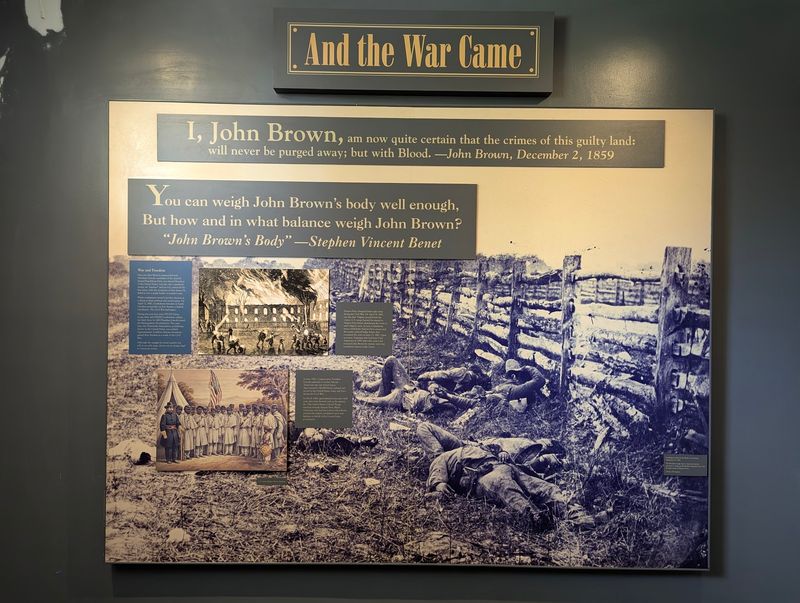
His final written statement, passed to a guard on the morning of his execution, predicted that the country’s wrongs would only be purged with blood, a prophecy that felt chillingly accurate within two years.
The museum traces this final chapter of Brown’s life with the same unflinching honesty it applies to the raid itself. His execution did not end the conversation he had started.
Instead, it transformed him into a martyr in the North and a symbol of existential threat in the South, accelerating the divisions that would soon erupt into civil war.
A Controversial Legacy That Still Sparks Debate
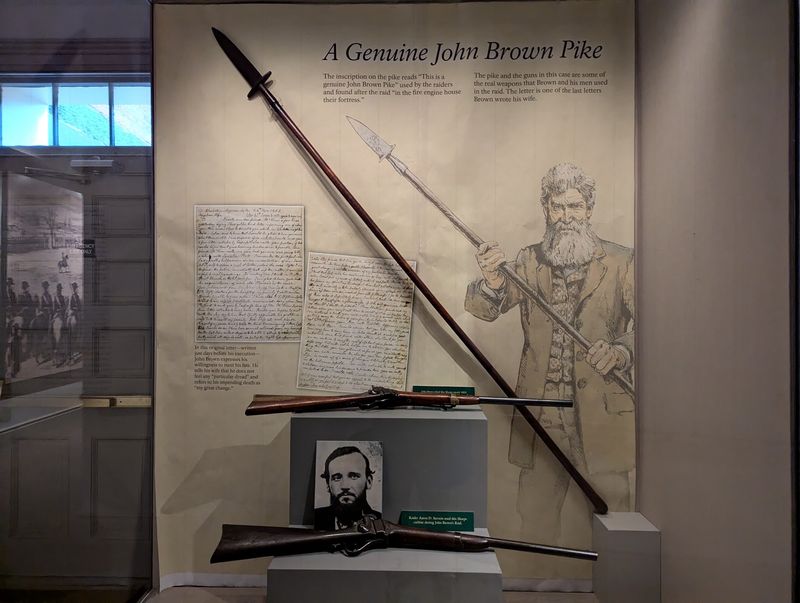
Few historical figures in American history generate as much genuine disagreement as John Brown, and the museum in Harpers Ferry does not try to resolve that disagreement for you. The exhibits present multiple perspectives, from those who viewed Brown as a heroic freedom fighter willing to sacrifice everything, to those who considered him a dangerous extremist whose methods caused unnecessary harm.
Outside the museum, a monument erected by the Daughters of the Confederacy honors Heyward Shepherd, a free Black man who became the first casualty of the raid. A separate placard challenges the traditional narrative attached to that monument, featuring a quote from Storer College’s music director that reframes Shepherd’s story.
The two markers stand side by side, a physical representation of the interpretive tension the museum itself embodies.
This willingness to hold competing truths in the same space is one of the museum’s greatest strengths. History presented without complexity is really just mythology, and the John Brown Museum consistently refuses to take that easier path, which is exactly what makes it worth visiting.
Harpers Ferry and the Civil Rights Thread That Runs Through It
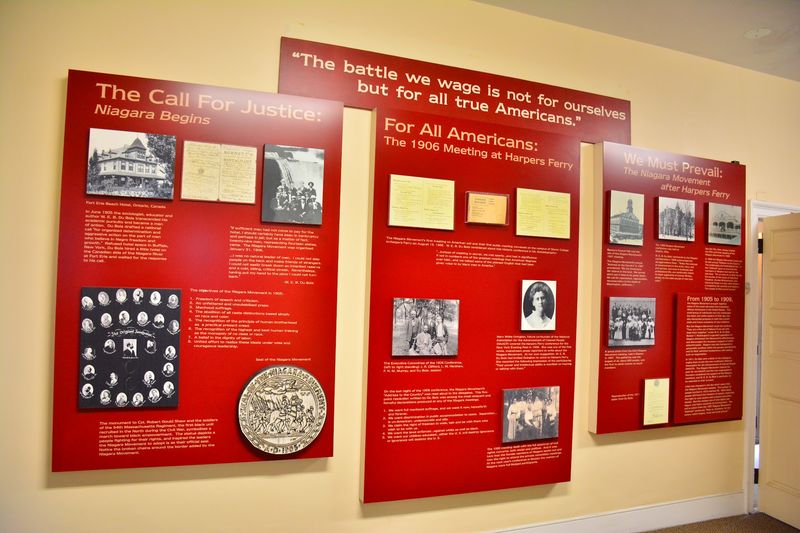
The story of Harpers Ferry does not end with the Civil War, and the museum makes sure you know it. After the war, Baptist missionaries founded Storer College on the heights above Lower Town, a historically Black institution that accepted students of any race or gender at a time when such openness was genuinely radical.
The college’s alumni list includes figures who went on to shape American culture and civil rights in significant ways. More strikingly, Harpers Ferry became a gathering point for national civil rights leaders.
The Niagara Movement, co-founded by W.E.B. Du Bois and William Monroe Trotter, held its second conference at Storer College in 1906, choosing the town deliberately for its symbolic connection to Brown’s fight for freedom.
This thread, running from Brown’s 1859 raid through post-war education to early 20th-century civil rights organizing, gives the museum a historical reach that extends well beyond a single dramatic event. Harpers Ferry turns out to be not just a site of conflict, but a recurring touchstone in America’s long argument with itself over equality.
Practical Tips for Getting the Most Out of Your Visit
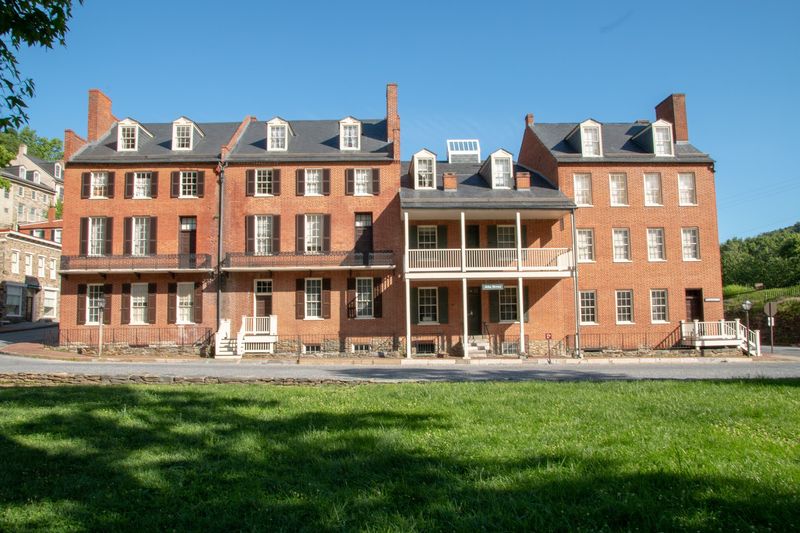
The John Brown Museum is open daily from 9 AM to 5 PM and can be reached by phone at (304) 535-6029. Admission to the museum itself is free, though a park entry fee applies: $20 per vehicle, $15 per motorcycle, or $10 per individual pedestrian or cyclist.
An annual Harpers Ferry pass is also available for frequent visitors and offers solid value if you plan to return.
Parking is limited in Lower Town, so the recommended approach is to park at the main Visitor Center and take the free shuttle bus down to the historic district. The shuttle runs regularly and removes the stress of finding a spot near the museum.
Once in Lower Town, the museum is walkable, though the side entrance can be easy to miss, so look for the small door on the building’s flank rather than expecting a grand front entrance.
The museum is currently undergoing some renovation, so it is worth calling ahead to confirm which exhibits and film segments are fully operational during your visit. Comfortable walking shoes are a must, and the museum offers air conditioning, which is a genuine relief during the warmer months.
The Natural Setting That Frames the Whole Experience
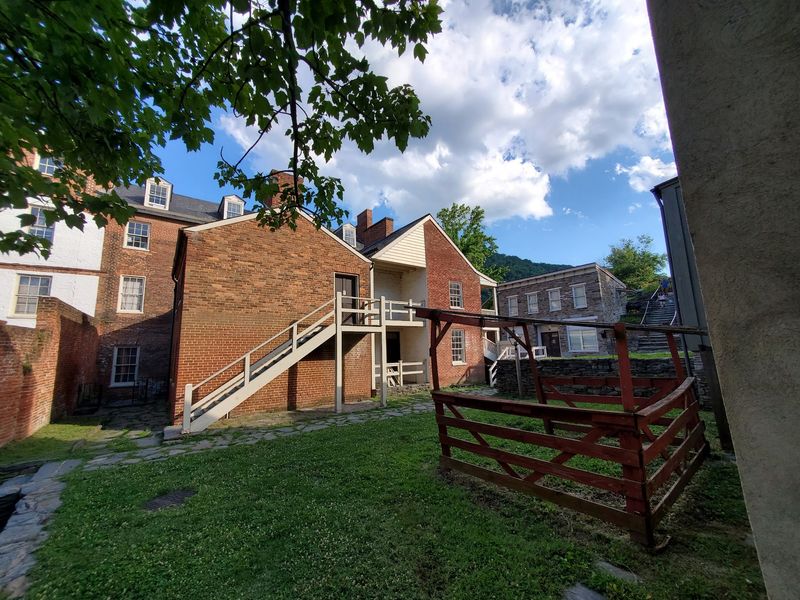
There is a reason people keep describing Harpers Ferry as one of the most dramatically situated towns in the eastern United States. The Potomac and Shenandoah rivers converge at a spot known as The Point, creating a natural spectacle that Thomas Jefferson once called one of the most stupendous scenes in nature.
Standing there, with Virginia on one bank and Maryland on the other, you understand immediately why this location mattered strategically, industrially, and symbolically.
The Blue Ridge Mountains rise on all sides, giving the town a sense of being cradled by the landscape. Jefferson Rock, a short but steep climb above Lower Town, offers a sweeping view that rewards the effort with a perspective that makes the whole historical narrative feel grounded in real geography.
After spending time inside the museum absorbing difficult history, stepping outside into this setting provides a kind of reset. The rivers keep moving, the mountains stay put, and the town sits at the center of it all, still carrying the weight of what happened here and still beautiful enough to make you glad you came.
Why This Small Museum Leaves a Lasting Impression
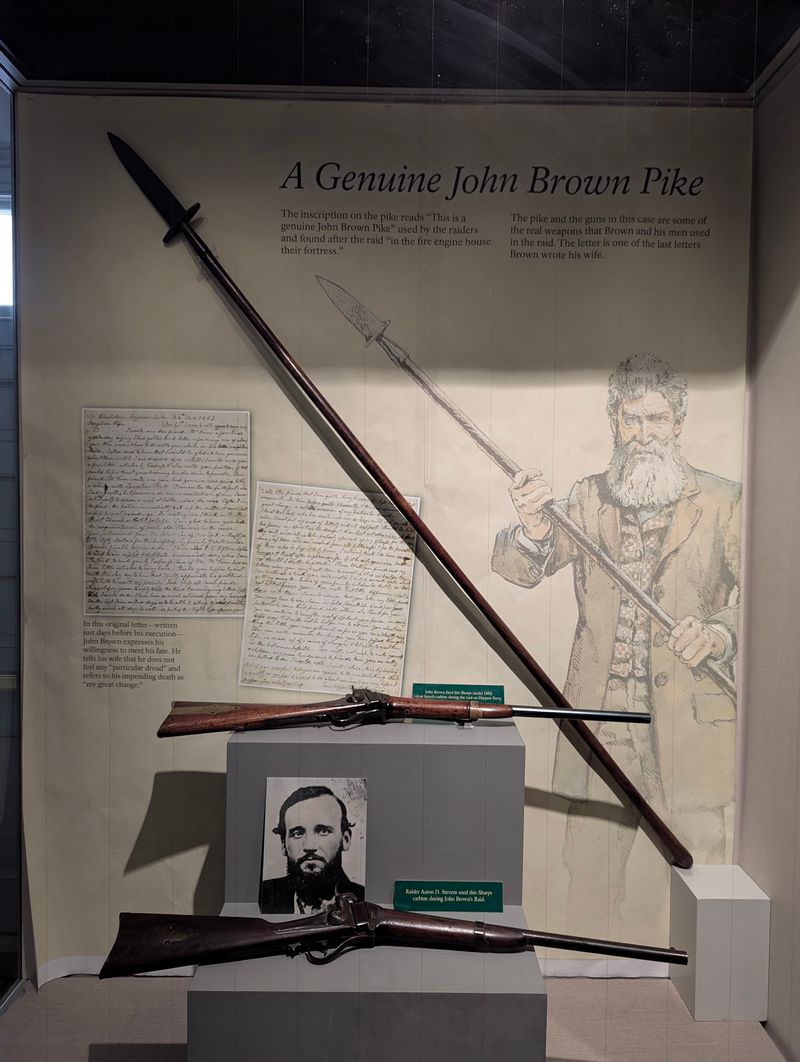
For a museum that could fit comfortably inside a modest house, the John Brown Museum carries an outsized emotional and intellectual weight. Visitors consistently describe it as thought-provoking, moving, and surprisingly deep for its size.
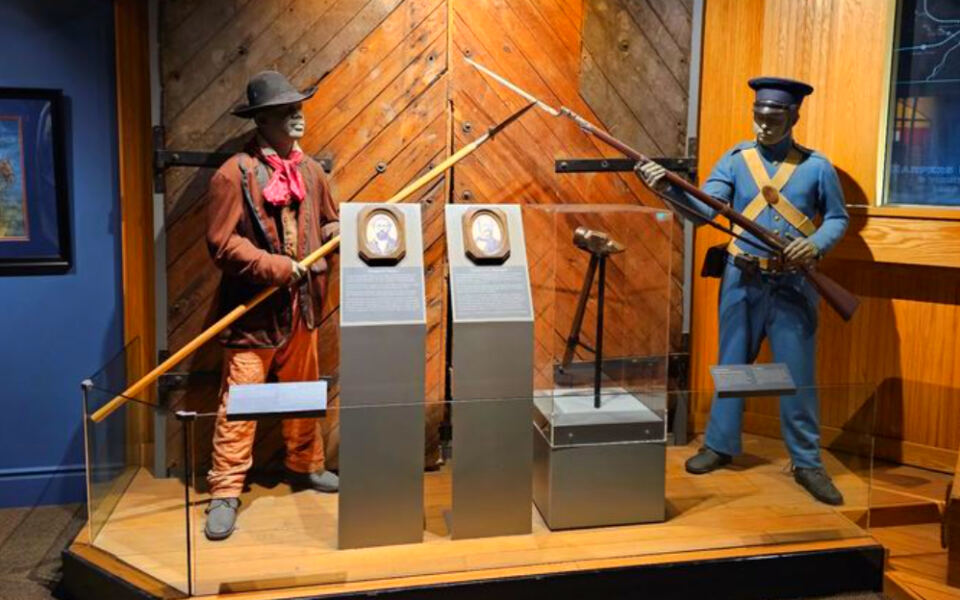
The combination of films, interactive displays, historical artifacts including weapons used in the raid, and extensive documentary material creates an experience that rewards attention.
What sets this museum apart from a simple recitation of facts is the way it frames the central question of the era as a personal one. The exhibits essentially ask: given what you know, what would you have done?
That question does not let you off the hook, and it is not meant to.
The museum holds a 4.8-star rating from visitors, and that number reflects genuine enthusiasm rather than polite appreciation. People leave here with more questions than they arrived with, which is exactly what the best history museums do.
For anyone curious about how one person’s radical conviction helped reshape an entire nation, this is a stop that belongs near the top of any Harpers Ferry itinerary.
Share this story