From the very first powered flight to the space age, American aviation has produced some of the most remarkable moments in human history. The good news is that you do not have to be a pilot or an engineer to appreciate any of it.
Across the country, museums, restored hangars, and historic sites preserve the aircraft, stories, and people who made it all happen. Whether you are planning a family road trip, a solo adventure, or just looking for somewhere genuinely worth your time, this list covers fourteen places where aviation history feels real, close, and completely worth the visit.
National Air and Space Museum, Washington, District of Columbia
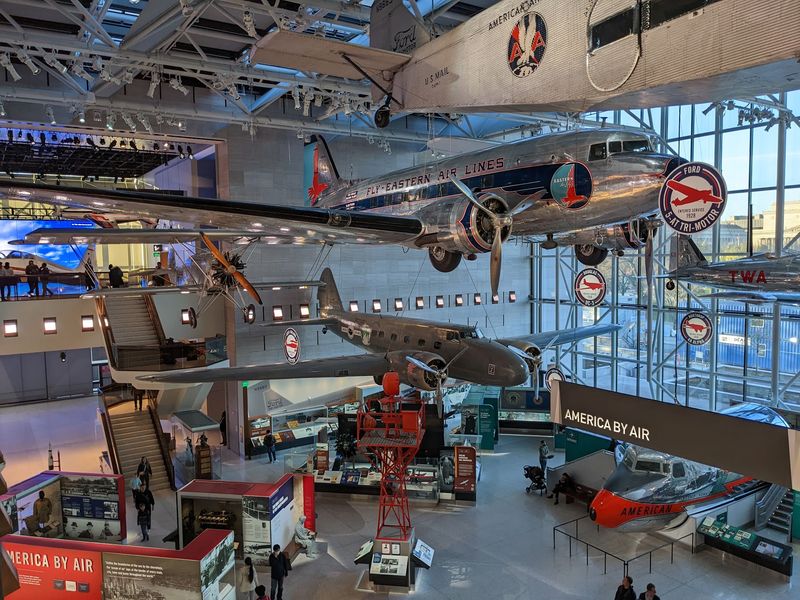
The original 1903 Wright Flyer hangs inside this museum, and standing beneath it puts history in sharp perspective. That aircraft completed the first successful powered, controlled flight, and the fact that you can see it in person, for free, is remarkable.
Few museums in the world can match that kind of opening statement.
The Smithsonian’s National Air and Space Museum is currently undergoing a major multiyear renovation, but significant galleries remain open while additional spaces continue reopening. Visitors should note that free timed-entry passes are required for the Washington location.
Booking those passes ahead of time, especially during busy seasons, is genuinely helpful advice worth following.
The museum is generally open daily from 10 a.m. to 5:30 p.m., with the exception of Christmas Day. Whether you spend two hours or a full afternoon here, the collection covers aviation and space exploration in ways that feel both educational and genuinely exciting.
Steven F. Udvar-Hazy Center, Chantilly, Virginia
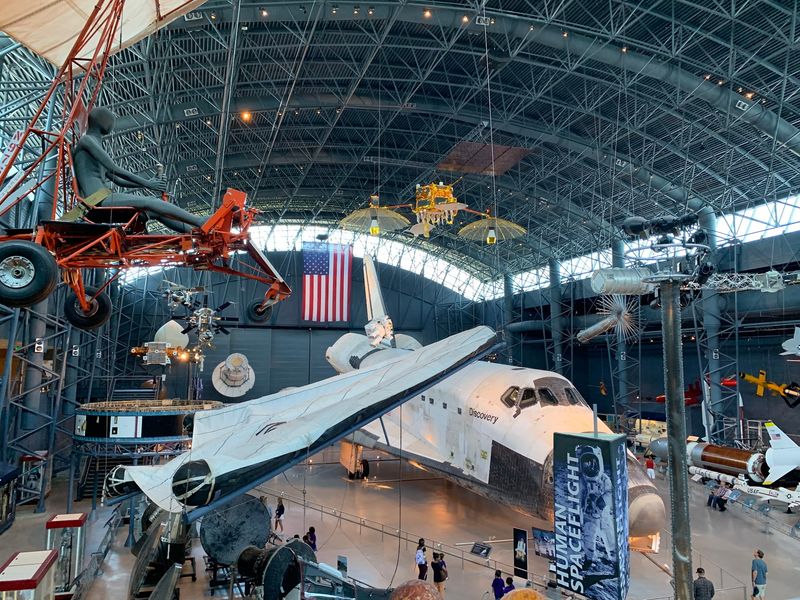
If the Washington museum feels like the introduction, Udvar-Hazy Center feels like the main event. Two enormous hangars hold more than 200 aircraft and spacecraft, and the sheer scale of the place is something you have to see to fully understand.
The Lockheed SR-71 Blackbird alone is worth the trip.
Space Shuttle Discovery is also here, positioned in a way that lets visitors get surprisingly close. The Mary Baker Engen Restoration Hangar offers a look at ongoing preservation work, which adds a behind-the-scenes dimension that most aviation museums cannot offer.
Watching conservators care for historic machines is genuinely fascinating.
Admission to the center is free, though parking carries a fee. The facility is open daily from 10 a.m. to 5:30 p.m., closing on December 25.
Located in Chantilly, Virginia, it is accessible enough from Washington to make a natural companion stop if you are already visiting the capital.
National Museum of the United States Air Force, Dayton, Ohio
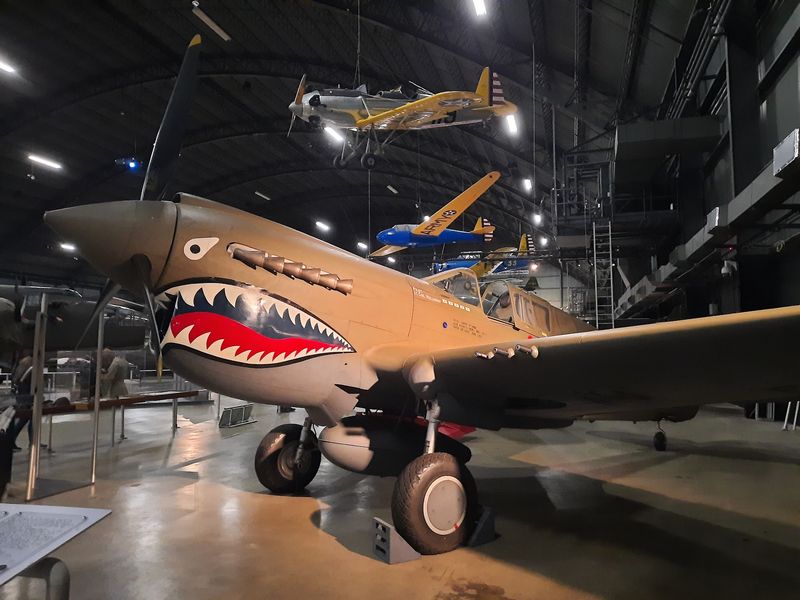
The world’s largest military aviation museum sits just outside Dayton, Ohio, and the numbers alone are staggering. More than 350 aerospace vehicles and missiles fill its galleries, covering military flight from the earliest biplanes through World War II, Korea, Vietnam, the Cold War, and into the modern era.
Presidential aircraft give the collection an unexpected layer of history, and experimental designs remind visitors how much trial and error shaped modern aviation. This is the kind of museum where enthusiasts regularly spend an entire day and still feel like they missed something.
The breadth of the collection is genuinely hard to overstate.
Admission and parking are both free, which makes this an easy choice for families or anyone on a budget. The museum is open seven days a week from 9 a.m. to 5 p.m., with closures on Thanksgiving, Christmas Day, and New Year’s Day.
Dayton’s connection to the Wright Brothers adds meaningful context to everything inside.
The Museum of Flight, Seattle, Washington

Seattle’s deep connection to American aircraft manufacturing makes it the right city for a major aviation museum, and the Museum of Flight delivers on that promise with a large, well-organized collection. Exhibits move from the earliest years of powered flight through commercial aviation, military aircraft, and space exploration without feeling rushed.
The museum regularly hosts educational programs, lectures, special tours, and changing exhibitions throughout the year, which means repeat visitors often find something new. That calendar of programming helps the museum feel like an active part of the community rather than a static display space.
It is also a strong option for school groups and families.
Current hours are 10 a.m. to 5 p.m. daily, with closures on Thanksgiving and Christmas Day. Given Seattle’s aviation heritage, the museum does an especially good job of connecting the machines on display to the broader story of how commercial air travel became part of everyday life for millions of Americans.
EAA Aviation Museum, Oshkosh, Wisconsin
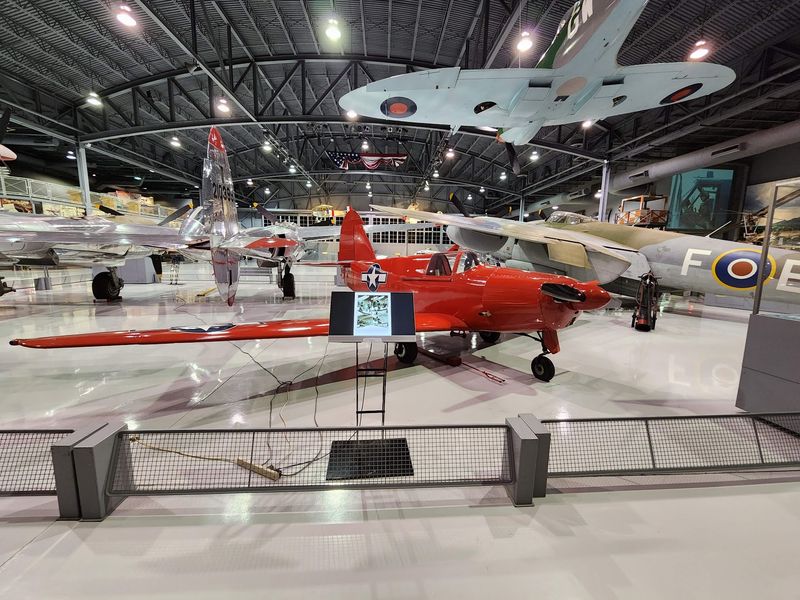
Oshkosh holds a special place in aviation culture, largely because it hosts EAA AirVenture, one of the most celebrated air shows on earth. The EAA Aviation Museum gives that culture a permanent home that visitors can explore any time of year, not just during the annual gathering.
The collection covers multiple eras and includes experimental aircraft, vintage machines, homebuilt designs, and historically significant examples. A replica of Charles Lindbergh’s Spirit of St. Louis is among the featured aircraft, which gives the museum a connection to one of aviation’s most famous solo achievements.
That alone tends to draw visitors who might not otherwise stop in Oshkosh.
Pioneer Airport adds a seasonal dimension worth mentioning. During portions of the year, aircraft operate from a grass runway on the property, offering a living glimpse of early aviation that static displays cannot fully replicate.
The museum is open daily from 10 a.m. to 5 p.m., making it easy to build into a Wisconsin road trip.
Pima Air & Space Museum, Tucson, Arizona
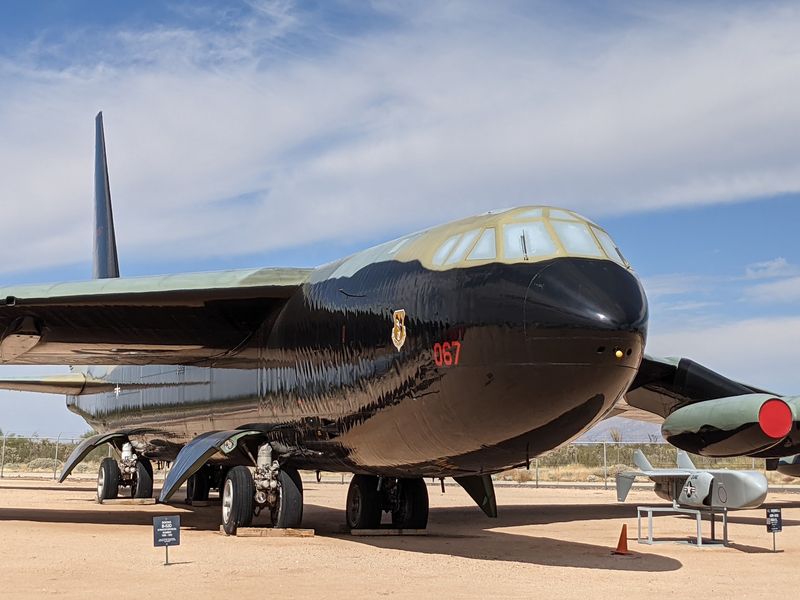
Rows of aircraft stretching across the Arizona desert under an open sky create an image that stays with you long after you leave Tucson. The Pima Air & Space Museum describes itself as one of the world’s largest independently funded aerospace museums, and its indoor and outdoor collections together support that claim convincingly.
The dry desert environment is actually an asset here. Aircraft preserved in Tucson’s climate hold up better than they might in wetter regions, and the visual contrast of enormous airplanes against the surrounding mountains and open landscape is striking in a way that indoor-only museums cannot replicate.
Military aircraft, commercial aviation history, and experimental designs are all represented.
Summer hours from June through September run from 9 a.m. to 3 p.m., while the regular October through May schedule extends to 5 p.m. The museum operates seven days a week.
If you are visiting during cooler months, the outdoor portions of the collection are especially comfortable to explore at a relaxed pace.
Wings Over the Rockies Air & Space Museum, Denver, Colorado
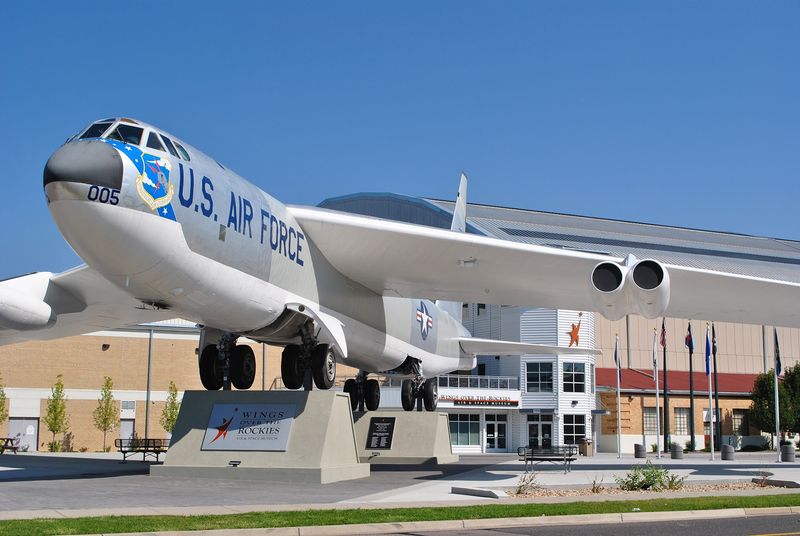
Hangar 1 of the former Lowry Air Force Base is a genuinely impressive building, and Wings Over the Rockies fills its more than 100,000 square feet with aircraft, space vehicles, uniforms, artifacts, and interactive exhibits. The hangar itself connects the museum directly to Colorado’s military aviation past in a way that feels concrete rather than decorative.
More than 60 aircraft are part of the collection, including some unusual military designs. The AV-8B Harrier II+, a jump-jet capable of vertical takeoff and landing, is one of those machines that tends to stop visitors in their tracks.
Flight simulators and educational programs round out the experience beyond what static displays alone can offer.
The museum is open throughout the week, though Sunday hours begin later than those on other days. Denver’s central location makes this a practical stop for anyone exploring Colorado, and the combination of historic architecture and aviation hardware gives it a character that newer purpose-built facilities sometimes lack.
National Naval Aviation Museum, Pensacola, Florida
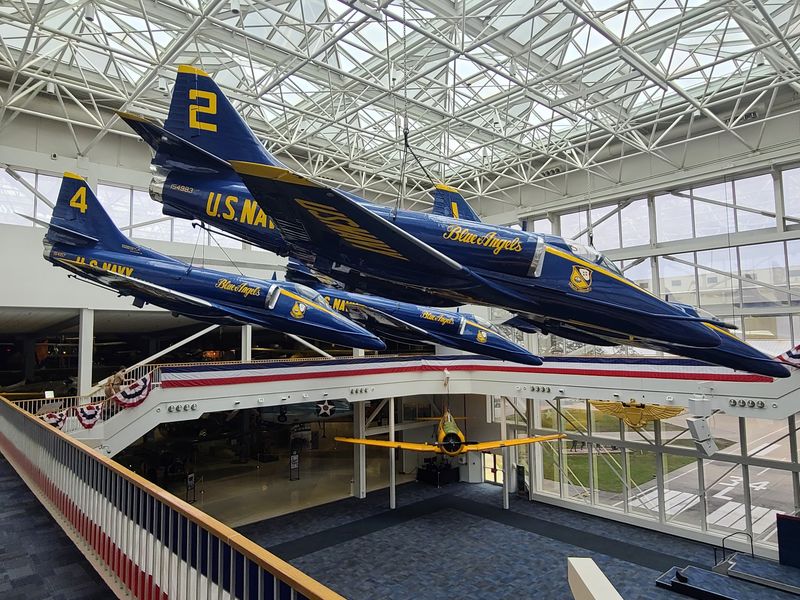
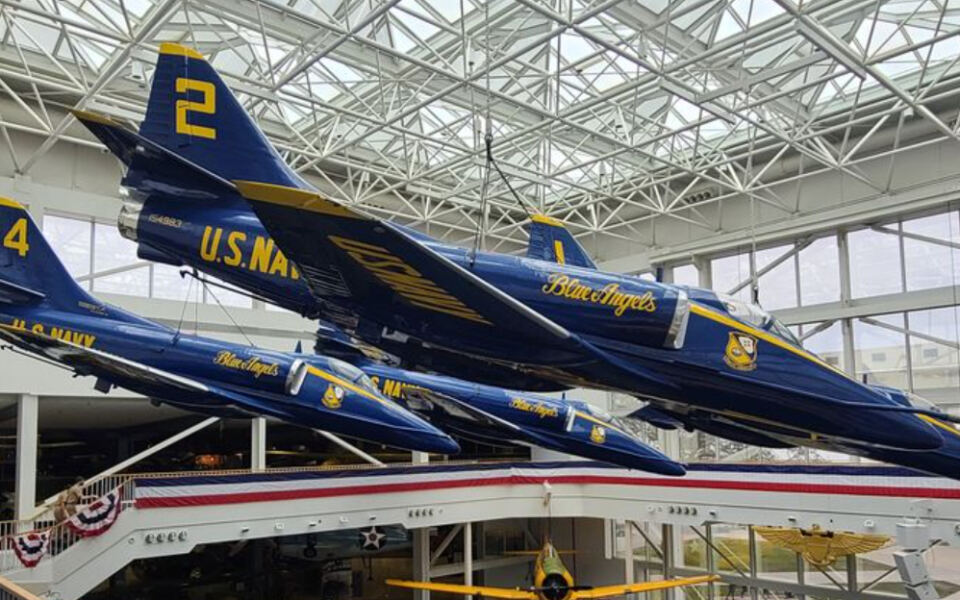
Naval aviation has its own distinct history, and no museum tells that story better than the National Naval Aviation Museum in Pensacola. More than 150 restored aircraft and over 4,000 artifacts document how the Navy, Marine Corps, and Coast Guard used aviation to transform military operations at sea and beyond.
Beyond the aircraft galleries, visitors can explore cockpit trainers, flight simulators, guided tours, and a giant-screen theater. The Blue Angels, the Navy’s famous flight demonstration team, practice at Naval Air Station Pensacola during their season, and those practices can sometimes be visible from the museum grounds on selected dates.
That is an experience that catches many first-time visitors completely off guard.
The museum is currently open daily from 9 a.m. to 4 p.m. Because it sits aboard an active naval air station, visitors should check current identification and base-access requirements before making the drive.
Admission is free, which makes it one of the most accessible major aviation museums in the southeastern United States.
Pearl Harbor Aviation Museum, Honolulu, Hawaii
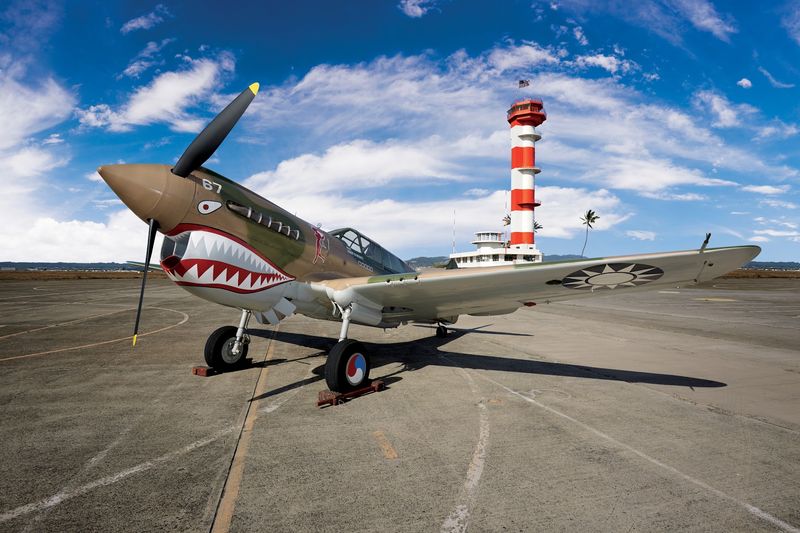
Very few aviation museums stand on ground that carries this much historical weight. The Pearl Harbor Aviation Museum occupies historic Ford Island, the same location where aircraft were destroyed and launched during one of the most significant events in American history.
That context changes how you experience everything inside.
Hangars 37 and 79 hold more than 50 aircraft along with artifacts and stories connected to World War II aviation in the Pacific. The Ford Island Control Tower provides an aerial perspective over Pearl Harbor that connects the aviation history inside the museum to the broader landscape outside it.
Both elements together make for a visit that covers a lot of ground emotionally and historically.
The museum is open from 9 a.m. to 5 p.m. and closes on Thanksgiving, Christmas, and New Year’s Day. If you are visiting Oahu and planning to see the Pearl Harbor National Memorial, adding this museum to that same day makes a lot of sense logistically and thematically.
Frontiers of Flight Museum, Dallas, Texas
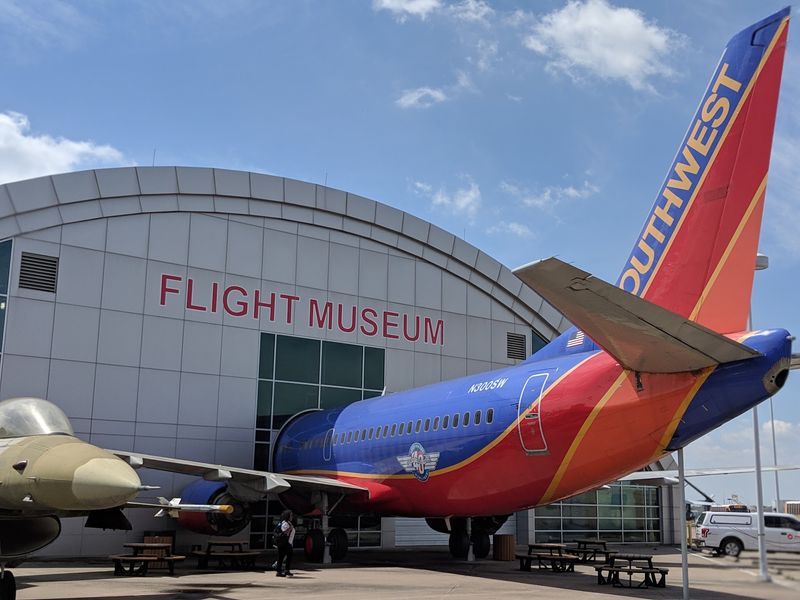
Sitting right beside Dallas Love Field gives the Frontiers of Flight Museum an atmosphere that other aviation museums cannot easily replicate. Modern air traffic moves in and out of the airport while visitors inside explore machines representing much earlier chapters of flight.
That contrast between past and present is quietly effective.
Exhibitions cover aviation pioneers, military aircraft, commercial aviation development, aerospace technology, and space exploration. North Texas has genuine ties to aircraft production and commercial flight history, and the museum does a good job of connecting those local roots to the broader national story.
It is not just a general aviation museum placed in Dallas by coincidence.
Current hours are Monday through Saturday from 10 a.m. to 5 p.m. and Sunday from 1 p.m. to 5 p.m. Because private events occasionally limit public access, the museum recommends checking its calendar before visiting.
That is practical advice worth taking seriously, especially if you are driving from outside the Dallas area specifically to visit.
New England Air Museum, Windsor Locks, Connecticut
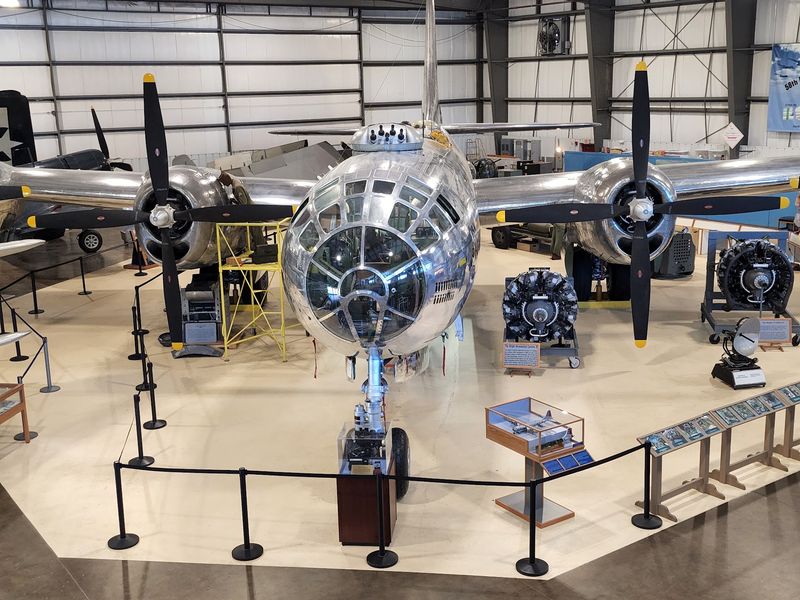
New England’s role in American aerospace manufacturing is larger than most people realize, and the New England Air Museum near Bradley International Airport makes that history concrete. More than 100 aircraft representing everything from aviation’s earliest years to modern military and civilian flight fill the museum’s collection.
Exhibits include aircraft, engines, aviation technology, interactive experiences, and displays connected to companies such as Pratt & Whitney, which has deep roots in Connecticut’s industrial history. Flight simulators and occasional open-cockpit experiences add a hands-on dimension that goes beyond reading panels and looking at static machines from behind a rope line.
The museum currently lists hours of 9 a.m. to 4 p.m., with last admission at 3:30 p.m. Several major holiday closures apply throughout the year.
For anyone traveling through central Connecticut, the proximity to Bradley International Airport makes this an easy stop to add before or after a flight, or as its own dedicated destination on a regional road trip.
March Field Air Museum, Riverside, California
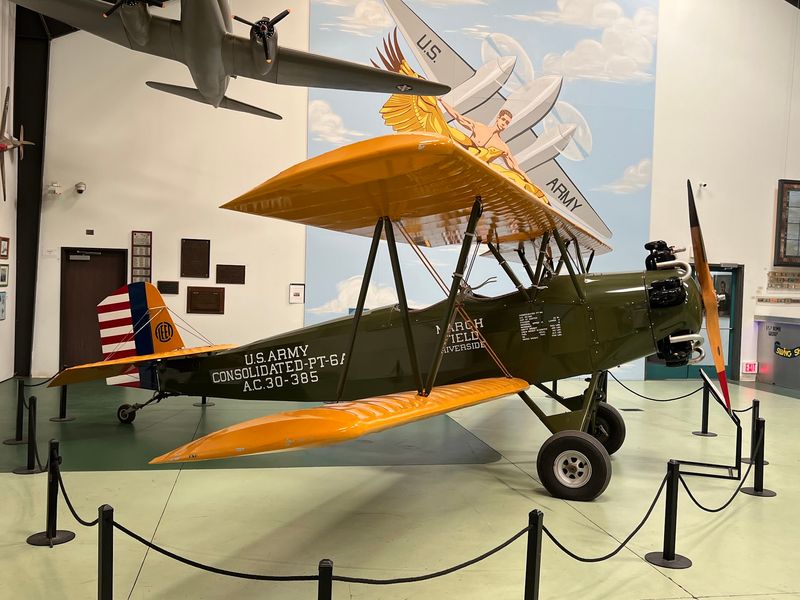
March Field Air Museum has something that many aviation museums simply cannot offer: a direct, unbroken connection to an active military airfield with roots stretching back to 1918. That history is not just a backdrop here.
It shapes the entire character of the collection and the experience of walking through it.
More than 100 aircraft illustrate the evolution of flight from early aviation through World War II, the jet age, Cold War operations, and modern unmanned technology. The museum’s location beside March Air Reserve Base lets visitors connect the machines inside to the airfield that has been operating beside them for over a century.
That sense of continuity is one of the more distinctive things about this stop.
March Field Air Museum is open Tuesday through Sunday from 9 a.m. to 5 p.m., with several major holiday closures throughout the year. Riverside’s location in Southern California makes it a practical addition to any road trip through the Inland Empire or a dedicated day trip from Los Angeles or San Diego.
Strategic Air Command & Aerospace Museum, Ashland, Nebraska
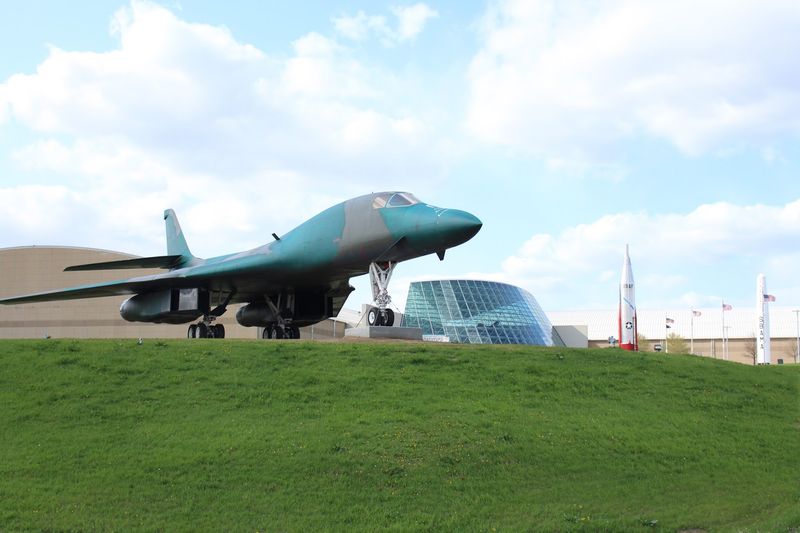
The Cold War produced some of the largest and most technically complex aircraft ever built, and the Strategic Air Command & Aerospace Museum preserves a remarkable number of them. Located between Omaha and Lincoln in Ashland, Nebraska, this museum focuses on the aircraft and technology that defined America’s nuclear-deterrence strategy for decades.
Large bombers dominate the collection, and their scale genuinely surprises visitors who have never stood beside one. The sheer size of machines designed for long-range strategic missions is difficult to grasp from photographs alone.
Exhibits also cover military service, aerospace engineering, and the broader technology development that ran alongside Cold War military planning.
The museum remains active in 2026 and operates on both summer and winter schedules. Summer hours run daily, while winter operations include a Tuesday closure.
Nebraska might not be the first state that comes to mind for aviation tourism, but this museum offers a compelling reason to reconsider that assumption and plan a stop on your next Midwest journey.
North American Aerospace Museum, McMinnville, Oregon
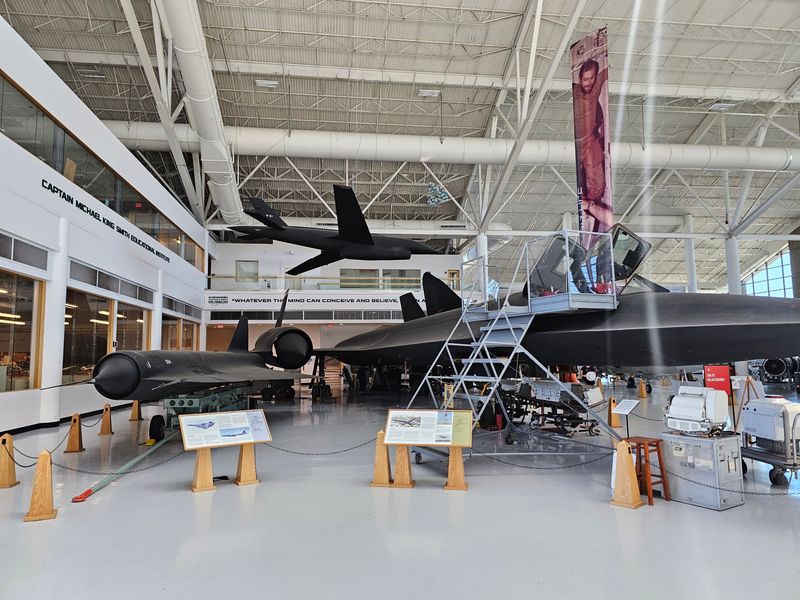
Howard Hughes built the H-4 Hercules with a wingspan wider than a football field is long, and the aircraft, popularly known as the Spruce Goose, is the centerpiece of the North American Aerospace Museum in McMinnville, Oregon. The museum was previously known as the Evergreen Aviation & Space Museum before its recent rebranding, but the star attraction has not changed.
The collection extends well beyond the Spruce Goose. Visitors can also see an SR-71 Blackbird, an F-117 Nighthawk, a Titan II missile, and exhibits covering early rockets, Cold War technology, and space exploration.
With more than 150 aircraft, spacecraft, and exhibits represented, there is enough variety here to keep aviation fans and casual visitors equally engaged throughout a full visit.
The museum is currently open daily from 9 a.m. to 5 p.m., with several holiday closures. McMinnville sits in Oregon’s Willamette Valley wine country, which means you can pair a genuinely remarkable aviation stop with some of the Pacific Northwest’s most celebrated agricultural scenery on the same trip.
Share this story