Oklahoma has a way of surprising you when you least expect it, and this is one of those moments. Tucked inside a small campus in a quiet part of the state sits a museum that most Oklahomans have never even heard of, yet it holds genuine Egyptian mummies, shrunken heads, ancient Greek pottery, and Renaissance paintings all under one roof.
The kind of place you stumble upon and immediately wonder how it stayed off your radar for so long. Get ready, because this hidden gem is about to become your new favorite road trip stop.
A Small Oklahoma Town Holding an Extraordinary Secret
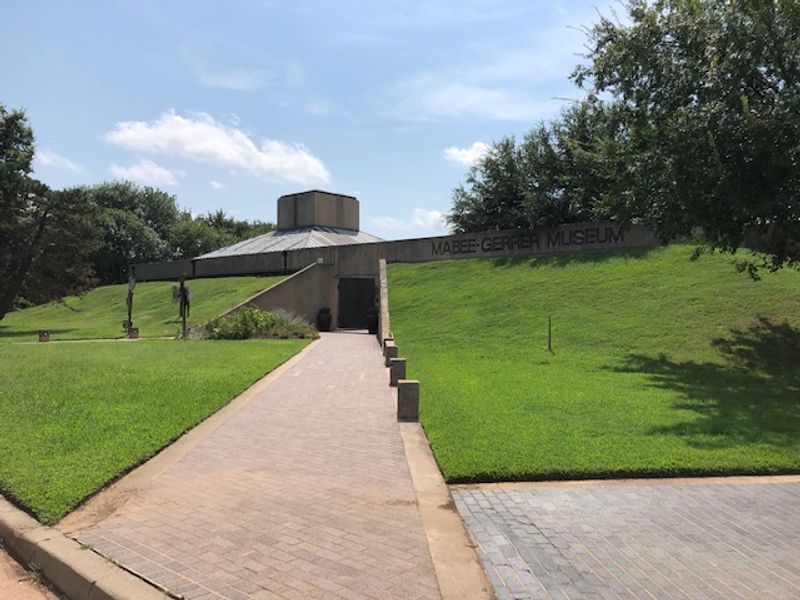
Shawnee, Oklahoma is not the first place most people picture when they think of world-class museum collections. Yet sitting quietly at 1900 W MacArthur St, the Mabee-Gerrer Museum of Art holds artifacts that would feel right at home in a major metropolitan institution.
From the outside, nothing about the building screams “ancient Egypt” or “Renaissance masterworks.” That understated exterior is exactly what makes stepping inside so unexpectedly thrilling.
The museum sits on the campus of St. Gregory’s University, which adds a layer of history all on its own. Founded through the efforts of Benedictine monk Gregory Gerrer, the collection grew from one man’s remarkable passion for art and artifacts gathered from across the globe.
Visitors who arrive without knowing what to expect often leave completely floored by the depth and variety of what they find.
Locals who have lived in Oklahoma for years frequently mention discovering the museum almost by accident, then immediately regretting not visiting sooner. That pattern of pleasant shock is basically the museum’s calling card.
Few places in the state pack this much genuine historical weight into such an approachable, welcoming space.
The Monk Behind the Collection
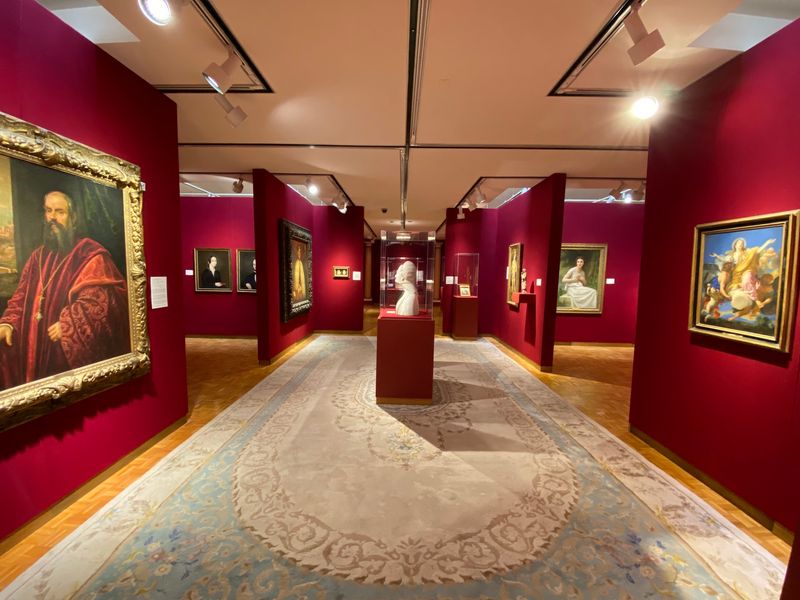
Gregory Gerrer was a Benedictine monk with an appetite for collecting that most museum curators would envy. Born in 1867, he traveled extensively and developed relationships with artists, scholars, and collectors across Europe and beyond, bringing back pieces that ranged from ancient Egyptian relics to finely crafted Renaissance paintings.
His personal works as a painter are also part of the collection, and they hold their own remarkably well alongside the historical pieces.
What makes Gerrer’s story so compelling is that he built this collection not for personal glory but out of a genuine belief that art and history should be accessible to people in his community. The museum that bears his name is essentially a love letter to human creativity across thousands of years and dozens of cultures.
Visitors who take a moment to learn about him often say it reframes everything they see on the walls and in the display cases.
The scope of what he assembled is staggering when you consider the era and the location. According to staff, what visitors see on the floor at any given time represents only about four percent of the total collection, with exhibits rotating seasonally to keep things fresh on every return visit.
Tutu: The Egyptian Mummy at the Heart of It All
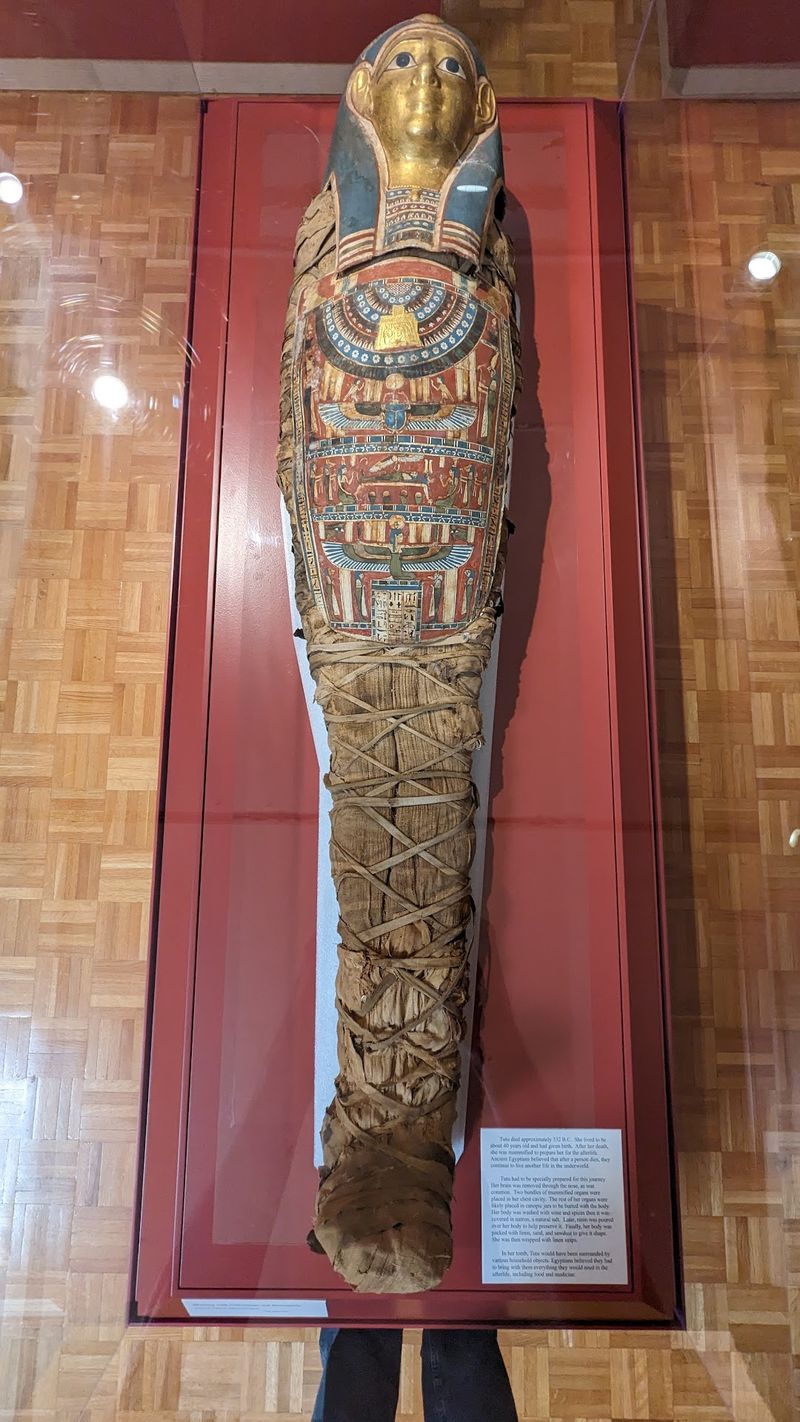
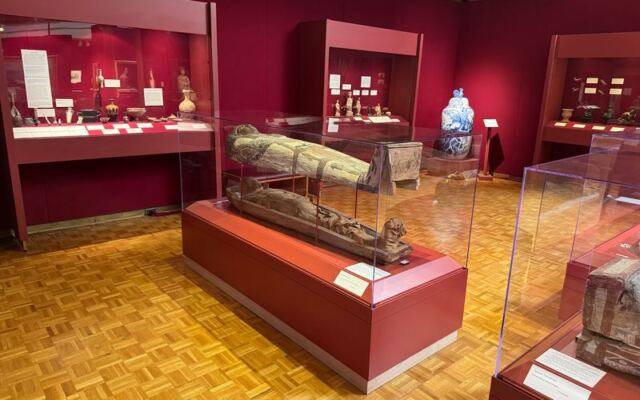
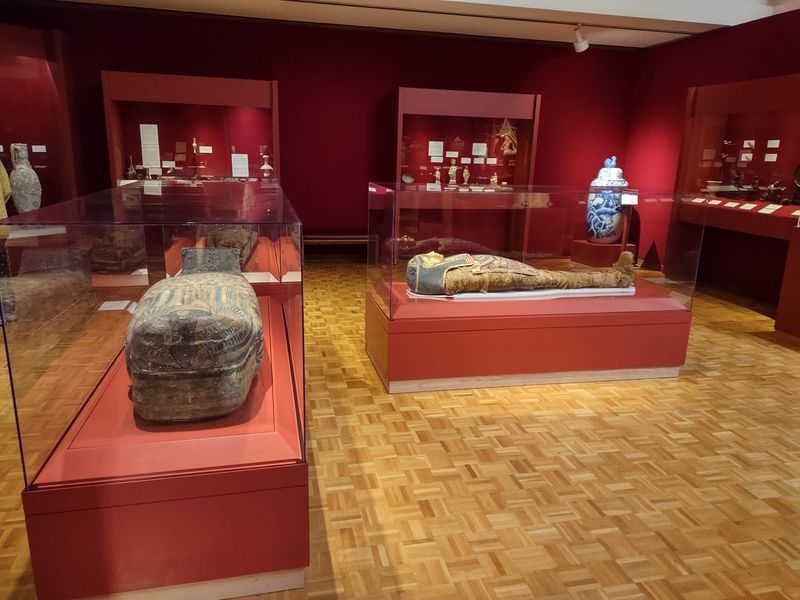
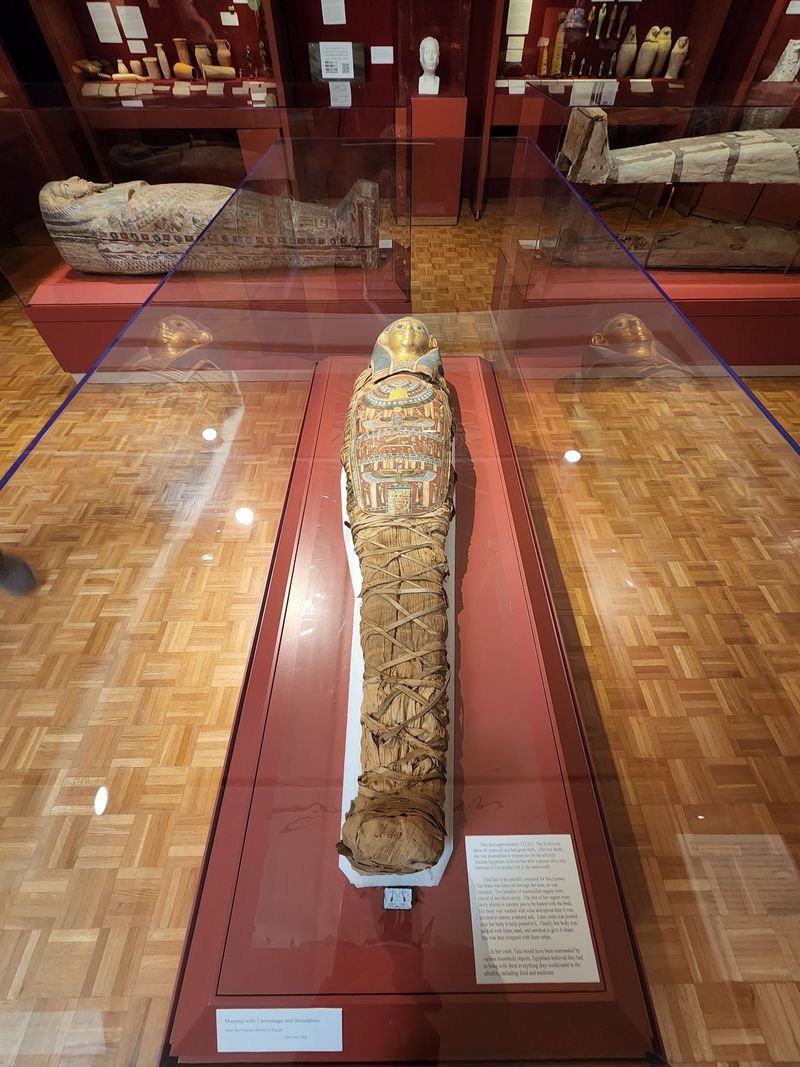
Meet Tutu, the museum’s most famous permanent resident. Tutu is an authentic Egyptian mummy, believed to be a princess, and she has been drawing curious visitors to Shawnee for longer than most people realize.
She rests in a dedicated display area that gives visitors plenty of room to take in the details of her wrappings and the artifacts surrounding her. The experience of standing a few feet from someone who lived thousands of years ago is genuinely hard to put into words.
Reactions tend to split right down the middle, especially among younger visitors. Some kids press their noses to the glass in complete fascination, while others grab a parent’s hand and quietly suggest moving to the next room.
Both responses are completely understandable, and honestly, that range of reactions says a lot about how real and present Tutu feels in person.
Special events like “Mummy Day” bring in knowledgeable staff who walk visitors through the history and science behind Egyptian mummification practices. Those who have attended these events consistently praise the staff for being both informative and genuinely enthusiastic.
Tutu is not just a curiosity sitting behind glass; she is the centerpiece of a thoughtfully curated ancient Egyptian experience.
Beyond One Mummy: The Full Egyptian Collection
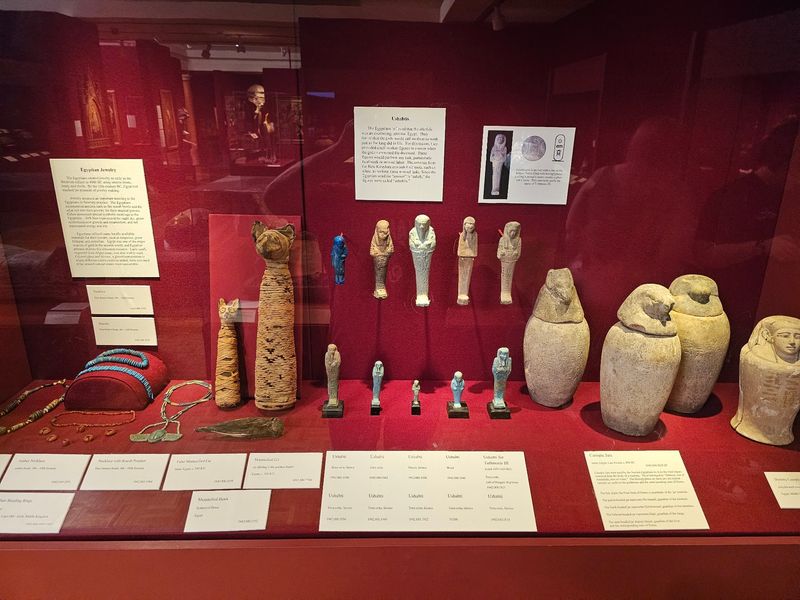
Plenty of visitors arrive specifically to see Tutu, but the Egyptian collection extends well beyond a single mummy. The museum holds a solid range of Egyptian artifacts including pottery, figurines, and objects that offer real context for understanding ancient Egyptian daily life and spiritual practices.
Gift shop shelves even carry small Egyptian cat figurines that make for meaningful souvenirs, a detail that has charmed more than a few first-time visitors.
One popular hands-on activity tied to the Egyptian collection involves making clay scarab beetles, an experience that has proven especially memorable for school groups and younger visitors. Turning ancient symbolism into a craft activity bridges the gap between history and personal connection in a way that purely visual displays sometimes cannot.
Kids who might otherwise rush past a display case slow way down when they get to make something with their own hands.
The Egyptian section also serves as a strong entry point for critical thinking conversations. Staff have led exercises where visitors analyze visual clues in paintings and artifacts to piece together historical context, turning a museum walk into something closer to active investigation.
For a relatively small collection, the Egyptian holdings punch well above their weight in terms of educational engagement and sheer wow factor.
Shrunken Heads and Other Unexpected Wonders
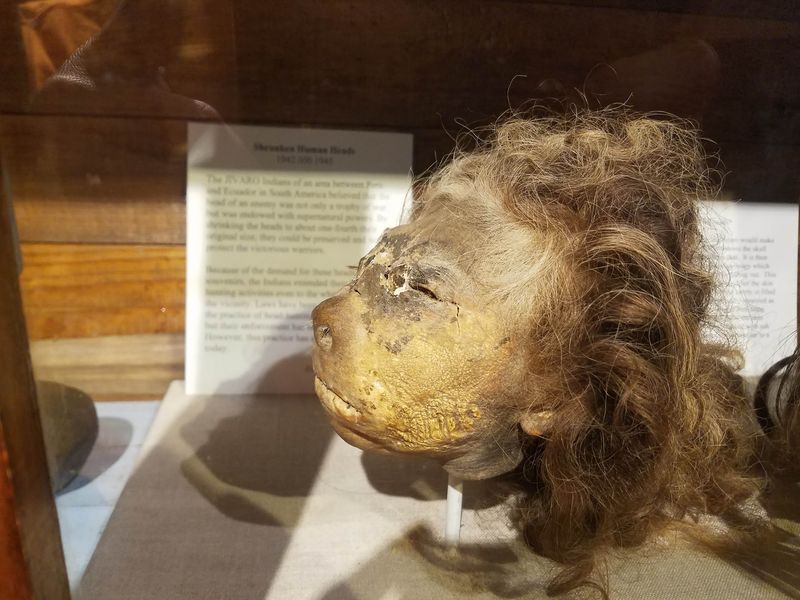
Right around the corner from the Egyptian section, the surprises keep coming. The museum holds a small but genuinely startling collection of shrunken heads, complete with explanatory materials detailing the cultural practices behind their creation.
Seeing items like these in a museum in Oklahoma feels almost surreal, which is precisely what makes the Mabee-Gerrer experience so hard to forget. Nobody expects to find something like this in a quiet Midwestern town.
The display is handled with care and educational context rather than treated as a shock exhibit. Visitors who have taken the time to read the accompanying information frequently note that understanding the cultural background makes the experience far more meaningful than simple spectacle.
That balance between the unusual and the respectful is something the museum handles consistently well throughout its galleries.
Other unexpected finds scattered through the collection include a longnose sawshark nose bone, a skullcap associated with Pope Pius X, Dogon and African tribal masks, Chinese smoking pipes, and indigenous clothing and tools from various cultures. The sheer variety of what Gerrer collected creates a kind of global treasure hunt feeling as you move through the rooms.
Every turn brings something you genuinely did not anticipate seeing in central Oklahoma.
Renaissance Paintings, Native American Art, and Everything Between
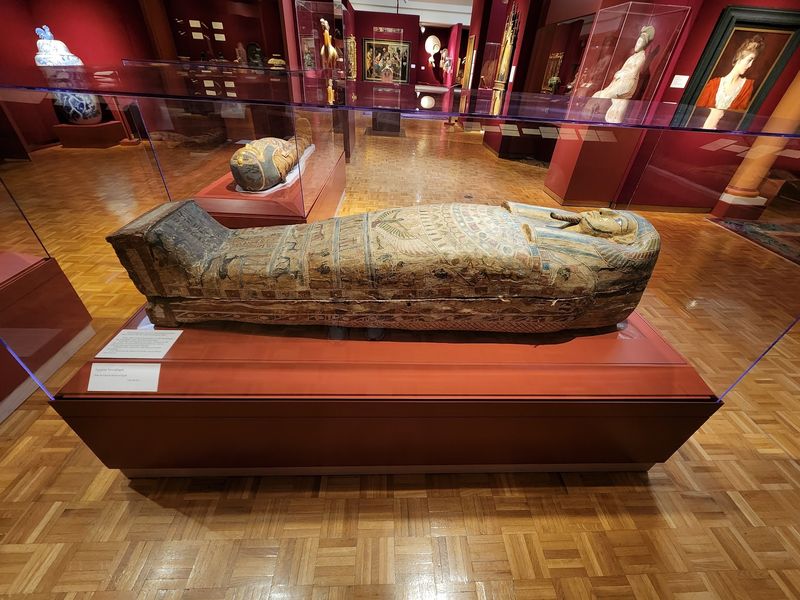
Art history fans will find plenty to appreciate even after getting past the more unusual curiosities. The museum holds a notable collection of oil paintings, including works by Gerrer himself, alongside pieces spanning from the Renaissance period through to contemporary expressions.
Sculpture and pottery round out the fine art holdings, giving the collection a breadth that feels genuinely impressive for a museum of this size.
Native American art and artifacts hold a meaningful place in the collection as well, which feels especially appropriate given Oklahoma’s deep ties to dozens of tribal nations. The pieces on display offer a thoughtful counterpoint to the European and ancient world artifacts, grounding the collection in the history of the land it now calls home.
Visitors interested in indigenous culture and craftsmanship will find the section well worth lingering in.
Greco-Roman pottery and coins add another layer to the historical timeline, taking the collection from ancient Greece and Rome through the medieval period and into the modern era. Seeing a Greco-Roman olla sitting near a piece of Native American pottery and a Renaissance canvas in the same building creates an unexpected sense of human continuity across time and geography.
Few museums of any size manage to pull that off as naturally as this one does.
The Madonna and Child Collection
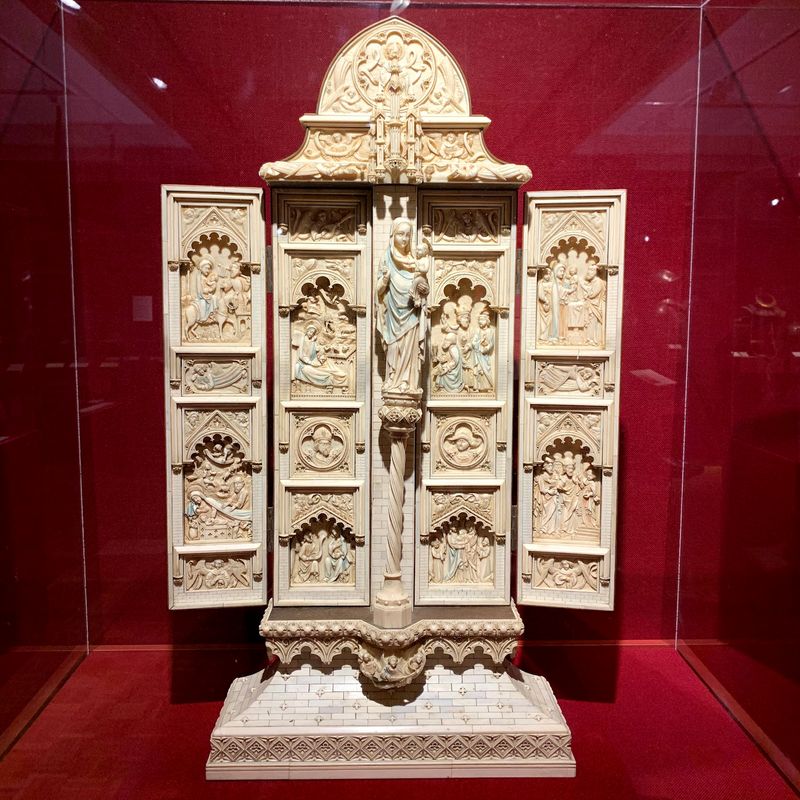
One of the museum’s most talked-about rotating highlights is its Madonna and Child collection. Works centered on this classic subject rotate in and out of display, with the collection typically featured prominently around Valentine’s Weekend before cycling back to storage.
Visitors who happen to catch it on display often describe the experience as an unexpected bonus that elevates an already impressive visit into something genuinely moving.
The quality of the paintings in this collection surprises many first-time visitors who arrive expecting a regional museum’s typical offerings. Gerrer’s eye for fine art was sharp, and the Madonna and Child works reflect the same curatorial instinct that guided his acquisition of ancient artifacts.
There is a consistency of quality running through the collection that speaks to how seriously he took every addition he made.
For visitors with an interest in religious art or art history, timing a trip to coincide with the Madonna and Child display is worth checking the museum’s schedule in advance. The museum’s website at mgmoa.org and phone line at 405-878-5300 are the best ways to confirm what is currently on view.
Stumbling upon it unexpectedly, as many visitors do, tends to be one of those genuinely happy surprises that makes the whole trip feel perfectly timed.
The Scavenger Hunt That Keeps Kids Engaged
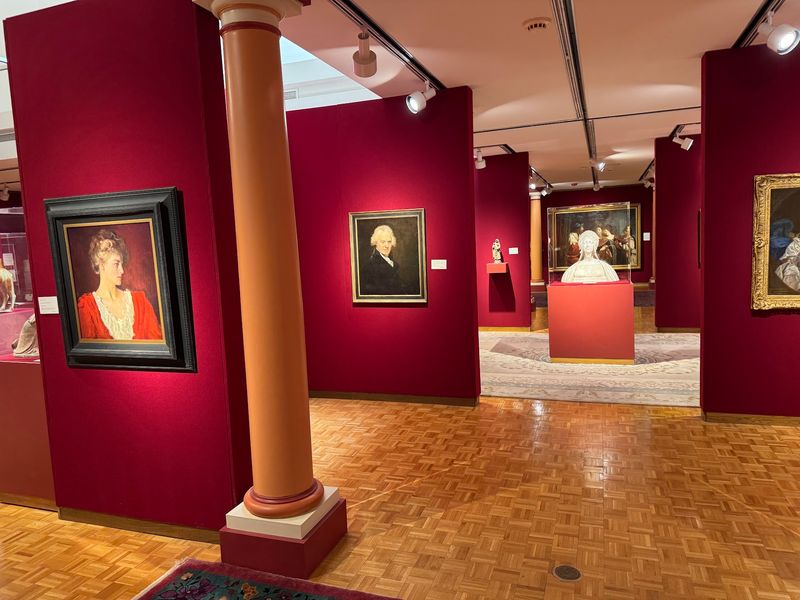
Keeping younger visitors engaged through a full museum experience can be a real challenge, and the Mabee-Gerrer has found a genuinely clever solution. An in-museum scavenger hunt sends kids hunting for specific details across the collection, turning passive viewing into active exploration.
Families consistently highlight this feature as one of the reasons the museum works so well for mixed-age groups.
The hunt leads children through various sections of the museum, encouraging them to look closely at paintings, artifacts, and displays they might otherwise skim past. At the end, participants get to open a treasure chest with a special key, a payoff that kids apparently find deeply satisfying.
Parents often note that their children spent more time genuinely studying the art because they were looking for specific clues rather than just walking through.
Beyond keeping the kids occupied, the scavenger hunt structure actually reinforces the educational mission of the museum in a hands-on way. Noticing visual details in a painting sharpens observation skills that extend well beyond the museum walls.
For families planning a visit, the scavenger hunt alone makes the trip worth it, and the fact that the rest of the collection is this strong turns a good outing into a genuinely memorable one.
The Atmosphere Inside: Peaceful, Quiet, and Genuinely Welcoming
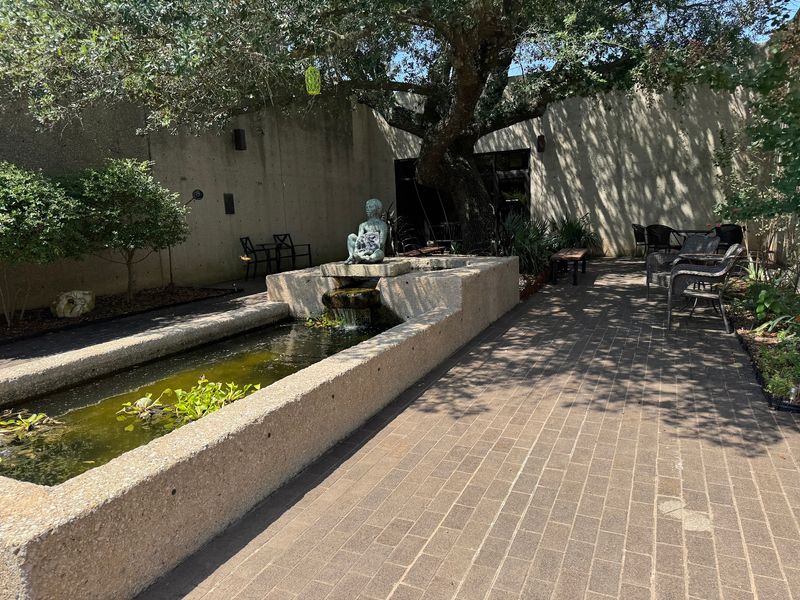
Walking into the Mabee-Gerrer feels immediately different from the hustle of larger institutions. The space is quiet and unhurried, with a calm that lets you actually absorb what you are looking at rather than feeling rushed by crowds.
The front courtyard is particularly praised for its peaceful quality, offering a moment of stillness before you head inside to explore.
Stained glass windows inside the building add a layer of visual warmth that visitors frequently mention. The interplay of colored light with the art and artifacts on display creates an atmosphere that feels almost contemplative, somewhere between a gallery and a sanctuary.
That quality is not accidental; it reflects the museum’s origins within a monastic academic community where beauty and reflection were taken seriously.
Staff and volunteers at the museum earn consistent praise for being friendly, knowledgeable, and genuinely helpful without hovering. The kind of place where you feel comfortable asking questions and lingering as long as you like.
Visitors who have made multiple trips often note that the staff’s enthusiasm for the collection never seems to wear thin, which makes the experience feel personal rather than transactional on every return visit.
Admission, Hours, and Getting There
One of the most pleasant surprises about the Mabee-Gerrer Museum of Art is its admission situation. The museum has offered free admission during certain periods, and many visitors have walked in without paying a cent.
Checking current admission details before your visit is always a good idea, but the museum has historically been praised for making itself accessible without requiring a significant financial commitment. For the quality of what is inside, even a nominal fee would be considered well worth it by most who visit.
The museum is open Tuesday through Saturday from 10 AM to 5 PM, and it is closed on Sundays and Mondays. Planning around those hours is straightforward, and the Tuesday-Saturday window covers most people’s schedules without much trouble.
Arriving with at least a couple of hours to spare is a good call, since the collection rewards slow, attentive exploration rather than a quick walk-through.
Finding the museum is easy enough with the address at 1900 W MacArthur St in Shawnee, Oklahoma. The phone number is 405-878-5300 for any questions about current exhibits or special events, and the website at mgmoa.org is regularly updated with exhibit schedules.
Shawnee sits within comfortable driving distance for a large portion of the Oklahoma population, making this an easy half-day trip from Oklahoma City.
Why This Museum Earns a Spot on Your Oklahoma Road Trip List
Some places earn their reputation through scale and spectacle. The Mabee-Gerrer Museum of Art earns its through sheer improbability.
The fact that a building in Shawnee, Oklahoma holds genuine Egyptian mummies, shrunken heads, Greco-Roman coins, Renaissance oil paintings, and Native American artifacts under one roof is remarkable by any measure. It is the kind of collection that makes you question how many other extraordinary places you have driven past without knowing.
The rotating exhibit schedule means repeat visits genuinely offer something new each time, and with only four percent of the full Gerrer collection on display at any given moment, the museum has essentially unlimited potential for future surprises. Families, solo history buffs, art lovers, and curious road-trippers all tend to find something that speaks directly to their interests.
Few places manage that kind of cross-audience appeal without feeling scattered or unfocused.
Adding the Mabee-Gerrer to an Oklahoma road trip itinerary requires almost no extra effort and delivers a payoff that far exceeds expectations. The combination of free or low-cost admission, genuinely world-class artifacts, kid-friendly programming, and a welcoming atmosphere makes it one of the state’s most underrated cultural destinations.
Once you visit, it will be very hard to explain why you waited so long.
Share this story