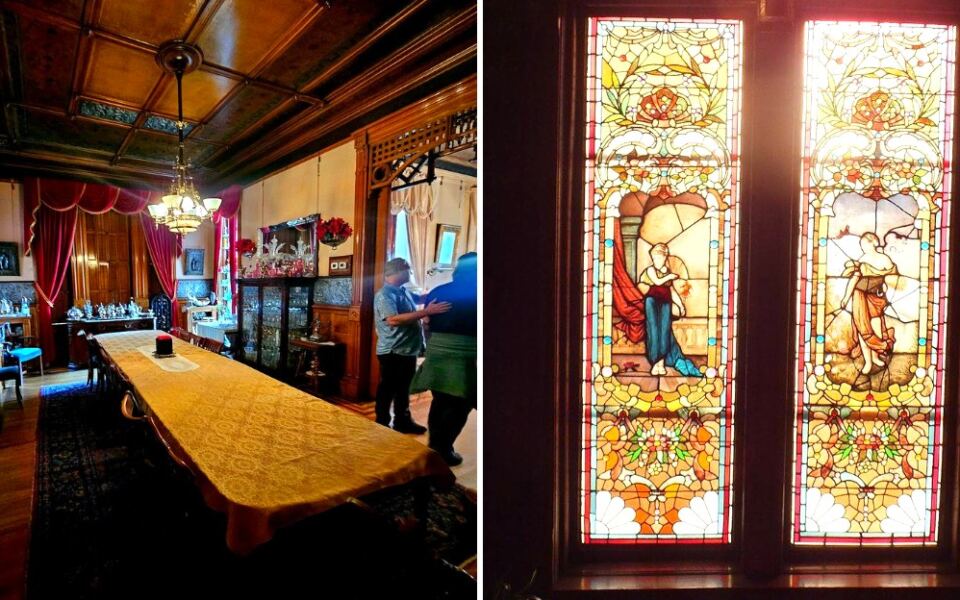
One historic mansion in Butte shows just how extravagant Montana’s copper boom became. The 34-room home is filled with hand-carved woodwork, hundreds of stained-glass panes, frescoed ceilings, ornate fireplaces, and a 64-foot ballroom hidden on the top floor.
One feature is especially difficult to forget. A grand carved staircase was reportedly dismantled and exhibited at a world’s fair before returning to the mansion, while other rooms showcase materials and decorative details imported from around the world.
The man behind it all rose from modest beginnings to become one of America’s richest industrialists. More than a century later, visitors can still tour the house, and overnight guests can even sleep in rooms once used by the family that helped define Butte’s copper era.
A Grand Address in the Heart of Uptown Butte
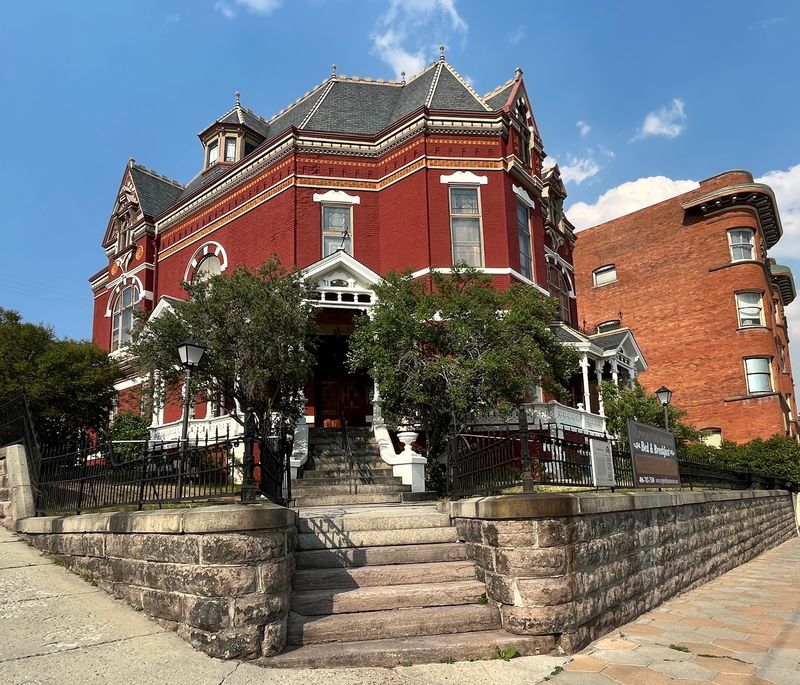
The Copper King Mansion sits at 219 W Granite Street in Butte, Montana 59701, and the moment you see it, you understand why people stop mid-stride on the sidewalk to stare.
Built between 1884 and 1888, this 34-room residence was the personal project of William Andrews Clark, one of three men history would label the Copper Kings of Montana. Clark was determined to build something that announced his success to the entire city, and he succeeded on a scale that still impresses visitors nearly 140 years later.
The construction cost was estimated at around $500,000 at the time, which converts to roughly $16 million in today’s currency. Imported materials alone accounted for between $200,000 and $260,000 of that total.
The mansion stands within walking distance of several other historic Butte landmarks, making it an ideal anchor for a full day of exploring the city’s remarkably preserved Gilded Age streetscape. Few starting points for a historic tour carry this much visual impact.
The Copper King Himself: William Andrews Clark’s Unlikely Rise
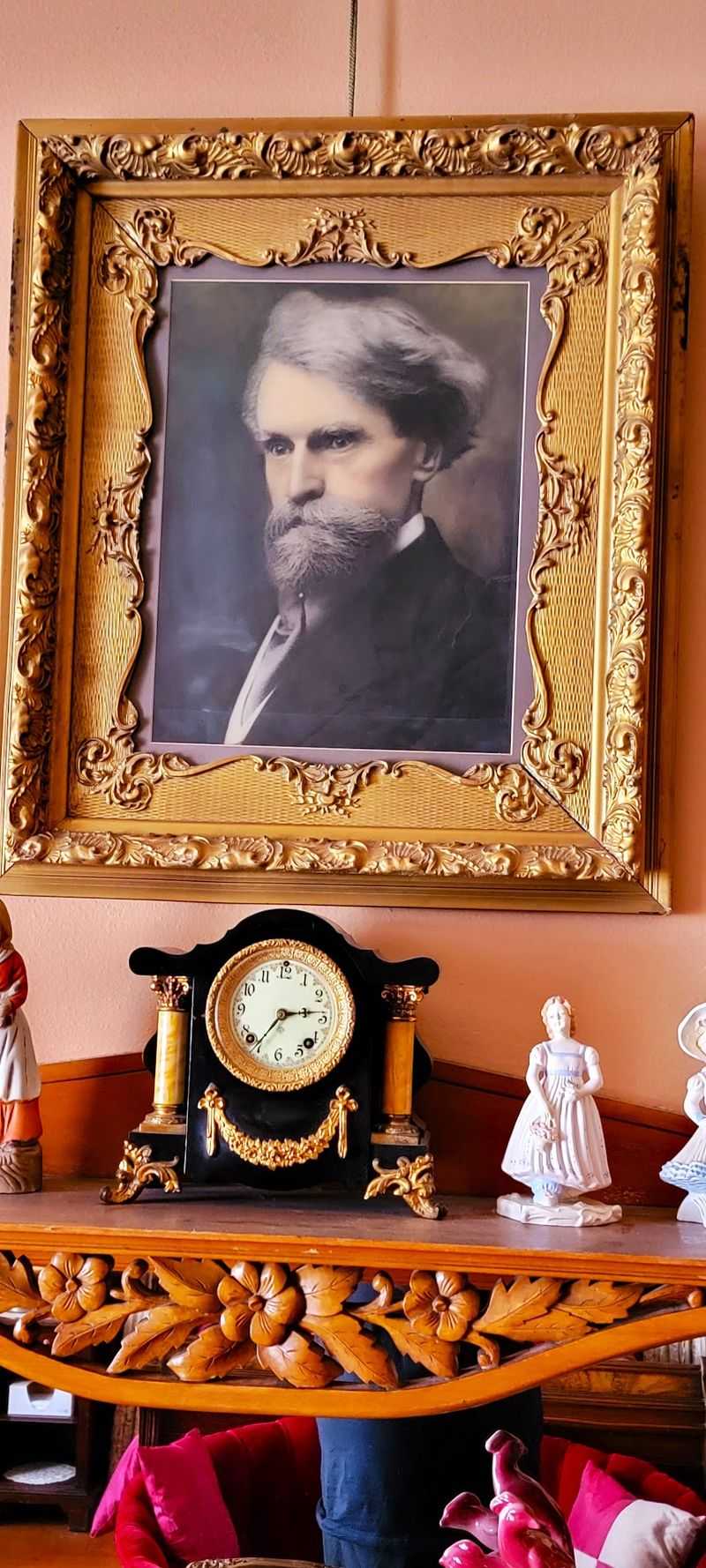
Clark arrived in Montana as a modest teacher and small-time trader with ambition that far outpaced his bank account. He recognized early that the real fortunes in Montana would not come from swinging a pickaxe but from owning the infrastructure around it.
He invested strategically in mining claims, banking, and railroads, steadily building a financial empire that eventually made him one of the wealthiest individuals in the entire country. His rivalry with fellow Copper Kings Marcus Daly and F.
Augustus Heinze became the stuff of Montana legend, full of legal battles, political maneuvering, and newspaper wars.
Clark also served as a U.S. Senator from Montana, though his path to the Senate was famously controversial.
Beyond Montana, his fingerprints appear in unexpected places: a Nevada railroad town he helped develop was originally called Clarks Las Vegas, which gives his legacy a surprisingly modern footnote.
Understanding Clark’s personality makes every room in his mansion feel more charged with intention and personality.
Romanesque Bones with a Victorian Heart: The Architecture
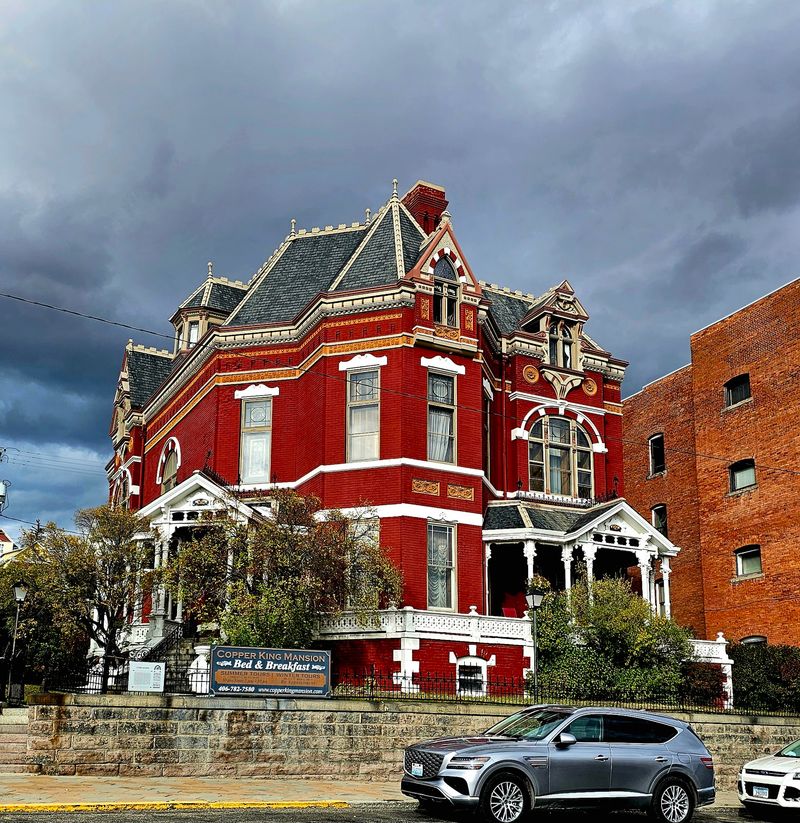
The mansion’s architectural style is a confident blend of Romanesque Revival structure and Victorian decorative sensibility. Thick masonry walls and rounded arches over doors and windows give the building a sense of permanence and authority that feels almost fortress-like from the street.
That solidity is softened immediately by the Victorian touches: asymmetrical massing, expansive windows, and delicate white timber trim that frames every opening with a kind of careful elegance. Architect D.T.
McDevitt and builder W.F. Beall and Co. created something that felt both powerful and refined, which matched Clark’s own self-image perfectly.
The smooth red brick with crisp white accents creates a visual contrast that holds your attention even from across the street. A local newspaper at the time described the illuminated mansion as a “picturesque corner of fairy land” when gas jets and incandescent lights first lit it up together.
That description sounds like hyperbole until you actually stand in front of it at dusk, when the building earns every dramatic word.
639 Panes of Light: The Stained Glass Throughout the Mansion
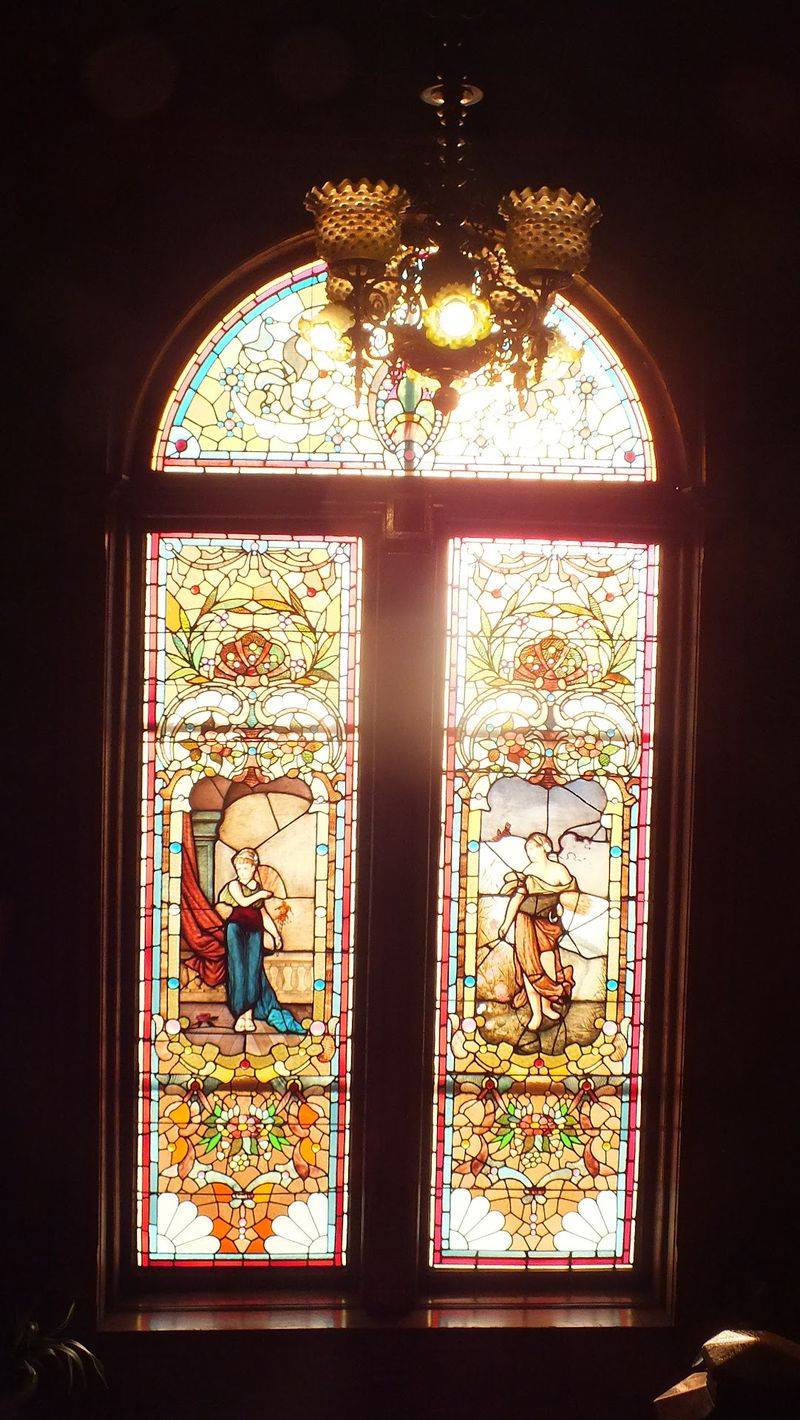
One of the most quietly spectacular features inside the mansion is its collection of stained glass, which totals 639 individual panes spread throughout the building. Most of the glass is French in origin, and several panes contain actual embedded gems, which catches visitors completely off guard the first time they notice it.
The window above the front door carries Clark’s initials, W.A.C., worked into the design in a way that is decorative but unmistakably territorial. It is the Victorian equivalent of putting your name on the building in neon.
The colored light that filters through these windows shifts throughout the day, turning rooms from warm amber in the morning to cooler blues by afternoon. That constant visual change makes the interior feel almost alive, as though the house itself has moods.
Combined with the fresco-painted ceilings and the hand-carved woodwork surrounding each window, the stained glass transforms what might otherwise be ordinary wall space into something closer to a curated art installation from another century.
Wood From Six Countries: The Interior Craftsmanship
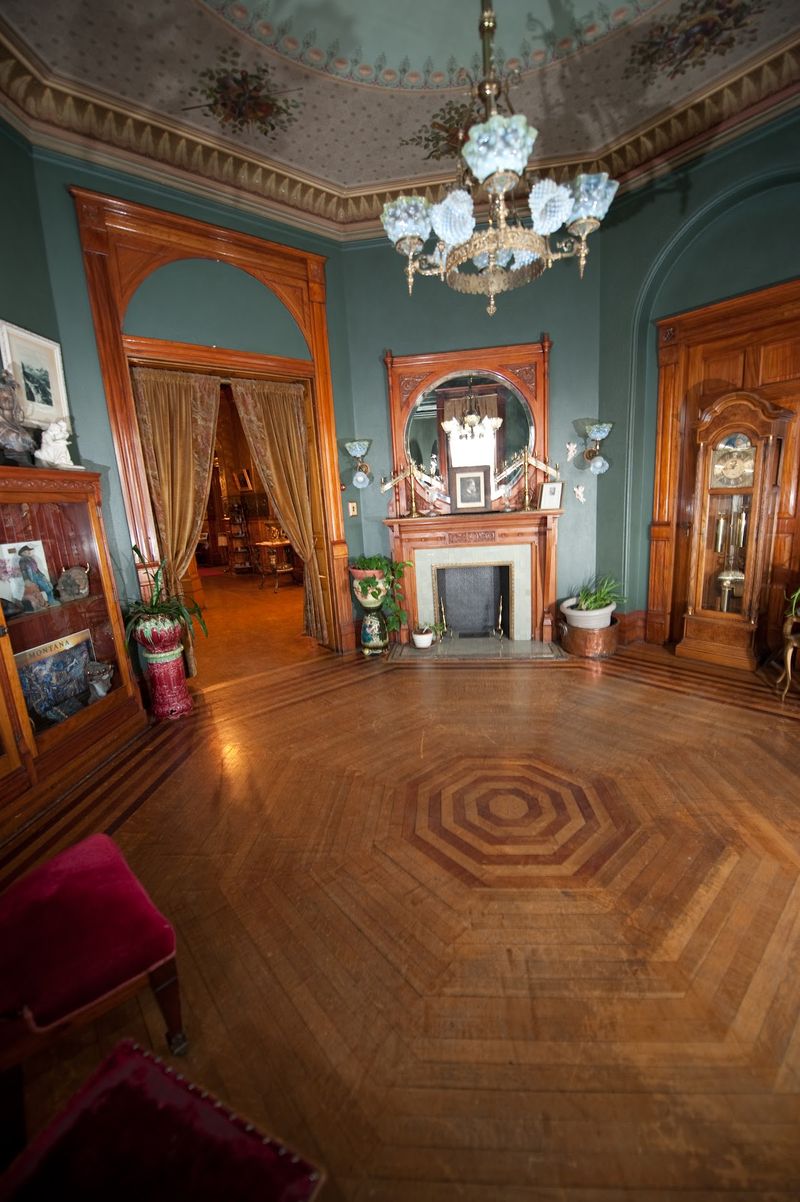
The woodwork inside the Copper King Mansion is the kind of detail that makes you slow down and actually look at walls. Parquet floors are inlaid with mahogany, cherry, ash, white oak, and white maple, each room introducing a slightly different palette of warm tones underfoot.
The hand-carved panels and trim work feature bird’s-eye maple, Cuban mahogany, fine oak, rosewood, and sycamore, with no two panels sharing exactly the same design. Craftsmen worked each surface individually, which means the interior rewards close inspection in a way that mass-produced decoration simply cannot.
Nine hand-carved fireplaces anchor the main rooms, many imported directly from France, each featuring a custom mantelpiece crafted from a different wood species. The variety is deliberate: Clark wanted every room to feel distinct, and the fireplaces are the clearest expression of that philosophy.
Running your hand along one of those carved mantels, you can feel the ridges and curves that some 19th-century craftsman shaped by hand, which is a surprisingly moving experience for a history enthusiast.
The Staircase That Went to a World’s Fair
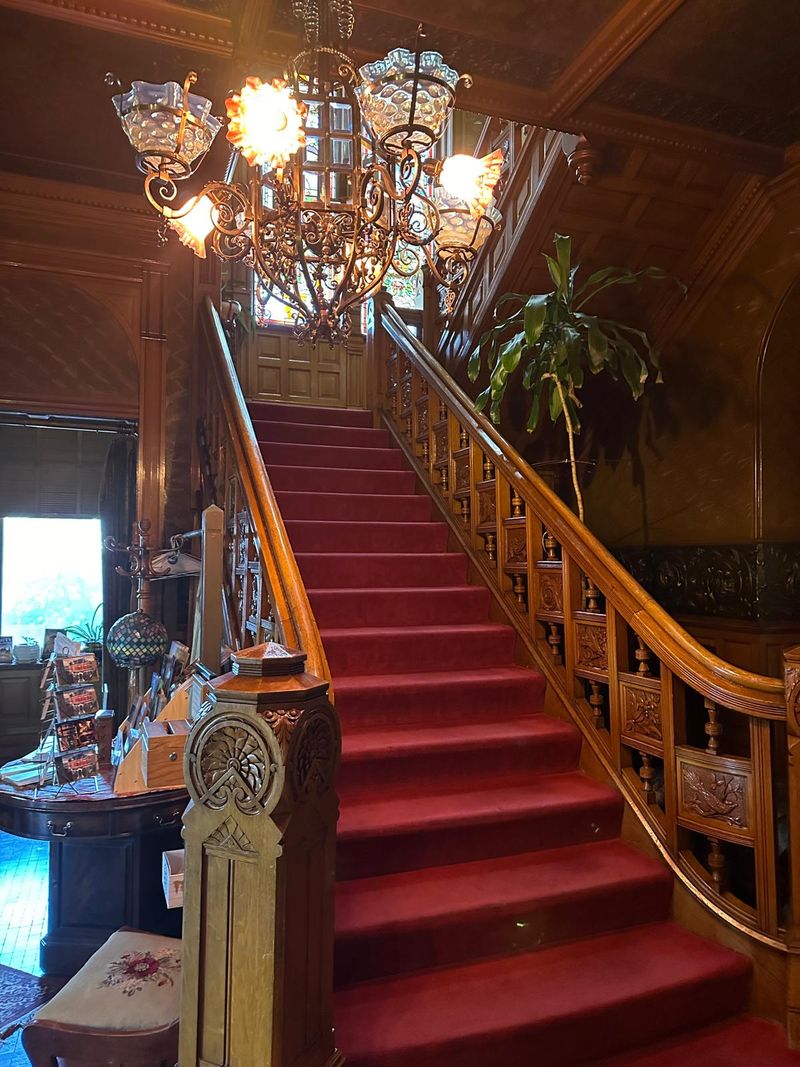
There is one feature in the mansion that stops nearly every visitor cold, and it is the staircase. Known as the Staircase of All Nations, this European wood-carved showpiece is adorned with delicate birds and flowering vines that wind up the banister with extraordinary precision.
The staircase is so exceptional that it was temporarily dismantled and exhibited at the St. Louis World’s Fair, with some sources citing the 1904 exhibition. The logistics of disassembling and transporting a grand staircase to a world exposition and then reinstalling it speak to how seriously Clark took the idea of impressing people on a global scale.
Ascending it today, you feel the weight of the craftsmanship beneath your hand on the banister, each carved detail passing under your fingers as you move between floors. The staircase is not merely decorative; it functions as the spine of the house, connecting all the grand rooms in a way that feels ceremonial.
And if you think the staircase is the mansion’s most surprising feature, wait until you hear about what is on the top floor.
Sleeping Where History Happened: The Bedroom Suites
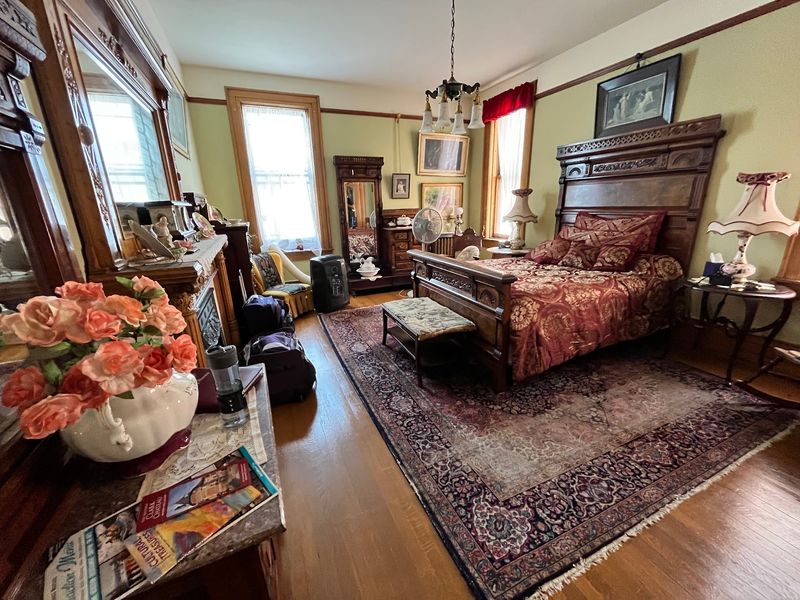
The master bedroom suite is where William Andrews Clark himself slept for decades, and it carries the kind of quiet authority you would expect from a man who rarely did anything on a small scale. Elegant sycamore woodwork lines the walls, a hand-carved fireplace anchors one end of the room, and a grand burled walnut bed with a matching dresser fills the sleeping area with serious visual weight.
Adjoining the bedroom is a sitting room with its own fireplace, and a bathroom featuring stained glass windows alongside an impressive collection of antique combs and beaded purses that feels unexpectedly personal.
Guests who book the master suite today sleep in the same space Clark occupied, which is either thrilling or slightly unnerving depending on your relationship with history. Other rooms carry their own distinct identities: the Family Suite features African mahogany sleigh beds and a cherry wood fireplace, while Huguette’s Room, named for Clark’s youngest daughter, is decorated with a rose motif and Carpathian burled walnut furniture.
The 64-Foot Ballroom and the Pipe Organ on the Top Floor
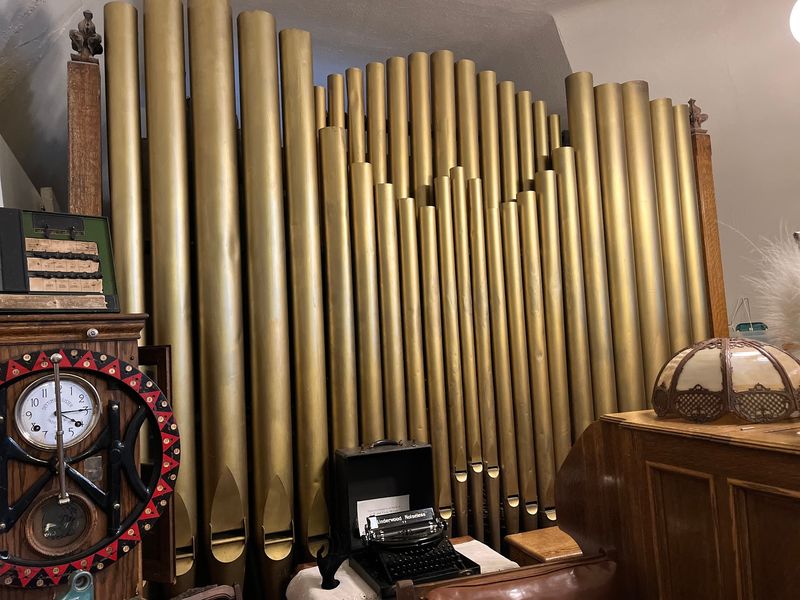
Most historic mansions reserve their grandest surprises for the main floor, but the Copper King Mansion saves one of its best revelations for the very top of the building. A 64-foot ballroom occupies the upper level, its fresco-painted ceiling arching overhead while the room stretches out in a way that feels genuinely surprising given the building’s exterior proportions.
High-society functions and political gatherings once filled this space with Butte’s most influential residents, the kind of events where business decisions and social alliances were quietly negotiated alongside polite conversation. The room carries that energy even now, when it stands empty between events.
Adding to the atmosphere is an impressive pipe organ that now resides in the ballroom, its presence giving the room a slightly theatrical quality that suits the mansion’s overall personality perfectly. The organ and the ballroom together suggest that Clark understood entertainment as seriously as he understood business.
The ballroom is also available as an event venue today, which means the space continues to host celebrations more than a century after it first opened its doors.
Fresco Ceilings Copied From European Masterpieces
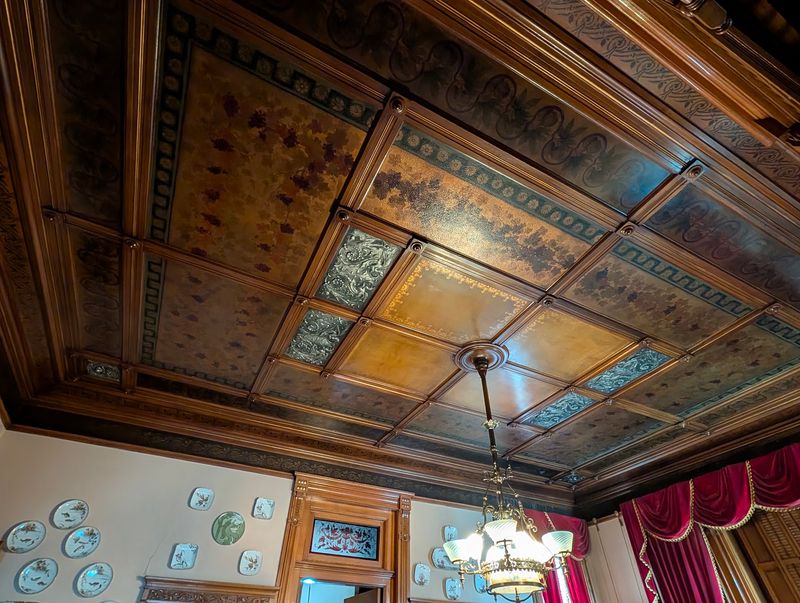
Look up in almost any room of the Copper King Mansion and you will find a ceiling that demands your full attention. Every major room features fresco-painted ceilings, each one a unique composition, and several were copied directly from well-known European masterpieces.
The decision to replicate great European art on the ceilings of a Montana mining town mansion says everything you need to know about Clark’s ambitions and his desire to import the cultural prestige of the Old World into his new one. These were not wallpaper prints or simple decorative patterns; they were labor-intensive painted works executed by skilled artists brought in specifically for the project.
The variety between rooms keeps the experience fresh as you move through the house. One ceiling might feature soft pastoral scenes while another carries bold geometric borders framing a central figurative composition.
The cumulative effect is that the mansion feels less like a single residence and more like a private gallery where the art happens to be directly above your head.
It is a design choice that rewards anyone willing to simply stop and look upward for a moment.
Paranormal Whispers: Montana’s Most Talked-About Haunted Landmark
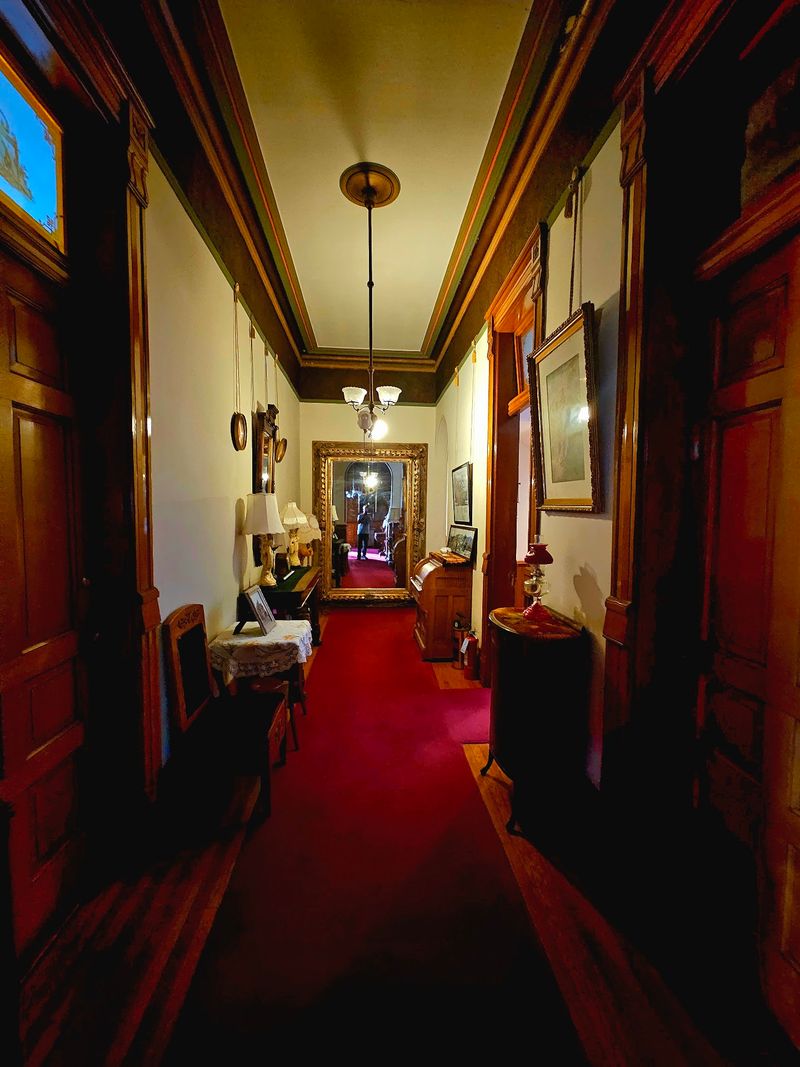
Not everyone who visits the Copper King Mansion leaves with only historical impressions. The mansion has developed a well-documented reputation as one of Montana’s most active locations for paranormal experiences, and the reports are consistent enough to attract dedicated investigators from across the country.
The most frequently described encounter involves a young girl in white, seen drifting through hallways or heard giggling in rooms where no children are present. Guests report the distinct sound of small footsteps pattering across the wooden floors late at night, which is either charming or deeply unsettling depending on your perspective.
Staying overnight gives visitors a chance to experience these reported phenomena firsthand, something that a daytime tour simply cannot offer. Paranormal enthusiasts often request specific rooms known for heightened activity, arriving with cameras and detection equipment ready for a long night.
Even if you remain completely skeptical, the combination of dim lighting, carved shadows, and century-old silence in the upper hallways creates an atmosphere that makes the imagination work harder than usual, which is its own kind of experience.
Planning Your Visit: Tours, Stays, and Practical Tips
Guided tours of the Copper King Mansion run daily from May through September and typically last about an hour, covering the main architectural features, the Clark family history, and Butte’s broader copper boom story. Winter tours are available by appointment with at least seven days of advance notice, which makes off-season visits entirely possible for those willing to plan ahead.
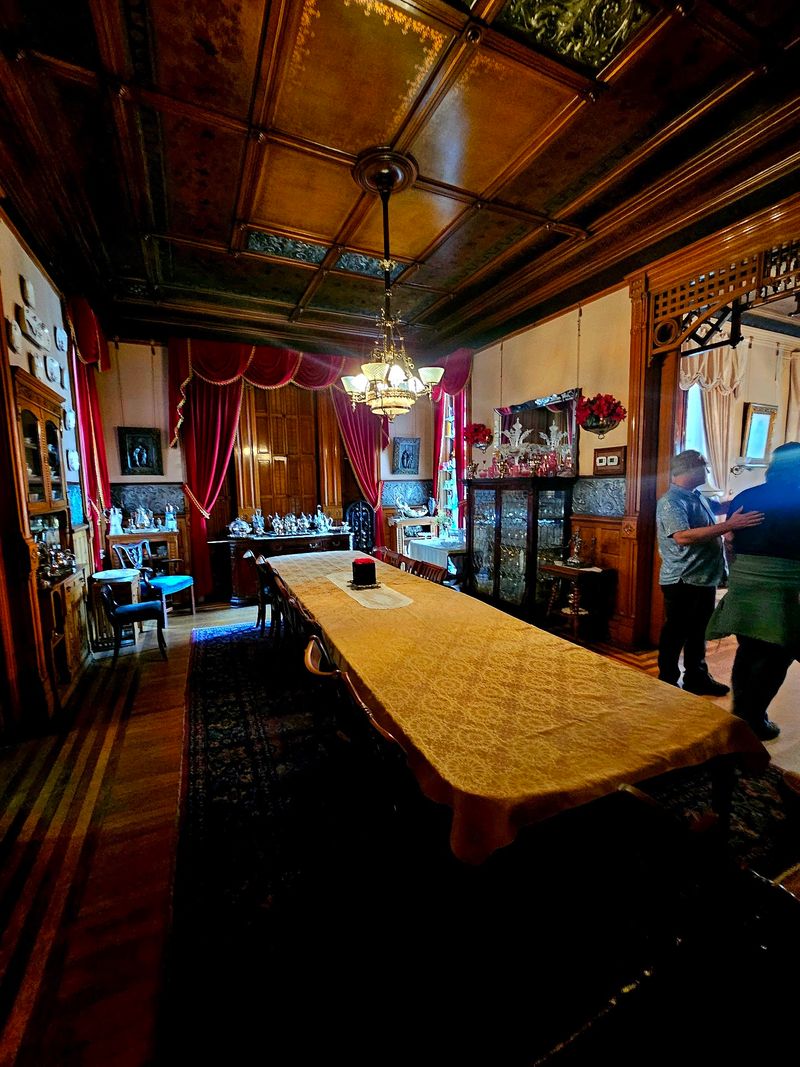
Booking an overnight stay as a bed-and-breakfast guest adds a full layer to the experience. Guests receive a complimentary guided tour, wake up to a homemade breakfast served in the formal dining room, and have the run of the common areas in the quiet hours when day visitors are gone.
The breakfast alone earns consistent praise, with the hosts known for accommodating dietary needs including gluten-free options.
The mansion is pet-friendly, kid-friendly, and offers free parking, which removes a surprising number of logistical headaches for traveling families. The phone number for reservations and inquiries is 406-782-7580, and the official website is copperkingmansion.com.
Whether you come for a one-hour tour or a two-night stay, the mansion delivers far more than a typical historic house visit.
Share this story