Europe is full of castles, museums, and scenic coastlines, but some of its most remarkable places look like they belong in a fantasy novel rather than on a real map. From underground amusement parks to monasteries balanced on rocky pillars, the continent holds a surprising number of spots that genuinely make you stop and ask whether what you are seeing is actually real.
These are not exaggerated travel myths or digitally altered photos. Every place on this list exists, is open to visitors, and is exactly as strange as it sounds.
If you have been searching for travel ideas that go beyond the usual highlights, this list is worth saving.
Salina Turda, Turda, Romania
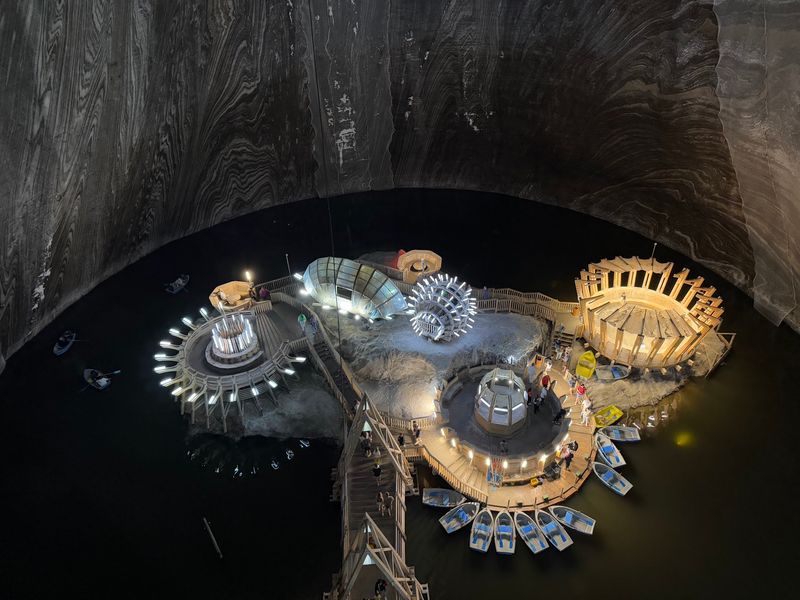
Hundreds of feet underground in Turda, Romania, there is a Ferris wheel. That sentence sounds made up, but Salina Turda is entirely real, and the Ferris wheel is just one of the stranger things waiting inside.
Salt extraction here dates back centuries, with organized mining operations running through various historical periods before the site eventually closed to commercial use. When it reopened as a visitor attraction, the Rudolf Mine chamber was transformed into a recreation area unlike anything most people have encountered before.
Visitors descend into enormous carved chambers illuminated by rows of colored lights. Platforms and structures fill spaces once shaped by generations of miners.
One chamber holds an underground lake where small boats operate, and the surrounding walls of pale salt stretch upward into the dimness above.
Salina Turda currently operates daily from 9 a.m. to 5 p.m., with final admission shortly before closing. Booking tickets in advance is strongly recommended, especially during peak travel months.
Giant’s Causeway, County Antrim, Northern Ireland
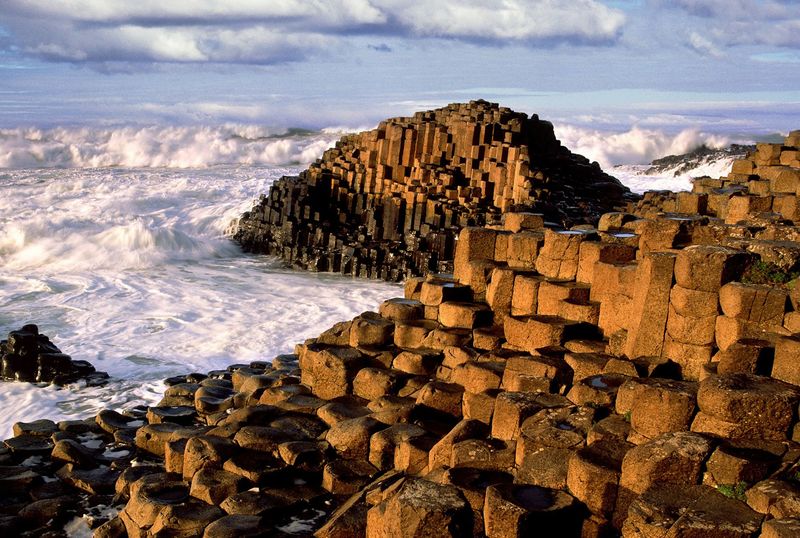
Standing at the edge of Giant’s Causeway, it is genuinely difficult to convince yourself that nature made this without any human assistance. Roughly 40,000 interlocking basalt columns line the coastline, many forming near-perfect polygonal shapes that look more like carefully laid paving stones than volcanic rock.
The scientific explanation involves ancient volcanic activity and the way lava cools and contracts. Irish mythology offered something more entertaining, crediting the giant Finn McCool with constructing the causeway as a path across the sea.
Visitors can walk directly down to the columns and explore the surrounding stretch of Northern Ireland’s dramatic coast. The National Trust operates the site and visitor facilities, and access to the coastline follows seasonal daylight hours.
The visitor center provides helpful context about both the geology and the folklore before you head down toward the water.
Reaching the columns requires a short walk from the facilities, so comfortable footwear is worth planning for in advance.
Cuevas del Sol and Cuevas de la Sombra, Setenil de las Bodegas, Spain
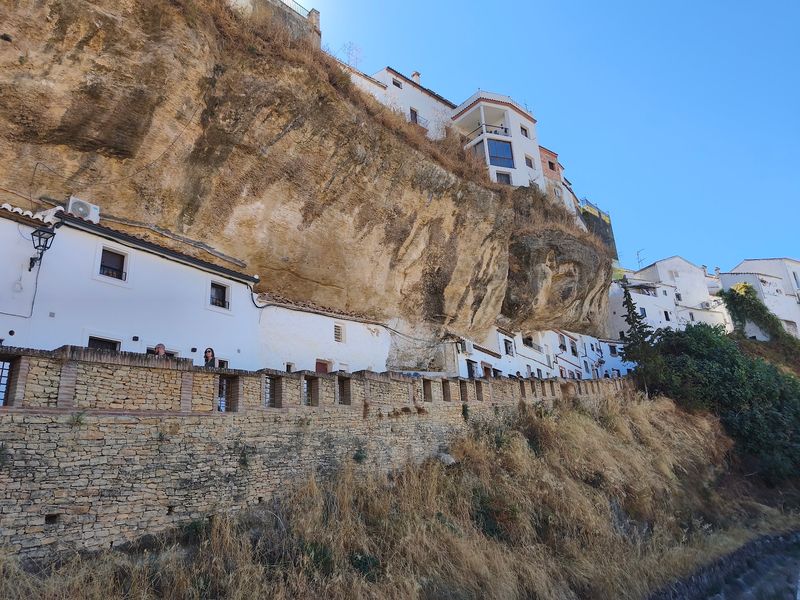
Most towns are built beside cliffs or beneath hills. In Setenil de las Bodegas, parts of the town are built directly underneath the rock itself, with the cliff face serving as both ceiling and wall for entire streets.
Along Cuevas del Sol and Cuevas de la Sombra, whitewashed homes, shops, and restaurants sit under enormous natural rock overhangs that extend so far overhead that the street below can feel more like a cave corridor than a public road. These are not abandoned structures or museum exhibits.
Businesses operate here, and residents go about daily life under hundreds of tons of stone.
The town sits in a river gorge in Andalusia, and the cave streets developed naturally within the rock cavities formed by erosion over time. The contrast between the ordinary village activity and the extraordinary setting above is what makes Setenil so genuinely disorienting to visit.
The streets are open year-round and free to walk through.
El Torcal de Antequera, Malaga, Spain
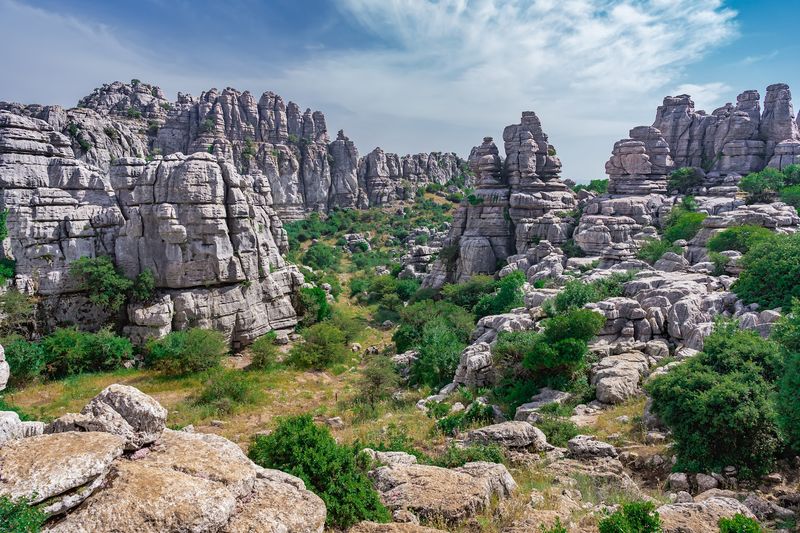
El Torcal looks like a mountaintop that forgot to follow the usual rules of geology. Millions of years of erosion shaped the limestone into towers, balanced slabs, narrow corridors, and stacked formations that can resemble faces, animals, or enormous piles of stone discs depending on where you are standing.
What makes this place especially accessible is that visitors are not restricted to a single distant viewpoint. Marked walking trails wind directly through the formations, bringing hikers into the middle of the landscape rather than keeping them at the edges of it.
Some routes are short and manageable for most fitness levels, while others cover more ground for those wanting a longer experience.
The natural area remains open throughout the day, and the visitor center operates daily with seasonal hours extending into the evening during warmer months. El Torcal sits near Antequera in Malaga province, making it a reasonable stop when traveling through Andalusia.
Entrance to the trails is free of charge.
Postojna Cave, Postojna, Slovenia
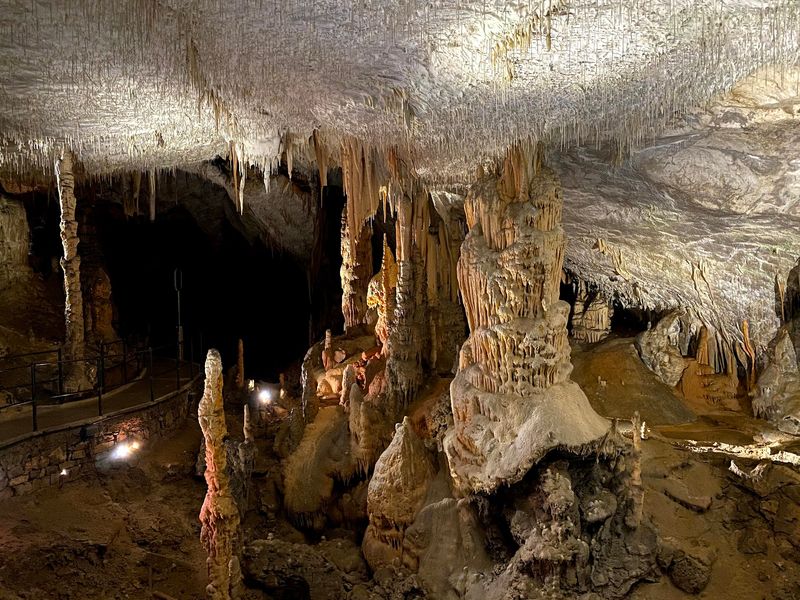
Most cave tours start with a guide and a walk. Postojna starts with a train ride underground, which sets the tone for everything that follows.
The cave system in Slovenia stretches for roughly 24 kilometers, making it one of the largest in Europe. Visitors board a narrow-gauge train that carries them deep into the mountain before the walking portion of the tour begins.
What follows is a series of enormous chambers, twisting passages, and formations that have been building for millions of years.
Postojna is also well known for the olm, a pale cave-dwelling amphibian that lives in underground water systems. Sometimes nicknamed the baby dragon, the olm is one of the few vertebrates adapted entirely to cave life and can be observed at the cave’s vivarium.
The attraction operates throughout the year, including holidays. Multiple guided cave departures run each day, with more frequent tours during the busiest summer months.
Advance booking is recommended during peak season.
Eisriesenwelt, Werfen, Austria
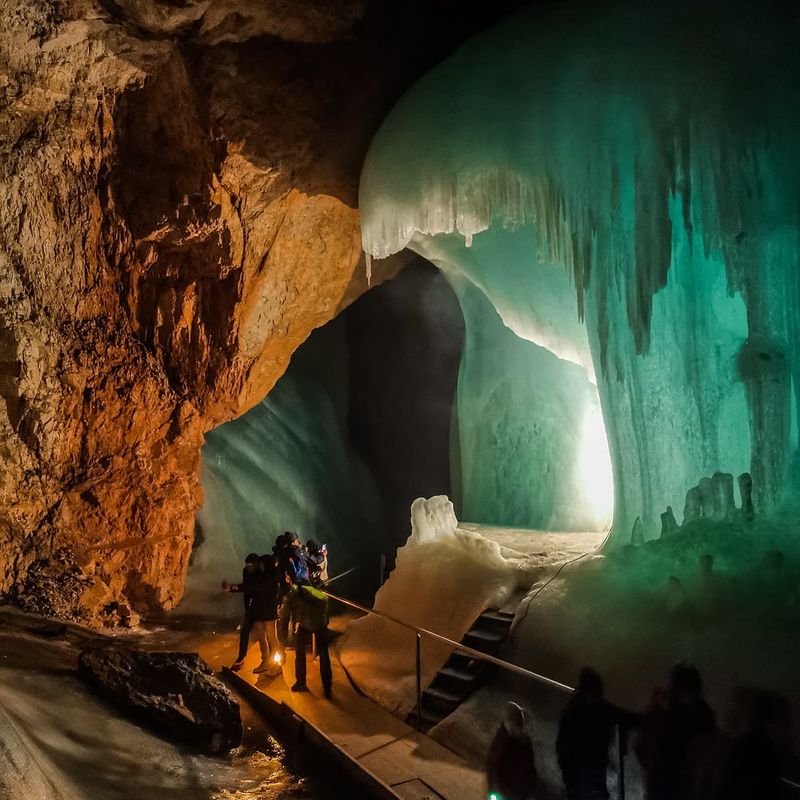
Inside an Austrian mountain above the town of Werfen, there is a cave system where ice formations the size of small buildings have been growing for centuries. Eisriesenwelt translates to World of the Ice Giants, and the name earns its weight once you are standing inside.
Cold air trapped within the mountain allows ice to build up in the cave’s entrance zone, creating frozen pillars, walls, and formations that survive even through summer. The contrast between the black rock of the cave walls and the pale, sculpted ice creates scenes that can look almost staged.
Reaching the cave requires a combination of travel methods, including mountain walking and cable car access, followed by a guided tour inside. The attraction is seasonal rather than year-round, operating from May 1 through November 1.
Guided tours with lanterns run throughout the day during the open season.
Because the journey involves elevation and some physical effort, comfortable footwear and layered clothing are both worth planning for.
Meteora Monasteries, Thessaly, Greece
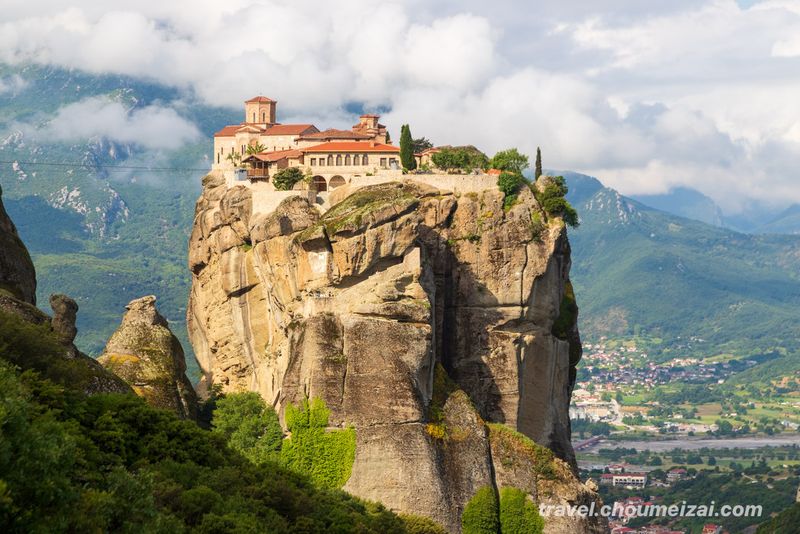
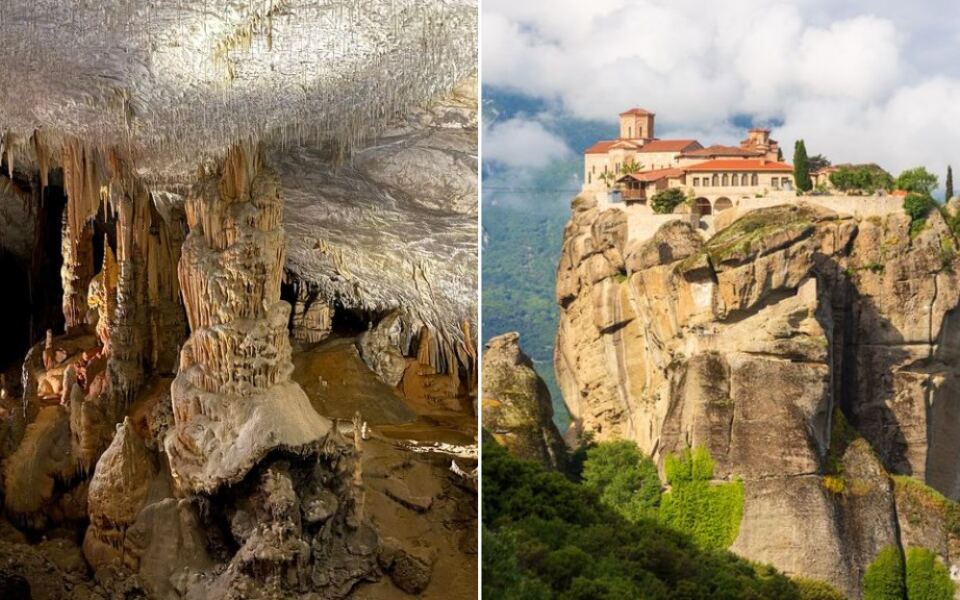
Photographs of Meteora tend to get dismissed as edited because the scene looks too dramatic to be real. The monasteries actually do sit on top of enormous sandstone pillars rising hundreds of feet from the valley floor around Kalabaka, and from certain angles below, the buildings appear suspended in midair.
The first hermits arrived in the area centuries ago, seeking isolation on the high rocks. Organized monastic communities eventually developed on the summits, constructing buildings in locations that required ropes and baskets to supply for generations.
Today, several of the monasteries remain functioning religious communities open to respectful visitors.
Not every monastery is open every day, and each maintains its own schedule with different weekly closing days and seasonal variations. Current 2026 schedules confirm regular public visiting hours throughout the year.
Modest dress is required at all sites, with shoulders and knees covered for entry.
The town of Kalabaka at the base of the rocks offers convenient accommodation options for those planning an overnight visit.
Adršpach-Teplice Rocks, Czech Republic
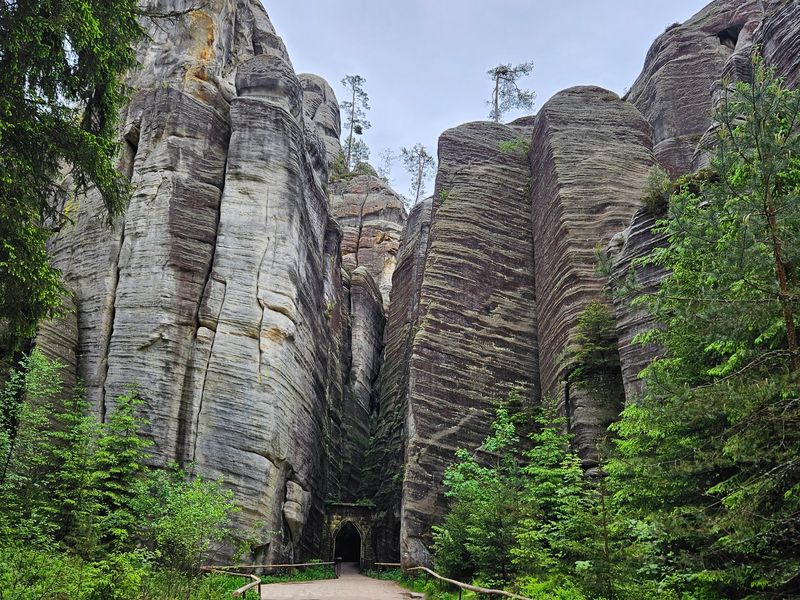
Walking into the Adršpach-Teplice Rocks feels a bit like stepping inside a canyon that decided to grow upward instead of outward. Sandstone towers rise tens of meters into the air along narrow paths that thread between the formations, and some corridors become so tight that the surrounding walls seem to close in on both sides.
The landscape is part of a protected nature reserve in northeastern Czechia, near the border with Poland. Naturally shaped formations have been given names based on the figures and objects people believe they resemble, adding a layer of curiosity to the walk.
The area also includes gorges, waterfalls, viewing platforms, and even a short boat route along an underground stream.
Both the Adršpach and Teplice sections can be explored along marked trails, and the area draws visitors from across Europe. Reservations are advised in advance due to the site’s popularity, particularly during summer months.
Czechia’s official tourism resources continue to highlight the area as a top natural attraction.
Fanal Forest, Madeira, Portugal
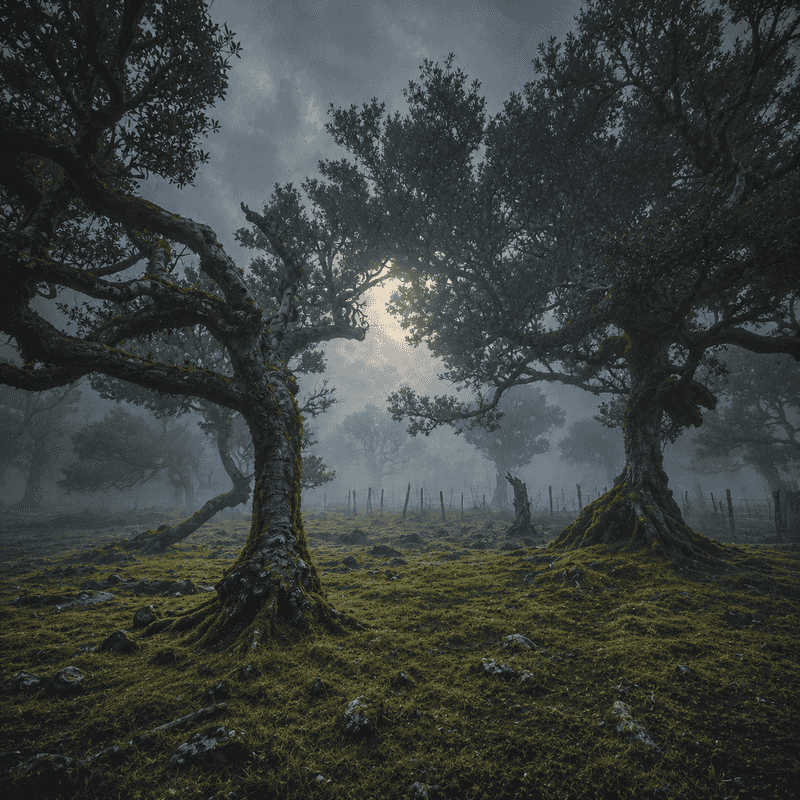
On a clear morning, Fanal Forest is striking. When the fog rolls in off the Atlantic, it becomes something else entirely.
Ancient laurel trees twist into unusual shapes across the open plateau, and the mist that frequently surrounds them can reduce visibility enough that trees just a short distance away disappear into white haze.
The forest forms part of Madeira’s protected Laurissilva, a UNESCO World Heritage laurel forest that covers large sections of the island’s interior. Fanal contains old specimens of Ocotea foetens, a species of laurel tree, some of which predate the European settlement of Madeira by centuries.
The age of the trees contributes significantly to their gnarled, sculptural appearance.
The area is accessible for nature visits, and official Madeira tourism information highlights two hiking routes passing through or near Fanal: PR13 Vereda do Fanal and PR14 Levada dos Cedros. Morning visits often produce the most dramatic fog conditions.
No admission fee applies to access the forest area itself.
Bastei Bridge, Saxon Switzerland, Germany
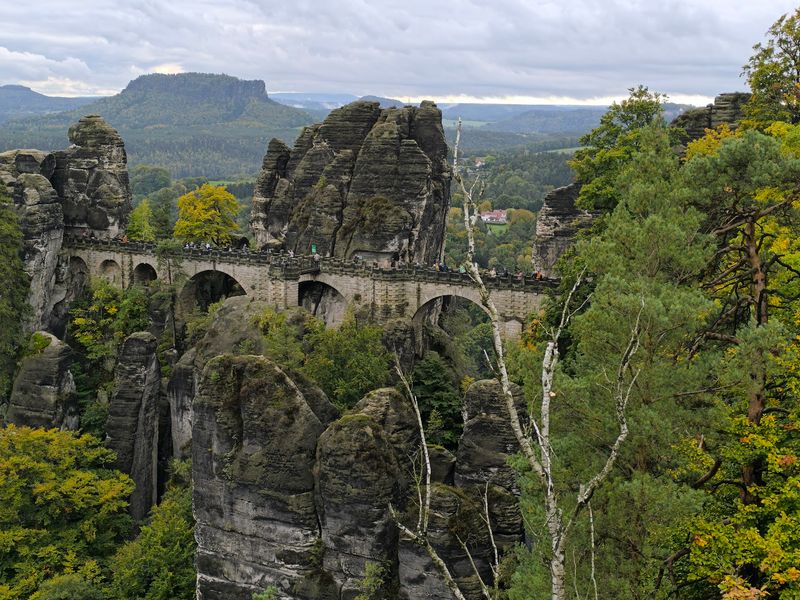
Saxon Switzerland sits about an hour southeast of Dresden, and the Bastei area is the reason most visitors make the journey. A historic stone bridge connects a cluster of jagged sandstone pinnacles that rise sharply above the Elbe River, and from certain viewpoints, sections of the bridge appear to float between enormous vertical towers of rock.
The current stone bridge dates to 1851, but the site has drawn visitors since the early 19th century when Romantic-era painters and writers helped establish its reputation. Remnants of the medieval Neurathen rock castle are incorporated into the same rocky outcrop, adding historical layers to an already dramatic setting.
Storm damage temporarily affected access in parts of Saxon Switzerland during 2026, but regional tourism authorities confirmed in August that the route from Rathen toward the Bastei had reopened. The surrounding region continues to operate as an active hiking and tourism destination with multiple marked trail options.
The viewing area at the Bastei itself is free to access.
Bardenas Reales, Navarra, Spain
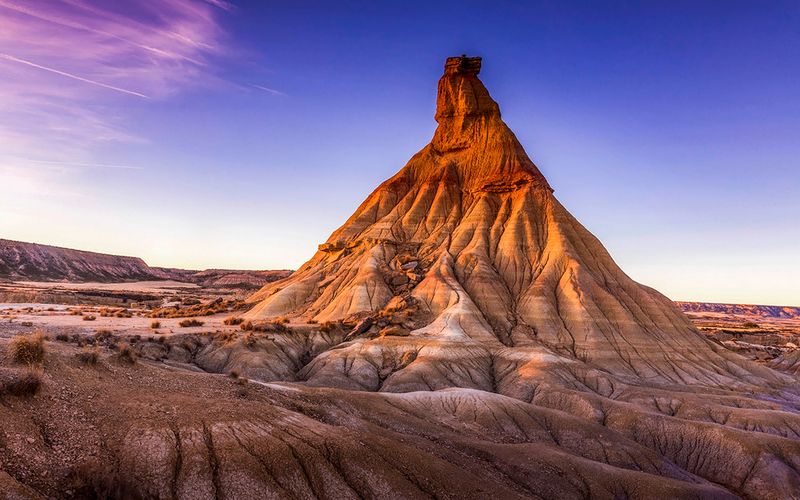
Northern Spain is not where most travelers expect to find a semi-desert. Bardenas Reales spreads across a striking badlands landscape in Navarra where clay, sandstone, and gypsum have been shaped by centuries of wind and water erosion into gullies, plateaus, and isolated formations that look more like the American Southwest than central Europe.
The Castildetierra formation is the most photographed feature in the park. It resembles a tall stone chimney or mushroom shape balanced above the barren terrain, and the silhouette is immediately recognizable from travel images of the region.
Driving or cycling through the park reveals additional formations spread across a vast and largely empty landscape.
Bardenas Reales holds UNESCO Biosphere Reserve status and remains open to visitors generally from 8 a.m. until one hour before sunset. Certain routes can face temporary restrictions due to wildlife protection, nearby military activity, or weather conditions, so checking current notices before arriving is worth the few minutes it takes.
Dimmuborgir, Lake Mývatn, Iceland
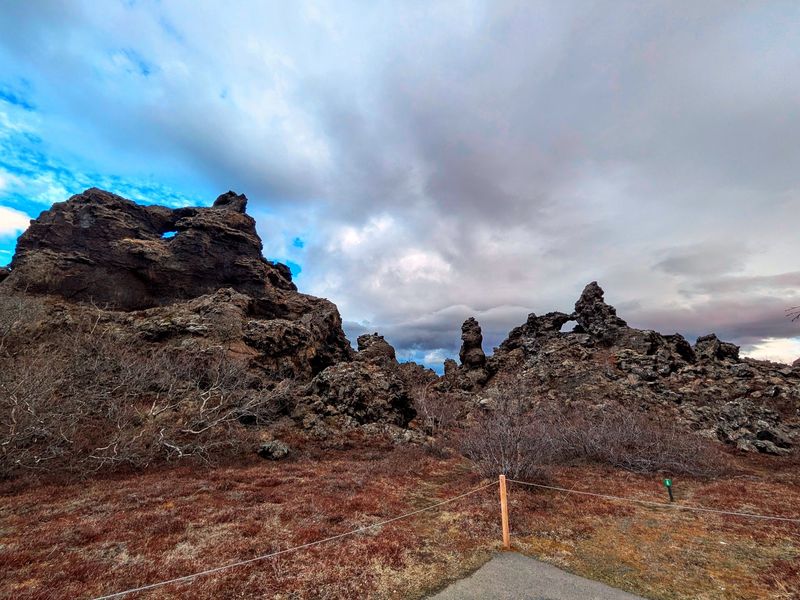
The name Dimmuborgir translates roughly to Dark Castles, and the landscape earns that label without much effort. This Icelandic lava field near Lake Mývatn contains arches, pillars, caves, and towering black formations created thousands of years ago when lava flowed across the area and cooled in unusual ways around pockets of steam and gas.
One of the most recognizable formations, called Kirkjan, resembles a vaulted natural chapel with an arched ceiling of hardened lava. The landscape overall is dense with shapes that seem too deliberate to be entirely natural, which is likely why Icelandic folklore long associated the area with supernatural beings and the mischievous Yule Lads of local tradition.
Marked walking trails lead visitors through the formations, with routes varying in length and difficulty. Iceland’s Environment Agency confirms paved road access to the site, and regional tourism authorities describe Dimmuborgir as a year-round destination.
Winter visits are possible but trail conditions can be limited by snow and ice, so checking local conditions before going is practical advice.
Pena Palace, Sintra, Portugal
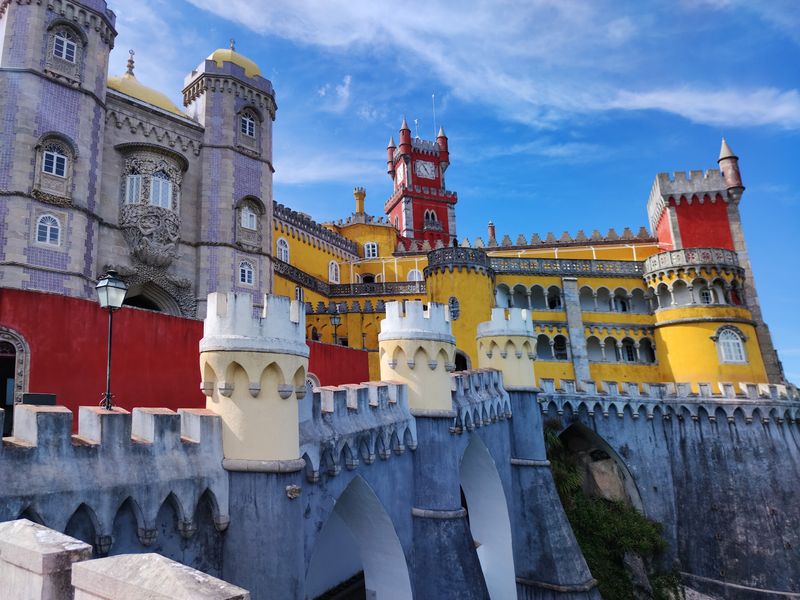
Pena Palace looks like the result of a very ambitious architectural committee that could not agree on a single style and decided to use all of them at once. Brightly colored walls in yellow and red, decorative towers, patterned tiles, battlements, domes, and influences from several European traditions come together on a wooded hilltop above Sintra.
The palace developed largely during the 19th century under King Ferdinand II, who transformed an older monastery ruin into one of the most elaborate examples of Romantic architecture in Portugal. The vivid color scheme and eclectic design make photographs of the palace look almost illustrated, which is part of why it draws so many visitors each year.
Pena Palace is currently open to visitors with daily hours for both the palace interior and the surrounding park. Timed admission applies to palace entry, while the park can be explored more freely.
Sintra sits about 30 minutes by train from Lisbon, making it an accessible day trip from the capital.
Share this story