There is a spot in northern Arizona where the highway suddenly hangs high above a green ribbon of water, and rust colored cliffs drop away on both sides. Rafters float far below, so small they look like specks, while giant birds with numbered wings roost on the steel beams underneath.
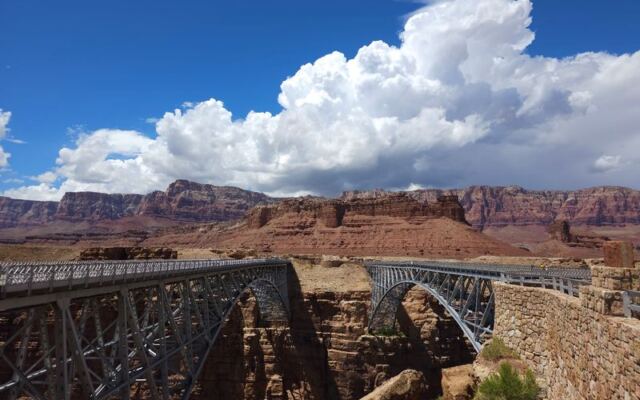
Most drivers zip past without knowing they missed one of the state’s most remarkable road stops, a place where two bridges stand side by side and tell a story nearly a century old. One carries cars, the other carries curious walkers who want to peer straight down into the canyon.
Free to visit and open at any hour, it rewards anyone willing to pull over for a few minutes. Keep reading to learn where this crossing sits, why it matters, and what makes it worth every mile of the drive.
Where the Two Bridges Meet the Canyon
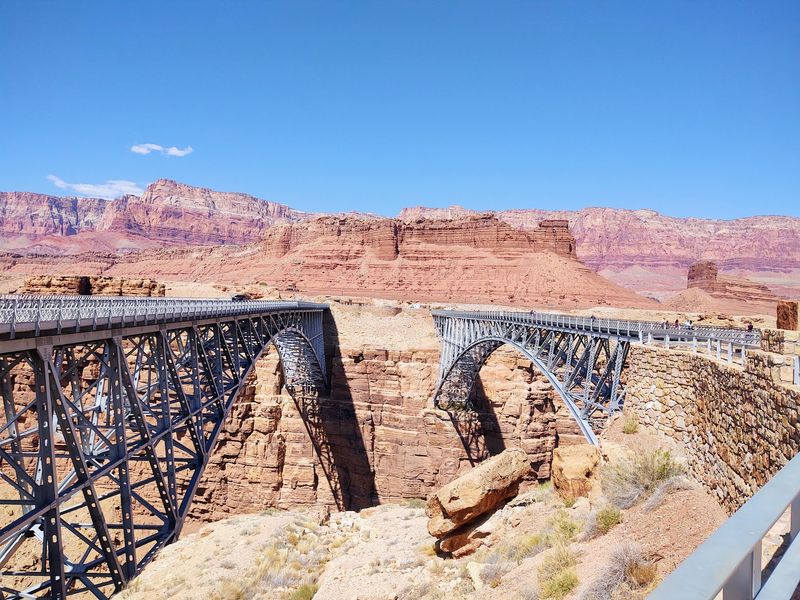
Along US-89A in Marble Canyon, Arizona 86036, the Historic Navajo Bridge stretches across a narrow slice of the Colorado River gorge. The setting sits deep in canyon country, not far from Lee’s Ferry and the edges of Glen Canyon.
What makes this stop unusual is that there are two bridges instead of one. The older steel arch structure now belongs to walkers, while the newer span carries vehicles across the same dramatic drop.
The National Park Service manages the site, and an interpretive center sits close by for anyone wanting the full backstory. Parking is organized and easy to reach right off the highway.
Because it hugs the road so closely, plenty of travelers roll past without realizing what waits below. Those who stop find a view of the river and cliffs that feels genuinely earned.
A Crossing Built Back in 1929
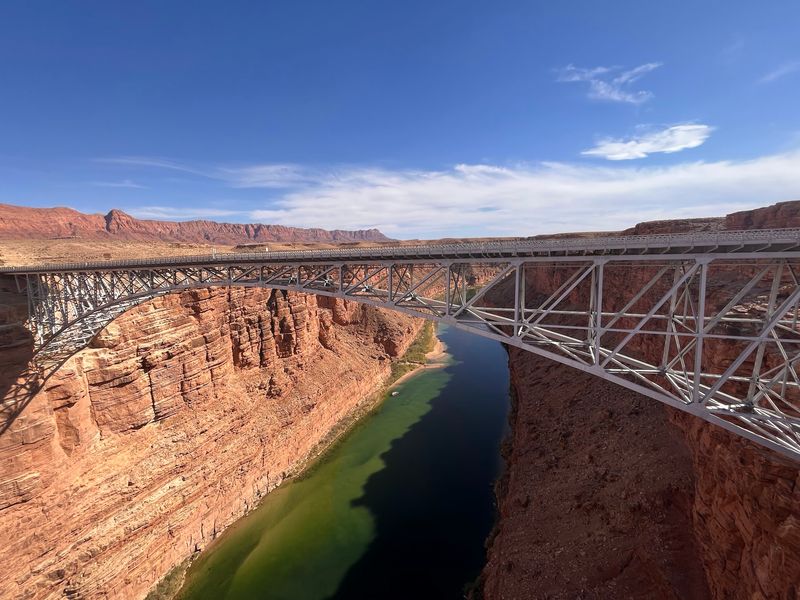
Long before pavement smoothed the journey, crossing this stretch of the Colorado River meant a slow and difficult trip by water. The first bridge changed everything when it opened in 1929.
It became the first automobile crossing over this section of the river for hundreds of miles in either direction. Suddenly the long river crossings that once slowed travelers to a crawl were replaced by a quick drive over solid steel.
That original span still stands, though it no longer handles cars. It was preserved and repurposed for people on foot after a wider modern bridge was built to carry traffic.
Walking the historic deck today connects visitors to a piece of engineering that reshaped travel across the region. Nearly a century later, it remains a proud reminder of how one crossing opened up an entire corner of Arizona.
California Condors on the Steel Trusses
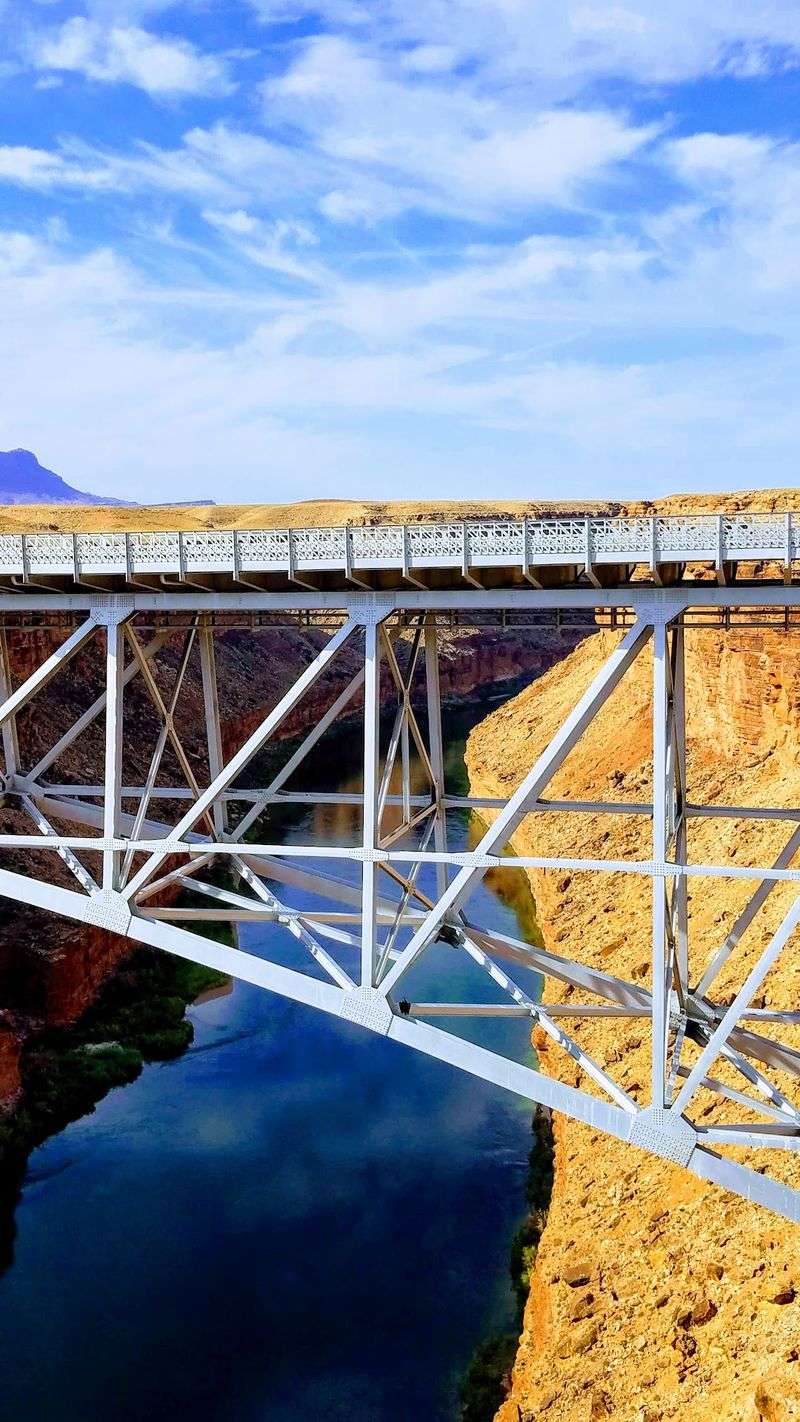
Look toward the beams beneath the bridge and you might catch one of the rarest sights in the American Southwest. California condors regularly roost and nest on the trusses here.
These enormous birds often perch under the crossing, and lucky travelers spot them flying or resting near the steel supports. The best angle tends to come from the side closest to the visitor center.
Sightings are common but never guaranteed. Early morning gives the strongest odds, though people have caught glimpses around midday too.
Each condor carries large numbered tags on its wings, part of the effort to track and protect the species. The markings stand out clearly against their dark feathers.
Guides leading tours through the area mention seeing them on nearly every stop. For anyone hoping to view one of these giant fliers up close, few places make it this easy.
The View Straight Down to the River
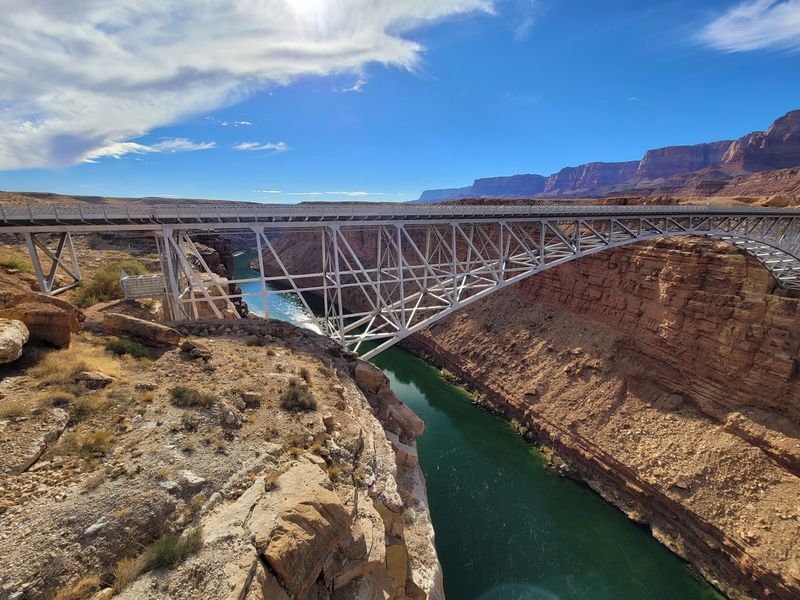
Peering over the railing rewards you with the kind of drop that makes the scale of the canyon click into place. The Colorado River winds far below, a narrow band of green water framed by towering walls.
Rafters frequently drift downstream, appearing tiny from the height of the deck. Catching one of these floats passing beneath adds a bit of movement to the scene.
The surrounding rock rises in layered cliffs that stretch toward Marble Canyon and beyond. Views reaching toward Glen Canyon and Lee’s Ferry give a real sense of how vast this landscape becomes.
Standing at the center of the pedestrian bridge offers the fullest perspective. From there the river, the canyon, and the distant formations all line up at once.
It is the sort of overlook that turns a quick photo stop into a longer pause.
Walking the Pedestrian Span
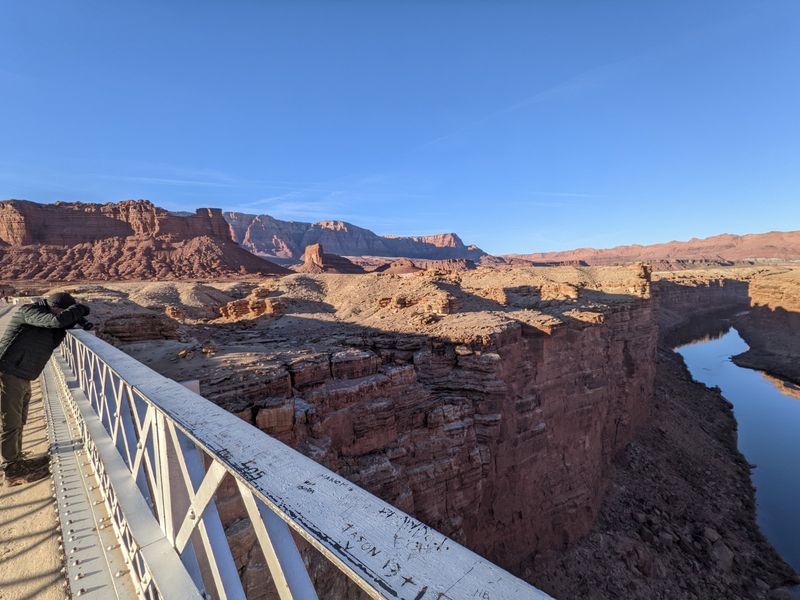
Strolling across the older bridge is completely free, and it may be the highlight of the whole stop. The historic deck now belongs entirely to people on foot.
Walkers can move at their own pace, stopping to look over the edge or read the details posted along the way. The steel arch design underfoot adds character that a plain modern span simply cannot match.
Access could not be easier, since the walkway sits right beside the parking area. A short walk gets you out over the middle, where the canyon opens up on both sides.
Historical plaques along the route explain why the crossing mattered so much when it first opened. Reading them turns the walk into a small lesson as well as a scenic outing.
Quiet and unhurried, the pedestrian bridge invites travelers to slow down for a moment.
Inside the Interpretive Center and Gift Shop
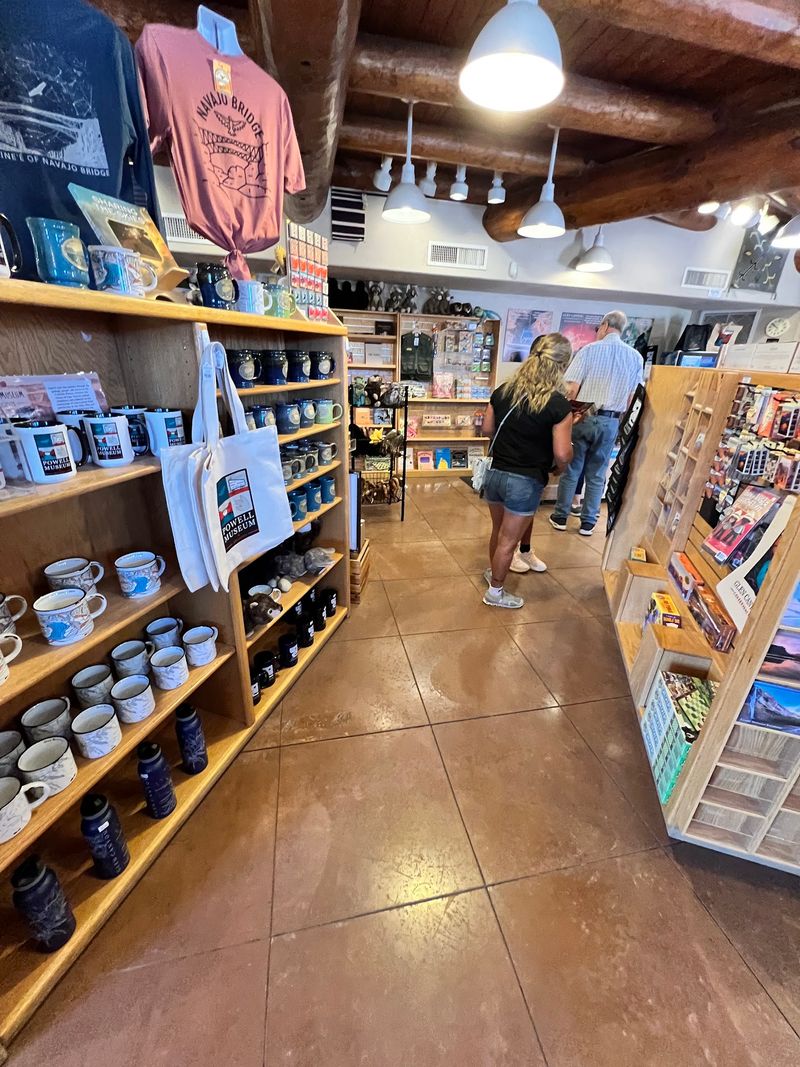
Steps from the bridge sits a small interpretive center that fills in the story behind the crossing. Admission costs nothing, which makes it an easy add-on to any visit.
Inside, displays walk through the history of both bridges and the region around them. The staff here have a reputation for being friendly and genuinely knowledgeable about the area.
The gift shop stocks postcards and other keepsakes, and it also serves as a handy source of information on nearby hikes. Travelers planning their next stop often pop in for advice.
People tend to describe the center as compact but well worth the time. It gives context that makes the view outside feel more meaningful.
For those who like to understand what they are looking at, a few minutes indoors pays off. The mix of learning and shopping makes it a natural pairing with the bridge walk.
Native Handmade Goods in the Stalls
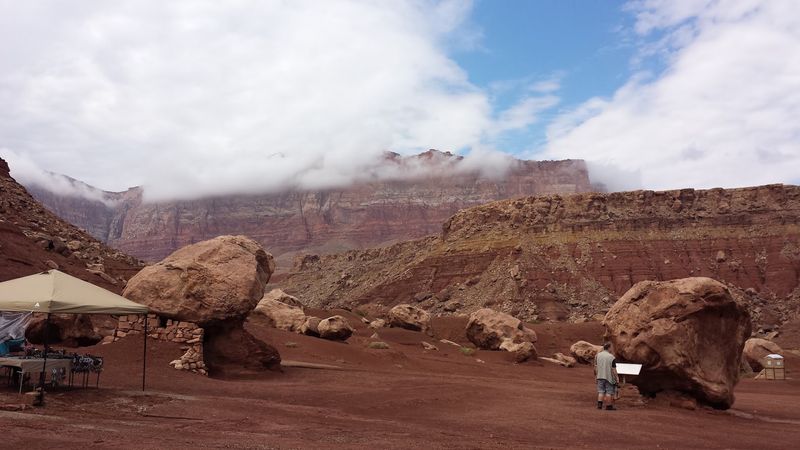
During the warmer months, small stalls appear near the bridge offering handmade Native crafts. Navajo jewelry is a common find among the goods for sale.
The stalls set up adjacent to the main area, giving travelers a chance to browse right after their walk. Items are made by local artisans, adding an authentic touch to the stop.
Shopping here supports the community while giving visitors a memento tied directly to the region. The selection tends to shift depending on the season and who has set up that day.
Anyone in the mood for a bit of retail browsing will find it convenient. The stalls sit only steps from the parking area and the interpretive center.
Pairing a scenic overlook with the chance to pick up handcrafted work makes the visit feel richer. It is a small detail that many travelers appreciate discovering.
A Quiet Place to Pause
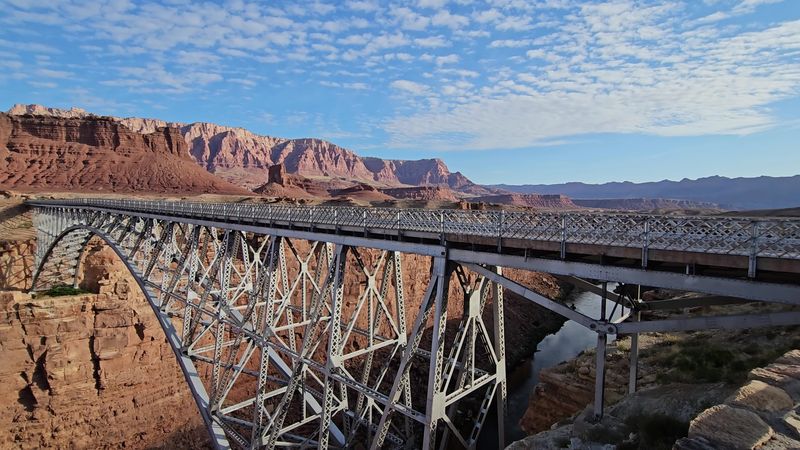
Not every stop needs to be a rush, and this one practically invites you to linger. Picnic tables sit in the shade near the visitor center, offering a spot to rest.
The area carries a calm, peaceful feeling that stands apart from busier tourist crowds. People often describe it as a good place to slow down for a few minutes.
Taking a break at one of the tables lets you soak up the surroundings without any pressure to move on. The shade is a welcome touch on warmer days.
Clean restrooms add to the comfort, though they use composting toilets, so travelers who prefer standard facilities should keep that in mind. Even so, the amenities earn steady praise.
Between the tables, the shade, and the quiet, it becomes an easy place to recharge. A short pause here can reset the whole road trip.
Getting There and What to Know
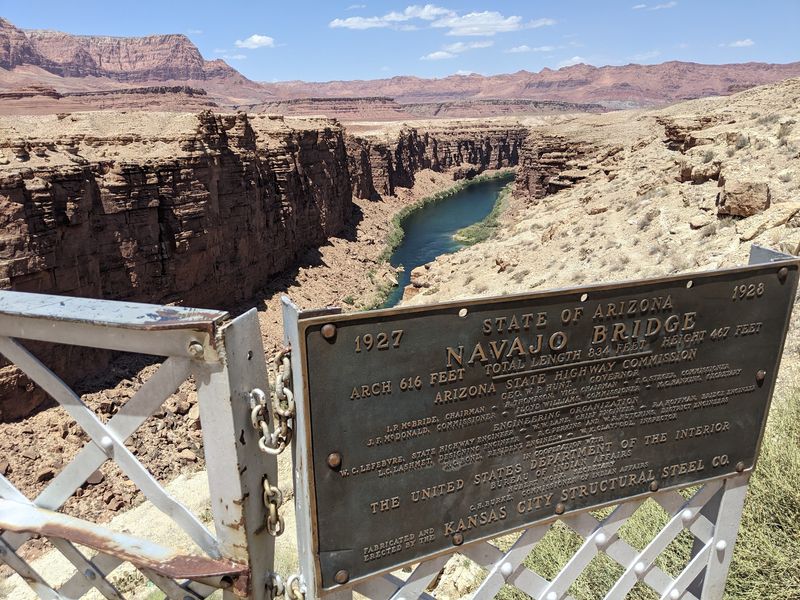
Reaching the bridge is refreshingly simple, since it sits right off US Highway 89A in Marble Canyon. The turnoff and parking are easy to find and well organized.
The site stays open 24 hours every day of the week, and there is no admission charge to visit. That flexibility means you can time your stop around condor sightings or softer light.
Earlier morning tends to bring the best chances of spotting the birds, so arriving before midday can pay off. The location falls under National Park Service management.
Travelers coming from Page can expect roughly an hour of driving to get here. Despite that distance, the crossing remains less crowded than some better known spots nearby.
Windy days do happen out in this open country, so a light jacket can help. Beyond that, little planning is needed to enjoy the stop.
Why This Stop Earns Its Reputation
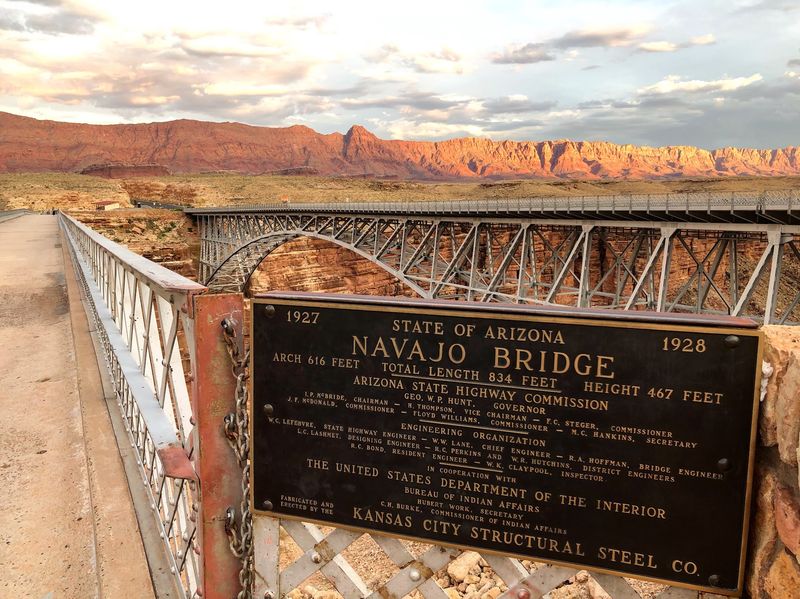
Few roadside stops pack this much into a short visit. A steady 4.8 star rating across thousands of reviews reflects just how well the bridge lands with travelers.
The combination of history, wildlife, and canyon views gives it a wide appeal. Families, road trippers, and curious wanderers all find something to enjoy here.
It works as a quick photo pause or a longer break with a walk and a browse through the shop. That flexibility is part of why so many recommend it.
Being free helps too, as does the easy access straight from the highway. There is little reason to skip it when passing through the area.
Whether the goal is spotting a condor, learning some history, or simply looking down at the river, the crossing delivers. For anyone traveling through northern Arizona, this bridge deserves a firm spot on the itinerary.
Share this story