There is a place in Kansas where the sky stretches so wide it feels like the whole world opens up around you, and the wind carries something that feels almost like a memory. It sits on a quiet stretch of prairie land, far from any big city, and it holds a story that millions of people grew up reading at bedtime.
If you ever wondered what it actually looked like where Laura Ingalls Wilder spent part of her childhood, this is the place that answers that question in the most tangible way possible. The site preserves the very ground where the Ingalls family tried to build a life in the early 1870s, and it does so with enough authenticity to make your imagination run wild.
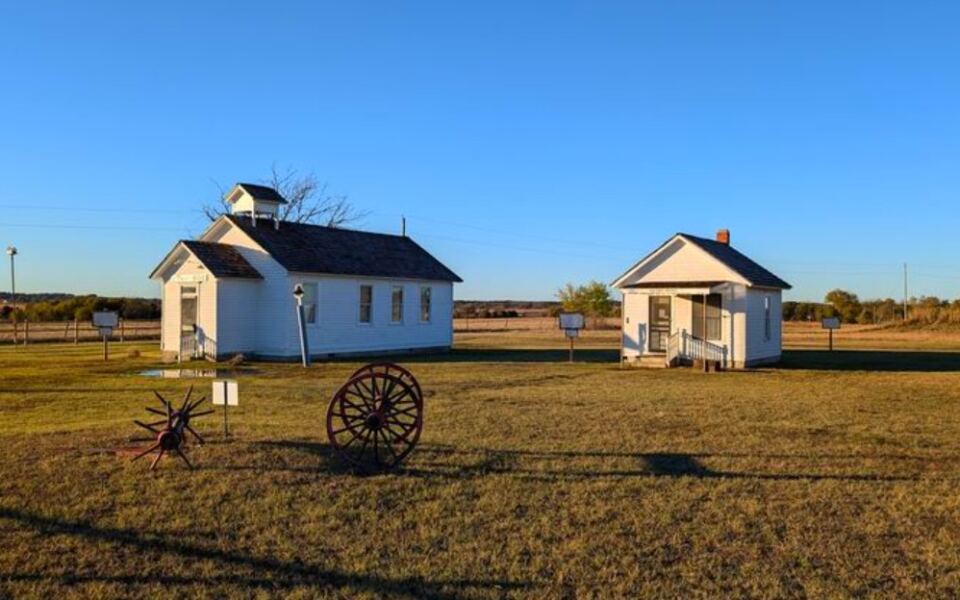
You will find a replica cabin, a one-room schoolhouse, a historic post office, barnyard animals, and a hand-dug well that helped historians confirm the exact location of the homestead. Keep reading to discover what makes this small Kansas museum one of the most surprisingly moving stops on any American road trip.
Where the Story Actually Began: The Address and Setting
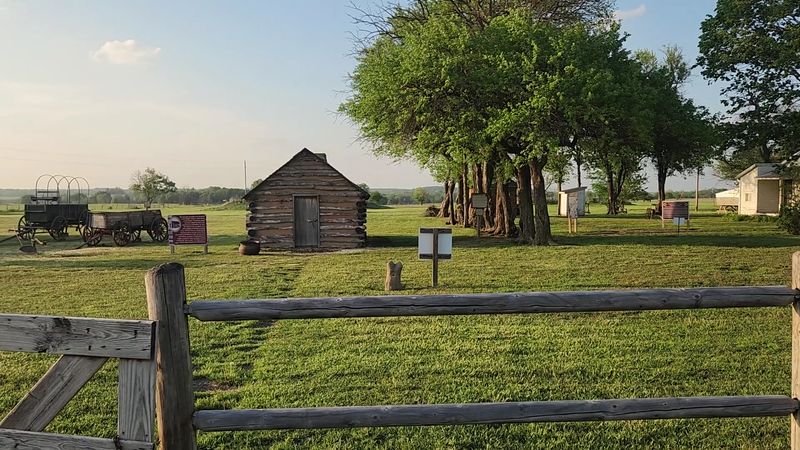
Most people picture a cozy television set when they think of Little House on the Prairie, but the real story started on a specific stretch of Kansas dirt at 2507 CR 3000, Independence, Kansas 67301. The museum sits roughly 10 to 13 miles outside of Independence, which means you will want GPS or clear directions before heading out on the country roads.
The drive itself is part of the experience. Open fields and wide skies greet you long before you arrive, and by the time the wooden structures come into view, you already feel miles away from modern life.
Established in 1977, the site is rated 4.6 stars by nearly 920 visitors on Google, which says a lot for a place that charges just five dollars per adult and three dollars per child. The museum is open daily from 10 AM to 5 PM during its seasonal window, which typically runs from April 1st through October 31st each year.
The Replica Log Cabin That Puts the Books in Your Hands
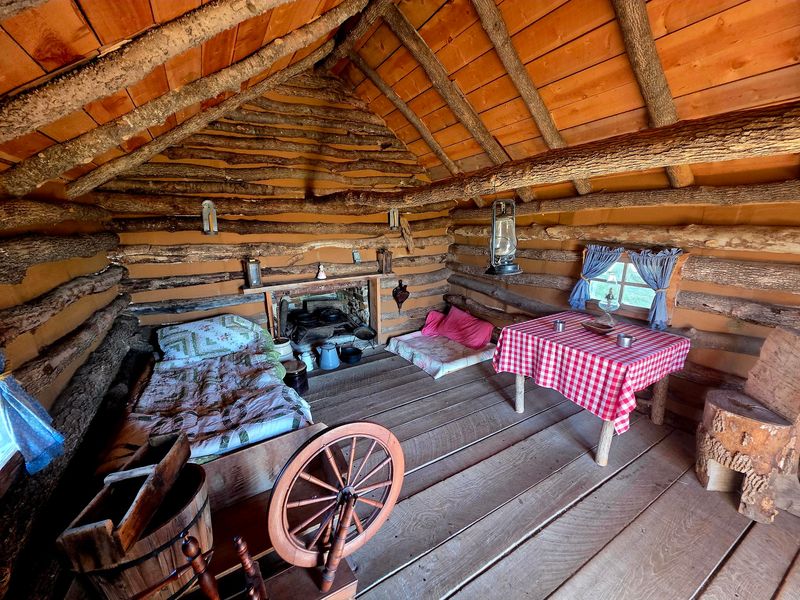
Nothing prepares you for how small the cabin actually is. The replica one-room log cabin at the heart of the museum was built to reflect the modest dwelling the Ingalls family occupied from 1869 to 1871, and its footprint is less than 500 square feet.
Ducking through the low doorway, you immediately understand that pioneer life required a very different relationship with space. The interior holds a simple fireplace, a sturdy wooden table, and beds that likely served multiple functions throughout the day, all arranged in a way that makes the room feel both intimate and surprisingly livable.
A particularly striking detail is that Carrie Ingalls was born in this cabin in August 1870, which transforms the structure from a historical curiosity into a place where real, vivid life unfolded. The cabin is not a glamorized version of what you might remember from television; it is quiet, honest, and genuinely moving in its plainness.
The Hand-Dug Well That Cracked a Historical Mystery
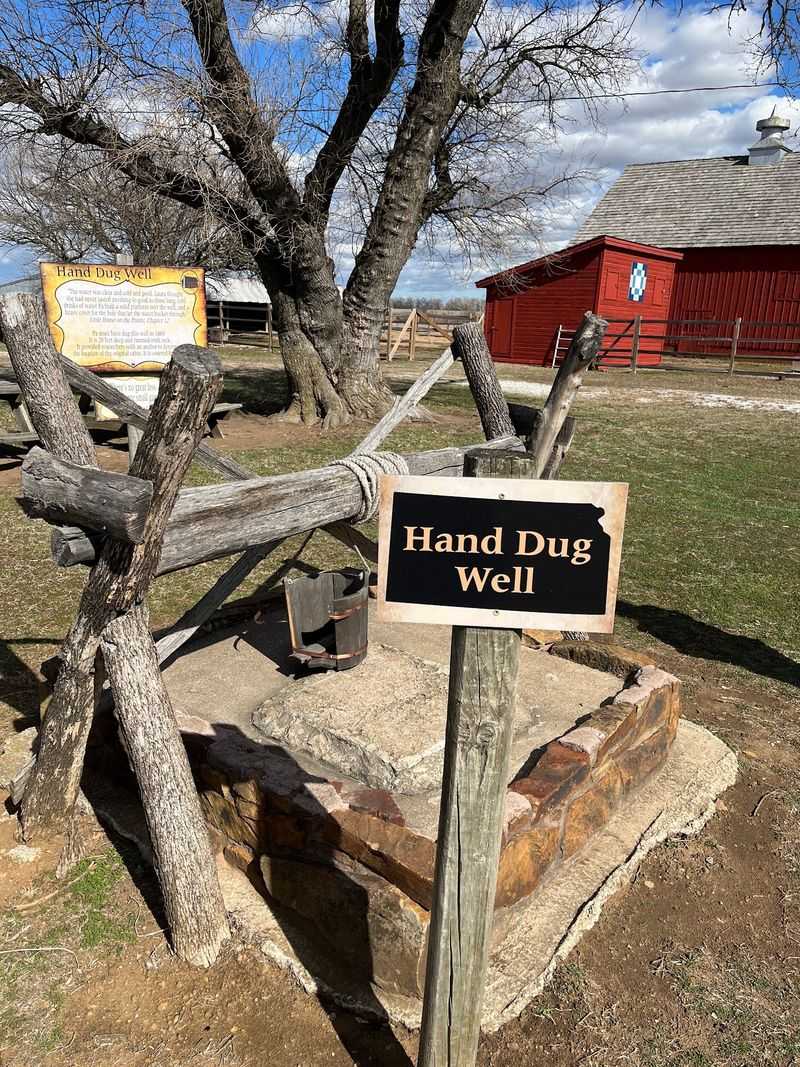
Here is a detail that sounds like something out of a detective novel. For decades, historians and even Laura Ingalls Wilder herself struggled to pinpoint the exact location of the family’s Kansas homestead.
Laura, as an adult, could not confidently identify the spot from memory alone.
The breakthrough came in 1969, when a dedicated team of researchers cross-referenced clues from her books with historical land records and physical evidence on the ground. Their key discovery was a 20-foot deep well, hand-dug by Charles Ingalls in 1869, which provided the irrefutable confirmation they needed to identify the precise location of the cabin.
Today the well is capped for safety, but it stands as the single most historically significant artifact on the entire property. Everything else at the museum, the cabin, the schoolhouse, the post office, was brought together around this one authentic anchor point.
Standing next to it, you feel the weight of that discovery in a way that no exhibit label could fully capture.
Sunny Side Schoolhouse: A Classroom Frozen in Time
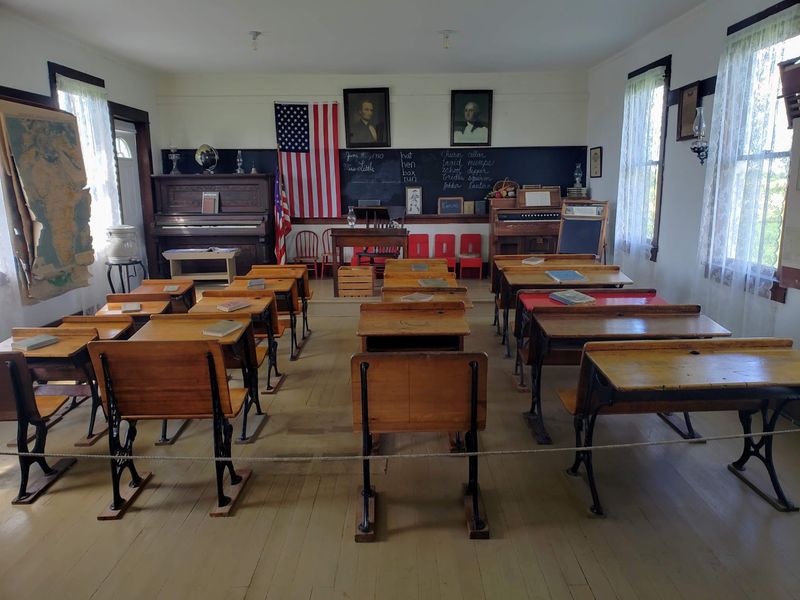
A short walk across the prairie grounds brings you to the Historic Sunny Side Schoolhouse, and the moment you cross its threshold, the air feels different. Hushed and still, the room holds rows of small wooden desks, some still fitted with inkwells, arranged in front of a classic chalkboard.
This is not a reproduction. The schoolhouse is an authentic building that educated students from 1872 all the way through 1947, before being carefully relocated to the museum grounds.
That span of 75 years of real classroom use gives the space a particular kind of weight that replica structures simply cannot replicate.
It is worth remembering that Laura Ingalls Wilder herself became a schoolteacher as a young woman, so this type of building was deeply woven into her own story. Imagining a room full of frontier children learning to read and write here, often taught by a single teacher managing multiple grade levels at once, offers a vivid window into how much early settlers valued education against difficult odds.
The Wayside Post Office and the Art of Staying Connected
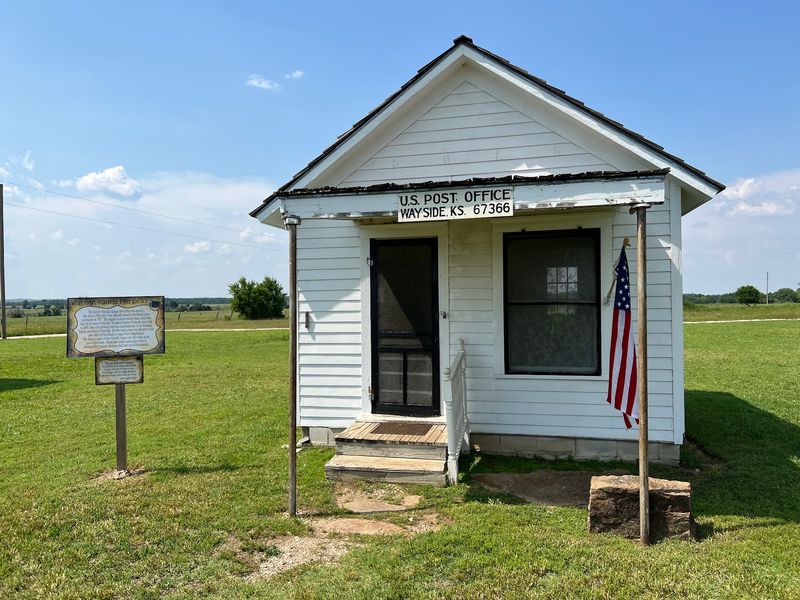
Before email, before telephones, and long before any social media, a letter was everything. The Wayside Post Office, originally established in 1885 in the nearby town of Wayside, served its rural community faithfully until 1984, and now stands on the museum grounds as a testament to how isolated prairie families kept their world from shrinking entirely.
Inside, a small wooden counter and a wall of old mailboxes set the scene immediately. You can almost feel the anticipation that settlers must have experienced waiting for news from relatives back east, knowing that a single envelope could carry months of family updates, practical advice, or emotional support across enormous distances.
The post office also functioned as a community gathering spot, a place where neighbors could share local news and check in on one another between the long stretches of solitary farm work. Its presence on the museum grounds adds a layer of social history that complements the Ingalls family story beautifully, reminding visitors that pioneer life was never truly lived alone.
Barnyard Characters Worth Every Carrot You Bring
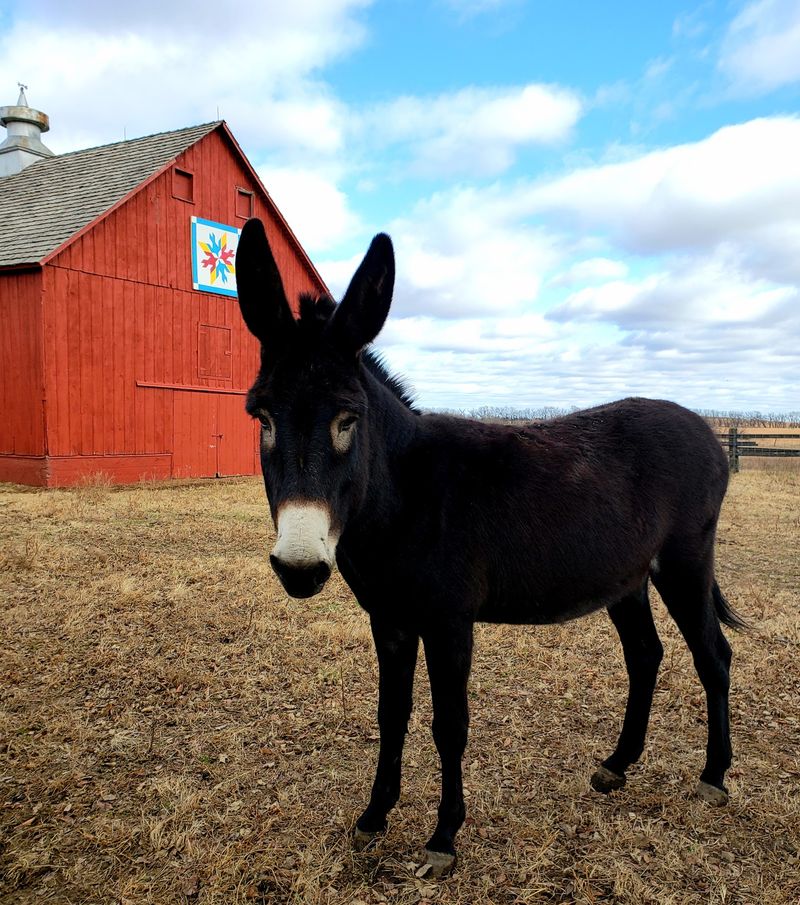
Not every highlight at this museum comes with a historical plaque. The barnyard animals, including mules, miniature donkeys, and miniature horses, bring an entirely different kind of joy to the visit, especially for younger travelers who might need a break from reading informational signs.
The front desk staff will hand you carrots to feed the animals if you ask, which turns a simple walk-around into a genuinely interactive moment. The miniature donkeys in particular have a reputation for being endearing crowd favorites, with their oversized ears and unhurried personalities making them hard to walk away from quickly.
There is something fitting about having working farm animals on these grounds. The Ingalls family depended on animals for survival, from transportation to plowing fields, and their presence here is not just for entertainment.
It adds a layer of living authenticity that static exhibits cannot provide, grounding the museum’s story in the practical, animal-assisted rhythms of 19th-century prairie homesteading in a way that sticks with you long after you leave.
Picnics on the Prairie: The Experience Beyond the Buildings
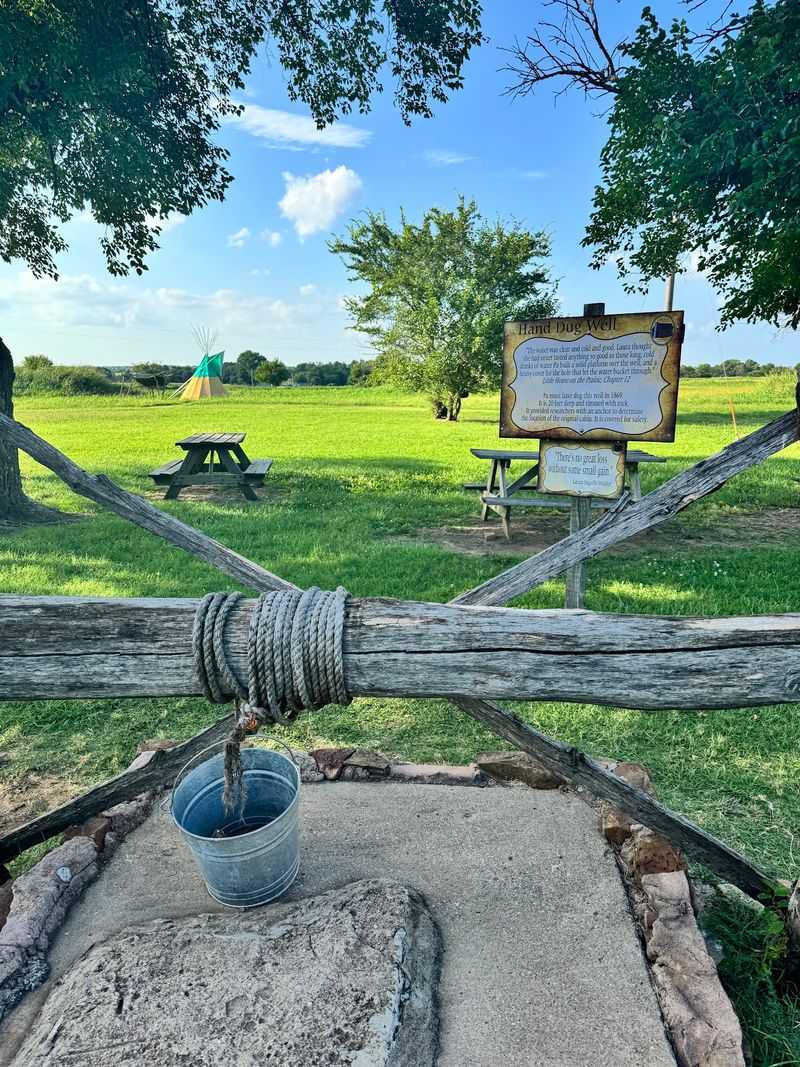
Some of the best moments at this museum happen outside of any building. The grounds encourage visitors to slow down and simply be present on the prairie, and spreading out a blanket for a picnic on the very land the Ingalls family once called home is a surprisingly powerful thing to do.
The Kansas sky above is enormous in a way that photographs struggle to capture. Tallgrass sways in the breeze, birds call from somewhere unseen, and the general hush of the landscape settles over you in a way that feels earned rather than manufactured.
Most visitors budget around one to one and a half hours for the full self-guided tour, but the picnic option invites you to stretch that time naturally. Packing a simple lunch and eating it outdoors here is not just a practical choice; it is a small act of connection to the unhurried pace of pioneer life.
The experience rewards anyone willing to put the phone down and just look around at what is actually there.
Carrie Days: When the Museum Truly Comes Alive
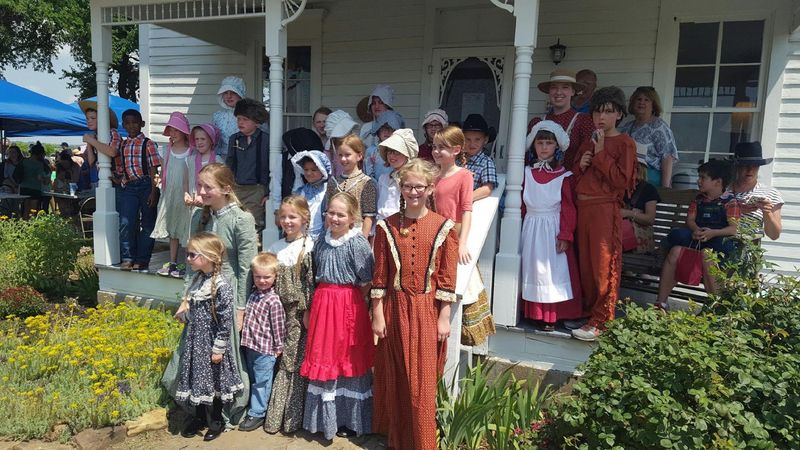
If your schedule allows any flexibility, timing your visit around Carrie Days is well worth the extra planning. This annual weekend event, typically held on August 1st and 2nd, celebrates the life of Carrie Ingalls Swanzey, who was born right on this Kansas prairie on August 3, 1870.
The event draws fans from across the country and regularly features special guests, including actresses who portrayed Carrie Ingalls and Rose Wilder Lane in the original Little House on the Prairie television series. Their presence turns the celebration into something genuinely personal, with stories and memories shared that you simply cannot find in any book or documentary.
Historic demonstrations, hands-on activities, food, and an outdoor musical experience round out the weekend program, transforming the usually quiet grounds into a lively gathering that honors the Ingalls family legacy with real warmth. If the standard visit feels like reading a chapter of a beloved book, Carrie Days feels like attending the reading in person, surrounded by people who love the same story you do.
The Self-Guided Tour and What to Actually Expect
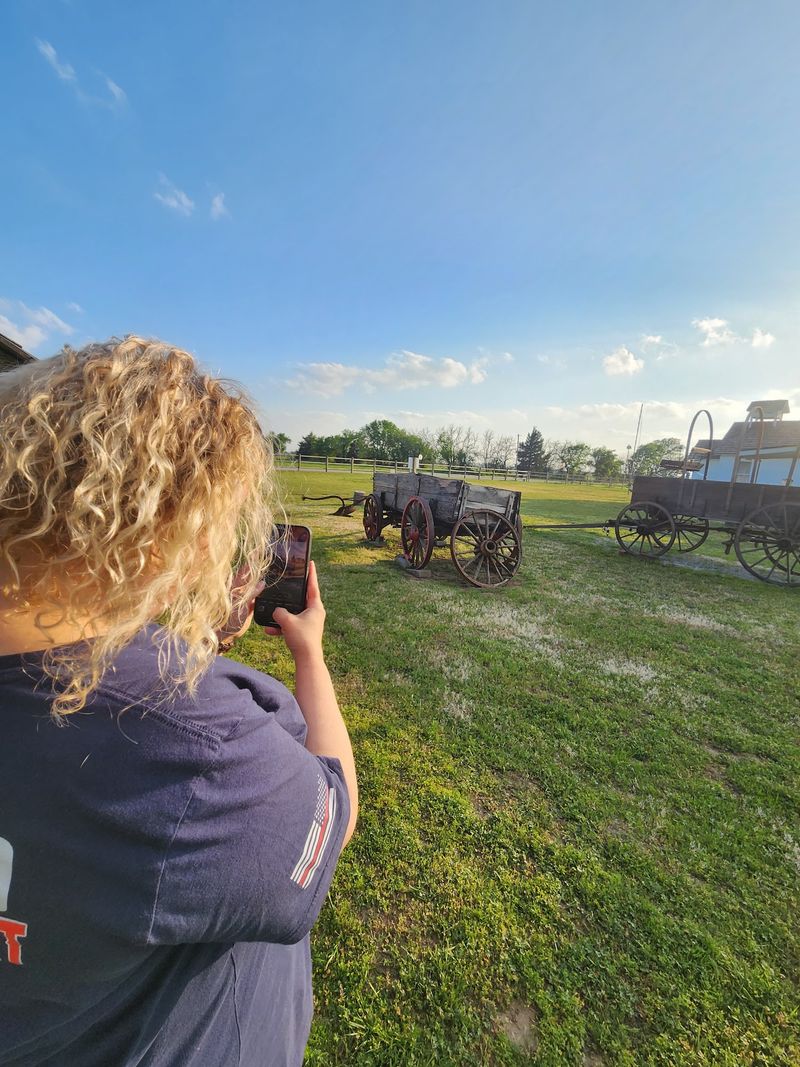
The tour here is entirely self-guided, which means you set your own pace and follow your own curiosity. Informational signs are posted throughout the property, both inside the buildings and along the outdoor paths, providing historical context without requiring a tour guide or a scheduled group visit.
Plan for roughly one to one and a half hours if you want to move through everything at a comfortable pace, though dedicated fans of the books or the television series often find themselves lingering much longer. The grounds are well maintained, the restrooms are on-site, and the staff in the gift shop are generally knowledgeable and happy to answer questions.
One practical note worth keeping in mind: the museum accepts credit cards and Apple Pay, which is useful since cash payment can occasionally create minor inconveniences for larger groups. The gift shop is stocked with a solid range of souvenirs, books, and memorabilia related to the Ingalls family story, making it a worthwhile final stop before heading back to the car.
A Global Story Rooted in One Kansas Field
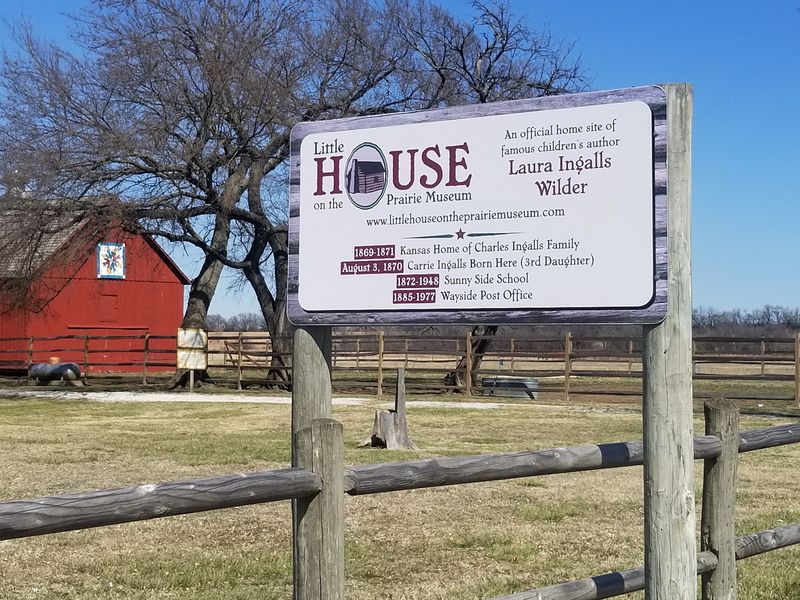
The reach of this small Kansas museum is genuinely remarkable. The site draws approximately 20,000 visitors annually, with guests arriving from around 30 different countries, a statistic that puts the universal appeal of Laura Ingalls Wilder’s writing into sharp perspective.
The Little House series has been reprinted roughly 77 million times since 1975, and approximately half of all third-grade students in the United States encounter these stories during their school years. That means a significant portion of the adults visiting this museum are returning, in a sense, to something they first discovered as children, which gives many visits an emotional quality that goes well beyond typical tourism.
The museum bridges the gap between those beloved books and the real, unvarnished history that inspired them. Visitors from Japan, Germany, Australia, and dozens of other countries make the trip to this rural Kansas field because the themes of family, perseverance, and frontier life translate across languages and cultures with remarkable ease.
That kind of global resonance, rooted in one specific patch of American soil, is genuinely hard to find anywhere else.
The Museum’s Mission Beyond the Replica Cabin
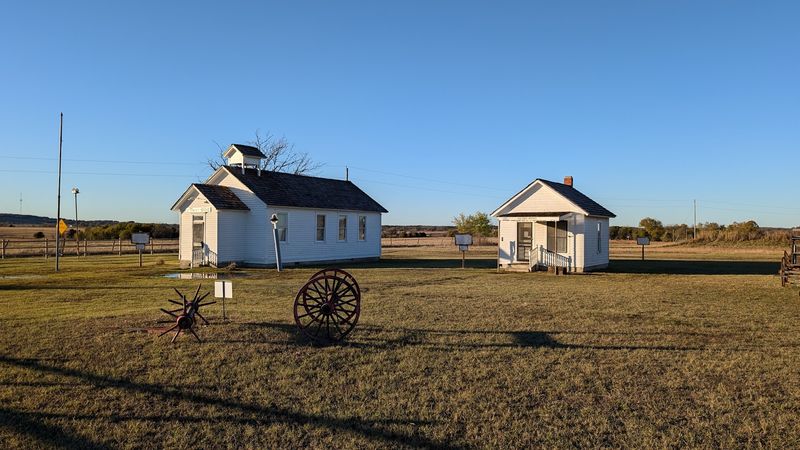
Some visitors arrive expecting a full-scale historical complex and leave mildly surprised by the museum’s modest size. Being upfront about this actually helps, because the experience rewards those who come with the right expectations and genuine curiosity about the Ingalls family story.
Beyond the physical structures on the grounds, the museum maintains a broader educational mission. Archives of documents, photographs, and artifacts chronicle the Ingalls family’s journey across multiple states, and the team regularly hosts informative programs and lectures that provide deeper context for the books and the era in which they were written.
The mix of authentic Kansas history and Ingalls family lore is intentional. The schoolhouse and post office are not strictly Ingalls artifacts, but they represent the kind of community infrastructure that shaped everyday pioneer life in this region, helping visitors piece together a fuller picture of what the 1870s actually felt like on the Kansas plains.
That layered approach to storytelling is what elevates this site above a simple roadside curiosity.
Share this story