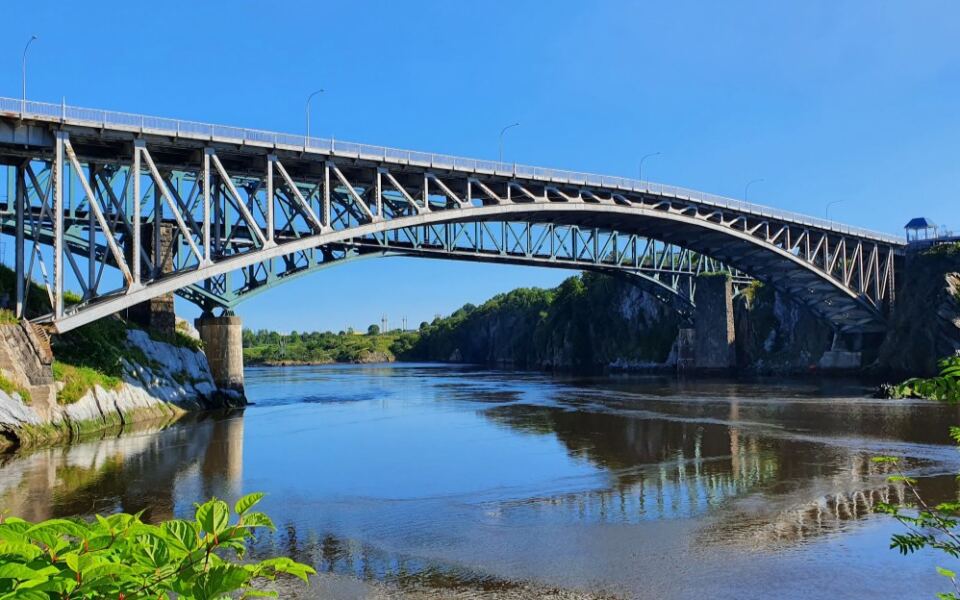
Canada is home to some of the most stunning bridges in the world, stretching across rivers, valleys, and ocean straits. From historic covered wooden bridges to modern steel giants, these structures are as impressive as they are useful.
They connect communities, carry millions of travelers, and often become landmarks in their own right. Whether you love history, engineering, or simply great views, Canada’s bridges have something for everyone.
1. Lions Gate Bridge – Vancouver, British Columbia
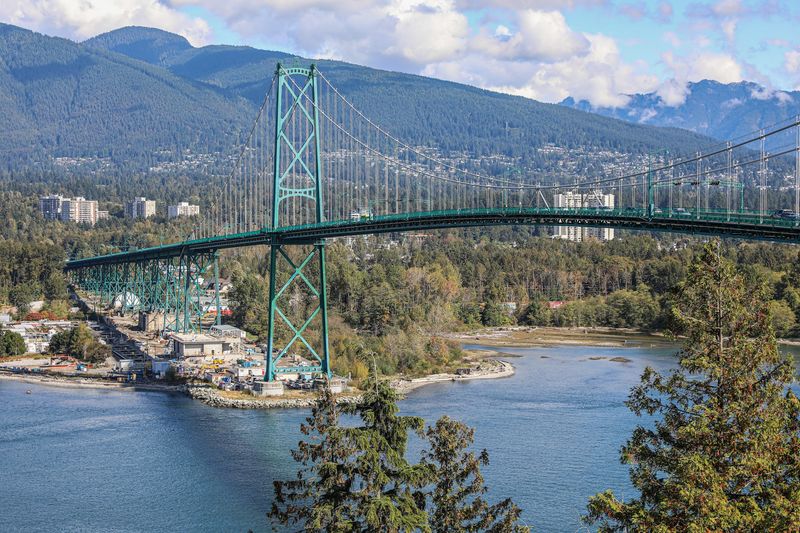
Few bridges in the world can match the drama of the Lions Gate Bridge. Suspended high above the First Narrows of Burrard Inlet, this iconic structure connects Vancouver to the North Shore communities of North Vancouver and West Vancouver.
Opened in 1938, it was built partly with funding from the Guinness family of Ireland.
The bridge stretches 1,823 meters and towers 61 meters above the water at its highest point. On a clear day, the views of the mountains and the Pacific Ocean are breathtaking.
It remains one of the longest suspension bridges in Canada.
Every year, millions of vehicles and pedestrians cross the Lions Gate Bridge. The bridge was refurbished in the early 2000s, but it kept its elegant Art Deco design.
For many visitors, crossing it is a highlight of any trip to Vancouver.
2. Confederation Bridge – Prince Edward Island/New Brunswick
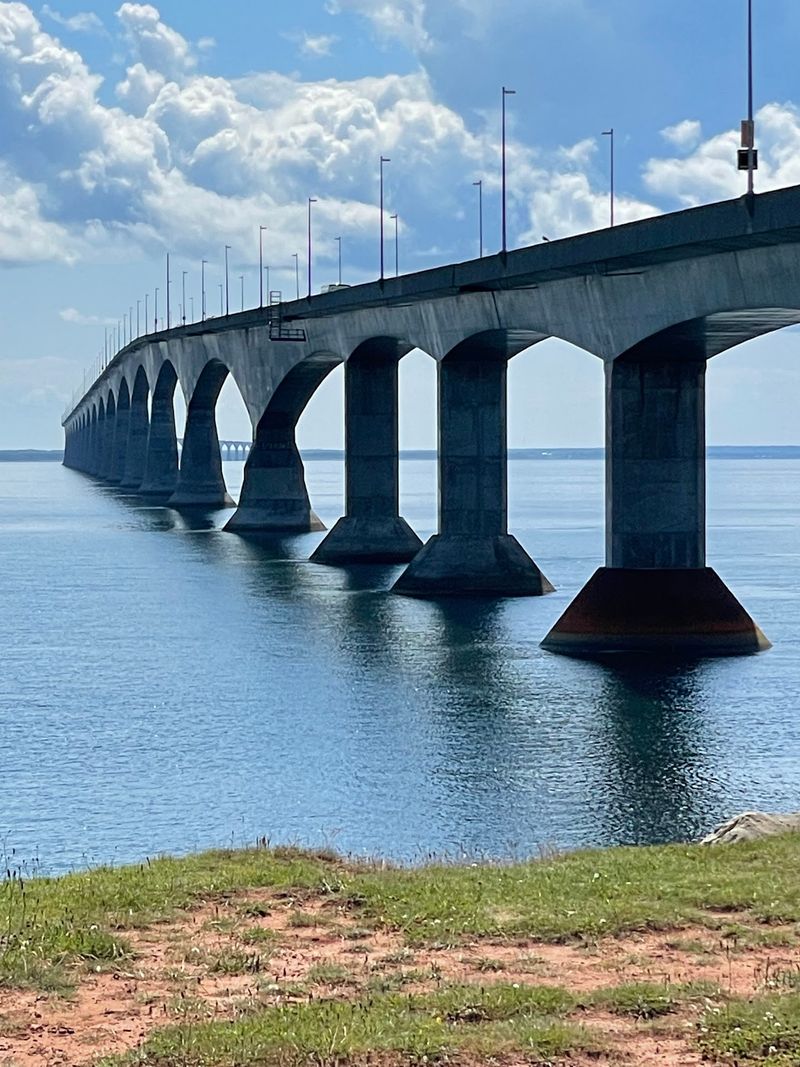
At nearly 13 kilometers long, the Confederation Bridge holds the record as the longest bridge over ice-covered water in the world. Opened in 1997, it connects Borden-Carleton in Prince Edward Island to Cape Jourimain in New Brunswick.
Before the bridge existed, the only way to reach PEI was by ferry.
Building this bridge was a massive engineering challenge. The Northumberland Strait freezes in winter, and the structure had to be designed to withstand powerful moving ice.
Construction took about three years and involved thousands of workers.
Today, crossing the Confederation Bridge takes about 10 minutes by car. Cyclists and pedestrians are not allowed to cross on their own, but a shuttle service is available.
The bridge charges a toll, but only when leaving the island. For many Canadians, it is a symbol of connection and national pride.
3. Quebec Bridge – Quebec City/Levis, Quebec
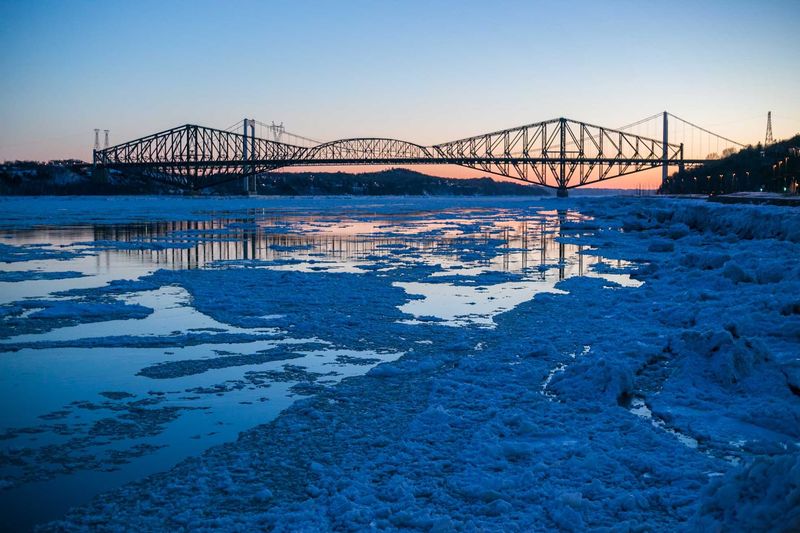
The Quebec Bridge is the longest cantilever bridge in the world, stretching 987 meters across the Saint Lawrence River. Connecting Quebec City to the town of Levis, it carries both road and rail traffic.
Designated a National Historic Site of Canada, it stands as a landmark of engineering achievement.
The bridge’s history is marked by tragedy. It collapsed twice during construction, in 1907 and again in 1916, killing dozens of workers.
Engineers learned hard lessons from those disasters, and the final bridge was completed in 1919. The failures led to major changes in how structural engineering is taught across Canada.
Today, the Quebec Bridge is a symbol of resilience. Its dark steel towers rise dramatically over the river, making it one of the most photographed structures in the province.
Efforts to restore and preserve the bridge have been ongoing for many years.
4. Jacques Cartier Bridge – Montreal, Quebec

Stretching across the Saint Lawrence River in Montreal, the Jacques Cartier Bridge is both a vital transportation link and a visual landmark. Opened in 1930 and named after the French explorer who claimed Canada for France, the bridge carries thousands of vehicles every single day.
It connects downtown Montreal to the South Shore suburb of Longueuil.
One of the most exciting features of the bridge today is its lighting system. Installed in 2017 to celebrate Canada’s 150th anniversary, the colorful LED lights change with the seasons and even respond to social media activity.
At night, the bridge glows in patterns that can be seen from kilometers away.
Walking or cycling across the Jacques Cartier Bridge is a popular activity for locals and tourists alike. The view of Montreal’s skyline and the river from the bridge deck is genuinely spectacular.
Few urban bridges in Canada offer such a rewarding experience.
5. Kinsol Trestle – Cowichan Valley, British Columbia
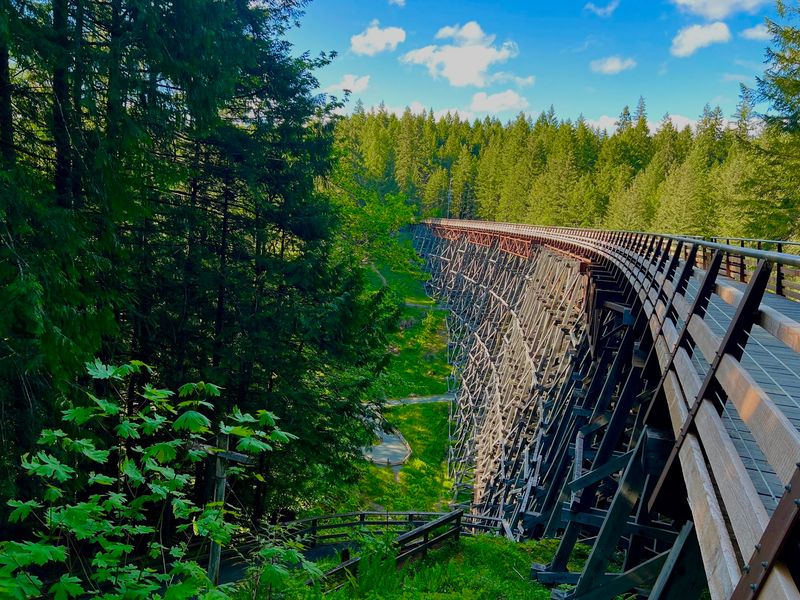
Tucked into the forested hills of Vancouver Island, the Kinsol Trestle is one of the largest wooden railway trestle bridges in the world. Rising about 44 meters above the Koksilah River, this incredible structure is made almost entirely of timber.
It was originally built in 1920 to carry logging trains through the Cowichan Valley.
After years of neglect, the trestle was carefully restored and reopened to the public in 2011. Today, it is part of the Trans Canada Trail and is a popular destination for hikers and cyclists.
Walking across the trestle offers stunning views of the river and surrounding forest.
The Kinsol Trestle has become a beloved attraction on Vancouver Island. Its rustic wooden beauty and natural setting make it feel like something out of an adventure story.
Visiting in the spring or fall, when the forest colors are most vibrant, is especially rewarding for outdoor enthusiasts.
6. Hartland Covered Bridge – Hartland, New Brunswick
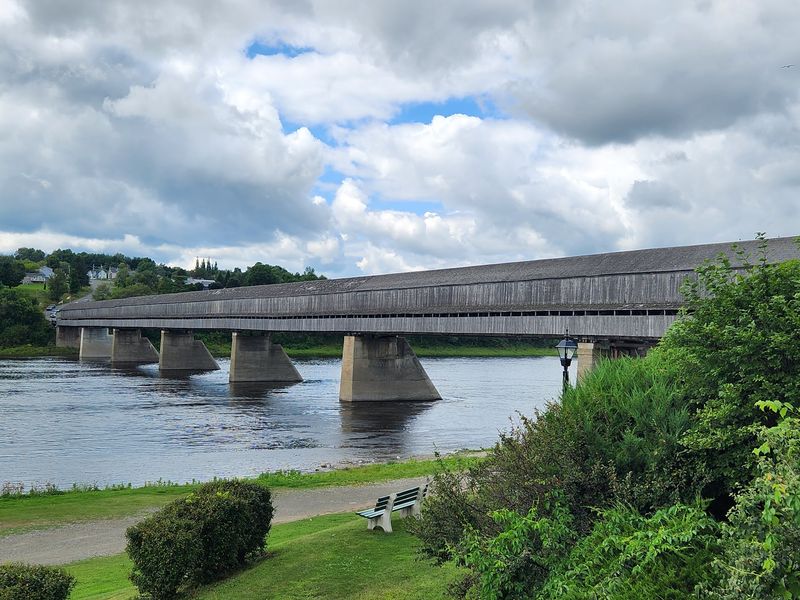
The Hartland Covered Bridge holds a special world record: it is the longest covered wooden bridge on the planet. Stretching 391 meters across the Saint John River in New Brunswick, this charming structure has stood since 1901.
Originally uncovered, a roof and siding were added in 1922 to help preserve the wooden structure.
Covered bridges were once common across North America, but most have been lost to time, fire, or flood. Hartland’s bridge survived because the community fought hard to protect it.
It was designated a National Historic Site of Canada in 1980.
Driving through the Hartland Covered Bridge feels like stepping back in time. The wooden planks rumble under tires, and the interior is dim and cool even on hot summer days.
Local legend says couples who share a kiss while crossing the bridge will have good luck. Whether or not that is true, the bridge is undeniably magical.
7. High Level Bridge – Lethbridge, Alberta
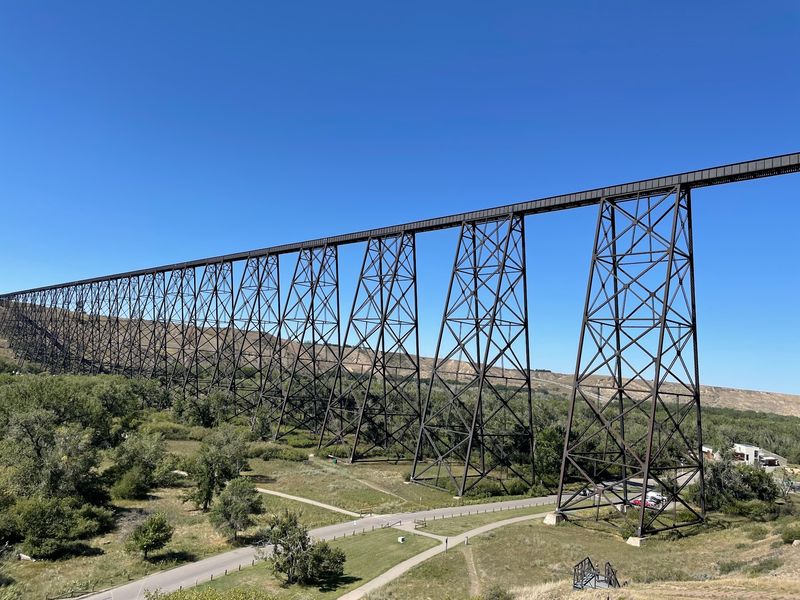
Standing 96 meters tall and stretching 1.6 kilometers across the Oldman River valley, the High Level Bridge in Lethbridge is one of the most impressive railway structures in North America. Built in 1909 by the Canadian Pacific Railway, it remains the highest and longest railway bridge in Canada.
The sheer scale of this steel giant is hard to fully appreciate until you see it in person.
The bridge was constructed to replace a longer, slower route around the valley. Engineers chose a direct crossing, which required building one of the tallest bridges of its era.
Over 12,000 tons of steel went into its construction.
Today, the bridge is still in active use, carrying freight trains across the valley. The city of Lethbridge has developed walking paths nearby so visitors can get a great view.
Watching a train cross the High Level Bridge is a genuinely memorable experience for anyone visiting southern Alberta.
8. Samuel De Champlain Bridge – Montreal, Quebec
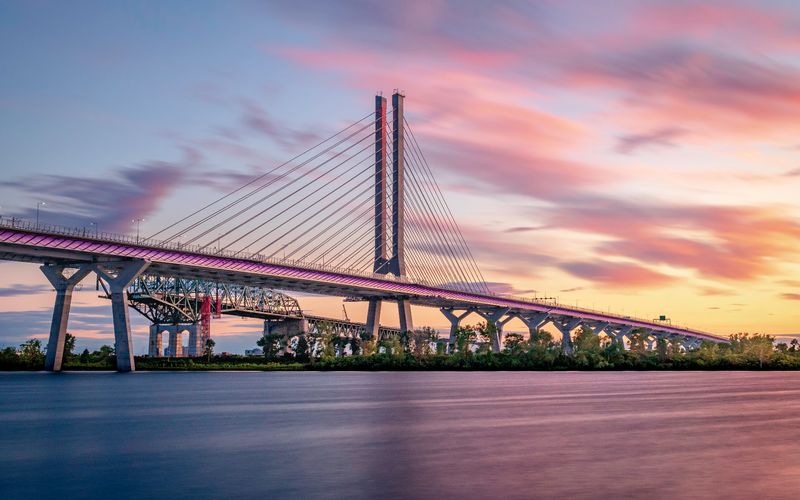
Opened in 2019, the Samuel De Champlain Bridge is the newest major bridge in Montreal and one of the most modern in all of Canada. Named after the French explorer who founded Quebec City, this cable-stayed bridge replaced the aging Champlain Bridge that had served the city for decades.
It carries vehicles, a light rail transit line, and a dedicated path for cyclists and pedestrians.
The bridge stretches about 3.4 kilometers across the Saint Lawrence River, connecting Montreal to the South Shore. Its design is sleek and contemporary, with tall pylons and cables that fan out like a harp.
At night, blue LED lighting gives it a futuristic look.
Building the Samuel De Champlain Bridge cost over $4 billion, making it one of the most expensive infrastructure projects in Canadian history. Despite the price tag, most agree that the result is a bridge worthy of a world-class city.
It is already a source of civic pride for Montrealers.
9. Humber Bay Arch Bridge – Toronto, Ontario
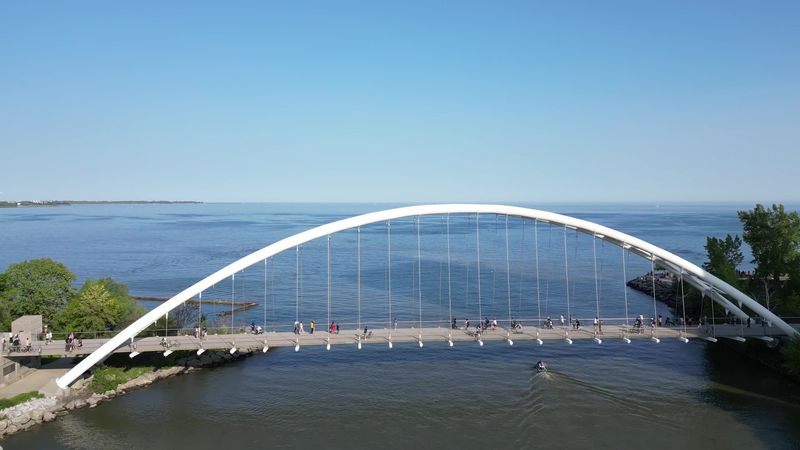
Graceful and modern, the Humber Bay Arch Bridge in Toronto is a favorite among cyclists, joggers, and photographers. Opened in 1994, this twin-arch pedestrian and cycling bridge spans the mouth of the Humber River where it meets Lake Ontario.
The bridge is part of the Martin Goodman Trail, one of Toronto’s most popular recreational paths.
The two arches rise elegantly above the bridge deck, giving the structure a distinctive silhouette against the lake and city skyline. At night, lighting transforms the bridge into a glowing landmark.
Many Toronto residents consider it one of the most photogenic spots in the city.
The Humber Bay Arch Bridge also carries cultural significance. The Humber River corridor is a designated Canadian Heritage River, recognized for its natural and historical importance.
Crossing this bridge on a sunny morning, with Lake Ontario sparkling nearby, is one of those simple pleasures that makes living in Toronto genuinely special.
10. Alexandra Bridge – Ottawa, Ontario/Gatineau, Quebec
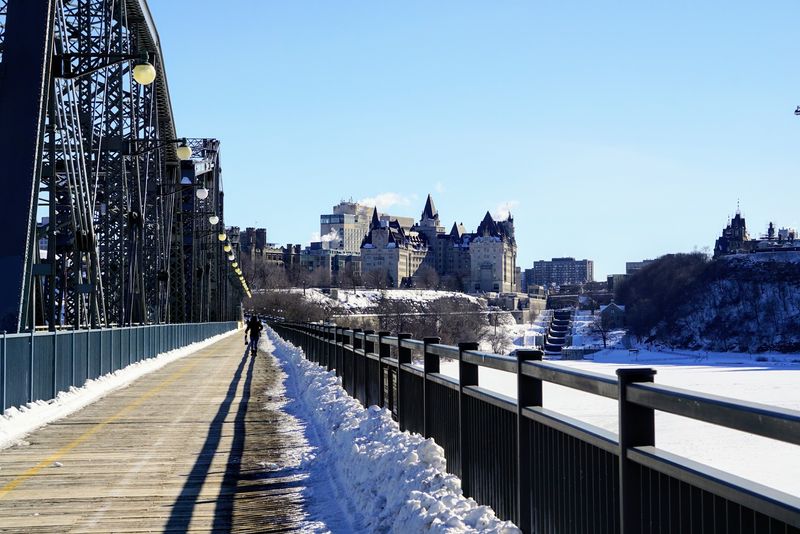
Connecting the capital cities of two provinces, the Alexandra Bridge links Ottawa, Ontario, to Gatineau, Quebec, across the Ottawa River. Opened in 1901, it was named in honor of Queen Alexandra, wife of King Edward VII.
The bridge carries both vehicles and pedestrians, and it offers one of the best views of Ottawa’s Parliament Buildings from any vantage point in the region.
The bridge’s green steel truss design is a classic example of early 20th-century engineering. Walking across it on a crisp autumn morning, with the Parliament Buildings glowing behind you, is a genuinely moving experience.
Many tourists make a point of crossing it on foot.
Plans have been discussed for years to eventually replace the aging Alexandra Bridge. For now, it continues to serve as both a working crossing and a beloved historic landmark.
Its location at the heart of Canada’s capital region makes it one of the most symbolically important bridges in the country.
11. West Montrose Covered Bridge – West Montrose, Ontario
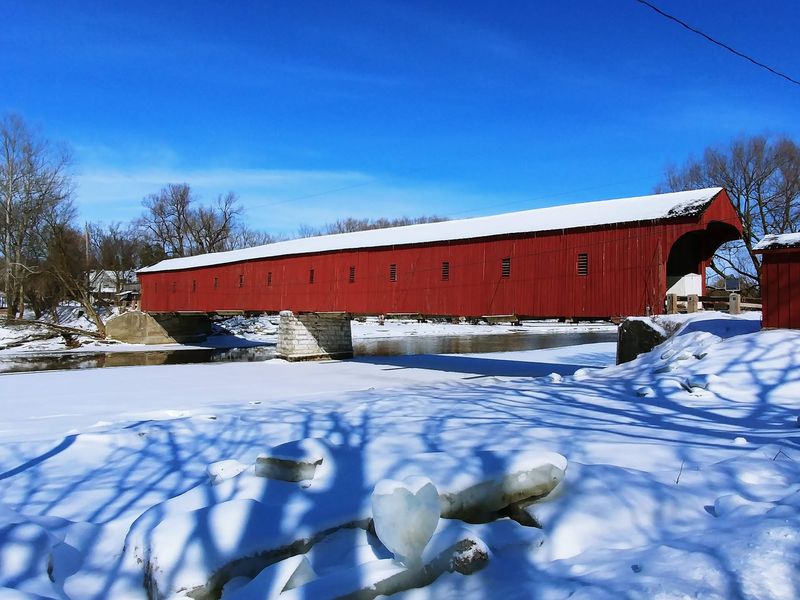
Known affectionately as the Kissing Bridge, the West Montrose Covered Bridge is the last remaining covered bridge in Ontario. Built in 1881, it spans the Grand River in the small community of West Montrose, nestled among the farms and rolling hills of Waterloo Region.
The nickname comes from the privacy the covered structure once offered courting couples passing through.
The bridge is 61 meters long and features the classic Howe truss design common in 19th-century bridge construction. Its red and white exterior blends beautifully with the surrounding countryside, especially in autumn when the leaves turn brilliant shades of orange and gold.
Visitors come from across Ontario to photograph the West Montrose Covered Bridge and enjoy the peaceful rural scenery. The nearby Grand River is popular for fishing and canoeing.
The bridge was designated a National Historic Site of Canada, recognizing its importance as a rare survivor of a once-common building tradition across the country.
12. Burlington Bay James N. Allan Skyway – Hamilton/Burlington, Ontario
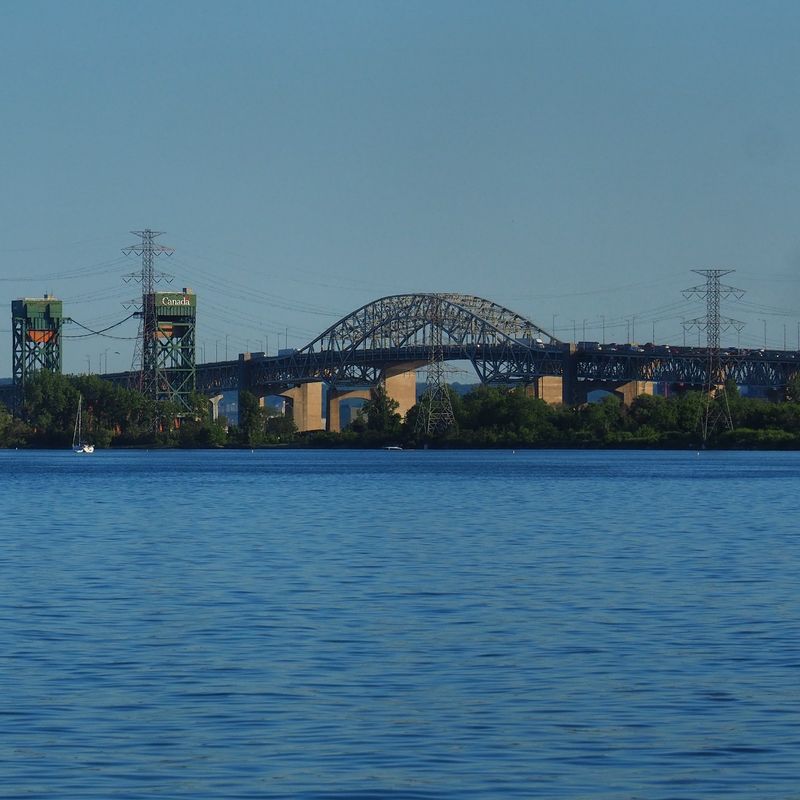
Rising high above Burlington Bay, the Burlington Bay James N. Allan Skyway is one of the most recognizable highway bridges in Ontario.
Opened in 1958, it carries the Queen Elizabeth Way across the bay between Hamilton and Burlington. A twinned span was added in 1985 to handle growing traffic volumes.
The bridge climbs to a height of about 40 meters at its peak, giving drivers a sweeping view of the bay and the surrounding region. On clear days, you can see the Hamilton waterfront, the Niagara Escarpment, and even the Toronto skyline in the distance.
It is a genuinely impressive drive, even for those who make the crossing regularly.
The Skyway is a critical link in one of Canada’s busiest highway corridors. Tens of thousands of vehicles cross it every day.
The bridge underwent significant maintenance and rehabilitation work in recent years to keep it safe and reliable for the decades ahead.
13. Macdonald Bridge – Halifax/Dartmouth, Nova Scotia
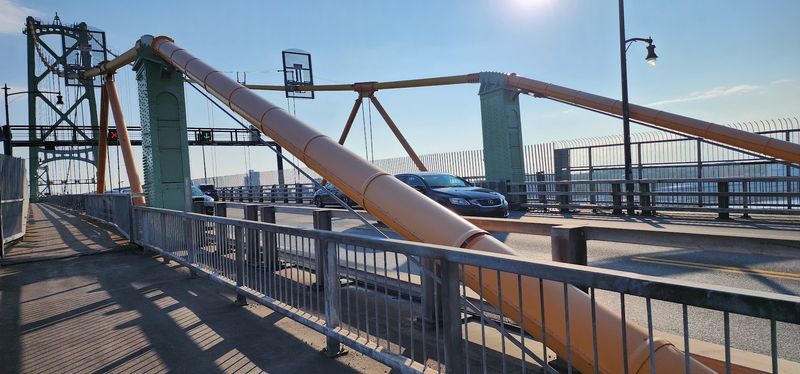
Spanning Halifax Harbour between Halifax and Dartmouth, the Angus L. Macdonald Bridge is one of Nova Scotia’s most beloved landmarks.
Opened in 1955, it was the first suspension bridge built in Atlantic Canada. Named after a former Nova Scotia premier, it carries thousands of commuters across the harbour every single day.
Between 2015 and 2017, the bridge underwent a remarkable feat of engineering called the Big Lift. Workers replaced the entire deck of the bridge, one section at a time, without ever closing it to traffic.
The project attracted international attention and won multiple engineering awards.
Walking or cycling across the Macdonald Bridge is a popular activity for Halifax residents and visitors. The views of the harbour, the historic waterfront, and the surrounding communities are spectacular.
The bridge also carries a dedicated pedestrian and cycling lane, making it accessible to everyone. For many Nova Scotians, it is simply home.
14. Reversing Falls Bridge – Saint John, New Brunswick
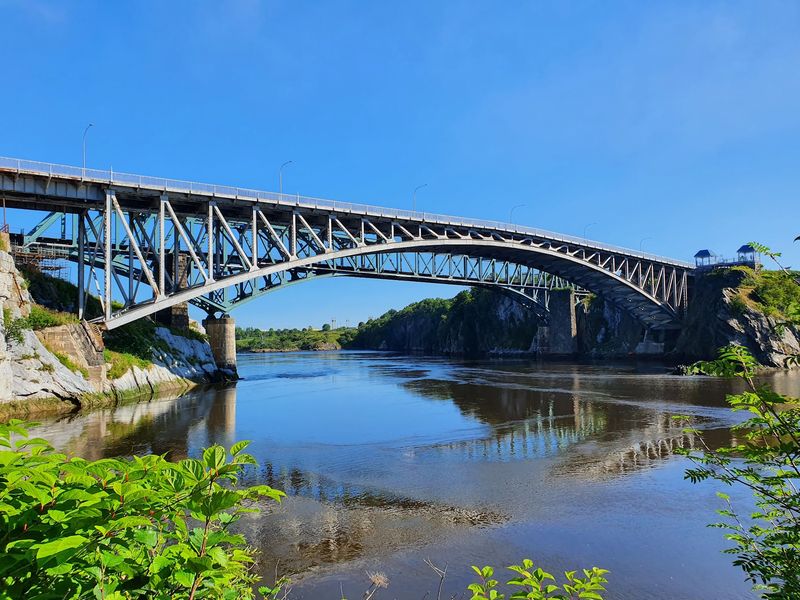
Few bridges in Canada sit above a more unusual natural phenomenon than the Reversing Falls Bridge in Saint John, New Brunswick. Below the bridge, the Saint John River meets the powerful tides of the Bay of Fundy.
Twice a day, the tidal force is so strong that it actually reverses the direction of the river’s flow, creating dramatic rapids and whirlpools in the gorge.
The bridge itself carries the Trans-Canada Highway across the gorge, making it a vital link for travelers moving through the region. The current structure replaced an older bridge and has become closely associated with the famous natural attraction it overlooks.
Nearby, a visitor center and observation deck give tourists a front-row seat to the reversing rapids. Watching the water churn and swirl below the bridge is a fascinating experience that you simply cannot replicate anywhere else.
The bridge and the falls together make Saint John one of Atlantic Canada’s most interesting stops.
15. Centre Street Bridge – Calgary, Alberta
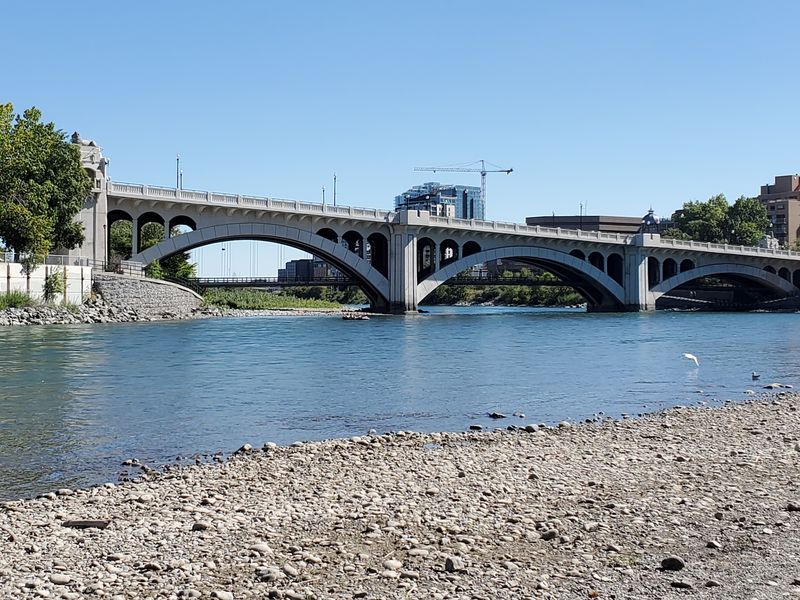
Calgary’s Centre Street Bridge is one of the most elegant historic structures in the city. Built between 1916 and 1918, this reinforced concrete bridge crosses the Bow River and connects downtown Calgary to the Sunnyside neighborhood.
Its classical design features decorative concrete railings and four bronze-painted concrete lions guarding the entrance at each end.
The lions have become unofficial symbols of the bridge and are beloved by Calgary residents. Over the years, the bridge has been a gathering spot for community events, protests, and celebrations.
It was designated a Municipal Historic Resource by the City of Calgary.
Standing on the Centre Street Bridge and looking upstream offers a beautiful view of the Bow River valley and the Rocky Mountains on clear days. The bridge sits along a major cycling and pedestrian route, making it a daily crossing for many Calgarians.
It is a reminder that infrastructure can be both practical and genuinely beautiful at the same time.
Share this story