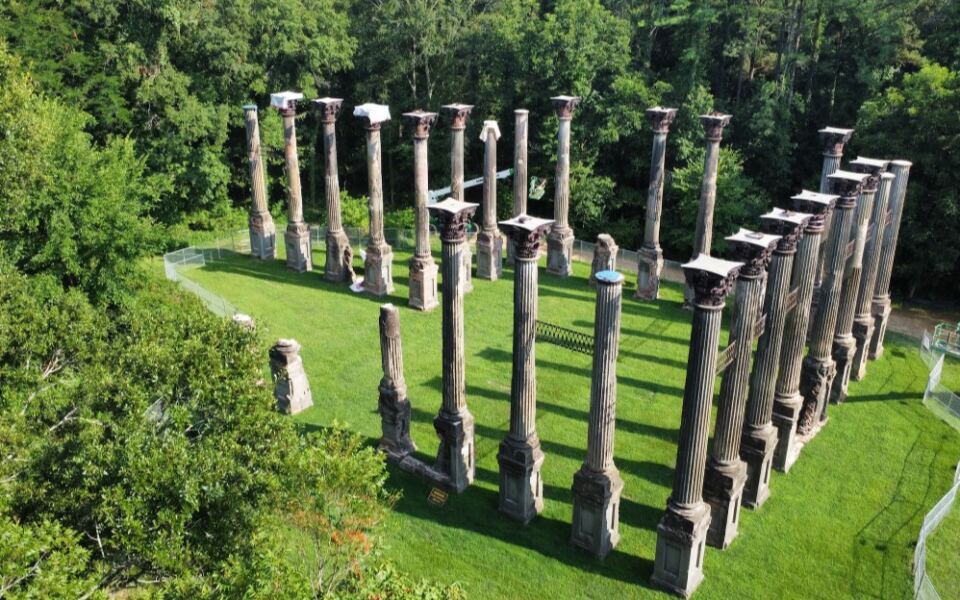
Deep in the woods of southwest Mississippi, 23 towering columns rise from the earth like silent giants frozen in time. They are all that remain of what was once the largest antebellum mansion ever built in Mississippi.
The house burned to the ground in 1890, but these colossal Corinthian columns have stood through more than 130 years of heat, storms, and history. Once you see them for the first time, it is nearly impossible to forget them.
The Largest Antebellum Mansion in Mississippi
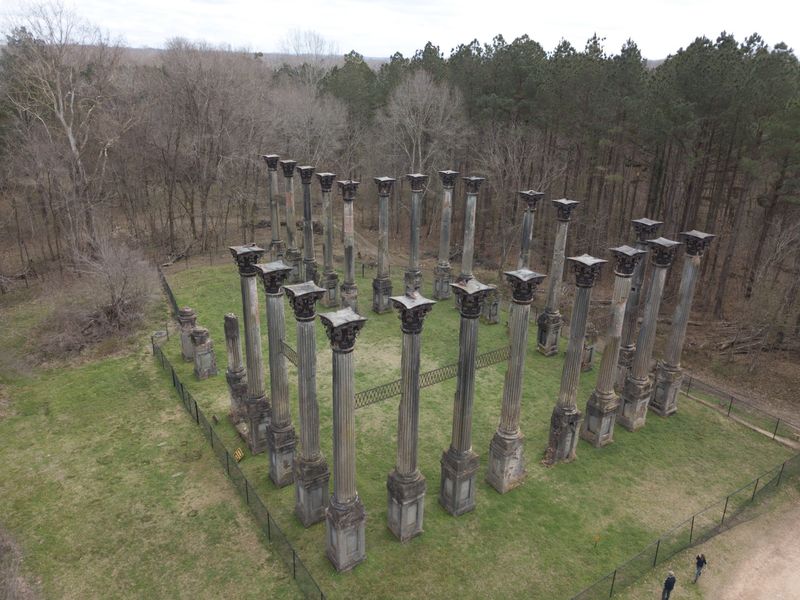
Before a single brick was laid, Smith Coffee Daniell II had a vision that few planters in the antebellum South could match. Construction on Windsor began in 1859 and was completed in 1861, making it the largest Greek Revival mansion ever built in Mississippi at the time.
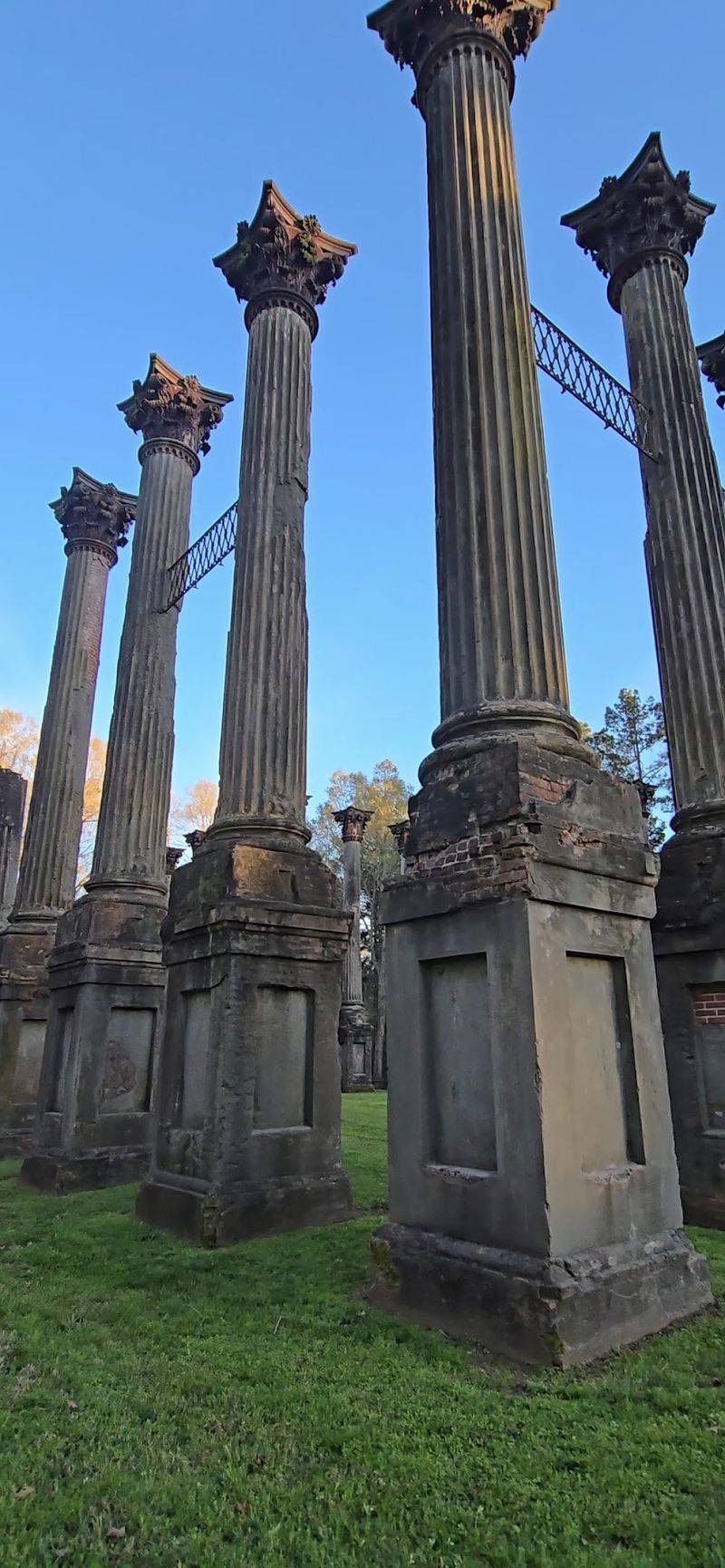
The house stood four stories tall and featured 23 massive Corinthian columns, each rising roughly 45 feet into the air. The structure was enormous by any standard of the era, with more than 25 rooms spread across its floors.
Sadly, Smith Coffee Daniell II passed away just weeks after the house was finished, never truly getting to enjoy what he had built. That bittersweet beginning set the tone for a place that would carry both grandeur and tragedy throughout its entire history.
The scale of what once stood here is almost impossible to fully picture today.
Where Windsor Ruins Is Located
Windsor Ruins sits along Rodney Road in Port Gibson, Mississippi 39150, tucked inside a wildlife management area that makes the journey feel like an adventure before you even arrive. The drive through winding, hilly backroads is part of the experience.
Port Gibson is a small town in Claiborne County, situated roughly between Natchez to the south and Vicksburg to the north. Many visitors stop at Windsor as a worthwhile detour while traveling that corridor along the Mississippi River region.
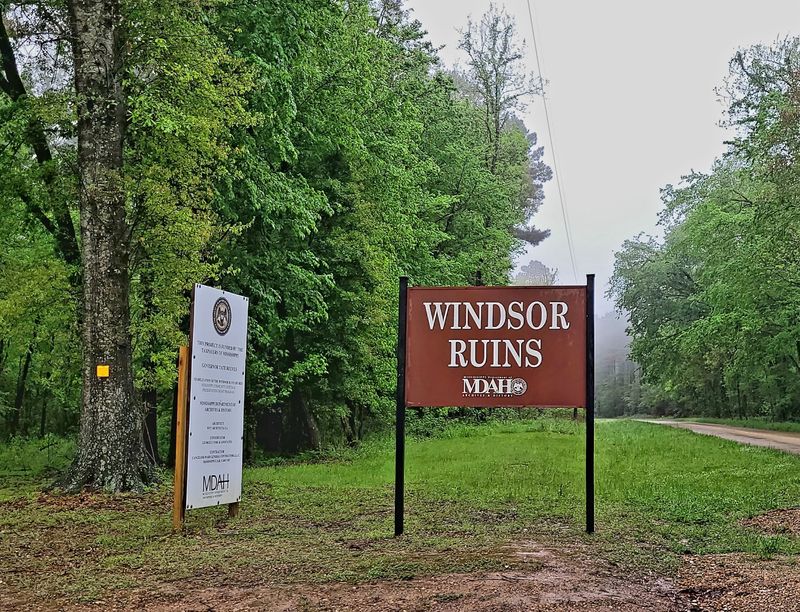
The site is managed by the Mississippi Department of Archives and History and is open daily from 8 AM to 7:30 PM. Admission is free, there is no attendant on duty, and you simply pull in, park, and walk the grounds at your own pace.
The gravel path around the columns is fairly level and easy to navigate for most visitors.
How the Fire of 1890 Changed Everything
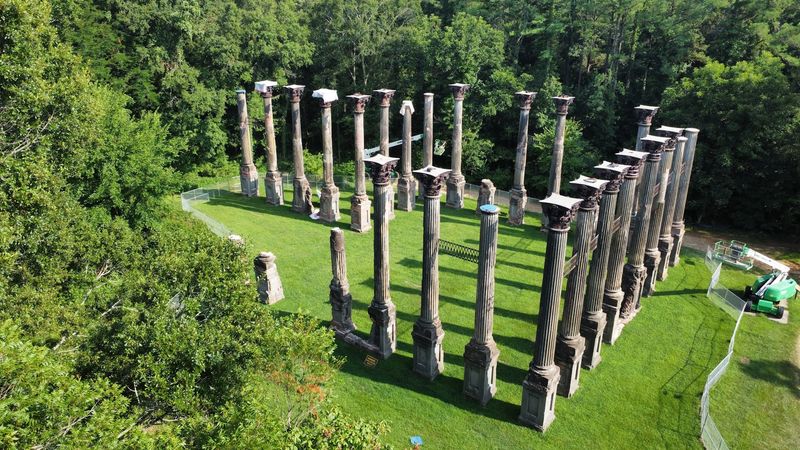
For nearly three decades, Windsor survived the Civil War largely intact, which was no small feat for a structure of its size and visibility. Union soldiers used the rooftop as an observation point, and the mansion reportedly served as a field hospital during that period.
Then, in February 1890, a fire broke out that no one could stop. Accounts suggest a careless guest left a lit cigarette that ignited the house during a party.
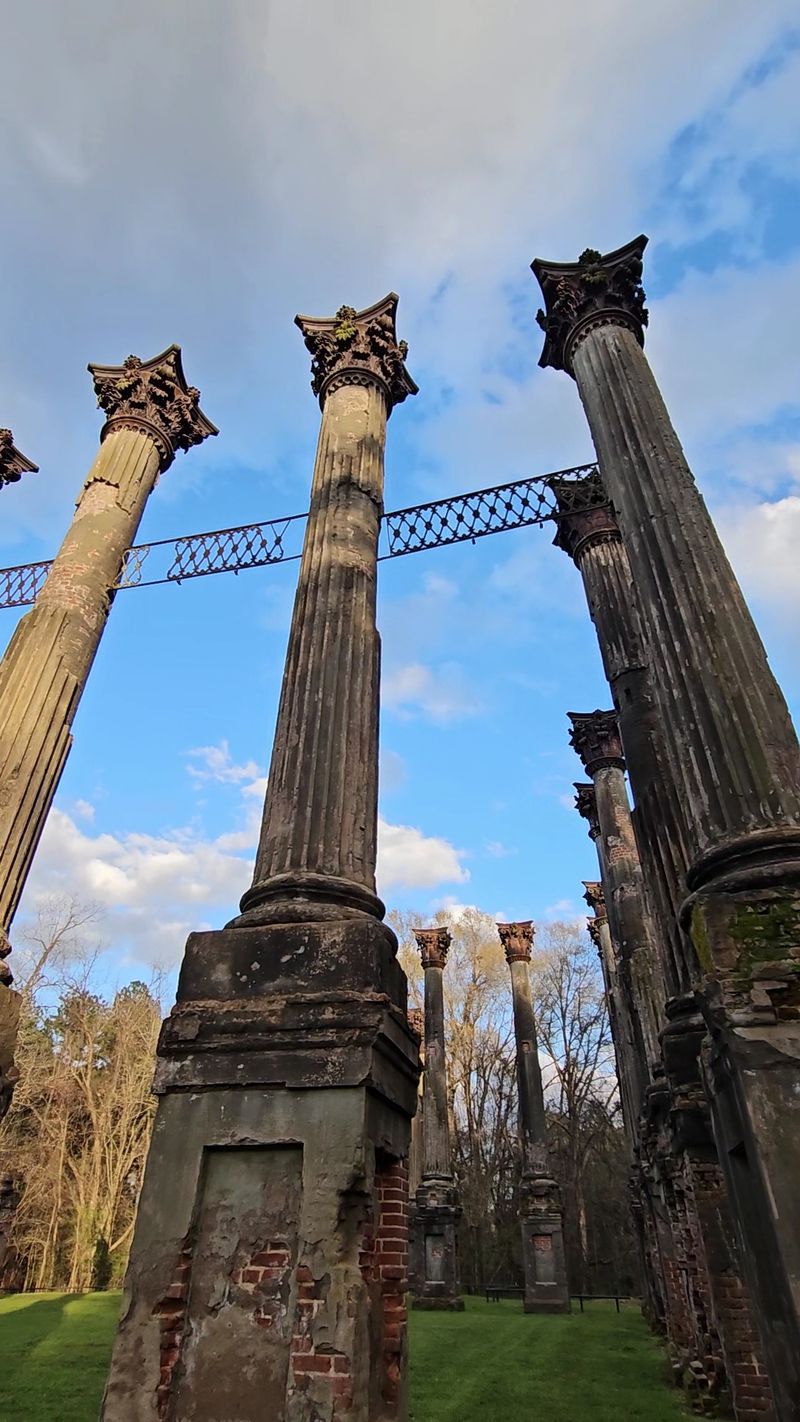
Within hours, the entire structure was consumed by flames, leaving only the 23 Corinthian columns standing amid the ruins.
The iron railings that once decorated the upper balconies melted and fell, but the columns themselves held firm. That survival feels almost defiant when you stand among them today.
The fire erased the mansion but could not erase the sense of scale and ambition that these columns still communicate so powerfully.
The 23 Corinthian Columns Up Close
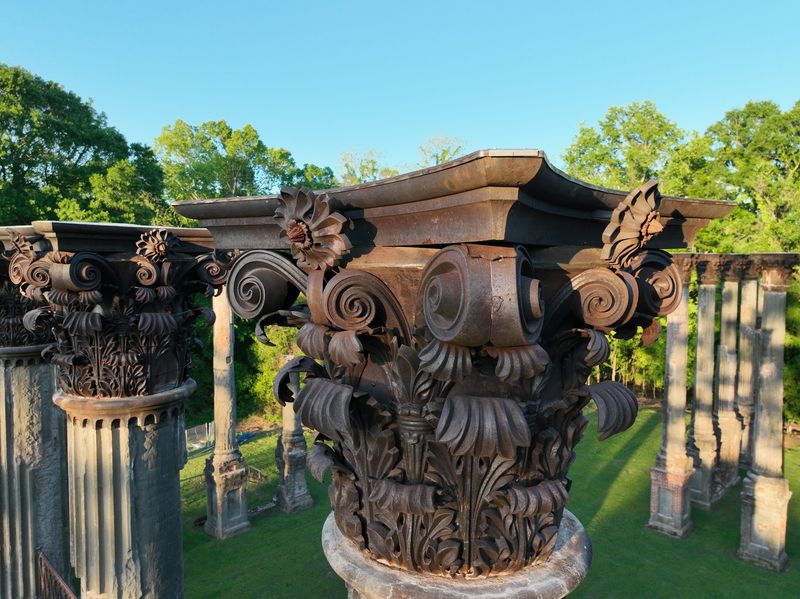
Standing beneath the columns for the first time is genuinely surprising. Photographs give you a sense of their height, but they do not prepare you for how physically imposing each column feels when you are right next to one.
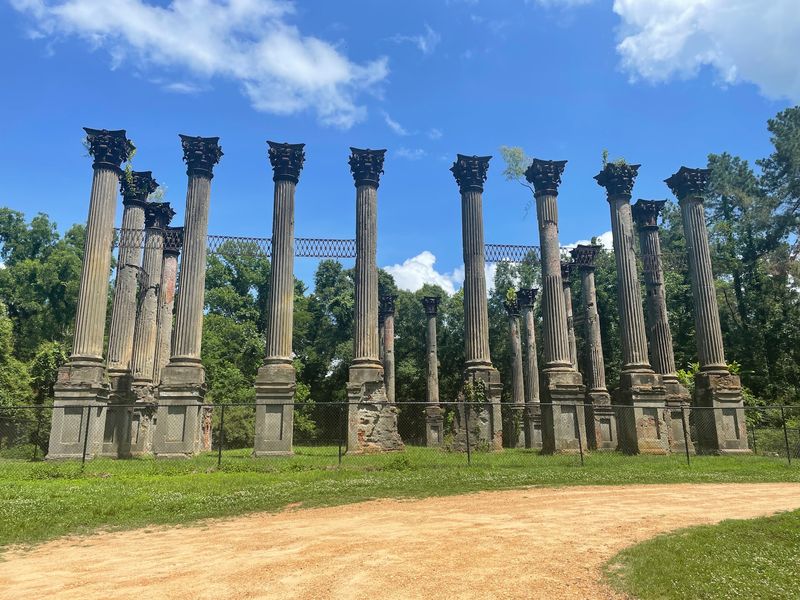
Each shaft rises roughly 45 feet, and the carved Corinthian capitals at the top feature handcrafted ironwork that still shows remarkable detail.
The craftsmanship involved in building these columns by hand in the mid-1800s is something worth pausing to appreciate. Workers shaped and stacked the materials without the benefit of modern equipment, yet the columns have outlasted the house they were built to support by more than 130 years.
A low pipe rail now surrounds the column area to protect visitors and preserve the structure, since the columns are not considered fully stable. You can walk the perimeter path and get very close, which gives you an excellent view of the ironwork details from multiple angles.
The Civil War Connection Most Visitors Miss
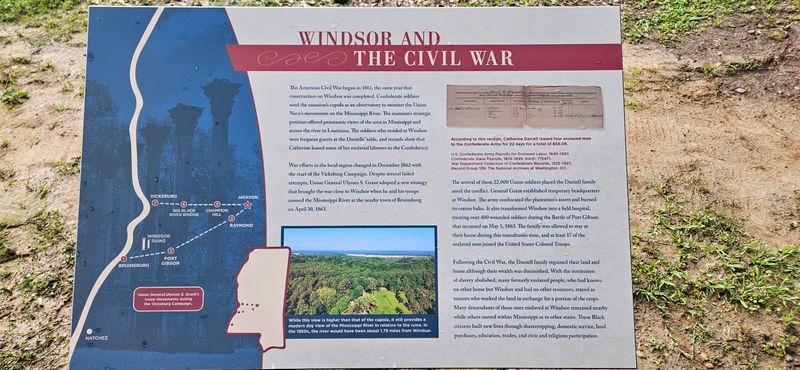
Windsor’s role during the Civil War is one of the more fascinating chapters in its history, and the informational plaques on-site help fill in some of that story. The mansion was spared from destruction largely because of its usefulness to Union forces moving through the region.
Soldiers used the rooftop platform as a high vantage point to observe the surrounding landscape, which made military sense given the mansion’s elevation and size. The building also reportedly served as a field hospital at various points during the conflict, treating wounded soldiers on both sides.
That the house survived the war only to be destroyed by an accidental fire 25 years later adds a layer of irony to its story. The columns that weathered military occupation and the chaos of wartime now stand quietly in a wildlife management area, surrounded by trees and birdsong.
History has a way of keeping its most surprising plot twists for the very end.
What the Grounds Feel Like Today
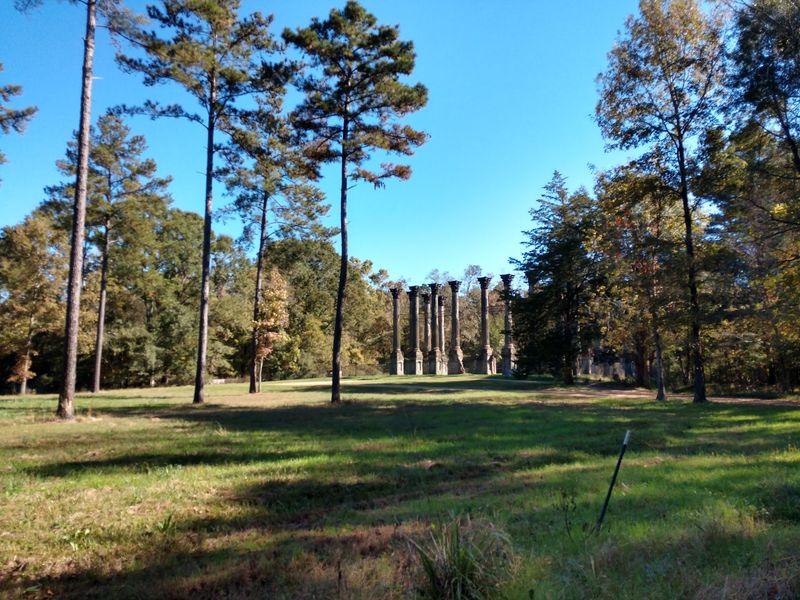
The grounds around Windsor Ruins are well-maintained and genuinely peaceful. The site is clean, the grass is kept tidy, and there are garbage bins and handicap parking available for visitors.
A picnic table near the columns makes it an easy spot to sit, eat, and simply take in the surroundings.
The gravel path that circles the ruins is level enough for most people to walk comfortably, and it takes roughly 15 minutes to complete a full loop. Along the way, informational placards provide historical context about the mansion, the family that built it, and the fire that ended it.
Because there is no attendant and no entry fee, the atmosphere feels relaxed and unhurried. On quieter days, you may have the entire site to yourself, which makes the experience feel surprisingly personal.
The combination of open sky above and dense Mississippi woods on all sides gives the place a mood that is hard to describe until you have been there.
Photography at Windsor Ruins
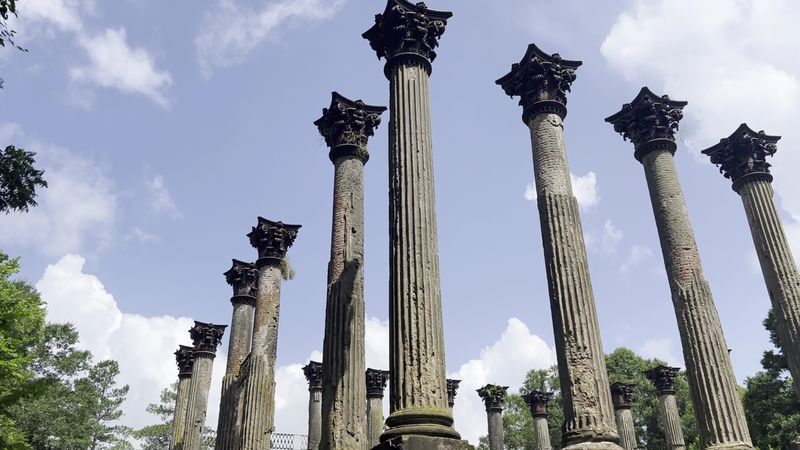
Windsor Ruins may be one of the most photogenic historic sites in the entire state of Mississippi. The columns create natural framing opportunities from nearly every angle, and the open sky above them means lighting conditions change dramatically throughout the day.
Early morning visits offer soft, diffused light that makes the column details easier to capture without harsh shadows. Late afternoon golden hour turns the columns a warm amber color that looks striking in photographs.
Overcast days produce an appropriately moody atmosphere that suits the history of the place very well.
Painters and plein air artists have also found Windsor Ruins to be a compelling subject. The combination of architectural geometry, natural surroundings, and historical weight gives artists a lot to work with.
Whether you shoot with a phone or a professional camera, the columns offer something genuinely dramatic to photograph, and no two visits seem to produce quite the same images.
The Ongoing Preservation Efforts
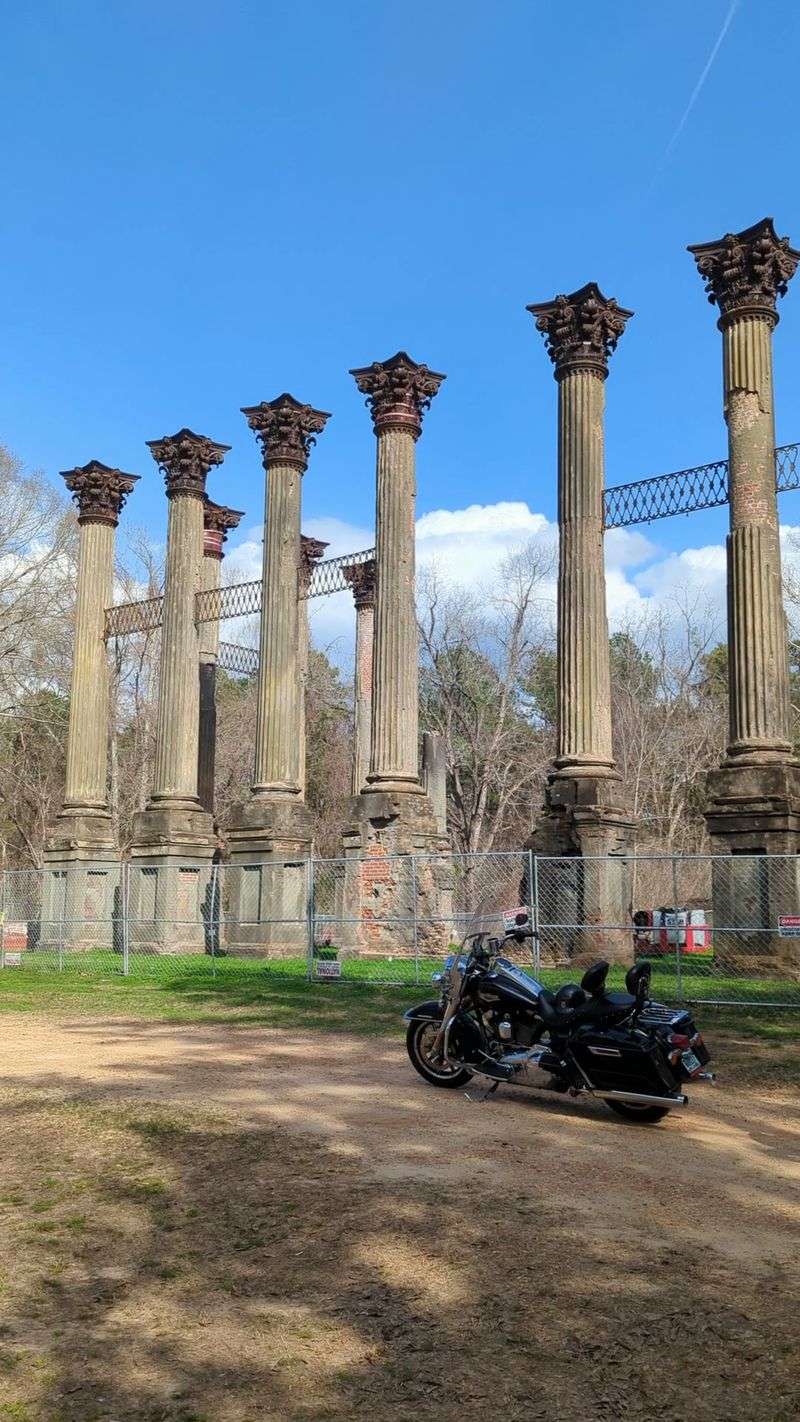
Keeping 23 massive columns standing for more than 130 years takes more than luck. The Mississippi Department of Archives and History has undertaken restoration work at Windsor Ruins to slow the natural deterioration of the columns and ensure they remain safe for visitors to view up close.
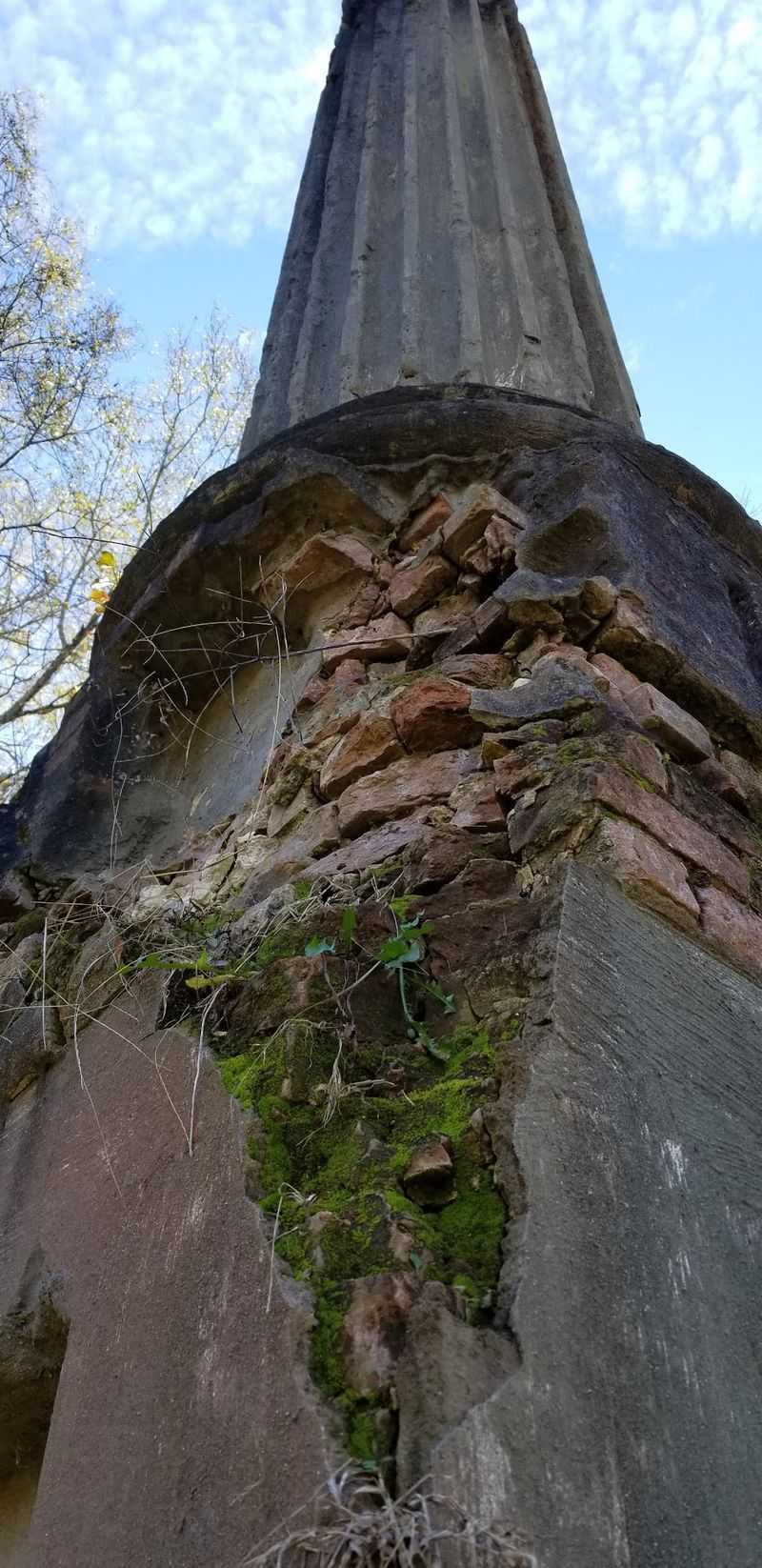
Part of that effort has included stabilization work on the column bases and the installation of protective barriers to keep vehicles and visitors from getting too close to the most vulnerable sections. At various points in recent years, fencing surrounded parts of the ruins during active restoration phases, though recent visitors have noted that much of that temporary fencing has been removed.
The fact that a state agency actively manages and maintains this site matters. Without ongoing attention, the columns would deteriorate far more quickly given the Mississippi climate.
Preservation work here is not glamorous, but it is what allows future generations to stand in the shadow of these remarkable structures and feel something real.
The Slave Labor That Built Windsor
Windsor Ruins cannot be fully understood without acknowledging the people who actually built it. The mansion was constructed using enslaved labor, as was common practice on large Mississippi plantations during the antebellum period.
The scale of the structure reflects how much human effort and suffering went into its creation.
The columns that visitors admire today were shaped, lifted, and set into place by people who had no freedom and no ownership over the work of their hands. That reality sits alongside the architectural beauty of the ruins in a way that is impossible to ignore once you know it.
Some of the historical placards on-site address this history, offering visitors a more complete picture of what Windsor represented. Recognizing that context does not diminish the craftsmanship on display.
Rather, it adds depth to the experience and gives visitors a more honest way to engage with what they are looking at.
Practical Tips Before You Visit
A few practical details can make your visit to Windsor Ruins more comfortable. There are no restroom facilities on-site, so plan accordingly before you arrive.
There are also no food vendors, gift shops, or stores nearby, so bringing water and snacks is a smart move, especially during hot Mississippi summers.
Bug spray is strongly recommended, particularly in warmer months. Mosquitoes can be persistent in this wooded area, and visitors who plan to spend time reading the historical placards will appreciate having some protection.
Comfortable walking shoes are helpful since the path is gravel.
The site is open daily from 8 AM to 7:30 PM and is completely free to visit. The drive in through the winding backroads is scenic, so allow a little extra travel time if you are coming from a highway.
Most people spend between 15 and 30 minutes at the ruins, though some stay longer to soak in the quiet.
Mark Twain and the Literary Connection
Mark Twain mentioned Windsor in his 1883 book “Life on the Mississippi,” describing the mansion as an impressive structure visible from the river. That literary reference has given Windsor Ruins a small but meaningful place in American literary history, adding another layer to an already rich story.
Twain traveled the Mississippi River extensively and wrote about the towns, plantations, and landmarks he observed along the way. His mention of Windsor speaks to how prominent and visually striking the mansion must have appeared from the water during its operational years.
Knowing that one of America’s most celebrated writers once took note of this same place adds a quiet thrill to a visit. The mansion Twain saw no longer exists, but the columns he could have glimpsed from a passing steamboat are still standing in the Mississippi woods, outlasting both the house and the era that produced them.
Why Windsor Ruins Stays With You Long After You Leave
There are historic sites you visit, check off a list, and move on from without a second thought. Windsor Ruins is not one of those places.
Something about standing in the open air surrounded by 23 columns that have outlasted everything around them creates a feeling that lingers well after you drive away.
The silence helps. The scale helps.
The knowledge that these columns watched a mansion rise and fall, survived a civil war, and kept standing through more than a century of Mississippi weather helps too. The story has enough weight to it that most visitors find themselves thinking about it for days afterward.
Windsor Ruins is free, quiet, and genuinely unlike anything else in the region. Whether you are a history enthusiast, a photographer, or simply someone passing through on a long road trip, the columns have a way of making you stop, look up, and feel the full reach of time.
Share this story