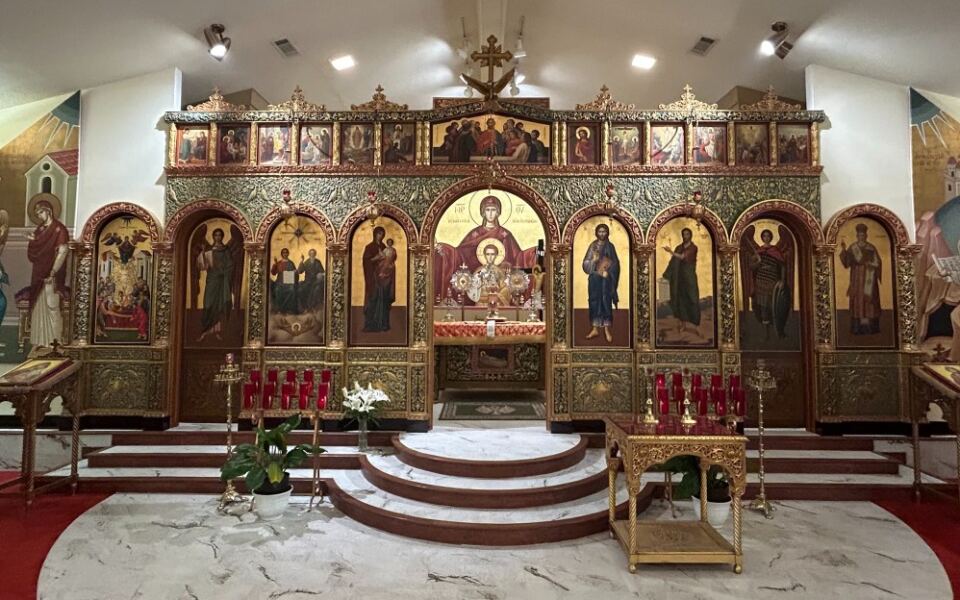
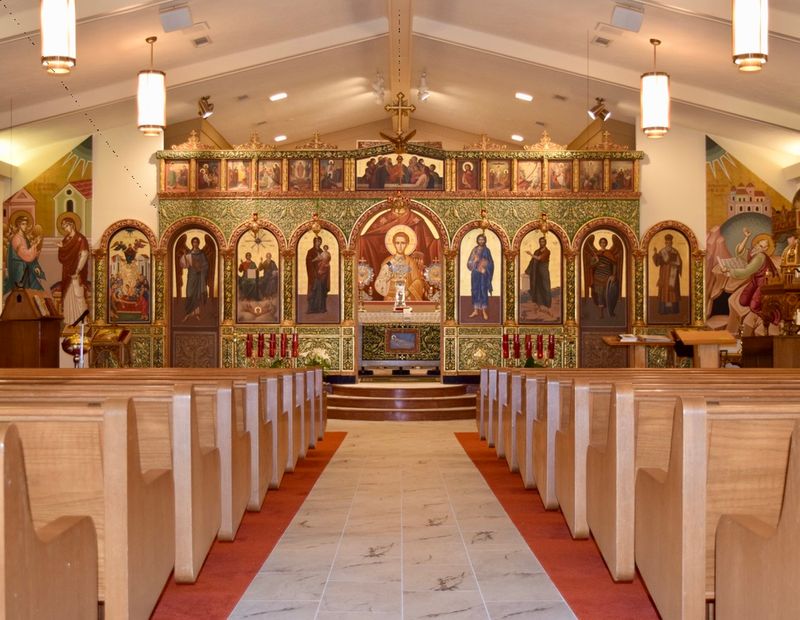
A whole wall of sacred icons greets worshippers at one church in Mississippi. I keep thinking about how many faces and stories one wall can hold at once.
The congregation belongs to the Orthodox Christian tradition, which has honored icons for many centuries. The church carries two names, one honoring the Holy Trinity and one honoring the apostle John.
That mix of names made me curious right away.
I like that a quiet building can carry so much meaning. I can’t imagine hurrying past that wall without taking a long, slow look at every face.
Each icon is created with care, and each one has a purpose. Visitors can learn a lot just by standing still and looking closely.
The listed hours include weekdays and Sunday mornings. Would you stop by?
A Sacred Wall Is The First Thing That Grabs Your Attention
Holy Trinity – Saint John the Theologian Orthodox Church is home to a sacred wall covered in religious icons. That wall gives this Mississippi church its character and shapes how worship feels from the very first moment.
Orthodox churches around the world are arranged with an icon screen at the front of the worship space. It stands between the main gathering area and the altar, and it draws every eye toward the front.
The icons follow long-standing patterns that have been handed down through many generations of believers. Worshippers know those patterns the way you know a family photo that has hung on the same wall forever.
The wall works like a story told in faces, gestures, and color. Anyone can read it, even without a single word being spoken.
It works like a picture book for the whole congregation, with saints as the main characters. A visit is a simple way to learn about that tradition up close.
Even a few quiet minutes in front of it can change how you think about sacred art. That’s a lot of impact from one wall in the Jackson area.
There’s A Big Word For That Wall Of Icons
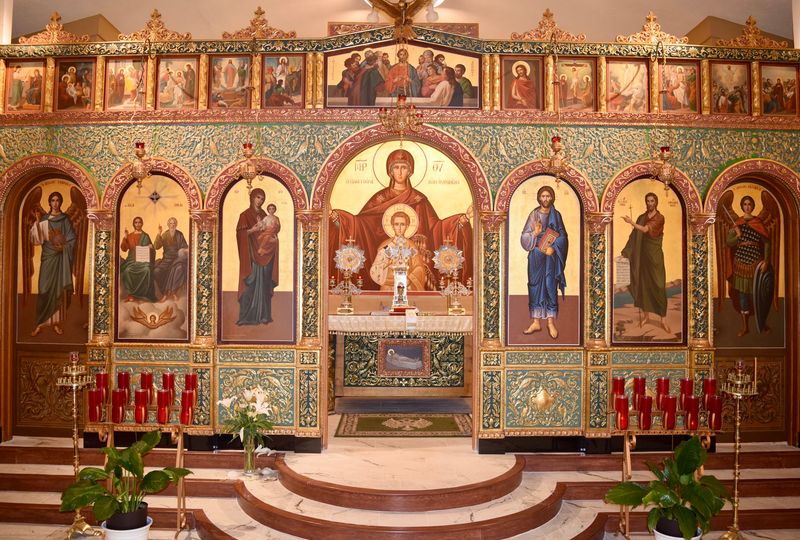
The word for that wall is iconostasis, and it’s a mouthful worth learning. It comes from Greek roots that point to a stand or screen made to hold icons.
In many Orthodox churches, the iconostasis includes a central set of doors, often called the Royal Doors. Those doors lead toward the altar area, and they open at certain moments in the service.
Icons on each side usually include Christ and the Theotokos, the Virgin Mary. Saints and feast day scenes often fill other rows, depending on how the church designs its wall.
Every church arranges its wall a little differently, so each one tells its own version of the story. That makes seeing the wall in person very different from scrolling through photos online.
Good news for beginners: nobody expects you to memorize the whole layout before you arrive at the door. A little curiosity is plenty, and asking questions is a natural way to learn more.
Holy Trinity – Saint John the Theologian Orthodox Church carries that ancient design into Jackson, Mississippi. That’s quite a lot of meaning packed into one very long word.
Look Closely And You’ll Start Spotting Familiar Faces
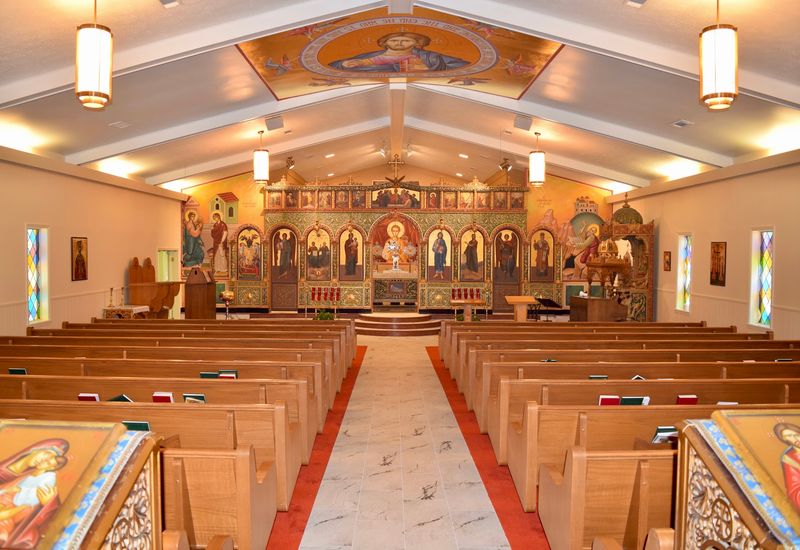
Who are all those faces looking back at you from the wall, anyway? In Orthodox tradition, icons commonly show Christ, the Virgin Mary, angels, apostles, and saints.
Each figure is usually labeled with a name written right on the icon, often in Greek or another language. That helps visitors figure out who is who, even without a guidebook in hand.
Halos are another clue, since they mark the holy figures in these images. Gentle expressions and steady gazes are part of the style, and they are meant to feel calm.
Orthodox icons usually avoid deep shadows and realistic perspective, which gives them a distinct look. The flat, glowing style is intentional, and it points beyond everyday space toward something greater.
Take your time with the wall, because the small details reward a slower, more careful look. Names, colors, and symbols all work together in each image to tell a clear story.
At this Jackson church, those details are part of worship, not wall decoration. Spotting a few familiar names on your first visit is a fun little win for any newcomer.
The Icons Here Follow A Tradition Of Writing, Not Just Painting
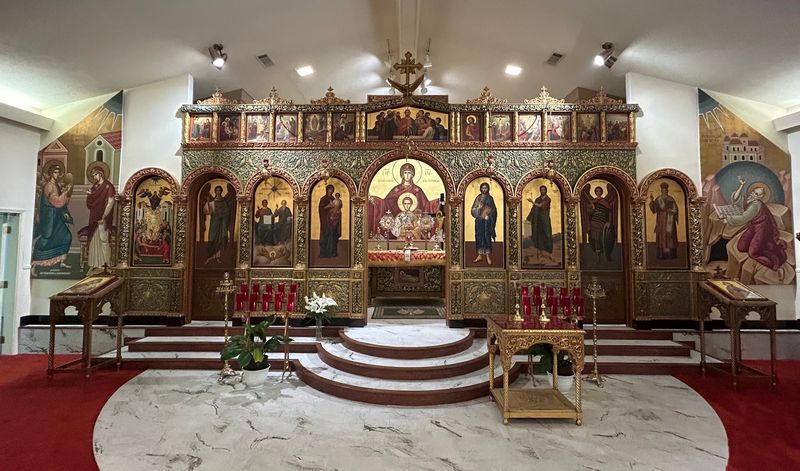
Orthodox iconographers often say they write an icon instead of painting one, and the choice of word matters. It shows that an icon is understood as scripture told in images rather than as simple decoration.
Traditional icons are often made with egg tempera on carefully prepared wood panels. Many also use gold leaf for glowing backgrounds that make the saints seem to shine.
Prayer and fasting often come before an iconographer begins work, according to many Orthodox traditions. The goal is faithfulness to the tradition, and showing off a personal style is not the point.
That’s why icons from different centuries can look surprisingly alike to a first-time visitor. A face written today may follow a pattern that was used a thousand years ago.
That continuity gives the sacred wall at this Mississippi church a deep sense of connection. Every icon links the congregation in Jackson to believers from many centuries and many countries.
It’s a bit like singing a favorite song that millions of people have sung before you. The tune stays the same, even while the singers change over time.
The Church Is Named For A Beloved Apostle

Saint John the Theologian was one of the twelve apostles, and the church carries his name proudly. Orthodox Christians honor him as the traditional author of the Gospel of John and the Book of Revelation.
The title Theologian is given to only a few saints in Orthodox tradition. It points to his deep writing about who God is and how God relates to the world.
His Gospel opens with the famous line, In the beginning was the Word. Those words are among the most quoted lines in all of Christian writing, and they still echo today.
In icons, he is often shown holding a Gospel book or a scroll. Look for that detail whenever you see his icon in an Orthodox church.
A church name tells you what a community treasures, and this one is clear about it. Holy Trinity – Saint John the Theologian Orthodox Church pairs a central Christian teaching with one of Jesus’ closest followers.
Orthodox calendars list the apostle’s commemoration on September 26. That date is a nice one to circle if you like to plan visits around feast days.
The Holy Trinity Name Has A Famous Artwork Behind It
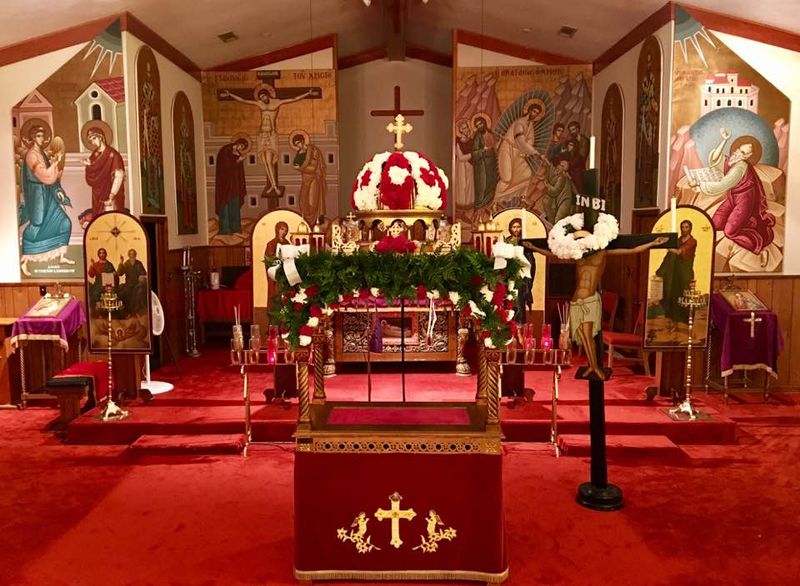
The other half of the church name points to the Holy Trinity, a central teaching of Orthodox Christianity. It describes God as Father, Son, and Holy Spirit, three persons in one being.
Orthodox churches often express that idea in art as well as in spoken prayers and hymns. One famous example is the Trinity icon by the Russian iconographer Andrei Rublev.
He created it in the early fifteenth century, and it remains one of the best-known icons in the world. It shows three angelic figures seated around a table, based on a visit to Abraham in Genesis.
Many viewers notice how the circle of figures feels calm, balanced, and deeply connected. Nobody has to be an art expert to sense that quiet harmony in the composition.
Icons of the Trinity, both famous and simple, appear in many Orthodox settings around the world. Holy Trinity – Saint John the Theologian Orthodox Church carries that theme right in its name.
Even a short stop in Jackson, Mississippi, can turn into a small lesson in Christian art. Not a bad return on just a few minutes of curiosity and a short drive.
Here’s The Address And Hours Worth Saving
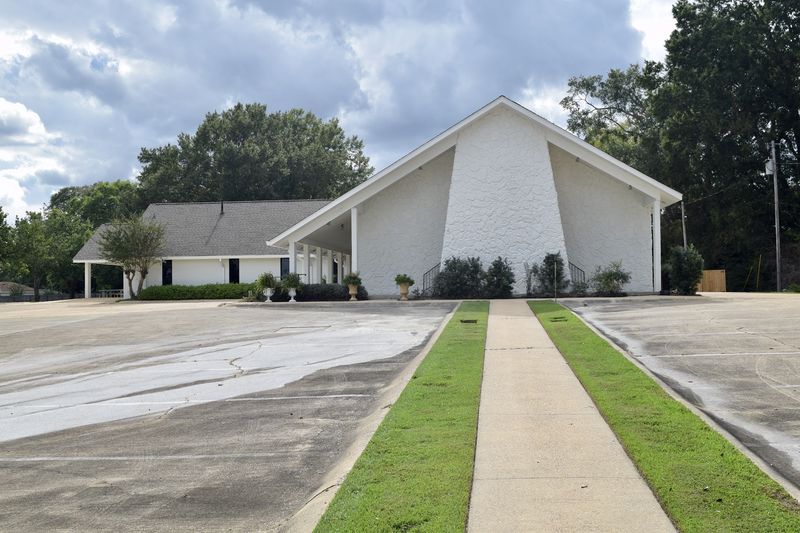
The address is 5725 S Pear Orchard Rd, Jackson, MS 39211, so plug that into your map app. The church sits in the south part of Jackson, which is the capital city of Mississippi.
Listed hours run from 9 AM to 4 PM on Monday, Tuesday, Wednesday, Thursday, and Friday. Sunday hours are shorter, running from 9 AM to 1 PM, so mornings are the time to go.
Saturday shows as closed, so plan your visit around that day. Because schedules can change, a quick check of the church’s latest information helps before you go.
Sunday morning is the natural time to see the community gathered in its worship space. Weekday visits may suit anyone who prefers a quieter pace and a closer look.
Either way, give yourself time to stand still, because the wall rewards a patient and careful look. The location makes it a simple stop for anyone already exploring Jackson.
Pair it with other plans in the city, and the whole day gets richer without much effort. Just remember that it is a working house of worship first, and sightseeing comes second.
A Few Simple Manners Make Your Visit Smoother
Respect goes a long way when you visit any Orthodox church, and that includes this one. Quiet voices and calm movement fit the setting well, especially near the icons at the front.
Dress comfortably but modestly, the same way you would for any house of worship in Mississippi. Phones can stay in a pocket during services, and silent mode is a smart idea for everyone.
Before taking any photos, ask a church member whether it’s okay to do so inside. Some spaces have their own rules, and asking first is always the most polite move.
You may notice worshippers bow, light candles, or kiss an icon as a sign of love. Visitors are not expected to copy those actions unless they feel comfortable doing so.
Standing respectfully and watching quietly is a perfectly good way to take part. Questions are welcome in most Orthodox communities, especially once the services have ended.
A simple hello to a church member can open the door to a great explanation about the wall. Curiosity paired with kindness is the best ticket you can bring to any sacred space.
Candles, Chants, And Icons Work Together
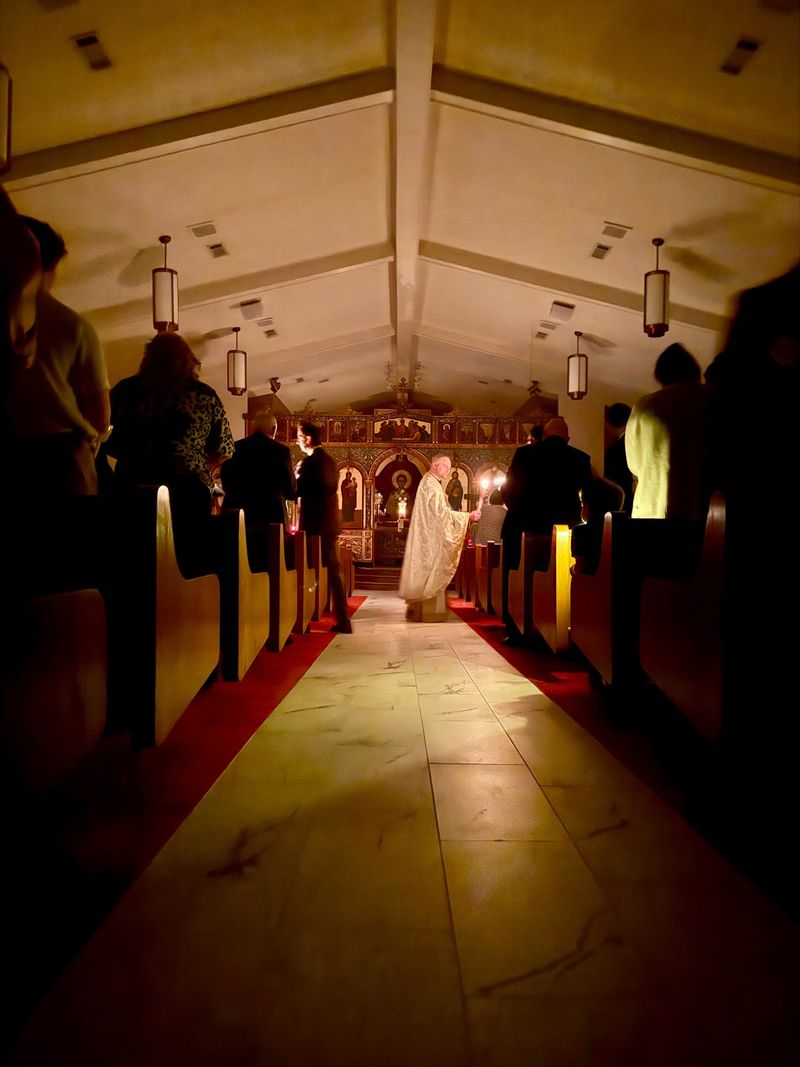
Orthodox worship usually engages more than the eyes, and the icon wall is only one part of it. Chanting, candles, and incense are common features of services in Orthodox churches around the world.
Worshippers often light a candle in front of an icon as a quiet, personal prayer. Standing, bowing, and making the sign of the cross are familiar parts of the rhythm.
Services follow a long tradition, so the pattern feels both ancient and wonderfully steady. In Orthodox practice, the icons are honored rather than worshipped, which is an important distinction.
They are seen as windows that point toward the people and truths they depict. That idea explains why the wall carries so much weight for the whole congregation here.
Holy Trinity – Saint John the Theologian Orthodox Church brings that living tradition to Jackson, Mississippi. For anyone curious, the listed weekday and Sunday hours make a first visit easy to plan.
One sacred wall can lead to a long list of good questions and a few surprises. I’d say that is a great reason to go and find some answers in person.
Share this story