Oklahoma has a way of surprising you when you least expect it. One moment you are rolling through open grassland under a wide sky, and the next you are standing at the edge of ancient granite boulders, cave openings, and rocky walls that feel like they belong in another world entirely.
Charon’s Garden Trail in the Wichita Mountains is exactly that kind of place, where the landscape shifts dramatically and rewards anyone willing to lace up their boots. If you have been sleeping on this corner of southwestern Oklahoma, consider this your wake-up call.
Where Charon’s Garden Trail Sits on the Map
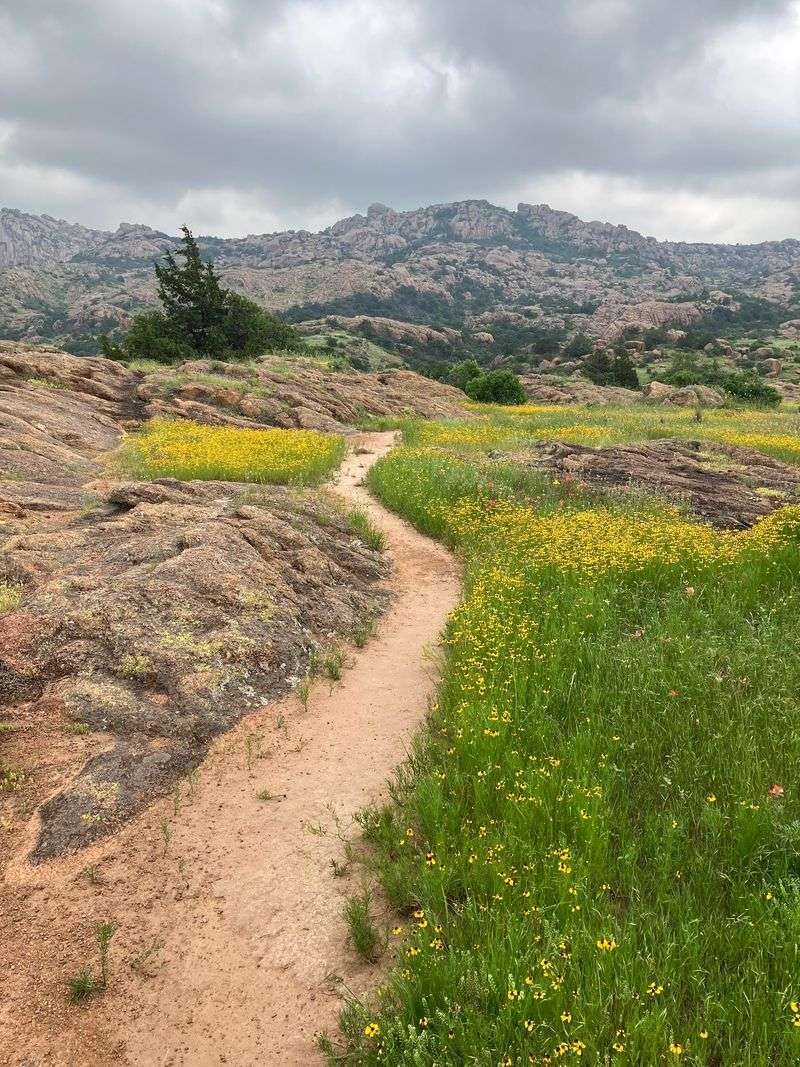
Tucked inside the Wichita Mountains Wildlife Refuge near Indiahoma, Oklahoma, Charon’s Garden Trail occupies one of the most geologically dramatic corners of the entire state. The refuge itself sprawls across nearly 60,000 acres of mixed-grass prairie, granite peaks, and rocky canyons in Comanche County, making it one of the largest wildlife refuges in the country.
The trail sits in a section of the refuge known for its ancient exposed granite, which geologists estimate to be around 500 million years old. Getting there is straightforward enough.
From Lawton, you head west on Highway 49 into the refuge, following signs toward the Charon’s Garden Wilderness Area.
The surrounding landscape shifts noticeably as you approach. Prairie grasses give way to scattered boulders, then to towering rock formations that rise sharply from the flat terrain.
Visitors often say the transition feels almost theatrical, like the land is slowly pulling back a curtain to reveal something far older and stranger beneath. The area is managed by the U.S.
Fish and Wildlife Service, and the trail connects hikers to some of the most rewarding terrain in southwestern Oklahoma.
The Wilderness Area Behind the Trail’s Name
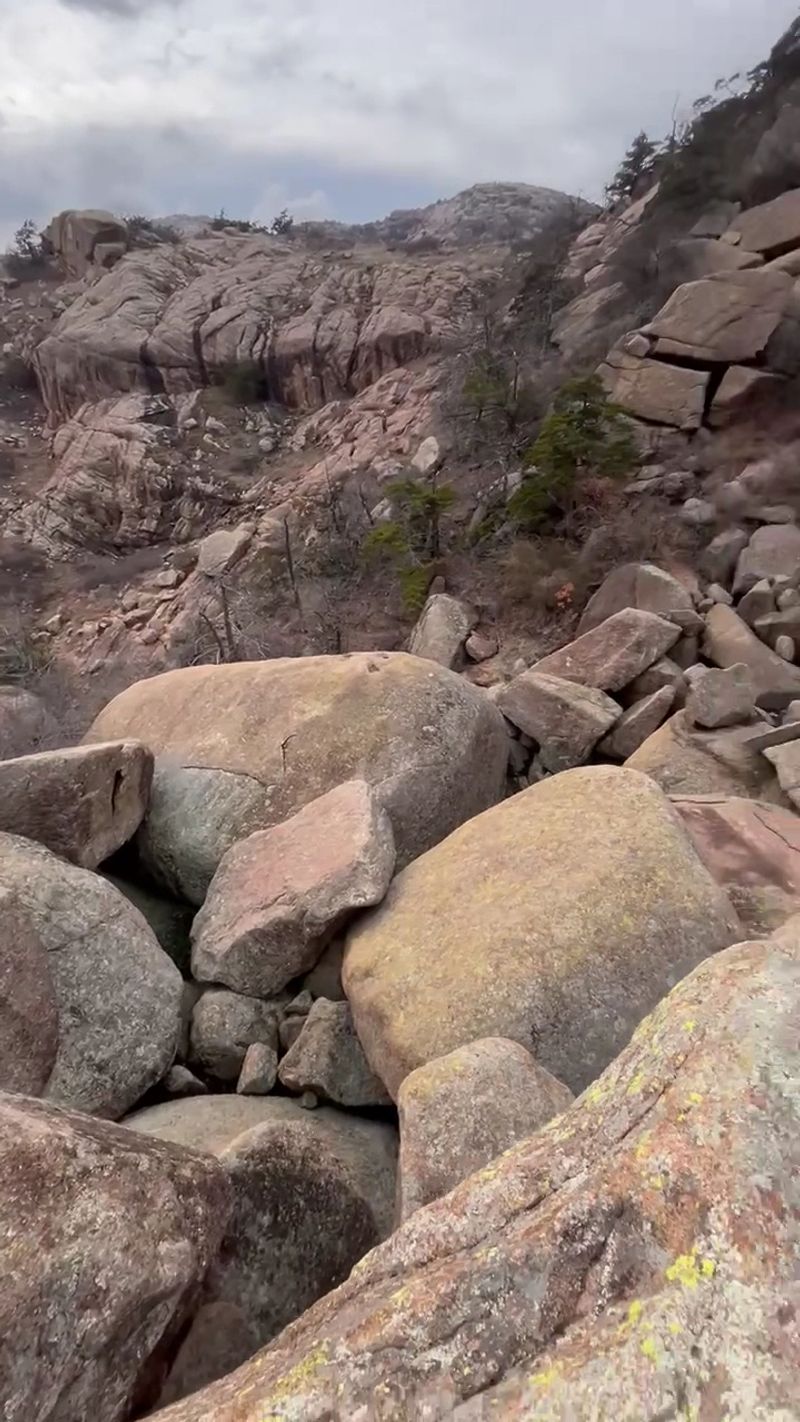
Named for the Greek mythological ferryman who guided souls across the river to the underworld, Charon’s Garden carries a name that matches its otherworldly character. The wilderness area was designated in 1970 and covers roughly 5,000 acres within the refuge, making it one of the few true wilderness areas in Oklahoma.
The name is not just dramatic flair. Standing among the boulder fields and shadowed cave openings on a grey afternoon, the landscape genuinely earns its mythological title.
The granite formations create narrow passages, hidden alcoves, and shadowy recesses that give the terrain a moody, ancient quality unlike anything else in the region.
Wilderness designation means the area is kept free of motorized vehicles and permanent structures, preserving the raw character that makes it so compelling. No roads cut through the interior.
No power lines interrupt the skyline. What you encounter is essentially the same landscape that existed here centuries ago, shaped only by wind, water, and time.
For hikers who appreciate wild places with genuine personality, the backstory behind this trail adds a layer of meaning to every step taken inside it.
Ancient Granite That Defines the Terrain
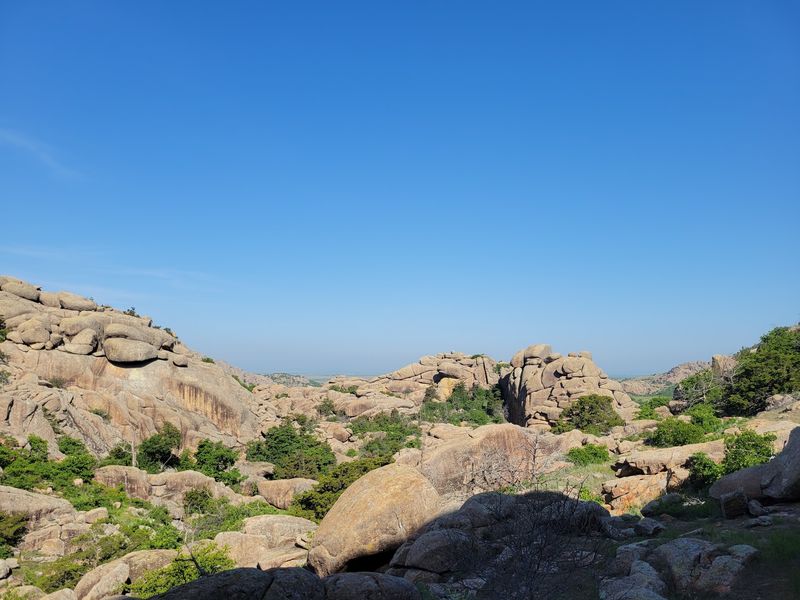
Half a billion years old and counting, the granite formations along this trail are among the most ancient exposed rock in the central United States. These are not soft sandstone cliffs that crumble at the touch.
The granite here is dense, crystalline, and built to last, which is exactly why it has survived while softer surrounding rock eroded away over millions of years.
Walking through the boulder fields feels a bit like wandering through a giant’s scattered toy box. Massive rounded rocks sit stacked and balanced in ways that seem to defy gravity, their surfaces covered in patches of orange and grey lichen that add color to the otherwise earthy palette.
Some boulders are the size of small houses.
The geology also creates the caves and overhangs that make this trail so visually interesting. As the granite fractured and shifted over geological time, gaps and chambers formed between the boulders, creating natural shelters and shaded passages that hikers can explore along the way.
Scenery consistently earns top mentions from visitors who have walked the trail, and the rock formations are almost always what people remember most vividly long after the hike is done.
Crab Eyes: The Rock Climbing Landmark
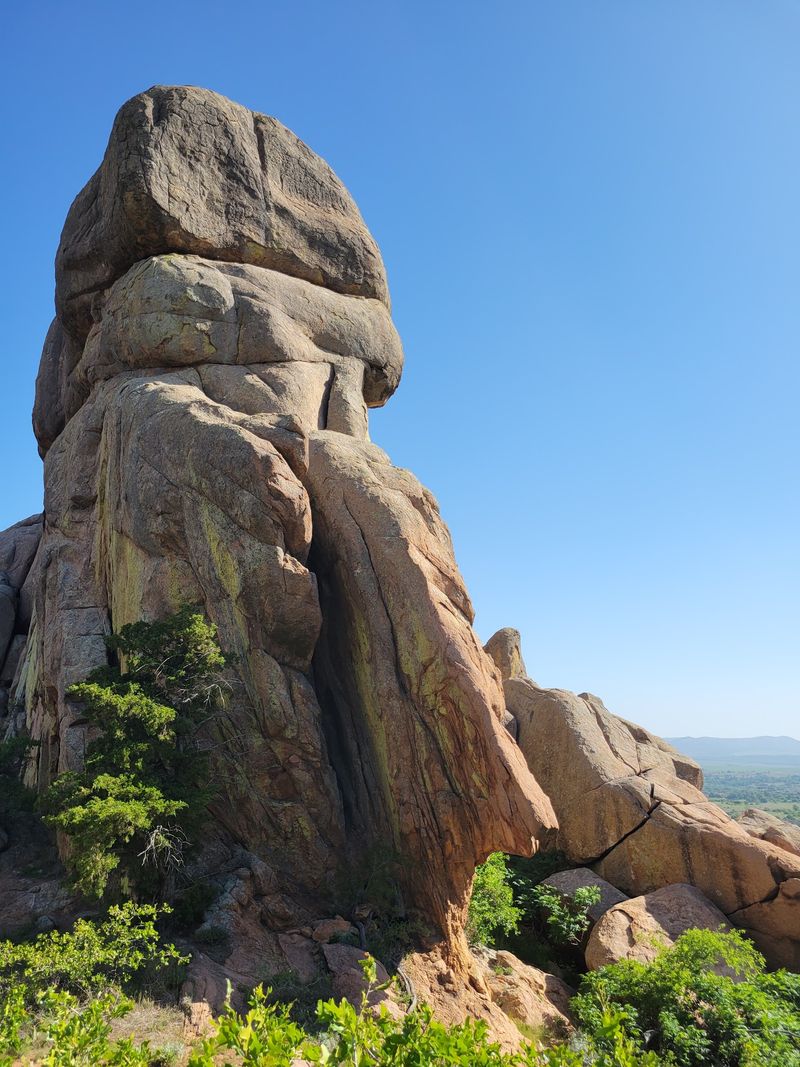
Among the many rock features along the trail, Crab Eyes stands out as the one that draws the climbing crowd back again and again. The formation gets its name from two rounded granite domes that sit side by side, resembling a pair of wide-set eyes when viewed from below.
They are unmistakable once you know what you are looking at.
Climbers describe the experience at Crab Eyes as genuinely fun rather than just technically demanding. The routes offer a range of difficulty levels, making the spot accessible to people who are just getting into climbing while still offering enough challenge to keep experienced climbers engaged.
Even hikers who have no interest in technical climbing often scramble up the side of the formation to reach the top of the eyes.
The view from up there is worth every bit of the effort. You can see across the refuge in multiple directions, with prairie stretching out in one direction and more granite peaks rising in another.
Crab Eyes also serves as a gateway to other climbing crags in the area, including a spot known as Lost Dome, making it a natural hub for anyone exploring the rock-climbing possibilities within the Wichita Mountains.
Post Oak Falls and the Seasonal Water Feature
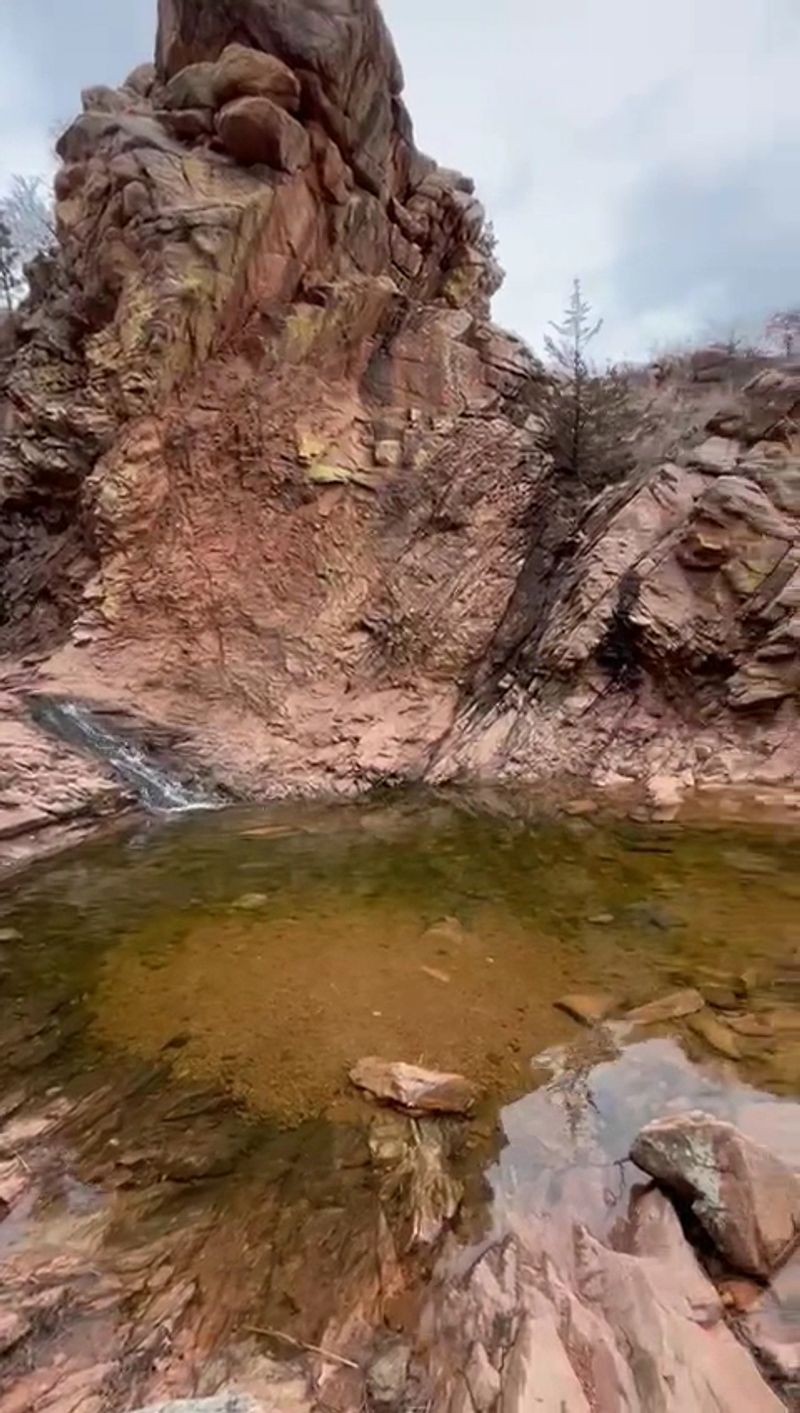
About a mile into the trail, hikers reach Post Oak Falls, a natural waterfall tucked into a rocky canyon setting that feels genuinely surprising given the surrounding dry terrain. The falls cascade over granite ledges into a small pool below, and the whole scene is framed by post oak trees and native vegetation that thrive in the moisture-rich microclimate near the water.
Whether the falls are running depends heavily on the season and recent rainfall. Visitors who arrive during wetter months or shortly after significant rain are treated to a lively cascade with real volume and sound.
During drier stretches, the falls slow to a trickle or pause altogether, though the rocky canyon setting remains beautiful regardless of water levels.
Regulars mention that the falls are always worth checking even in dry conditions because the surrounding scenery holds up on its own. The short distance from the trailhead makes Post Oak Falls an achievable destination for hikers of most fitness levels, including families with older children who can handle a mile of rocky terrain.
Spotting wildlife along the way adds to the appeal, since the refuge supports a rich variety of birds, mammals, and reptiles that are often seen near water sources.
Wildlife Encounters Along the Route
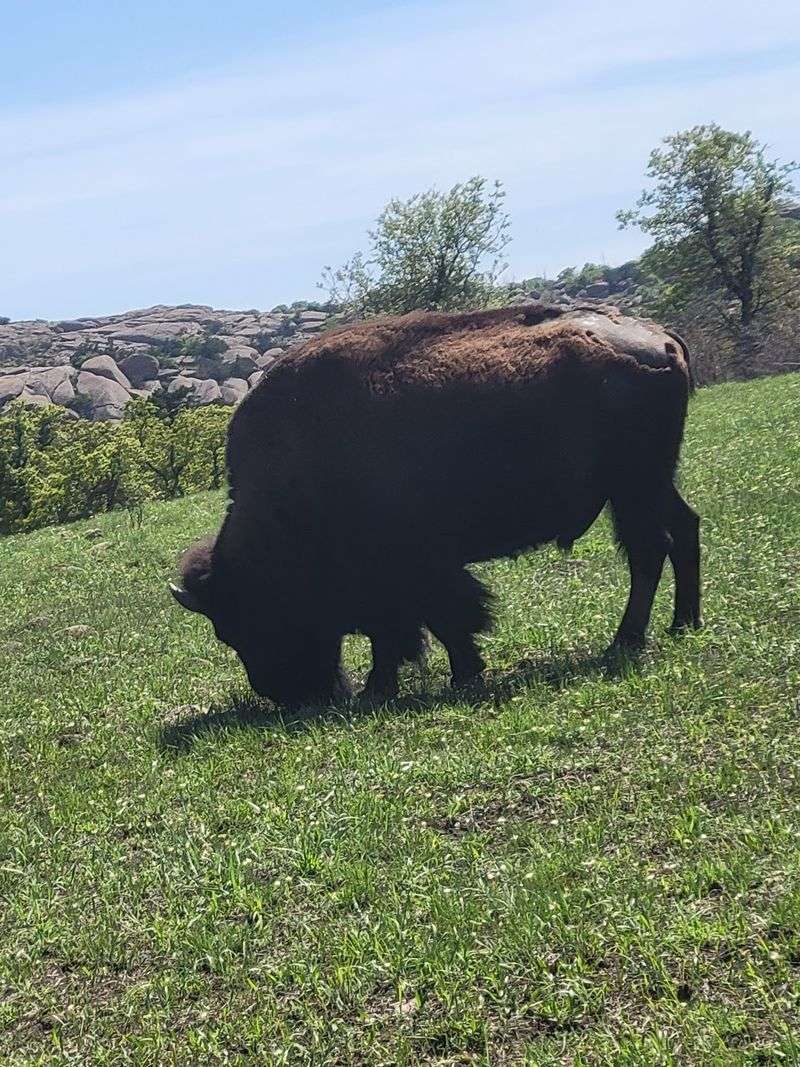
Few hiking trails in Oklahoma come with the wildlife backdrop that Charon’s Garden delivers almost as a matter of routine. The Wichita Mountains Wildlife Refuge is home to free-roaming bison herds, Texas longhorn cattle, Rocky Mountain elk, white-tailed deer, and wild turkey, among dozens of other species.
Spotting one or more of these animals on or near the trail is genuinely common rather than a lucky exception.
Bison sightings tend to generate the most excitement, and understandably so. Watching a massive bison move through the rocky terrain near the trail is a reminder that this landscape has been shaped by large animals for thousands of years.
Visitors are advised to maintain a safe distance and never approach bison, as they are wild animals capable of moving quickly and unpredictably.
Beyond the large mammals, the trail also rewards patient observers with a variety of bird species, lizards, and the occasional Texas horned lizard, a species the refuge actively works to protect. Visitors consistently mention wildlife as a highlight of the experience, and the combination of dramatic scenery plus active animal sightings makes each trip feel like a genuinely fresh experience rather than a repeat of the last one.
The Cave Openings and Rocky Overhangs
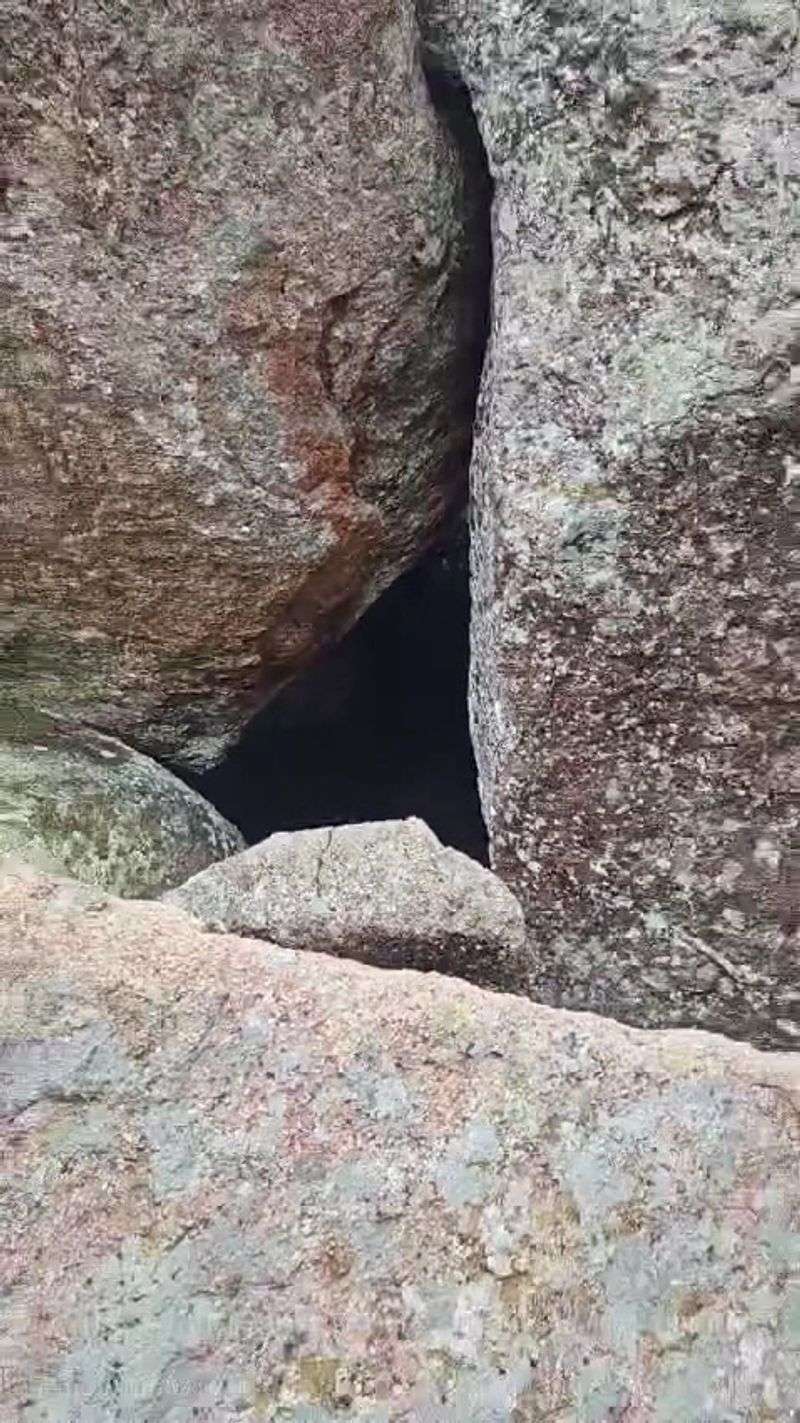
One of the defining characteristics of the Charon’s Garden area is the way the granite formations create natural caves and overhangs that invite exploration. These are not deep underground caverns requiring gear and headlamps.
Rather, they are boulder caves formed by massive rocks leaning against each other, creating shadowed chambers and low-ceilinged passages that hikers can peer into or carefully enter.
The overhangs are particularly striking in afternoon light, when the sun casts long shadows that deepen the sense of depth and mystery in the rock formations. Some of the overhangs are large enough to shelter a small group from rain, and their cool interiors offer welcome relief on hot Oklahoma summer days.
Exploring the cave openings is part of what gives this trail its adventurous character. The terrain demands attention and a bit of physical confidence, since navigating around and between boulders requires some scrambling and route-finding.
Children who are comfortable on rocky terrain tend to love this aspect of the hike, treating the boulder caves like a natural playground. Adults who appreciate geology or simply enjoy spaces that feel genuinely wild tend to linger near the overhangs longer than almost anywhere else along the route.
Prairie Meets Rock: The Dramatic Landscape Contrast
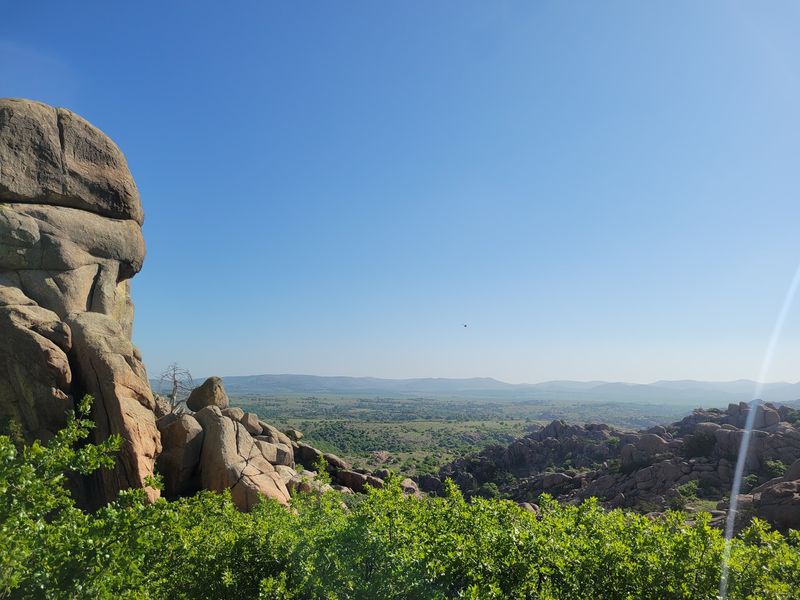
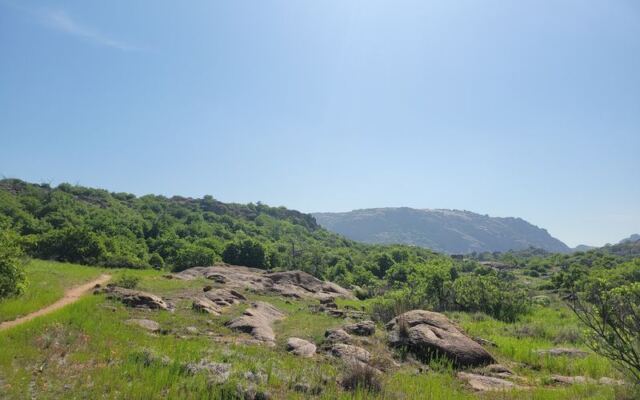
What makes Charon’s Garden Trail visually memorable is not just the rocks or just the prairie but the tension between the two. Standing at certain points along the route, you can look in one direction and see open grassland rolling gently toward the horizon, and turn 180 degrees to face a wall of ancient granite rising sharply from the earth.
The contrast is arresting in a way that photographs only partially capture.
The mixed-grass prairie that dominates much of the Wichita Mountains refuge provides the green, softly textured foreground against which the granite formations read as bold and dramatic. Wildflowers appear in the prairie sections during spring and early summer, adding color to the mix and attracting pollinators that buzz through the grass between the boulders.
Scenery is the most frequently mentioned topic among people who have visited, and this landscape duality is almost certainly a big reason why. The trail does not offer a single type of scenery from start to finish.
Instead, it moves through genuinely different visual environments within a relatively compact distance, keeping the experience fresh and engaging throughout. For photographers, the interplay of open sky, golden grass, and dark granite creates compositions that are difficult to find anywhere else in the state.
Who the Trail Is Best Suited For
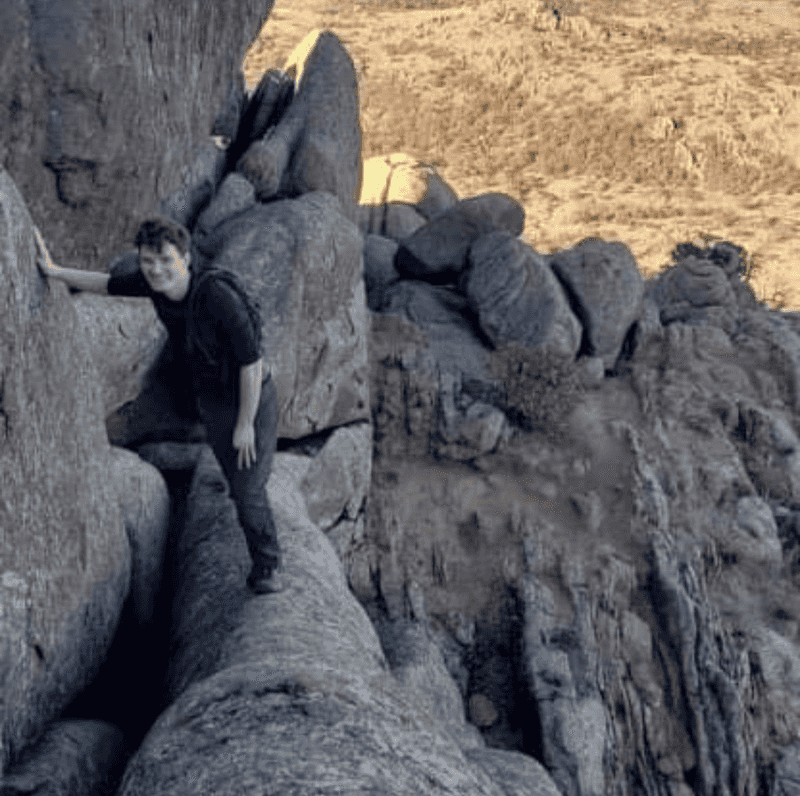
Charon’s Garden Trail leans toward the adventurous end of the hiking spectrum. The terrain involves scrambling over and around boulders, navigating uneven rocky surfaces, and covering ground that does not always follow a smooth, well-groomed path.
Hikers who are comfortable on irregular terrain and reasonably fit will find the experience highly rewarding.
That said, the trail is not extreme by any measure. The distance to Post Oak Falls is roughly a mile, making it achievable for most adults and for children who are confident on their feet and enjoy a physical challenge.
Families with young kids who are already comfortable on rocky trails often cite this as an excellent introduction to the Wichita Mountains.
Rock climbers specifically seek out this trail for access to Crab Eyes and other crags in the area, and the trail functions as a natural meeting point for the climbing community in southwestern Oklahoma. People who simply want to walk through striking scenery, observe wildlife, and explore naturally formed caves will also find plenty to enjoy without any technical skills required.
Comfortable, sturdy footwear with good grip is strongly recommended regardless of experience level, since the granite surfaces can be slippery when damp.
Seasons and the Best Time to Visit
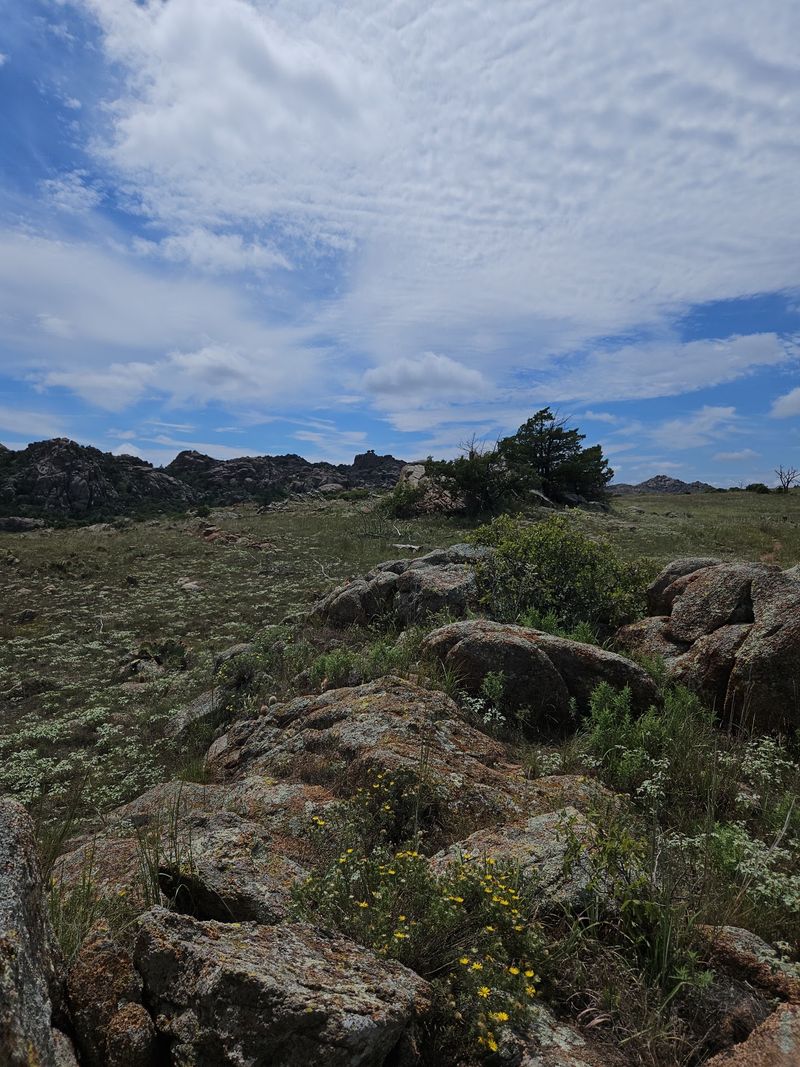
Every season brings a different version of Charon’s Garden Trail, and each one has its own merits. Spring is widely considered the most scenic window, when recent rainfall keeps Post Oak Falls flowing, wildflowers bloom across the prairie sections, and mild temperatures make hiking comfortable for most of the day.
Wildlife activity also tends to peak in spring as animals become more mobile after winter.
Summer brings heat that can be significant in southwestern Oklahoma, so early morning starts are strongly advisable during June, July, and August. The granite rock absorbs and radiates heat, which makes midday hiking genuinely uncomfortable and potentially risky without adequate water and sun protection.
The cave overhangs offer some shade relief, but early starts remain the smarter approach.
Fall is a quieter and often underrated time to visit. Temperatures cool, crowds thin considerably, and the prairie grasses take on warm golden tones that complement the granite beautifully.
Winter visits are possible since the trail is open year-round, and the bare landscape reveals rock formations that dense summer vegetation partially obscures. Cold mornings can make the granite surfaces icy, so appropriate footwear matters even more during winter months.
Each season genuinely offers something worth experiencing.
Hours, Access, and Practical Visiting Details
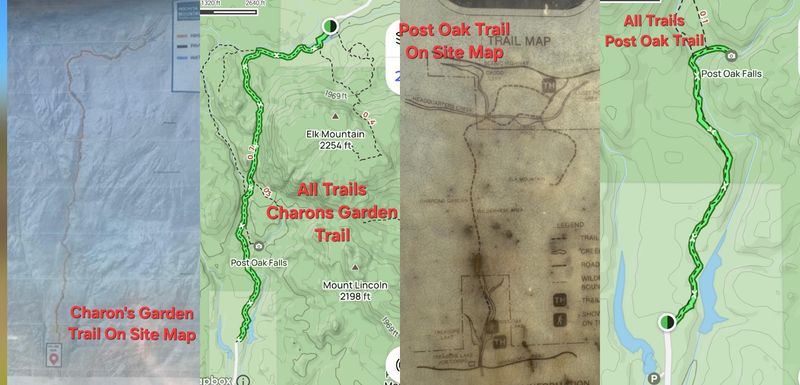
Charon’s Garden Trail operates on a simple and visitor-friendly schedule: it is open 24 hours a day, seven days a week, every day of the year. There is no window of access to worry about, which makes it easy to plan an early morning start to beat the summer heat or arrive at sunset for golden-hour views of the granite formations.
The trail falls within the Wichita Mountains Wildlife Refuge, which is a federally managed area operated by the U.S. Fish and Wildlife Service.
Accessing the refuge and the trail itself carries no admission fee, which makes this one of the more accessible outdoor experiences in Oklahoma for families and budget-conscious travelers.
For navigation, the official trail information is available through the refuge’s website at fws.gov, where a trail map specifically for Charon’s Garden Trail can be found. The refuge phone number is 580-429-3222 for anyone with specific questions before visiting.
Parking is available at designated areas near the trailhead, and cell service can be limited inside the refuge, so downloading maps or directions before leaving home is a practical step. Bringing enough water, especially during warmer months, is not optional given the exposed, rocky terrain.
Why This Trail Deserves a Spot on Your Oklahoma List
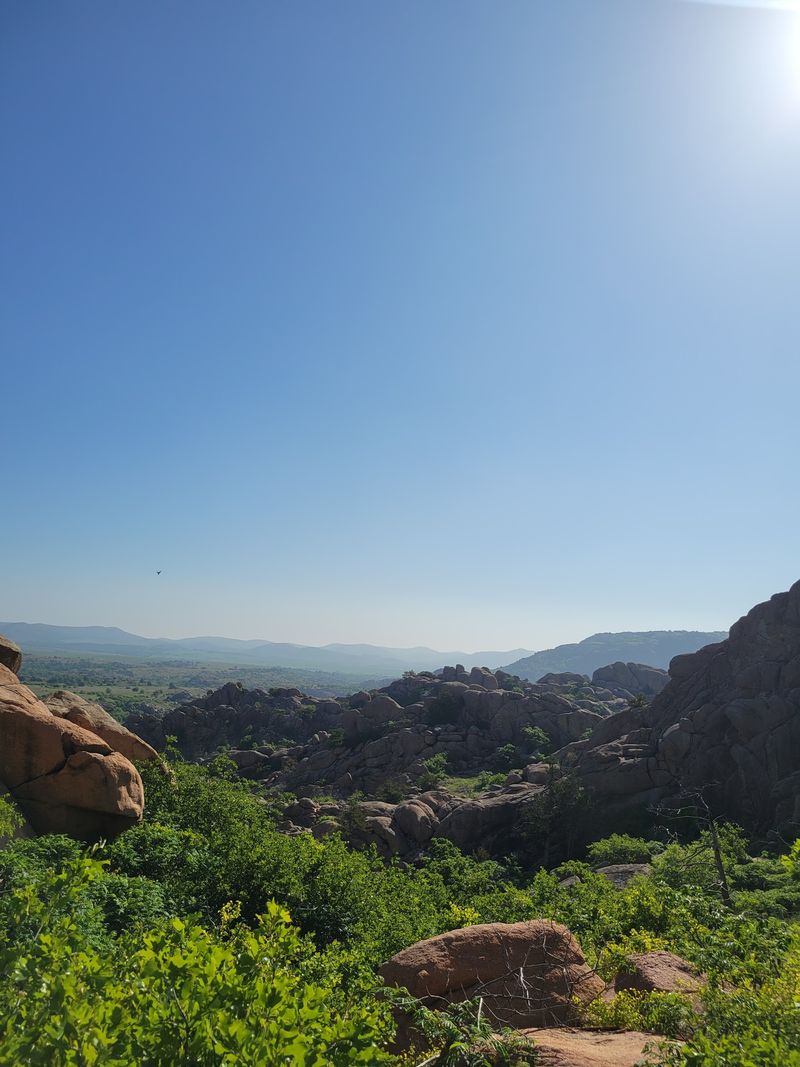
Not every trail earns the description of genuinely surprising, but Charon’s Garden consistently delivers something most visitors did not fully anticipate before arriving. The combination of ancient geology, wildlife encounters, a seasonal waterfall, and legitimate rock-climbing access in one relatively compact area is unusual for a trail of this length and accessibility.
Visitors who use it as an introduction to the Wichita Mountains often find themselves returning to explore further into the wilderness area and connecting to other features within the refuge. The trail functions as both a standalone experience and a gateway to a much larger landscape worth knowing well.
For Oklahoma locals who feel they have already seen most of what the state offers outdoors, Charon’s Garden has a habit of recalibrating that assumption. The landscape here is not the Oklahoma most people picture when they think of the state.
It is rockier, wilder, and more visually dramatic than the prairie stereotype suggests. Anyone who appreciates places that carry genuine character, reward curiosity, and look completely different from what surrounds them will find this trail a worthwhile addition to their personal map of Oklahoma worth visiting.
Share this story