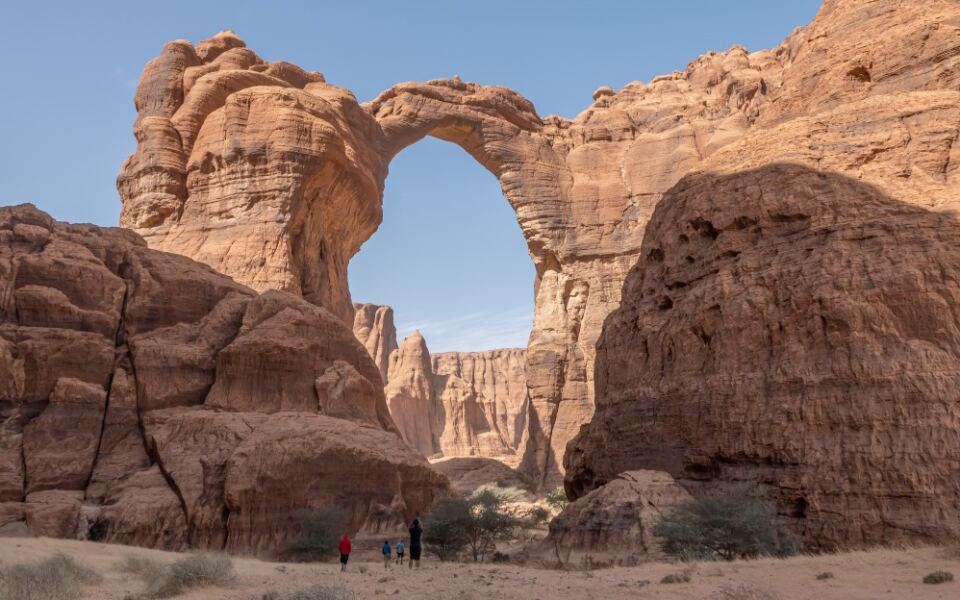
Africa is home to some of the most breathtaking landscapes on Earth, yet many of its most stunning natural wonders remain largely unknown to the average traveler. Beyond the famous safaris and well-worn tourist trails, there are remote plateaus, shimmering salt lakes, ancient forests, and towering mountains waiting to be discovered.
These lesser-known places offer raw beauty, rich history, and unforgettable experiences for those willing to venture off the beaten path. If you love nature and adventure, this list will open your eyes to a whole new side of Africa.
1. Ennedi Plateau, Chad
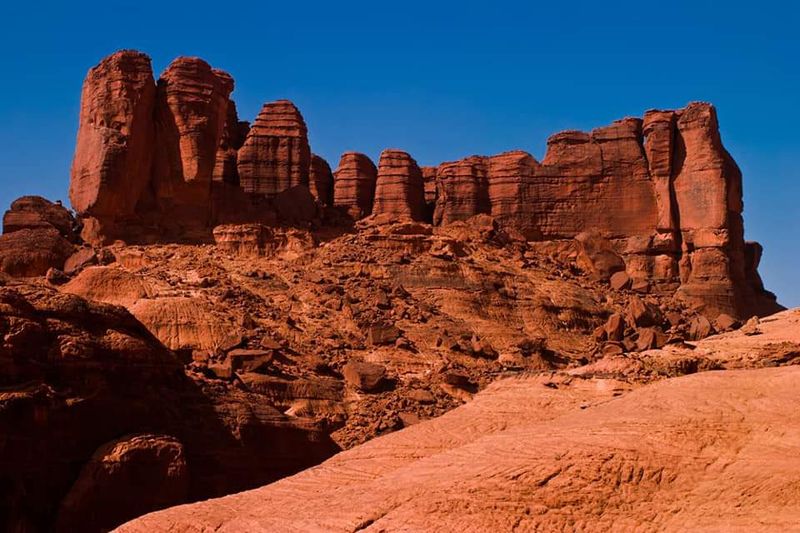
Rising dramatically from the Sahara Desert in northeastern Chad, the Ennedi Plateau looks like something out of a science fiction movie. Towering sandstone pillars, natural arches, and narrow gorges stretch across a landscape shaped by millions of years of wind and water erosion.
One of its most famous features is the Aloba Arch, one of the largest natural arches in the world.
Ancient rock paintings found throughout the plateau reveal that people and animals once thrived here thousands of years ago, when the Sahara was much greener. The area became a UNESCO World Heritage Site in 2016, recognizing its outstanding geological and cultural value.
Crocodiles still survive in isolated pools deep within the canyons, a surprising reminder of the region’s wetter past.
Getting there requires serious planning, but the reward is a landscape almost entirely free of crowds and full of wonder.
2. Tassili n’Ajjer, Algeria
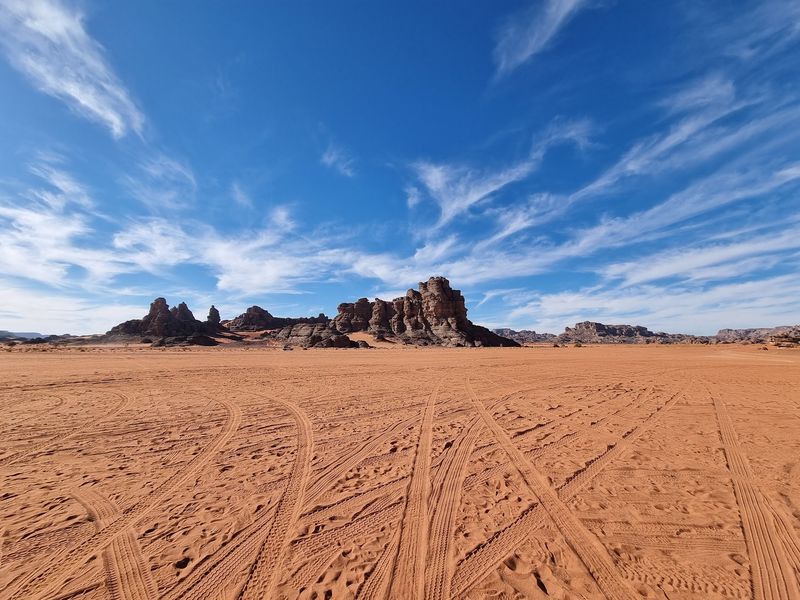
Tassili n’Ajjer is one of the most extraordinary places on the African continent, yet very few travelers have ever heard of it. Located in the Algerian Sahara, this UNESCO World Heritage Site features a stunning plateau of eroded sandstone that creates a forest of stone pillars and arches unlike anything else on Earth.
What truly sets Tassili apart is its incredible collection of prehistoric rock art. More than 15,000 drawings and engravings have been discovered here, depicting animals, human figures, and scenes from daily life dating back over 10,000 years.
Researchers believe these images show a time when the Sahara was alive with rivers, grasslands, and wildlife.
Visiting requires a permit and a guide, and the remote location means you will share the landscape with almost no one. For history lovers and nature enthusiasts alike, Tassili n’Ajjer is a deeply rewarding destination.
3. Bandiagara Escarpment, Mali
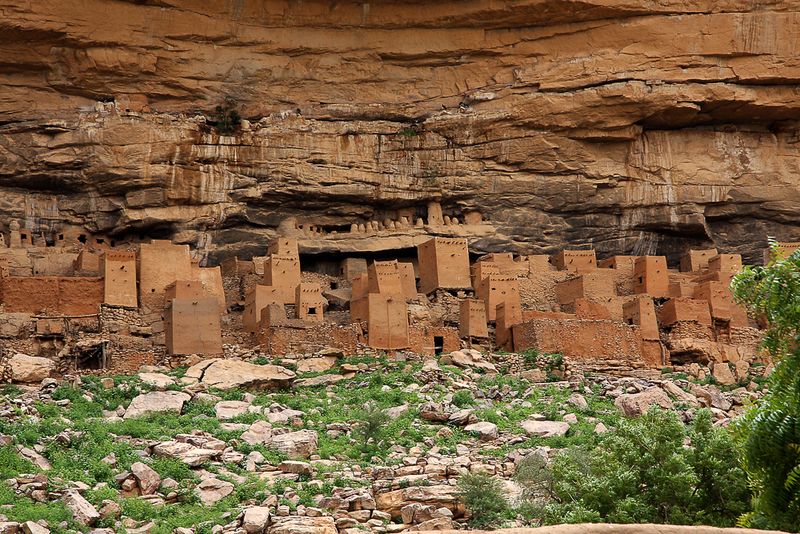
Carved by nature and shaped by human hands over centuries, the Bandiagara Escarpment in Mali is one of West Africa’s most awe-inspiring landscapes. This sandstone cliff stretches more than 150 kilometers and rises up to 500 meters above the plains below.
Perched along its rocky ledges are the ancient villages of the Dogon people, a community with one of the richest cultural traditions in all of Africa.
The Dogon have lived here for hundreds of years, building their homes directly into the cliff face to protect themselves from rival groups. Their art, ceremonies, and belief systems have fascinated scholars and travelers for generations.
The escarpment itself is a UNESCO World Heritage Site, recognized for both its natural beauty and cultural significance.
Hiking along the cliffs offers breathtaking views and a rare chance to connect with a way of life that has changed very little over the centuries.
4. Lake Assal, Djibouti
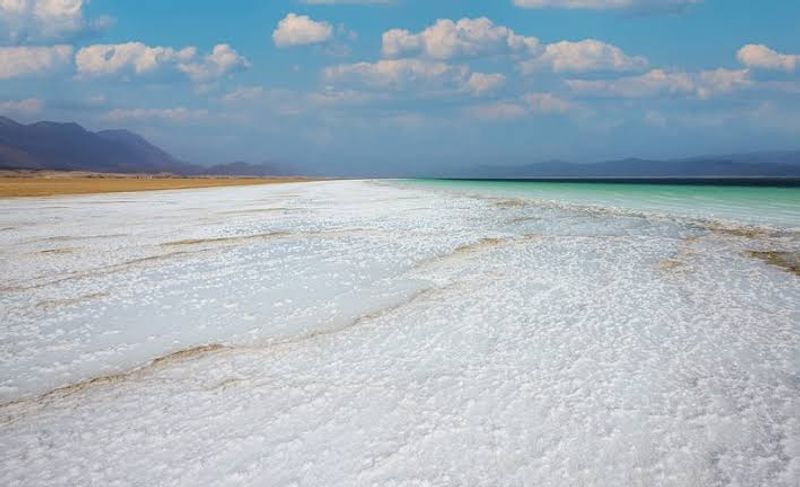
Sitting 155 meters below sea level, Lake Assal holds the title of the lowest point in Africa and one of the saltiest bodies of water on the entire planet. Located in a volcanic crater in Djibouti, this lake is about ten times saltier than the ocean, which means almost nothing can survive in its waters.
The shoreline is encrusted with thick layers of brilliant white salt that sparkle in the harsh desert sun.
Despite its harsh conditions, Lake Assal has been an important salt source for local communities for thousands of years. Camel caravans once crossed the region regularly, carrying salt inland for trade.
Today, small-scale salt harvesting still takes place along its shores.
The surrounding landscape of black volcanic rock, steaming vents, and glittering salt flats creates a surreal, almost alien environment. Visiting requires preparation for extreme heat, but the visual payoff is absolutely worth it.
5. Aloba Arch, Chad
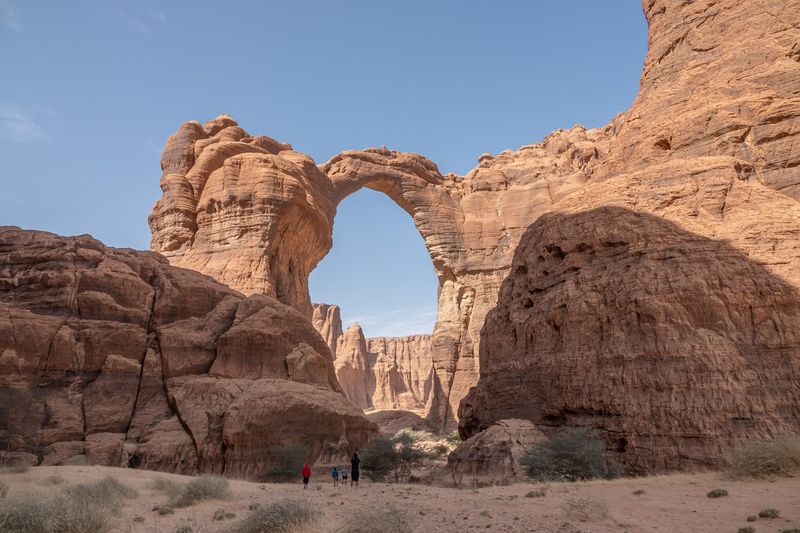
Hidden deep within Chad’s Ennedi region, the Aloba Arch is one of the largest natural rock arches anywhere in the world, yet it remains almost completely unknown outside of geology and adventure travel circles. The arch spans an estimated 120 meters wide and rises roughly 75 meters high, making it a truly jaw-dropping sight when you finally round the canyon corner and see it for the first time.
Reaching Aloba requires a multi-day journey across the Sahara, usually by four-wheel-drive vehicle with an experienced local guide. There are no paved roads, no visitor centers, and no crowds.
Just you, the silence of the desert, and this enormous window carved by thousands of years of wind and rain.
Photographers and geologists who have made the journey describe it as one of the most humbling natural experiences of their lives. For the truly adventurous, Aloba Arch is an unforgettable destination.
6. Richat Structure, Mauritania
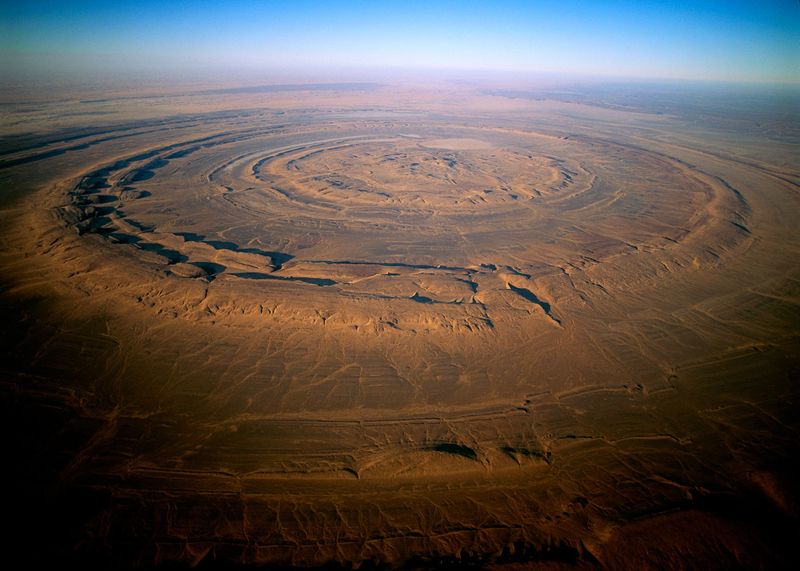
From the ground, the Richat Structure looks like a series of rocky ridges in the middle of the Mauritanian desert. From space, it looks like a giant eye staring up at the sky.
This enormous circular formation stretches about 50 kilometers across and is so large that astronauts have used it as a landmark to track their position over Africa.
For years, scientists believed the Richat Structure was formed by a meteorite impact. More recent research suggests it was created by volcanic activity and millions of years of erosion, which slowly carved the circular rings into the ancient rock.
The different layers of rock represent different geological time periods, making it a fascinating open-air textbook for geologists.
Visiting involves traveling deep into the Sahara, but guided tours are available from nearby towns. Standing inside this massive formation is a humbling reminder of just how ancient and powerful natural forces truly are.
7. Simien Mountains, Ethiopia
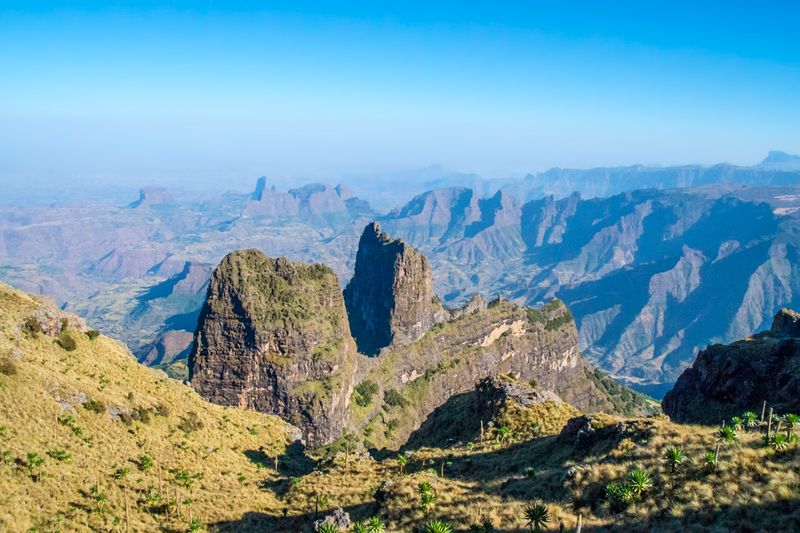
The Simien Mountains in northern Ethiopia are often called the Roof of Africa, and one look at the landscape explains why. Jagged peaks, sheer cliffs dropping thousands of meters, and wide green plateaus create a scenery so dramatic it feels almost unreal.
The highest point, Ras Dashen, reaches 4,550 meters and is one of the tallest mountains on the continent.
Beyond the stunning views, the Simien Mountains are home to animals found nowhere else on Earth. The Ethiopian wolf, the Walia ibex, and the Gelada baboon all live in this highland ecosystem.
Watching hundreds of Gelada baboons graze on the cliff edges at sunset is one of those wildlife moments that stays with you forever.
The park is a UNESCO World Heritage Site and offers excellent trekking routes for all fitness levels. Local guides are required and add tremendous value by sharing knowledge about the region’s ecology and culture.
8. Lake Natron, Tanzania
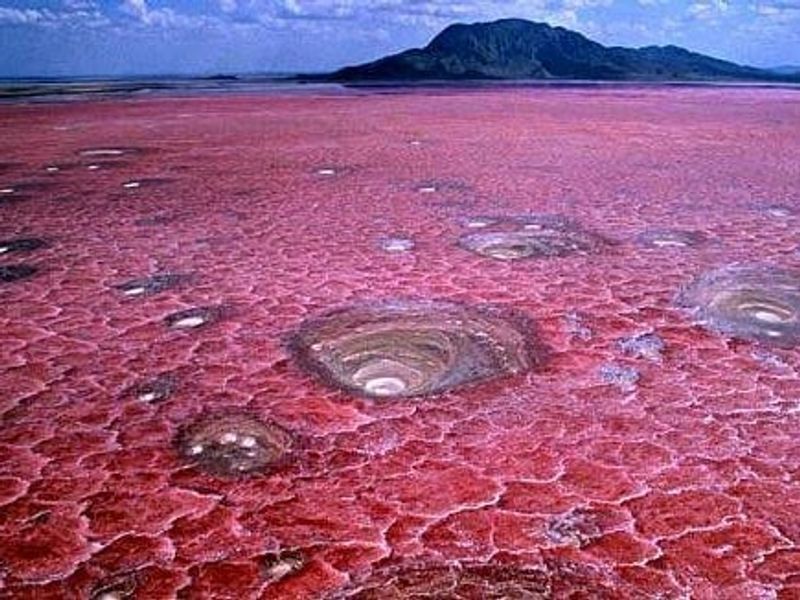
Lake Natron in northern Tanzania is one of the most unusual and visually striking lakes in the world. Its waters are naturally dyed deep shades of red and orange by salt-loving microorganisms called haloarchaea, which thrive in the lake’s extreme alkaline conditions.
The water temperature can reach up to 60 degrees Celsius in some areas, making it one of the harshest environments on the continent.
Despite these extreme conditions, Lake Natron is the primary breeding ground for nearly three million lesser flamingos. The high alkalinity protects their nesting sites from most predators, allowing flamingo populations to flourish here like nowhere else in Africa.
Seeing the lake flushed pink with thousands of birds is an unforgettable experience.
The nearby Ol Doinyo Lengai, an active volcano sacred to the Maasai people, adds another dramatic layer to the landscape. Visiting in the dry season offers the best access and most vivid colors.
9. Nyungwe Forest, Rwanda
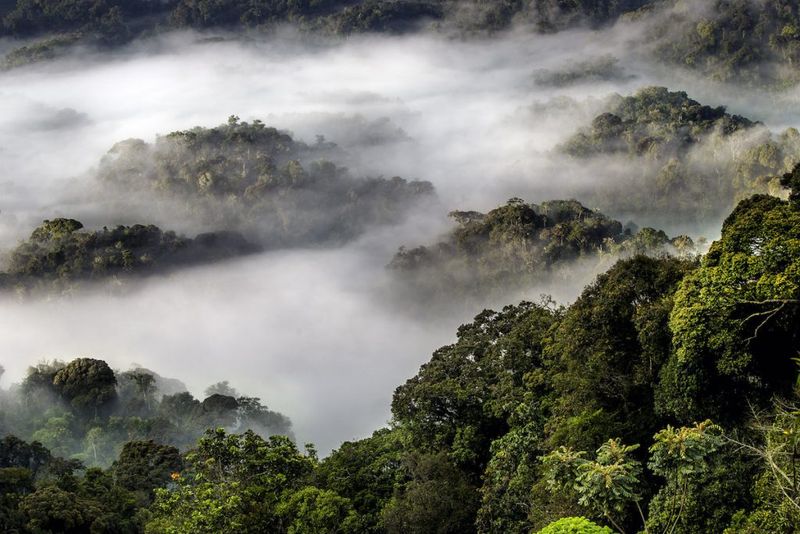
Nyungwe Forest in southwestern Rwanda is one of the oldest and most biodiverse rainforests in Africa, yet it consistently flies under the radar compared to Rwanda’s famous mountain gorilla experiences. This ancient forest covers about 1,020 square kilometers and has remained largely intact for millions of years, making it a living museum of biodiversity.
More than 1,000 plant species, 300 bird species, and 13 primate species call Nyungwe home, including chimpanzees, colobus monkeys, and the rare L’Hoest’s monkey. The forest also contains one of the highest canopy walkways in Africa, offering a thrilling bird’s-eye view of the treetops and valleys below.
Guided treks through Nyungwe are well-organized and accessible for most visitors. The experience of walking through misty mountain forest while listening to chimps call in the distance is something that stays with travelers long after they return home.
10. Mount Mulanje, Malawi
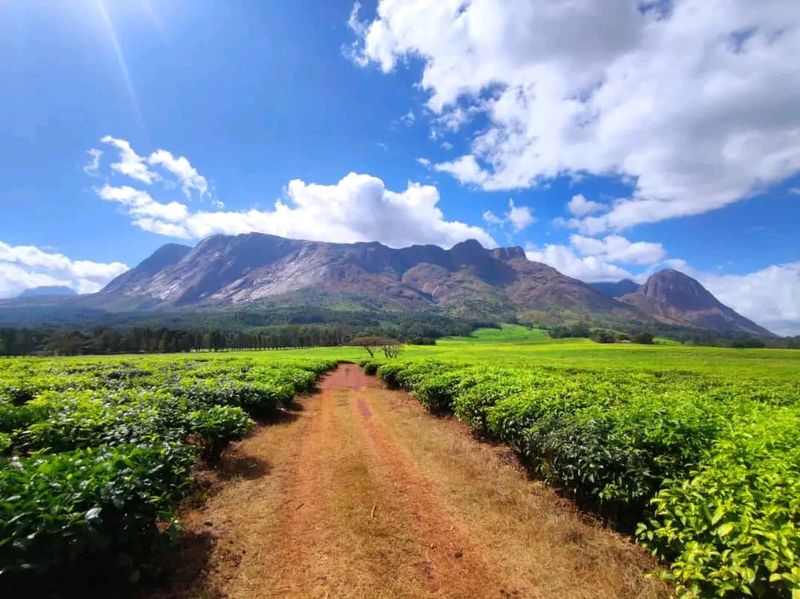
Looming over the southern landscape of Malawi like a giant island in the sky, Mount Mulanje is the highest mountain in Central Africa, with its highest peak reaching 3,002 meters. What makes Mulanje especially striking is the way it rises almost vertically from the flat surrounding plains, creating a dramatic silhouette visible from far away.
The mountain is home to the Mulanje cedar, a tree found nowhere else in the world, along with a rich variety of orchids, birds, and small mammals. Hiking routes range from gentle day walks to challenging multi-day treks that take you across wide plateaus and up steep rocky faces.
Hut-to-hut trekking is a popular option, with mountain huts maintained by the Mountain Club of Malawi.
Local communities around Mulanje have deep spiritual connections to the mountain. Many believe it is home to ancient spirits, adding a layer of cultural richness to an already extraordinary natural experience.
11. Bazaruto Archipelago, Mozambique
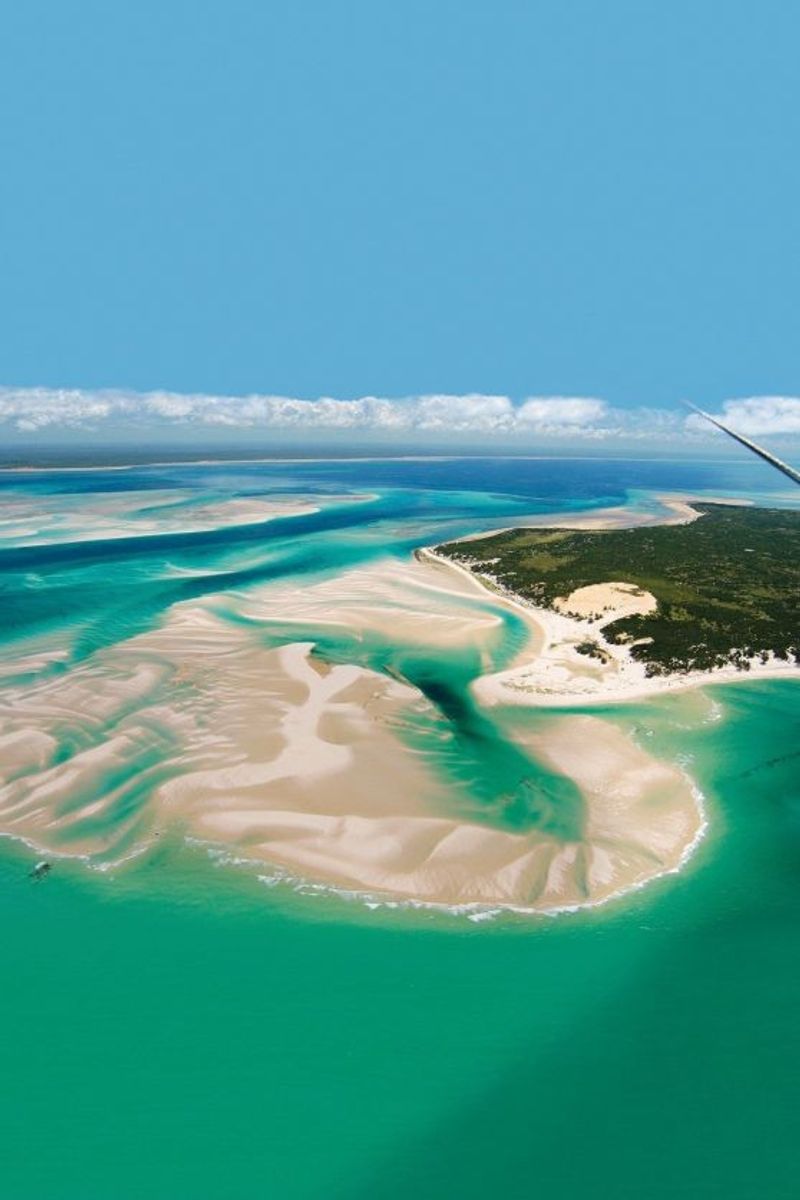
Off the coast of Mozambique, the Bazaruto Archipelago is a collection of five islands surrounded by some of the clearest, most dazzling water in the Indian Ocean. Protected as a national park since 1971, this marine reserve is home to dugongs, humpback whales, dolphins, manta rays, and hundreds of fish species that thrive in its healthy coral reef ecosystem.
The islands themselves are covered in rolling sand dunes, freshwater lakes, and patches of forest, creating a surprisingly diverse landscape for such small pieces of land. Bazaruto Island, the largest in the group, has freshwater lakes that support crocodiles and a wide variety of water birds, which is rare on a coastal island.
Tourism here is deliberately kept low-key to protect the environment. Accommodation options tend to be eco-friendly lodges that prioritize conservation.
For travelers seeking pristine beaches combined with serious wildlife encounters, Bazaruto is one of Africa’s best-kept secrets.
12. Ts’ehlanyane National Park, Lesotho
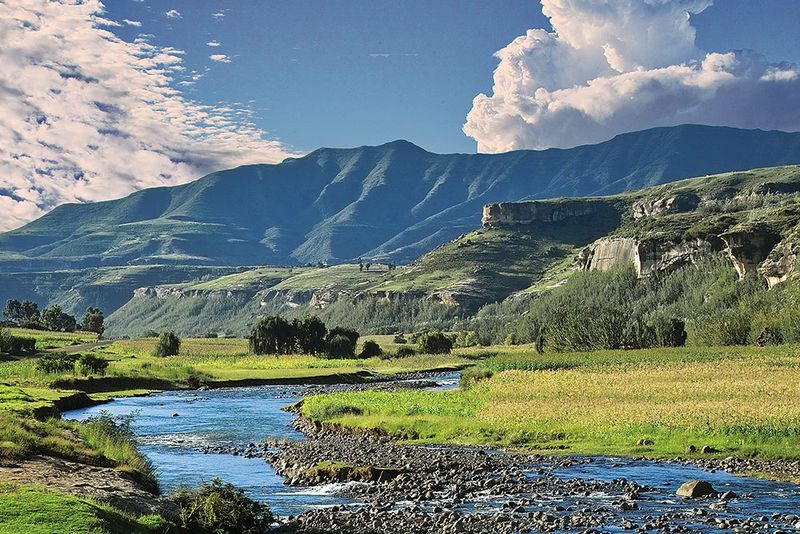
Most people could not point to Lesotho on a map, let alone name one of its national parks, but Ts’ehlanyane is a place that genuinely surprises every visitor who makes the effort to get there. Tucked into the Maluti Mountains, this small but spectacular park protects one of the largest remaining areas of indigenous Leucosidea forest in southern Africa, a type of woodland that turns brilliant gold and orange in autumn.
The park is also home to the endangered bearded vulture, Cape clawless otter, and a range of mountain antelope. In winter, the peaks are regularly dusted with snow, creating a landscape that feels more like the Swiss Alps than sub-Saharan Africa.
A suspension bridge and well-marked hiking trails make exploring the park accessible and safe.
Staying in the park’s eco-friendly chalets, with a wood fire crackling and mountain views stretching in every direction, is a deeply peaceful experience that most tourists will never know exists.
13. Lope National Park, Gabon
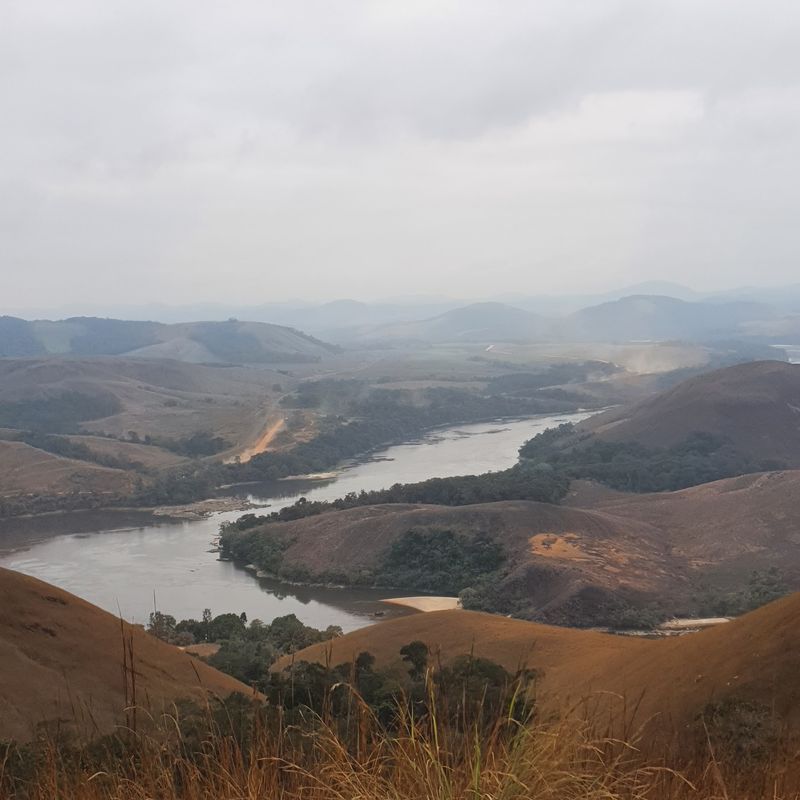
Gabon is one of the most forested countries in the world, and Lope National Park sits at its ecological heart. Covering more than 5,000 square kilometers, Lope is a rare place where ancient rainforest meets open savanna, creating a patchwork of habitats that supports an extraordinary variety of wildlife.
It became a UNESCO World Heritage Site in 2007 for its exceptional biodiversity and prehistoric significance.
Forest elephants, western lowland gorillas, chimpanzees, mandrills, and buffalo all roam through Lope’s diverse terrain. The park also contains some of central Africa’s most important prehistoric rock engravings, with carvings dating back thousands of years discovered along the Ogooue River valley.
Tourism infrastructure in Lope is modest but improving, with guided wildlife walks, boat trips, and night drives available. Because visitor numbers remain very low, wildlife sightings here feel genuinely wild and unscripted, a refreshing contrast to more crowded safari destinations elsewhere in Africa.
14. Makgadikgadi Pans, Botswana
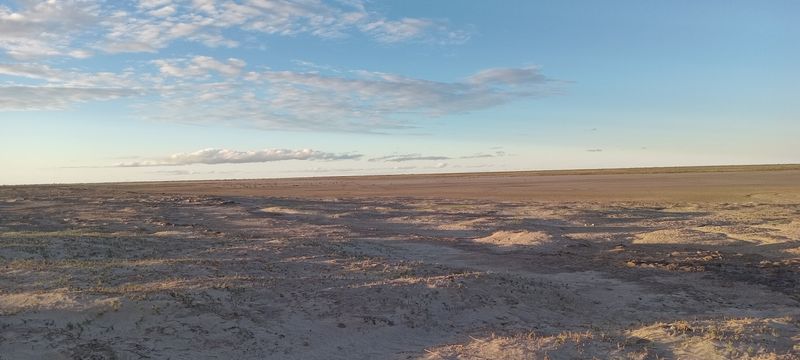
Once the bed of one of Africa’s largest ancient lakes, the Makgadikgadi Pans in northeastern Botswana are now a vast, shimmering expanse of salt flats covering nearly 12,000 square kilometers. During the dry season, the cracked white surface stretches endlessly to the horizon, creating one of the most surreal and meditative landscapes on the continent.
When the rains arrive between November and April, the pans transform completely. Shallow water floods the flats, attracting enormous flocks of flamingos and one of Africa’s largest zebra migrations, with tens of thousands of animals moving across the landscape in search of fresh grass.
The contrast between the two seasonal faces of Makgadikgadi is remarkable.
Quad biking across the salt pans, sleeping under a sky filled with stars, and visiting habituated meerkat groups with expert guides are among the most memorable activities available here. Makgadikgadi rewards curious travelers with something genuinely different from the typical African safari.
15. Kidepo Valley, Uganda
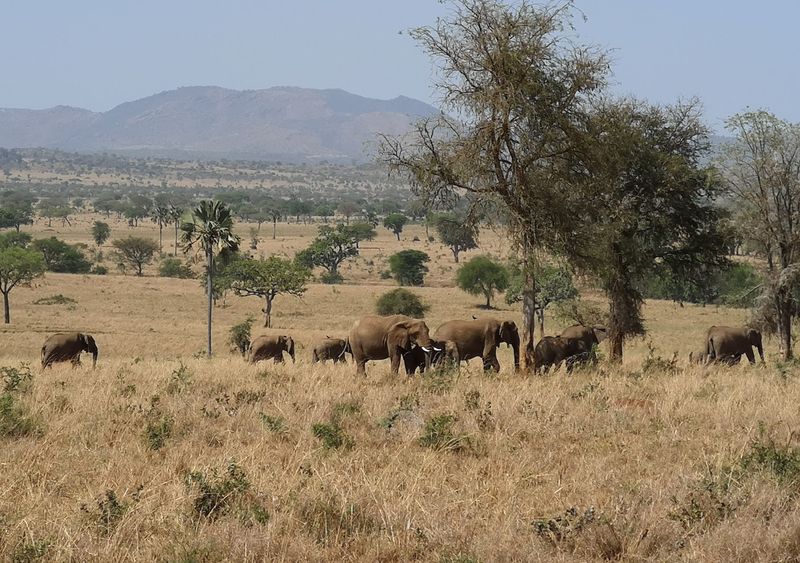
Tucked into the remote northeastern corner of Uganda, near the borders of South Sudan and Kenya, Kidepo Valley National Park is regularly ranked among the finest national parks in Africa by wildlife experts and seasoned safari travelers. Yet because it sits far from Uganda’s main tourist circuit, it receives only a fraction of the visitors that Bwindi or Queen Elizabeth parks attract each year.
The park’s wide, sweeping savannas are home to lions, cheetahs, leopards, elephants, buffaloes, and over 475 bird species. Kidepo also shelters species found nowhere else in Uganda, including the caracal, Karamoja apalis, and the bat-eared fox.
The surrounding Karamojong communities offer fascinating cultural encounters for those interested in traditional pastoralist life.
Getting to Kidepo requires either a long drive or a small charter flight, but the effort pays off richly. The sense of space, silence, and wildness here is something that is becoming increasingly rare across the African continent.
Share this story