Most historic ships spend their retirement tied to a dock, looking pretty while visitors peer through a rope barrier. A lucky few still head out under canvas, and an even luckier group of travelers gets to help make that happen.
These vessels range from 19th century Maine schooners to a towering square rigger in Sydney Harbour, and every single one of them invites passengers to grab a line, haul a sail, or take a turn at the wheel. If you have ever watched a tall ship pass and wished you were on board doing something useful, this list was written for you.
1. Tall Ship James Craig, Sydney, New South Wales, Australia
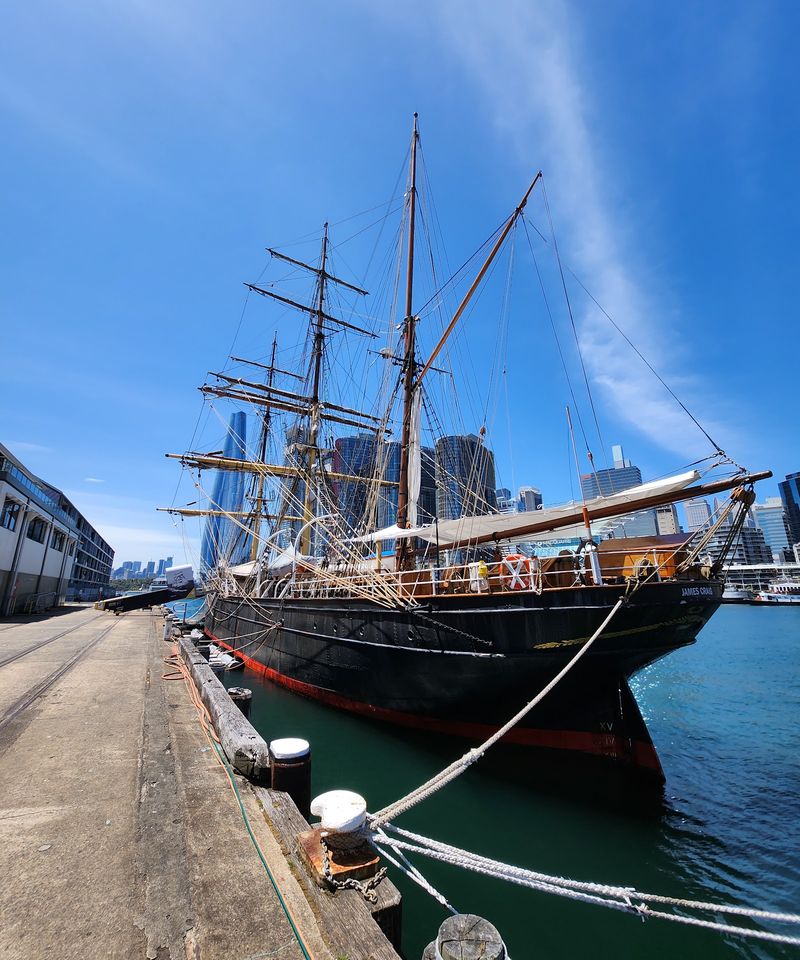
Rounding Cape Horn 23 times in 26 years is not a casual achievement, and the James Craig did exactly that during her working life as a cargo barque after launching in Sunderland, England, in 1874.
Renamed in 1905, she carried cargo between New Zealand and Australia until steam power made her obsolete. She eventually became a coal hulk and was deliberately sunk in Tasmania in 1932.
A volunteer-led restoration effort beginning in 1972 brought her back, and she was relaunched in 1997 and fully completed in 2001, winning the World Ship Trust’s Maritime Heritage Award in 2003 for the quality of the restoration work.
She is one of only four 19th century barques in the world still regularly going to sea, and the only one in the Southern Hemisphere that consistently carries the general public. Fortnightly daysails from Darling Harbour accommodate up to 80 passengers, who are invited to haul lines and help set her enormous canvas alongside the volunteer crew.
2. Windjammer Schooner Lewis R. French, Camden, Maine
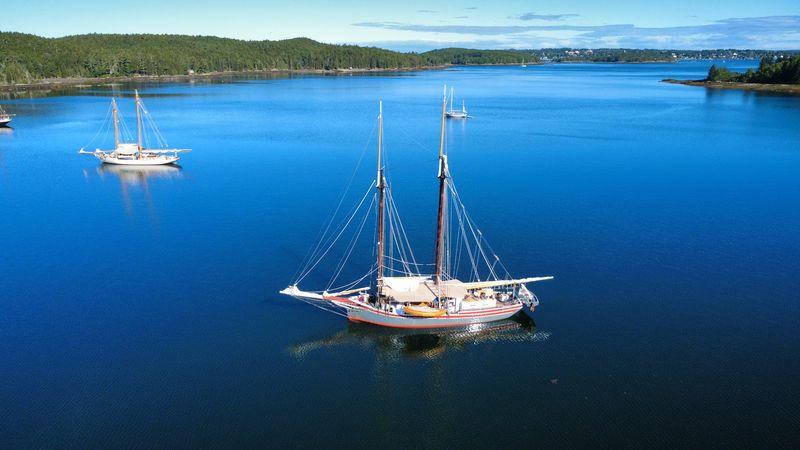
Built in 1871, the Lewis R. French holds the title of the oldest known two-masted schooner still actively sailing in the United States, and she earns that title every summer by actually going out to sea.
Guests are not just along for the ride. You can help raise and trim her 3,000 square feet of sail, operate the hand-cranked windlass to haul the anchor, and take a turn at the helm while the islands of Penobscot Bay slide past on either side.
The crew also offers informal lessons in coastal navigation, so you leave knowing more than when you boarded. She operates without an inboard engine, meaning the wind does all the real work, which makes every sail set feel genuinely purposeful.
Designated a National Historic Landmark in 1992, she is the real thing.
3. Schooner Stephen Taber, Rockland, Maine
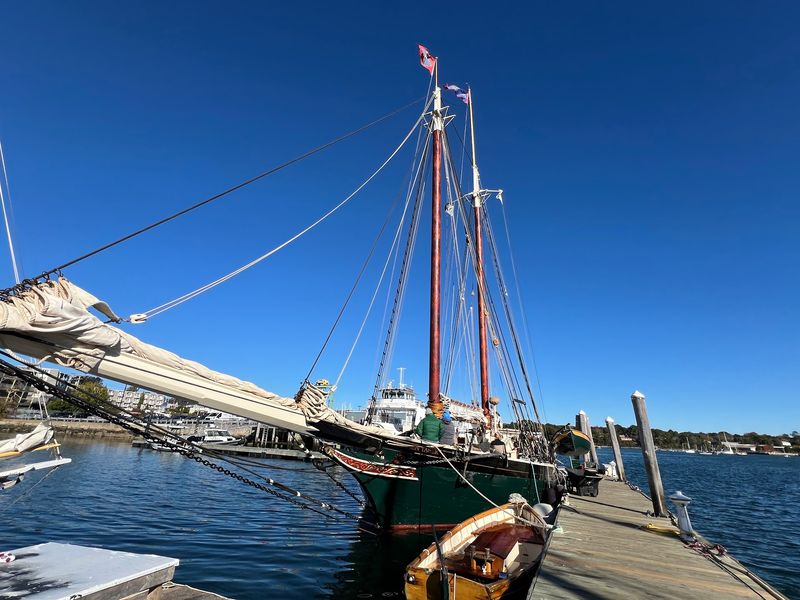
The Stephen Taber also dates to 1871, making her the oldest documented sailing vessel in continuous service in the United States, a record she has held without interruption for well over a century.
Originally built on Long Island Sound as a cargo hauler, she relocated to Maine in 1920 and joined the windjammer passenger trade in 1946. Today she accommodates up to 22 guests and operates entirely without an inboard engine, relying on the wind and her yawl boat, named Babe, when the breeze goes quiet.
Passengers who want more than a comfortable deck chair can join the crew at the halyards when sails need handling. The experience is genuinely collaborative, with the professional crew happy to explain what each line does and why.
Her National Historic Landmark status confirms she is worth every knot.
4. Schooner Grace Bailey, Rockland, Maine
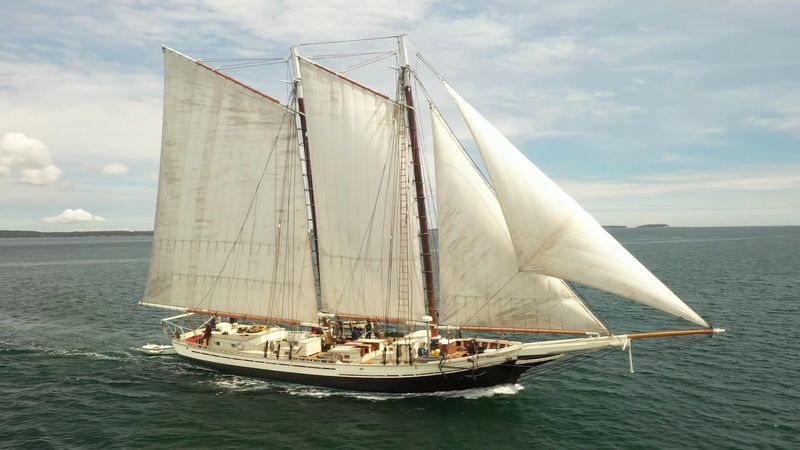
Launched in 1882, the Grace Bailey spent her early decades hauling cargo between New England ports before trading freight for passengers and becoming one of Maine’s best-loved windjammers.
Her summers are now devoted to exploring the island-studded coast of Maine, and guests who prefer action over sunbathing will find plenty to do. Raising, lowering, and trimming the sails all require willing hands, and the crew genuinely welcomes the help rather than simply tolerating it.
The experience gives first-time sailors a clear picture of how a traditional schooner actually functions, from the relationship between wind angle and sail trim to the satisfying mechanics of a wooden block and tackle. Multi-day cruises follow the wind between coves, harbors, and anchorages that have barely changed since the vessel first visited them over a hundred years ago.
5. Sail When And If, Key West, Florida
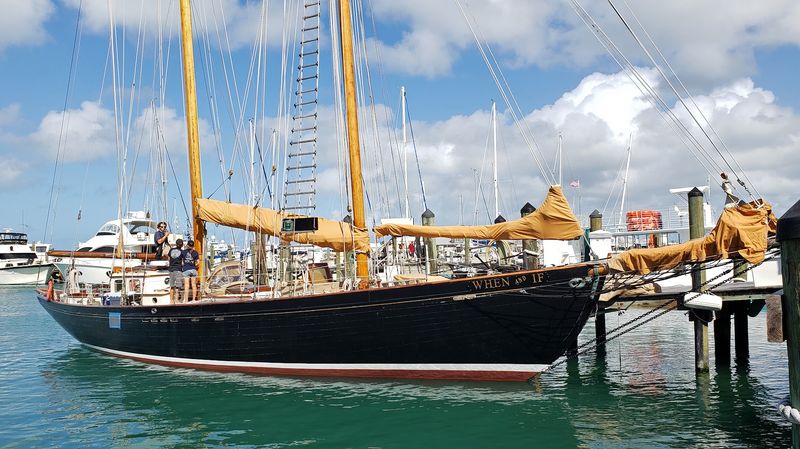
General George S. Patton commissioned this 83-foot Alden schooner in 1939 with a specific plan: sail around the world with his wife after the war, when and if he survived it.
The ship’s name comes directly from that phrase, which gives her a backstory that no amount of marketing could improve upon.
Designed by John Alden and built in Wiscasset, Maine, with double-planked mahogany over black locust frames, the When And If was constructed for serious ocean sailing. She now holds National Historic Landmark status and divides her year between Key West in winter and Salem, Massachusetts, in summer.
Morning and shared sails invite passengers to help raise the sails or take the helm, and the crew is consistently praised for being knowledgeable and genuinely engaging rather than just going through the motions. Options include daysails, sunset sails, and private charters, making her accessible to a wide range of schedules and group sizes.
6. Schooner Adventure, Gloucester, Massachusetts
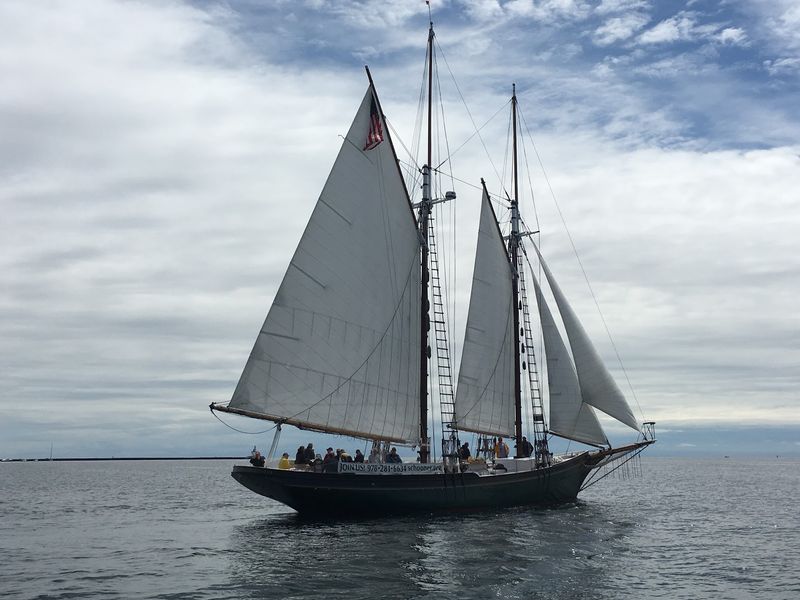
The Adventure earned the nickname Queen of the Windjammers not by accident but by consistently landing more fish than any other vessel working out of Gloucester during her heyday in the 1930s and 1940s.
Launched in 1926 and designed by the celebrated marine architect Thomas McManus, she fished the North Atlantic for nearly three decades before retiring as the last American dory fishing trawler still operating in the Atlantic. Donated to the people of Gloucester in 1988, she underwent a meticulous restoration returning her to her original 1926 configuration, and now holds National Historic Landmark status.
Public sails run from June through September out of Harriet Webster Pier in Gloucester Harbor, and passengers are invited to help raise the canvas and occasionally take the helm. Two-and-a-half-hour sails include crew storytelling about the schooner’s restoration and fishing legacy.
Guests are welcome to bring their own food.
7. Mystic Seaport Museum, Mystic, Connecticut
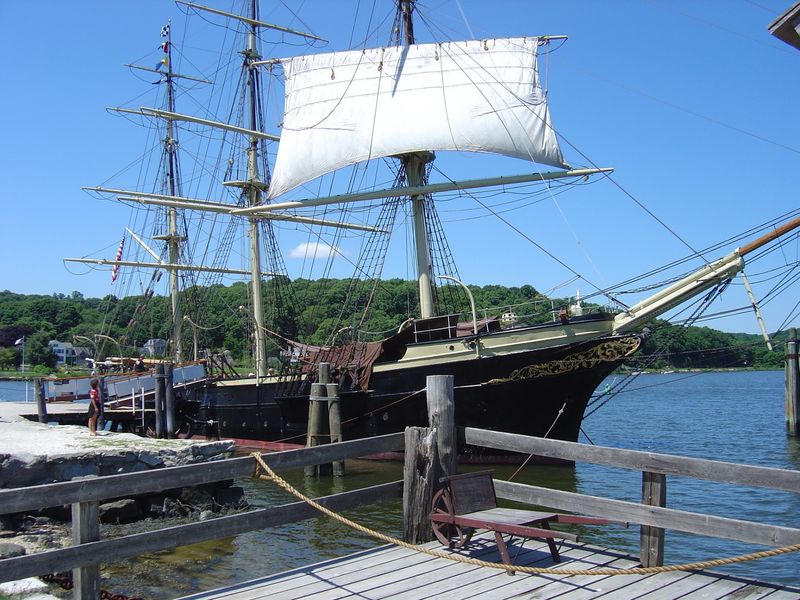
WoodenBoat Magazine once called the Brilliant one of the 100 most beautiful classic boats in existence, and one of the best-maintained classic yachts in the country, which is a strong endorsement from people who look at boats professionally.
Built in 1932 and donated to Mystic Seaport Museum in 1953 with the specific mission of teaching young people seamanship, the Brilliant has since sailed the equivalent of five times around the globe and introduced more than 11,000 students of all ages to traditional offshore sailing.
The 2026 guest program focuses on private day and overnight charters rather than standard public sails, with participants working as genuine crew members alongside the professional staff. Tasks include hauling lines, steering at the helm, and learning navigation and teamwork in a structured but engaging format.
Multi-day programs typically anchor in a different port each night along the New England coast.
8. Schooner Ladona, Rockland, Maine
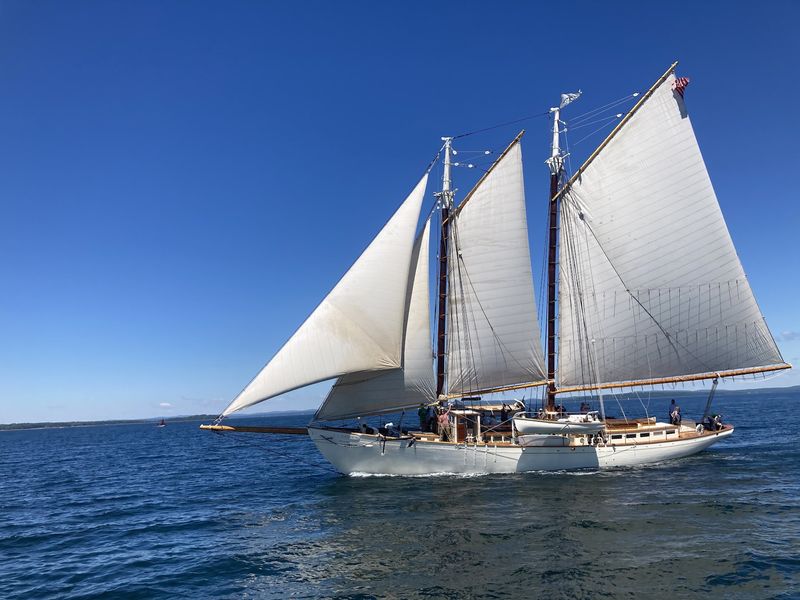
Few vessels on the Maine windjammer circuit carry themselves with quite the quiet elegance of the Ladona, a classic yacht launched in 1922 that still looks like she belongs on the cover of a vintage sailing magazine.
Beginners are genuinely welcome aboard, and the crew makes a point of teaching guests how the traditional rig works rather than just asking them to pull ropes without context. Lessons cover coastal navigation, basic ropework, and the mechanics behind the gaff-rigged mainsail, turning a vacation into a surprisingly practical introduction to seamanship.
The hands-on approach sets Ladona apart from vessels where passengers are treated purely as cargo. Experienced sailors can take on more demanding tasks while newcomers start with simpler jobs and build confidence across the voyage.
The result is a cruise that feels active and educational without ever becoming overwhelming for those who have never set foot on a sailboat.
9. Sound Experience, Port Townsend, Washington
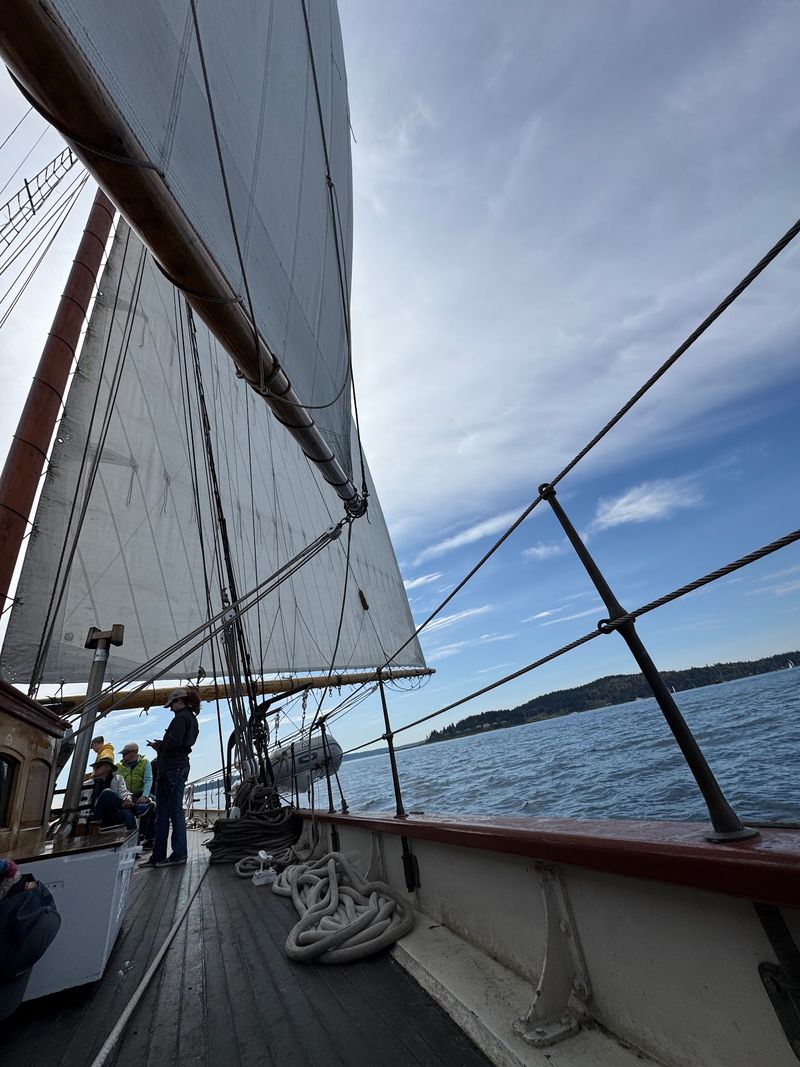
The Adventuress has been sailing the waters of Puget Sound and the Salish Sea since 1913, which means she has been at this longer than most of the towns along her regular route have had paved roads.
Operated by Sound Experience and designated a National Historic Landmark, she offers public sails where participation is built into the program rather than tacked on as an afterthought. Passengers haul lines, help work the sails, and take turns at the helm, with sea chanteys sometimes sung collectively to coordinate the effort in the traditional way.
Marine ecology lessons are woven into most voyages, connecting the ship’s history to the living environment of the Salish Sea in a way that feels cohesive rather than like two separate programs bolted together. The Pacific Northwest setting adds its own appeal, with mountains, wildlife, and remarkably clear water forming the backdrop for a genuinely participatory sailing experience.
10. Schooner J & E Riggin, Rockland, Maine
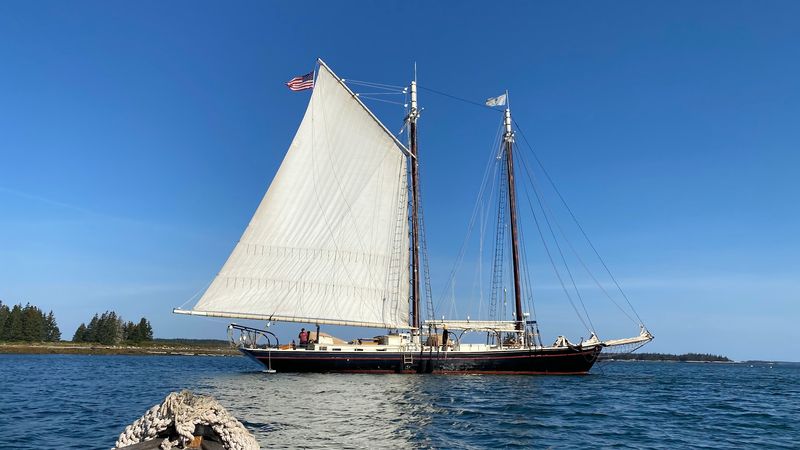
Before she became a Maine windjammer icon, the J. and E. Riggin was winning oyster schooner races on the Delaware Bay in 1929, which tells you something useful about how fast she actually is.
Built in 1927 and named for her builder’s sons Jacob and Edward, she spent decades in the oyster trade before being stripped of her masts and converted into a diesel trawler. A dedicated couple from Rockland bought her in 1975 and spent two years restoring her to her original schooner form, earning her National Historic Landmark status in 1991.
Today she accommodates up to 24 guests and still competes in the annual Great Schooner Race on Penobscot Bay. Passengers can haul sails, raise the anchor, steer at the helm, and learn to identify the islands and lighthouses sliding past the rail.
The crew runs things with a warm, family-like atmosphere.
11. Schermerhorn Row, South Street Seaport Museum, New York City, New York
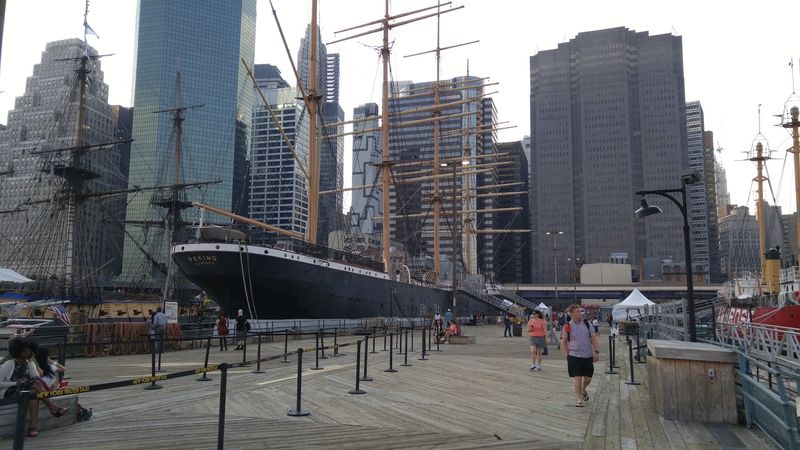
The Pioneer has a genuinely unusual origin story: launched in 1885 as a sand-hauling sloop, she was one of only two iron cargo sloops ever built in the United States, and she is the only one that survived.
Now operated by the South Street Seaport Museum, she sails New York Harbor from April through October, offering passengers a hands-on connection to the city’s maritime past. Guests can haul on ropes to raise the sails, practice traditional line handling, and sometimes take the wheel while Lower Manhattan recedes behind the stern in a view that never really gets old.
Educational sails for school groups include water quality testing and trawl net activities, but public sails are equally engaging for adults. Discounted 90-minute Sunday family sails keep the experience accessible, and the combination of working participation and harbor scenery makes the Pioneer one of the more distinctive options for New York visitors.
12. Portland Schooner Co., Portland, Maine
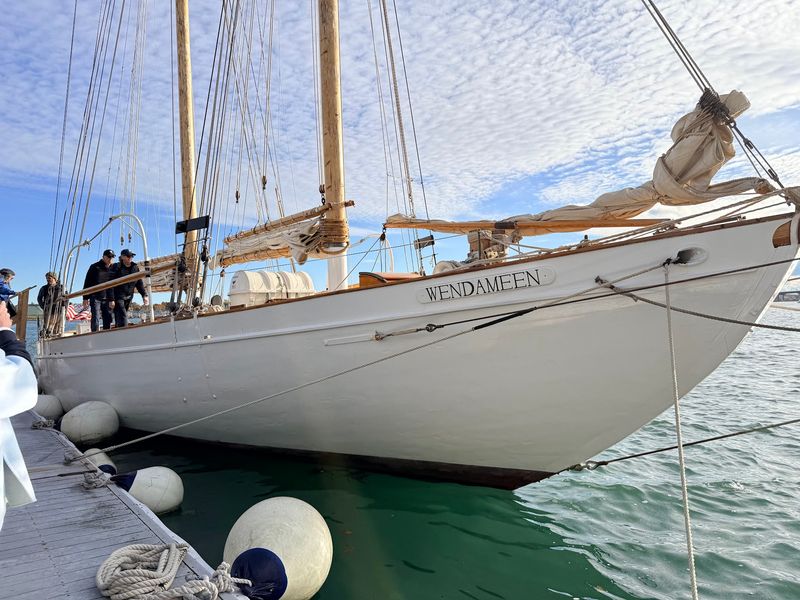
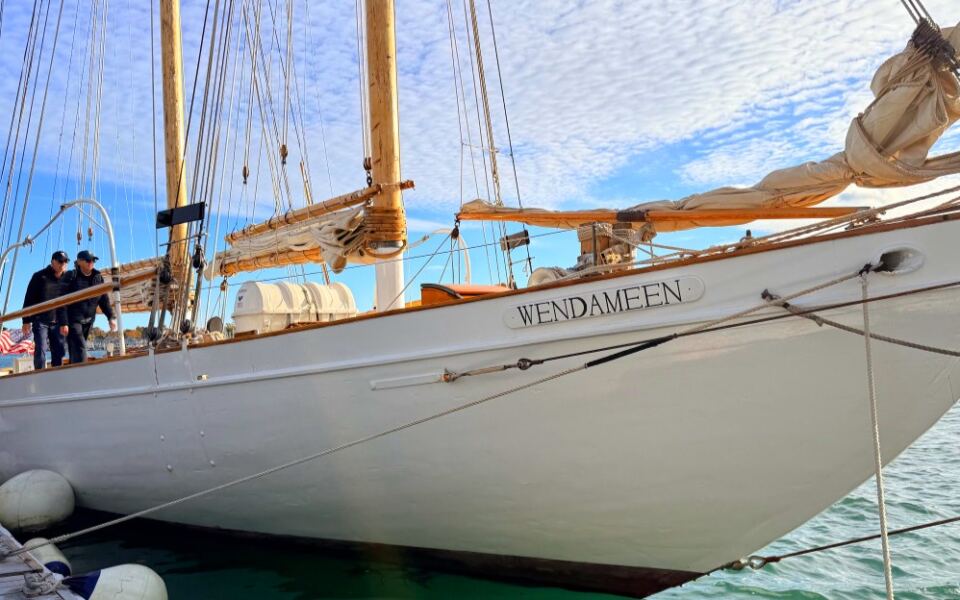
Operating since 2001, Portland Schooner Co. runs a fleet of traditional wooden sailing vessels from Portland Harbor, three of which, the Bagheera, the Wendameen, and the Timberwind, are listed on the National Register of Historic Places.
The Bagheera dates to 1924, the Wendameen to 1912, and the Timberwind to 1931, giving the fleet a combined age that would make most marine surveyors nervous and most history enthusiasts genuinely excited. Public two-hour sails run from May through October, and private charters are available on smaller vessels for groups as intimate as six.
Guests are welcome to join the crew in hoisting the sails or take a turn at the wheel while Casco Bay’s forts, lighthouses, and islands unfold around them. The crew shares local history throughout the voyage, turning a scenic harbor trip into something considerably more interesting than a standard sightseeing tour.
13. Bayshore Center at Bivalve, Port Norris, New Jersey
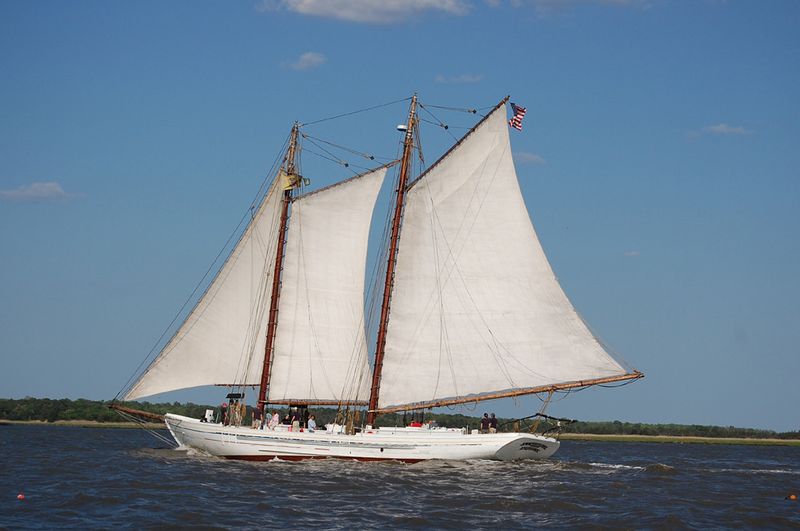
New Jersey has an official tall ship, and her name is the A.J. Meerwald, a 1928 oyster schooner that spent her working life dredging the shallow waters of Delaware Bay before becoming a floating ambassador for the state’s maritime heritage.
The Bayshore Center at Bivalve operates the vessel and offers public sails from several ports, including Cape May, where passengers board and immediately find themselves invited to participate rather than simply observe. Helping the crew raise the sails is a central part of the experience, not an optional extra.
As the schooner moves through the bay, crew members share the history of the oyster industry, explain the ecology of the Delaware Bay watershed, and describe the working waterfront culture that once thrived along this stretch of coastline. The combination of hands-on sailing and substantive storytelling makes the A.J.
Meerwald one of the more genuinely educational options on this list.
14. Schooner American Eagle, Rockland, Maine
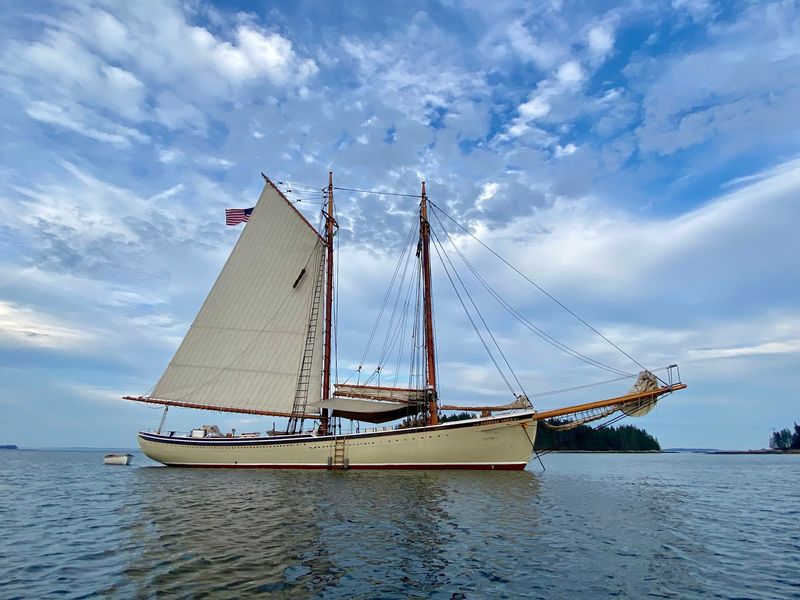
The last fishing schooner ever built in Gloucester, Massachusetts, the American Eagle launched in 1930 under the name Andrew and Rosalie and spent years working the North Atlantic before being restored and relaunched as a passenger windjammer in 1986.
Her working schooner atmosphere has been carefully preserved, and guests on multi-day cruises can lend a hand with the sails, experiencing the same kind of collective effort that once defined life aboard a commercial fishing vessel. Special day sails also invite participants to help set the canvas as the old vessel moves back through waters she knew during her fishing years.
Every September, the American Eagle makes a homecoming trip to Gloucester to compete in the regional schooner regatta, a tradition that underlines her continued connection to the port where she was born. Her National Historic Landmark designation, awarded in 1991, reflects just how rare and significant her survival actually is.
Share this story