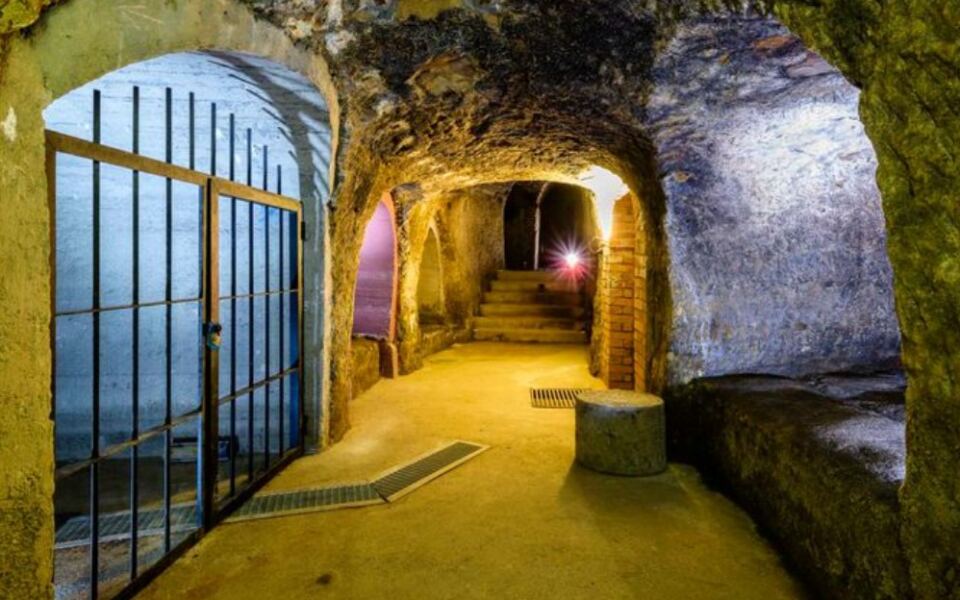
Beneath the streets, hills, and deserts of the world, entire cities exist that most people never see. Some were carved thousands of years ago for shelter, worship, or survival.
Others grew slowly over centuries into sprawling networks of tunnels, rooms, and passageways that stretch farther than anyone expected. These underground worlds are not myths or legends.
They are real, they are remarkable, and several of them are still open for you to explore today. From the volcanic rock of Cappadocia to the limestone cliffs of Malta, each site tells a story about human ingenuity that goes far deeper than the surface.
Derinkuyu, Cappadocia, Turkey
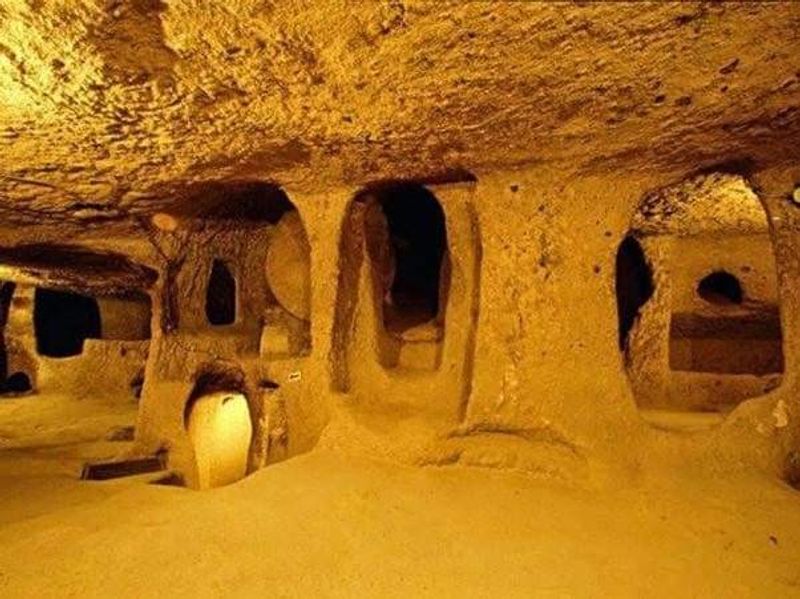
Reaching roughly 85 meters below the surface, Derinkuyu is one of the most extraordinary feats of ancient engineering ever discovered. Workers carved this massive underground settlement from soft volcanic rock, creating a self-sufficient world beneath the Cappadocian plains.
Stables, storage rooms, churches, and ventilation shafts are all packed into a space that could shelter thousands of people at once.
The ventilation system alone is impressive. Researchers have identified around 15,000 air shafts that kept the lower levels breathable despite the enormous depth.
Portions of Derinkuyu remain open to visitors today, offering a guided walk through some of the most well-preserved ancient underground spaces on Earth.
The site was rediscovered in 1963 when a local resident found a hidden room behind a wall in his home. That discovery eventually revealed a city that archaeologists believe dates back at least to the Byzantine era, possibly earlier.
Kaymaklı, Cappadocia, Turkey
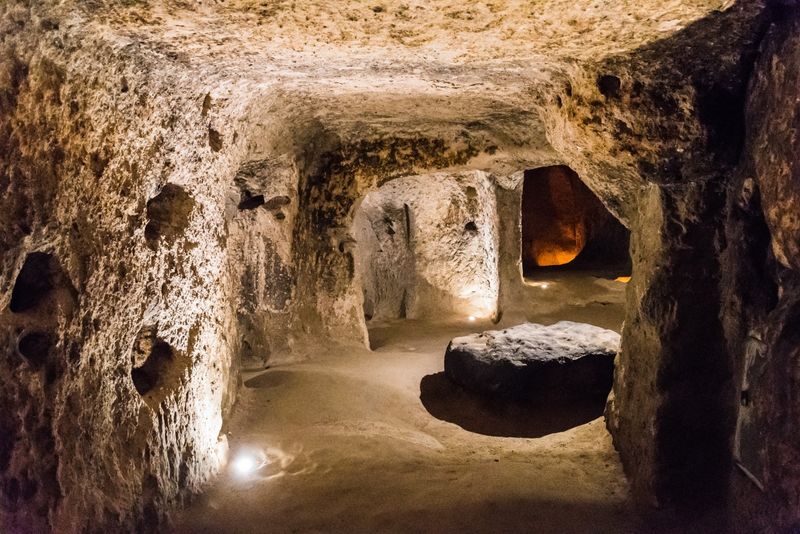
Kaymaklı sits just a short drive from Derinkuyu, and together they represent the heart of Cappadocia’s remarkable underground world. Eight levels have been identified beneath the surface, though only four are currently accessible to visitors.
The accessible sections include former living quarters, stables, storage areas, and religious spaces, each connected by a maze of low tunnels that require some ducking to navigate.
What makes Kaymaklı particularly interesting is how thoughtfully it was designed. Large stone rolling doors could seal off individual sections from the inside, giving residents control over who could enter during times of conflict.
The storage areas show signs of long-term habitation, suggesting communities lived here for extended periods rather than using it only for brief emergencies.
The site is part of the Goreme Historical National Park, a UNESCO World Heritage area. Visitors exploring Cappadocia often pair Kaymaklı with nearby Derinkuyu for a fuller picture of the region’s underground history.
Naours, France
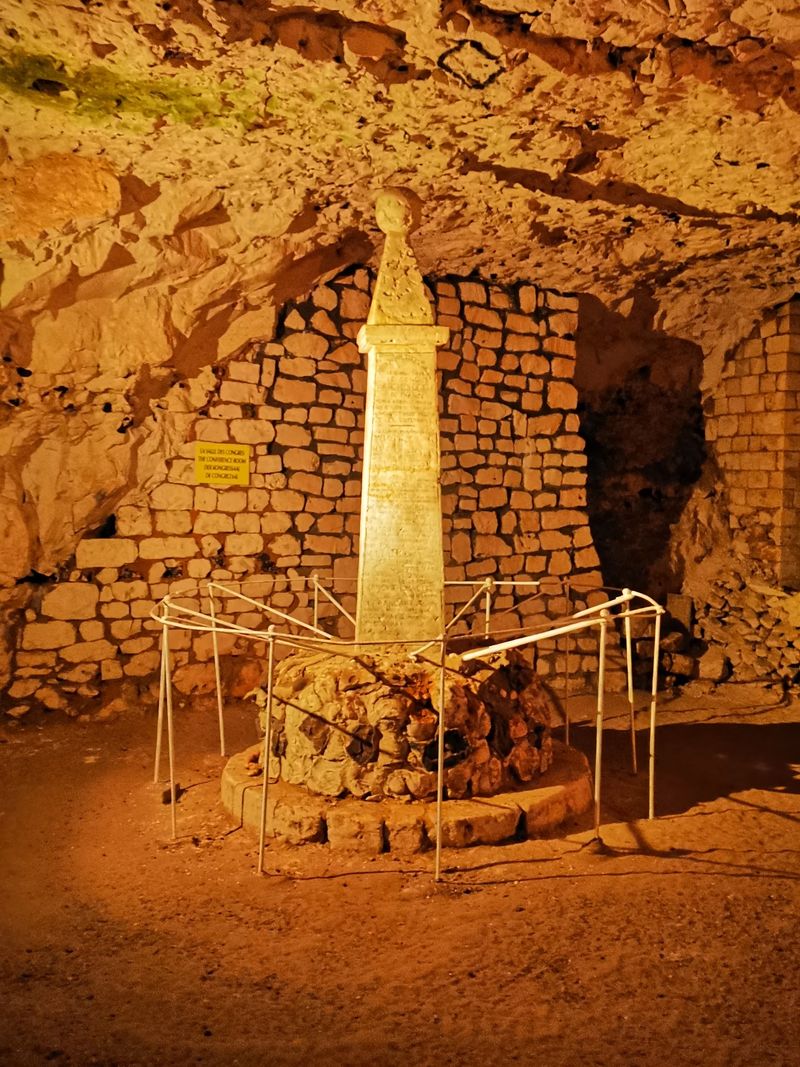
Beneath a quiet village in northern France lies one of the most extensive underground refuge networks in Europe. The underground city of Naours contains 28 galleries and hundreds of individual chambers, all carved from the chalky ground beneath the Somme region.
Communities used these tunnels as hiding places during periods of conflict stretching back several centuries.
The site gained additional historical significance during World War One, when soldiers from multiple countries carved graffiti into the walls. Those inscriptions survive today as a record of the people who sheltered and passed through the tunnels during one of history’s most difficult chapters.
Visitors hoping to see Naours in 2026 will need to plan ahead. Officials have confirmed the underground portion will remain closed throughout the 2026 season for preservation and renovation work.
It is worth checking ahead before making travel plans, as the closure timeline may be updated. The surrounding grounds and museum remain part of the broader site.
Wieliczka Salt Mine, Poland
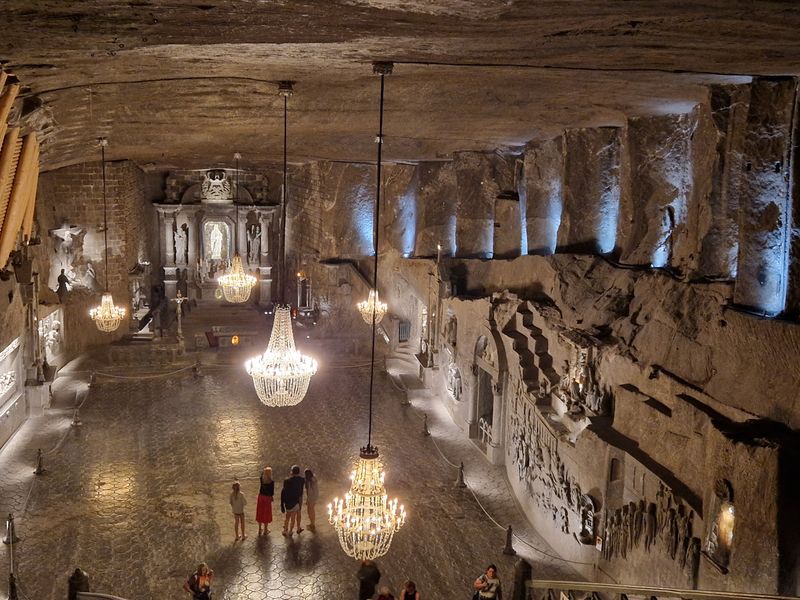
Salt mining at Wieliczka began in the 13th century and continued for over 700 years, producing one of the most unexpected underground attractions in the world. As miners dug deeper and wider, the complex grew into a layered city of chambers, corridors, and underground lakes stretching across nine levels and more than 300 kilometers of passageways.
The highlight for most visitors is St. Kinga’s Chapel, a fully functional underground church carved entirely from salt. Its walls, floors, chandeliers, and sculptures were all created by miners working over generations.
The chapel still hosts religious services and concerts today, and the acoustics inside the salt chamber are genuinely impressive.
Wieliczka became one of the first sites inscribed on the UNESCO World Heritage List in 1978. The tourist route is currently open to visitors year-round, with guided tours available in multiple languages.
The mine also includes a history museum and underground health resort spaces used for respiratory therapy.
Orvieto Underground, Orvieto, Italy
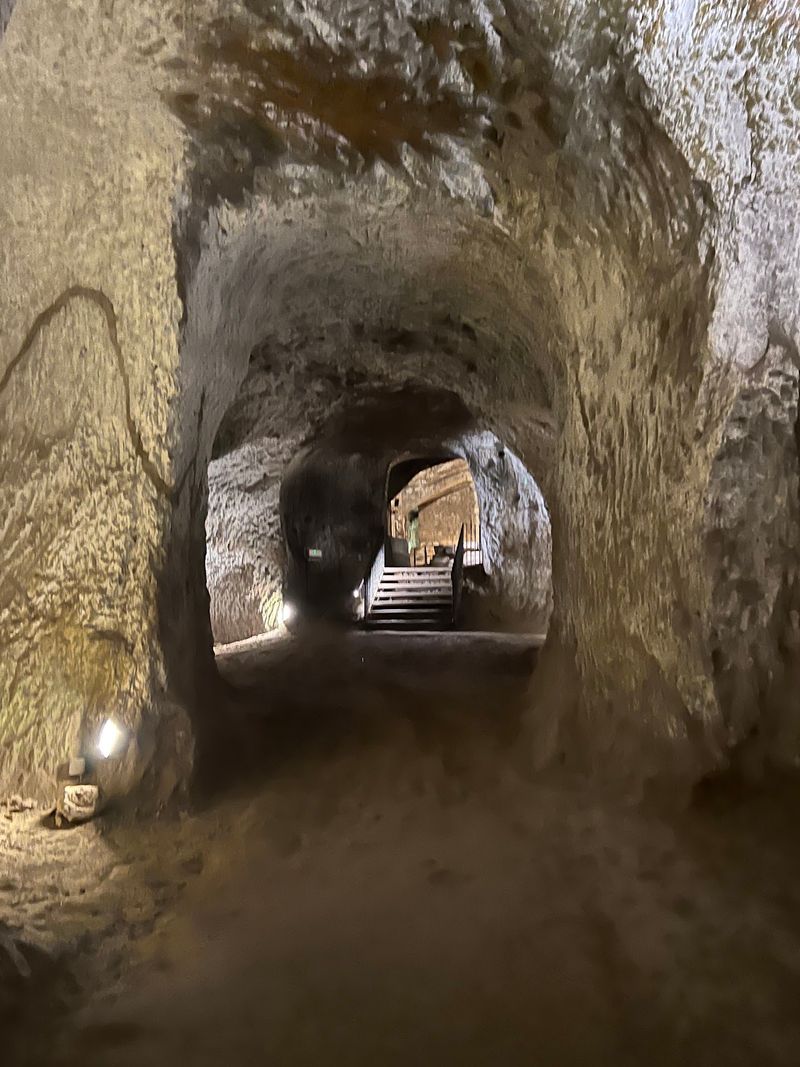
The hilltop city of Orvieto in Umbria sits on a plateau of volcanic tufa rock, and for roughly 2,500 years, its residents have been carving into it. The result is a layered underground network of more than 1,200 caves, tunnels, wells, and storage chambers directly beneath the city streets.
Etruscans started the digging, and generations of medieval and Renaissance inhabitants continued expanding the system.
Guided tours currently operate throughout the year, except on Christmas Day, taking small groups through a section of the network that includes ancient olive presses, dovecotes, and cisterns. Some chambers were used to keep food cool before refrigeration existed, a practical underground solution that worked remarkably well given the stable temperatures below ground.
The caves are not just historically interesting. They also reveal how deeply connected daily life in Orvieto was to the rock beneath the city.
Every chamber has a story tied to the people who carved and used it across multiple eras.
Rock-Hewn Churches of Lalibela, Ethiopia
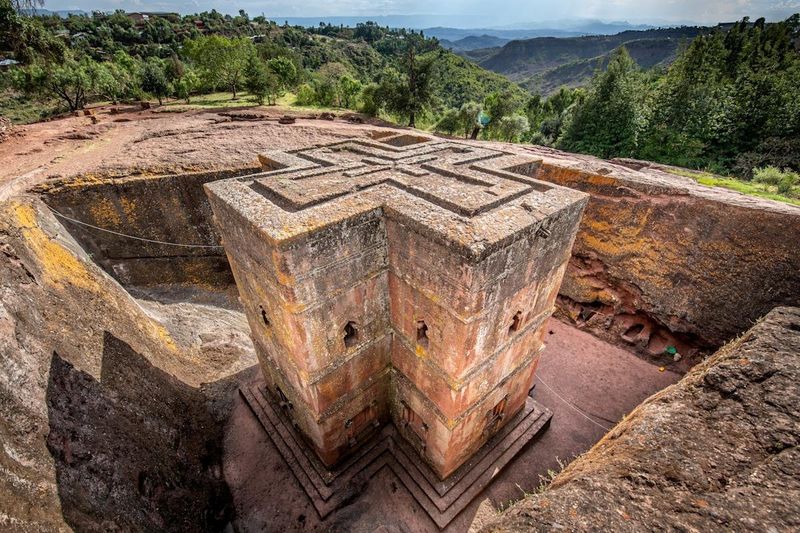
Lalibela is one of the most remarkable religious sites on Earth. Eleven medieval churches were carved directly from solid volcanic rock in the Ethiopian highlands, not built up from the ground but cut downward and inward into the earth.
The churches are connected by tunnels and trenches, creating a sacred underground landscape that has been in continuous use for roughly 900 years.
Pilgrims travel from across Ethiopia and beyond to worship at Lalibela, particularly during major Orthodox Christian festivals. The complex remains an active place of worship, not just a museum, which gives it a living quality that many ancient sites lack.
A UNESCO World Heritage Site since 1978, Lalibela received an international UNESCO delegation as recently as July 2026.
The most photographed structure is the Church of St. George, carved into a deep trench and topped with a cross-patterned roof. Seeing it from the rim of the surrounding rock is a genuinely striking experience that photographs rarely do full justice.
Beijing Underground City, Beijing, China
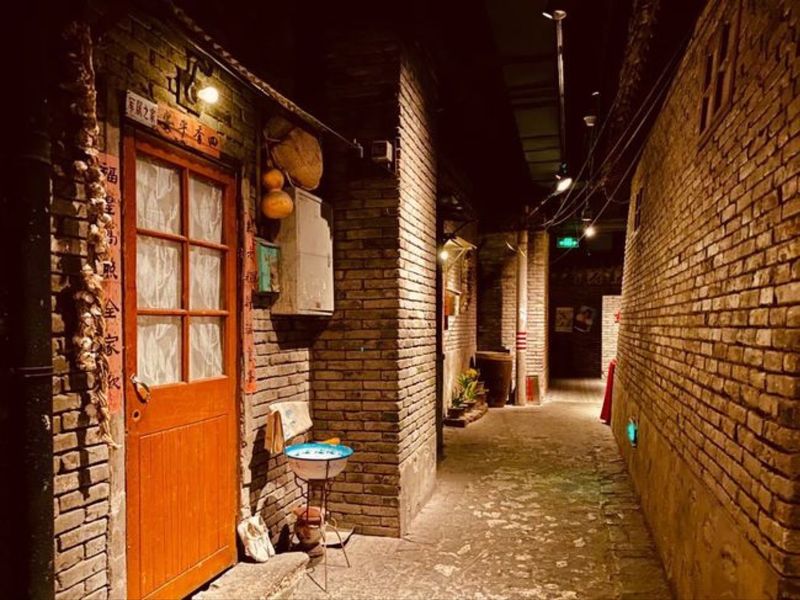
Built during Cold War tensions in the late 1960s and 1970s, Beijing’s vast underground civil-defense network was designed to shelter millions of residents beneath the capital in the event of a military emergency. The tunnels extended beneath much of central Beijing, connecting neighborhoods through a network of passages that included storage areas, ventilation systems, and emergency facilities.
The site is now presented as the Beijing Civil Air Defense History and Culture Museum, offering visitors a look at the tunnels alongside exhibits explaining the political climate that drove their construction. After a period of closure, the museum officially reopened to visitors on August 1, 2026, making it newly accessible for travelers visiting the capital.
The underground city is located in the Xicheng District near Qianmen Street. It offers a very different perspective on Beijing compared to the city’s well-known imperial landmarks, reflecting a chapter of modern Chinese history that is rarely discussed as openly as this museum now presents it.
Pilsen Historical Underground, Pilsen, Czech Republic
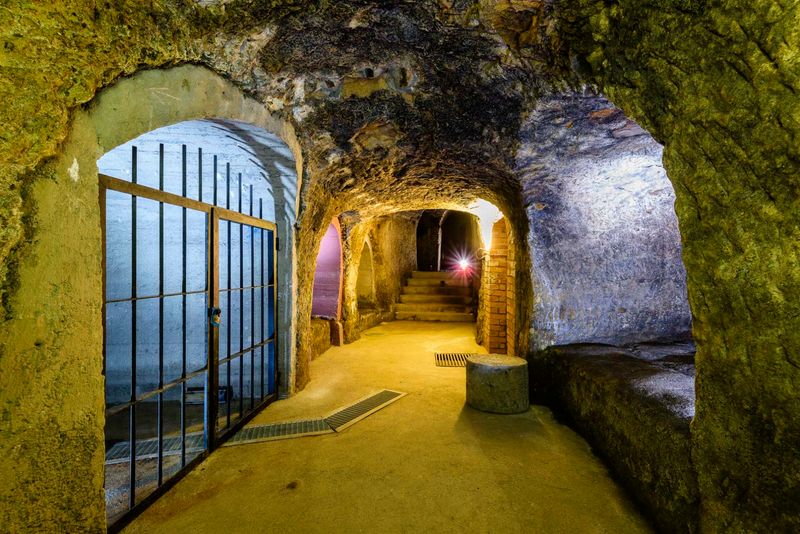
Beneath the historic center of Pilsen in the Czech Republic runs nearly 20 kilometers of passages, cellars, and wells that date back to medieval times. The network developed gradually as residents dug cellars beneath their homes and businesses, eventually connecting into a sprawling underground system that served the city for centuries as storage space, a source of water, and occasional shelter.
Not all of it is open to the public, but an approximately 800-meter section is currently accessible on guided tours running through 2026. The tour takes visitors through well-preserved medieval cellars and passages, explaining how the underground network functioned as part of daily city life during the Middle Ages.
Pilsen is also known internationally for its brewing heritage, and the underground passages were historically used to maintain the cool temperatures needed for lagering beer. The guided tour connects both histories, giving visitors a fuller picture of why these underground spaces mattered so much to the city above them.
Edinburgh Vaults, Edinburgh, Scotland
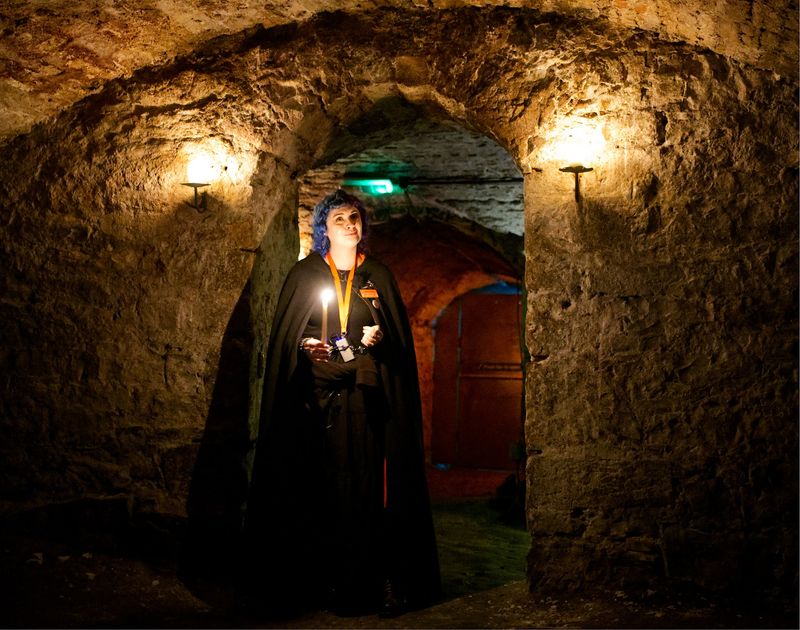
South Bridge in Edinburgh was completed in 1788, and its 19 arches were designed to span a valley while supporting the street above. The spaces within those arches quickly became storage areas and workshops, but because the bridge was never properly waterproofed, the vaults became damp and were eventually abandoned by merchants and tradespeople.
Over the following decades, the vaults took on a very different character, used by some of Edinburgh’s most vulnerable residents before eventually falling out of use entirely. They were rediscovered in 1985 and have been accessible through guided tours ever since.
The Blair Street Underground Vaults remain one of Edinburgh’s most visited underground attractions, with regular tours offered throughout the year.
The vaults cover a fascinating slice of 18th and 19th century urban history. The stone chambers feel genuinely old, and the tour guides do a solid job of connecting the physical space to the social history of the city above.
It is a thoughtful stop for anyone interested in Edinburgh beyond its castle and Royal Mile.
Matmata, Tunisia
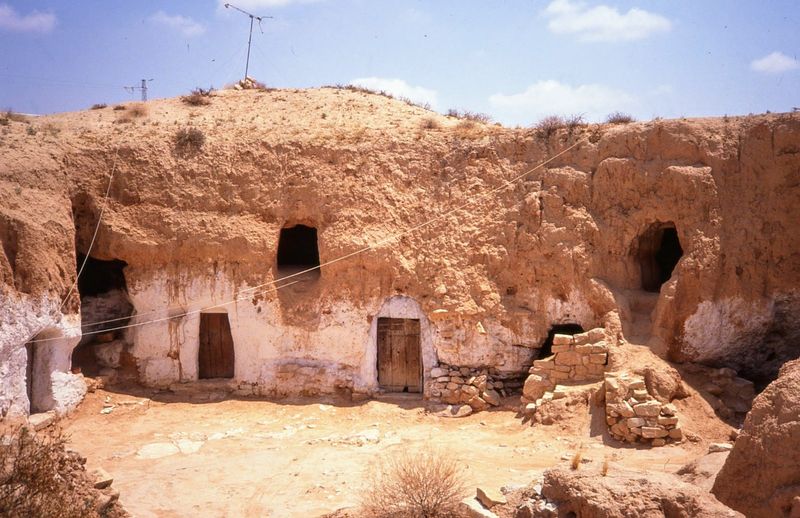
Matmata sits in the arid hills of southern Tunisia, and its most distinctive feature is not something you can see from the road. The traditional Amazigh troglodyte houses here were built downward rather than upward, with large central pits dug into the earth and rooms carved into the surrounding walls.
The design keeps interiors cool during the brutal summer heat and insulated during cold desert nights.
Some of these pit houses are still family homes today. Others have been converted into small museums or guesthouses that welcome visitors who want to experience the architecture firsthand.
The site gained international recognition after being used as a filming location for the Tatooine scenes in the original Star Wars trilogy, though the troglodyte tradition itself stretches back far longer than that connection suggests.
Visiting Matmata gives you a clear sense of how people adapt to extreme environments using nothing more than the ground beneath them. The simplicity of the design is part of what makes it so impressive on closer inspection.
Coober Pedy, South Australia, Australia
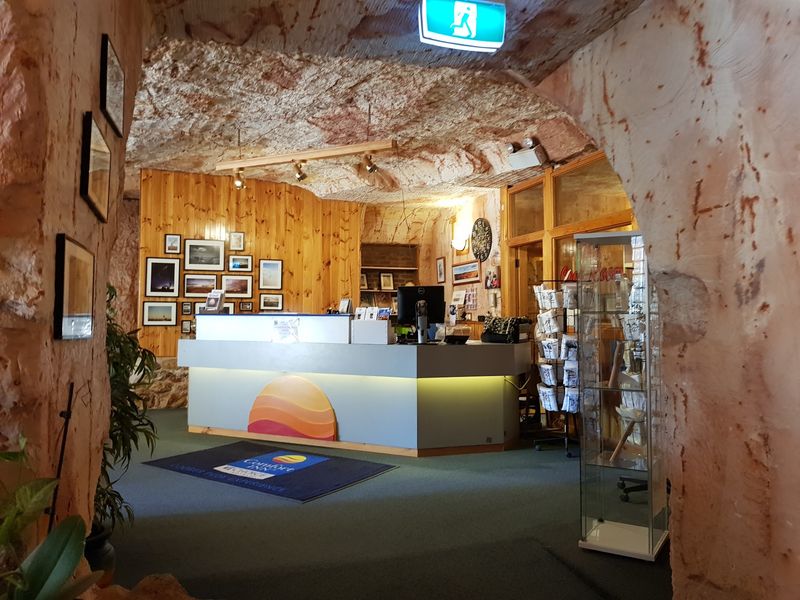
Coober Pedy is not ancient by any historical measure, but it deserves a place on this list because it represents something genuinely rare: a modern town where thousands of people chose to live underground. Opal mining began here in 1915, and as the population grew, residents discovered that building their homes underground offered a practical solution to the extreme heat of the South Australian outback.
The underground dwellings, called dugouts, range from simple single-room spaces to elaborate multi-room homes with full kitchens, living areas, and bedrooms. The town also has underground hotels, shops, and churches, all carved directly from the sandstone.
Temperatures inside stay relatively stable year-round, hovering around 23 degrees Celsius regardless of the scorching conditions outside.
Coober Pedy still produces a significant portion of the world’s opal supply. Visitors can tour working and historic mines, stay in underground accommodations, and get a very real sense of what it means to build an entire community beneath the surface of the earth.
Özkonak Underground City, Cappadocia, Turkey
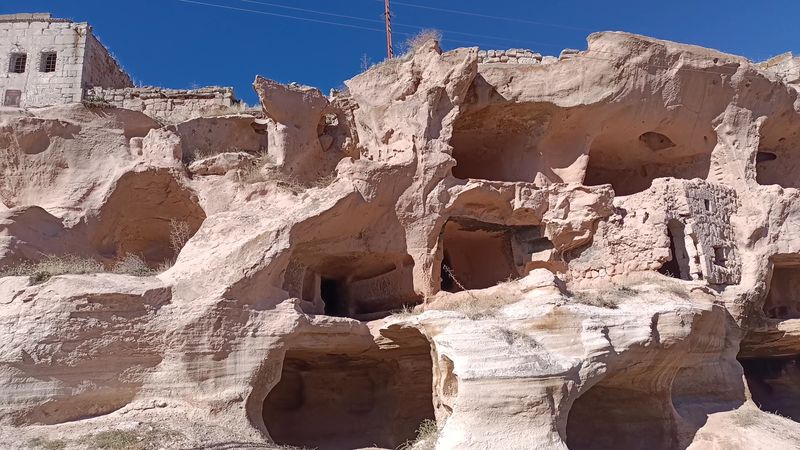
Located near the town of Avanos in Cappadocia, Özkonak is one of the lesser-visited underground cities in the region, which makes it worth seeking out if the crowds at Derinkuyu or Kaymaklı feel overwhelming. Like its better-known neighbors, Özkonak was carved from the region’s soft volcanic rock and designed to shelter communities during periods of conflict and invasion.
What sets Özkonak apart are its unusually narrow communication and ventilation shafts. These small openings were designed to allow defenders to pour hot liquids or use long implements against intruders attempting to force their way through, while still maintaining airflow through the lower levels.
The engineering is specific and clever in a way that makes the settlement feel genuinely strategic rather than just functional.
The site was discovered in 1972 by a local farmer who noticed water disappearing into holes in his field. Excavations revealed a multi-level settlement with chambers connected by tunnels that descend to a significant depth.
It remains open to visitors exploring the Cappadocia region.
Hal Saflieni Hypogeum, Malta
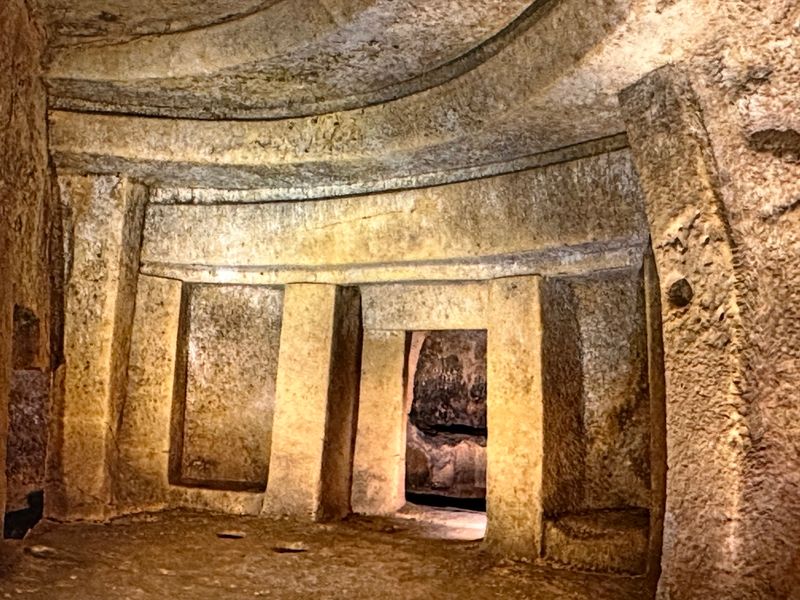
Dating to roughly the fourth and third millennia BCE, the Hal Saflieni Hypogeum on the island of Malta is one of the oldest and most carefully protected prehistoric underground sites in the world. The complex was carved from limestone over multiple generations, creating three descending levels of chambers that were used for burial and ritual purposes over thousands of years.
Archaeologists estimate that the remains of around 7,000 individuals were eventually interred here.
Heritage Malta manages access very carefully, admitting only a limited number of visitors each day to protect the fragile environment inside the chambers. Advance booking is strongly recommended, and tickets often sell out weeks ahead.
The restriction exists because humidity from visitors can damage the ancient walls and the faint red ochre decorations still visible inside some of the chambers.
The Hypogeum became a UNESCO World Heritage Site in 1980. Visiting it requires patience and planning, but the experience of standing inside a space that humans carved and used more than 5,000 years ago is genuinely unlike anything else in the Mediterranean region.
Petra, Jordan
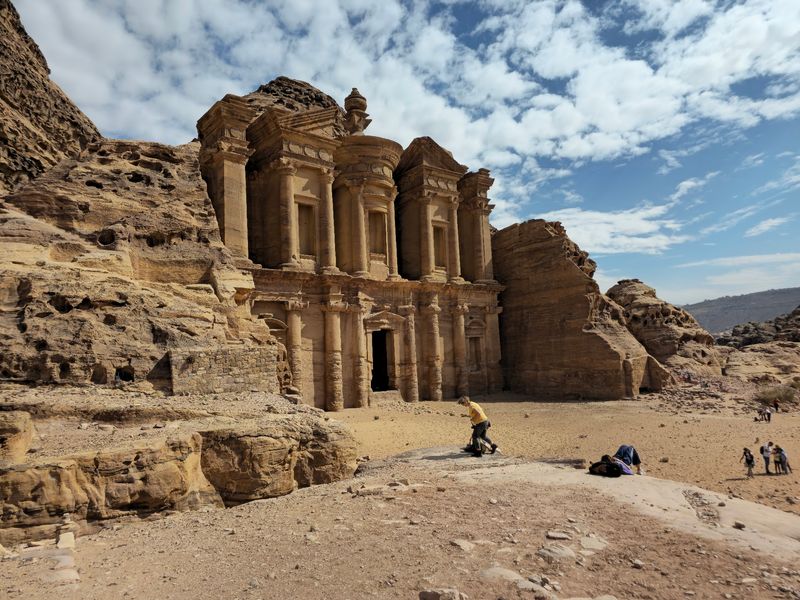
Petra is most famous for the Treasury, that iconic facade carved into rose-red sandstone cliffs that appears on travel posters and movie screens around the world. The Nabataean civilization that built Petra starting around the 4th century BCE did far more than carve impressive facades, though.
They created an extensive system of rock-cut tombs, cisterns, channels, and underground spaces that allowed a city of tens of thousands to survive in one of the driest landscapes in the Middle East.
The water management system is particularly impressive. Engineers carved channels and pipes directly into the rock to capture, direct, and store rainwater, turning a desert canyon into a functioning city.
That infrastructure kept Petra alive for centuries and remains visible throughout the site today.
The archaeological site remains open to visitors, with official 2026 opening hours published by the Petra Development and Tourism Region Authority. The site is large enough that most visitors see only a fraction of it, making multiple days worthwhile for anyone with a genuine interest in Nabataean history.
Share this story