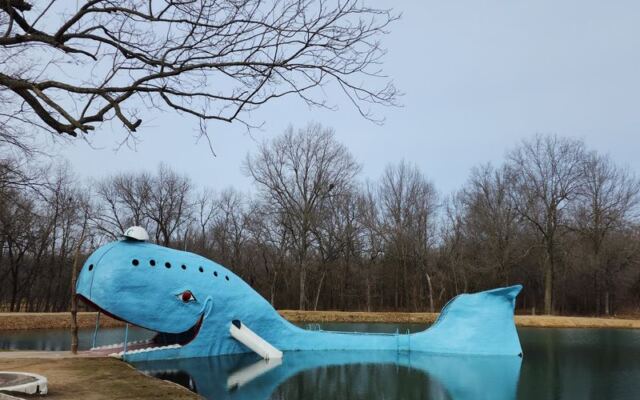
Oklahoma has a way of surprising you when you least expect it, and few surprises along the Mother Road are as wonderfully strange as a massive blue whale sitting beside a quiet pond. Built in 1972 as a labor of love, this roadside giant has been turning heads and sparking smiles for over five decades.
Whether you stumble across it on a cross-country drive or make a special detour just to see it, the experience sticks with you long after you leave. Come curious, because this is one of those places that genuinely earns its legend.
Where the Blue Whale Lives on Route 66
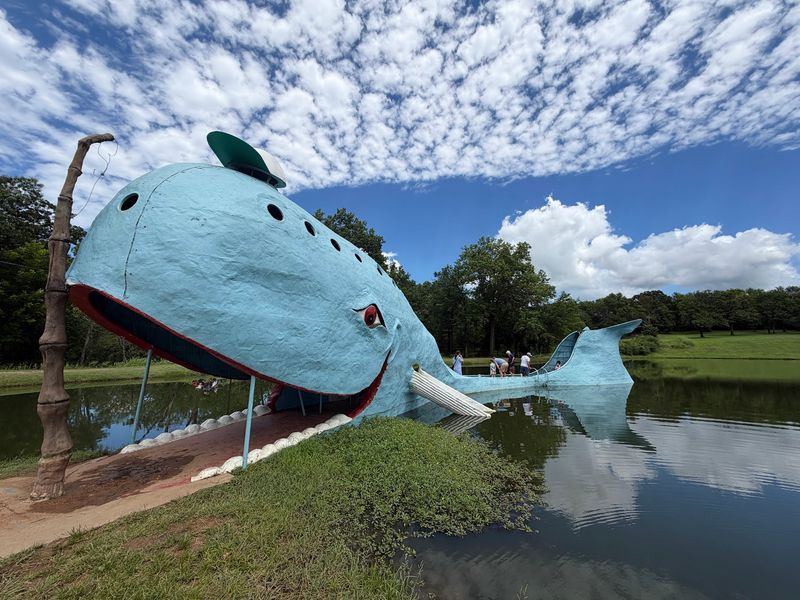
Sitting right alongside Oklahoma State Highway 66 near Catoosa, the Blue Whale is one of those roadside sights that stops you mid-thought. You spot a flash of vivid blue paint through the windshield, and before your brain fully processes what it’s seeing, you’re already pulling off the road.
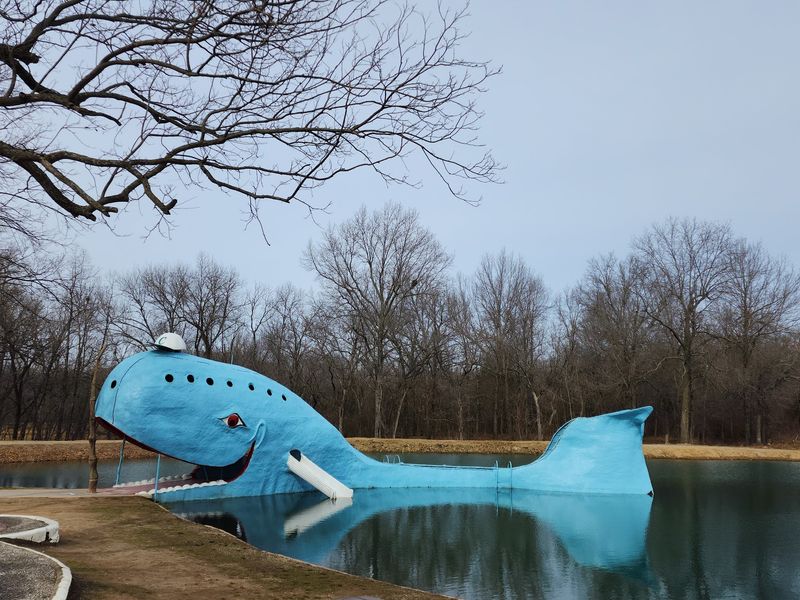
The attraction sits at 2600 OK-66 in Catoosa, a small town just east of Tulsa. A small but scenic pond frames the whale, giving the whole scene a peaceful, almost dreamlike quality that you wouldn’t expect from a roadside stop.
Ample parking is visible right from the highway, so there’s no guesswork about where to go.
Getting here is straightforward for anyone already traveling Route 66. Catoosa is easy to reach from Tulsa, making this spot a natural first or last stop for road-trippers heading east or west across Oklahoma.
The setting feels laid-back and unhurried, which perfectly matches the spirit of the Mother Road itself.
The Love Story Behind the Whale
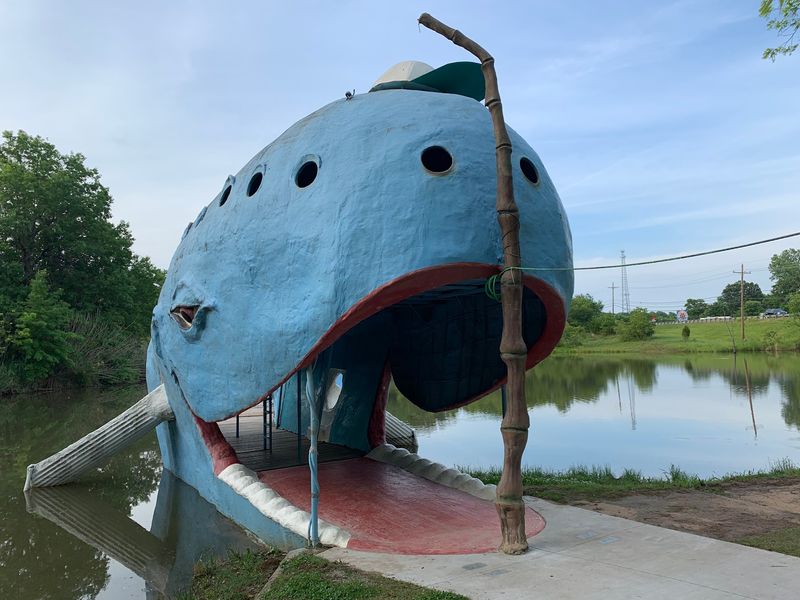
Few roadside attractions can claim a backstory as heartwarming as this one. Hugh Davis built the Blue Whale in 1972 as a gift for his wife, Zelta, who had a fondness for whale figurines.
What started as a personal gesture of affection gradually grew into something the entire community could enjoy.
Hugh transformed the area around the whale into a small recreational spot, complete with slides and a swimming hole where local families could splash around during warm Oklahoma summers. For a time, a small reptile zoo operated nearby, adding another layer of quirky charm to the property.
Vintage postcards from that era, some of which are still available in the gift shop today, give visitors a glimpse into what the attraction looked like during those early years.
After Hugh passed away, the whale fell into disrepair through the 1990s. Community members and local organizations eventually rallied around the landmark, pouring care and resources into an ongoing restoration effort.
Reading about Hugh and Zelta’s story on the visitor center walls makes the whole stop feel less like a tourist attraction and more like a genuine piece of Oklahoma heart.
The Restoration and Route 66 Centennial Revival
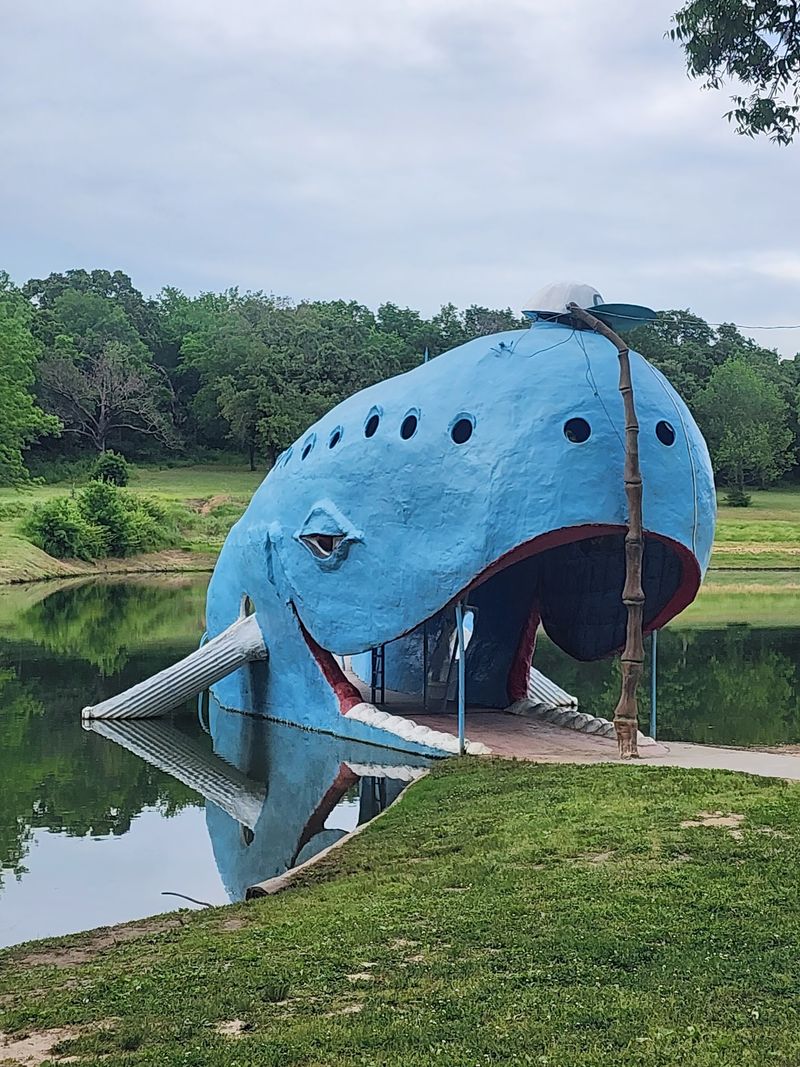
Seeing the Blue Whale today, you’d never guess how close this beloved landmark came to being lost entirely. Years of neglect left the whale faded and the surrounding grounds overgrown, but a determined restoration effort has brought the site back with remarkable results.
The most visible part of that renewal is the brand-new visitor center, which opened in time for Route 66’s centennial celebration. From the outside, the building looks polished and purposeful, with a large Blue Whale sign that visitors have called a standout feature on its own.
The updated grounds, refreshed parking lot, and restored whale itself reflect the kind of careful, community-driven effort that keeps historic landmarks alive.
Visitors who stopped by before the renovation and returned afterward have described the transformation as genuinely jaw-dropping. The care that went into preserving the original spirit of the place while modernizing the infrastructure is evident at every turn.
Rather than turning the attraction into something unrecognizable, the restoration team leaned into the whale’s quirky Route 66 identity and let that guide every decision. The result is a landmark that feels both historic and fresh at the same time.
The Whale Itself – What You Actually See Up Close
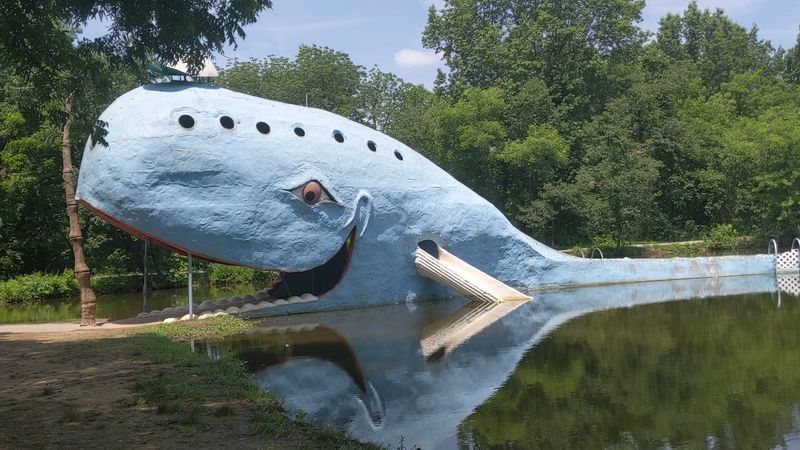
Standing next to the Blue Whale in person has a way of making you feel unexpectedly small. The structure is genuinely massive, painted a vivid shade of blue that pops against the Oklahoma sky and the calm surface of the pond below.
Visitors can walk right up to the whale and even step inside its mouth, which is one of those experiences that sounds odd on paper but feels completely delightful in the moment. One reviewer described the interior as a little creepy in the best possible way, and that captures it perfectly.
There’s a dock that extends out over the pond, and on busy days you might find kids fishing from the middle section while families snap photos along the edges.
Earlier versions of the attraction allowed visitors to climb to an upper viewing platform inside the whale, though that area has been closed off for safety reasons in recent years. Several longtime visitors have expressed hope that the upper section might eventually reopen as restoration efforts continue.
For now, walking around the base, stepping inside the mouth, and taking in the sheer scale of the thing is more than enough to make the stop worthwhile.
The Gift Shop and Visitor Center Experience
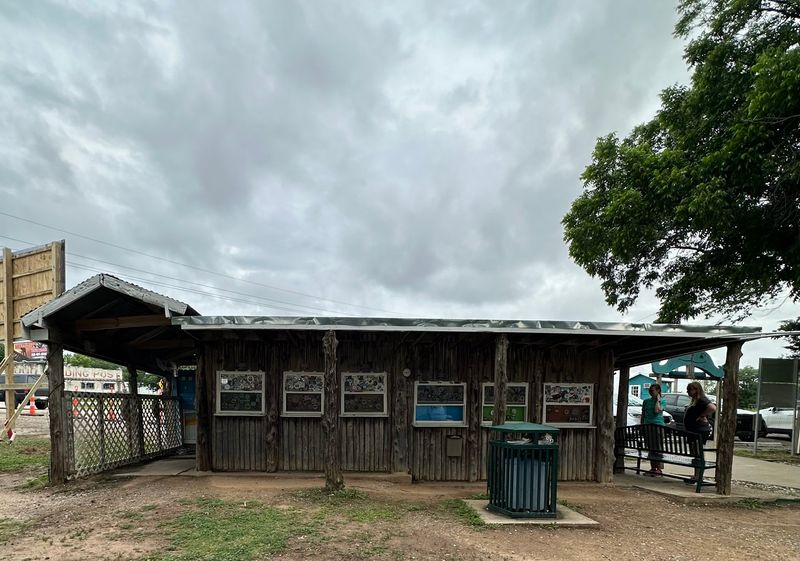
Before the renovation, the Blue Whale was essentially a park where you showed up, looked around, and left. The addition of a proper visitor center has changed that dynamic considerably, giving people a reason to linger a little longer.
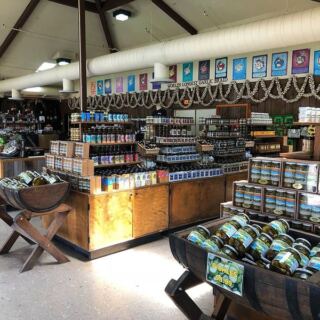
Inside, the gift shop offers a solid selection of Route 66 souvenirs and keepsakes, including some vintage postcards from the attraction’s early days as a reptile park. Prices have been described as reasonable, and the space itself is clean and welcoming.
There are also indoor picnic tables, making it a convenient spot to sit down for a packed lunch before or after exploring the grounds.
One note worth keeping in mind: the visitor center does not sell food or drinks, so bring your own refreshments if you’re planning to eat on-site. The building also features public restrooms, cold water fountains, and a guest book in the visitor center that’s worth signing before you head out.
For collectors chasing the Oklahoma Route 66 Passport stamp, this is a designated stop, so don’t get so caught up in whale-watching that you forget to grab it.
The Pond, the Turtles, and the Grounds
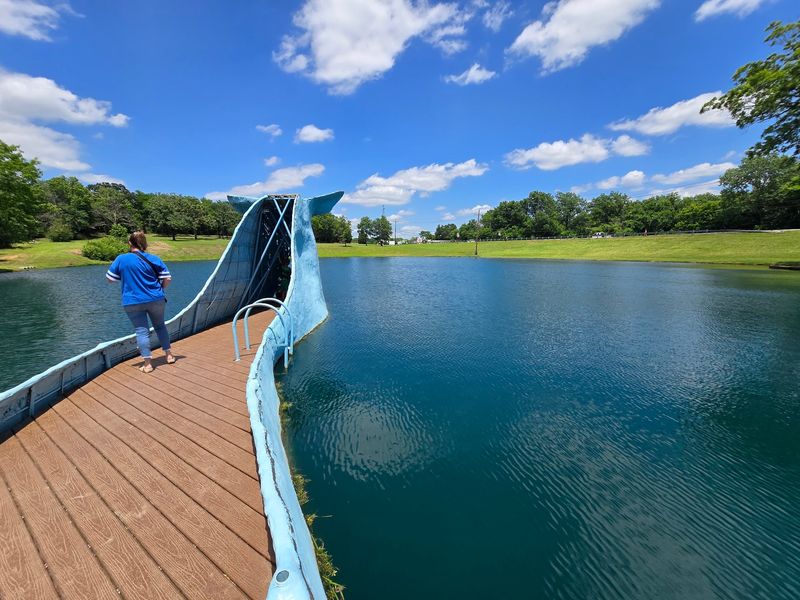
Beyond the whale itself, the grounds around the pond offer a surprisingly peaceful place to spend some time. The water is clear enough that you can spot fish swimming near the surface, and the area has a relaxed, unhurried atmosphere that feels like a genuine escape from highway noise.
Feeding turtles is one of the small joys that visitors mention with genuine enthusiasm. The pond is home to a healthy turtle population, and watching them gather near the bank is one of those simple pleasures that resonates with kids and adults alike.
Fishing is also permitted from the dock, adding another low-key activity for families who want to slow down and enjoy the setting.
Picnic seating is available both inside the visitor center and at outdoor spots near the pond, though some longtime visitors have noted that the remodel reduced the number of outdoor picnic tables compared to what was there before. A small farmers market with crafts occasionally sets up on the grounds as well, depending on the day and season.
The overall vibe of the place is relaxed and community-centered, which makes it feel less like a commercial attraction and more like a neighborhood park with a very unusual centerpiece.
Who the Blue Whale is Perfect For
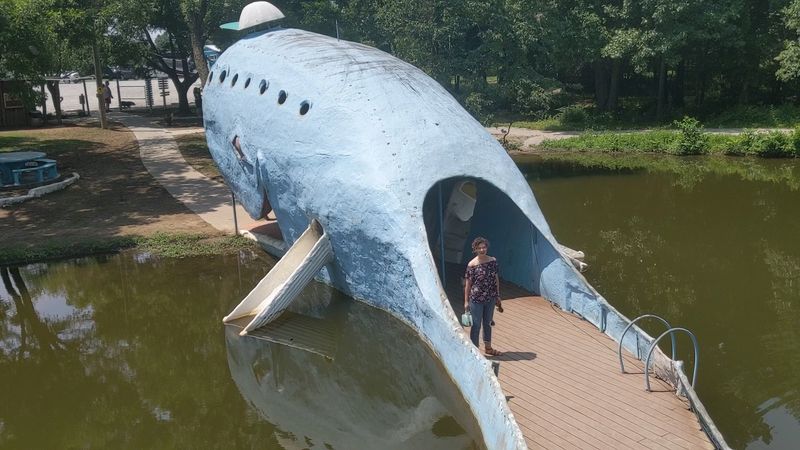
Road-trippers of just about every stripe find something to love here. Families with young children get a kick out of the sheer silliness of a giant blue whale sitting in a pond in the middle of Oklahoma, and the open grounds give kids room to roam without any structured agenda.
History buffs and Route 66 enthusiasts will appreciate the deeper layer of the story, from Hugh Davis’s original vision to the community-driven effort to restore the landmark for future generations. The visitor center walls and exterior displays do a solid job of presenting that history in an accessible, engaging way.
Photography lovers also find the Blue Whale endlessly rewarding, with the pond reflections, the vivid paint, and the surrounding landscape offering compositions that work at almost any time of day.
Solo travelers who want a quick, no-pressure stop will feel right at home here too. You don’t need a full afternoon to appreciate the Blue Whale.
Most visitors find that twenty to thirty minutes covers the whale, the pond, the gift shop, and a few good photos. That kind of low-commitment, high-reward ratio is exactly what makes a roadside attraction worth stopping for.
Hours, Admission, and Getting There
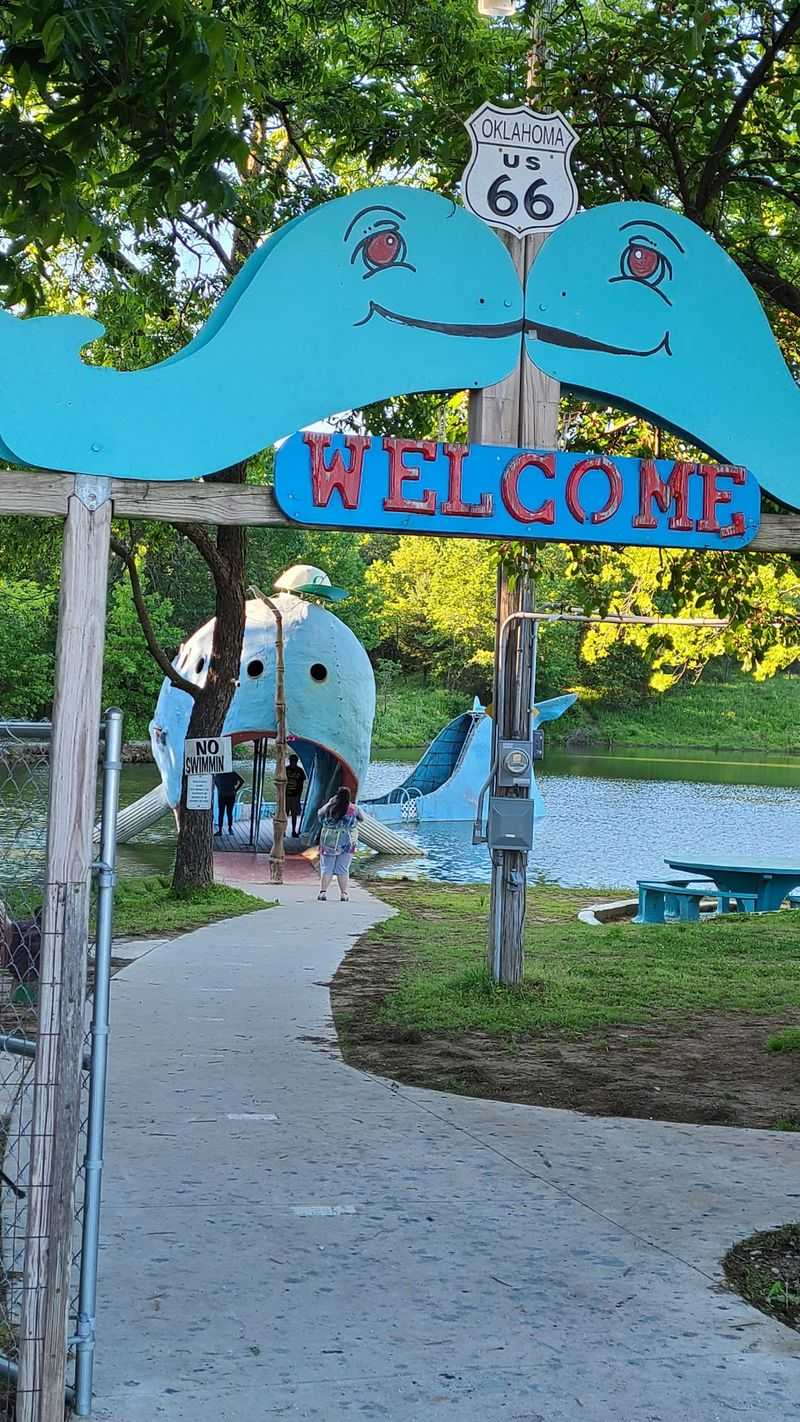
One of the most appealing things about the Blue Whale of Catoosa is that it costs nothing to visit. Admission is completely free, which makes it an easy yes for any road-tripper watching their travel budget.
Parking is also free and plentiful, with the lot clearly visible from the road.
The visitor center and gift shop keep regular hours throughout the week. Monday through Wednesday, Friday, and Saturday, the site is open from 9 AM to 4:30 PM.
Thursday hours extend a bit later, with closing time at 7 PM, which is helpful for those passing through later in the day. Sunday hours run from 11 AM to 4:30 PM, so plan accordingly if you’re traveling on the weekend.
A few visitors have noted that the 4:30 PM closing time can catch people off guard, especially on Saturdays when travelers are still moving through the area in the late afternoon. Arriving earlier in the day gives you the best chance of catching the gift shop open and the grounds at their most relaxed.
For any questions, the site can be reached at +1 918-857-0676, and additional details are available at the City of Catoosa’s official website.
Why the Blue Whale Still Earns Its Place on the Mother Road
More than fifty years after Hugh Davis first set this whale beside a pond in Catoosa, the attraction continues to do exactly what the best roadside stops do: make you glad you pulled over. There’s no elaborate ticketing process, no gift-shop pressure, and no scripted experience waiting for you.
Just a big blue whale, a quiet pond, and the open road on either side.
What keeps the Blue Whale relevant isn’t just nostalgia, though it has plenty of that. The recent restoration has given the landmark a second life that feels earned rather than manufactured.
The new visitor center respects the original spirit of the place while making it more comfortable and accessible for the next generation of road-trippers. That balance is genuinely difficult to pull off, and Catoosa has managed it well.
Stopping here leaves you with the kind of quiet satisfaction that’s hard to get from a planned tourist experience. You came for a curiosity, and you leave with a story.
That’s the Route 66 promise in its purest form, and the Blue Whale of Catoosa delivers it every single time. Pack a lunch, charge your camera, and give yourself a few unhurried minutes beside the pond.
Share this story