Oklahoma holds many surprises tucked along its back roads, but few places stop you in your tracks quite like a town that simply ceased to exist. Somewhere in the northeastern corner of the state, a community that once buzzed with tens of thousands of workers now sits eerily silent, surrounded by massive gray mounds that rise from the flat landscape like something from another world.
The story behind this place is equal parts fascinating and sobering, a reminder of how quickly fortune can turn. If you have ever been curious about what happens to a boomtown after the boom is gone, this is a journey worth taking.
Location and Identity of a Ghost Town
Picher sits in Ottawa County in the far northeastern corner of Oklahoma, close to the borders of Kansas and Missouri. Geographically, it occupies a small but striking patch of land where the landscape has been dramatically reshaped over more than a century of industrial activity.
Today, the town is officially classified as a ghost town, a designation that carries real weight when you stand on its empty streets.
Once recognized as a proper city with its own government, schools, and community life, Picher is now a quiet shell of its former self. The population has dwindled to essentially nothing, and most structures that once defined daily life here have been demolished or left to decay.
Yet the place still draws curious visitors who want to understand how a thriving community simply vanished.
Picher was part of the Tri-State Mining District, a region that straddled Oklahoma, Kansas, and Missouri. That context matters enormously because it explains why so many people came here in the first place and why the consequences of their work lingered long after the industry packed up and left.
Few Oklahoma towns carry a story quite this layered.
The Mining Boom That Built a City
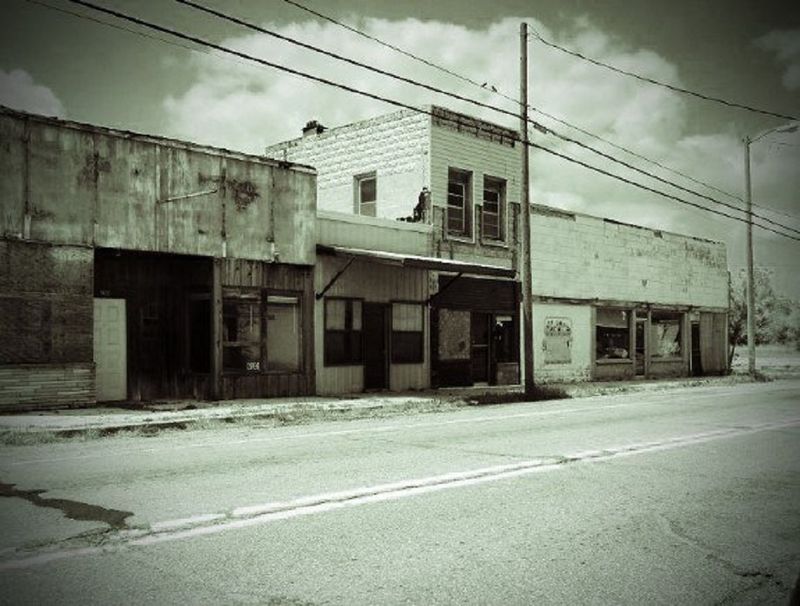
For more than 100 years, Picher served as a major national center for lead and zinc mining, making it one of the most productive mining communities in the entire United States. At its peak, the town was a roaring, crowded place filled with miners, merchants, families, and all the infrastructure that comes with sudden prosperity.
Thousands of workers poured into the area, and the economy grew rapidly around their labor.
The Tri-State Mining District was a massive operation, and Picher sat at its heart. Lead and zinc extracted from this region supplied materials used across American industry, including significant contributions during both World Wars.
The town’s importance to the national supply chain gave it a sense of purpose and permanence that seemed unshakeable at the time.
Businesses lined the streets, schools filled with children, and civic organizations flourished. Picher had the energy of a place that believed it would grow forever.
Looking back now, the contrast between that confident, bustling era and the empty silence of today is almost impossible to fully absorb. The mining boom wrote Picher into history, even if it also planted the seeds of the town’s eventual unraveling.
Chat Piles: The Gray Mountains Left Behind
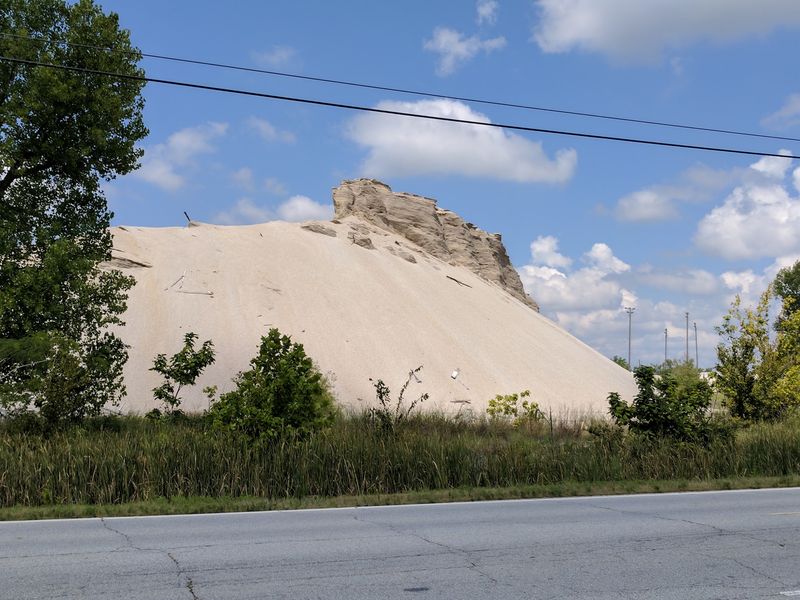
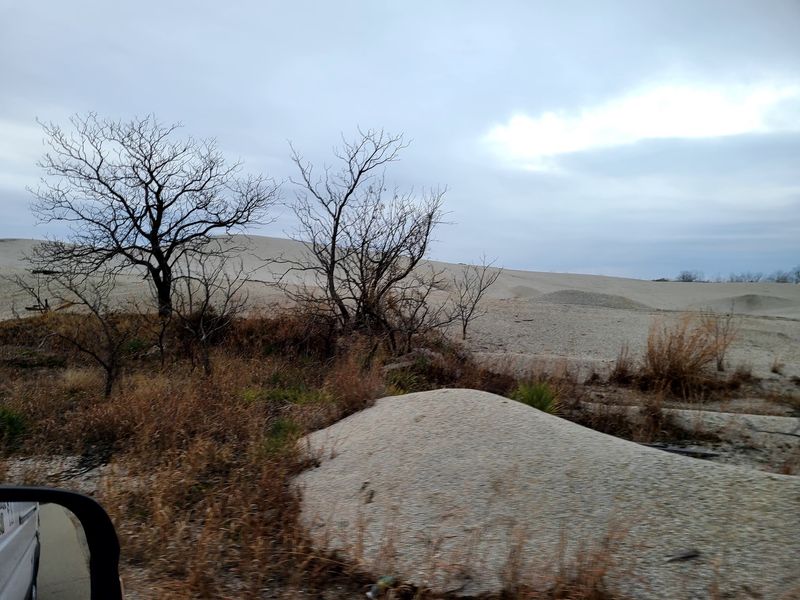
Nothing prepares you for the visual impact of the chat piles. Rising dramatically from the otherwise flat northeastern Oklahoma terrain, these enormous mounds of gray mining waste are the most immediately striking feature of the Picher landscape.
Chat is the crushed rock and tailings left over after lead and zinc ore was processed, and over decades of continuous mining, it accumulated into mountains that can be seen from miles away.
Some of these piles stand several stories tall, covering vast stretches of ground. They have a strange, otherworldly appearance, their pale gray surfaces nearly devoid of vegetation, contrasting sharply with the green fields and scrubby trees that surround them.
Photographers and curious travelers often describe the scene as feeling like a different planet has been dropped into Oklahoma.
The chat piles are not just visually unusual. They represent one of the most visible reminders of the environmental toll that a century of intensive mining left behind.
Rain and groundwater moving through the piles carried heavy metals into the surrounding soil and water over many years. Walking near them today, you get a clear, unfiltered look at what large-scale industrial extraction actually leaves on the land long after the workers are gone.
Environmental Contamination and Its Consequences
Beneath Picher’s surface, the ground tells a troubling story. Decades of mining left the earth riddled with tunnels and shafts, and the processing of lead and zinc ore spread heavy metals through the soil and into local water sources.
Elevated levels of lead were detected in the environment, raising serious concerns about public health, particularly for children who had grown up playing in and around the contaminated landscape.
Federal environmental agencies eventually designated Picher and the surrounding area as one of the most contaminated sites in the country. Cleanup efforts began, but the scale of the problem was immense.
The combination of underground instability from old mine tunnels and widespread surface contamination created a situation where continued habitation was considered genuinely dangerous.
Residents faced a painful reality: the land that had supported their community for generations was no longer safe to live on. Buyout programs were offered, and families began leaving, some reluctantly, some relieved.
The contamination issue was not a sudden discovery but rather a slow, accumulating recognition that reshaped how everyone understood the town’s future. Picher’s environmental legacy is a sobering chapter in the broader national conversation about the long-term costs of industrial resource extraction.
The Tornado That Hastened the End
Already struggling with contamination concerns and a shrinking population, Picher faced another devastating blow in May 2008 when a powerful tornado tore through the area. The storm caused significant destruction to a community that was already in the process of being dismantled.
Buildings that had survived decades of industrial activity were reduced to rubble in minutes, and the disaster accelerated what had already become an inevitable process of abandonment.
The tornado struck when many residents had already accepted buyout offers and relocated, but a stubborn core of longtime residents had stayed behind, unwilling to leave the only home they had ever known. The storm injured many and caused widespread property damage, adding a heartbreaking layer of loss to a community already grieving its own slow disappearance.
Emergency responders and volunteers arrived quickly, but the scale of the damage was overwhelming for such a small remaining population.
After the tornado, the pace of departure quickened noticeably. Rebuilding made little sense given the existing environmental situation, and the combination of the two crises pushed the final holdouts toward relocation.
For many former residents, the storm felt like a closing chapter, nature punctuating a story that industrial history had already written toward its conclusion.
What Remains Standing Today
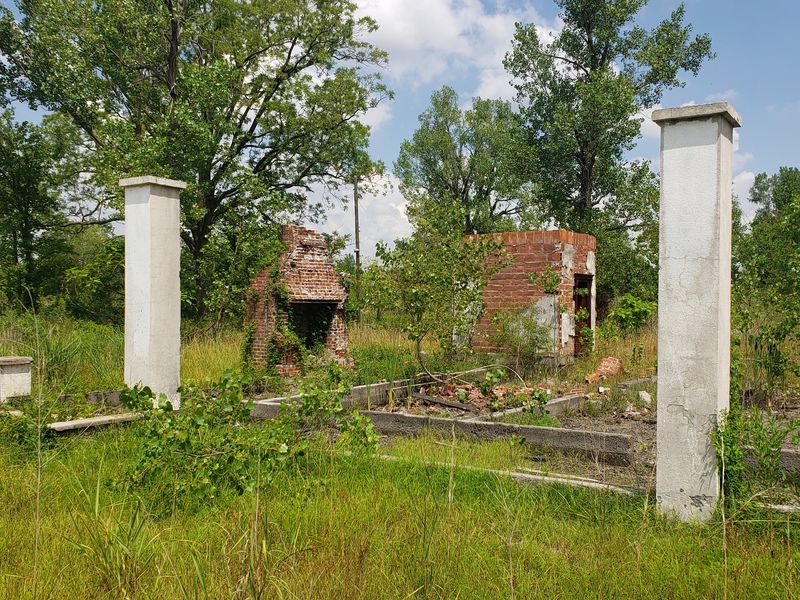
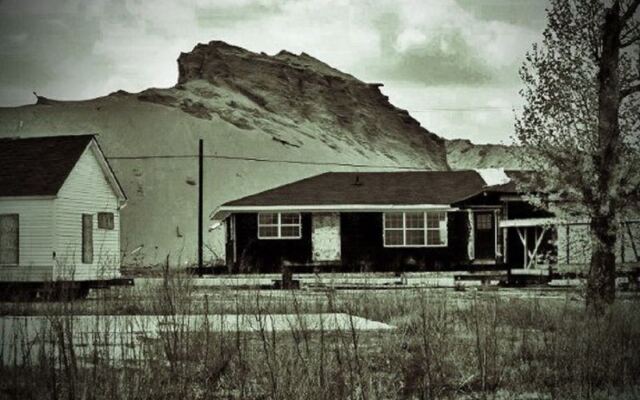
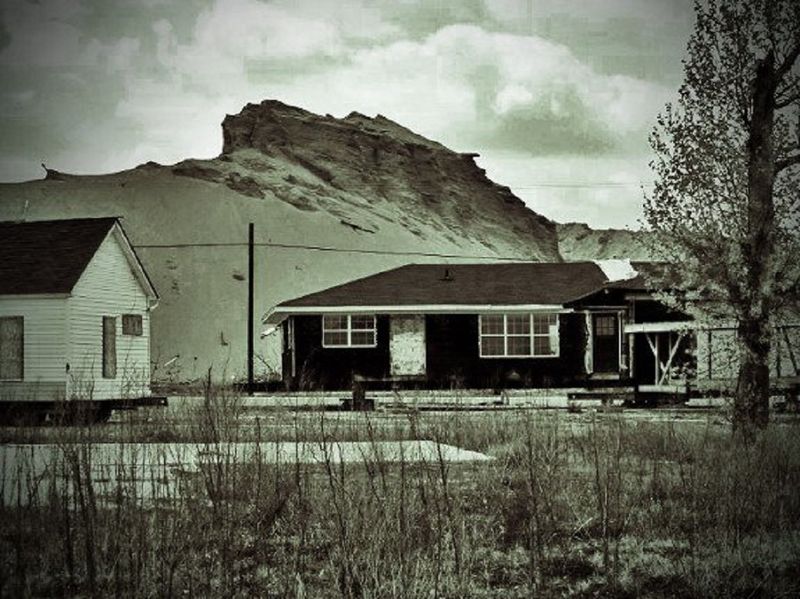
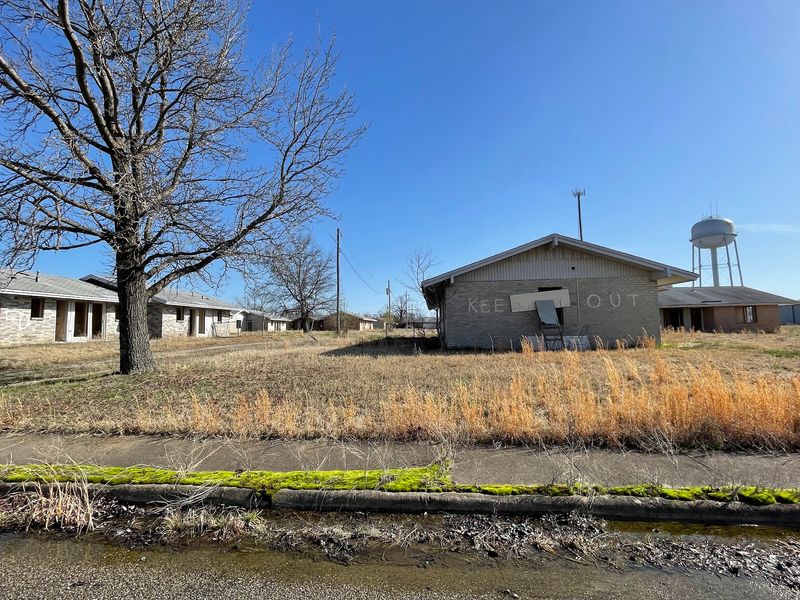
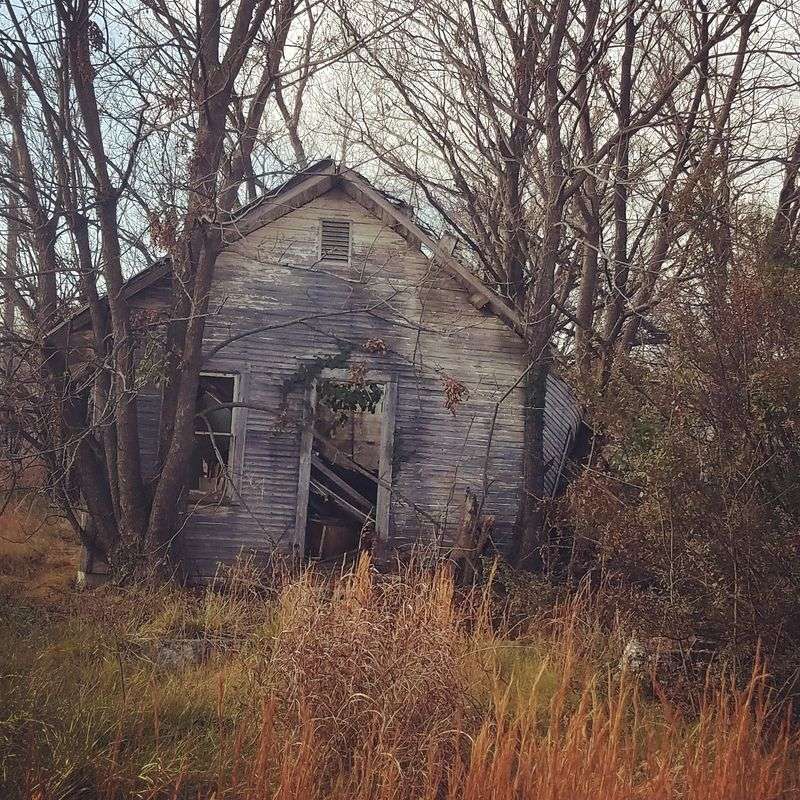
Walking through Picher today means navigating a landscape of absences. Where buildings once stood, you now find open lots, cracked foundations, and the occasional surviving structure that has been left to slowly return to the earth.
The street grid is still visible in places, giving the town a ghostly sense of its former layout, as if the city is still there in outline even if the substance has been stripped away.
A few structures remain, though most have been demolished through official cleanup and safety efforts. The chat piles, however, are permanent-looking landmarks that dominate the horizon in every direction.
They are the most enduring physical evidence that something enormous happened here, a reminder that the landscape was fundamentally altered and will not simply revert to what it was before mining began.
Some visitors note the surreal quality of standing on a street corner where a neighborhood once existed, surrounded by silence and gray mountains. Old signage, crumbling curbs, and occasional remnants of driveways hint at the ordinary domestic life that filled these blocks not so long ago.
Picher is not a ruin in the romantic sense. It is something starker and more honest: a place where the consequences of a century of industry are simply, plainly visible.
Visiting Picher: Atmosphere and Who Makes the Trip
Picher draws a specific kind of traveler: someone genuinely curious about history, environmental stories, and the quieter, stranger corners of Oklahoma’s past. Urban explorers, history enthusiasts, and road-trippers making their way through the northeastern part of the state often include a stop here.
The atmosphere is unlike anything you encounter at a conventional tourist destination, and that is precisely the point.
The mood at Picher is contemplative rather than festive. There are no shops, no restaurants, and no guided tours waiting to walk you through the story.
What you get instead is open space, an overwhelming visual landscape of gray chat, and the particular stillness that comes from a place where thousands of people once lived and now no one does. That kind of quiet has a weight to it that stays with you long after you leave.
Photographers find the location endlessly compelling, with the contrast between the industrial waste piles and the wide Oklahoma sky producing striking images at almost any time of day. History buffs appreciate the raw, unmediated quality of the site.
Picher does not soften its story or package it for easy consumption. You simply arrive, look around, and reckon with what you are seeing on your own terms.
Planning a Visit to Picher
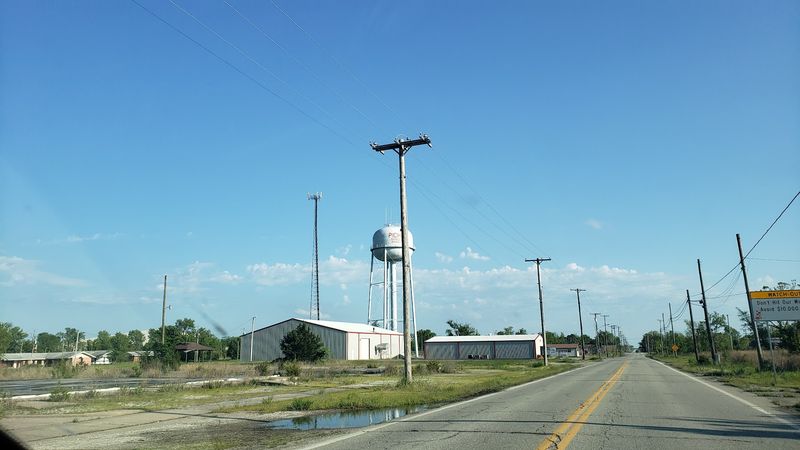
Picher is located in Ottawa County in northeastern Oklahoma, accessible via state highways that connect it to larger nearby communities like Miami, Oklahoma, which sits roughly ten miles to the south. There is no formal entrance fee, no visitor center, and no set hours, since Picher is an open, publicly accessible ghost town rather than a managed attraction.
You simply drive in and explore at your own pace.
Because there are no facilities on site, visitors should come prepared. Bring water, wear sturdy shoes, and avoid entering any structures that are still standing, as stability cannot be guaranteed.
The area around the chat piles also warrants caution: while you can observe them from a distance, direct contact with the chat material is not advisable given the contamination history. Common sense goes a long way here.
The best time to visit is during dry weather, when the roads and open lots are easiest to navigate. Northeastern Oklahoma’s fall months offer comfortable temperatures and clear skies that make the stark landscape even more photogenic.
If you are planning a broader road trip through the region, Picher pairs naturally with a drive along nearby historic routes or a stop in the Ottawa County area, turning a single destination into a fuller day of exploration.
Share this story