A free outing in New Jersey can sound almost too easy, especially when rescued animals are part of the plan. Yet an unassuming farm offers a chance to meet goats, donkeys, chickens, and more without buying an admission ticket.
It matters because a casual day out can also support the people caring for the animals. The best part is that the animals, not a packed schedule, decide what catches your attention next.
A rescue with an open gate
The name tells only half the story. Funny Farm Rescue & Sanctuary is an animal rescue at 6908 Railroad Blvd, Mays Landing, NJ 08330, United States, where people can spend time around animals without paying admission.
That combination makes it an appealing New Jersey outing for families and animal lovers. It is not simply a place to pass by on the way to somewhere else.
Goats, donkeys, chickens, and other animals give people plenty to focus on once they arrive, while the rescue purpose gives the stop meaning beyond a pleasant afternoon.
Some animals roam, and others remain in their own areas, so the experience is less predictable than a fixed exhibit. A donkey may become the day’s main character; on another trip, chickens might claim that role.
There is no need to plan an elaborate itinerary here. Start with enough time to explore, then let the farm set the pace.
Care behind the farm outing
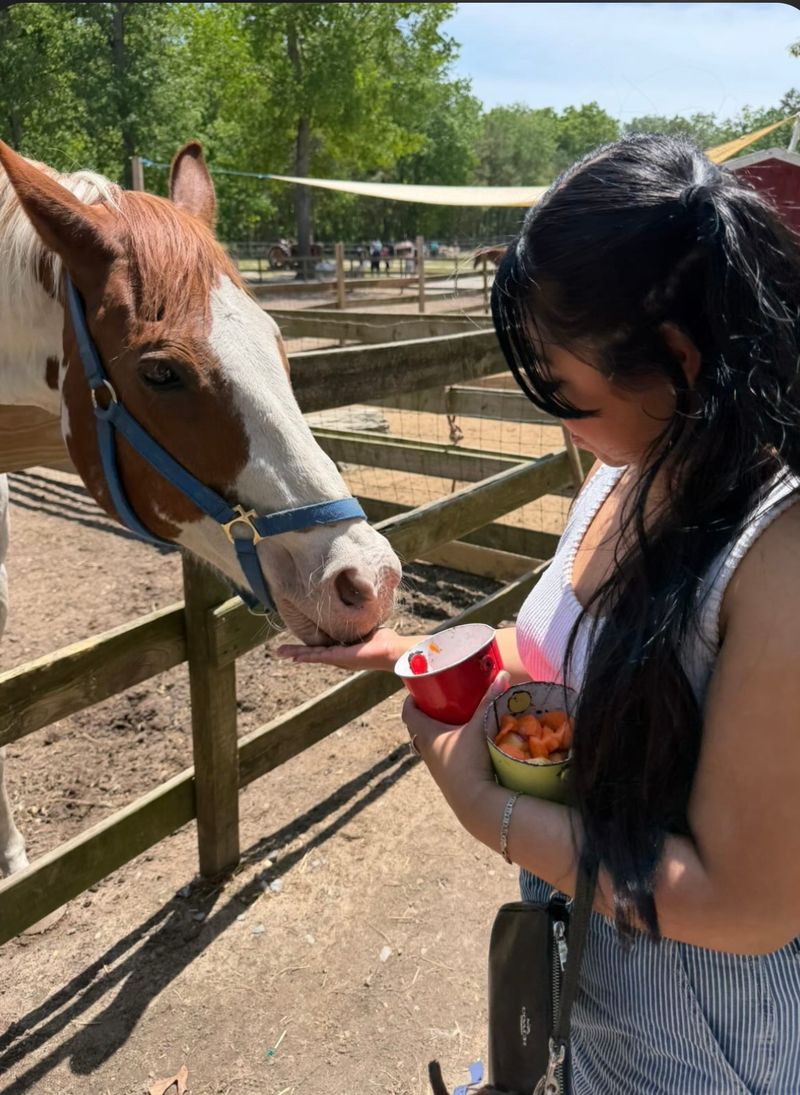
A playful name can hide a serious commitment to animal care. At Funny Farm, the chance to spend time with animals comes alongside its work as a rescue and sanctuary.
That distinction matters when planning a trip: the animals are not props for a family outing.
People who have spent time there describe animals that appear well cared for and helpers who are welcoming. One account describes the team taking in a hen, a reminder that the work extends beyond the days the public can come by.
Laurie, who is associated with the rescue, has also written a book called Funny Farm.
A short visit cannot tell every animal’s story, and it should not be expected to. Still, knowing the purpose behind the farm changes the way a walk around the grounds feels.
The amusing encounters are real, but so is the everyday effort that makes space for them.
A farmyard with room to roam
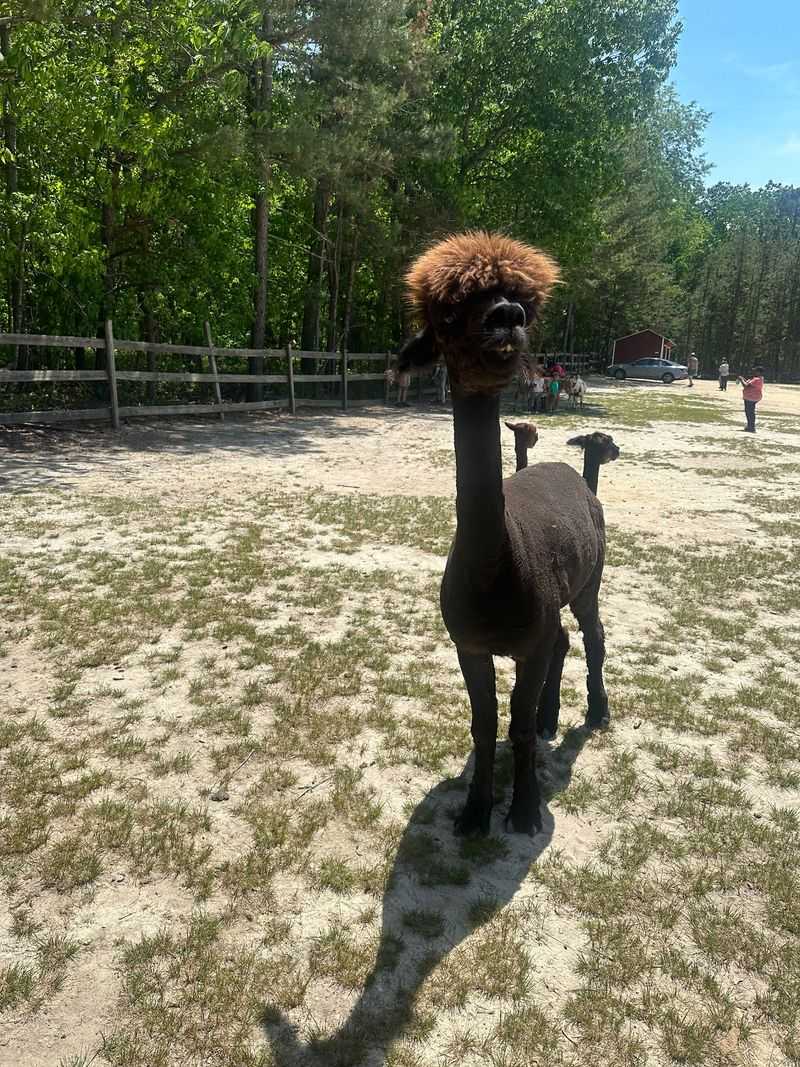
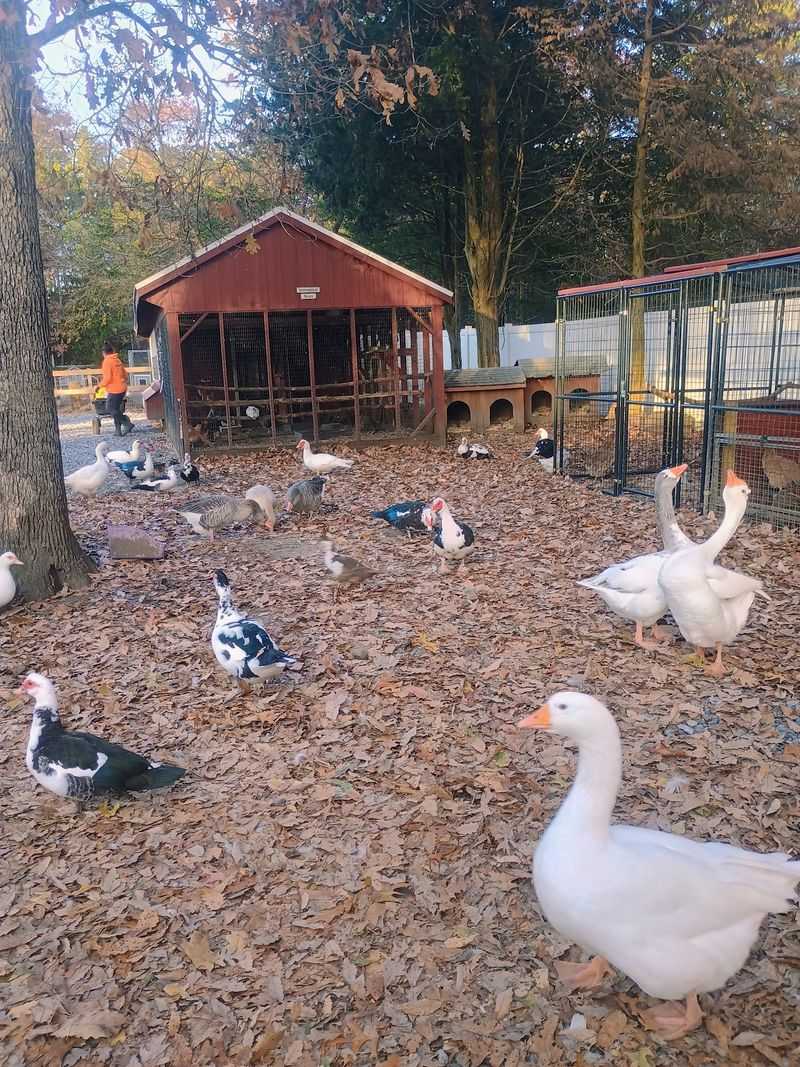
Not every introduction happens across a fence. Accounts of the farm describe goats, chickens, donkeys, and other animals moving freely in some areas, while others stay within enclosed spaces.
The result is an outing that can change from one moment to the next.
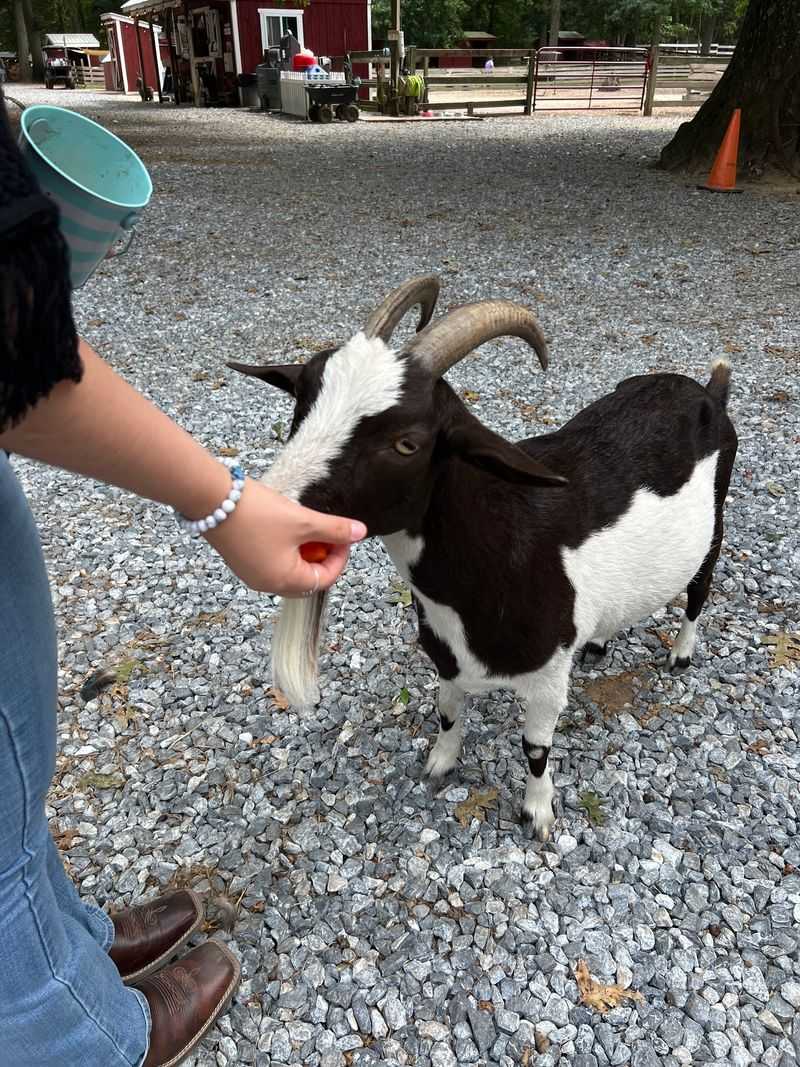
Roaming animals may come close, particularly when feed is involved, so give them room and pay attention to how they behave. A goat with an interest in snacks can be charming, but it is still an animal with its own plans.
The mix of open areas and separate enclosures also means there is no single way to interact with everything on the farm.
That variety makes the grounds more interesting than a checklist of species. Spend a little time noticing which animals approach and which prefer their own space.
The funniest part may be realizing that the farmyard has a schedule, and it does not need yours.
Goats, peacocks, and a changing cast
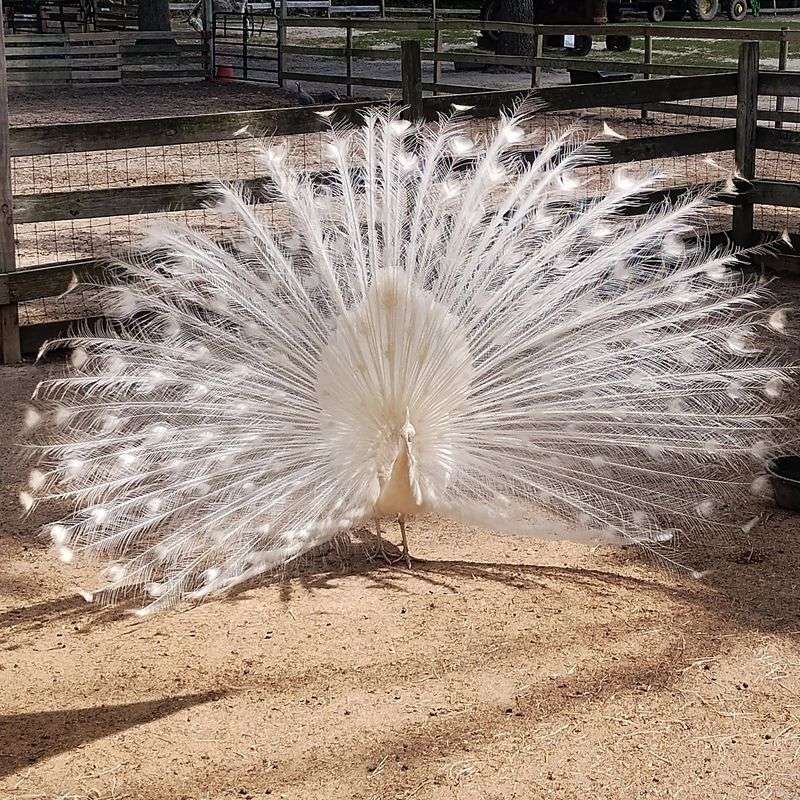
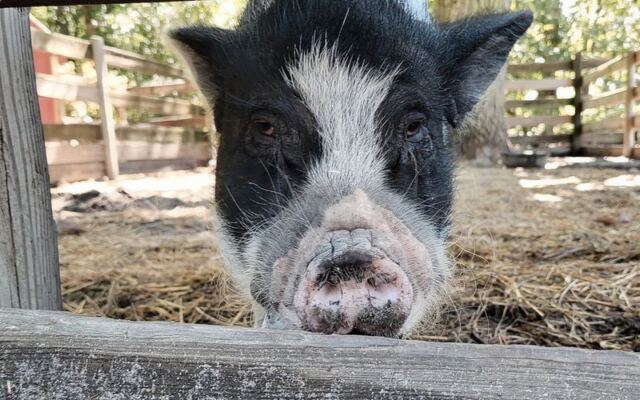
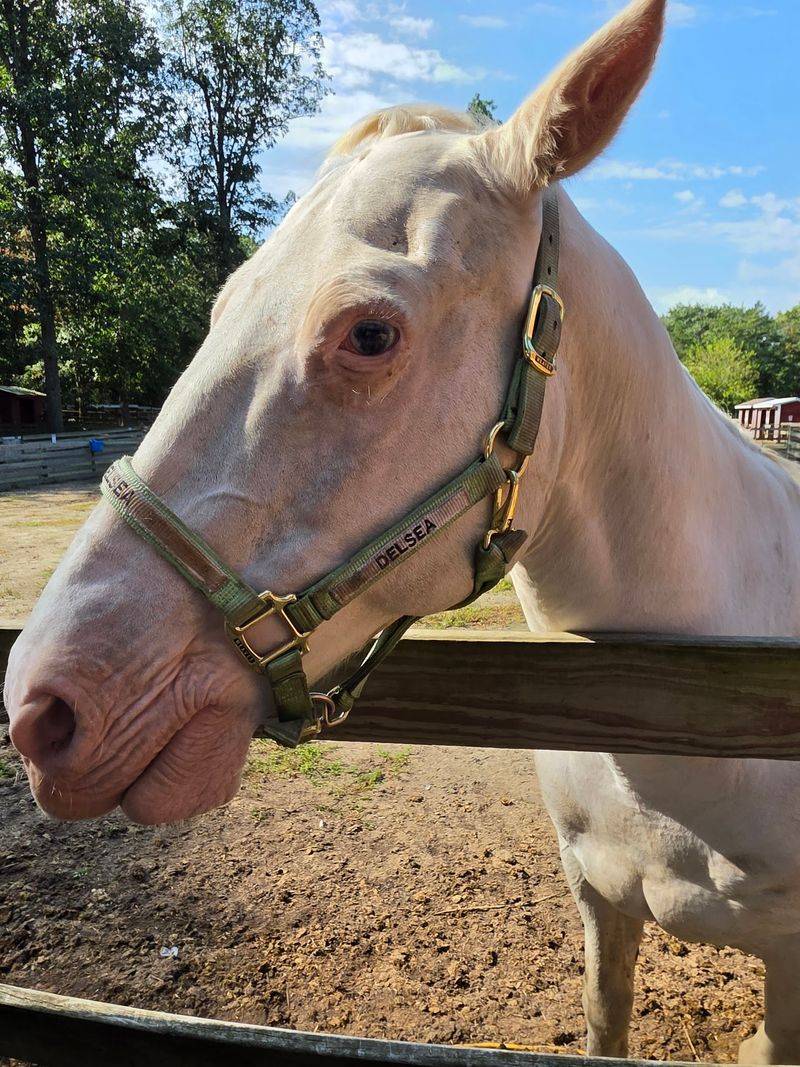
The animal cast goes well beyond a few familiar farm favorites. People have described seeing horses, cows, goats, donkeys, cats, dogs, peacocks, chickens, geese, and pigs at the sanctuary.
Another account mentions turkeys and an alpaca, which gives curious kids plenty of animals to ask about.
That list is not a promise that every animal will be available for an encounter on every trip. Some have their own spaces, and a sanctuary must put their needs first.
Instead of arriving with one must-meet animal in mind, leave room for surprises. A peacock might become the subject of the day’s questions, or a group of chickens may hold everyone’s attention longer than expected.
The range of animals is one reason this free stop can fill more time than its simple description suggests. Even people who know farm animals well may find that this particular group has its own ideas about how an afternoon should go.
Feed buckets and thoughtful boundaries
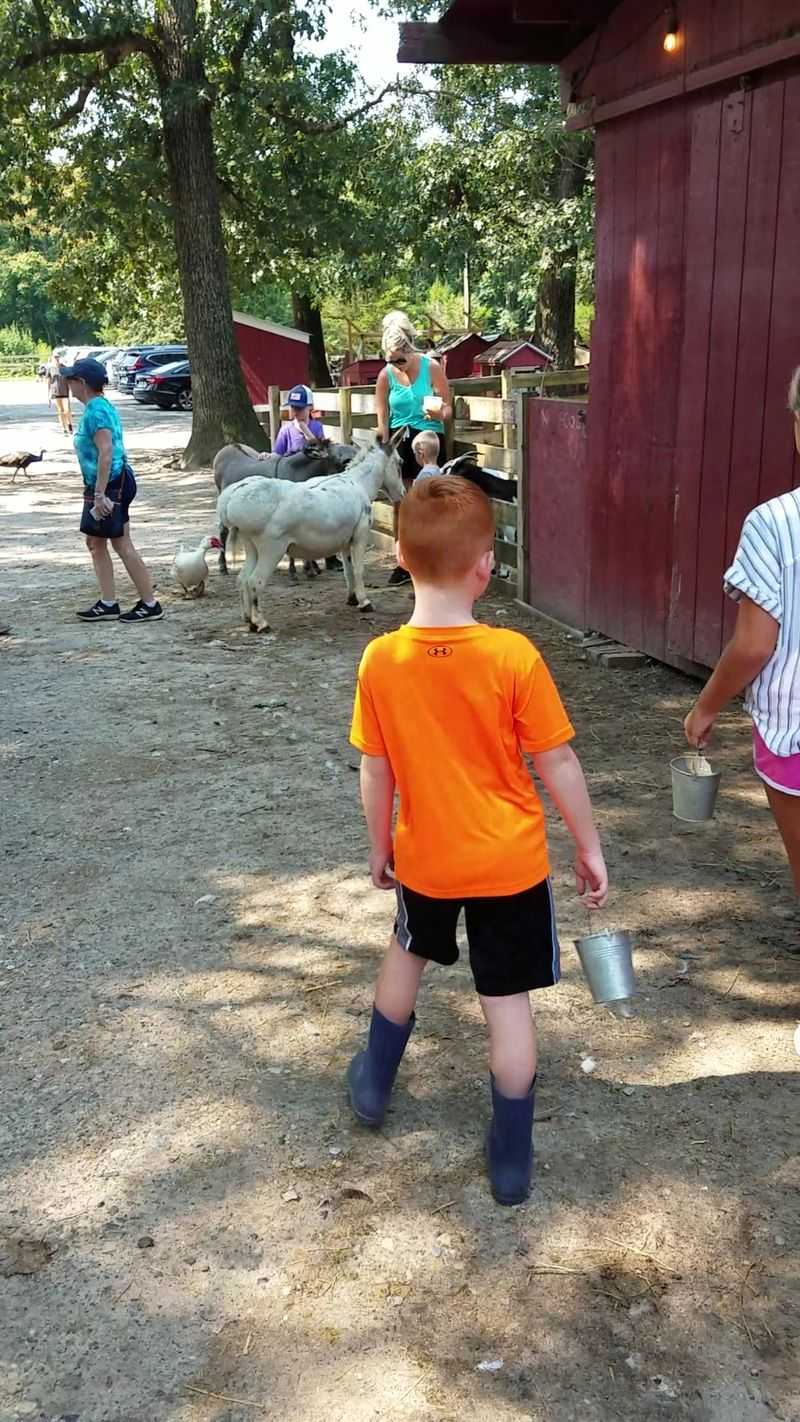
A small bucket can turn a casual walk into an animal introduction. Feed has been sold on-site, and people describe offering it to animals as one of the farm’s most engaging activities.
Reports of bucket costs differ, including four and five dollars, so treat those figures as past examples rather than a current price.
Before sharing anything, follow the farm’s directions. Signs have identified animals on special diets or those needing a more careful approach.
Those instructions are part of the experience, not an obstacle to the fun. They help keep an eager feeding moment appropriate for the animal in front of you.
Adults should guide young children during interactions, even when an animal seems comfortable around people. An empty bucket does not end the outing, either.
Watching how the animals spend their time can be just as interesting as handing out feed, with considerably less competition for your attention.
An outing for curious families
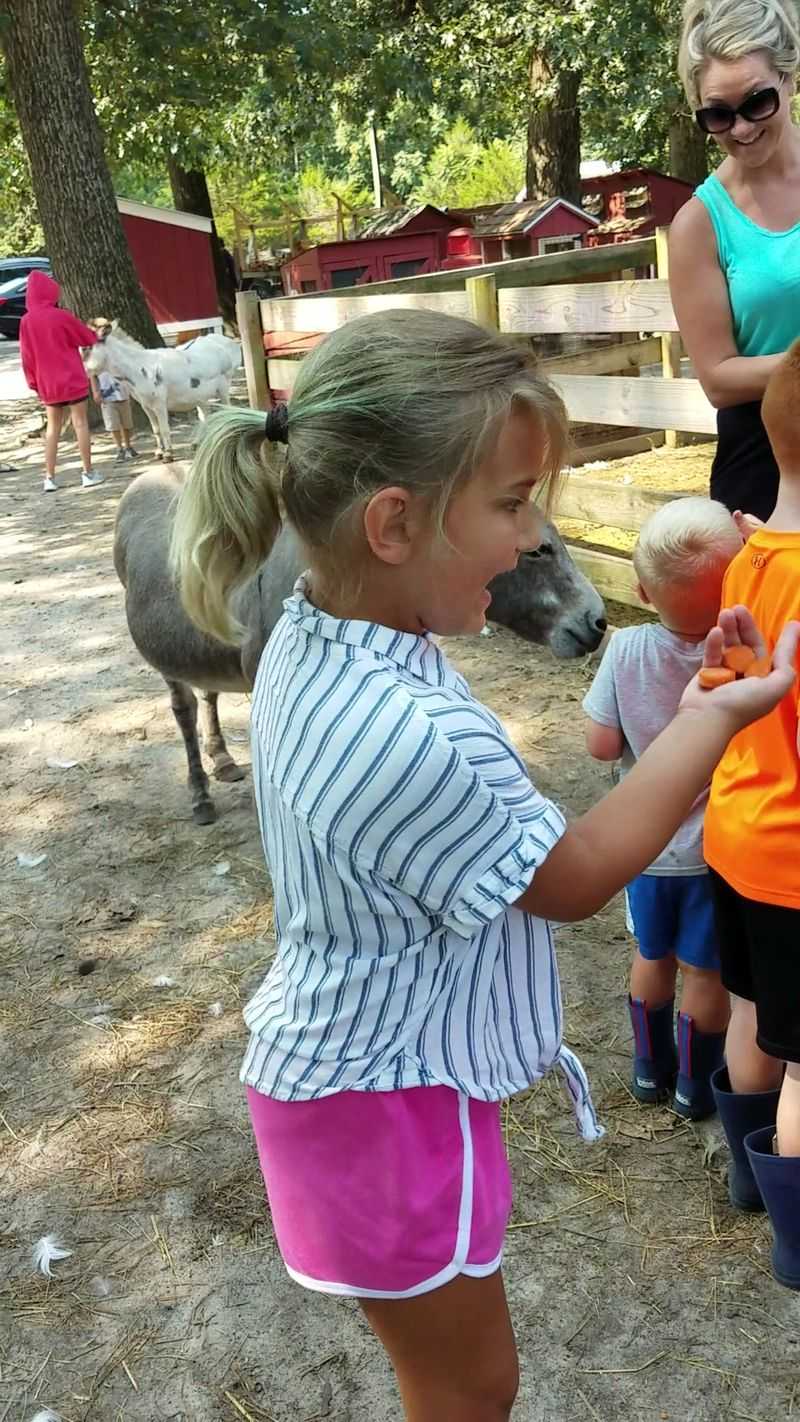
Young children do not need a long explanation to find something interesting here. Families describe spending time with the animals, and one account notes that a three-year-old was taken with the old tractors around the grounds as well as the goats and horses.
The atmosphere suits people who would rather follow a child’s curiosity than keep to a strict timetable. It also works for adults who simply enjoy being around animals.
Accounts mention helpful volunteers and a peaceful setting, though an animal-focused outing calls for attention as well as enthusiasm. Keep children close, respect signs, and allow animals to decide how near they want to be.
For anyone planning a group gathering, the farm has also been used for events in a barn. Ordinary open days need no special occasion, though.
A family can come for a short look and discover that the animals have made a stronger case for staying awhile.
Two public days and no admission charge
The calendar is the detail to check before making the trip. Listed public hours are Tuesday and Sunday, 8 AM to 4 PM; the farm is listed as closed on Monday, Wednesday, Thursday, Friday, and Saturday.
Confirm the current schedule on the sanctuary’s website before setting out, especially if plans depend on a particular day.
Admission is free, with donations accepted. Animal feed is an optional purchase, and previously reported bucket prices have varied, so bring flexibility rather than counting on an exact amount.
Accounts also mention parking and signs on the approach, but a busy special event may be different from an ordinary open day.
Choose practical walking shoes and plan to wash your hands after animal contact; hand-washing areas have been noted on the grounds. Those small preparations leave more time for the reason you came.
A free outing feels even easier when the open-day details are settled first.
A small trip with a lasting point
The best reason to go may be how little the trip asks of you. Set aside time on an open day, follow the farm’s guidance, and see which animals are ready to share their space.
There is no admission ticket to justify and no need to turn every encounter into an activity.
For New Jersey residents, Funny Farm offers a reminder that a worthwhile local outing can center on care rather than spectacle. The mix of roaming animals, separate enclosures, and optional feeding gives each trip its own shape.
Families may focus on helping children learn respectful habits around animals; other guests might simply take their time around the grounds.
A donation, if it fits your plans, is one way to support the rescue behind the experience. Even without a purchase, arriving prepared and respecting the animals helps make the outing work.
That is a satisfying kind of free day: memorable for people, with the animals’ needs still coming first.
Share this story