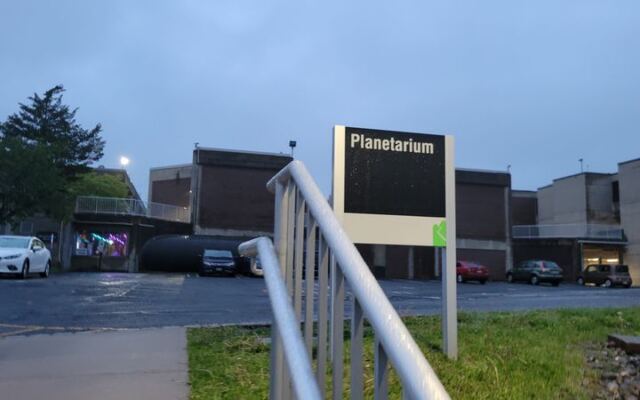
A community college campus has a domed theater where lasers dance to music and constellations glow overhead. On clear nights, the staff has even pointed out the ISS sliding across the real sky.
That combo got me hooked. Black holes, eclipses, star maps, and laser concerts all share one cozy room here in New Jersey.
It’s the kind of place you could drive past for years without a second thought.
I like how unassuming it feels. Families bring toddlers, scout troops earn badges, and grown-ups sneak in their own wonder too.
The lobby has hands-on exhibits, including a heat sensor wall that kids can’t resist.
I can’t imagine a better rainy-day backup plan. Or a better clear-night adventure, honestly.
So how did a college classroom building end up hosting the cosmos?
A College Dome Where The Whole Universe Fits Overhead
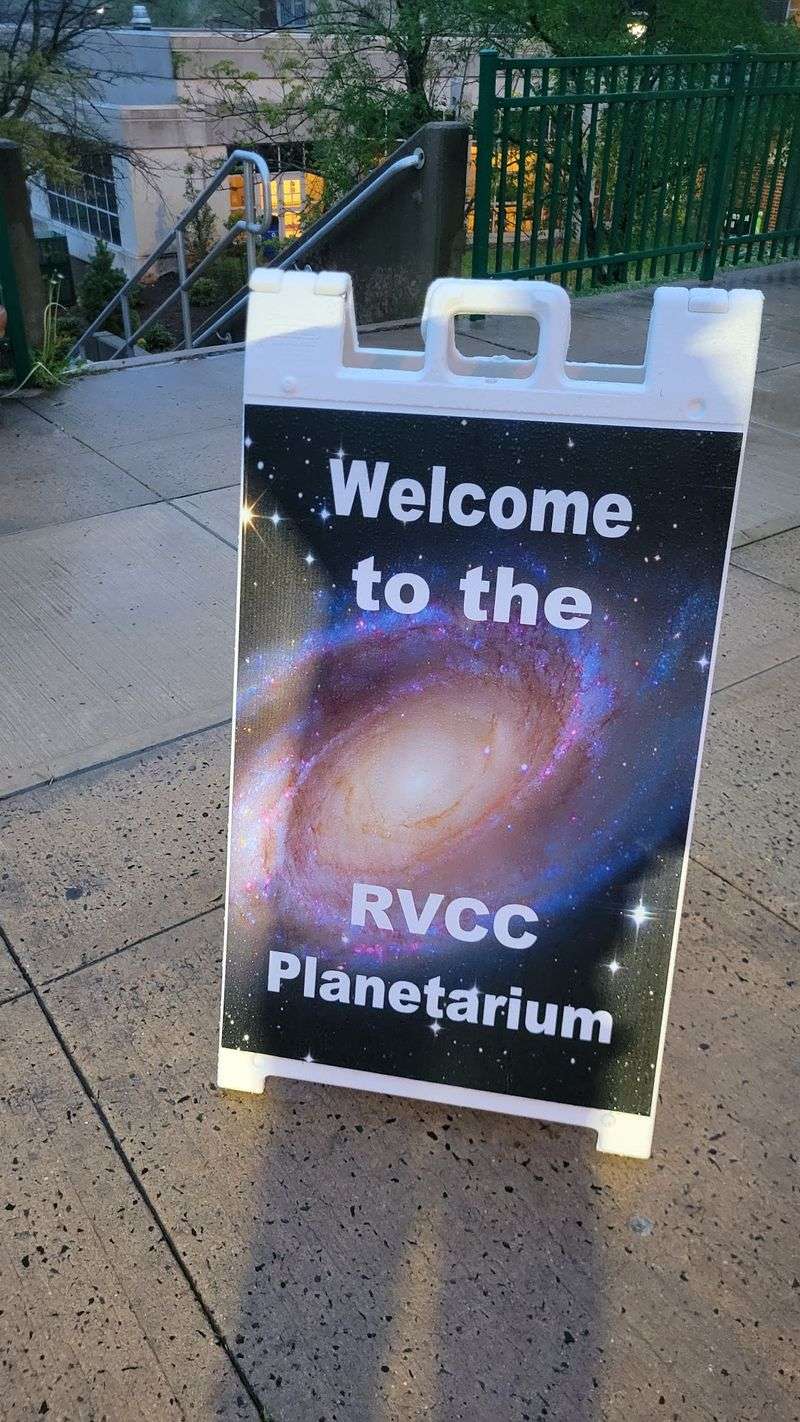
Out on the campus of Raritan Valley Community College sits the RVCC Planetarium, an indoor dome built for sky shows and laser concerts. It’s a college venue, but the public gets a seat too.
The setup is refreshingly simple. You come for a show, lean back, and let the stars take over the ceiling.
Programs cover astronomy topics like constellations, black holes, and eclipses. Laser shows set to music round out the lineup for folks who want a little more sparkle.
There’s also a gift shop on site. Small souvenirs make it easier to bring a piece of the night sky home.
What makes it stand out is the blend of learning and fun. A college facility could easily feel stiff, yet this one leans friendly and approachable.
It’s not a sprawling science museum with endless halls. Think of it as a focused, show-centered stop that does one big thing well.
For New Jersey families, that focus is a plus. You know exactly what you’re getting, and the cosmos does the heavy lifting.
Bring curious kids, curious adults, or both. The sky up there doesn’t care about age, and the dome welcomes everyone.
Finding Your Way To Lamington Road
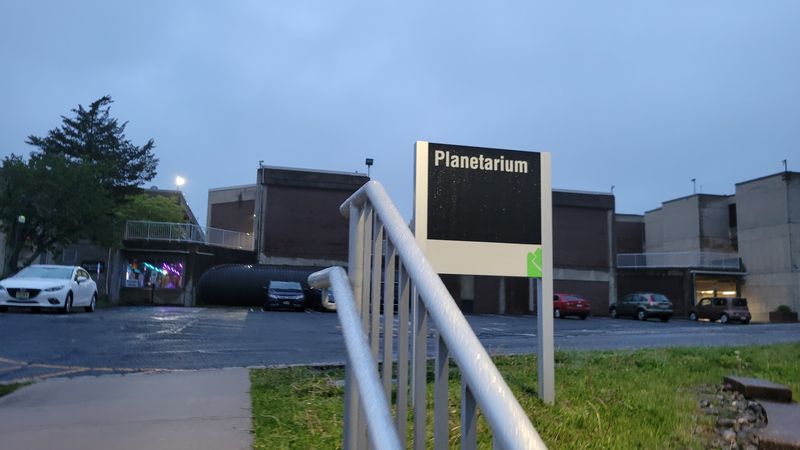
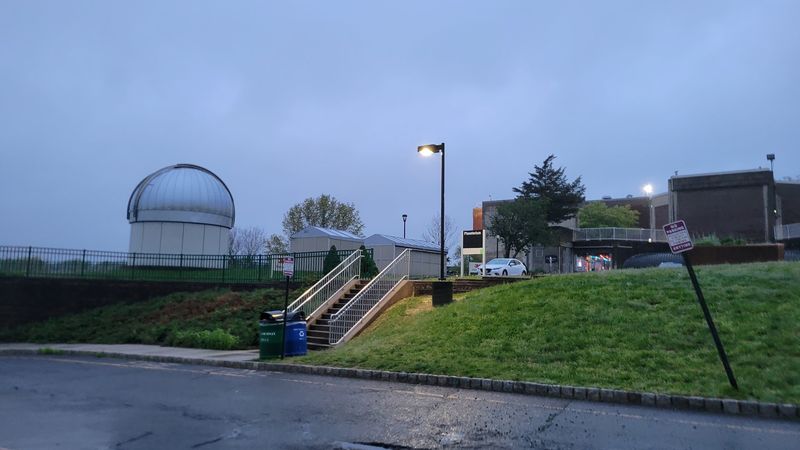
Directions are easy once you know the trick. The planetarium lives at 118 Lamington Rd, Branchburg, NJ 08876, right on the Raritan Valley Community College campus.
That means you’re heading to a college, not a standalone attraction. Keep an eye out for campus buildings rather than a giant observatory tower.
Branchburg sits in Somerset County, a comfortable drive for much of central New Jersey. Plenty of families could fit a show into an afternoon without a full-day commitment.
The campus setting adds a fun twist. Kids get a peek at a real college while they’re there for something that feels like a field trip.
Parking and building access follow campus routines, so give yourself a few extra minutes. Wandering a new campus always takes slightly longer than you expect.
Arriving early also gives you time for the lobby exhibits. Nobody wants to sprint into a dark theater just as the stars appear.
Once you’re inside, the trip feels worth it. The drive to Lamington Road quickly becomes the shortest part of your journey across the galaxy.
Star Maps That Turn Strangers Into Constellation Fans
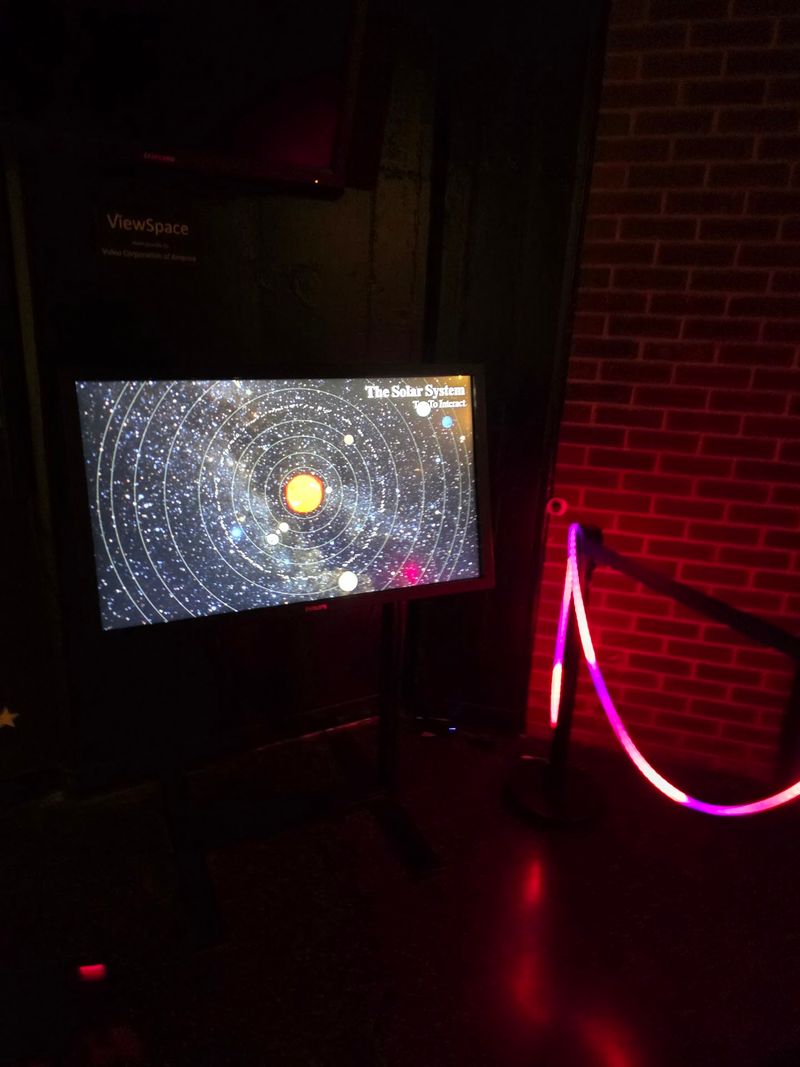
Orion, the Big Dipper, and their starry neighbors get the spotlight here. Presenters walk audiences through a star map showing constellations currently visible in the sky.
That part sounds basic until you try it yourself. Finding shapes in a messy night sky is way easier after someone traces them overhead.
Visitors often mention the constellation explanations as a favorite. Kids especially seem to light up when the dots suddenly become pictures.
Shows about the star pictures help everyone connect old stories to real points of light. Suddenly the sky over your backyard feels less random and more like a storybook.
I believe that’s the quiet magic of a planetarium. You walk out knowing where to look, and that skill sticks around.
The live narration adds personality too. A good presenter can answer questions and adjust the pace for younger crowds.
Next time you’re under a clear New Jersey sky, you might catch yourself pointing upward. Don’t be surprised if your kids beat you to the punchline.
It’s astronomy you can actually use. And it starts in a comfy seat under a dome.
Laser Concerts With A Retro Glow
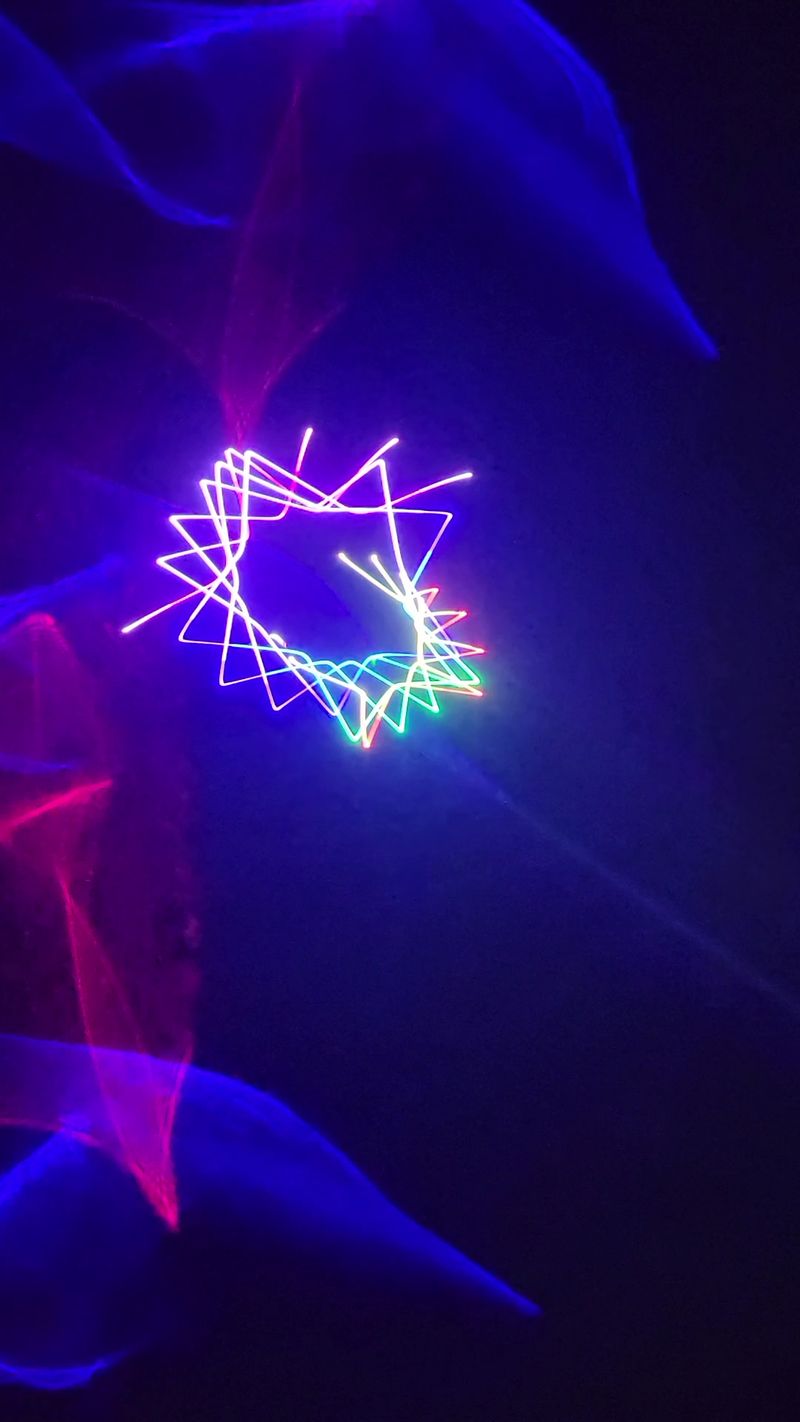
Music plus lasers plus a giant dome. That equation has been pleasing crowds for a long time, and the RVCC Planetarium keeps it in rotation.
Laser shows here pair beams of light with soundtracks. The patterns swirl and pulse across the dome while the music fills the room.
Some visitors find these shows fascinating. Others feel they lean a bit dated, so your mileage may vary.
Honestly, that retro feel can be part of the charm. Laser concerts have a playful, throwback energy that’s hard to find elsewhere.
Little kids tend to be the most enthusiastic audience. Bright colors moving to music is basically their love language.
Families often pair a laser show with an astronomy show for a full outing. One feeds the brain, the other just feels fun.
If you’re sensitive to flashing lights, consider that before booking. A quick call ahead can clear up what a specific show includes.
For everyone else, it’s a goofy, glowing break from screens at home. Sometimes that’s exactly what a weekday needs.
Black Holes, Eclipses, And Other Big Questions
Black holes get a whole show at this dome. Past visitors have enjoyed full programs on these mind-bending cosmic objects.
Eclipses get attention too. Some groups have received a local update on upcoming eclipses, plus a demonstration of how they actually work.
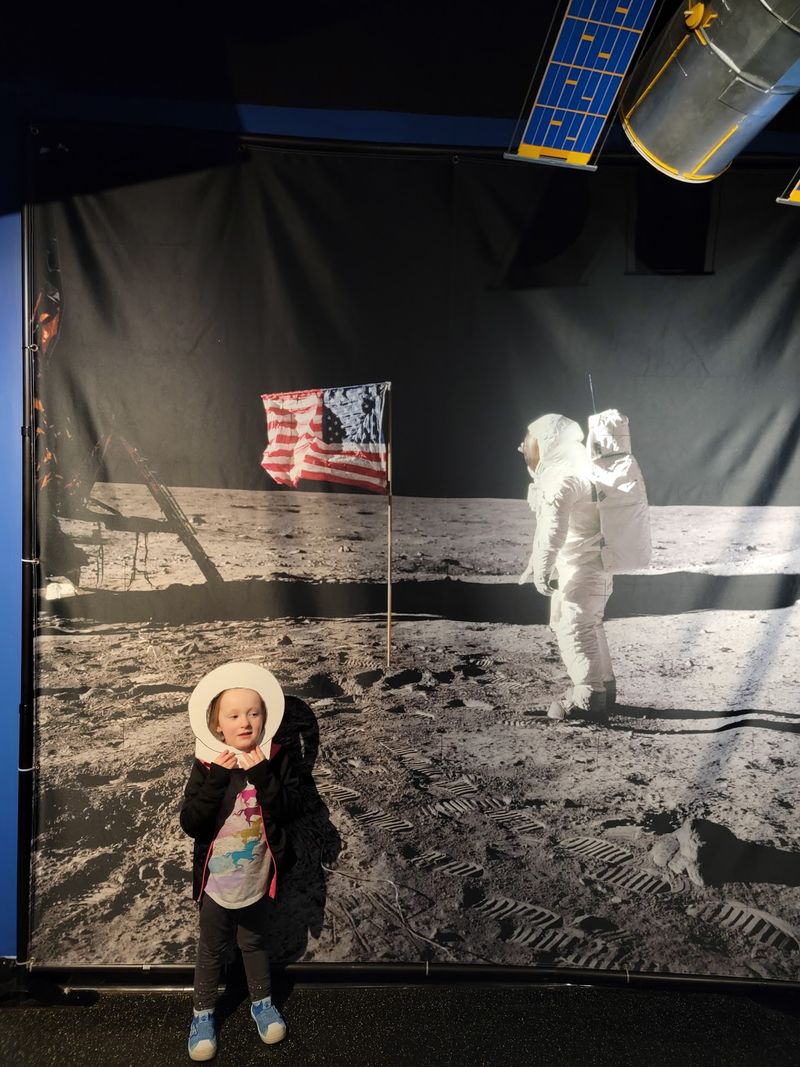
Back in 2019, the planetarium marked the 50th anniversary of the moon landing. Shows like “Astronaut” and “First and Farthest” explored space travel and the race to the moon.
Not every film targets the same audience. Some lean animated and kid-friendly, while others dig deeper into history and science.
That variety is useful. Checking the current schedule helps you match the show to whoever’s coming along.
The planetarium also hosted a solar eclipse event years ago that drew a strong turnout. Big sky moments clearly bring the community together here.
I like that the programs tackle real science without talking down. Kids absorb more than you’d think when the ceiling is doing the teaching.
Adults sneak away with new facts too. Good luck not repeating eclipse trivia at dinner.
Hands-On Exhibits Waiting In The Lobby
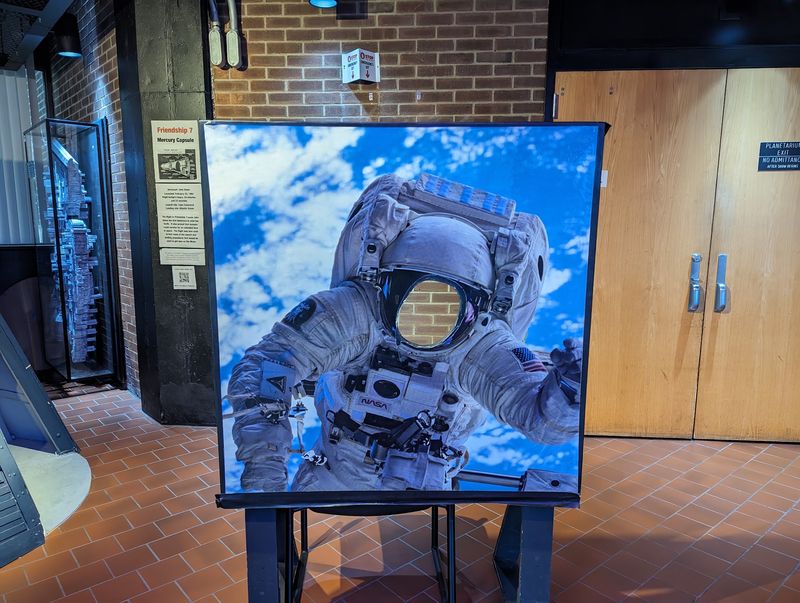
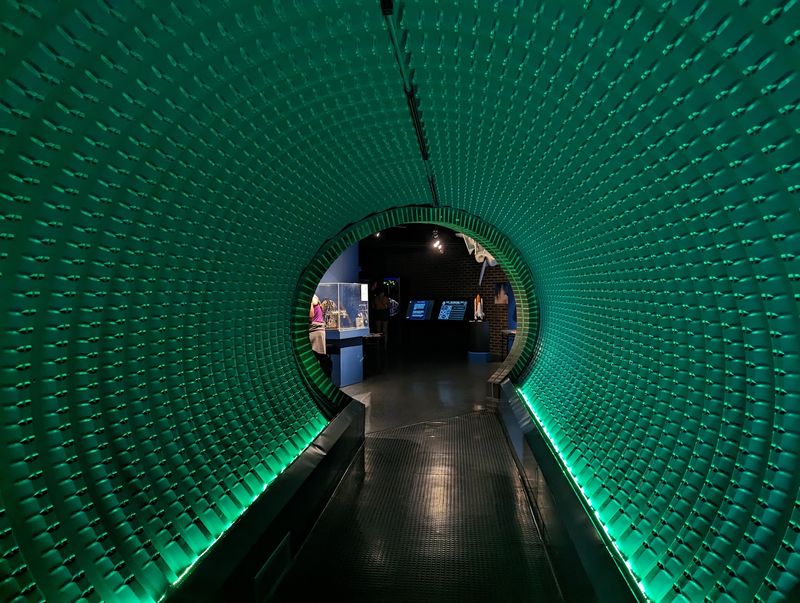
Before the lights dim, there’s a small walk-through exhibit area to explore. Kids gravitate straight toward anything they’re allowed to touch.
A touch screen display is one popular stop. A heat sensor wall is another, showing the warmth of hands and faces in glowing color.
Small is the key word here. Families suggest timing a visit around a show rather than coming just for the exhibits.
Think of the lobby as an appetizer. It warms up young minds before the main event overhead.
The heat sensor wall is a sneaky science lesson. Kids learn about infrared without realizing they’re learning anything at all.
Some visitors have also mentioned a coin exhibit in the lobby. Little moments like that keep restless hands busy.
A quick lap through the exhibits also helps with timing. You won’t be rushing, and the kids burn off a bit of energy first.
It’s a smart, compact setup. Exactly the right size for a short attention span with big curiosity.
Real Telescopes On Clear New Jersey Nights
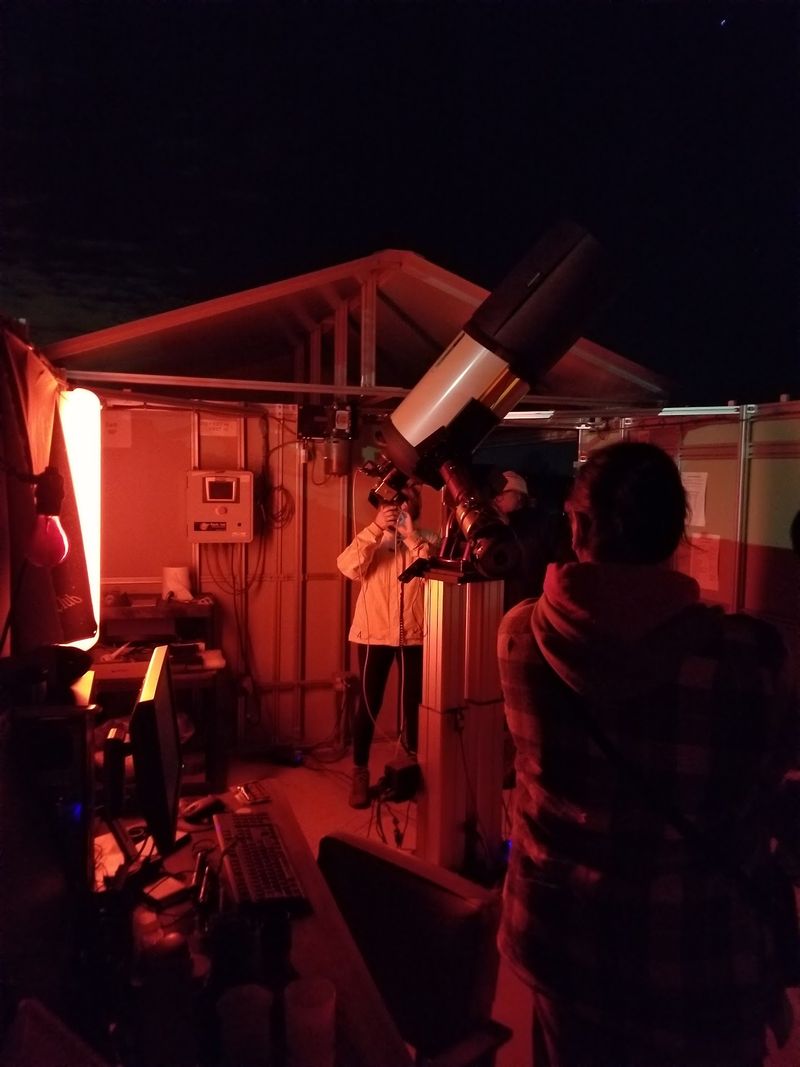
Cloud-free skies change everything. On clear evenings, the planetarium has opened for viewing actual stars and planets.
Visitors have looked at planets, stars, and nebulae through telescopes. Staff explain each target, so you know exactly what’s in the eyepiece.
One lucky group even spotted a satellite and the International Space Station passing overhead. That’s the kind of bonus nobody can schedule.
Weather calls the shots, of course. A cloudy night means the real sky stays hidden, so flexibility helps.
Moving from the dome to the real sky is a neat progression. First you learn the map, then you check it against the universe.
For kids, seeing a planet with their own eyes hits differently. Pictures are fine, but Saturn’s rings in person feel unreal.
Since regular listed hours are weekday daytime, evening viewing works as a special event. Check the official schedule before planning around it.
When the clouds cooperate, it’s pure New Jersey stargazing gold. Bundle up and let your eyes adjust.
Tiny Astronauts And Grown-Up Stargazers Both Belong
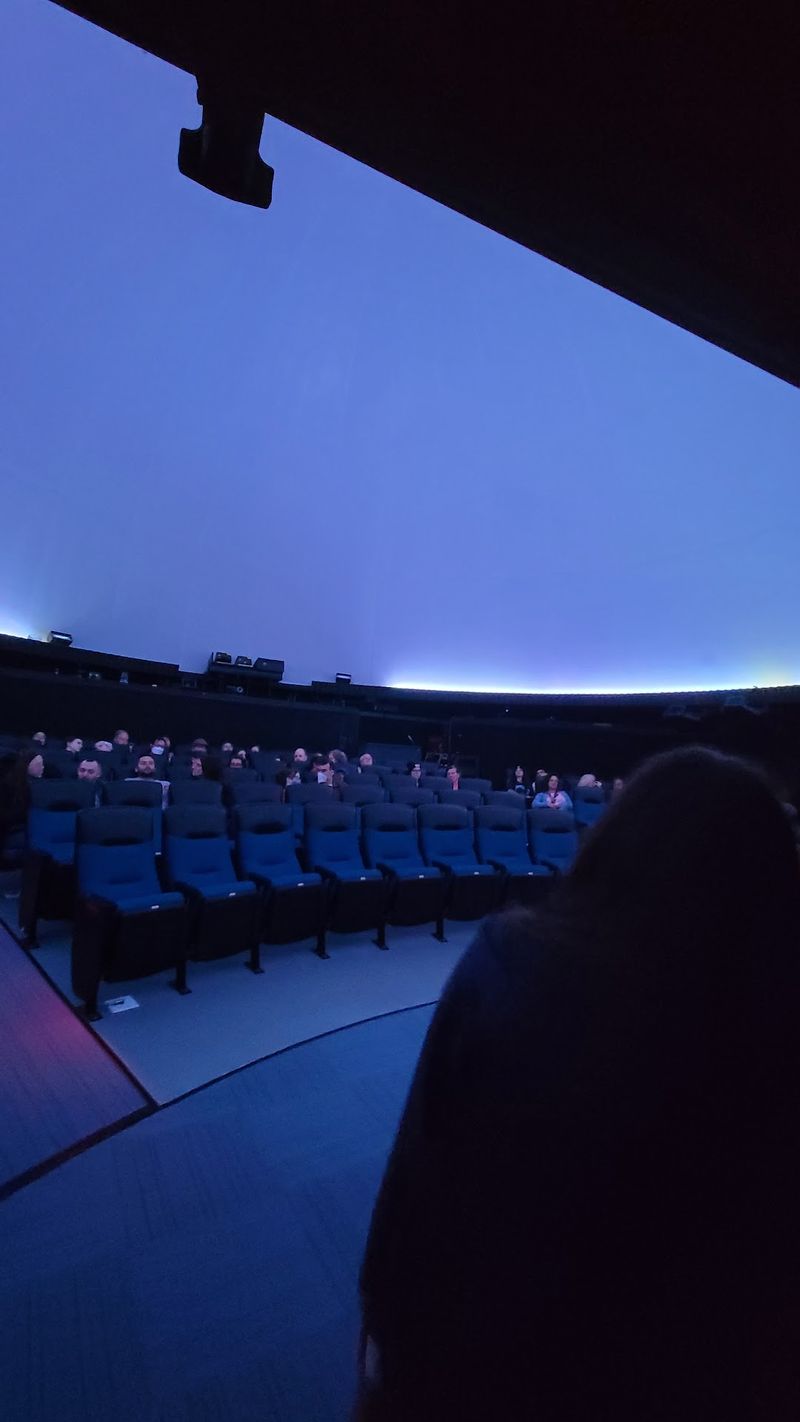
Toddlers count as space fans too. Families have brought kids as young as 18 months and three years to shows.
Little ones often treat the dome like the best thing ever. Bright stars and big visuals hold their attention surprisingly well.
One suggested sweet spot for the astronomy shows is around age five or six and up. Older kids can follow the storylines and constellation explanations more easily.
Adults aren’t left out. Several programs dig into history and science that grown-ups genuinely appreciate.
The room isn’t huge, which keeps things feeling personal. You’re not lost in a massive theater with hundreds of strangers.
Shows often run about 45 minutes, a manageable stretch for most families. Pairing two can fill a satisfying afternoon.
Sound can be a little hard to hear at times, according to some families. Sitting closer to the center may help.
Mostly, it’s a shared experience. Kids gasp, parents grin, and everybody leaves with something new to talk about.
Hours, Tickets, And A Smart Call Ahead
Weekdays are the backbone of the schedule. The RVCC Planetarium lists hours of 9 AM to 5 PM, Monday through Friday.
Saturdays and Sundays show as closed in regular listings. Special public shows and events can pop up outside those times, so check the official calendar.
Online listings haven’t always matched each other perfectly. A quick call before driving out keeps surprises to a minimum.
Reservations are recommended. Walk-ins have worked out before, but staff encourage booking ahead.
Pricing has been described as reasonable by families and groups alike. Exact costs vary by show and group size, so confirm when booking.
Don’t skip the gift shop on your way out. Space-themed treasures make great rewards for well-behaved stargazers.
Plan for about a couple of hours if you’re pairing shows with the lobby exhibits. That’s enough time without exhausting younger kids.
A little planning goes a long way here. Once that’s handled, the stars take care of the rest.
Why This Little Dome Deserves A Spot On Your Calendar
Some outings are about spectacle. This one is about curiosity, and that’s a better reason to go.
The RVCC Planetarium isn’t massive or flashy. It wins with friendly guides, star maps that make sense, and shows that spark real questions.
Kids get hands-on exhibits and a glowing dome. Adults get history, science, and maybe a peek at Saturn on a clear night.
It’s also a reminder of what community colleges offer beyond classrooms. Branchburg has a little window to the universe that anyone can book.
For New Jersey families, it’s a solid indoor plan for chilly or rainy days. For stargazers, telescope nights add serious bonus appeal.
Not every show will land for every person, and that’s fine. Pick programs that match your crew, and you’re in good shape.
I can’t think of many better ways to spend a couple of hours. You walk out looking up, and that habit is worth keeping.
So grab the calendar. The stars are ready whenever you are.
Share this story