Temples are among the most awe-inspiring places humans have ever built. Whether carved from stone a thousand years ago or shaped from gleaming marble in recent decades, these sacred spaces tell stories about faith, culture, and extraordinary craftsmanship.
From the jungles of Cambodia to the mountains of South Korea, the world’s most stunning temples span continents, religions, and centuries of history. This list brings together 20 of the most visually remarkable and historically significant temples you can actually visit today, each one offering something genuinely unforgettable for travelers who appreciate beauty, architecture, and the deeper meaning behind the places we build to connect with something greater than ourselves.
Angkor Wat, Siem Reap, Cambodia
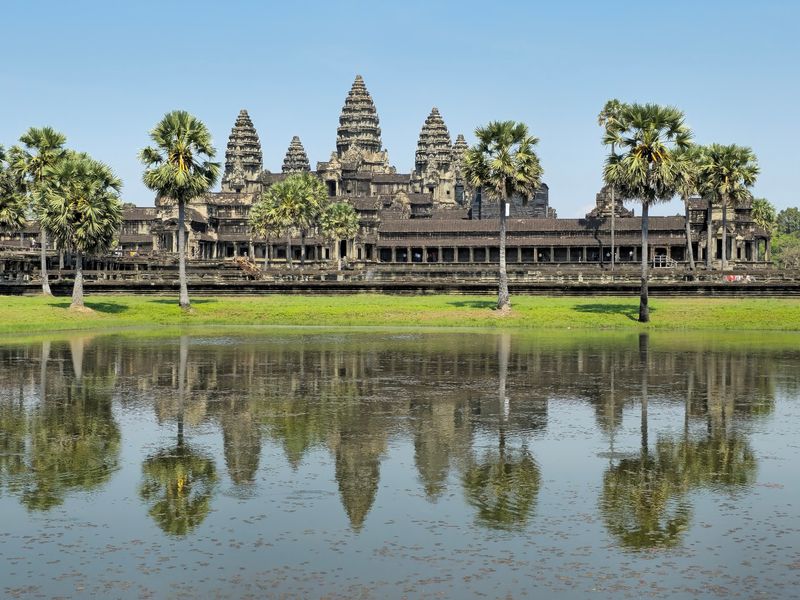
The sheer scale of Angkor Wat is difficult to prepare for, even if you have seen hundreds of photographs. Built during the Khmer Empire in the 12th century, this massive complex was originally dedicated to the Hindu god Vishnu before transitioning into a Buddhist site over the following centuries.
Its five iconic towers, long stone galleries, and enormous surrounding moat form one of Southeast Asia’s most extraordinary architectural achievements. The bas-reliefs carved into the walls stretch for hundreds of meters and depict mythological scenes, royal processions, and celestial figures with remarkable detail.
UNESCO recognizes Angkor as one of the most important archaeological areas in the entire region. The complex opens daily at 5:00 a.m. and closes at 5:30 p.m., giving early risers the chance to watch the sunrise over its silhouette, which remains one of the most photographed moments in all of travel.
Borobudur Temple, Central Java, Indonesia
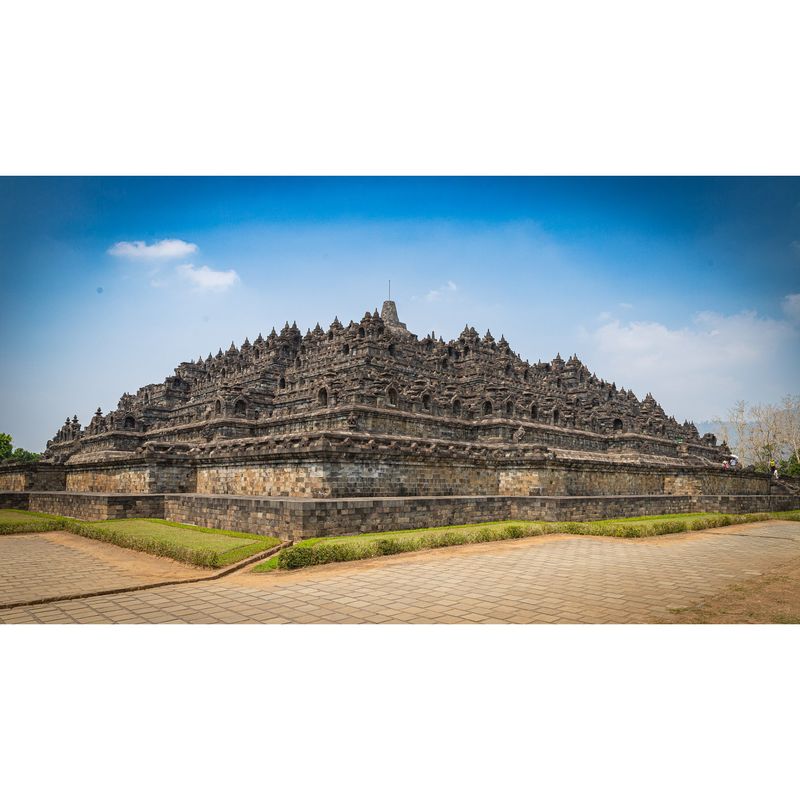
Rising from the green lowlands of Central Java like a stone mountain built by hand, Borobudur defies easy comparison. Constructed during the eighth and ninth centuries, it is the world’s largest Buddhist monument and one of the most thoughtfully designed religious structures anywhere on earth.
The monument consists of nine stacked platforms covered with nearly 2,700 carved relief panels and more than 500 Buddha statues. Seventy-two perforated stupas surround the upper terraces, each one originally containing a seated Buddha figure inside.
The architecture follows Buddhist cosmological ideas, meaning that walking from the base toward the summit is meant to represent a spiritual journey from worldly desire toward enlightenment. UNESCO calls it one of the world’s great Buddhist monuments, and visiting during early morning, when mist still clings to the surrounding plains, gives the site an atmosphere that photographs rarely capture fully.
Kinkaku-ji, Kyoto, Japan
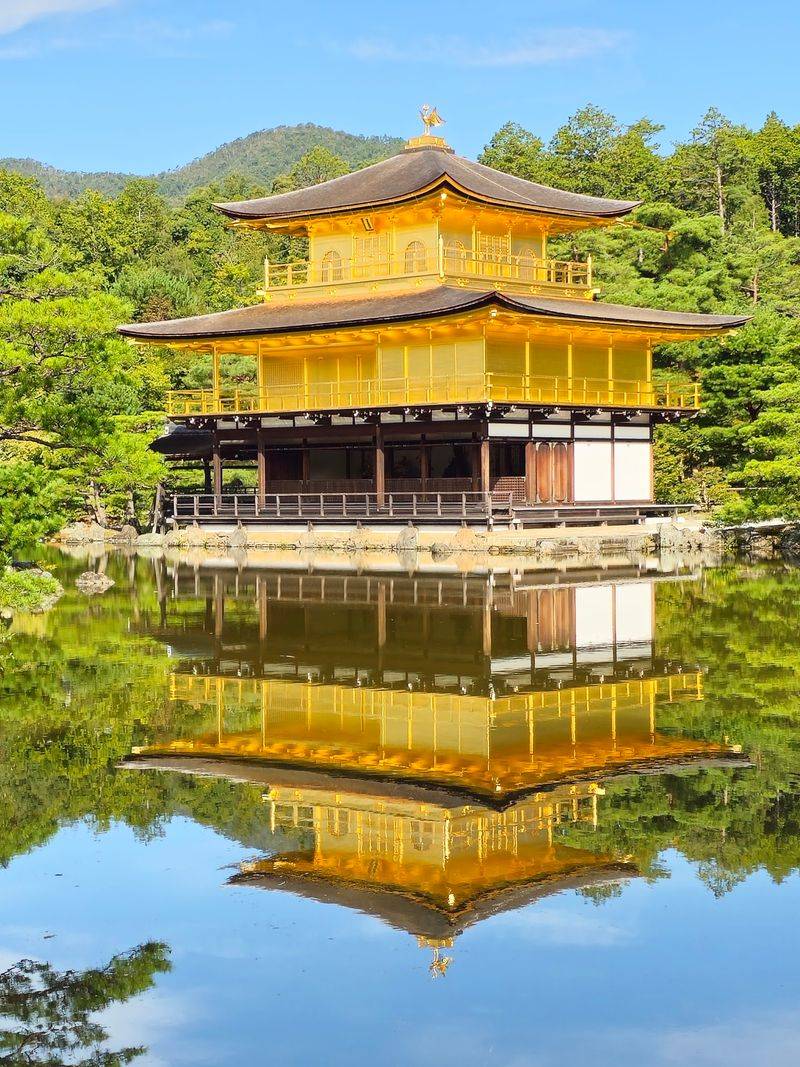
Gold leaf covering an entire building sounds excessive until you actually see Kinkaku-ji shimmering across its reflection pond on a clear Kyoto morning. The upper two floors of the pavilion are coated in real gold leaf, and the effect against blue sky, dark water, and surrounding pines is genuinely striking.
The temple’s history runs deep. Originally built as a retirement villa for a shogun in the late 14th century, it was converted into a Zen Buddhist temple after his passing.
The current structure is a careful postwar reconstruction, but it follows the original design faithfully.
The surrounding garden, known as a strolling garden, was designed so that different angles reveal new compositions of water, rock, and vegetation as visitors walk the path. Kinkaku-ji is open throughout the year, generally from 9:00 a.m. to 5:00 p.m., and remains one of Kyoto’s most visited and most rewarding cultural landmarks.
Meenakshi Amman Temple, Madurai, India
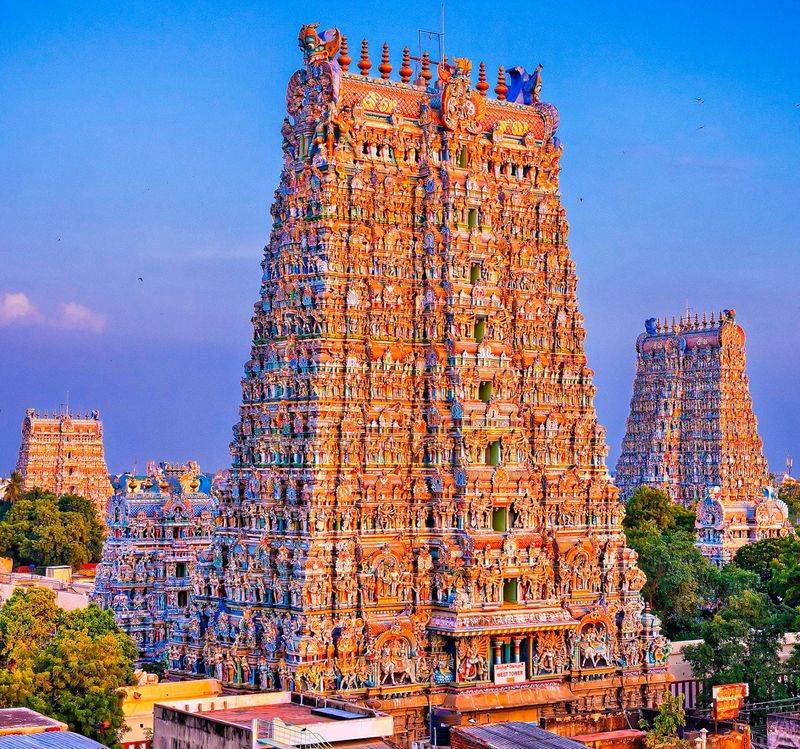
Color hits you first at Meenakshi Amman Temple. The four towering gopurams rise above the city of Madurai covered in densely packed sculptures painted in vivid reds, greens, yellows, and blues.
Thousands of individual figures representing deities, mythological characters, and celestial beings crowd every inch of the surface.
Located in the historic heart of Madurai, the sprawling complex contains multiple shrines, sacred halls, the Golden Lotus Tank, and the well-known Thousand Pillar Hall, which actually houses slightly fewer than a thousand pillars but remains an architectural landmark in its own right.
The temple continues to function as one of South India’s most important active religious centers, drawing pilgrims and visitors in enormous numbers throughout the year. Dravidian temple architecture reaches some of its most elaborate expression here, making Meenakshi Amman a place that rewards slow exploration rather than a quick walk-through.
Wat Arun, Bangkok, Thailand
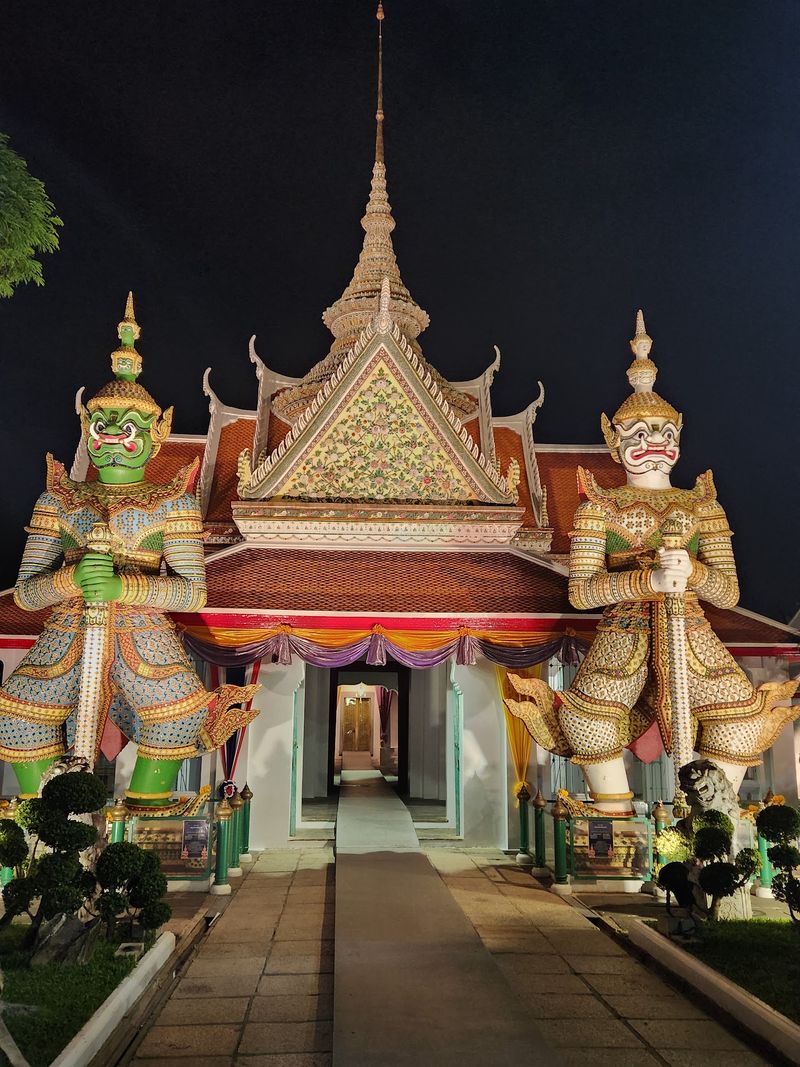
Standing on the west bank of the Chao Phraya River, Wat Arun earns its place on every serious Bangkok itinerary. Its tall central prang, which reaches about 70 meters, is covered with intricate mosaic patterns made from porcelain pieces, shells, and decorative ceramics embedded into the surface.
Despite its English nickname, the Temple of Dawn, afternoon light actually brings out the surface details in especially interesting ways as the angles shift and different colors catch the sun. The temple dates back centuries, though its distinctive prang was significantly developed during the reign of King Rama II and III in the 19th century.
Visitors can climb partway up the steep steps of the main tower for views across the river and surrounding neighborhoods. Thailand’s Tourism Authority continues to list Wat Arun among Bangkok’s primary religious and architectural attractions, and the surrounding area makes for a pleasant riverside visit.
Temple of Heaven, Beijing, China
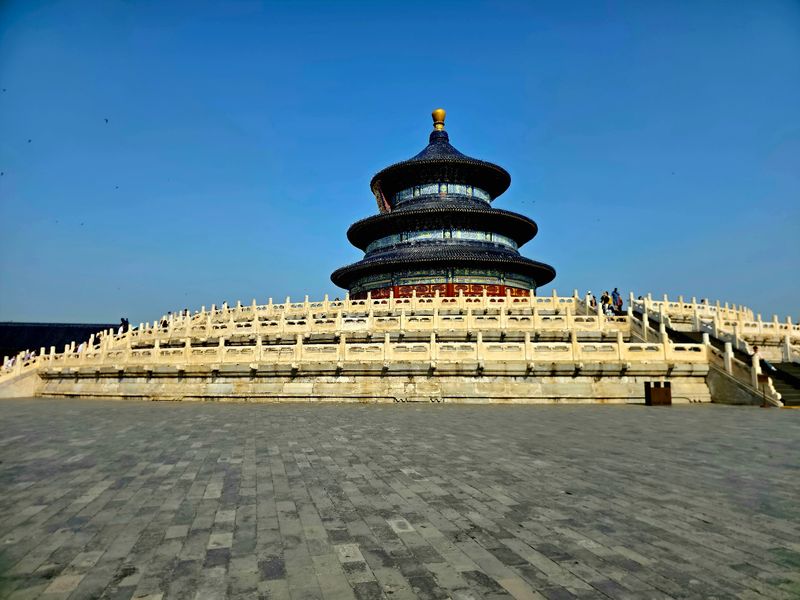
Built during the early Ming dynasty in the 15th century, the Temple of Heaven was never a public place of worship in the ordinary sense. Ming and Qing emperors traveled here in elaborate ceremonies to perform sacrifices and offer prayers for successful harvests, connecting imperial authority directly with the forces of nature.
The circular Hall of Prayer for Good Harvests, with its three-tiered blue roof and white marble terraces, has become one of Beijing’s most recognizable structures. UNESCO notes that the complex was designed to express the cosmological relationship between heaven and earth through its layout, proportions, and symbolic features.
The surrounding park contains ancient cypress trees and open spaces where local residents practice tai chi and other morning activities, adding a lived-in quality to the historic grounds. The principal historical buildings are open to visitors on published schedules, making it an accessible and genuinely fascinating stop in central Beijing.
Byodo-in Temple, Uji, Japan
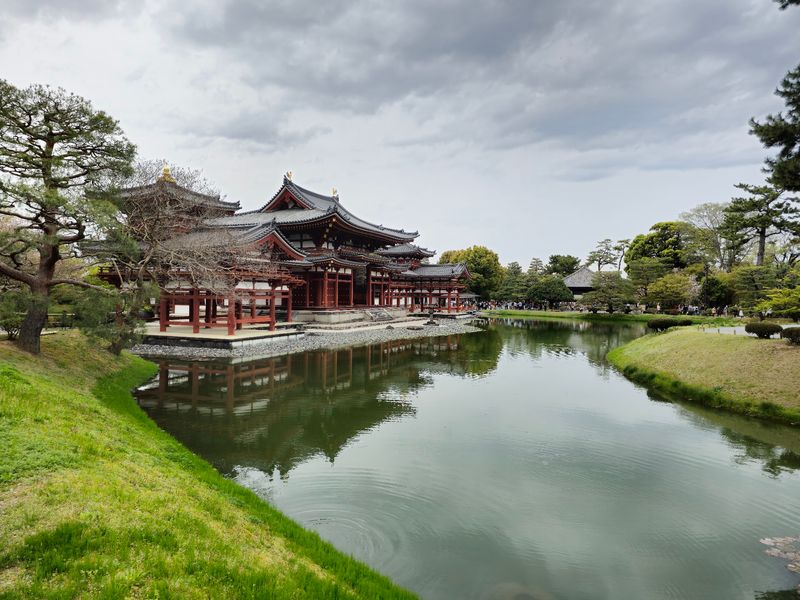
There is a reason the Phoenix Hall at Byodo-in ended up on Japan’s 10-yen coin. The building’s elegant symmetry, with its central hall flanked by wing corridors that seem to stretch toward the water, creates one of Japanese architecture’s most refined compositions.
Its reflection in the surrounding pond only adds to the effect.
Originally built as a noble family’s villa, the property became a Buddhist temple in 1052, and the Phoenix Hall was completed the following year. Inside, an important Amida Buddha statue carved by the sculptor Jocho remains one of Japan’s national treasures.
The neighboring Hoshokan museum houses original temple treasures, including decorative panels and bronze phoenixes, in climate-controlled conditions that protect them from further weathering. Byodo-in’s gardens and museum are open daily, though interior access to the Phoenix Hall can occasionally be limited during ceremonies.
The town of Uji itself, known for green tea, makes the trip even more worthwhile.
Lotus Temple, Delhi, India
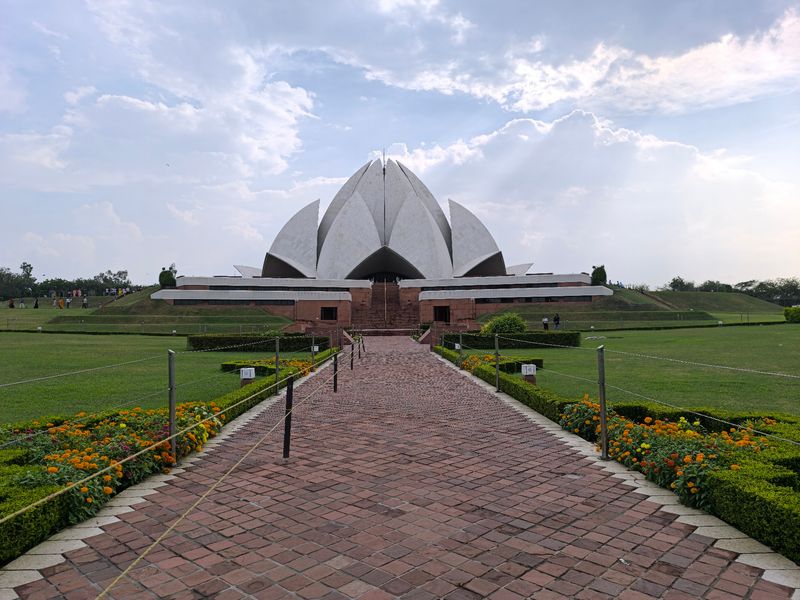
No towers, no carved deities, no traditional religious iconography at all. Delhi’s Lotus Temple makes its statement entirely through form.
Twenty-seven white marble petals arranged in clusters of three create the shape of an opening lotus flower, giving the building one of the most distinctive silhouettes of any religious structure built in the 20th century.
Designed by Iranian-Canadian architect Fariborz Sahba and completed in 1986, the Bahai House of Worship operates on an open-door policy, welcoming people of any faith or background. Nine entrances lead toward the central hall, which seats over a thousand people in a calm, undecorated interior.
Reflecting pools surround the building, and the surrounding gardens provide a quieter approach to the temple than the busy city streets just beyond the gates. India’s official tourism portal lists regular public visiting hours with seasonal adjustments between summer and winter.
It remains one of Delhi’s most architecturally compelling public spaces.
Swaminarayan Akshardham, New Delhi, India
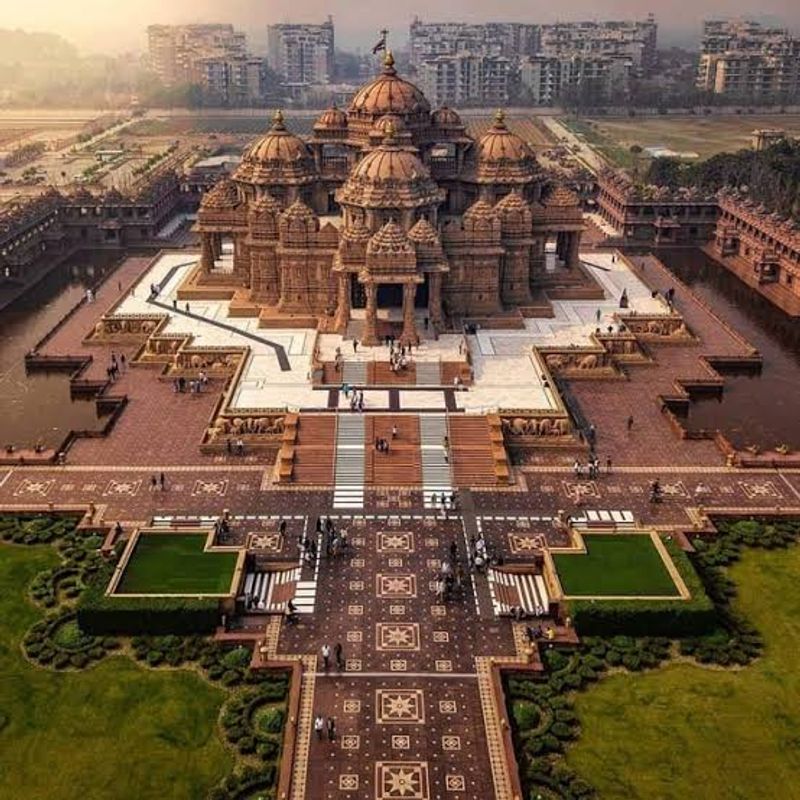
At first glance, Akshardham looks like it could be centuries old. The central mandir is covered with extensive hand-carved stonework featuring thousands of figures, floral patterns, and traditional Indian architectural motifs executed in pink sandstone and Italian marble.
The craftsmanship is meticulous in a way that makes the building feel timeless.
What makes Akshardham particularly surprising is that the complex only opened in 2005. It was built using traditional construction methods, with skilled craftspeople working on the stone carvings by hand.
The broader campus includes landscaped gardens, water features, and exhibition spaces connected to Indian culture and spiritual history.
The official site currently welcomes visitors Tuesday through Sunday, with the mandir open for darshan into the evening hours. Photography rules inside the complex are strict, so it is worth reviewing the current guidelines before visiting.
The scale of the place, both architecturally and spiritually, tends to leave a strong impression on first-time visitors.
Mahabodhi Temple, Bodh Gaya, India
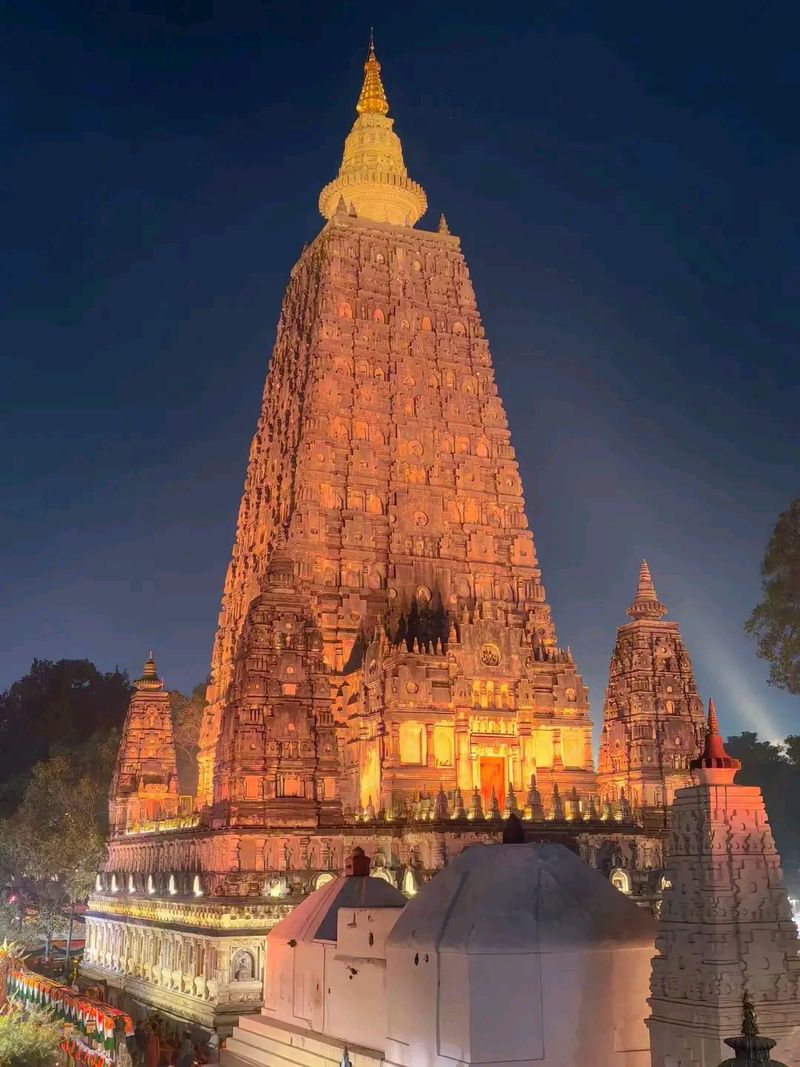
Bodh Gaya holds a specific and irreplaceable place in Buddhist history. This is where Siddhartha Gautama is traditionally believed to have attained enlightenment and became the Buddha, making the Mahabodhi Temple Complex one of the most spiritually significant sites in the entire world for Buddhist practitioners.
The current brick temple, with its tall pyramidal spire, largely dates from the fifth or sixth centuries, though an earlier sanctuary was established under Emperor Ashoka centuries before that. The complex surrounds the sacred Bodhi Tree, which is considered a direct descendant of the original tree under which the Buddha sat.
Meditation areas, smaller stupas, and additional sacred locations are spread throughout the grounds. Pilgrims from across Asia and beyond gather here year-round, giving the site a constant atmosphere of quiet devotion.
UNESCO has recognized the Mahabodhi Temple Complex as a World Heritage Site, acknowledging both its architectural and spiritual importance to global human heritage.
Prambanan Temple, Java, Indonesia
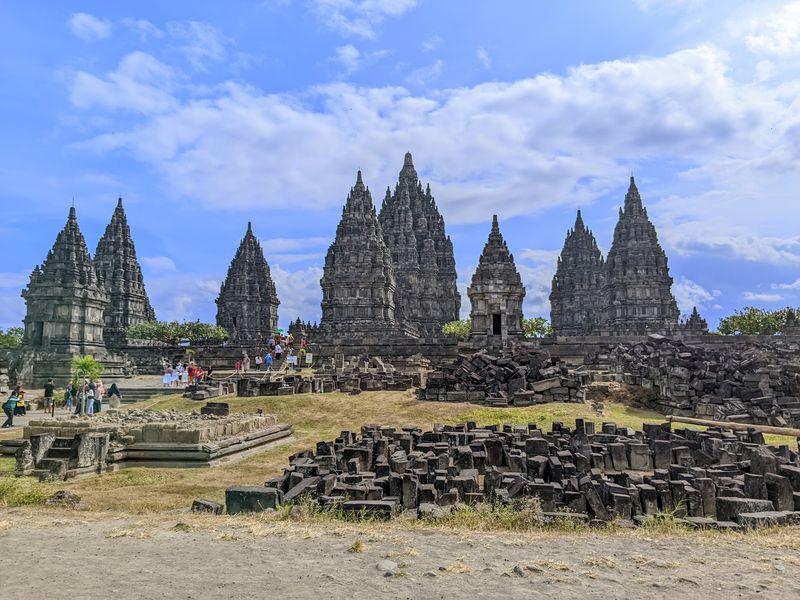
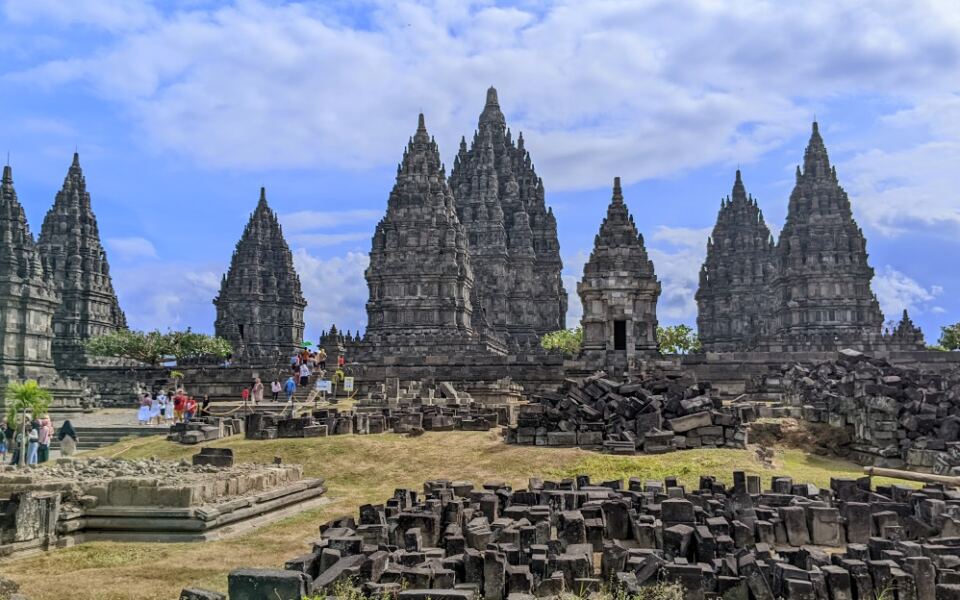
Prambanan announces itself across the flat plains of Central Java with a collection of sharply pointed stone towers that look like they were designed to reach the sky as efficiently as possible. Built during the ninth and tenth centuries, the complex is dedicated primarily to the Hindu Trimurti of Shiva, Vishnu, and Brahma.
The three tallest central shrines dominate the surrounding landscape, while hundreds of additional temple structures and ruins spread across the broader complex. The carved reliefs along the gallery walls are particularly worth examining closely, depicting episodes from the Ramayana epic in sequential panels that read almost like an ancient illustrated story.
UNESCO describes Prambanan as Indonesia’s largest Hindu temple complex and an outstanding example of classical Javanese religious architecture. The site pairs naturally with a visit to Borobudur, since the two monuments are located within reasonable distance of each other in Central Java, offering a remarkable contrast between Buddhist and Hindu architectural traditions.
Kiyomizu-dera, Kyoto, Japan
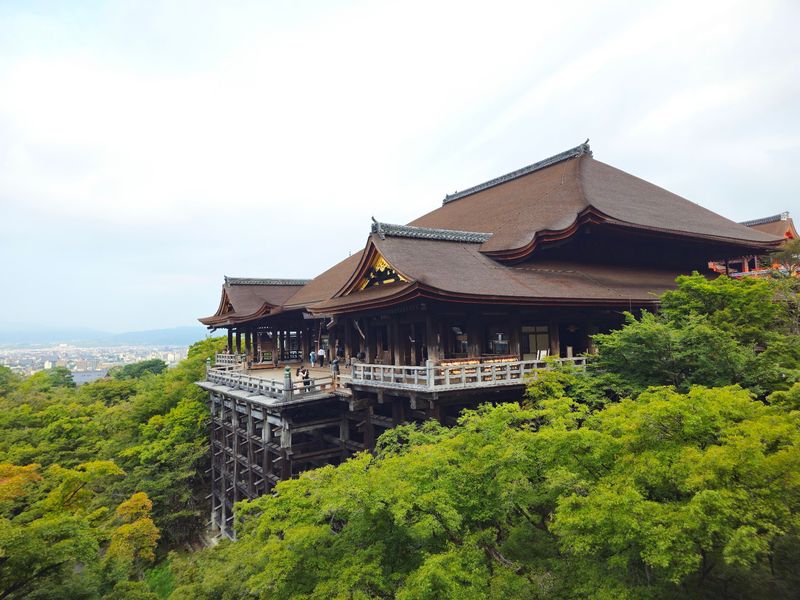
The wooden stage at Kiyomizu-dera projects from the hillside without a single nail holding it together. That engineering fact alone tends to stop visitors in their tracks, but the view from the platform across Kyoto’s forested hills and historic neighborhoods is what makes the stop genuinely memorable.
The temple’s history stretches back more than 1,250 years, making it one of Kyoto’s oldest sacred sites. It is dedicated to Kannon, the bodhisattva of compassion, and remains an active place of worship visited by enormous numbers of pilgrims and travelers throughout the year.
Seasonal changes transform the surrounding landscape dramatically. Cherry blossoms in spring and fiery foliage in autumn create entirely different atmospheres around the same structures.
Official 2026 visitor information confirms daily opening from 6:00 a.m., with closing times varying by season and special evening illumination events held during peak foliage and blossom periods. Early morning visits offer a noticeably quieter experience.
Senso-ji, Tokyo, Japan
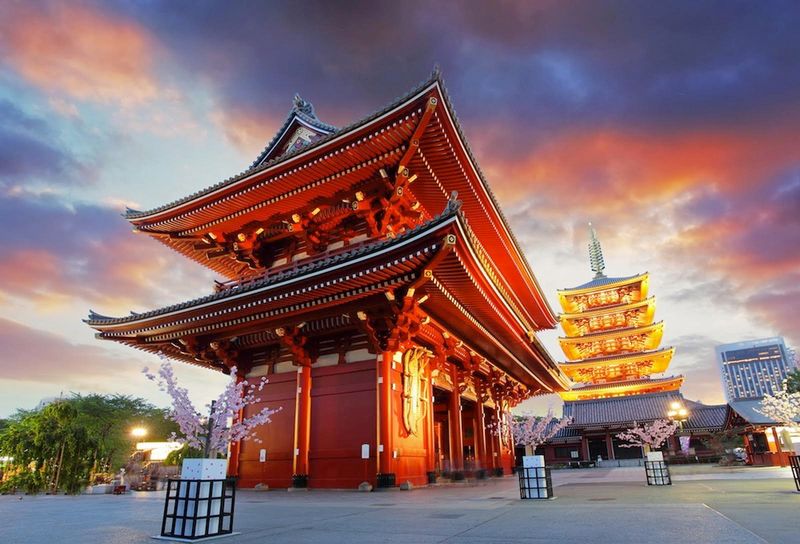
Walking through Senso-ji’s enormous Kaminarimon gate in Asakusa is one of those Tokyo experiences that manages to feel both ancient and completely alive at the same time. The gate’s massive red lantern, hanging between two fierce guardian statues, has been greeting visitors to this temple complex for centuries.
Beyond the gate, Nakamise shopping street leads toward the main hall, lined with small stalls selling traditional snacks, souvenirs, and craft items. The five-story pagoda and the main hall dedicated to Kannon stand at the far end, and the complex remains an active religious site rather than simply a tourist attraction.
Senso-ji is Tokyo’s oldest famous Buddhist temple, with origins traditionally traced back to the seventh century. The main hall opens at 6:00 a.m. for most of the year and 6:30 a.m. from October through March, closing at 5:00 p.m.
The surrounding Asakusa neighborhood adds plenty of additional reasons to spend a full half-day in the area.
Pura Besakih, Bali, Indonesia
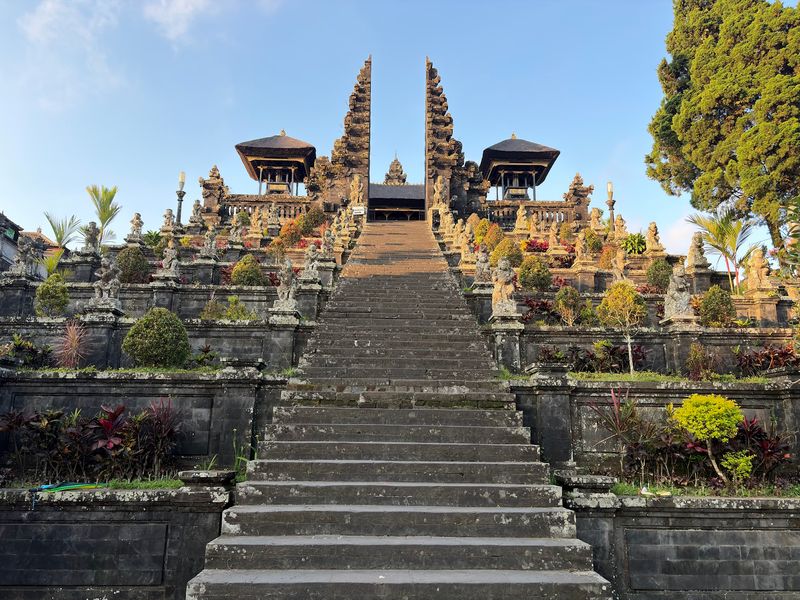
Pura Besakih does not fit neatly into a single frame. Bali’s largest and holiest Hindu temple complex spreads across the volcanic slopes of Mount Agung rather than occupying a single compact site, with dozens of individual temples, terraces, ceremonial courtyards, and traditional multi-tiered meru towers arranged across the hillside.
The relationship between the temple and the mountain is central to its spiritual significance. Mount Agung is considered sacred in Balinese Hindu tradition, and Besakih’s elevated position gives the complex dramatic views across the island’s southern plains on clear days.
Because Besakih is a fully active religious complex, visitors should dress respectfully and follow current entry guidelines, which can change based on religious ceremonies taking place on site. Indonesia’s official tourism portal provides visitor guidance and confirms the complex remains accessible.
The combination of architectural scale, religious activity, and natural setting makes Pura Besakih unlike any other temple experience in Bali.
Ulun Danu Beratan Temple, Bali, Indonesia
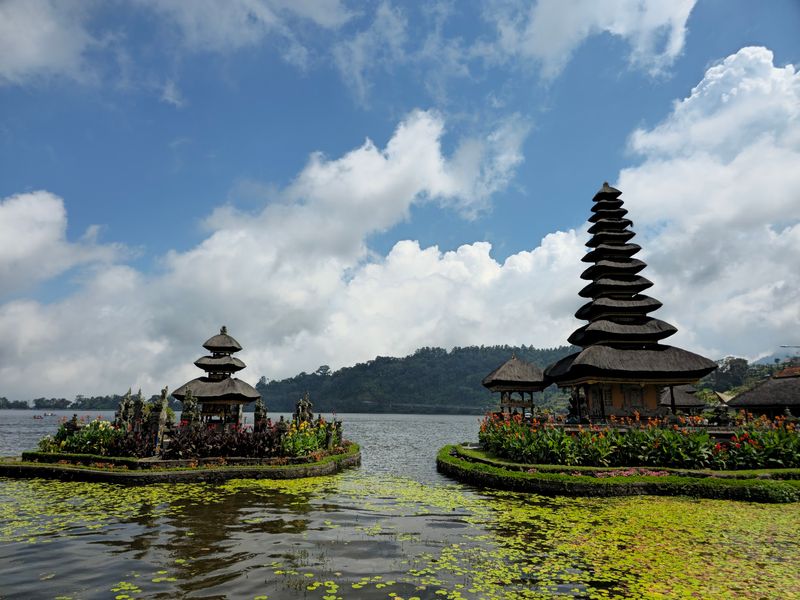
Perched beside Lake Beratan in the cool Bedugul highlands, Ulun Danu Beratan has a quality that photographs chase but rarely fully capture. When the water level is high, several of the temple’s shrines appear to sit directly on the lake’s surface, creating a composition that has made this one of Bali’s most reproduced images.
The temple is dedicated to Danu, the Balinese goddess associated with lakes, rivers, and water, which explains its lakeside location. The surrounding highlands sit at an elevation that keeps temperatures noticeably cooler than coastal Bali, and morning mist frequently drifts across the water, adding to the site’s distinctive atmosphere.
The complex contains several sacred buildings, including multi-tiered meru towers with black thatched roofs that contrast beautifully against the grey-green lake and misty mountains. Indonesia’s official tourism site notes that Ulun Danu Beratan continues to function as an important spiritual and cultural landmark, drawing both Balinese worshippers and international visitors throughout the year.
Golden Temple, Amritsar, India
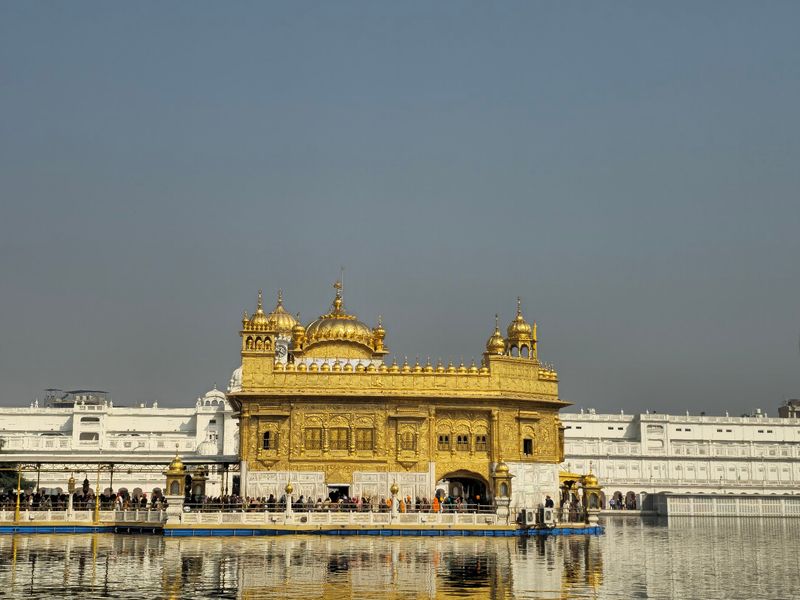
Sri Harmandir Sahib, widely known as the Golden Temple, is the spiritual center of Sikhism and one of the most welcoming religious sites anywhere in the world. Its gold-covered sanctuary sits within the Amrit Sarovar, the Pool of Nectar, and the reflection across the water creates a scene of remarkable beauty at any hour of the day or night.
What sets the Golden Temple apart beyond its appearance is the langar, the community kitchen that operates continuously to provide free vegetarian meals to anyone who arrives, regardless of religion, background, or circumstances. Tens of thousands of people eat here daily, making it one of the largest free communal kitchens on earth.
Pilgrims gather around the clock for prayer and scripture recitations broadcast continuously throughout the complex. India’s official tourism portal lists the temple as open daily with extended visiting hours from early morning until late evening.
Arriving before sunrise, when the golden exterior catches the first light, remains a deeply affecting experience.
Lama Temple, Beijing, China
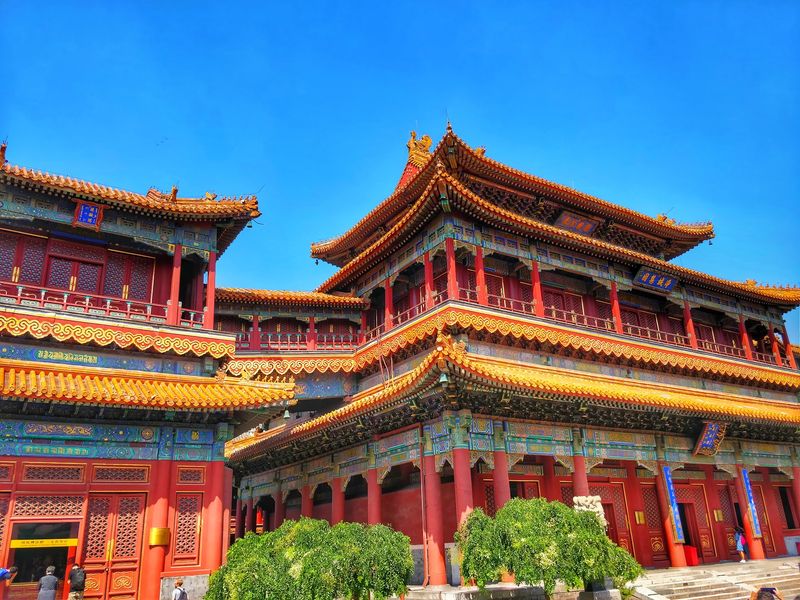
The Yonghe Temple, commonly called the Lama Temple, occupies a fascinating position in Beijing’s history. Built in 1694 as a residence for the future Yongzheng Emperor, it was later converted into a Tibetan Buddhist monastery, creating an architectural blend that combines Chinese imperial style with Tibetan religious tradition in a way that feels genuinely distinctive.
A series of interconnected courtyards leads visitors through progressively more elaborate halls filled with large Buddha statues, painted ceilings, hanging silk banners, and active incense burners. The final hall houses a 26-meter tall Maitreya Buddha statue carved from a single white sandalwood tree, which is listed in the Guinness World Records.
The temple remains an active monastery as well as a major cultural attraction. Beijing’s official tourism website lists it as open year-round, with slightly shorter hours during winter months.
The surrounding Dongcheng district provides easy access by subway, making it a straightforward addition to a Beijing itinerary.
Brihadisvara Temple, Thanjavur, India
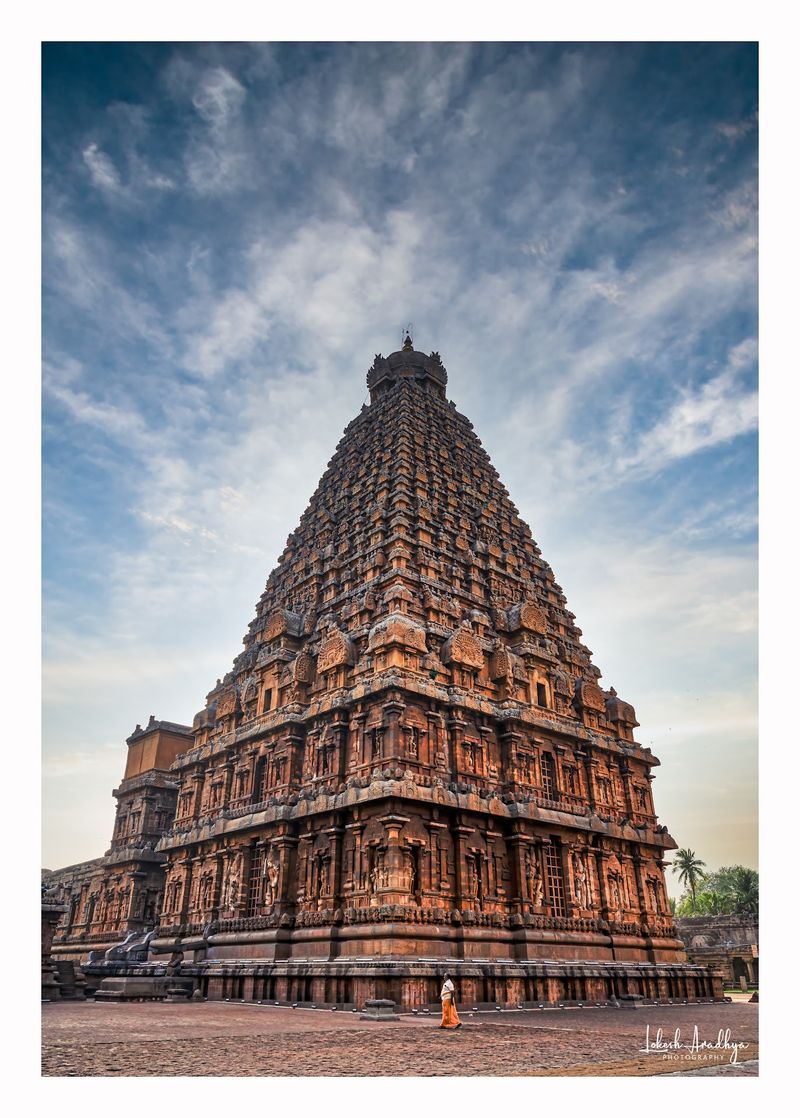
Engineering ambition from a thousand years ago is on full display at Brihadisvara Temple in Thanjavur. Built in the early 11th century under the Chola king Rajaraja I, the temple is dominated by a stone vimana that rises approximately 66 meters above the sanctuary below.
What makes it even more remarkable is that the entire structure was built without mortar.
The capstone at the top of the tower weighs an estimated 80 tons, and researchers still debate exactly how Chola builders raised it into position with the technology available at the time. Detailed sculptures, bronze figures, painted murals, and extensive inscriptions cover the temple’s surfaces, documenting the Chola period’s artistic and administrative sophistication.
UNESCO includes Brihadisvara within the Great Living Chola Temples designation, recognizing both its architectural achievement and the fact that active religious traditions continue here. The temple remains one of the finest examples of classical South Indian temple architecture and deserves far more international attention than it typically receives.
Bulguksa Temple, Gyeongju, South Korea
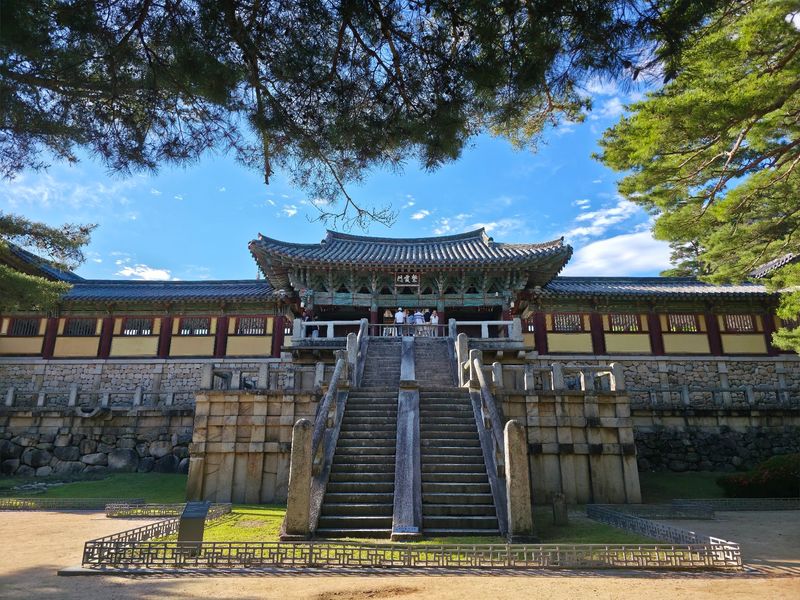
Bulguksa sits in the forested foothills outside Gyeongju, the ancient capital of the Silla kingdom, and the setting alone signals that this is a place of serious historical weight. Originally established during the Silla period in the mid-sixth century and significantly expanded in the eighth century, the complex has been carefully rebuilt and preserved over the following centuries.
The arrangement of wooden halls, stone staircases, bridges, and courtyards was deliberately designed to evoke Buddhist spiritual worlds rather than simply create an attractive collection of buildings. Two famous pagodas, Dabotap and Seokgatap, stand in the main courtyard and represent contrasting approaches to stone construction that have fascinated architects and historians for generations.
Korea’s official tourism organization lists Bulguksa as open year-round, with visiting hours extending from morning into early evening. The nearby Seokguram Grotto, a UNESCO-listed stone cave temple housing a carved granite Buddha, makes for an excellent combined visit on the same day.
Haeinsa Temple, Hapcheon, South Korea
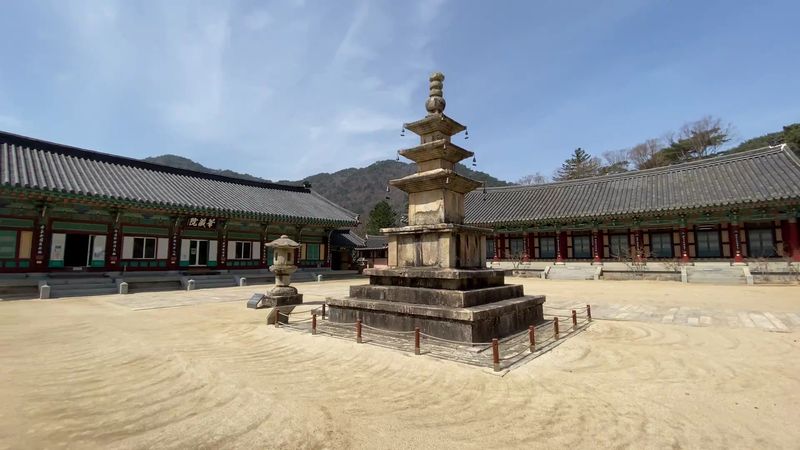
Getting to Haeinsa requires a drive into the mountains of South Gyeongsang Province, and the approach through the forests of Gayasan already sets a different kind of mood from urban temple visits. Founded in 802 during the Silla period, the complex has survived fires, invasions, and centuries of change, though the most famous part of the site has remained remarkably intact.
Haeinsa is internationally recognized as the home of the Tripitaka Koreana, a collection of roughly 81,000 wooden printing blocks containing the complete Buddhist scriptures. The blocks were carved in the 13th century and have been stored in the Janggyeong Panjeon buildings for over 600 years.
UNESCO highlights these storage structures for their sophisticated ventilation and humidity control systems, which have preserved the blocks without modern technology.
Korea’s official tourism organization lists Haeinsa as open year-round with seasonal visiting hours. The mountain setting, the historical depth, and the quiet forest atmosphere make this one of Korea’s most rewarding temple destinations for visitors willing to make the trip.
Share this story