A garden can look like a small stop on the map and still give you plenty to explore. In New Jersey, one former private garden has rocky paths, ponds, bridges, and plants spread across 33 acres.
It is free to enter, so there is no need to plan a big outing around it. The interesting part is how much the place changes as you follow its paths.
A Public Garden in Far Hills
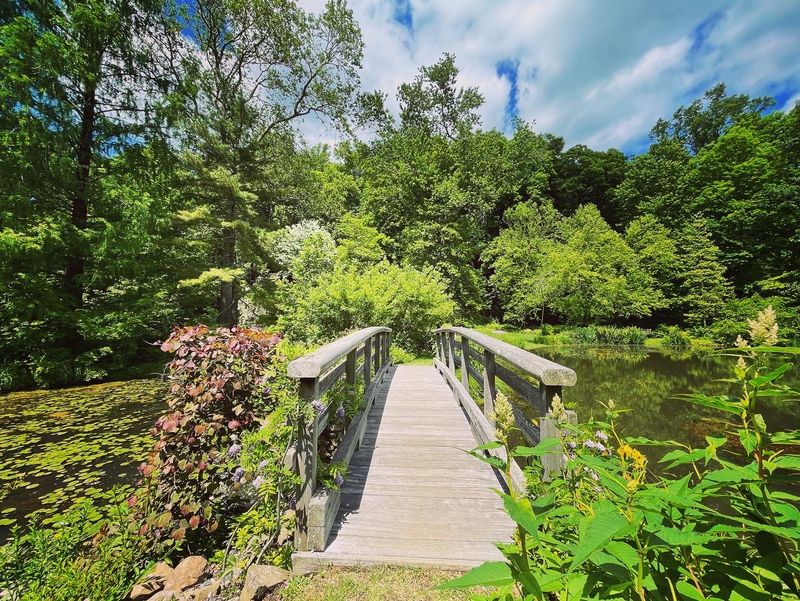
The small name on the map covers a fairly large place. Leonard J Buck Garden is at 11 Layton Rd, Far Hills, NJ 07931, United States.
Its 33 acres include paths, streams, ponds, planted areas, and places to pause along the way. What was once a private garden is now open to the public, making it an easy option for a New Jersey outing that does not require an admission ticket.
Rather than one central display, the grounds offer several parts to explore at a comfortable pace. A walk might follow a path beside a pond, climb through a rocky area, then lead toward a bridge or an open stretch of ground.
That variety is the main reason to give the place more than a quick glance. It is a garden, but it also gives people room to choose their own route and decide how long they want to stay.
A Garden With a Private Past
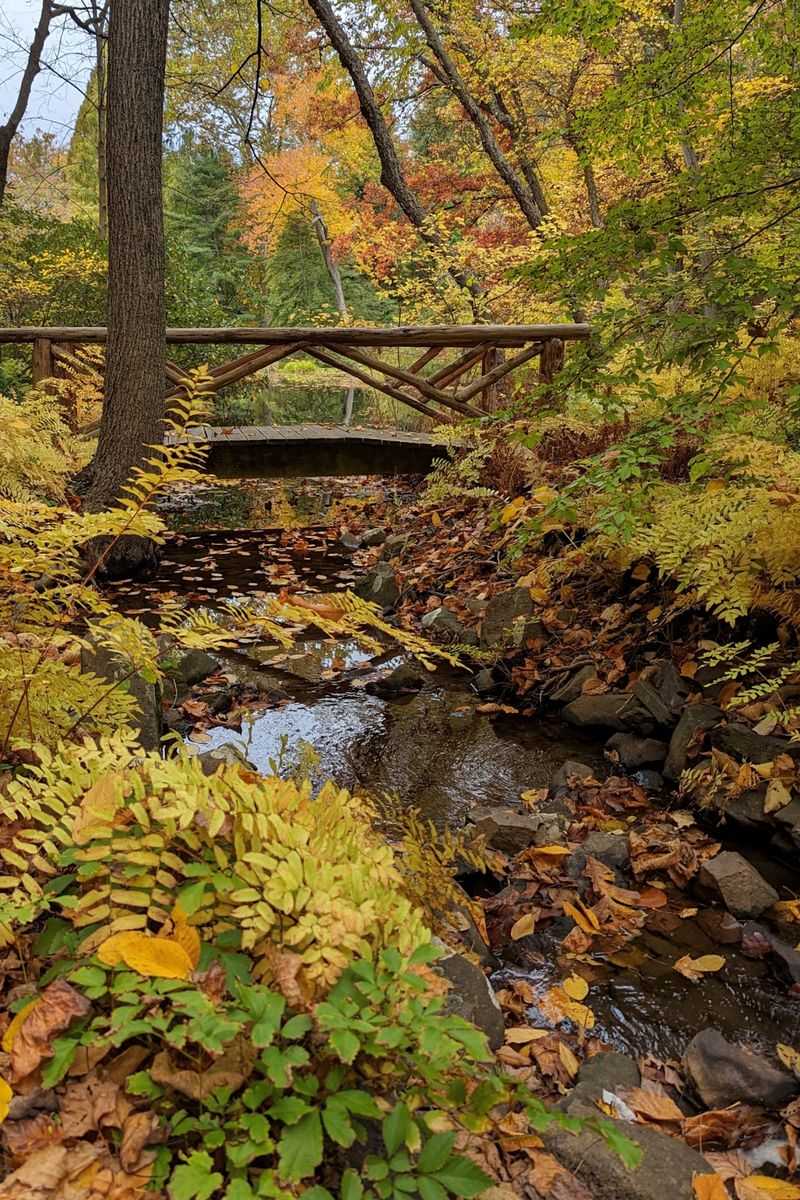
Long before the grounds became a public place to walk, they were Leonard J. Buck’s garden.
The green space began in the 1930s, and its history helps explain why the layout feels more personal than a broad, open park. Paths connect planted areas, rocks, water, and small structures instead of directing everyone toward a single main attraction.
The garden grew around the character of its site, and that relationship remains central to a walk here.
There is more to its past than a date, but the visitor center is the better place to learn about the person behind the name. That makes a useful first stop for anyone who likes a bit of context before exploring.
Even without a long history lesson, the shift from private grounds to public access is significant. A place created for one owner can now be enjoyed by anyone with time for a walk.
Rock Gardens Shaped by the Site
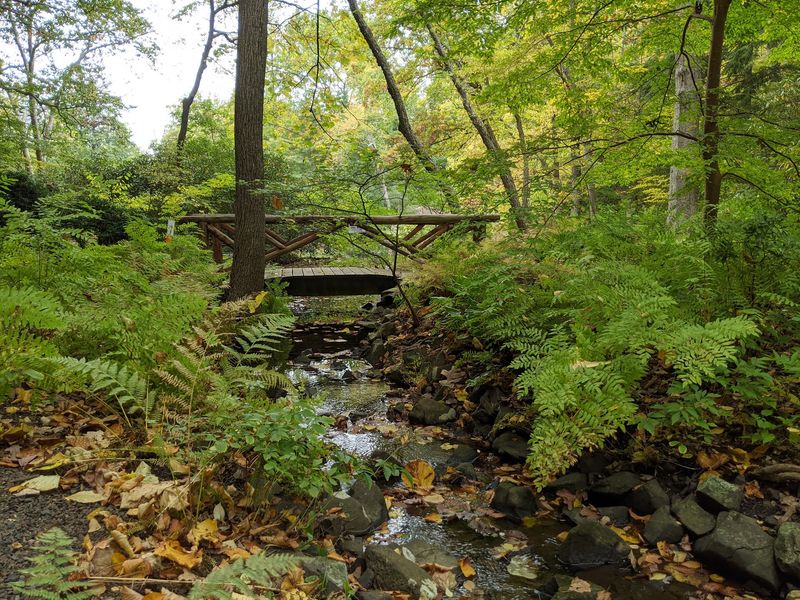
Rocks are not just borders for the plant beds here. The garden uses its rocky ground as part of the design, with planted rockeries set among the natural terrain.
That gives this section a different character from a formal garden built on level ground. Plants occupy spaces around the stone, while paths guide people through the changes in height and shape.
A closer look at these areas explains why the garden rewards an unhurried walk. One section may be about the rock formation itself; another may draw attention to how plants fit around it.
There is no need to identify every plant to appreciate the thought behind the layout. The rock gardens also give the place an identity beyond its flowers, which may be especially useful to remember when blooms are less prominent.
Here, the ground itself has a leading role.
Paths With More Than One Pace
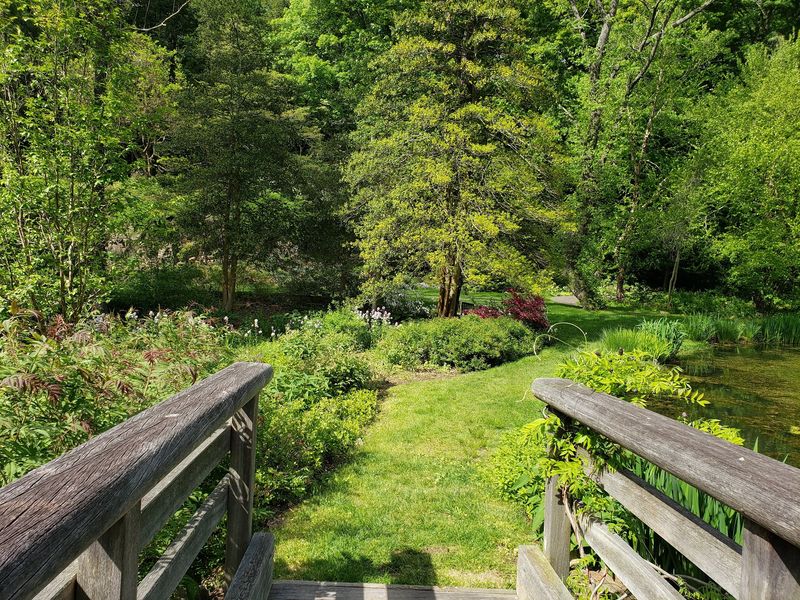
A route through the grounds does not have to look the same for everyone. Leonard J Buck Garden has winding paths, with some sections that climb and others that stay more level.
Gravel and pebble surfaces, steps, and changes in elevation make the walk more varied than a simple loop around a lawn. They also mean it helps to pay attention to the route before committing to a steeper section.
People seeking a brief outdoor stop can explore part of the path network rather than trying to cover every acre. Those who want more walking can continue through the garden’s hills and planted areas.
The steps are an important practical detail for anyone bringing a stroller or planning around mobility needs. A map from the visitor center may help with choosing a route.
The best plan is not a race across the grounds, but a walk that suits the people taking it.
Ponds, Streams, and Lily Pads
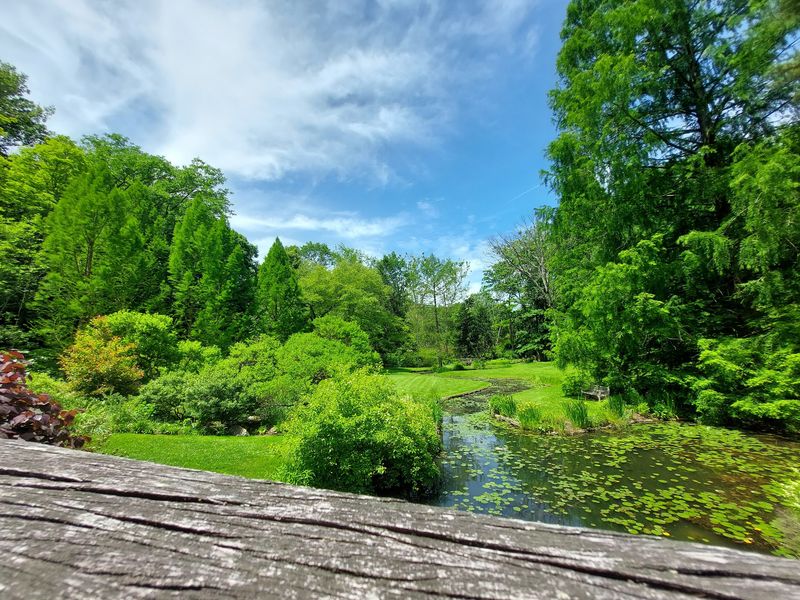
Water changes the focus of a walk without demanding a separate activity. Ponds and streams appear among the paths at Leonard J Buck Garden, giving people several reasons to stop before moving on.
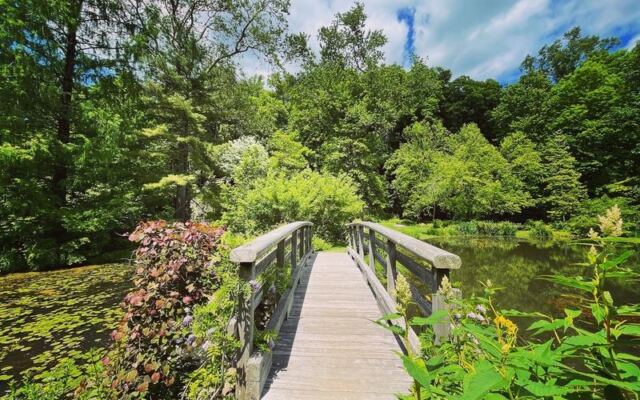
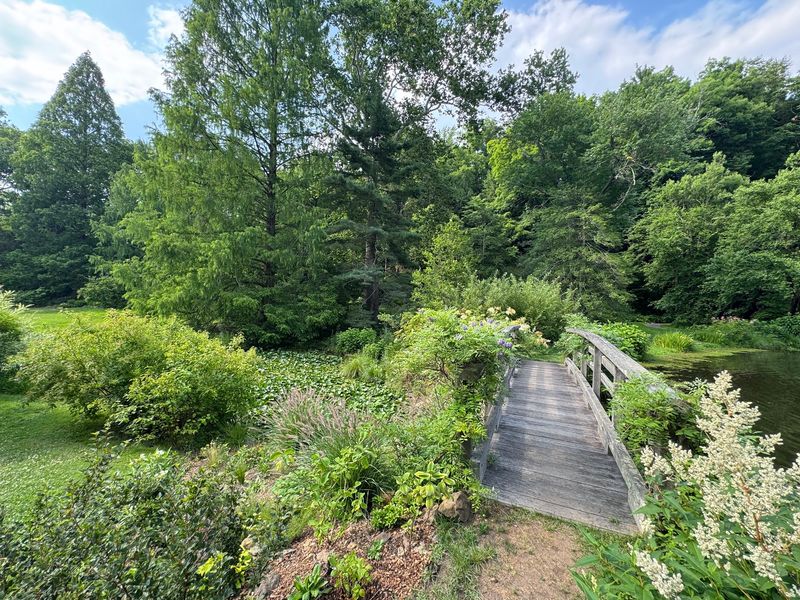
A lily pad pond is one of the features associated with the grounds, and bridges provide places to take in the nearby water. There is also a fountain in a lower pond.
No single pond needs to carry the whole outing. The interest comes from encountering water in different parts of a landscape that also includes rocks, plants, and changes in elevation.
Someone planning a short visit might make a pond the goal; someone with more time can let it be one stop on a longer route. Keeping to the paths and giving the water’s edge appropriate space makes the experience straightforward.
The ponds are part of a larger garden, not a separate attraction tucked behind it.
Plantings That Change the Walk
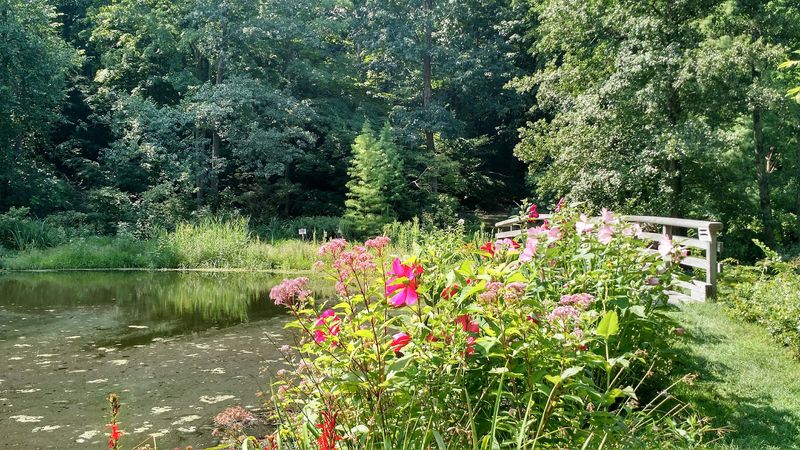
Flowers get attention, but they are only part of the planting story. The grounds include a variety of plants, with rhododendrons among those noted at the garden.
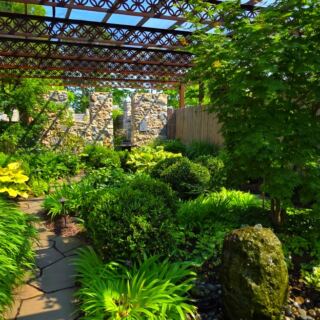
Planted areas appear alongside paths, rocks, ponds, and open ground, so the route offers more than a single flower display. It is worth approaching the garden as a landscape to explore rather than expecting every bed to be in bloom at once.
The timing of a trip can change what stands out. One account describes a strong showing near the start of summer, while others note that flowers were not especially plentiful during their own walks.
Neither observation needs to decide the whole trip. Paths and rock gardens remain part of the outing when blossoms are modest, and returning in another season offers a chance to notice different plantings.
The garden leaves room for curiosity without asking anyone to plan around one perfect day.
Bridges, Benches, and a Gazebo
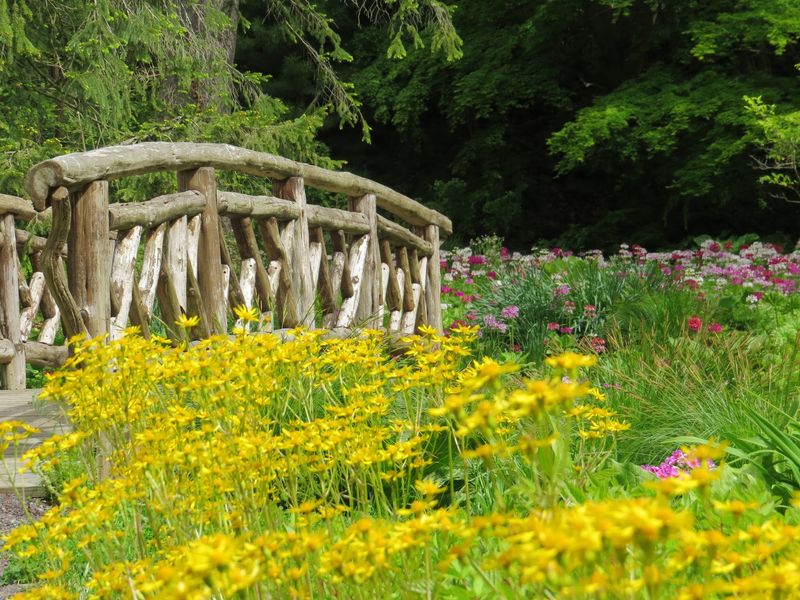
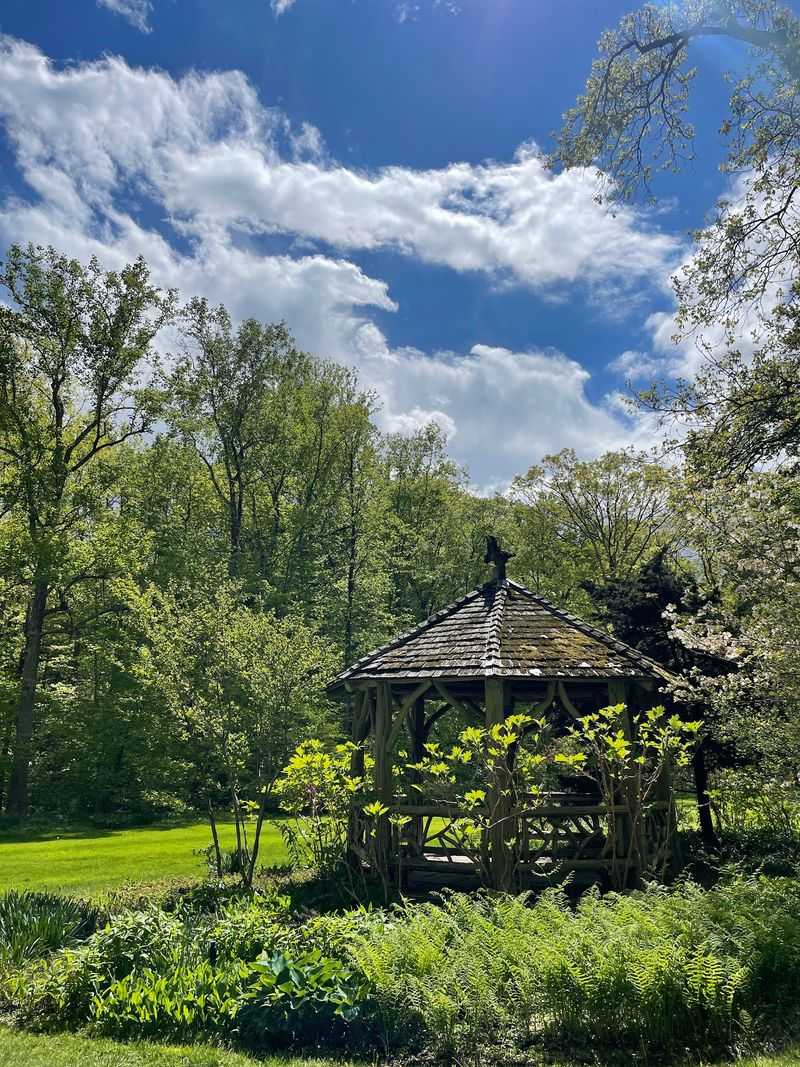
Not every useful garden feature grows from the ground. Small bridges, benches, and a gazebo give a walk here its own set of pauses and landmarks.
The bridges connect parts of the route around water, while seating makes it easy to spend time in one area instead of moving continuously. These details matter because they support several kinds of outing, from a short circuit to a longer visit with breaks.
A bench near a pond can serve as a place to read or simply sort out which path to try next. The gazebo adds another recognizable point within the grounds, and wooden fences help define parts of the route.
None of these structures needs to be treated as the single highlight. Together, they make the garden easier to explore at an individual pace.
It is a practical kind of charm: there are reasons to continue walking and places to stop when a pause sounds better.
Wildlife Around the Water
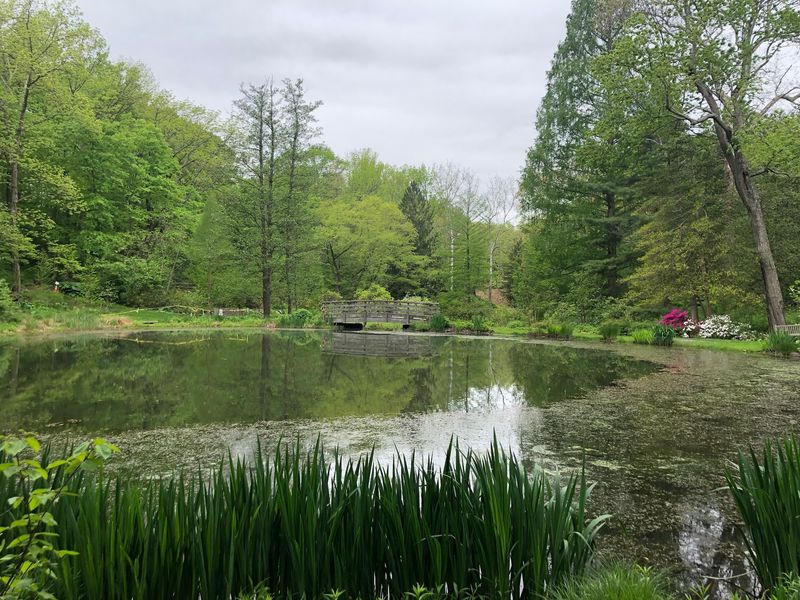
The ponds offer something to look for beyond plants and water features. Accounts of the garden mention fish, frogs, turtles, tadpoles, and other small wildlife around its wet areas.
Hummingbirds have also been noticed on the grounds. Wildlife is never a guaranteed part of a trip, of course, so it is better treated as a possible extra than a checklist to complete.
That small distinction can improve a visit. A family can take time near a pond without promising children that a particular animal will appear.
Someone interested in plants can follow the same route and still have a reason to pause at the water. Staying on established paths and observing animals without disturbing them keeps the focus on the garden as it is.
Even when wildlife stays out of view, the ponds remain an important part of the landscape. When an animal does appear, it adds a new point of interest to an already varied walk.
An Outing That Allows a Pause
Some outings ask you to keep moving; this one gives you permission to stop. The garden has benches and places to sit, while its paths offer enough choice for a casual walk or a more active one.
People have used the grounds for reading, taking pictures, picnicking, and spending a modest stretch of time outdoors. Its size makes an afternoon excursion possible without requiring a full-day plan.
There is one useful expectation to set before going. Road noise from nearby Highway 287 can reach the garden, so it would be misleading to promise complete quiet.
That does not erase the appeal of the ponds, rock gardens, or seating, but it may shape where someone chooses to linger. The place suits people who like to alternate walking with breaks and who do not need every minute mapped out.
Bring a little flexibility, and the grounds provide plenty of ways to use it.
A Visitor Center and Two Parking Areas
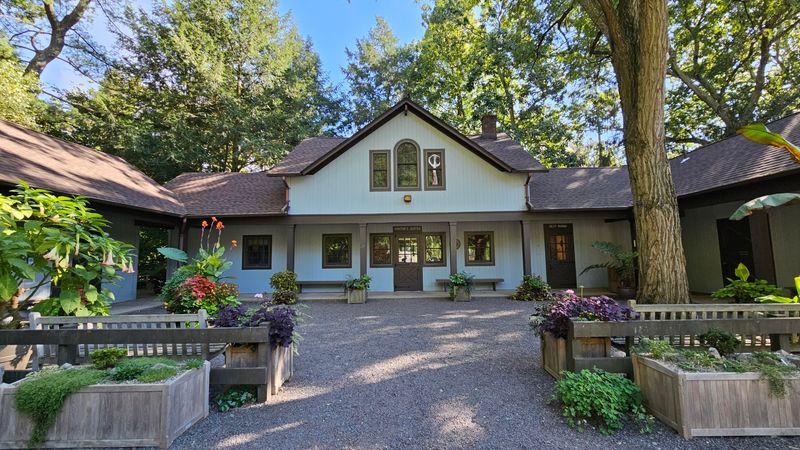
Before choosing a path, the visitor center is a sensible stop. Information about the garden and its history is available there, along with maps and restrooms.
That is helpful on grounds where routes vary in steepness and steps appear in some places. It also provides a starting point for anyone who would rather make a plan than decide at each path junction.
Parking is available in two areas, but spaces can be limited. Accounts describe a lower lot as an additional option, though it too can fill.
Allowing a little flexibility is wise, particularly if a specific arrival time matters to the rest of the day. The address leads to the garden, but the parking situation may determine how quickly the walk begins.
Once on site, check the map and choose a route that fits the group. A few minutes spent planning at the center can make the rest of the outing simpler.
Free Entry and a Reason to Return
A practical plan makes this garden easy to fit into a New Jersey day trip. Listed hours are 9 a.m. to 4 p.m.
Tuesday through Friday, 10 a.m. to 5 p.m. Saturday, and noon to 5 p.m.
Sunday; the garden is closed Monday. Entry is free, with donations suggested rather than required.
Because schedules can change, checking the garden’s current information before setting out is a sensible final step.
The appeal is not tied to completing a route or finding every feature. A short walk can include rocks, planted areas, and a pond; a longer one can take in more of the paths and places to sit.
Different seasons may give different parts of the grounds their turn. Leonard J Buck Garden is worth considering precisely because the plan can stay simple: arrive during open hours, choose a route, and let a former private garden become a public part of the day.
Share this story