A wooden bridge in one West Virginia town still carries a U.S. highway across a river. It opened in 1852, and cars roll through it today.
That detail alone made me want to learn more about the state’s other covered bridges.
The stories get better from there. One bridge came back after an arson fire nearly ruined it.
Another was taken apart and rebuilt miles from where it first stood. A few now sit beside quiet country roads where traffic is rare.
Covered bridges were built with roofs for a practical reason. The roof kept rain and snow off the wooden deck and trusses, so the bridge lasted longer.
Each one shows how local builders solved a real problem with timber and skill.
Some are long and famous, while others are barely bigger than a farm shed. So which ones deserve a spot on your next road trip?
1. Philippi Covered Bridge, Philippi, West Virginia
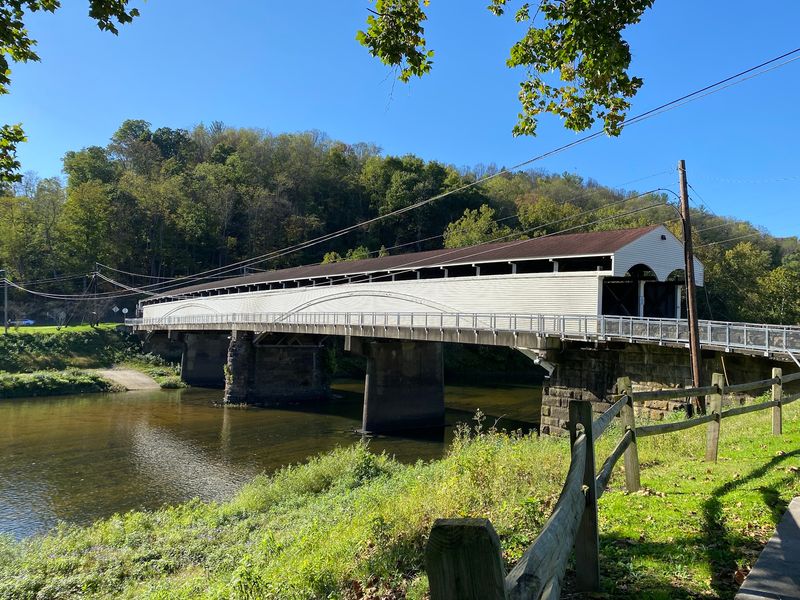
Cars and trucks still drive through a bridge that opened in 1852. That fact surprises a lot of people, since most bridges this old retired from traffic long ago.
Lemuel Chenoweth, a well-known bridge builder from the region, designed this crossing over the Tygart Valley River. At about 285 feet, it ranks as the longest covered bridge in West Virginia.
It’s also a two-lane covered bridge, which is uncommon in the United States. Most old covered bridges squeezed traffic into a single lane, so drivers had to take turns.
History nearly ended here in 1989. A fire badly damaged the structure, and crews spent years restoring it with care before it reopened.
Today, the bridge carries U.S. Route 250 traffic into downtown Philippi.
You can drive through it, then park nearby and walk along the riverbank for a better view of the long roofline.
Give yourself a few minutes for photos from the river side. The full length is easier to appreciate from a distance.
Address: U.S. Route 250, Philippi, WV 26416
2. Barrackville Covered Bridge, Barrackville, West Virginia
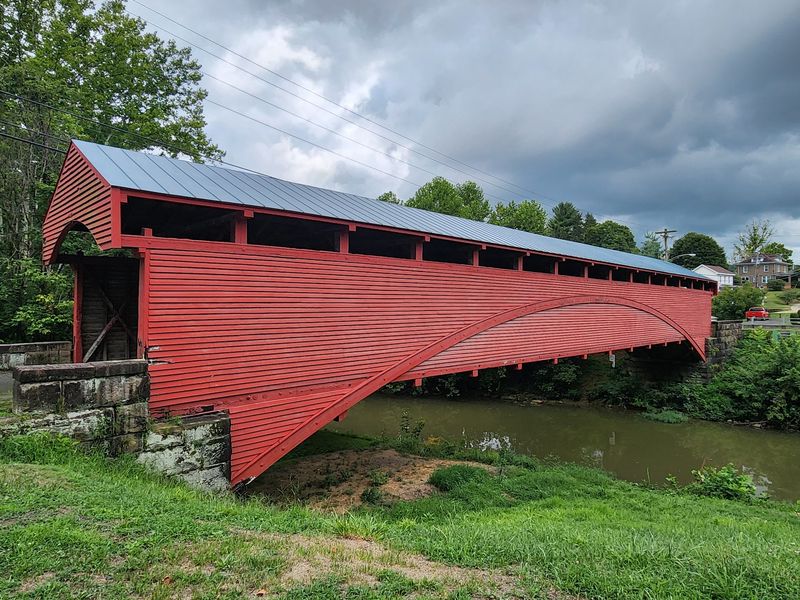
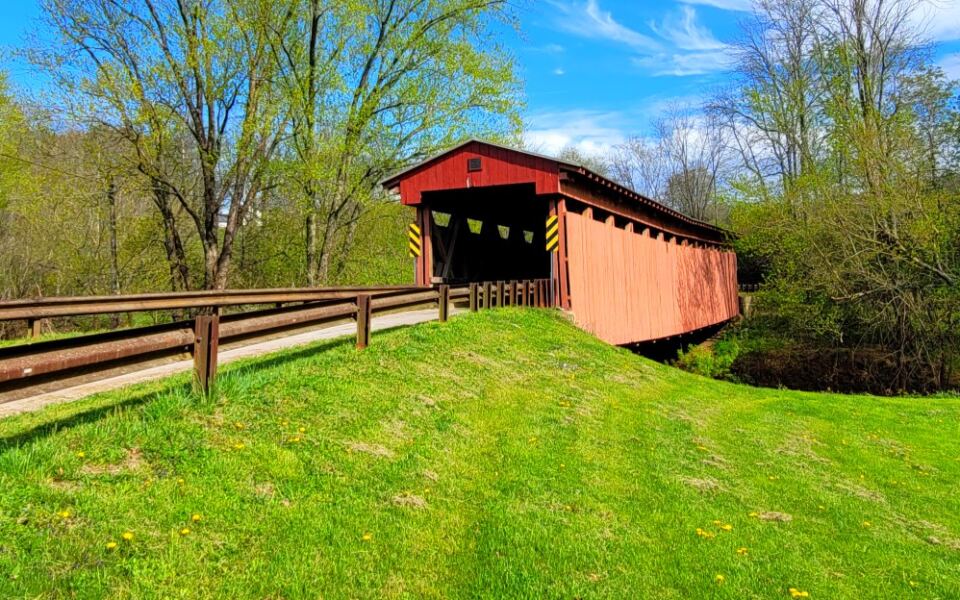
Lemuel Chenoweth had a busy decade in the 1850s. A year after finishing work on the Philippi crossing, he and his brother Eli completed this bridge over Buffalo Creek in 1853.
The bridge uses a Burr arch truss. That design combines a long wooden arch with a framework of upright posts and diagonal braces, giving the structure extra strength.
Its bright red siding makes it easy to spot in the small Marion County town. Photographers often frame it with the creek below, and the color stands out in every season.
Barrackville sits just a short drive from Fairmont. That makes this stop easy to add if you’re already traveling near Interstate 79.
The bridge closed to vehicle traffic years ago, so you can walk through and look at the timber framework up close. Take a moment to study how the arch meets the posts.
Those joints were cut and fitted by hand. Seeing them in person helps you appreciate how carefully these bridges were planned.
Address: Pike Street, Barrackville, WV 26559
3. Carrollton Covered Bridge, Philippi, West Virginia
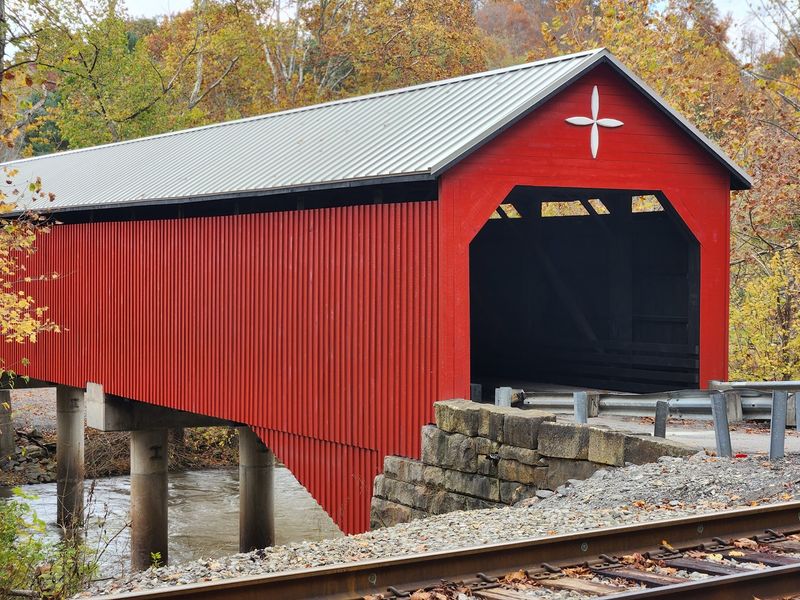
How do you rebuild a bridge after someone sets it on fire? Barbour County found out the hard way when this 1856 crossing was badly damaged by arson in 2017.
The bridge spans the Buckhannon River near the village of Carrollton, a short drive from Philippi. Before the fire, it had served the area for more than 160 years.
Restoration took several years and a lot of careful work. Crews replaced damaged timbers while keeping the original design in mind.
The comeback means Barbour County now has two restored covered bridges within easy reach of each other. You can see both in a single afternoon without much backtracking.
The setting here feels more rural than the Philippi bridge. Farmland and wooded hills surround the river, so the drive itself is pleasant.
Pair this stop with a visit to downtown Philippi for lunch. You’ll get a fuller picture of how the county has protected its historic crossings over the years.
Address: Carrollton Road (County Route 36), Philippi, WV 26416
4. Simpson Creek Covered Bridge, Bridgeport, West Virginia
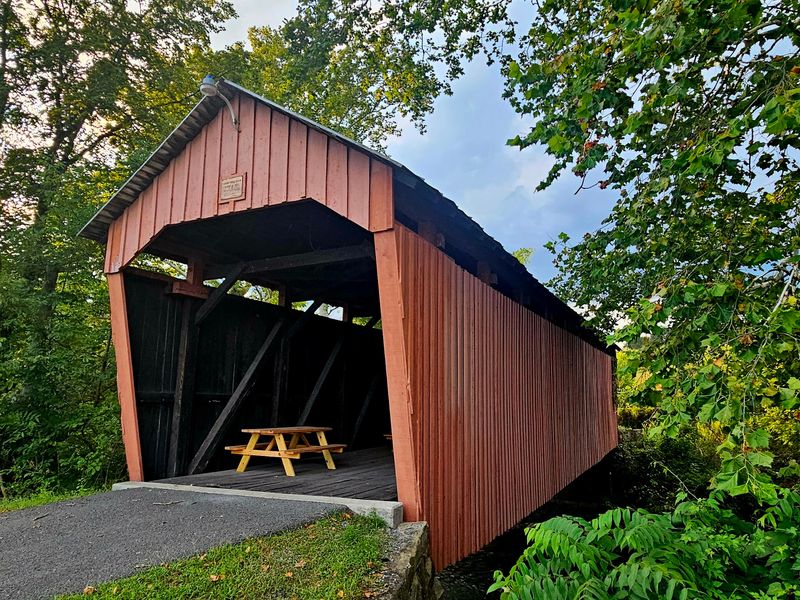
Shoppers zipping around Bridgeport might not realize a wooden bridge from 1881 sits just a few minutes away. It’s close to Interstate 79, yet the setting feels much quieter.
The bridge stretches about 74 feet across Simpson Creek. Builder Asa S.
Hugill used a multiple kingpost truss, a pattern of upright posts and slanted braces repeated along the sides.
That design was common for shorter spans. It was simple to build and strong enough for the wagons that once rolled through.
Its small size is part of the appeal. You can take in the whole bridge in one glance, which makes it easy to photograph from either bank.
Harrison County once had many bridges like this one. Today, this is one of the few left standing in the area.
Stop here on the way to a meal or errand in town. A ten-minute visit gives you a quick lesson in how rural West Virginia communities stayed connected.
Address: County Route 24/2, Bridgeport, WV 26330
5. Herns Mill Covered Bridge, Lewisburg, West Virginia
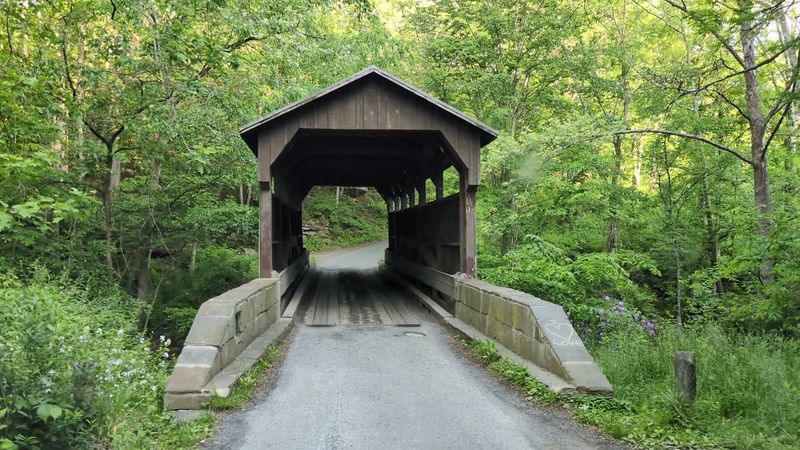
Only a few miles separate downtown Lewisburg from this little crossing, but the scenery changes fast. Shops and restaurants give way to farm fields and a winding creek.
The bridge dates to 1884 and spans Milligan Creek. It’s one of two covered bridges still standing in Greenbrier County.
Builders used a queenpost truss here. That design relies on two upright posts with a horizontal beam between them, which worked well for modest spans like this one.
The name comes from a mill that once operated nearby. Mills and bridges often went together, since farmers needed a reliable way to haul grain to be ground.
A newer road now carries traffic past the bridge, so you can explore on foot. Wear sturdy shoes if you plan to walk down near the creek.
Lewisburg makes a great home base for the day. You can browse its historic downtown, then head out for this quick and scenic side trip.
Address: Herns Mill Road (County Route 40), Lewisburg, WV 24901
6. Hokes Mill Covered Bridge, Ronceverte, West Virginia
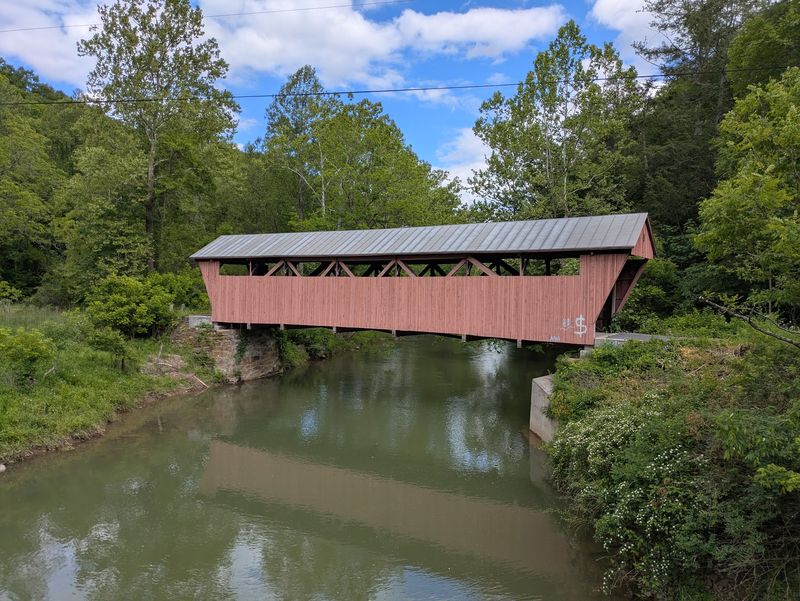
Second Creek doesn’t sound like a dramatic name for a stream. Still, the bridge that crosses it near Ronceverte is worth the winding drive.
Built in the late 1890s, Hokes Mill Covered Bridge once gave local farmers access to a mill of the same name. The mill is gone, but the bridge remains.
Here you’ll see a Long truss, named for engineer Stephen H. Long.
It uses crisscrossing wooden braces set inside rectangular frames.
That pattern looks quite different from the arch-supported bridges in northern West Virginia. Comparing the two styles is a fun way to see how builders approached the same job.
The road out here is narrow, so take your time. You’ll pass farms and wooded hillsides on the way.
Vehicles no longer cross the bridge, which makes it a calm place to stretch your legs. Bring a snack and enjoy a break before heading back toward Lewisburg or Ronceverte.
Address: Hokes Mill Road (County Route 62), Ronceverte, WV 24970
7. Indian Creek Covered Bridge, Union, West Virginia
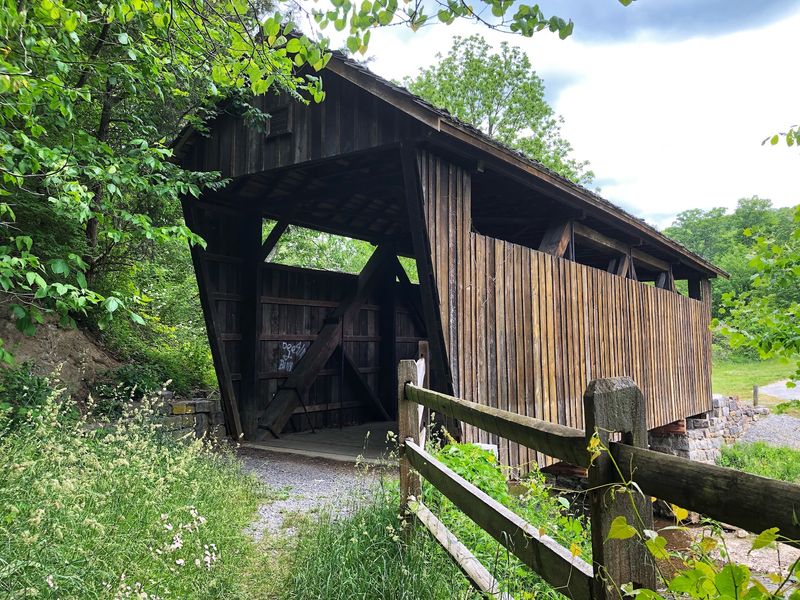
Some historic stops require a long detour on gravel roads. This one sits right beside U.S.
Route 219, so you barely have to leave the highway.
Indian Creek Covered Bridge dates to 1898 and stands south of Union in Monroe County. Its red siding makes it hard to miss as you drive by.
The bridge uses a Long truss design. Inside, you can see the crossed wooden braces that helped spread the weight of wagons and livestock.
Traffic has long since moved to a modern road, and the old crossing is now preserved for visitors. A small pull-off area makes stopping simple.
Monroe County is mostly farmland, and the drive along Route 219 shows that off nicely. Cattle pastures and rolling hills line much of the road.
Plan a short stop rather than a long visit. It’s a quick and easy break that adds a bit of history to a scenic drive through southern West Virginia.
Address: U.S. Route 219, Union, WV 24983
8. Locust Creek Covered Bridge, Renick, West Virginia
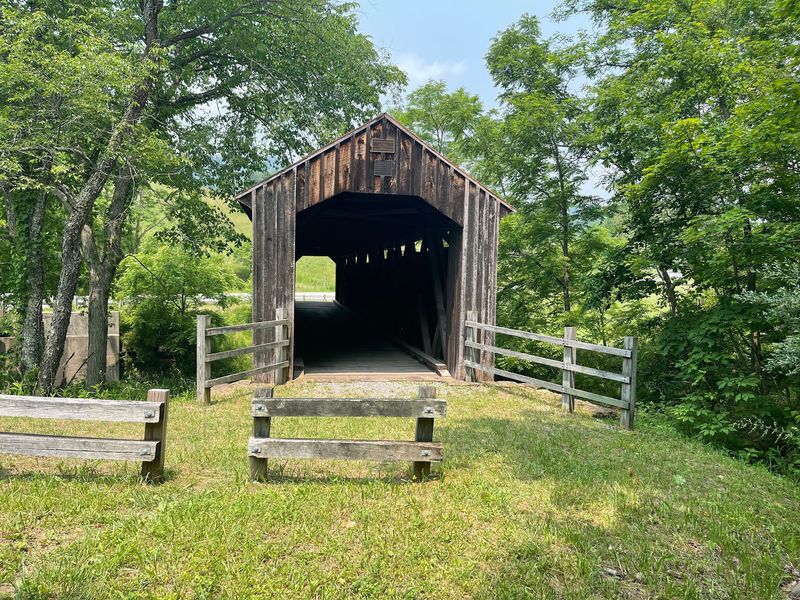
Pocahontas County is better known for mountains and forests than covered bridges. That makes this lone survivor near Hillsboro even more interesting to find.
Locust Creek Covered Bridge dates to around 1870. It’s the only covered bridge left in the county.
The bridge sits along a quiet back road between the towns of Hillsboro and Renick. You won’t pass it by accident, so plan your route before you go.
Its wooden truss sets it apart from many of the bridges in neighboring counties. If you enjoy engineering, take time to look at how the beams connect inside.
A modern bridge now handles traffic, leaving the old one open for walking. That gives you space to explore without watching for cars.
Nearby attractions include the Pearl S. Buck Birthplace in Hillsboro and the Cranberry Glades farther north.
Combining stops turns a single bridge visit into a full day of exploring the area.
Address: Locust Creek Road (County Route 31), Hillsboro, WV 24946
9. Staats Mill Covered Bridge, Ripley, West Virginia
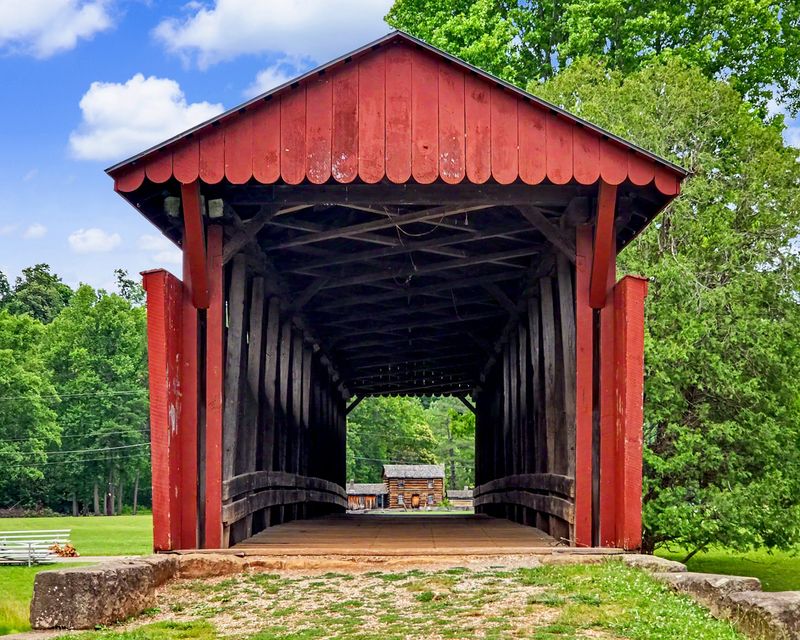
Moving a whole bridge sounds like a strange idea. That’s exactly what happened to this 1887 crossing in Jackson County.
Staats Mill Covered Bridge originally spanned Tug Fork of Big Mill Creek. In the 1980s, it was taken apart and rebuilt at Cedar Lakes, a conference center near Ripley.
Now it stretches across a pond instead of a creek. The reflection on calm days makes it a favorite spot for photos.
The bridge uses a Long truss, with crossed timber braces inside each section. Since it’s no longer on a working road, you can walk through and look closely at the framework.
Cedar Lakes has walking paths and open lawns around the pond. That makes this one of the easiest covered bridges to visit with kids or older relatives.
Ripley is only a few minutes away and sits near Interstate 77. It’s a simple stop to fit into a trip between Charleston and Parkersburg.
Address: 82 FFA Drive, Ripley, WV 25271
10. Walkersville Covered Bridge, Walkersville, West Virginia
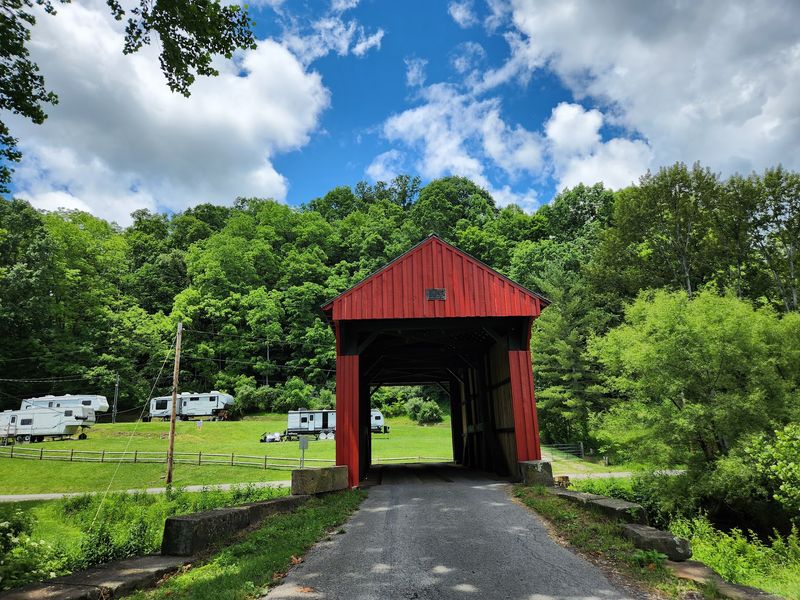
The year 1903 might not sound old for a covered bridge. In West Virginia, though, it puts this crossing among the later wooden bridges built before steel and concrete took over.
Walkersville Covered Bridge spans the Right Fork of the West Fork River in southern Lewis County. Builders used a queenpost truss, a sturdy and fairly simple design.
It’s a small bridge, so you won’t need long to explore it. The quiet setting is the main reward.
Walkersville is a tiny community, and the bridge sits along a rural road. Expect farmland, trees, and very little traffic on the way.
Weston is the nearest larger town for food and fuel. Fill up before heading out, since services are limited near the bridge.
If you’re already visiting Weston or Stonewall Jackson Lake, this makes a relaxing side trip. It’s a good choice when you want a historic stop without crowds or souvenir stands.
Address: County Route 19/17, Walkersville, WV 26447
11. Sarvis Fork Covered Bridge, Sandyville, West Virginia
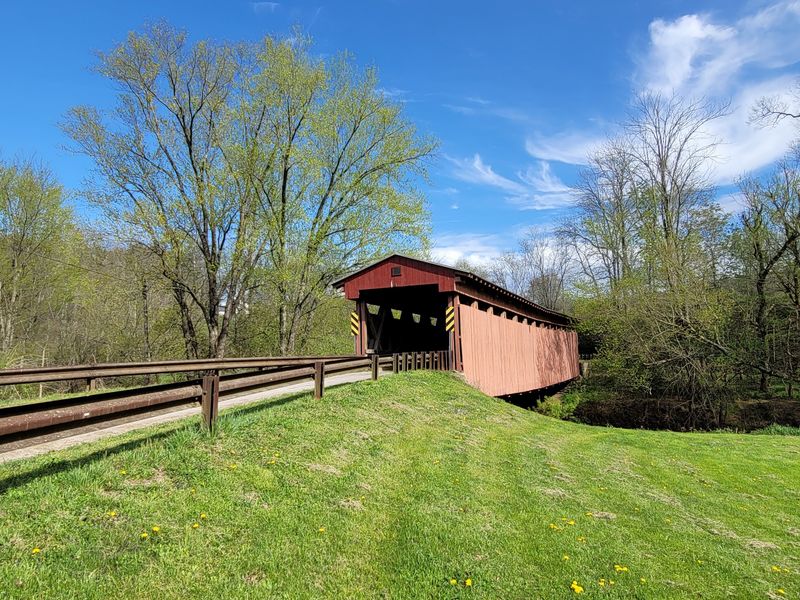
Talk about a bridge with a travel history. Sarvis Fork Covered Bridge was built in 1889, then taken apart and moved to its current spot in 1924.
Today, it crosses the Left Fork of Sandy Creek near the small Jackson County community of Sandyville. At roughly 101 feet, it’s one of the longer covered bridges in this part of the state.
The bridge uses a Long truss, the same general design found at Staats Mill. Seeing both on the same trip lets you compare how builders handled different lengths.
Restoration work over the years has helped keep the timbers in good shape. That care is why the bridge still stands more than a century after its move.
Sandyville is a short drive from Ripley, so you can visit both Jackson County bridges in one outing. The back roads connecting them pass through peaceful farm country.
Bring a camera and some patience. The best angles come from the creek banks rather than the road.
Address: County Route 21/15, Sandyville, WV 25275
12. Center Point Covered Bridge, Center Point, West Virginia
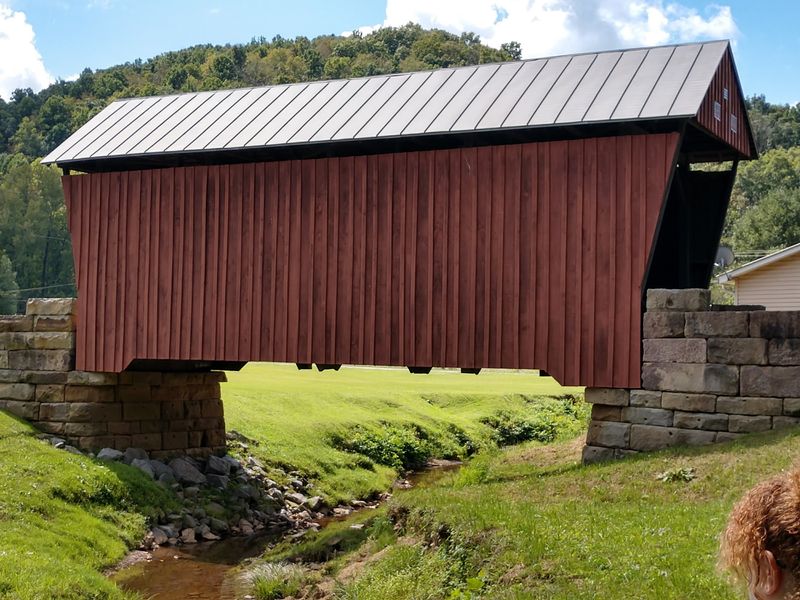
At about 42 feet long, this Doddridge County bridge is less than a sixth the length of the Philippi crossing. Small doesn’t mean forgettable, though.
Built in 1888, Center Point Covered Bridge spans Pike Fork of McElroy Creek. It’s the last covered bridge left in Doddridge County.
Local residents and preservation groups have worked to keep it standing. Repairs over the years helped the wooden frame survive floods and weather.
The bridge uses a Long truss, with diagonal braces crossing inside each panel. Because it’s so short, you can see nearly the whole framework from one end.
Center Point is a tiny community in the hills of north-central West Virginia. Roads here twist and climb, so allow extra time and drive carefully.
West Union is the nearest town with more services. Combine this stop with a ride along the North Bend Rail Trail nearby, and you’ll have a relaxing day exploring one of the state’s quieter corners.
Address: County Route 10, Center Point, WV 26339
Share this story