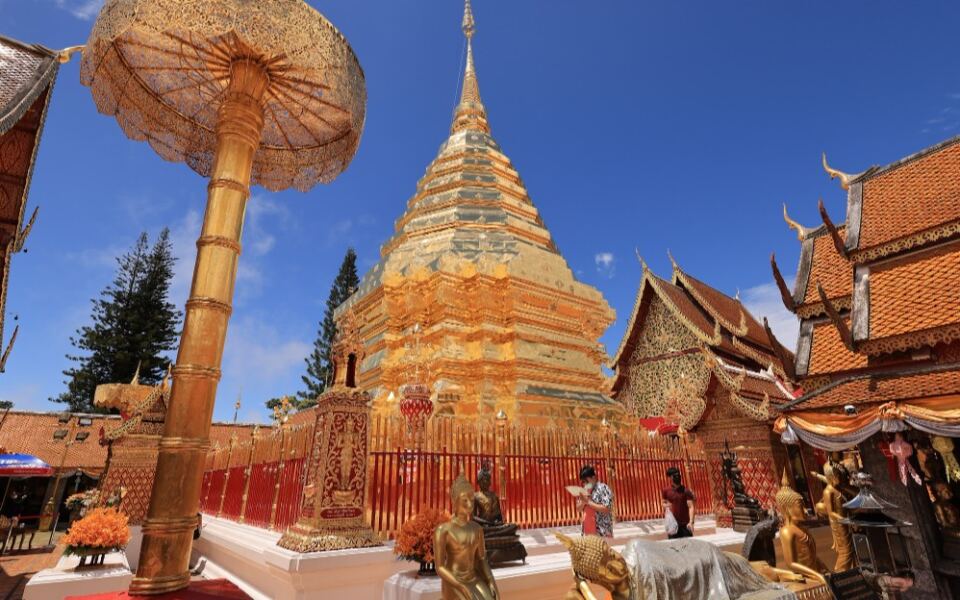
High above Chiang Mai, a golden spire catches the sun and seems to wink at the whole city. Wat Phra That Doi Suthep has watched over northern Thailand since 1383, and it is still one of the most sacred spots in the country.
Here are ten things that make a visit worth every step, from serpent stairs to sunset glow.
The Legend of the White Elephant
Picture a king with a big problem: where do you build a temple for a sacred relic? According to local legend, he strapped the relic onto a white elephant and let the animal decide.
The elephant wandered up Doi Suthep, trumpeted loudly, and then stopped.
That spot became the home of Wat Phra That Doi Suthep. Visitors still love telling this story as they climb toward the top.
It adds a little magic to the trip, and it explains why the temple sits partway up the mountain instead of in the city.
The date usually given is 1383, during the Lanna Kingdom. That makes the temple more than 600 years old.
Few places in Chiang Mai have a backstory this charming.
If you like stories, read the information boards on the grounds. Staff are friendly too, and many are happy to share more tales.
Knowing the legend makes the golden stupa feel even more special when you finally see it up close.
The 306-Step Naga Staircase
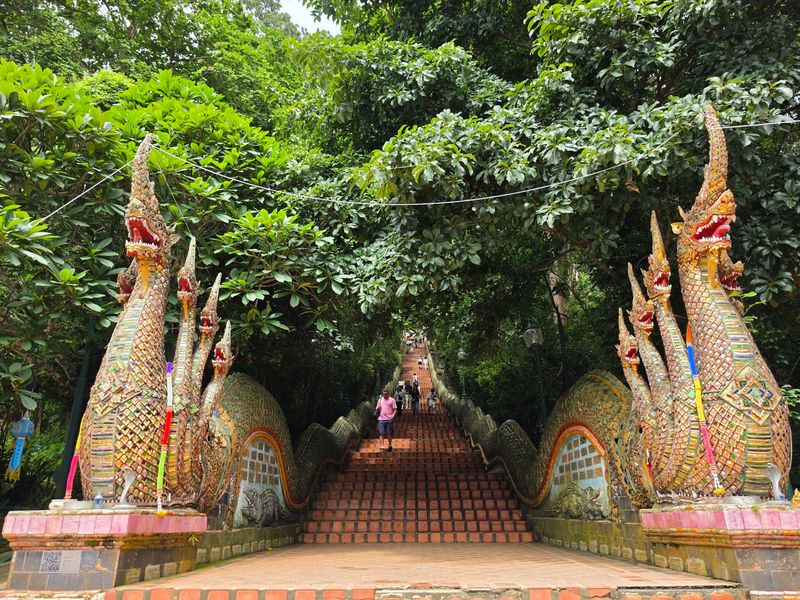
Three hundred and six steps sounds scary, but your legs will survive. The staircase is lined with long, colorful naga serpents, and their seven heads make the climb feel like an adventure.
Many visitors stop just to take photos of them.
Go in the morning if you can. The air is cooler, the crowds are thinner, and the steps feel much easier before the heat arrives.
Wear shoes with good grip, because the stone can get slippery after rain.
Small souvenir stalls line the way, so you can shop while you catch your breath. Benches and rest points appear along the route too.
Take your time and enjoy the view of the greenery.
One local belief says that making the effort to climb helps your wishes come true. Even if you are not sure about that, the sense of reward at the top is real.
Think of every step as a tiny deposit toward a great photo.
The Funicular Shortcut
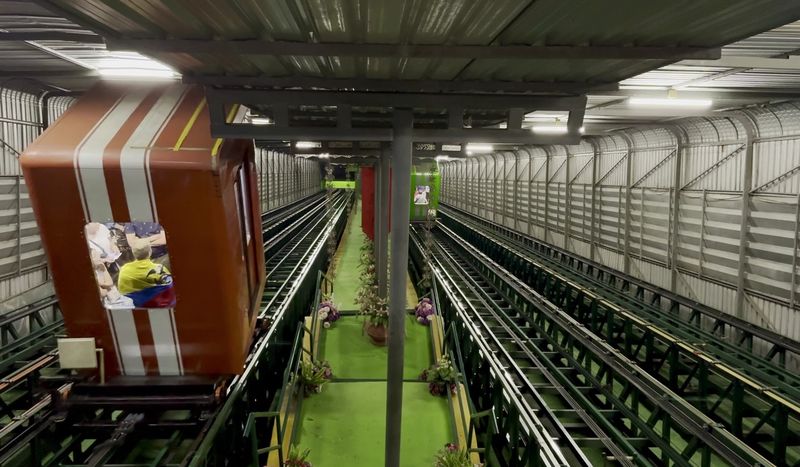
Tired legs, meet your new best friend. A small funicular lift runs beside the stairs and carries you to the temple level in moments.
Visitors report fees of roughly 10 to 20 baht, so it will not hurt your wallet.
It is a smart choice for older travelers, young children, or anyone feeling the heat. Plenty of people mix it up too.
One reviewer rode up in the tram and walked down the naga staircase, which gave them the best of both.
Keep a little cash handy for the ticket. Lines can grow longer in the middle of the day, so early or late visits are smoother.
If a crowd is waiting, the stairs may be quicker.
Taking the lift does not make your visit any less meaningful. The golden chedi looks just as dazzling when you arrive fresh and relaxed.
Save your energy for exploring the courtyard instead.
The Golden Chedi
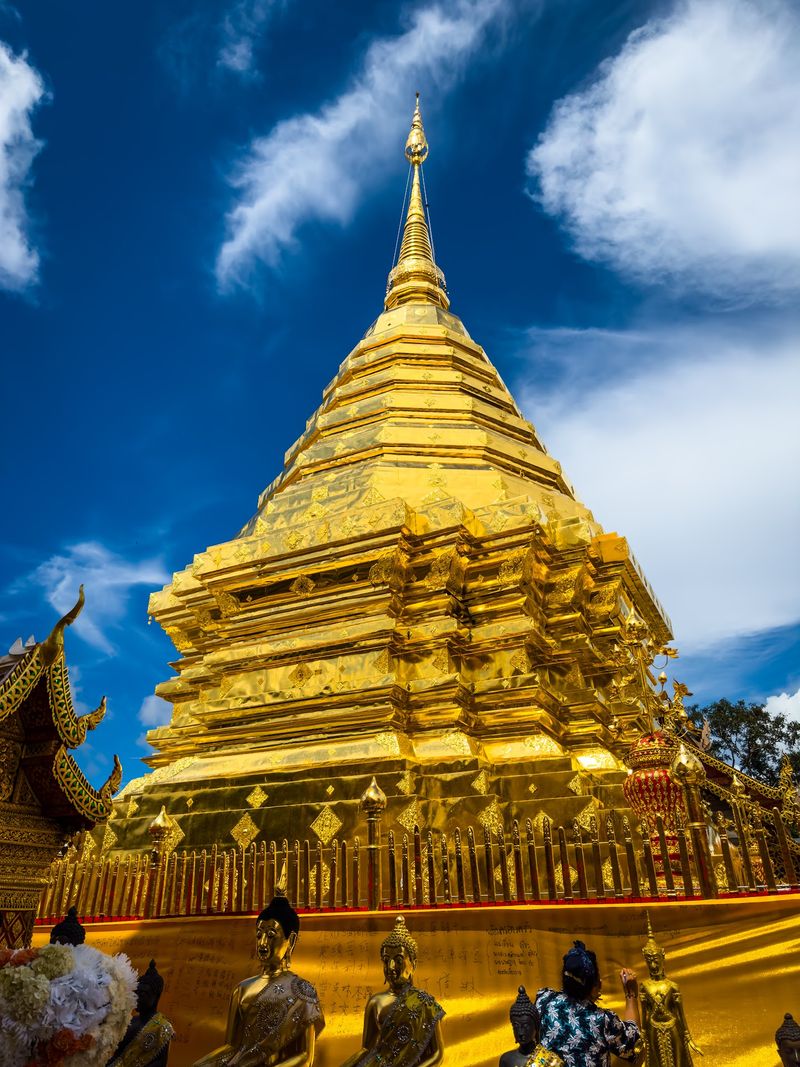
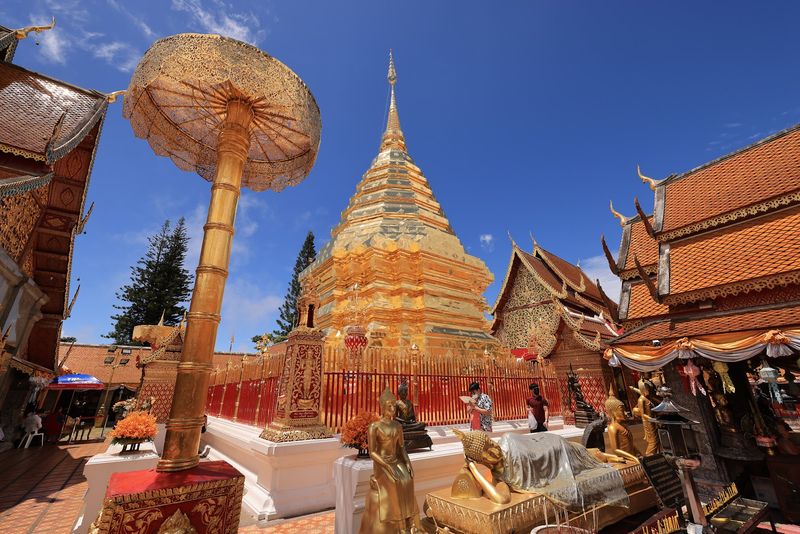
Sunlight bounces off the golden chedi so brightly that you might reach for your sunglasses. Standing about 24 meters tall, it is the heart of the whole temple.
The copper plating glitters in the day and glows at night.
Walk around it clockwise, as local worshippers do. Many carry lotus flowers, candles, and incense while they circle the shrine.
Monks often chant nearby, and the sound gives the courtyard a calm, steady rhythm.
Look closely at the details. Golden umbrellas stand at the corners, and Buddha statues sit around the base.
Lanna-style roofs and red accents make a lovely contrast with the blue sky.
The chedi holds a sacred relic, which is why people travel here from all over Thailand. Keep your voice low and be patient when taking photos.
The best shot often comes after a short wait for the crowd to shift.
Panoramic Views of Chiang Mai
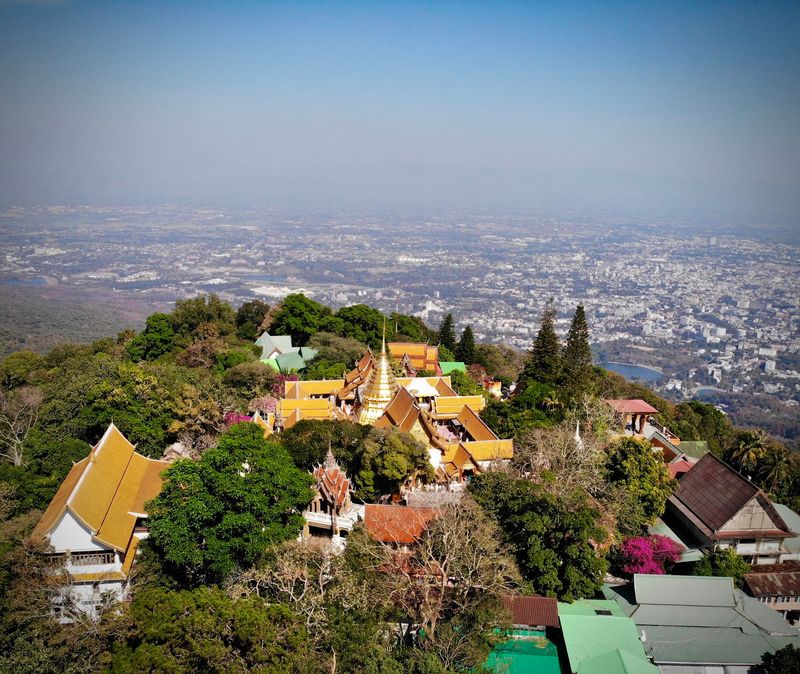
Planes the size of toys glide in and out of the airport far below. That is one of the fun surprises from the back terrace.
From here, the whole Chiang Mai basin spreads out like a map.
You can spot the Old City, the rooftops, and the faint outline of distant hills. Clear days give the sharpest view.
Clouds sometimes sit low in the morning, but one visitor saw them lift within half an hour, so a little patience pays off.
Winter brings cool breezes and thick fog, while the rainy season paints everything green. Each season gives the view a different mood.
Bring a camera, but also leave time to just stand and look.
There is also a small cafe on the hilltop if you want a snack with your scenery. The upper terrace gets strong afternoon sun, so pack a hat.
A water bottle will be your friend here.
Dress Code and Temple Manners
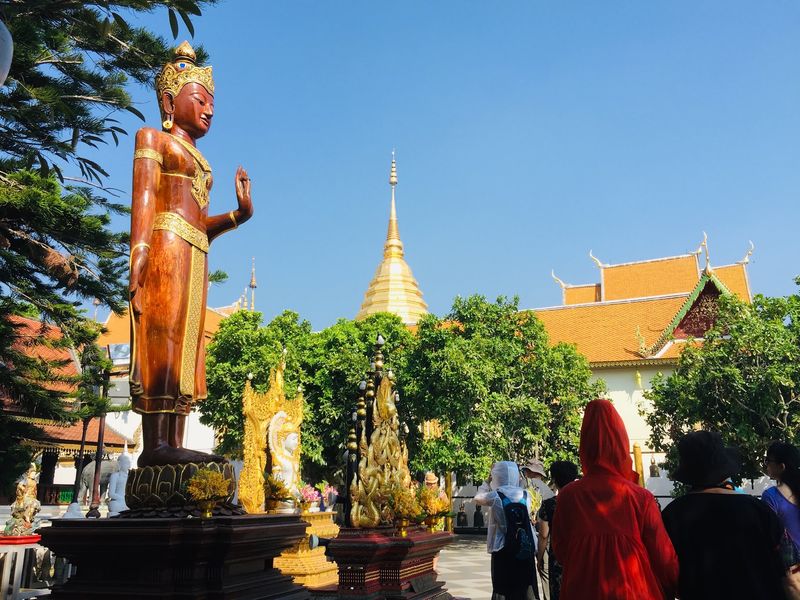
Shorts and tank tops will not get you far here. Shoulders and knees must be covered, since this is one of the most sacred sites in Thailand.
Short skirts and sleeveless shirts are also a no.
Forgot to pack the right clothes? Sarongs and wraps can be rented or borrowed near the entrance, and some visitors say the loan is free.
It is an easy fix, so there is no need to panic.
Shoes come off before you enter the inner golden courtyard. A storage area keeps them safe.
Bring a small towel to wipe your feet afterward, especially after rain.
Speak softly and move slowly. Take a moment to watch local worshippers instead of only snapping pictures.
Respect goes a long way, and people notice and appreciate it.
Bells, Blessings, and Bracelets
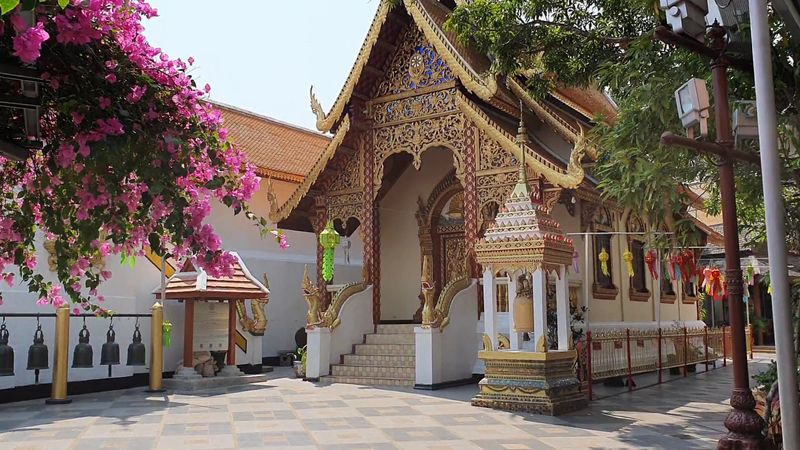
Ding, dong, good fortune. A line of bronze bells circles the courtyard, and visitors ring them one by one for luck.
The sound drifts across the grounds and mixes with soft chanting.
Monks sometimes offer water blessings, and they may ask where you come from. Afterward, you might receive a white bracelet for protection.
It is a sweet little keepsake that many travelers keep for months.
Donations are welcome, though never forced. Pay respect first, then give what feels right.
Smile, say thank you, and keep the mood gentle.
Inside the area you can also see murals, and one visitor even watched a woman painting them live. Details like these show that the temple is still alive and cared for.
It is not just a museum on a hill.
Sunrise and Morning Chants
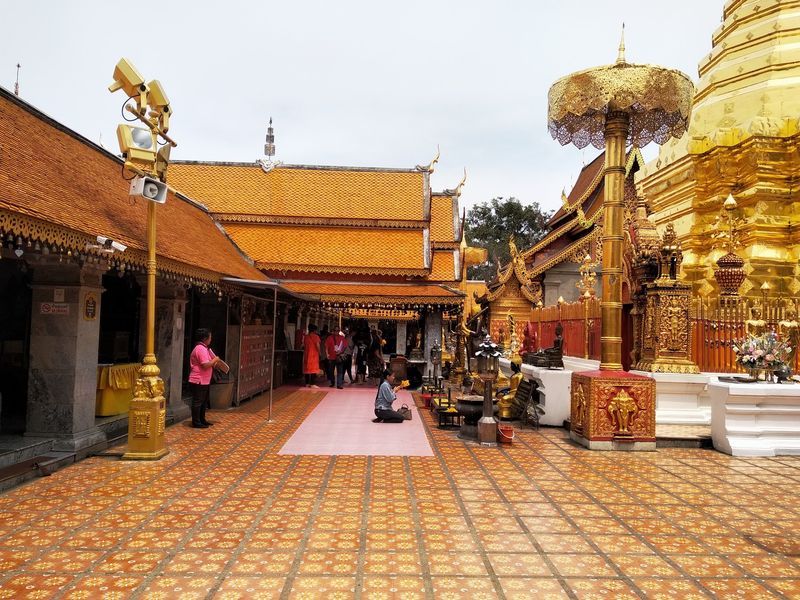
Alarm clocks are cruel, but this one is worth it. The temple opens at 5 am, and by 6 you can catch monks chanting as the sun rises.
The mountain air is cool and the golden spire glows softly.
Crowds are small at this hour. That means easier photos and a calmer walk up the stairs.
Fog sometimes drapes over Chiang Mai below, creating a dreamy view.
Songthaew trucks run from the zoo or Chang Phuak Gate, and a shared ride costs around 50 baht per person in a group. Grab a seat early and enjoy the winding drive.
If you get carsick, bring a remedy for the curves.
Arriving early also beats the heat and the tour buses. You will have time to wander, then head down for breakfast in the city.
It is a lovely way to start a day.
Glowing After Dark
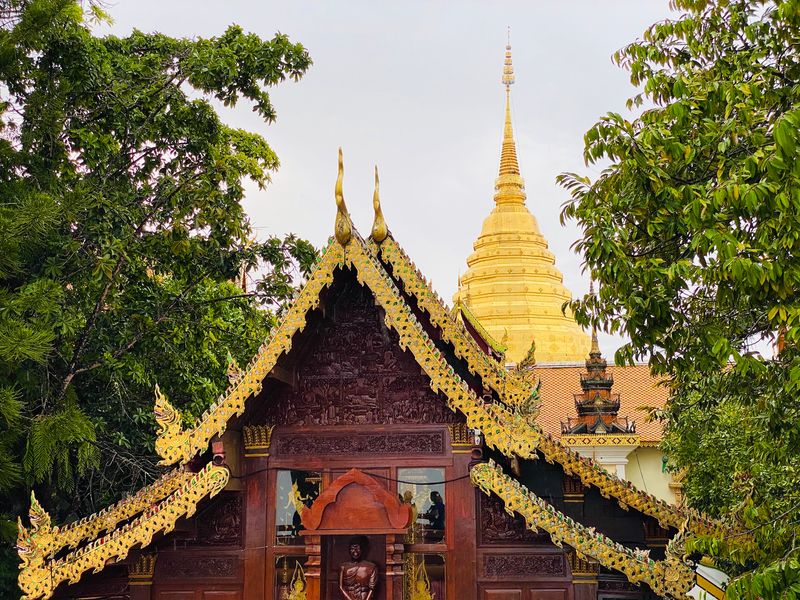
Most temples go to bed early, but this one stays up until 9 pm. When the lights switch on, the chedi turns into a glowing golden beacon.
Many people arrive at sunset and linger to see the change.
The observation area offers a view of the Chiang Mai night sky and the city lights below. Reviewers call it a highlight not to skip.
The air is cooler, and the mood is quiet and dreamy.
Late afternoon is also popular for golden hour photos. Expect more people, but the light is lovely.
A little patience will give you clean shots.
Getting back down is easy. Tuk-tuks wait outside, and you can ask a taxi or Bolt driver to wait for you.
Arrange your ride before you stay too late.
Getting There and Paying Up
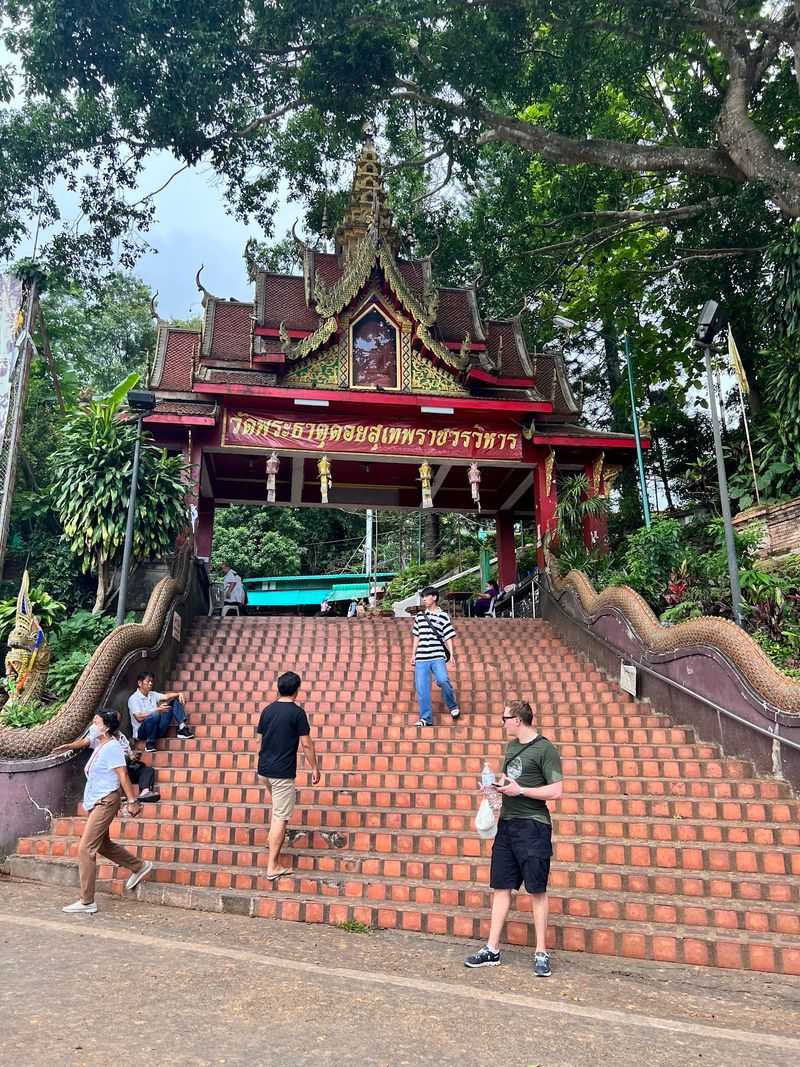
Red trucks are the classic ride up the mountain. These songthaews leave from Chang Phuak Gate, Chiang Mai Zoo, and the front of Chiang Mai University.
The temple sits about 15 kilometers from the city center.
The winding road takes roughly 30 to 40 minutes. You can also book a Grab or hire a private driver.
Some brave hikers walk up from town, but the trail is steep, so good fitness helps.
Entry costs 30 baht for foreign visitors. The lift is a small extra fee.
Bring cash for both, plus a little for donations and snacks.
Plan a half-day trip rather than a quick stop. Pack sunscreen, water, and a light rain jacket, since the top can be cool.
Hiking down the Monk’s Trail through Wat Pha Lat is a fun way to return.
Doi Suthep’s Spiritual Heartbeat
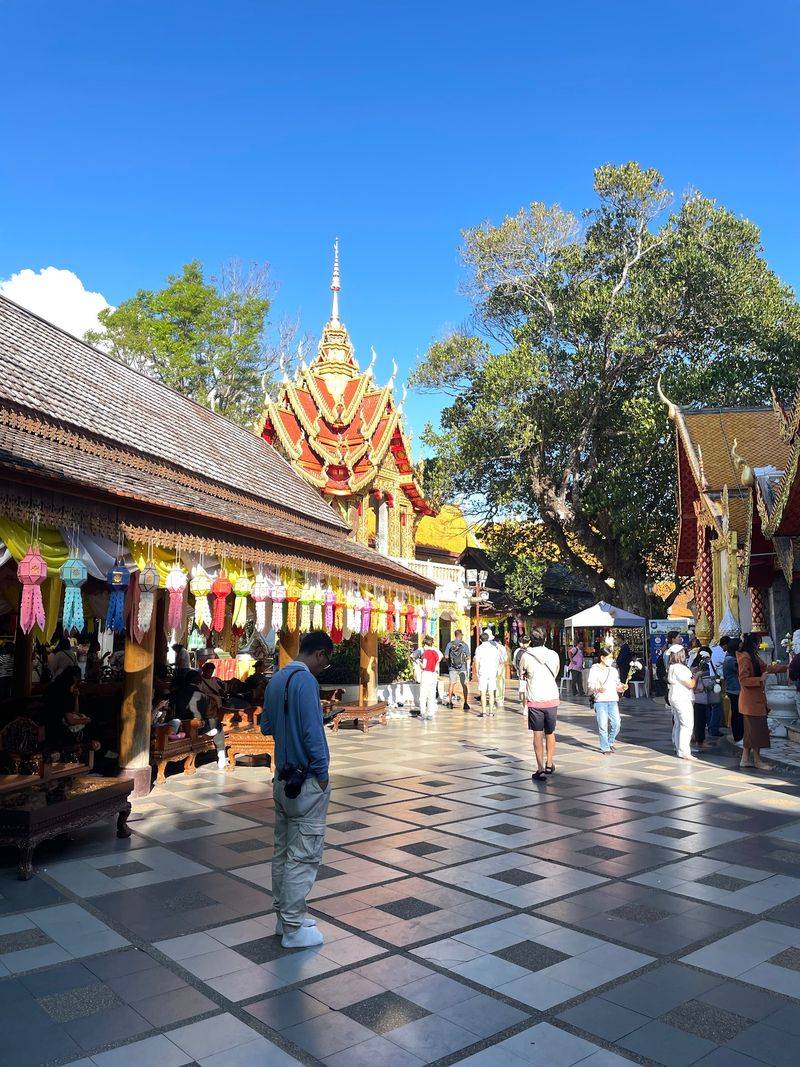
Tourists come for photos, but locals come to pray. Doi Suthep is one of the most sacred pilgrimage spots in Thailand, tied to the Lanna Kingdom that ruled the north.
Worshippers make merit, light incense, and walk around the stupa with quiet focus.
The feeling here is peaceful even when it is busy. Many visitors say the temple still feels serene despite its fame.
The scent of incense and the sound of bells help you slow down.
You will also find sacred spots for making wishes and a resident monk. Some people use the grounds for meditation.
A statue honors Monk Sivichai, who raised funds to build the road up the mountain.
Leave time to simply sit and soak it in. Watch, listen, and let the day go slowly.
That calm is the real souvenir.
Share this story