A retired Detroit-area autoworker spent decades turning two ordinary backyards into a homemade version of Disneyland. Instead of rides and roller coasters, he built towering windmills, model airplanes, and unusual sculptures using scrap metal, discarded toys, and whatever else he could find.
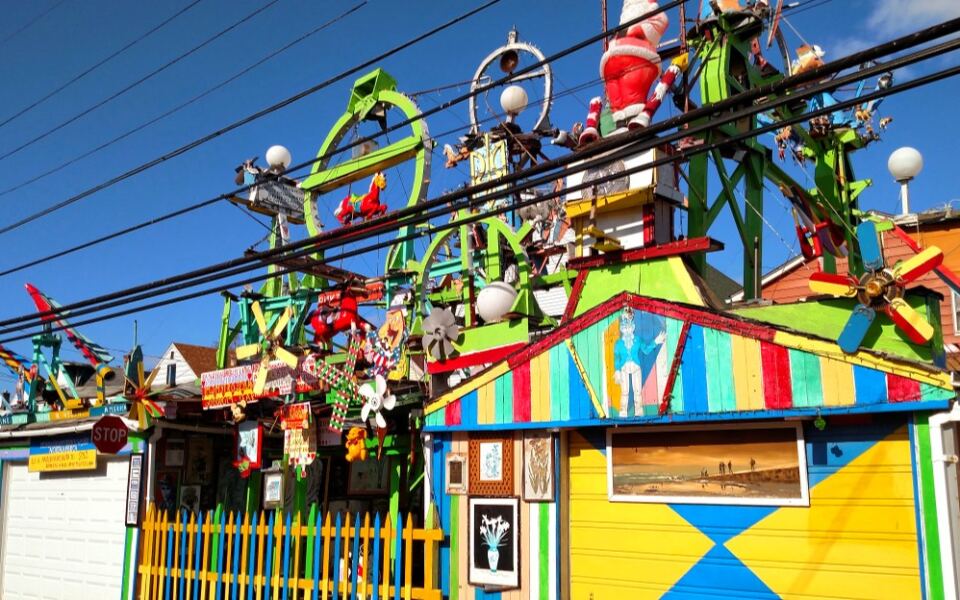
The result is Hamtramck Disneyland, one of Michigan’s most unusual folk art attractions. Hidden behind houses along a residential alley, the sprawling installation became a neighborhood landmark through the work of just one man.
Dmytro Szylak started building after retiring from General Motors, eventually creating a collection of handmade structures that rose above the surrounding garages. His backyard project attracted visitors from far beyond Hamtramck.
But the story didn’t end when its creator passed away. A local arts organization stepped in to preserve his work, giving this unlikely Michigan attraction a second life.
Today, visitors can still see the remarkable collection that one determined retiree spent years putting together.
A Backyard Kingdom Off an Alley
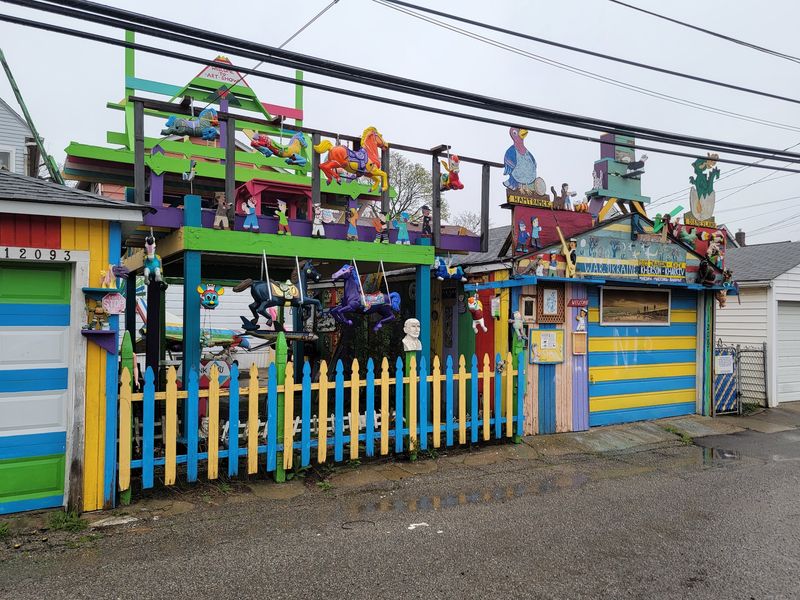
Hamtramck Disneyland sits at 12087 Klinger St in Hamtramck, Michigan, a small city surrounded almost entirely by Detroit. It is a folk art installation spread across the backyards of two neighboring houses.
The name is playful, of course. You won’t find costumed characters here, just a tall, crowded jumble of handmade sculptures built by one determined man over many years.
Getting there takes a little planning. The front of the property faces the street, but the art is best seen from the alley behind the houses.
Map apps can make this confusing. Many people find it easier to circle the block and approach through the alley, where the towers come into view above the fences.
Google lists the site as open around the clock, but this is a real residential block. People live right there, so quiet voices and polite behavior matter.
I find that detail part of the appeal. You are seeing art exactly where it was made, not inside a museum gallery.
To understand why anyone would build something like this, it helps to meet the man behind it.
The Retired Autoworker Who Kept Building
Dmytro Szylak didn’t set out to create a famous landmark. He was a Ukrainian immigrant who worked for decades at General Motors before retiring.
Retirement gave him time, and he filled it with building. Starting in the early 1990s, he began adding sculptures to his backyard, one piece after another.
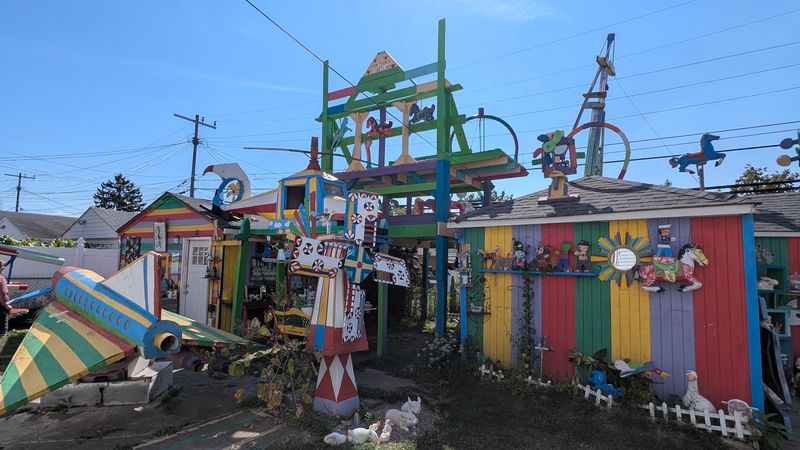
Many builders would stop after a few projects. Szylak kept going for years, stacking new creations higher until the yard reached well above the garage roofline.
His work spread into the yard next door, which he also owned. That is why the installation covers two properties instead of one.
I can understand the appeal of a project like this. After years on an assembly line, building whatever you want, however you want, must have felt freeing.
Neighbors watched the whole thing grow. Over time, the yard became known well beyond Klinger Street, attracting art lovers and curious travelers from across Michigan and other states.
Szylak passed the project on later in life, and its story continued without him. Before getting to that chapter, though, the materials themselves deserve a closer look.
Junk Turned Into Treasure
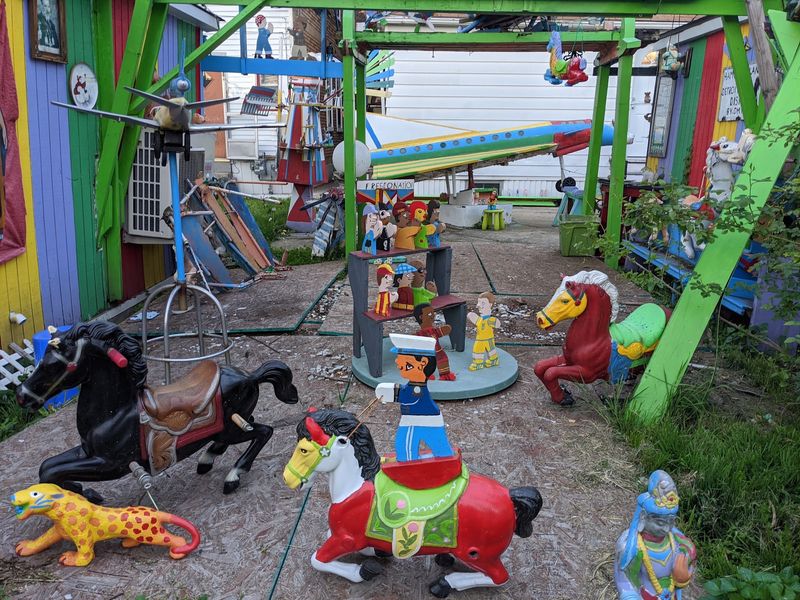
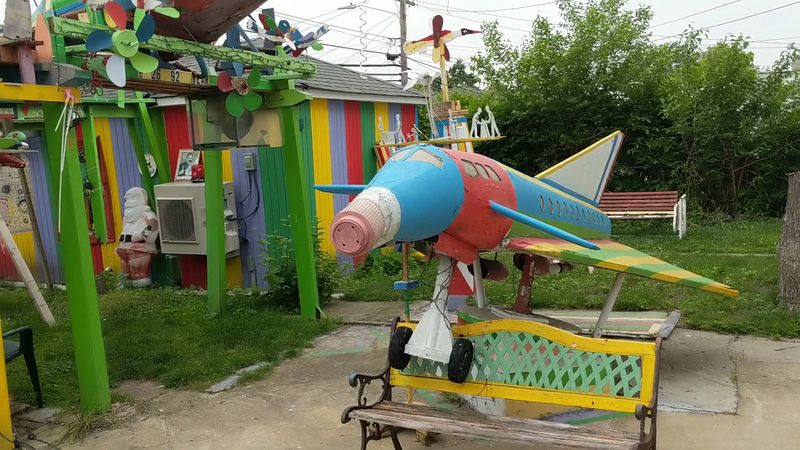
Old toys, scrap wood, metal parts, and household leftovers make up much of this yard. Szylak worked with what he could find and gave it a second life.
That approach is called assemblage art. It means building something new by putting together objects that already existed.
Up close, you can spot pieces that once had ordinary jobs. Bits of hardware, plastic figures, and painted panels now share space in the towering frames.
Kids often enjoy this part most. It turns into a kind of seek-and-find game, where every corner hides another familiar object in an unfamiliar place.
I would bring a phone camera with a good zoom. Some of the most interesting details sit high up, far from easy viewing.
Bright paint ties many of the pieces together. Reds, blues, and yellows help the different materials look like parts of one big creation.
Recycling wasn’t a trendy idea for Szylak, as far as anyone can tell. It was simply how he built.
Of all those reused items, a few shapes show up again and again, and they give the yard its personality.
Windmills Reaching for the Sky
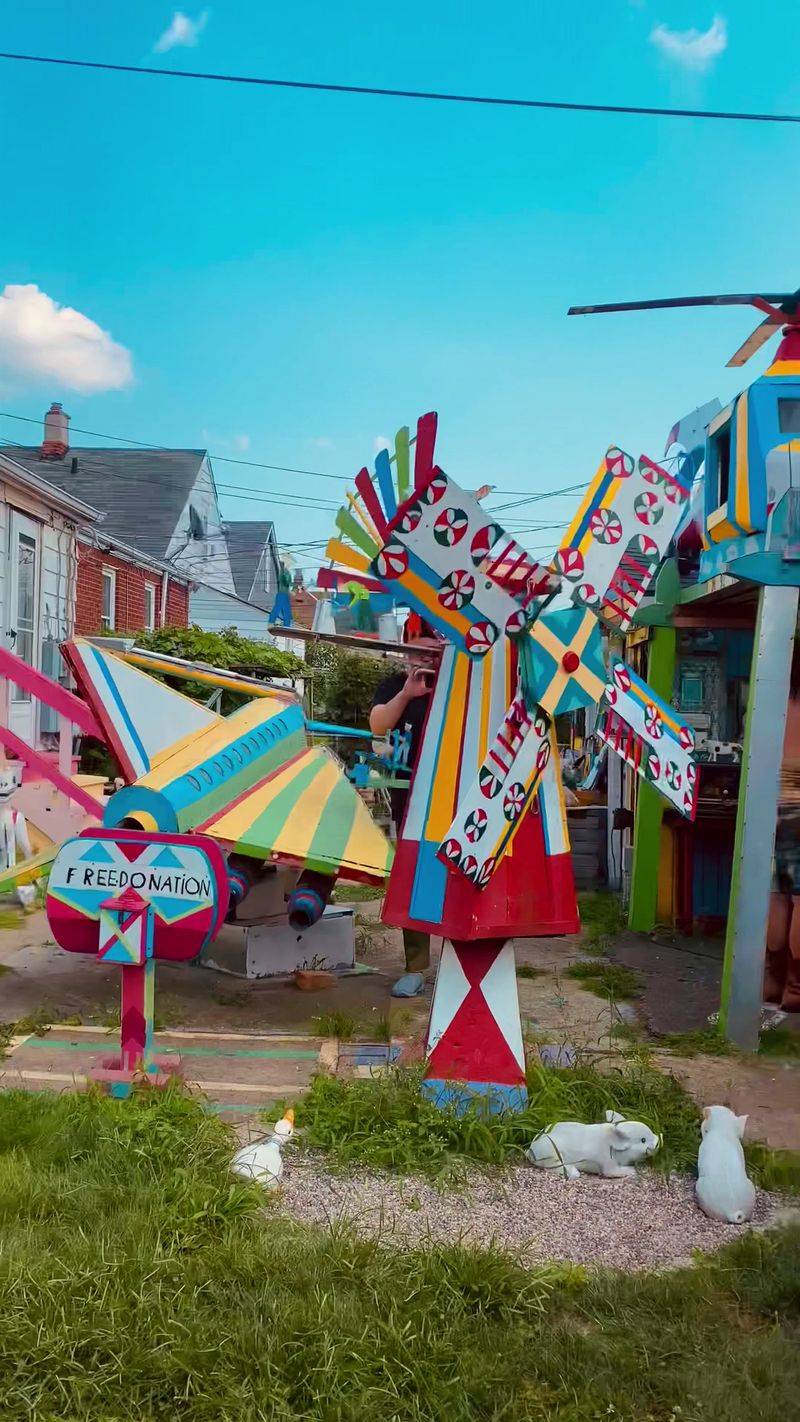
Look up, and the windmills grab your eye first. Szylak built many of them, along with whirligigs, and set them high on the structure.
Whirligigs are wind-powered toys or sculptures with moving parts. When a breeze passes through, pieces can spin or turn.
That movement gives the yard a living quality. A calm day and a windy day can make the same place feel quite different.
Some visitors mention the colorful moving pieces as a highlight. If you can, aim for a day with at least a light breeze.
Windmills also connect to older folk art traditions. Many rural builders across America made whirligigs from scraps, and Szylak’s work fits right into that history, even in a dense city setting.
I find it charming that such farm-style objects appear in a crowded urban alley. They seem a little out of place, which makes them more fun to spot.
Wind and weather are not gentle on homemade art, though. Spinning parts wear out, and paint fades quickly.
Still, the windmills share the sky with another favorite subject: flying machines.
Airplanes Parked Above the Garages
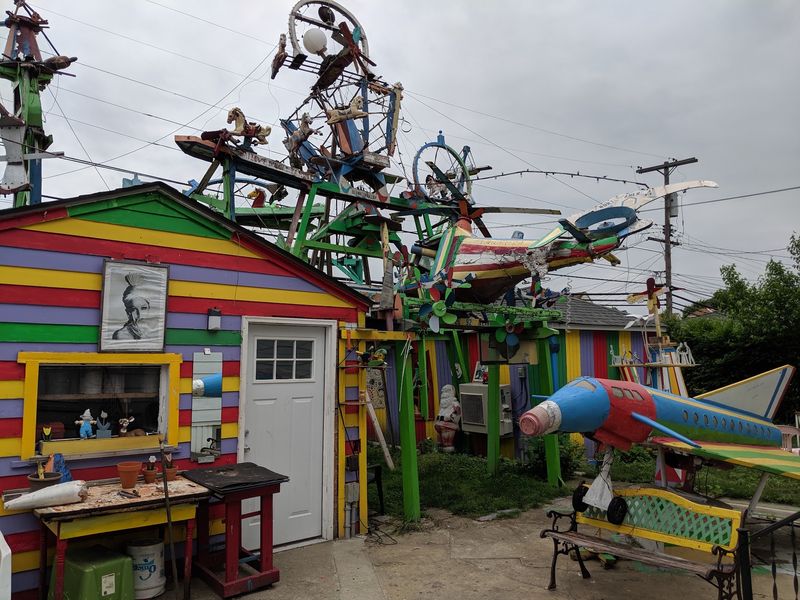
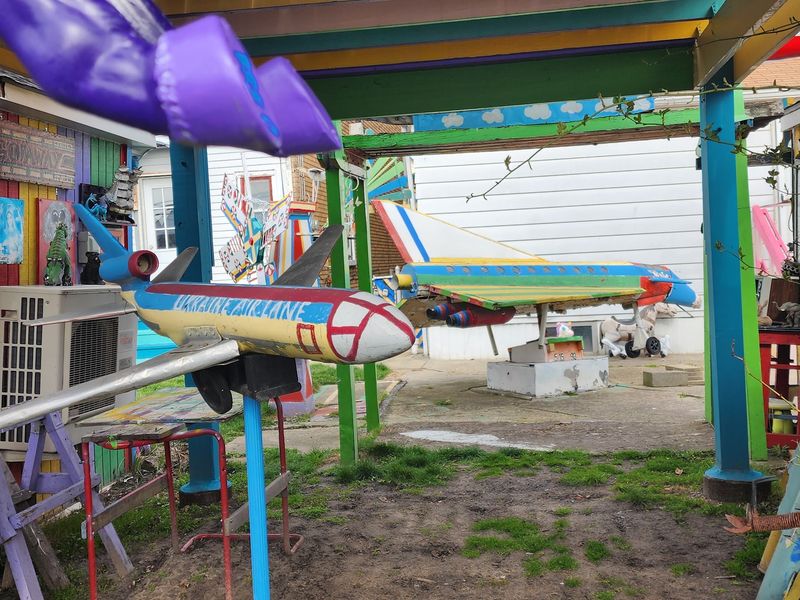
Planes seem to take off from the top of the towers. Szylak included airplanes and other flying shapes throughout his creation.
Some reports say his interest in flight connected to his time serving in the military during World War Two era years. The exact meaning behind each plane isn’t fully documented, so I’d rather admire them than guess.
What you can see clearly is the effort. Building aircraft shapes from scrap takes patience, careful balance, and a lot of trial and error.
These pieces work well for photos. Shooting upward from the alley lets you frame the planes against open sky.
Kids usually enjoy counting how many aircraft they can find. Some are easy to see, while others hide among flags and painted beams.
Airplanes add a sense of motion and adventure. Paired with the windmills, they make the whole yard feel like it wants to lift off the ground.
Over the years, though, the sculptures didn’t fly anywhere. They aged in place, which brings up an important turning point in the yard’s story.
Rescued by an Artist Group
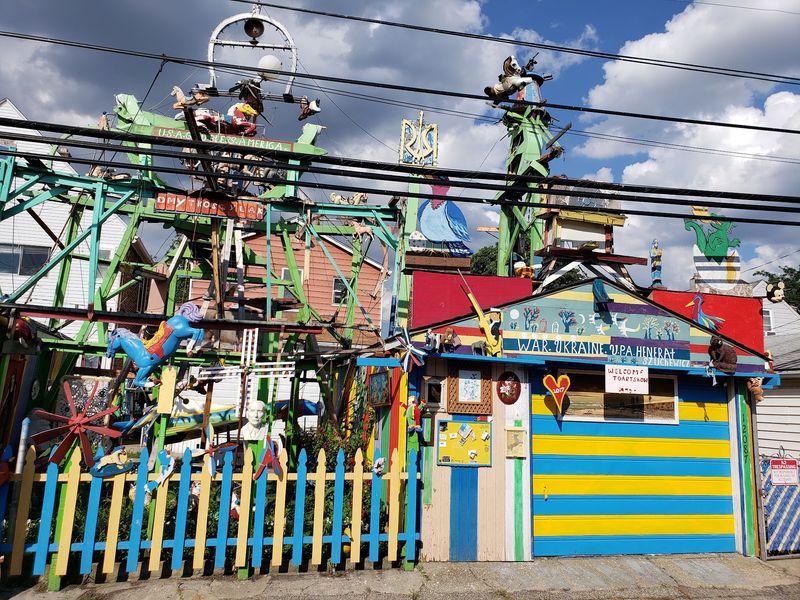
Plenty of homemade art projects vanish once their creators move on. This one got a second chance.
Hatch Art, a nonprofit arts group based in Hamtramck, took over care of the property. Its website now hosts information about Hamtramck Disneyland.
The group’s goal has been to preserve and restore the work. That means repairing broken pieces, repainting faded areas, and keeping the structures safe.
Restoration takes careful thinking. Fixers want to protect Szylak’s original vision rather than replace it with their own ideas.
Visitors have reported meeting a restoring artist on site who shared details about the work. The group has also asked for volunteers to help with projects over the years.
I like the idea that a community can adopt one person’s dream. It turns private art into something shared by the whole city.
Hatch Art has also used the space as a creative hub, with plans for artist housing tied to the property.
Restoration costs money, of course. That’s where a small but useful detail near the entrance comes into play.
Free to See, Kind to Support
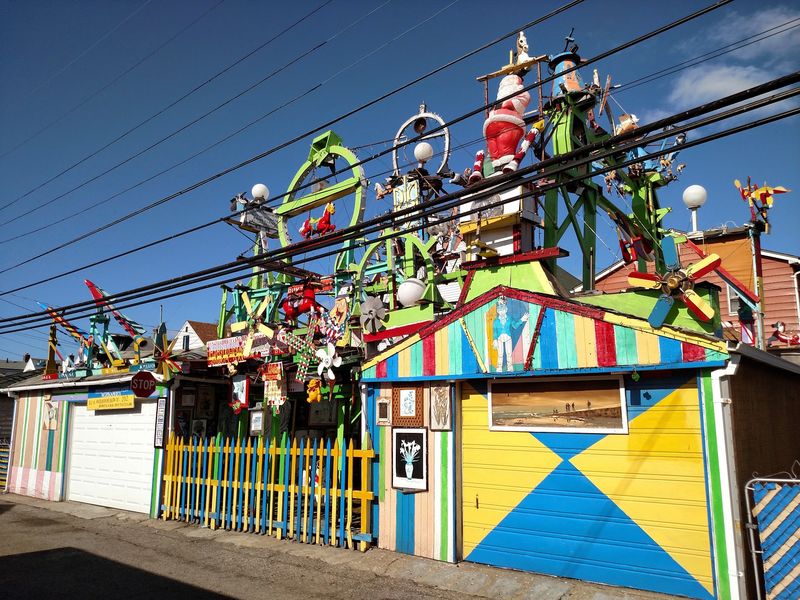
No admission fee stands between you and the art. Viewing Hamtramck Disneyland is free.
Near the gate, recent visitors have spotted a sign with a way to donate digitally. Those gifts help support upkeep and restoration.
I’d make a small donation part of the plan. Paint, wood, and repair materials add up fast, especially for outdoor pieces facing Michigan winters.
Policies about entering the yard have changed over the years. Some people say they could walk through the gate, while others viewed everything from the alley.
Older signs once warned against trespassing at the front. The safest approach is following whatever signs are posted when you arrive.
Some visitors suggest calling ahead, which can help you learn current access rules. The Google listing includes contact information you can use.
Either way, the alley view still shows a large part of the installation. Tall towers were built to be seen over fences.
Treat the space with care. Don’t climb, touch fragile pieces, or block neighbors’ driveways.
Respect matters even more once you realize who lives just steps away.
A Neighborhood Full of Stories
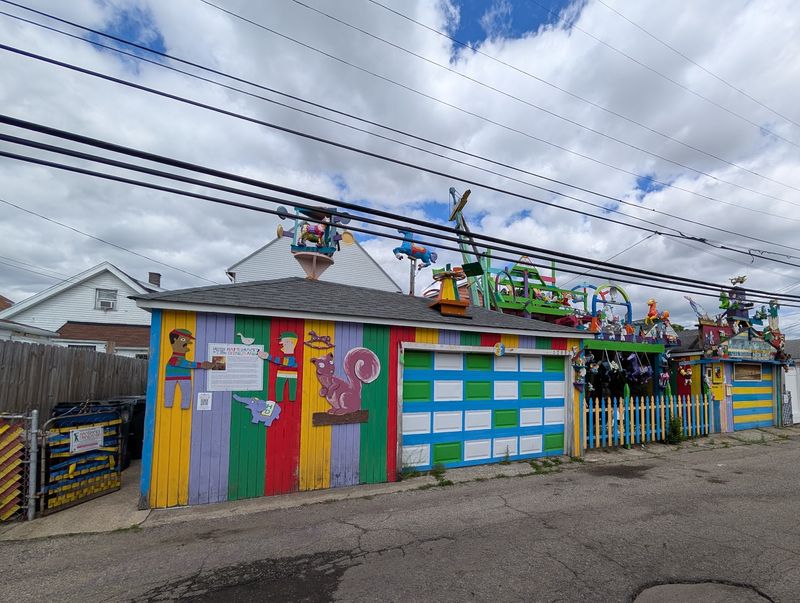
Hamtramck is just about two square miles, yet it holds a remarkable mix of cultures. The city has long welcomed immigrants from many parts of the world.
Polish families once defined much of its identity. Today, residents with roots in Bangladesh, Yemen, Bosnia, and other countries also call it home.
Szylak, an immigrant from Ukraine, fits right into that story. His yard reflects how newcomers have shaped this small city.
The installation sits on a working residential street. Parking is mostly on the street, so take care to leave room for residents.
Several people recommend visiting during daylight. Better light helps with photos, and it keeps the visit easy and calm for everyone.
Keep your voice low and your stay short if people are nearby. You’re a guest on their block.
I find the setting part of the lesson. Art doesn’t always live downtown; sometimes it grows right beside garages and laundry lines.
Since you’re already in Hamtramck, it makes sense to think about how long the visit takes and what fits around it.
Short Stop, Lots of Detail
Most people spend about 15 to 30 minutes here. It’s a quick stop, not an all-day outing.
That makes it easy to pair with other plans. Some travelers combine it with the Heidelberg Project, another well-known outdoor art site in Detroit.
Short visits don’t mean shallow ones, though. If you slow down, you’ll notice small figures, signs, and painted touches hidden in every section.
I would start with a wide look from the alley. Then I’d focus on one tower at a time, moving from bottom to top.
Kids tend to enjoy the bright colors and strange shapes. Give them a challenge, like finding three airplanes or five windmills.
Comfortable shoes help, since alley ground can be uneven. A camera or phone is almost required.
Fans of outsider artists such as Howard Finster may feel right at home. Both made sprawling, personal environments from everyday materials.
Once you’ve taken in the details, you might wonder what the whole thing means for art in general.
Why Outsider Art Like This Matters
Szylak had no formal art training. That puts his yard in a category often called outsider art or folk art.
These works come from personal passion rather than art school. Builders follow their own rules, and the results often feel deeply individual.
Across America, similar backyard environments have disappeared once their makers were gone. Many were torn down or simply fell apart.
Hamtramck Disneyland avoided that fate, at least so far. Its rescue shows how communities can protect unusual art before it’s lost.
Some pieces look worn, and a few visitors have said so. That aging is part of the honest story of outdoor art.
I like that the yard invites everyday people to see themselves as creators. You don’t need a gallery or a degree to make something people want to visit.
It also reminds us that retirement can be a beginning. Szylak started building after a long factory career and kept going for years.
Walking away, you might look at your own garage clutter a little differently. Somewhere in that pile might be the start of a windmill.
Share this story