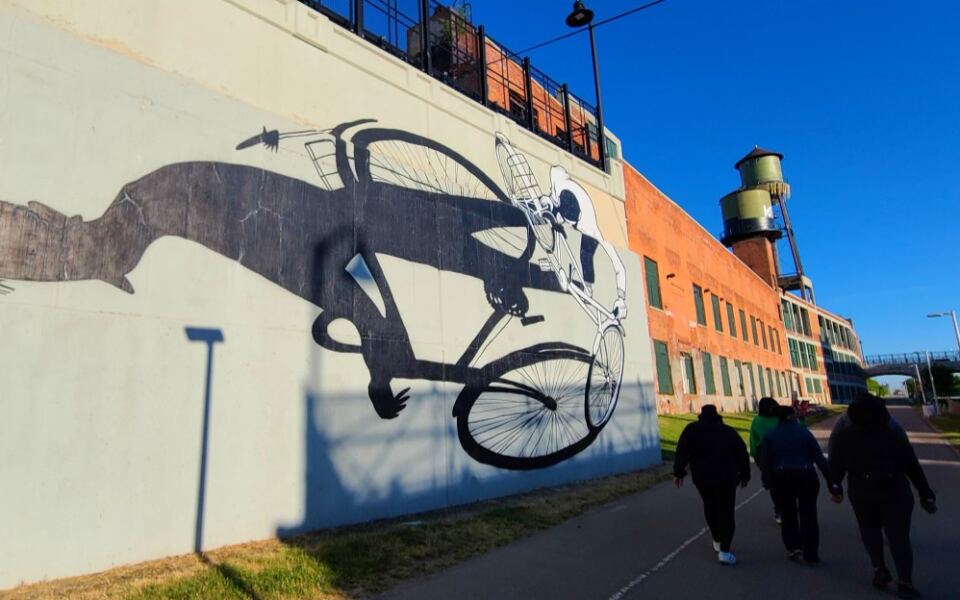
Detroit has a nearly two-mile walking and biking trail that runs below city streets, past graffiti-covered walls and colorful murals. It follows an abandoned railroad corridor where freight trains once traveled, and today visitors can explore it for free.
Known as the Dequindre Cut Greenway, the paved trail connects Eastern Market with the Detroit Riverfront. Separate lanes for walkers and cyclists make it an easy way to explore this part of the city without dealing with road traffic along the trail.
The artwork is a major attraction, but there is more to discover. Old railroad bridges, a seasonal gathering space built from shipping containers, and connections to two popular Detroit destinations make this former freight route worth exploring.
Meet the Dequindre Cut Greenway
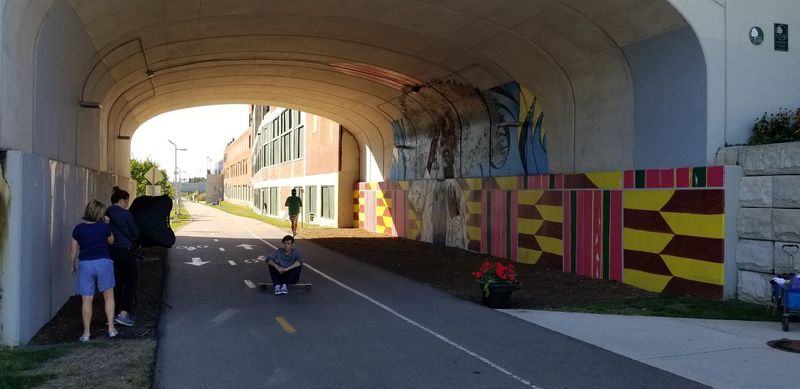
Railroad tracks used to run where people now jog in sneakers. The Dequindre Cut Greenway sits at Dequindre Cut Greenway, Detroit, MI 48207, on the east side of the city in Michigan, United States.
The trail runs just under two miles between Atwater Street near the Detroit River and Mack Avenue near Eastern Market. Much of it sits below street level, so the walls rise up on both sides of you.
Overhead, city streets cross on bridges while you keep moving underneath.
The path has separate lanes for walkers and for bikers. That simple design choice keeps things calm, even when the trail gets busy on a nice day.
It’s a park, so you don’t pay anything to use it. The greenway is managed with the Detroit Riverfront Conservancy, the same group that cares for the city’s riverfront paths.
I find it clever that the old rail line already did the hard work. The corridor was flat, straight, and separated from traffic long before anyone thought about bikes.
All the city needed was pavement, lights, and a little imagination, plus a lot of paint, which brings us to the walls.
Walls That Work as a Giant Outdoor Gallery
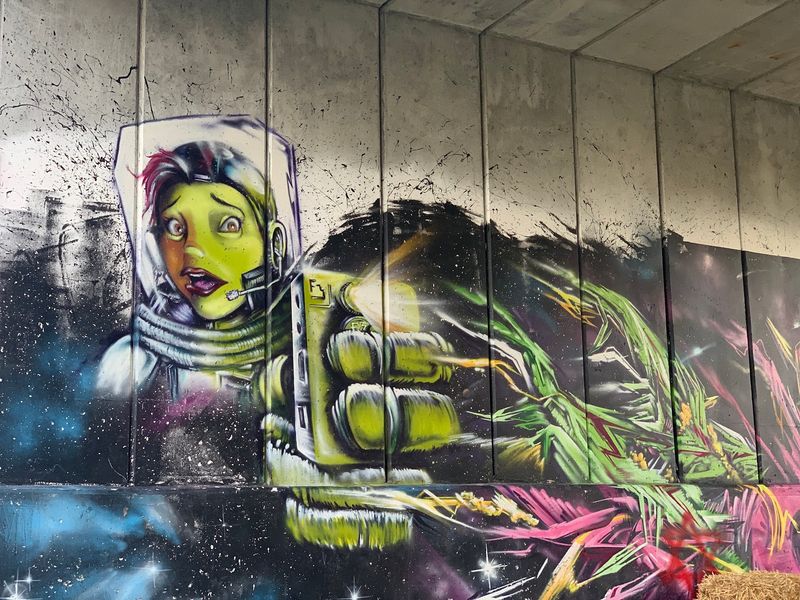
Spray paint is the main attraction here. Bridge supports, retaining walls, and concrete slabs along the Cut are covered in murals and graffiti from top to bottom.
Some pieces are huge and colorful, with faces, letters, and patterns stretching across whole walls. Others are smaller tags and designs tucked between the bigger works.
Together, they turn a plain trench into a long open-air art show.
Part of the fun is that the art isn’t frozen in place. Street art changes over time, so a wall you saw last year may look different on your next visit.
I’d suggest walking the trail slowly at least once. On a bike, it’s easy to zip past details you’d catch on foot, like small signatures or hidden characters in a busy design.
Photographers love this stretch for good reason. The murals give portraits a bright, city-style background without any planning at all.
Bring your phone fully charged. If you still crave more color after the Cut, the neighborhood waiting at the northern end has a well-known mural scene of its own.
A Freight Line With a Second Life
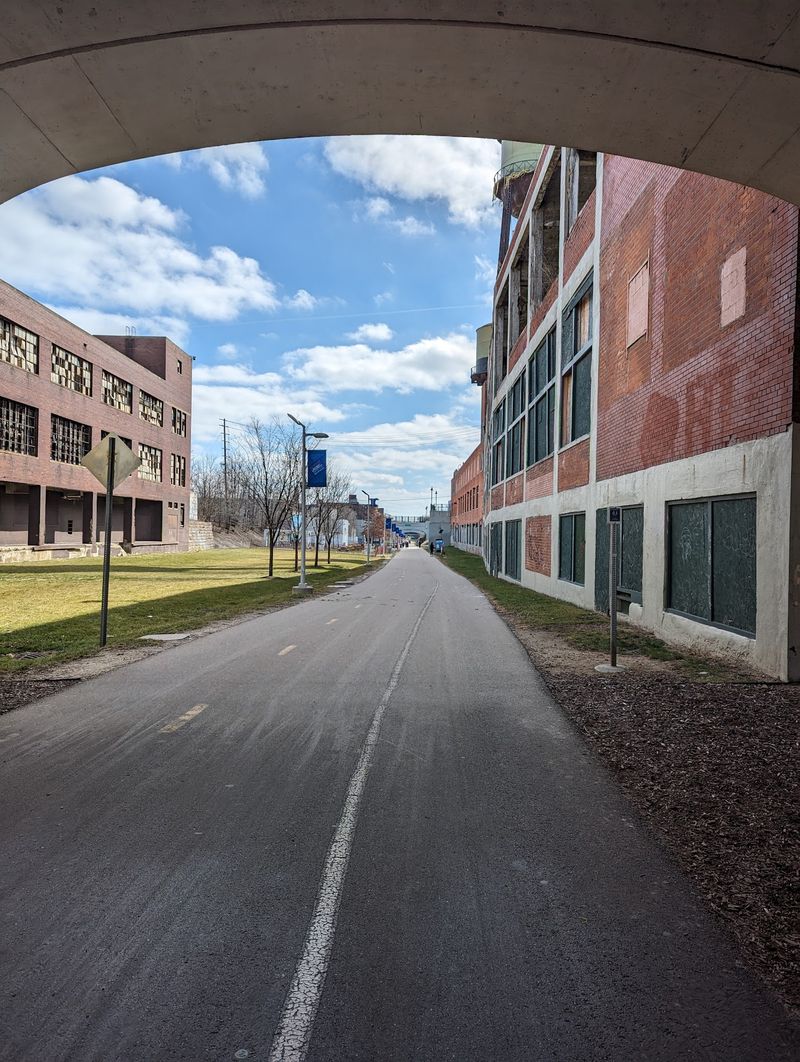
Long before the bike lanes, this trench belonged to the Grand Trunk Western Railroad. The line was dug below street grade so trains could move without blocking busy Detroit roads.
Eventually, the trains stopped running. The empty corridor sat unused for years, and graffiti artists began painting its walls long before it was an official trail.
That early art helped give the place its personality. When the greenway opened in 2009, much of the street-art spirit came along with it.
Later work pushed the trail further north toward Mack Avenue. The extension made it easier to reach Eastern Market and added more room to walk, ride, and gather.
I like that the trail kept its railroad shape. It’s long, straight, and sunken, so you can almost feel how the trains once moved through here.
Knowing the history changes how the walk feels. Every overpass you pass under was built to carry street traffic over a working rail line.
That’s a fun detail to share with kids, especially when they ask why the path sits so far down.
Where the River Meets the Trail
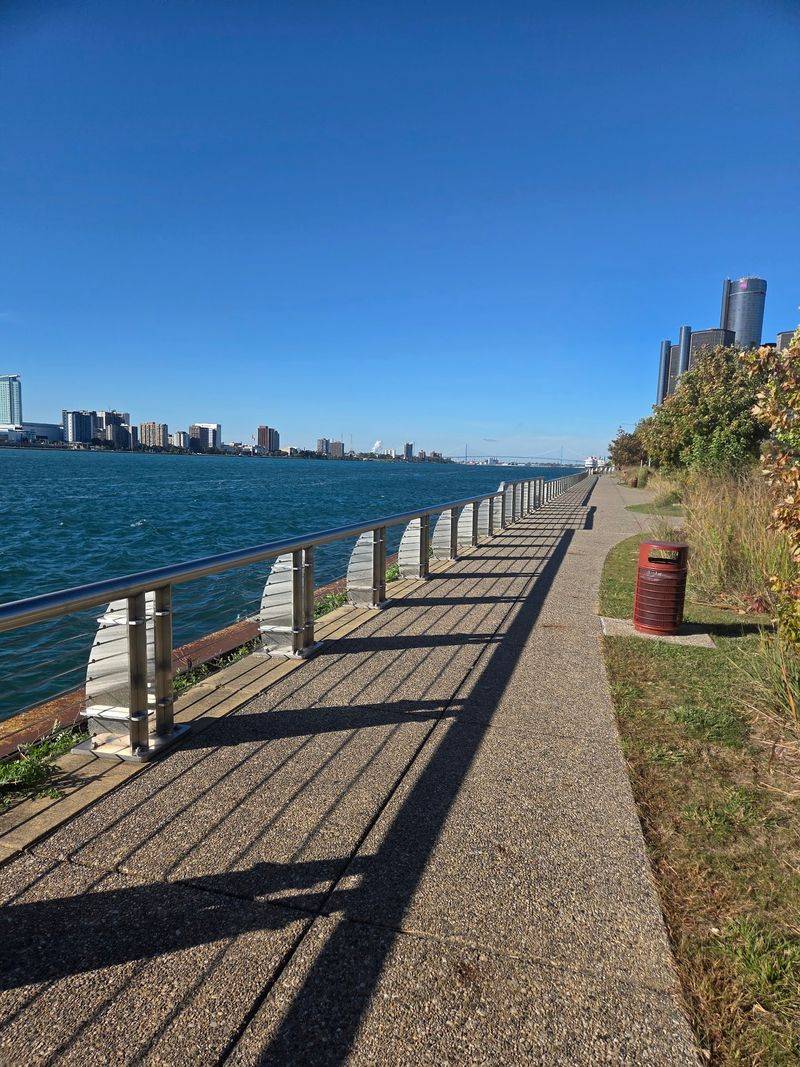
Head south and the walls eventually fall away. At Atwater Street, the trail opens toward the Detroit RiverWalk and William G.
Milliken State Park.
That connection changes the whole mood. You go from a sunken, art-covered corridor to wide water views and open sky in just a few steps.
Milliken State Park sits right by the river and has public restrooms. That’s handy, since restroom options along the Cut itself are limited.
From there, you can keep going on the RiverWalk. The riverfront path stretches along the water past downtown, so a short walk can easily become a longer outing.
Across the river, you can see Canada. Yes, from this end of Detroit, the foreign country across the water sits to the south, which surprises many first-time visitors.
I’d plan a route that uses both paths. Start on the Cut, enjoy the art, then finish beside the water with the downtown skyline in view.
If your legs still feel fresh, turn around and head north, where food and fresh produce wait at the other end.
Eastern Market at the Northern End
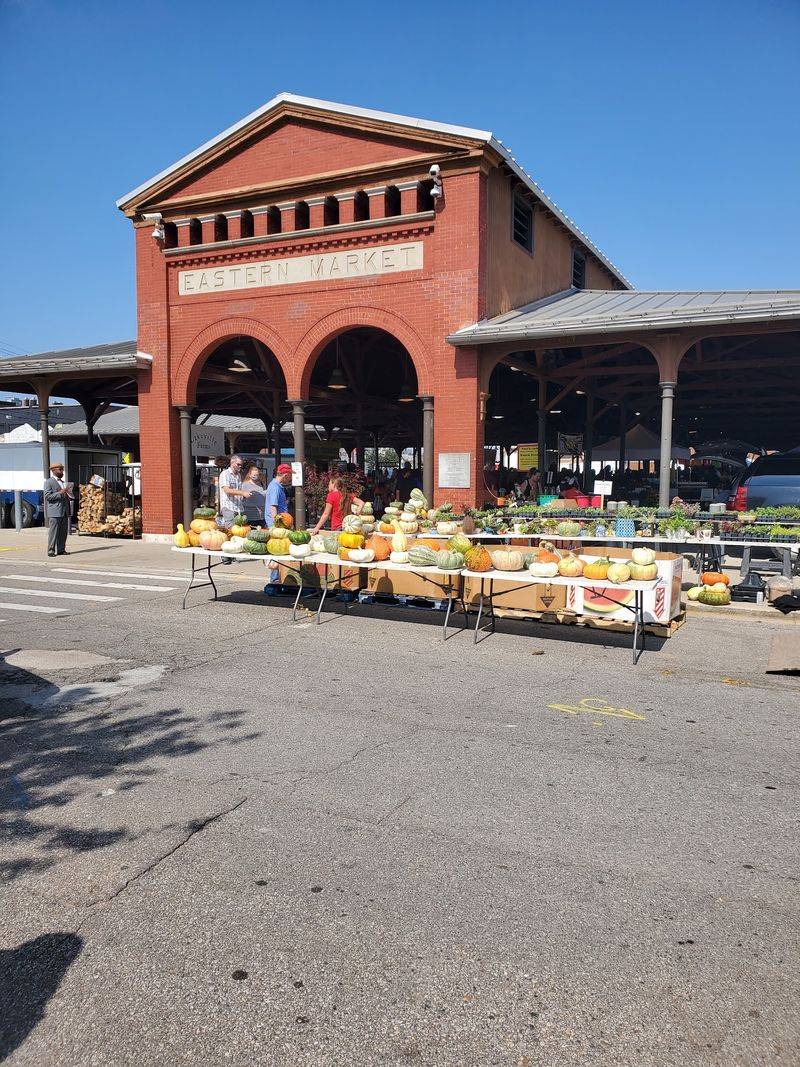
Fresh produce and painted brick are waiting at the top of the trail. The northern end of the Cut reaches Eastern Market, one of the oldest public market districts in the country.
The market area is famous for its big sheds, local vendors, and food shops. Saturdays tend to be the busiest market day, so plan around that if you want the full scene.
The neighborhood is also packed with murals. Many buildings near the market are covered in large painted works, so the art keeps going after you leave the trail.
Many people like to start their trip here. There’s free parking near the Mack Avenue side, and nearby spots to grab a snack before heading south.
I think this end makes a smart starting point for families. You can eat, explore the market, then walk downhill in spirit toward the river.
Finding the actual trail entrance can take a moment, though. Several visitors have shared tricks for spotting it, and those tips are worth knowing before you arrive.
Finding the Right Ramp In
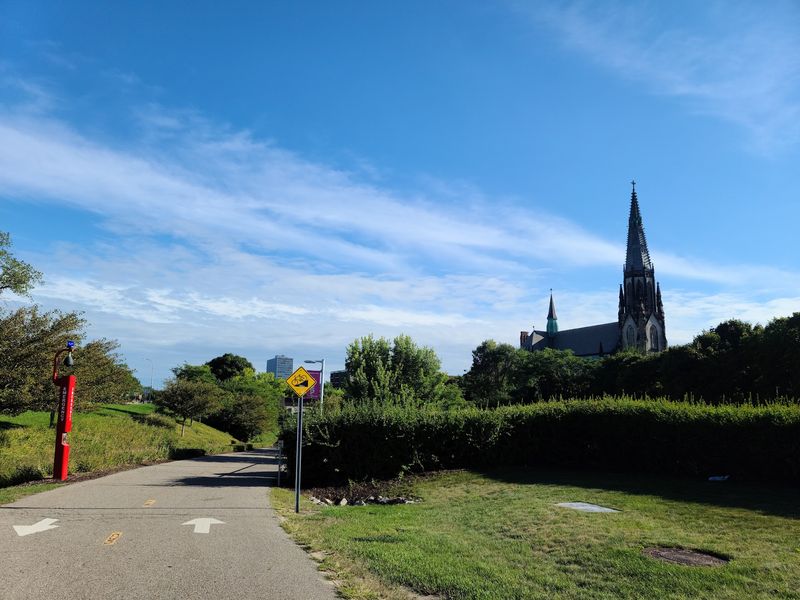
Here’s a small headache worth solving early. The entrances to the Cut aren’t always obvious, especially on the northern side near the market.
The trail has several formal access points along its length. Ramps lead down from street level, so you don’t need stairs to get in.
That ramp design matters. Strollers, wheelchairs, bikes, and scooters can all roll down without a struggle.
One helpful trick is to search for the Dequindre Cut Parking Lot in your map app. The lot sits between Wilkins and Orleans streets, close to the Wilkins Street entrance.
Near that lot, look for the Keep Growing Detroit farm across the street. The walkway sits right beside it, which makes a nice landmark.
At the southern end, the entrance near Atwater Street is easier to spot because it opens toward the riverfront.
I’d recommend saving your entry point in your phone before you go. It sounds simple, but it can save you ten minutes of circling a parking lot.
Once you’re down on the path, things get much easier, and a fun stop sits partway along the route.
The Freight Yard Pit Stop
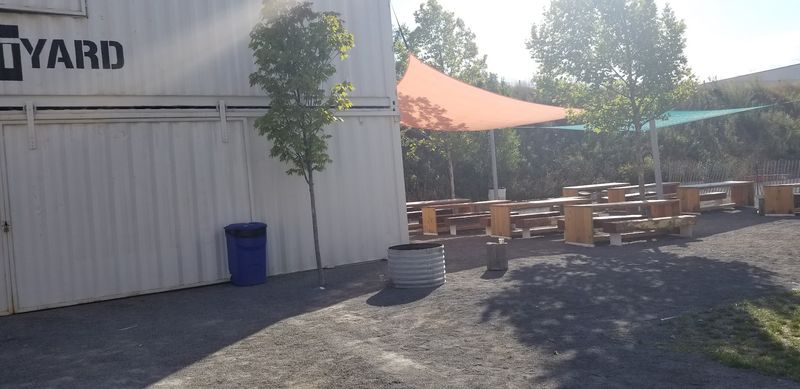
Shipping containers make a surprising snack stop. Along the trail, a gathering area called the Freight Yard gives people a place to sit, rest, and refuel.
The space uses containers and outdoor seating that fit the trail’s industrial look. It has served food and drinks during its open season.
Visitors have also found live music and big lawn-style games there, like oversized stacking blocks and giant four-in-a-row. Those details make it a relaxed spot for groups.
Hours and offerings can change by season, so check the Detroit Riverfront Conservancy’s updates before planning a meal around it. Treat it as a bonus rather than a guarantee.
I like the idea of a halfway reward. Kids especially might walk a lot farther knowing there’s a place to stop and play a game.
The setting also suits the trail’s history. Freight trains once carried goods through this corridor, and now the name nods right back to that past.
After a break, you’ll be ready for the other activities people bring to the Cut.
Bikes, Skates, Scooters, and Sneakers
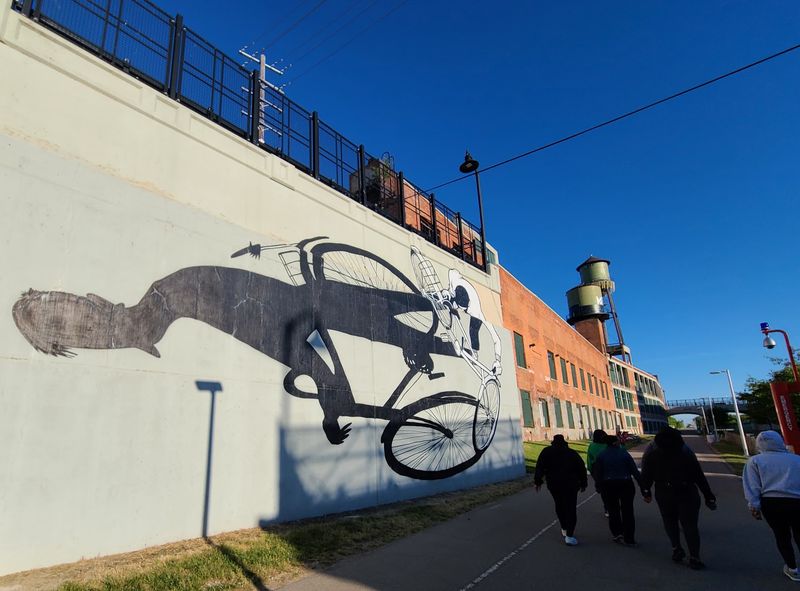
Smooth pavement draws all kinds of wheels. Biking is easily the most common activity, but you’ll also see runners, walkers, skaters, and people on rental scooters.
The separate lanes help everyone share space. Bikes move in their own lane while people on foot stay in theirs.
Because the trail is mostly flat, it works well for beginners. New riders and young kids can practice without hills or car traffic to worry about.
Dog owners use it too. A leashed pup and a long, straight path make an easy pairing for a weekend outing.
Runners get a simple out-and-back route. The trail is just under two miles each way, so a round trip lands close to four miles.
I’d consider combining the Cut with the RiverWalk for a longer bike ride. The two paths connect, which opens up miles of car-free pedaling along the water.
No bike? Scooter and bike rentals are often available around the area, so you can roll without bringing your own gear.
Just keep an eye on the trail’s daily hours before heading out late.
Lights, Cameras, and Peace of Mind
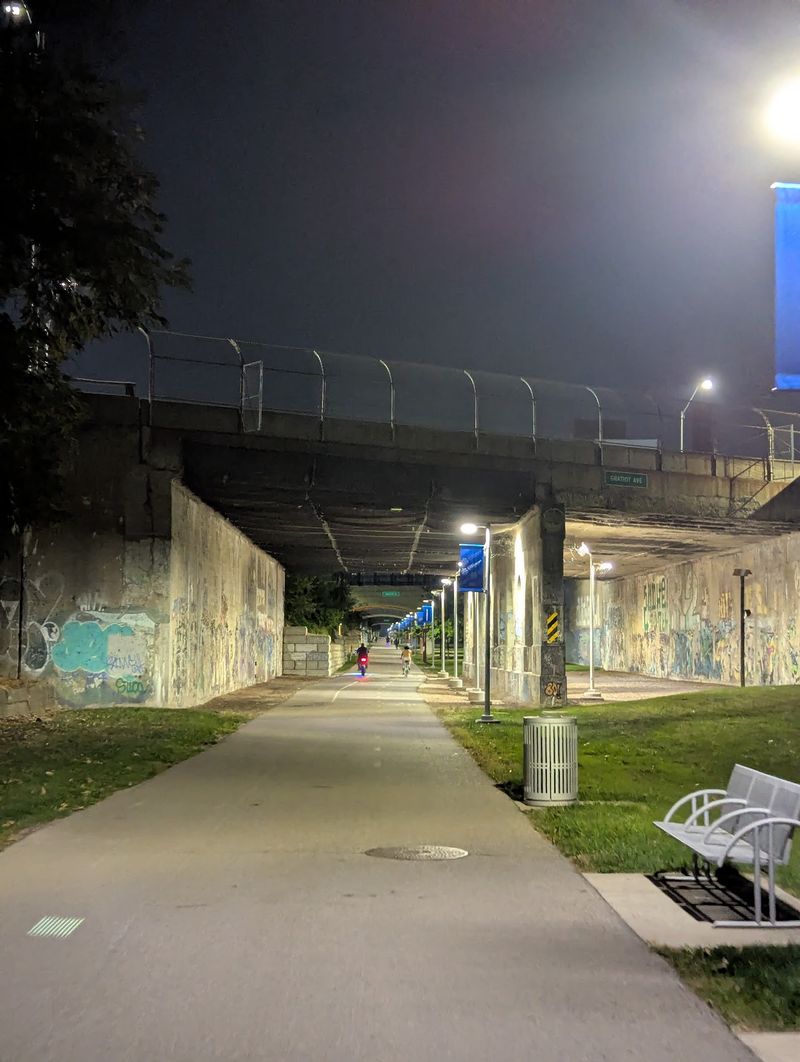
Safety gets real attention on this trail. The Cut has bright lighting, security cameras, and emergency call boxes along the route.
Patrols help too. Private security and Detroit police regularly move through the greenway.
That setup is part of why many people feel comfortable here in the evening. You’ll often see walkers and riders out after sunset.
The trail is open from 6 a.m. to 10 p.m. daily, according to its current listing. That gives early risers and after-work walkers plenty of time.
Restrooms are another planning detail. Options along the trail itself are limited, so parents with little ones should plan a stop before starting, or use the restrooms at Milliken State Park.
I’d also bring water on warm days. The sunken corridor can feel cozy, but you’re still covering a decent distance.
The murals look different under the lamps after dark. Colors that pop in sunlight take on a softer glow at night, so an evening walk can feel like a brand-new trail.
Seasonal events bring even more crowds and color.
Seasons, Festivals, and Green Spaces
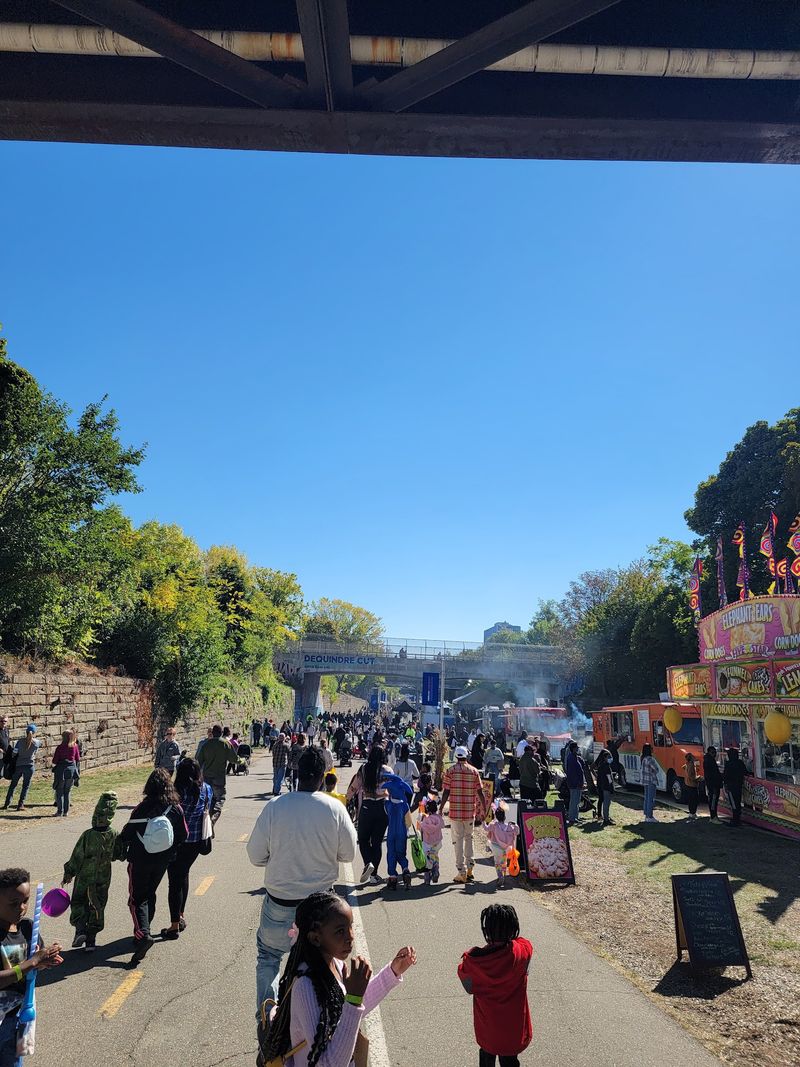
Fall brings one of the trail’s liveliest gatherings. The Detroit Riverfront Conservancy has hosted a harvest festival along the Cut, with food trucks and family activities.
Events like this change from year to year. Check the conservancy’s calendar for current dates rather than counting on last year’s schedule.
Even without a festival, the trail has plenty of green. Trees, grassy areas, and landscaped edges soften all that concrete.
There are seating spots along the way too. They make good places to rest, people-watch, or study a mural a little longer.
Volunteers sometimes join cleanup days that help keep the path tidy. Taking part is a nice way to give back to a park that costs nothing to enjoy.
I like that each season shifts the experience. Spring adds fresh green, summer brings long evenings, and fall turns the trees golden above the painted walls.
The Cut keeps growing too, with ongoing upgrades and connections to other city paths. That’s the kind of park that rewards repeat visits rather than a single checkmark.
Share this story