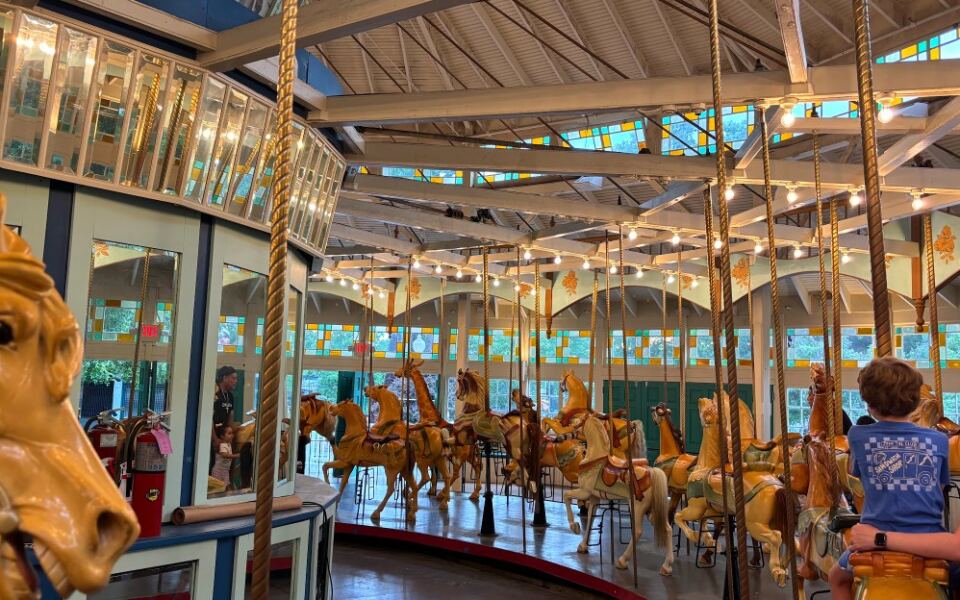
Some of America’s oldest amusement rides are well over a century old, and you can still buy a ticket and climb aboard. Long before roller coasters got taller and faster, a ring of hand-carved wooden horses was enough to pull huge crowds.
Carvers spent weeks on a single figure, adding painted saddles, glass eyes, and real horsehair tails. Some of these rides have rolled through several states, survived hurricanes, and dodged the scrap pile more than once.
A few still let riders grab for a brass ring, an old game where one lucky catch wins a free spin. The list ahead covers the oldest of the bunch, with the years they were built, the people who carved them, and the odd animals hiding among the horses.
Expect a zebra, a dragon, a hippocampus, and even a horse that swings from chains. Grab a seat on the outside row, because the first stop is a ride that has been spinning since before the light bulb went on sale.
1. Flying Horses Carousel, Oak Bluffs, Massachusetts
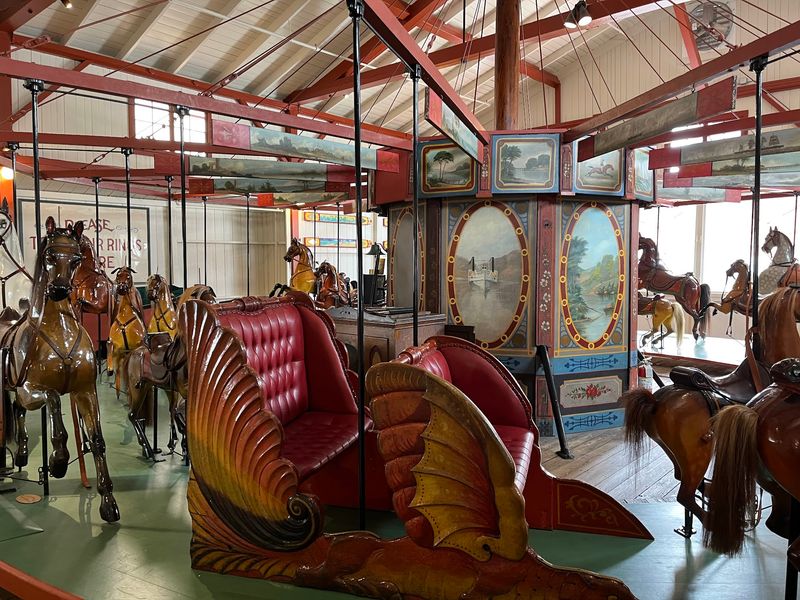
America’s oldest operating platform carousel started its career at Coney Island in 1876. Charles W.
F. Dare built it, and it sailed to Martha’s Vineyard in 1884.
A stamp reading Coney Island #4, found inside a panel, gave away its past. Since 1889, it has spun at the foot of Circuit Avenue in Oak Bluffs.
Its 20 horses do not jump up and down. They stay fixed to the platform, which was common in early designs built to travel.
Look closely at the faces. Each horse has real horsehair and glass eyes, and some eyes hold tiny carved animals inside.
The Martha’s Vineyard Preservation Trust bought the ride in 1986, and it became a National Historic Landmark a year later. Riders still reach for brass rings, and a lucky grab earns a free ride.
Keep your arm ready and your aim steady.
2. Flying Horse Carousel, Watch Hill, Rhode Island
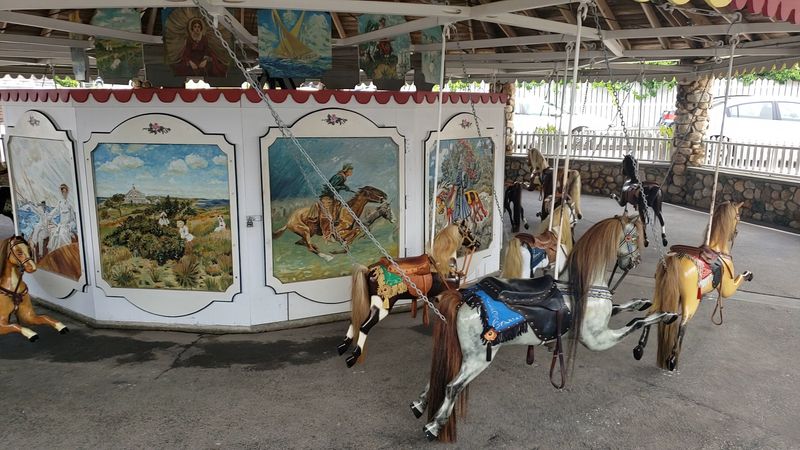
Gravity gets a day off in Watch Hill. The wooden horses here hang from chains instead of poles, so they swing outward as the ride speeds up.
Records show it running by the late 1870s. Local legend says a traveling carnival left it behind, and the village simply kept it.
Each of the 20 horses has a real horsehair mane, a leather saddle, and glass eyes. A horse once turned the cranks, then water power took over, and electricity arrived by 1914.
The 1938 hurricane wrecked the village, but the horses were found in nearby sand dunes and restored. Three chariots were lost for good.
Because the figures are fragile, only kids under 12 can ride. Adults can watch from behind the picket fence while young riders on the outer row chase the brass ring.
3. Crescent Park Looff Carousel, Riverside, Rhode Island
Charles I. D.
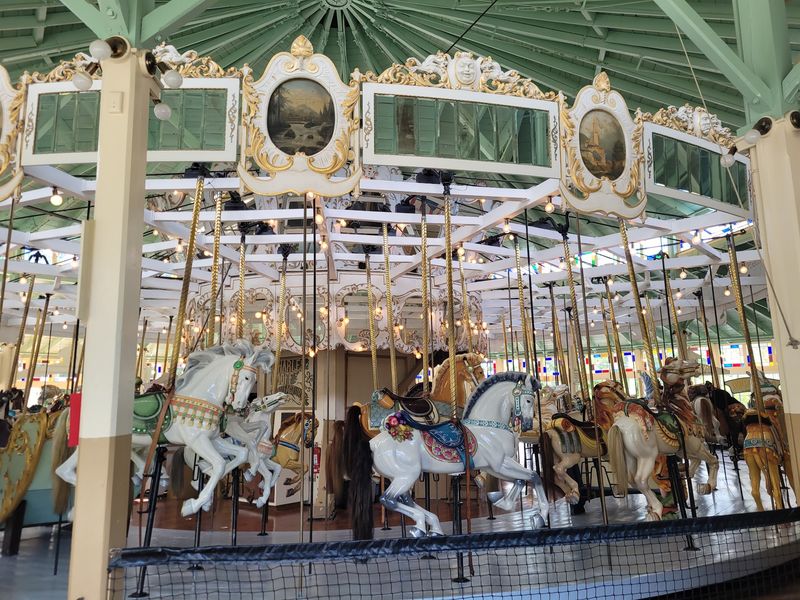
Looff built the very first carousel at Coney Island, so he knew a thing or two about making heads turn. In 1895, he created this showpiece in Riverside.
Looff also used it as a sales sample. Park owners could see his best carving styles in one place before ordering their own ride.
Expect horses with slender legs, flowing manes, and glass jewels on their bridles. Mirrors and painted panels decorate nearly every surface.
The amusement park that once surrounded it closed long ago. The carousel stayed put, and neighbors fought to save it.
Today it is a National Historic Landmark and runs in its original pavilion. Plan a visit during the warm season, buy a few tickets, and try more than one horse.
Each figure has its own carved details, so no two spins look the same.
4. Weona Park Carousel, Pen Argyl, Pennsylvania
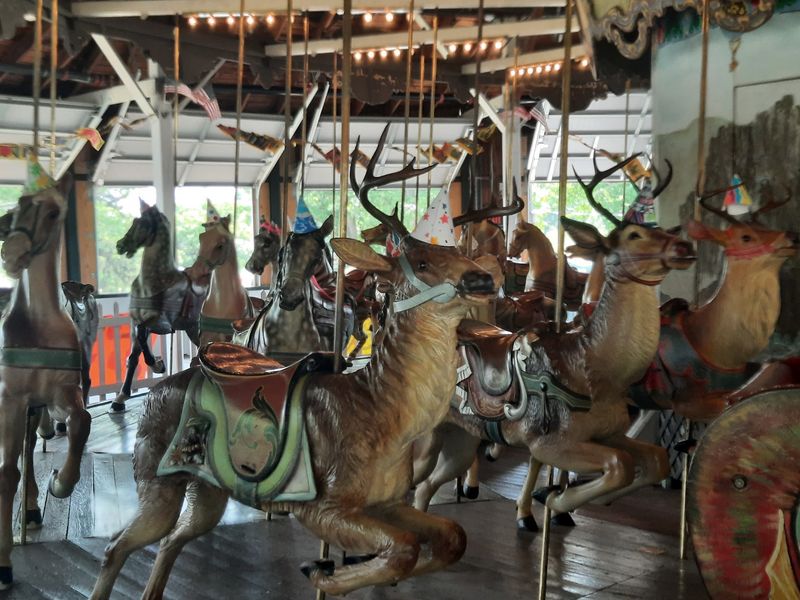
Nobody bounces on this ride. Built around 1900 by the Dentzel company, the Weona Park carousel belongs to a rare group with stationary animals that never move up or down.
Gustav Dentzel came from Germany and opened his Philadelphia shop in 1867. His family became famous for menagerie carousels with many kinds of animals.
Here, riders can pick a giraffe, a deer, a goat, or a zebra instead of a horse. Carvers used basswood and poplar and added muscles and veins for realism.
The ride arrived in Pen Argyl in 1923 and has stayed there ever since. It is listed on the National Register of Historic Places.
Best of all, the brass-ring machine still works. Visit during the summer season, sit on the outer row, and see if your reach matches your enthusiasm.
5. Kit Carson County Carousel, Burlington, Colorado
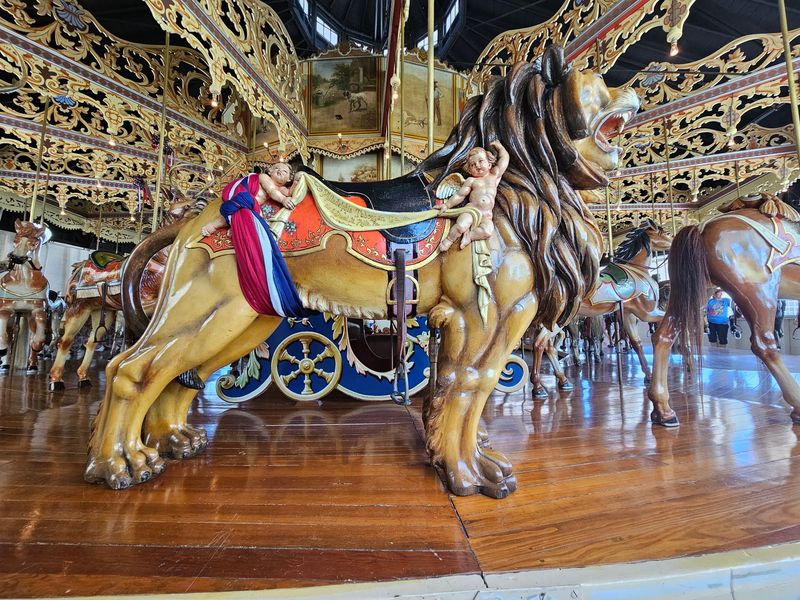
A sea creature on the Colorado plains sounds like a mistake, yet a carved hippocampus, half horse and half fish, waits for riders in Burlington.
The Philadelphia Toboggan Company built this carousel in 1905 for Elitch Gardens in Denver. Kit Carson County bought it in 1928 for 1,200 dollars.
Its 46 animals include zebras, camels, giraffes, a lion, and a tiger. Many still wear their original factory paint, which is extremely rare.
Hard times nearly closed it, and for years it sat unused. Volunteers restored it, and in 1987 it became a National Historic Landmark.
A Wurlitzer band organ supplies the tunes. Rides cost only a small fee, which is a bargain for a trip on a century-old masterpiece.
Check the summer schedule before you go, since it runs mainly during the county fair season.
6. Lake Compounce Carousel, Bristol, Connecticut
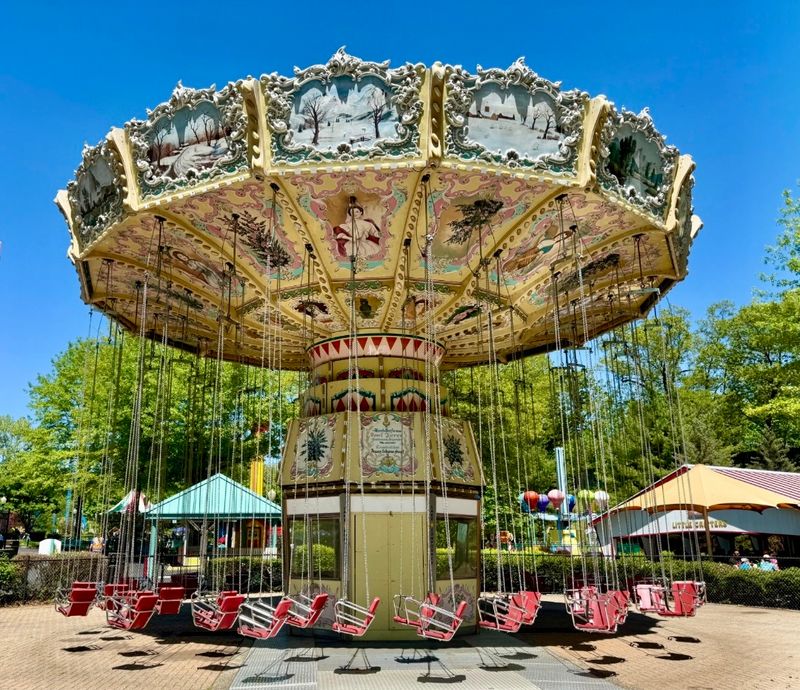
Roller coasters may get the screams at Lake Compounce, but the carousel got there first. It was built in the 1890s and spun at Savin Rock in West Haven before moving here in 1911.
Lake Compounce opened in 1846, making it the oldest continuously running amusement park in the country.
The carousel is a team project. Famous carvers Charles Carmel, Charles Looff, and the duo of Stein and Goldstein all have figures on board.
Count them up and you get 27 jumping horses, 22 standing horses, two chariots, and one goat. That goat tends to be a crowd favorite.
A Wurlitzer 153 band organ plays during each ride. Hop on between bigger attractions, since lines are usually short.
It is a calm break that still packs plenty of history.
7. Looff Carousel at Slater Park, Pawtucket, Rhode Island
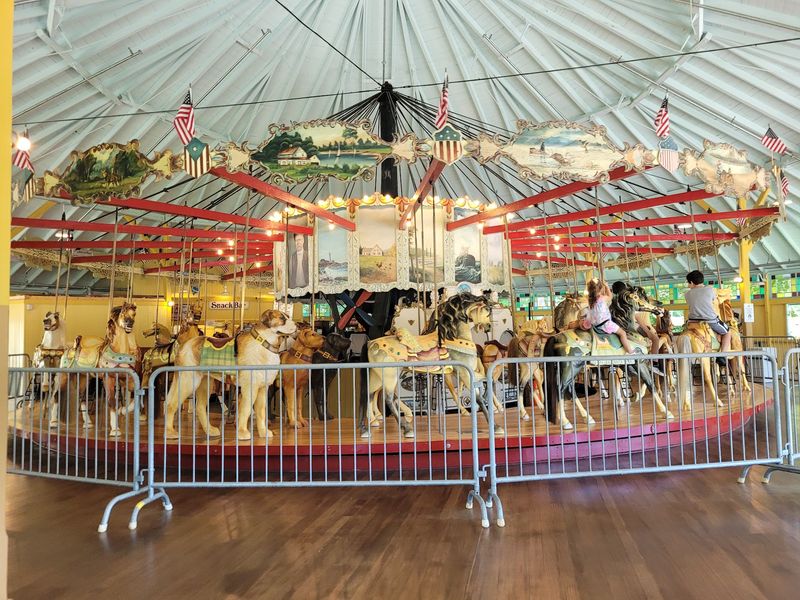
Speed demons, take note. The Slater Park carousel spins at about 9 miles per hour, faster than most carousels.
Charles I. D.
Looff carved it in 1895, and it moved to Pawtucket in 1910. It is the oldest Looff carousel with all standing animals still running anywhere.
The lineup includes 44 horses, three dogs, a lion, a camel, a giraffe, and two chariots. Look for glass jewels and small mirrors on the trappings.
Its twelve-sided building has a cupola and stained-glass windows. Only a handful of historic carousels still run in their original buildings.
A 1909 band organ joined the ride in 1996. In 2018, it was named Historic Carousel of the Year.
Tickets are cheap, so ride twice and spot the dogs.
8. Weona Park Carousel’s Contemporary, Ontario Beach Dentzel Carousel, Rochester, New York
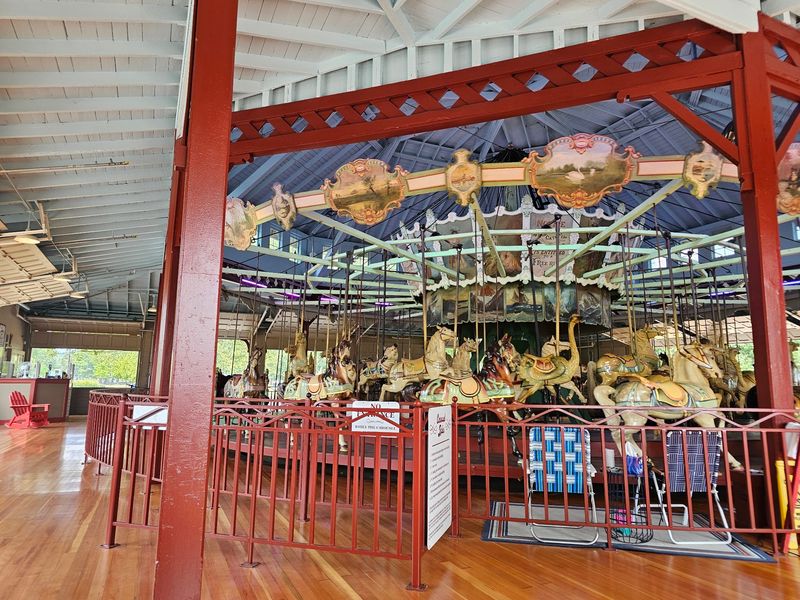
Ever wanted to ride a pig? Rochester can arrange that.
The Dentzel carousel at Ontario Beach Park has carried passengers since 1905. Its menagerie includes rabbits, ostriches, pigs, a tiger, and plenty of horses.
It is one of only a few Dentzel menagerie carousels still turning, and it is listed on the National Register of Historic Places.
Each animal shows the Dentzel love of detail, from glass eyes to carved muscles. Some figures have tails made of real horsehair.
The ride sits steps from the sand along Lake Ontario. Pair a spin with a walk on the pier or a picnic on the beach.
Fares are very low, which makes it easy to come back for a second animal. Try the ostrich first, then see if anyone in your group dares pick the pig.
9. Seaport Village Carousel, San Diego, California
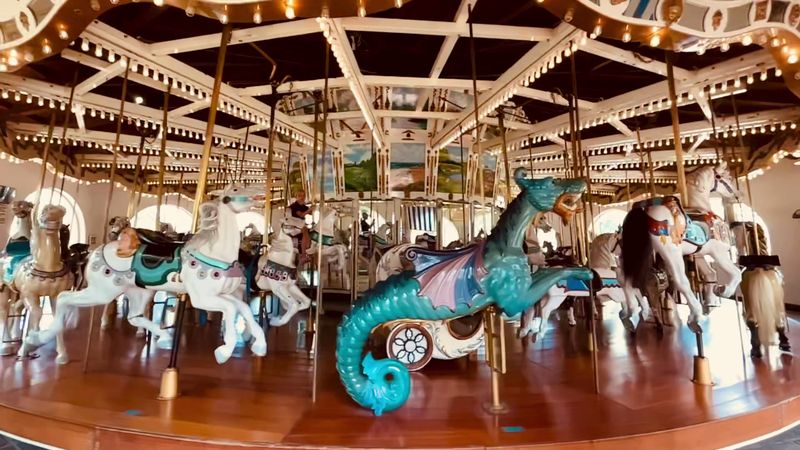
Frequent flyer miles would suit this carousel nicely. Built by Charles Looff in 1895, it started in Dallas and later stopped in California, Washington, Oregon, and Ohio.
It now sits along the harbor at Seaport Village in San Diego. Its colorful animals stand out against the modern waterfront buildings.
Horses share space with camels, giraffes, an elephant, and a dragon. Spotting each one makes a good game for younger riders.
Looff’s carvers gave the figures slender legs and active poses. Many animals are decorated with jewels and carved flowers.
Seaport Village offers shops and harbor views a short walk away. Ride the carousel, then watch the boats from the boardwalk.
Check the current schedule before visiting, as the area has seen updates in recent years. A quick call can save a wasted trip.
10. City Park Carousel, New Orleans, Louisiana
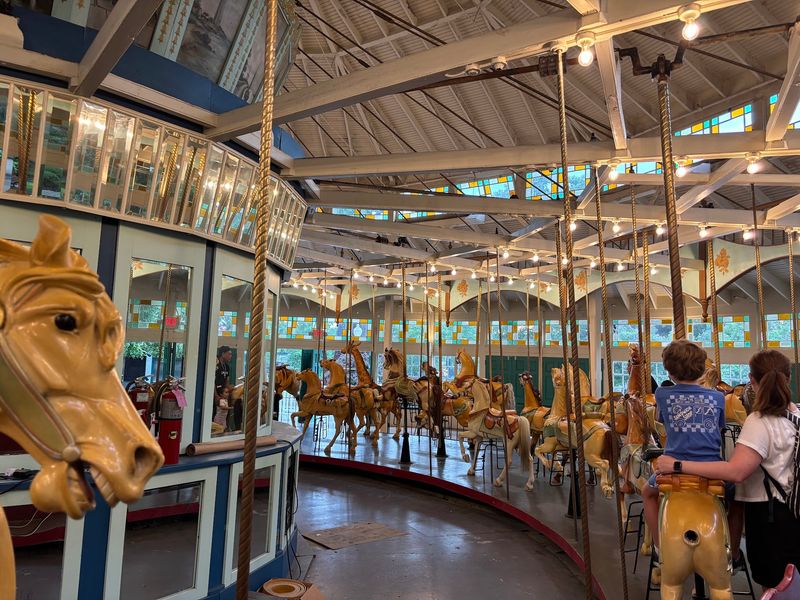
Locals call it the Flying Horses, and New Orleans families have ridden it for generations. The carousel in City Park dates to the early 1900s.
It runs inside Carousel Gardens Amusement Park, surrounded by giant oak trees. The carousel is listed on the National Register of Historic Places.
Most figures are horses, but a lion, a giraffe, and a camel join the herd. The carvings came from more than one famous workshop.
Hurricane Katrina flooded the park in 2005. The carousel was restored and reopened, proving it can handle tough times.
Plan a full afternoon in City Park. You can visit the sculpture garden, rent a pedal boat, or stop by the botanical garden nearby.
Buy an unlimited ride pass if kids want several spins. The carousel usually wins the most repeat visits.
11. Grand Carousel at Knoebels, Elysburg, Pennsylvania
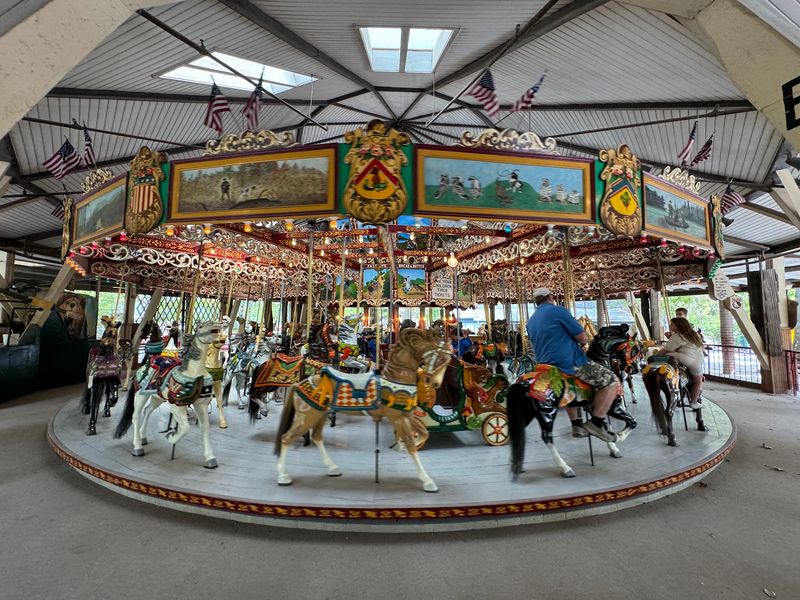
Bring your best reaching arm. Riders on the outside row at Knoebels still grab rings as they pass, hoping to land the brass one for a free ride.
The Grand Carousel was built around 1913 and first ran at North Beach on Long Island. Henry Knoebel bought it in 1942 for about 4,000 dollars.
It weighs roughly 27 tons and carries 63 horses plus two chariots. Master carver Charles Carmel shaped the horses.
Music comes from antique band organs, including one built in 1888. No recordings are needed here.
The ride won Best Carousel at the Golden Ticket Awards many years in a row. Knoebels charges no entry fee, so you pay only for rides.
Arrive early on weekends, since this carousel draws steady crowds all day.
12. Glen Echo Park Dentzel Carousel, Glen Echo, Maryland
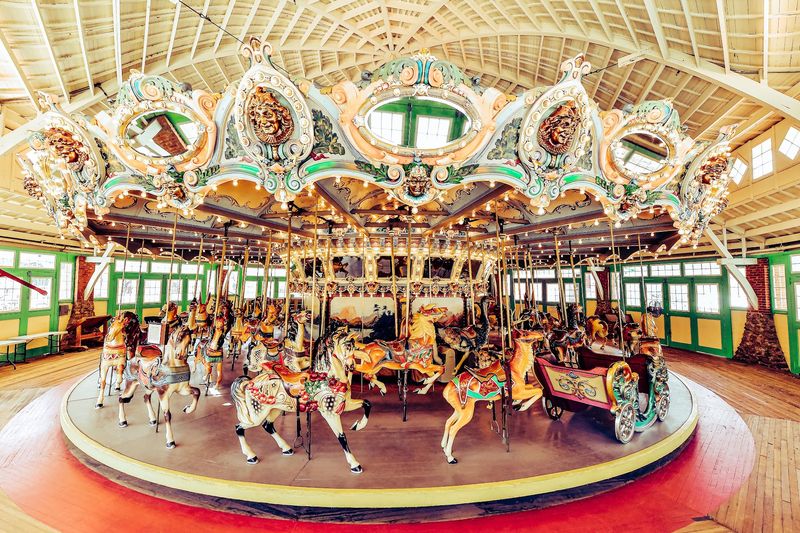
History rides along on every turn at Glen Echo. In 1960, protesters held sit-ins at this carousel to challenge segregation at the park.
Their efforts helped bring change, and the park opened to all visitors in 1961. The carousel became a symbol of that struggle.
The Dentzel company installed it in 1921. It holds 52 animals, including rabbits, ostriches, a giraffe, a tiger, and a lion, plus two chariots.
When the amusement park closed in 1968, the carousel was nearly sold off. Local residents raised money, and the National Park Service stepped in to keep it.
A Wurlitzer band organ still plays during rides. The season runs from spring through early fall.
Tickets are inexpensive, and the park hosts dances and art classes nearby.
13. Balboa Park Carousel, San Diego, California
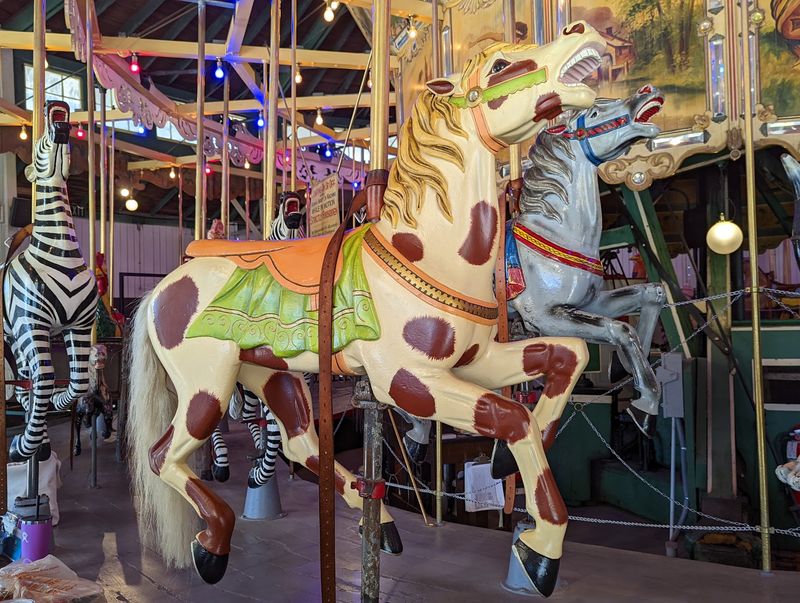
Frogs, lions, and a sea dragon all share the platform at Balboa Park. The Herschell-Spillman Company built this menagerie carousel in 1910.
It started at Luna Park in Los Angeles, moved to Coronado’s Tent City in 1915, and arrived in Balboa Park in 1922.
All but four of the animals are original. Camels, giraffes, and zebras join the horses for an unusual mix.
The brass-ring game is the big draw. Only about a dozen carousels in North America still offer it.
In 2021, the city named it a historical resource and renamed it the Dorothea Laub Balboa Park Carousel.
The San Diego Zoo is a short walk away. Bring cash for rides, and pick an outer-row animal if you want a shot at the ring.
14. Bushnell Park Carousel, Hartford, Connecticut
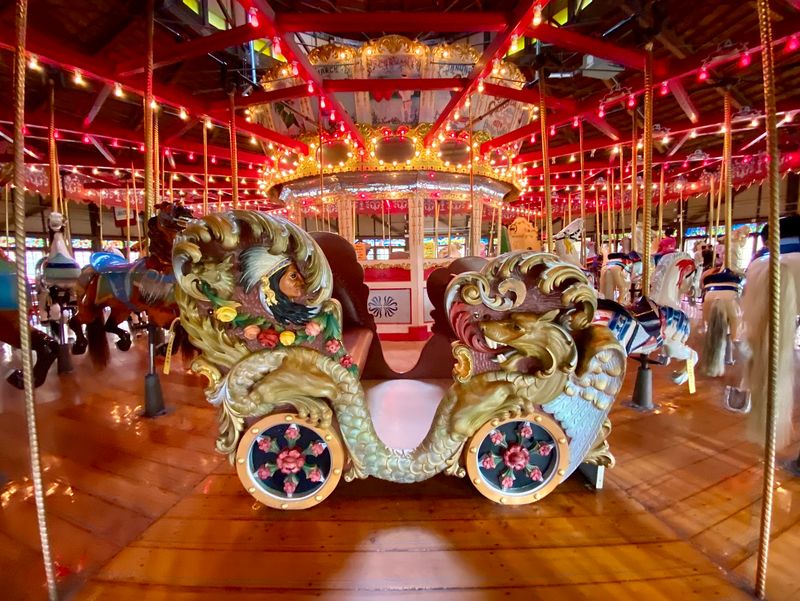
Only three Stein and Goldstein carousels are known to survive, and one sits in downtown Hartford. Solomon Stein and Harry Goldstein built it in 1914.
Their horses are easy to recognize. Look for wide eyes, flared nostrils, and big carved cabbage roses on the saddles.
The ride first ran in Albany, New York, until 1940. It then spent 34 years at Myers Lake Park in Canton, Ohio.
In 1974, a local foundation brought it to Hartford as a symbol of the city’s renewal. It now has 36 jumping horses, 12 standing horses, and two chariots.
A Wurlitzer 153 band organ plays inside the 24-sided pavilion. Rides cost very little, and the State Capitol stands just across the park for a quick photo stop afterward.
Share this story