Fountains do much more than splash water around. Long ago they gave cities drinking water and showed off clever engineering.
Today some of them dance to music, glow with lights, or shoot water higher than skyscrapers. Here are fifteen that turn simple water into pure art.
Trevi Fountain, Rome, Italy
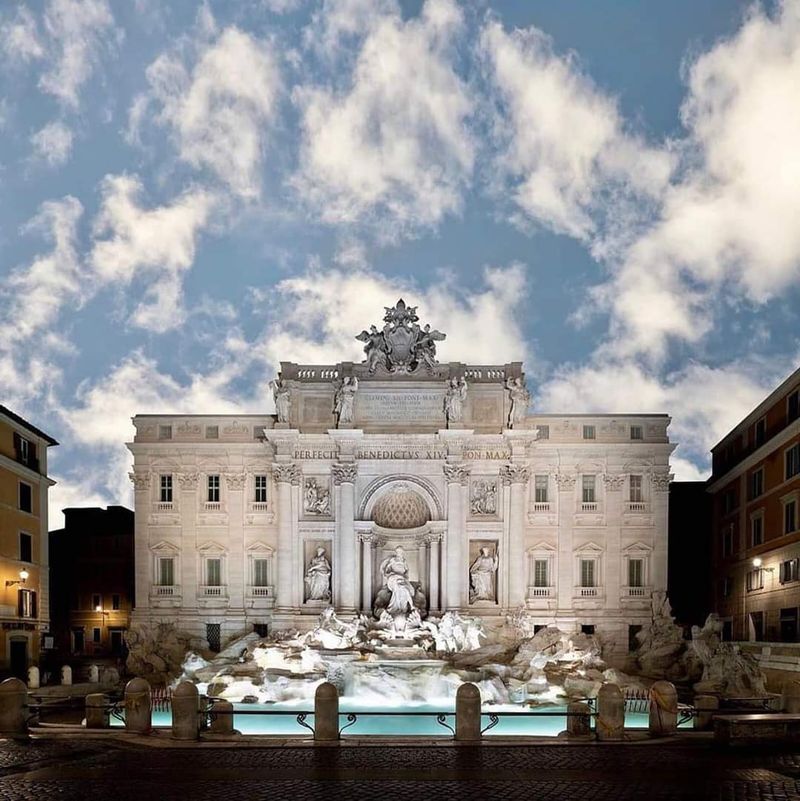
Few places in Rome feel as crowded and magical as this one. The Trevi Fountain turns a whole palace wall into a stage, and the star is Oceanus, the sea god, standing over horses, tritons, and rocky cliffs.
The fountain marks the end of the ancient Aqua Virgo aqueduct, a water line with roots about 2,000 years old. Nicola Salvi won the design contest in 1732, but he died before the work was done, so others finished it later in the 18th century.
Water spills from several levels and gathers in a wide basin below. It sounds like a small waterfall in the middle of the city, which is why people linger so long.
Here is a handy tip for planners. Since February 2026, visitors who do not live in Rome pay a 2 euro fee to enter the inner monumental area.
You can still admire the fountain from outside for free, so you can choose your view and your budget.
Go early in the morning if you want space for photos. The stone glows softly in dawn light, and the crowds have not yet arrived.
Fountain of the Four Rivers, Rome, Italy
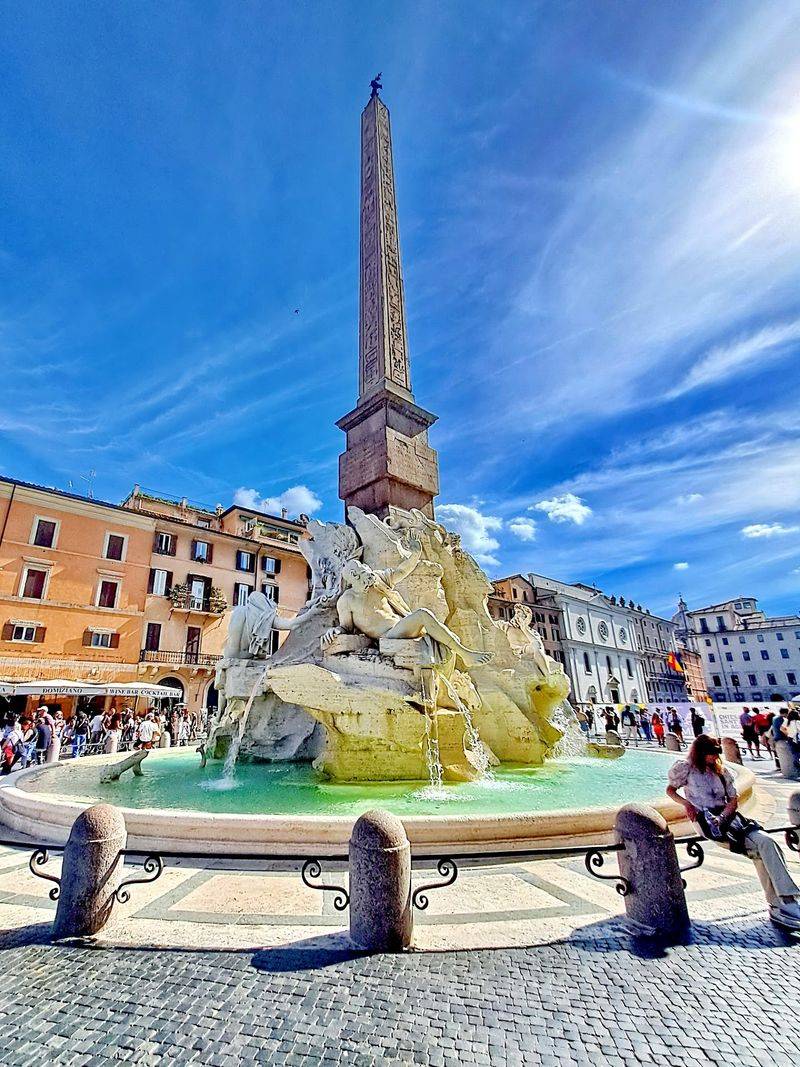
Picture a giant stone obelisk that seems to hover in midair. That was the trick Gian Lorenzo Bernini pulled off in Rome’s Piazza Navona between 1648 and 1651.
Four huge river figures sit around the base. They stand for the Nile, the Danube, the Ganges, and the Rio de la Plata, rivers linked to the continents Europeans knew at that time.
Water flows through a rocky base that looks hollow. Building it was a major engineering feat for its day, and it still impresses visitors who stop to peer between the stones.
Bernini placed the obelisk so it appears to float above the openings in the rock. Stone and moving water work together to create the illusion of weightlessness, and it is very convincing.
The fountain also carries political meaning, since it showed off the power and taste of Baroque Rome. Take a slow lap around it.
Each side reveals a different figure, a different pose, and a new reason to grab your camera.
Apollo’s Fountain, Versailles, France
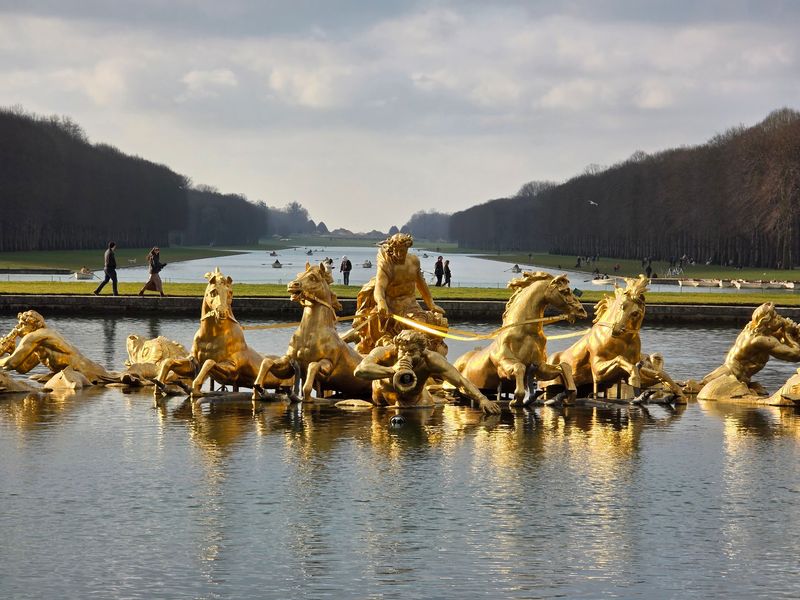
Thirty tonnes of gilded lead rise from the water at Versailles, and the sun god Apollo is driving. His four-horse chariot bursts upward as if the day is just beginning.
Jean-Baptiste Tuby made the sculpture group between 1668 and 1671, using a design by Charles Le Brun. Apollo was tied closely to the image of King Louis XIV, so the scene doubled as royal advertising.
Tritons and sea creatures surround the chariot. In total the group holds 13 statues, which makes it feel crowded in the best way.
Location matters here. The fountain sits on the palace’s Grande Perspective, a long visual line that runs from the palace toward the Grand Canal.
Stand near the palace and look down the axis. The fountain becomes one bright stop in a huge, carefully planned landscape.
At Versailles, even the scenery was designed to impress.
Dubai Fountain, Dubai, United Arab Emirates
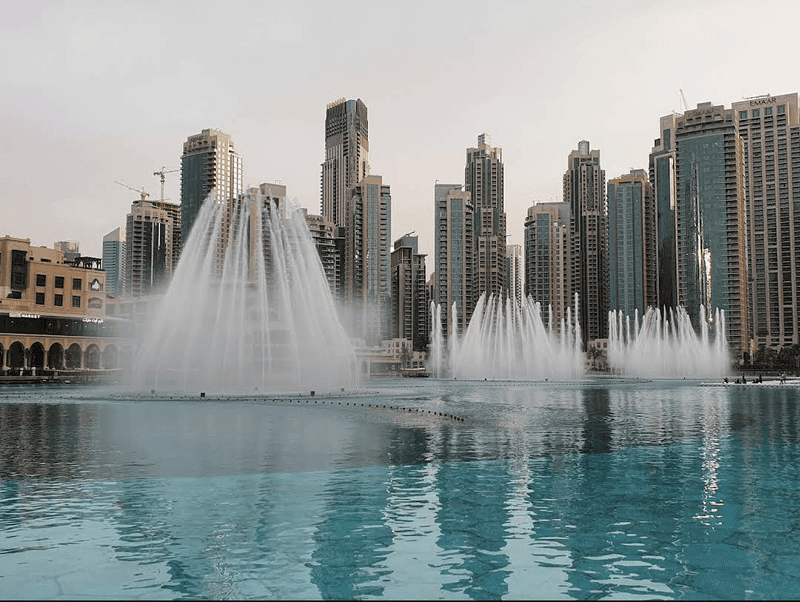
Imagine jets of water as tall as a 40-story building, all moving to a song. That is the nightly show at the Dubai Fountain, set in the 30-acre Burj Lake beside Burj Khalifa.
The jets cover an area about as long as two football fields. According to Visit Dubai, the system can move around 22,000 gallons of water at once, sending jets up to about 140 meters high.
WET Design, the company that also built the Bellagio fountains, created it. It opened in 2009.
The shows mix water, lights, and music, from Arabic songs to orchestral pieces. Each performance feels like a mini concert where the water is the dancer.
The fountain reopened on October 1, 2025, after a major renovation. More lighting and technical upgrades continued into 2026, so the show keeps getting better.
Check the schedule before you go, since timings can change.
Banpo Bridge Moonlight Rainbow Fountain, Seoul, South Korea
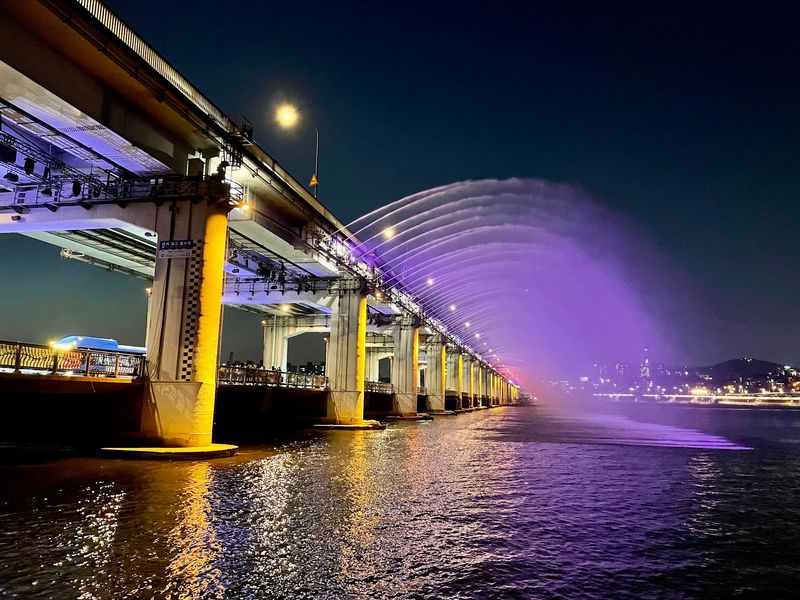
A bridge that sprays water sounds like a plumbing mistake, but in Seoul it is a showstopper. The Moonlight Rainbow Fountain runs along Banpo Bridge over the Han River.
It stretches 1,140 meters in total. Guinness World Records named it the world’s longest bridge fountain in 2008.
Rows of jets shoot water out from both sides of the bridge. After dark, colored lights and music turn the falling water into a glowing curtain.
The fountain grew out of Seoul’s Hangang Renaissance project. That plan aimed to make the riverfront a lively place where people actually want to spend time.
Bring a picnic and settle on the riverbank for the show. Remember that the fountain runs seasonally, and it generally takes a break during the coldest part of winter.
Buckingham Fountain, Chicago, Illinois
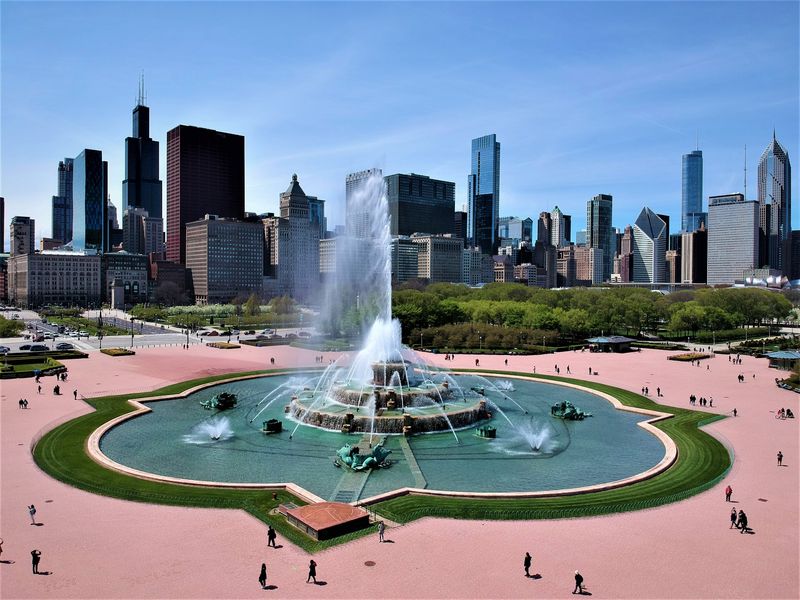
Chicago likes to do things big, and Buckingham Fountain proves it. Opened in 1927 in Grant Park, it was inspired by grand European palace fountains, with Lake Michigan as its symbolic theme.
During major displays, the central jet climbs about 150 feet. That is roughly the height of a 15-story building.
After dark, 820 lights turn the water into a colorful show. The fountain runs seasonally, from roughly early May through mid-October.
Sculpted sea horses ring the huge basin. Hourly water displays last 20 minutes and ripple across several tiers.
The skyline behind it adds extra drama. Few fountains have a backdrop of skyscrapers, which makes the whole scene feel boldly urban.
Montjuic Magic Fountain, Barcelona, Spain
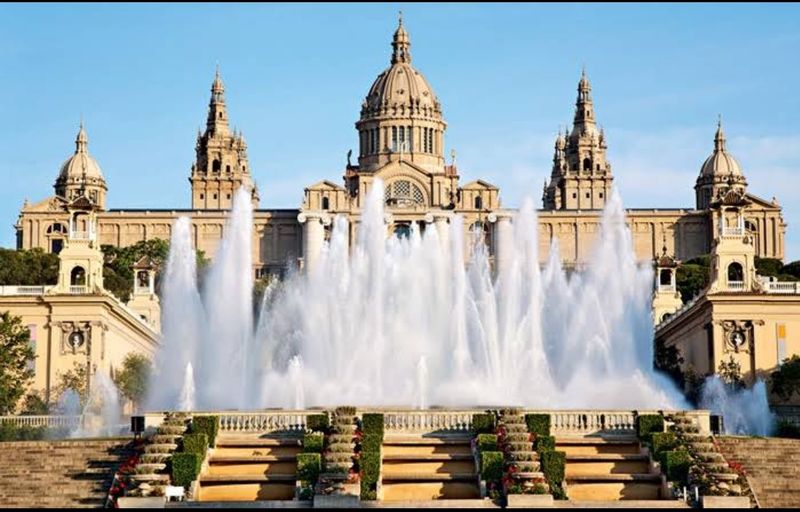
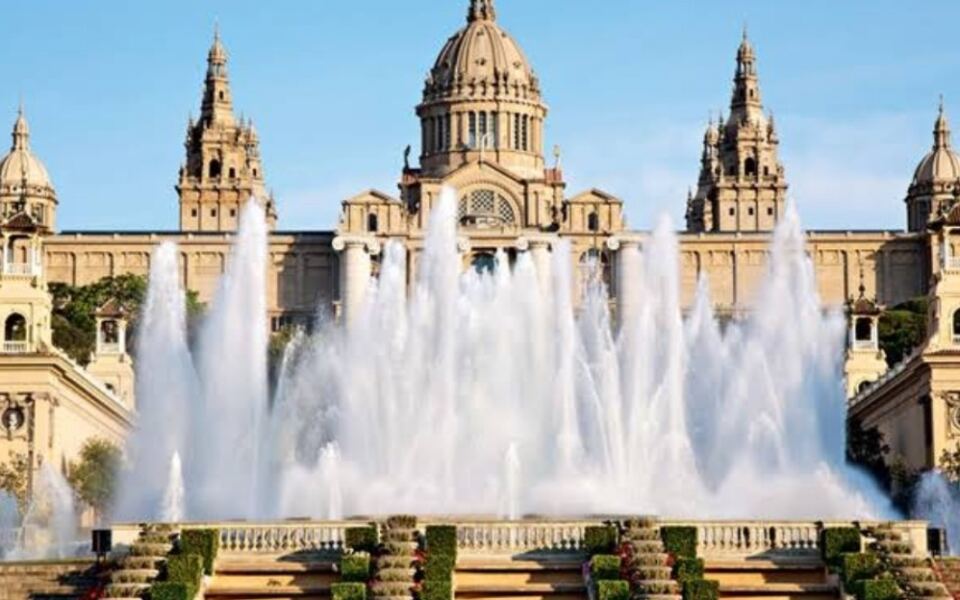
Long before light shows were everywhere, Barcelona had one. The Magic Fountain debuted at the 1929 International Exhibition and still draws crowds.
Engineer and lighting specialist Carles Buigas designed it. It forms the center of a grand series of cascades and fountains climbing toward the Palau Nacional on Montjuic.
At night, the jets and falling water glow in shifting colors. Scheduled performances have historically been paired with music.
The setting does a lot of the work. Wide stairways, exhibition-era buildings, and the long line of Avinguda Reina Maria Cristina frame the water perfectly.
A practical note: schedules have changed in recent years because of drought rules and restoration work. Check current status before you head up the hill.
Jet d’Eau, Geneva, Switzerland
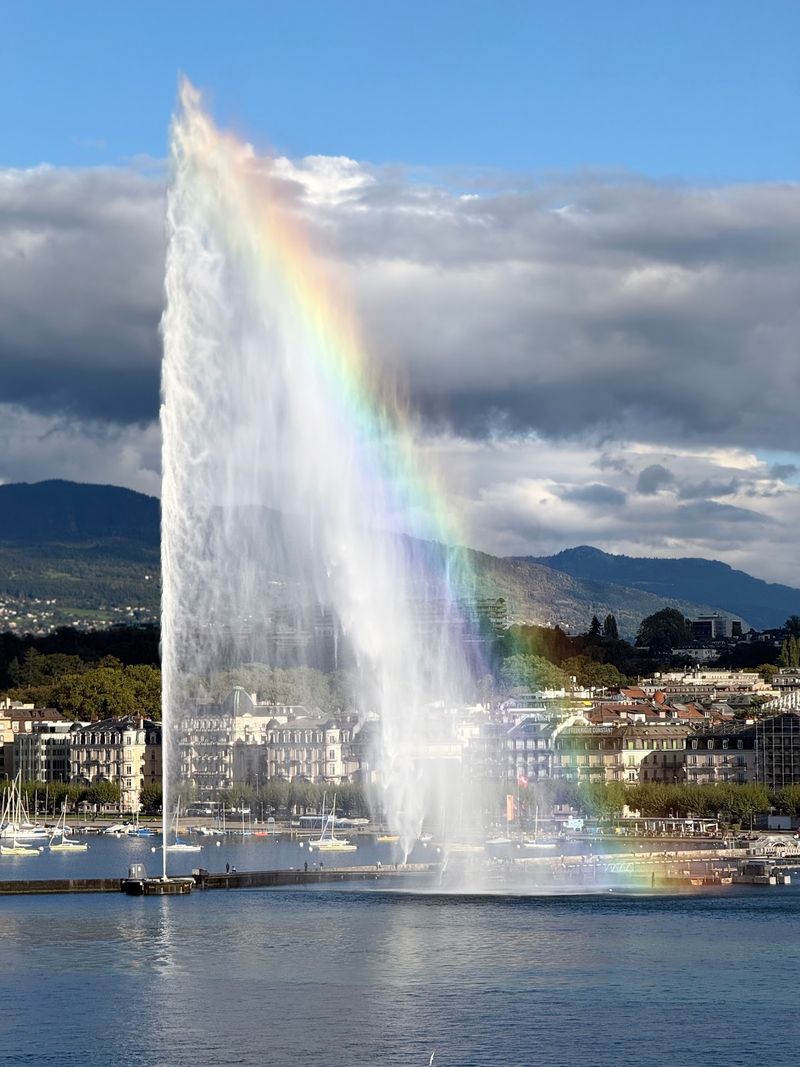
Here is a fountain that began as a pressure problem. In 1886, a hydraulic plant needed a way to release extra pressure when workshops closed for the evening.
People loved the sight so much that Geneva built a dedicated fountain in the harbor in 1891. Since 1951, a separate pumping station has fed the current jet with water from Lake Geneva.
The numbers are wild. It sends 500 liters per second as high as 140 meters, leaving the nozzle at about 200 kilometers per hour.
There is no fancy sculpture at all, just one tall column of water. Yet it has become the symbol of the whole city.
Watch how it changes. Wind, sunlight, and spray reshape the plume from minute to minute, so no two views look quite the same.
King Fahd’s Fountain, Jeddah, Saudi Arabia
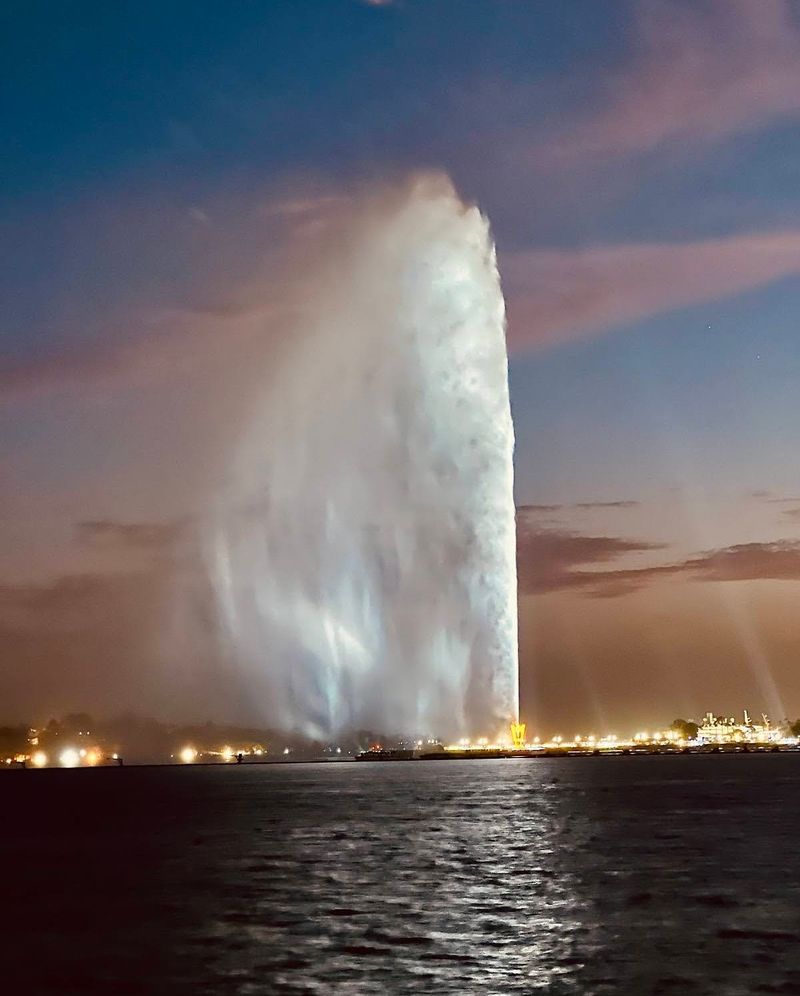
Some fountains whisper, and this one shouts. King Fahd’s Fountain blasts seawater about 312 meters into the sky off Jeddah’s waterfront.
Saudi tourism authorities say it is the tallest fountain of its kind in the world. The water leaves the system at roughly 350 kilometers per hour.
At night, strong lights turn the spray into a glowing landmark. People can see it from large stretches of the Corniche.
The fountain stands offshore, not inside a normal basin. That means the Red Sea becomes part of the installation.
Wind plays along too. It bends and reshapes the tall white column from moment to moment, so the view keeps changing as you stroll the waterfront.
Samson Fountain at Peterhof, Russia
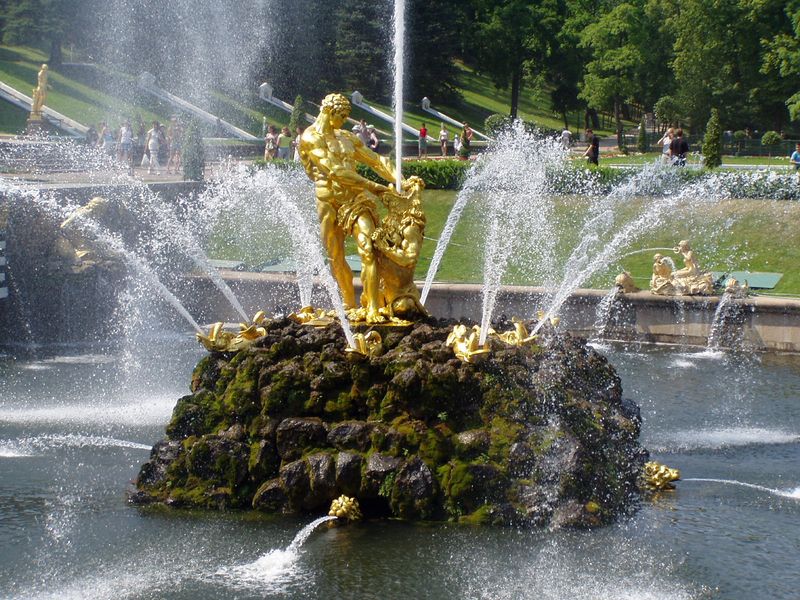
A golden man wrestles a lion, and water shoots straight out of the lion’s mouth. That is the dramatic centerpiece at Peterhof, installed in 1735.
The sculpture shows the biblical hero Samson forcing open the lion’s jaws. It honored Russia’s victory over Sweden at the Battle of Poltava, and the lion nodded to Swedish heraldry.
The jet reaches about 20 meters high. It is bold, bright, and impossible to miss.
The original statue was lost during World War II. The bronze version you see now was rebuilt from old drawings and photographs, then reinstalled in 1947.
Here is the neat part. Peterhof’s fountains run on a gravity-fed hydraulic network, not on regular pumps.
The water simply follows the slope, which adds engineering brilliance to the show.
Stravinsky Fountain, Paris, France
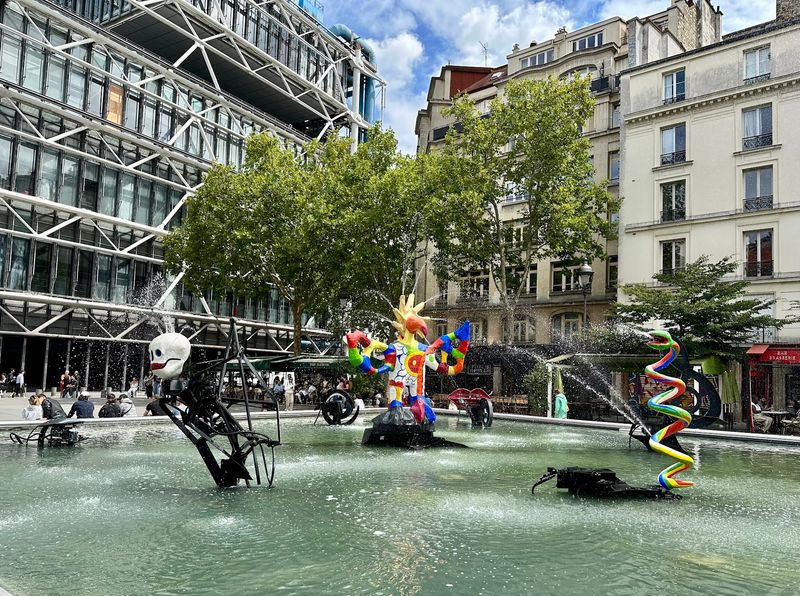
Spinning hearts, a giant red lips sculpture, and a squirting black snake all share one pool. Welcome to the Stravinsky Fountain, which opened in 1983 beside the Centre Pompidou.
Artists Jean Tinguely and Niki de Saint Phalle made it together. Sixteen mechanical sculptures move, twirl, and spray water, each inspired by the music of composer Igor Stravinsky.
The contrast is the fun part. Tinguely’s dark, clanky machines sit beside de Saint Phalle’s bright, playful figures.
Nearby stands the Gothic Saint-Merri Church. Old stone and cheerful modern art make an odd but lovely pair.
Water here is a working ingredient of the art, not just a backdrop. Bring a friend and see who gets splashed first.
Gefion Fountain, Copenhagen, Denmark
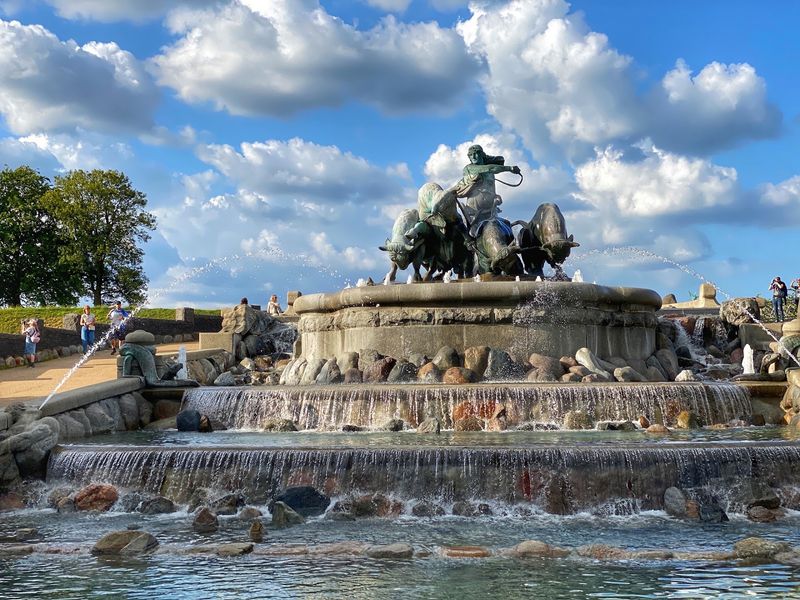
One goddess, four oxen, and an entire island torn from another country. That is the legend behind Copenhagen’s Gefion Fountain.
The story goes that a Swedish king promised Gefjun as much land as she could plow in one night. She turned her four sons into oxen and pulled the island of Zealand away from Sweden.
The sculpture makes the animals look like they are straining forward through the spray. Water adds to the feeling of rough, powerful movement.
You will find it near the Kastellet and the waterfront. It is Copenhagen’s largest monument, so it is hard to miss.
A long restoration began in 1999 and kept the fountain switched off for several years. It was re-inaugurated in 2004, and the oxen have been splashing happily ever since.
Fountain of Neptune, Bologna, Italy
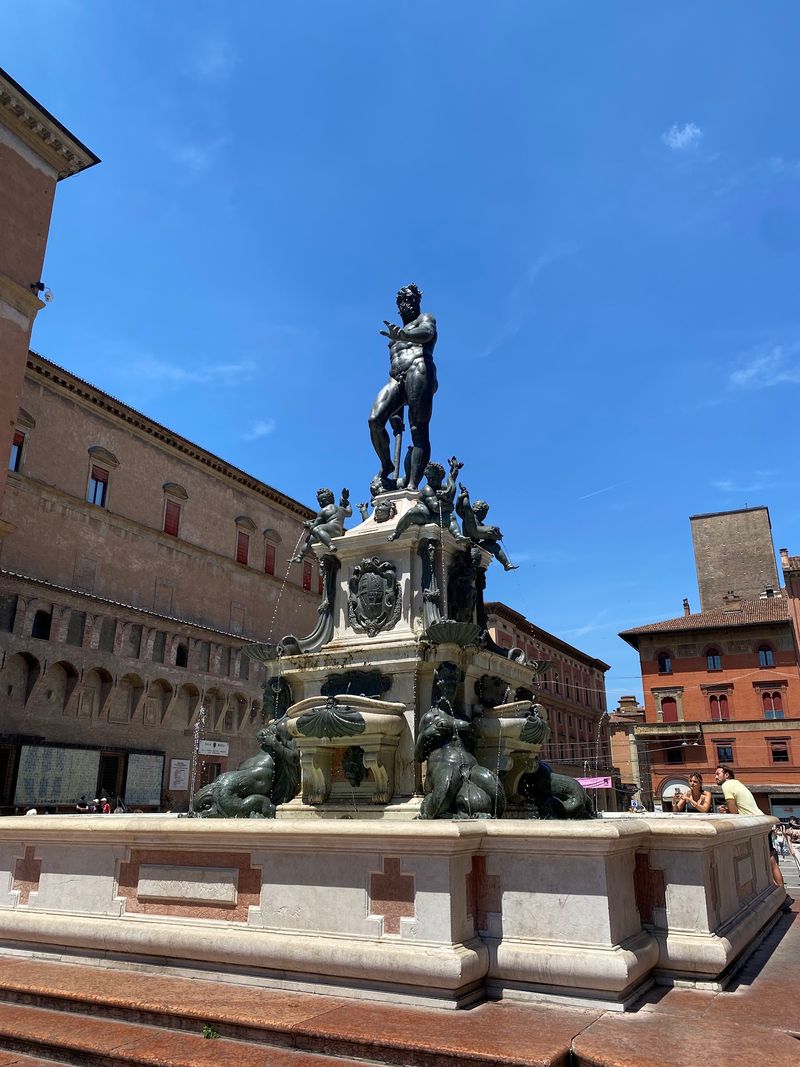
Locals do not call him Neptune. They call him “Il Gigante,” meaning “The Giant,” and the nickname fits.
Pope Pius IV commissioned the fountain in 1563. It was built by 1566 from designs by architect Tommaso Laureti and sculptor Giambologna.
The bronze Neptune stands about 3.4 meters tall. Below him are dolphins, cherubs, mermaids, and heraldic details.
Four smaller figures stand for the Ganges, Nile, Amazon, and Danube. They represent the continents known to Europeans at the time.
The sculptures are part of the plumbing, too. Water comes out of 38 nozzles built into the bronze figures, so the art itself does the spraying.
Fountain of Wealth, Singapore
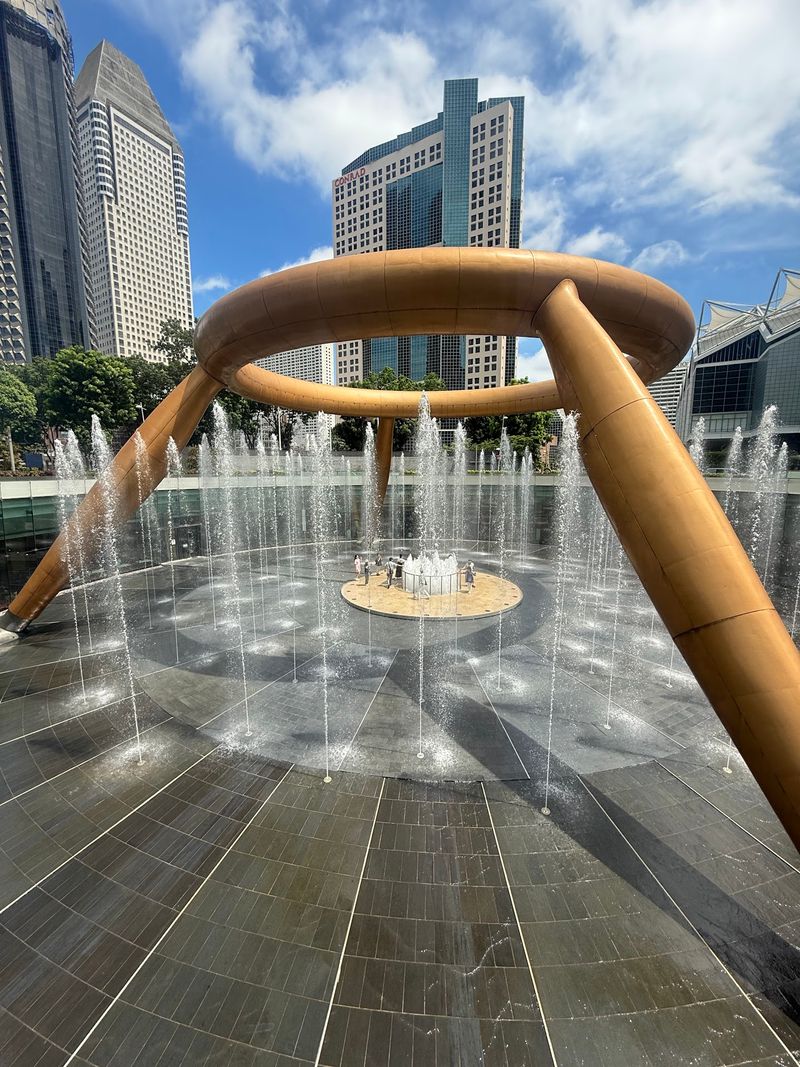
In Singapore, water flows inward on purpose. The Fountain of Wealth at Suntec City follows feng shui ideas, where water gathering in the center stands for prosperity staying close.
The big circular bronze structure sits among office towers planned like the fingers of a hand. The fountain rests in the palm.
Visitors can join special “Touch Water” sessions. During these times the main cascade is switched off, and people can walk up to the smaller central fountain.
At other times, sheets of water pour from the raised ring. A business complex suddenly becomes a giant public water sculpture.
It is one of Suntec City’s best-known landmarks. Check session times first if you want to touch the water for good luck.
Friendship of Nations Fountain, Moscow, Russia
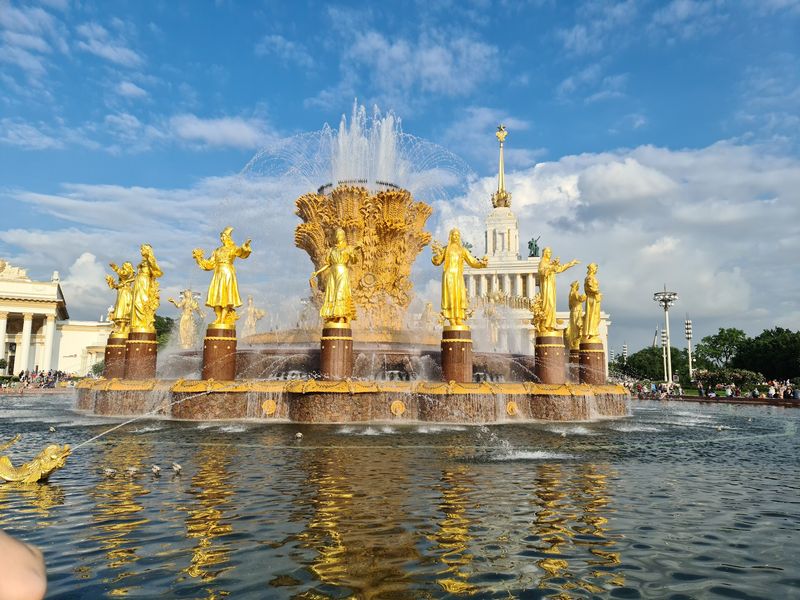
Sixteen golden women circle a giant sheaf of wheat, and about 800 jets swirl around them. The Friendship of Nations Fountain at VDNH is Soviet design at full volume.
Each figure originally stood for a republic of the Soviet Union, including the former Karelo-Finnish SSR. Together they present a message of unity.
The water is no quiet background. Those jets create constantly changing patterns around the gold-covered sculptures and the red-granite basin.
Eight pumps push thousands of liters of water through the system. That is a lot of muscle behind the sparkle.
The imagery is openly political, showing farm abundance and many nations working together as a spectacle. With its size and shine, it remains one of VDNH’s most striking sights.
Share this story