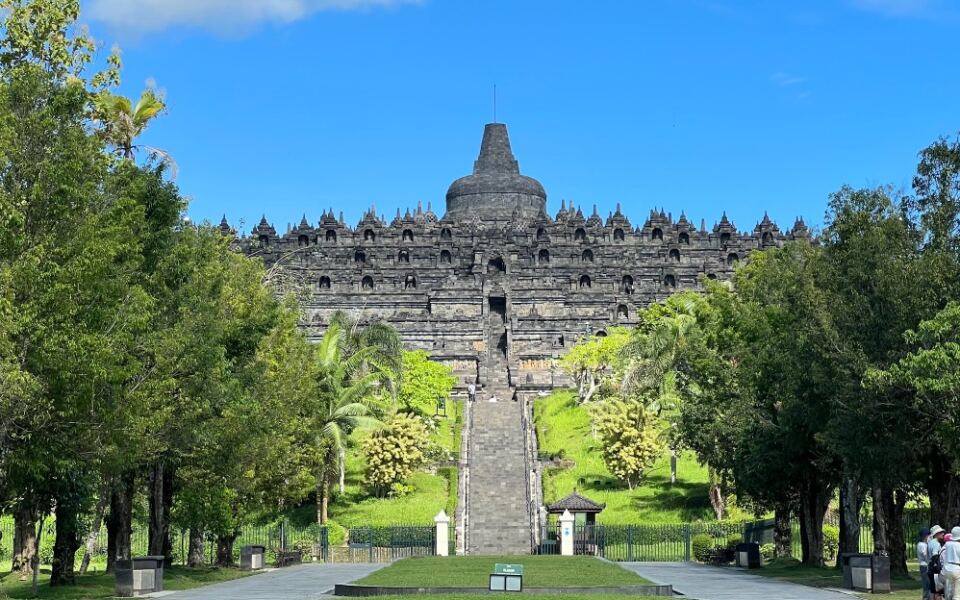
Rising from the green plains of Central Java, Borobudur Temple is a giant stone puzzle more than 1,200 years old. It is the largest Buddhist temple on Earth, and it still leaves visitors speechless.
Pilgrims, history fans, and curious families all walk its terraces for different reasons. Here are fifteen reasons this monument deserves a spot on your travel list.
The Biggest Buddhist Temple on the Planet
Size matters, and Borobudur has plenty of it. Nothing else in the Buddhist world matches this stone giant, which is why travelers call it the largest Buddhist temple anywhere.
Even people who expect something grand tend to stop and stare when it first appears through the trees.
The monument rises in nine stacked levels, built from a huge number of volcanic stone blocks. Each block was cut, carried, and fitted by hand.
That is a mind-boggling amount of teamwork for the ninth century.
Here is a funny twist. One visitor said the temple is actually not as big as expected, and that is exactly why daily visitor numbers are limited.
The structure is huge in meaning but cozy in footprint, so crowds would wear it down fast.
Walking around it takes time, and the climb gives your legs a workout. Wear comfortable clothes and pace yourself.
You will want energy left for the top, where the best views are waiting for you above all those carved stones.
Sunrise Over Mount Merapi
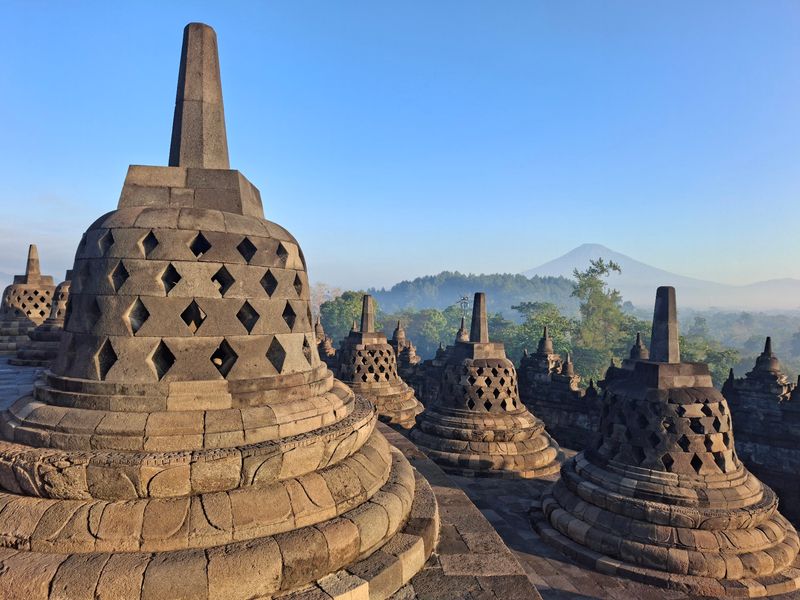
Picture this: it is 4:30 in the morning, the air is cool, and the sky is slowly turning pink. You climb in near darkness, and then the sun peeks over Mount Merapi, an active volcano on the horizon.
Visitors who booked the early access call it worth every rupiah.
Golden light spreads across the stupas one by one. Mist floats over the hills and the whole valley seems to hold its breath.
Even chatty travelers go quiet.
Sunrise tickets are limited, so plan ahead. Book online as soon as your dates are set, and check the official website for current rules.
Bring a light jacket, because the top can feel chilly before the sun climbs.
Not an early bird? That is fine, but know that the morning calm is hard to match.
Even a regular morning slot gives you softer light and fewer people in your photos than the afternoon.
A Monument Over 1,200 Years Old
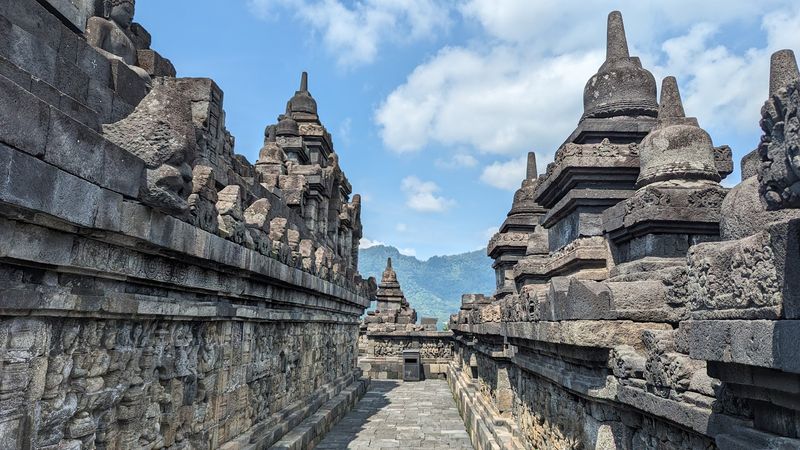
Born around the year 800, Borobudur is older than most countries on the modern map. It was built during the reign of the Sailendra dynasty on the island of Java.
Think about that the next time your phone battery dies after a day.
Builders had no cranes and no trucks. They had skill, patience, and a clear plan.
The temple stood for centuries as a place of study and prayer.
One guide in a visitor review grew up just a few hundred meters away and played hide-and-seek on the grounds as a kid. That is the kind of living connection that makes the place feel less like a museum and more like a neighbor with a very long memory.
Run your eyes over the gray stone as you walk. Tiny details, like worn edges and carved lines, show how many hands shaped it.
Reading a little history before you arrive makes every step richer.
Thousands of Stone Story Panels
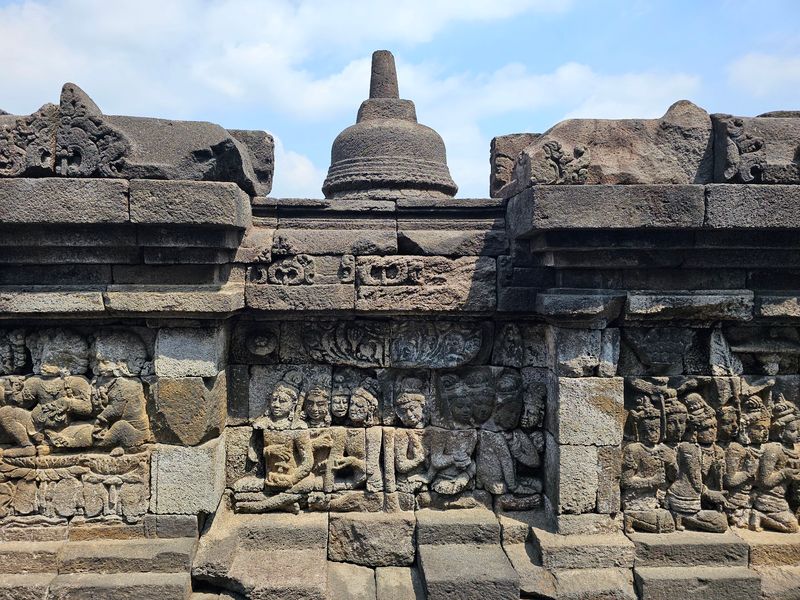
Stone can talk, and at Borobudur it never seems to stop. The walls hold thousands of carved relief panels, stretched out like a comic book you can walk beside.
They show Buddhist teachings, royal scenes, ships, farmers, and everyday life from the eighth and ninth centuries.
Look closely at the tiny details. You might spot a sailing boat, a dancing figure, or a tree full of fruit.
A good guide will point out panels you would walk right past.
Visitors often say the guides explain the deep meaning behind the carvings in a very clear way. That turns a pretty wall into an actual lesson.
One traveler called it an educational journey, and the label fits.
If you are short on time, choose a few panels and really study them. Looking at ten well rather than a hundred quickly is a smarter plan.
Bring a camera, but keep your eyes up too.
Seventy-Two Stupas With Hidden Buddhas
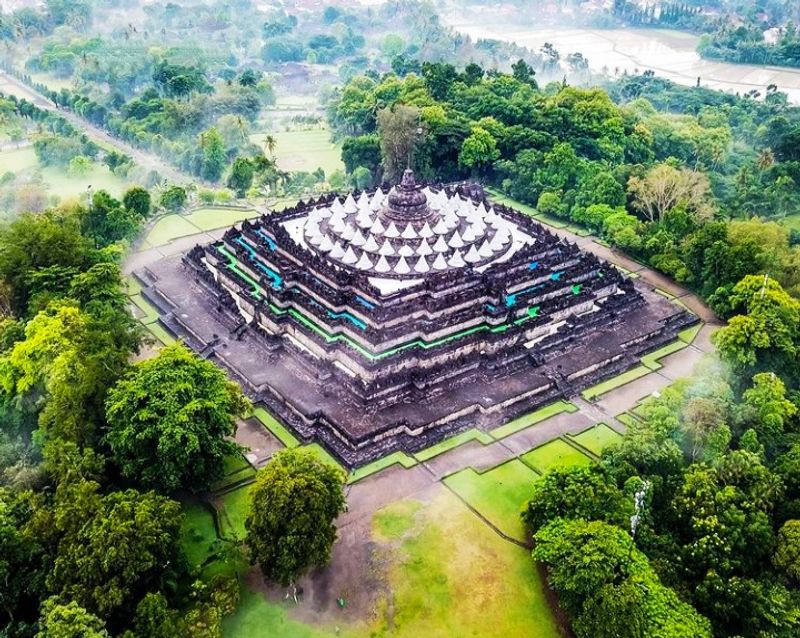
Peek-a-boo, but with Buddhas. On the upper round terraces, 72 bell-shaped stupas sit in neat rings, and each one is full of little holes in a diamond pattern.
Look through the gaps and you can spot a seated Buddha statue inside.
The sight is playful and peaceful at once. Some statues are still whole, while others have lost their heads over the centuries.
Each one sits in a calm pose, with hands in meaningful positions.
Rubbing luck out of a statue is a popular local belief, but rules protect the monument, so look and do not touch. Guides will tell you which hand gestures matter.
The stupas also make great photo frames. Try shooting from a low angle so the stone lattice and the sky fill the picture.
Remember that the upper levels get very sunny, so a hat and water will help you enjoy the view.
Three Levels of the Universe in Stone
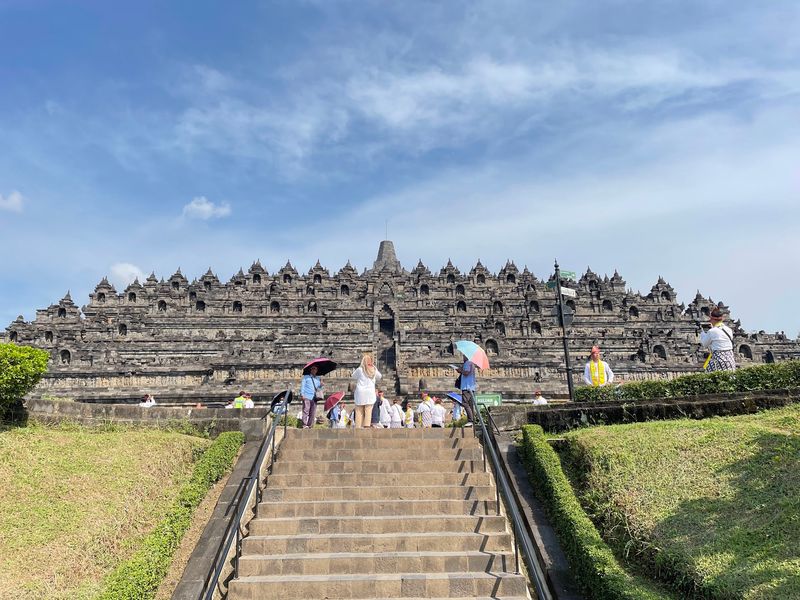
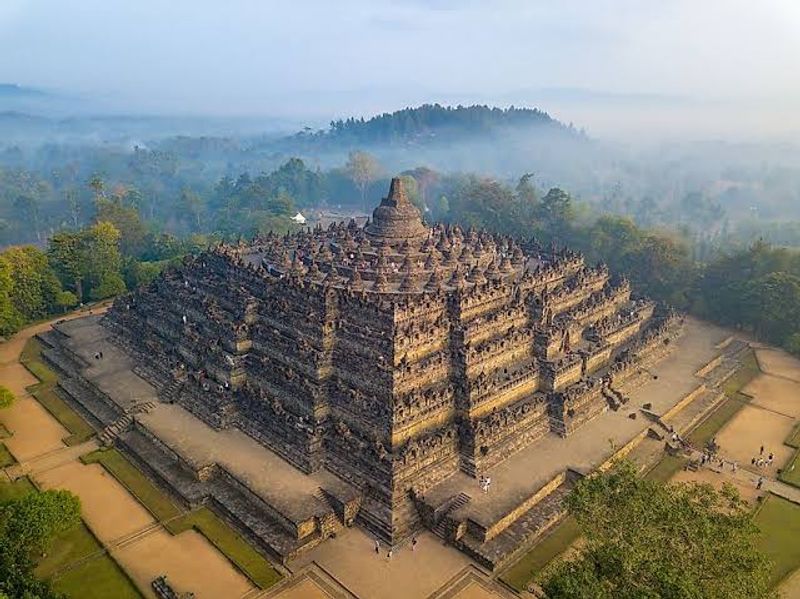
Borobudur is a lesson set in architecture. Its levels follow three stages in Buddhist thought: the world of desire at the base, the world of form in the middle, and the world of formlessness at the top.
Climbing becomes a symbolic journey.
The lower base was once covered up, so most visitors never see the full original bottom. The square galleries in the middle are packed with carvings.
The top is open, round, and simple.
That change feels real as you walk. The tight, busy corridors give way to wide-open sky and quiet stupas.
One visitor described reaching the top as leaving physical things behind.
Even if you are not Buddhist, the design is easy to appreciate. Ask your guide to explain each level as you go.
Knowing the idea behind the climb makes the steep steps feel like part of the story, not just a workout.
A Giant Mandala Seen From Above
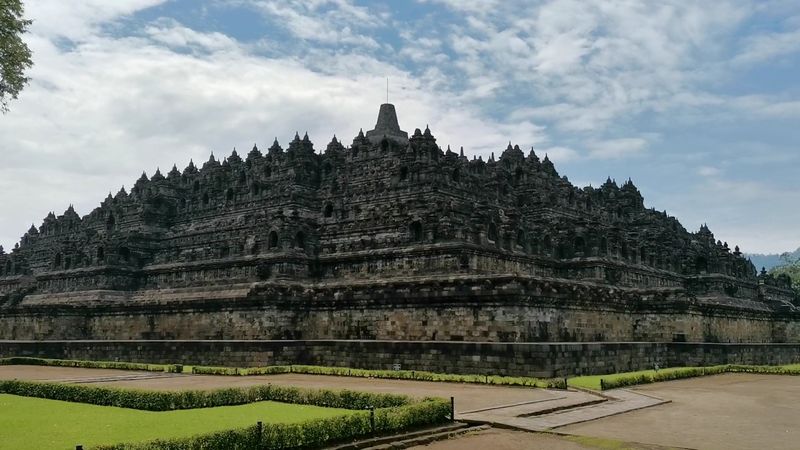
From high above, Borobudur reveals a secret. The layout is a mandala, a sacred pattern with squares and circles around a center point.
Birds probably get the best view, though drone photos come close.
On the ground, you feel the pattern as you walk clockwise around each terrace. That direction is traditional for pilgrims.
Each lap brings you a little higher and a little closer to the middle.
One reviewer said walking the terraces felt like moving through a living mandala. It is a good way to describe it.
The path is not random, and every turn has a purpose.
You do not need to be an expert to enjoy this idea. Just notice how the shape changes from boxy to round as you climb.
Take a moment at the top to look back down at the terraces and enjoy the calm symmetry spread out below you.
Stones Locked Together Without Cement
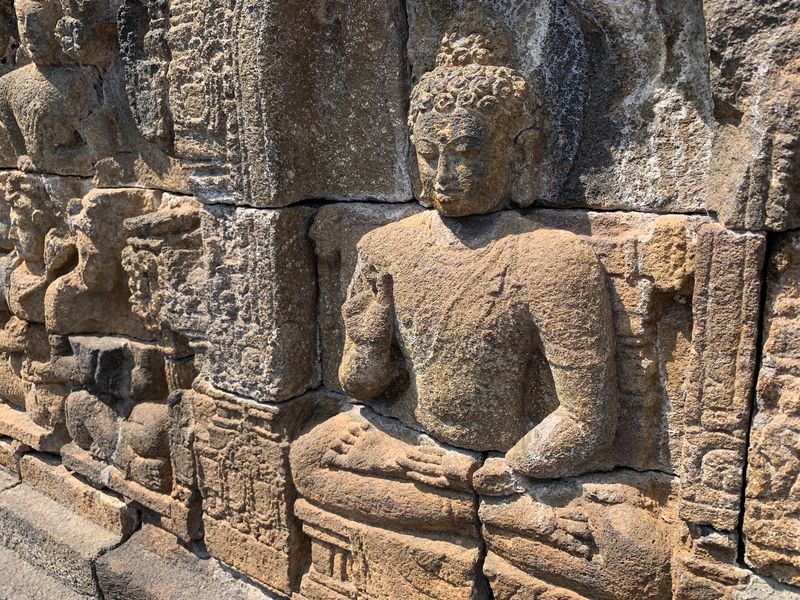
No glue, no cement, no problem. Borobudur was built from volcanic stone blocks that lock together like giant building toys.
Notches and grooves hold them in place through weight and clever shaping.
That style helped the monument survive for more than a millennium in an earthquake-prone region. It also had to handle heavy tropical rain, so builders added drainage with spouts to guide water away.
Smart planning was baked right in.
One visitor called it an engineering marvel, and few would argue. Stand close to a wall and run your eyes along the seams.
The fit is tight and neat.
Later restoration work took the whole thing apart and rebuilt it with better drainage and support. Think of how many stones had to be tracked and matched.
If you like how things are made, ask your guide about the building methods. You will leave with plenty of fun facts to share at dinner.
Lost in the Jungle, Found Again
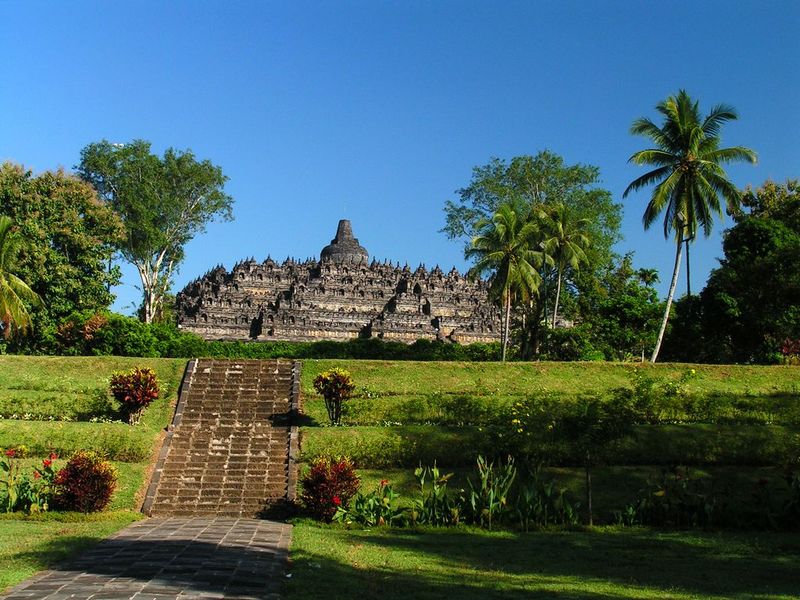
For a long time, Borobudur was basically missing. Volcanic ash, plants, and trees covered much of it after people stopped using the site.
Local communities still knew a big mound existed, though.
In 1814, Sir Thomas Stamford Raffles, then the British governor of Java, heard about the hidden monument. He sent an engineer to investigate.
Workers cleared away the green overgrowth and uncovered the carved galleries.
Imagine seeing those statues and panels appear from the leaves. That moment kicked off two centuries of study and care.
Today the temple is a source of national pride for Indonesia.
A reviewer called it a proudly Indonesian heritage with many historical stories. You can feel that pride from guides and staff.
When you visit, ask about the rediscovery tale. It adds a bit of adventure to the walk, and you might look at the surrounding trees a little differently afterward.
A UNESCO World Heritage Treasure
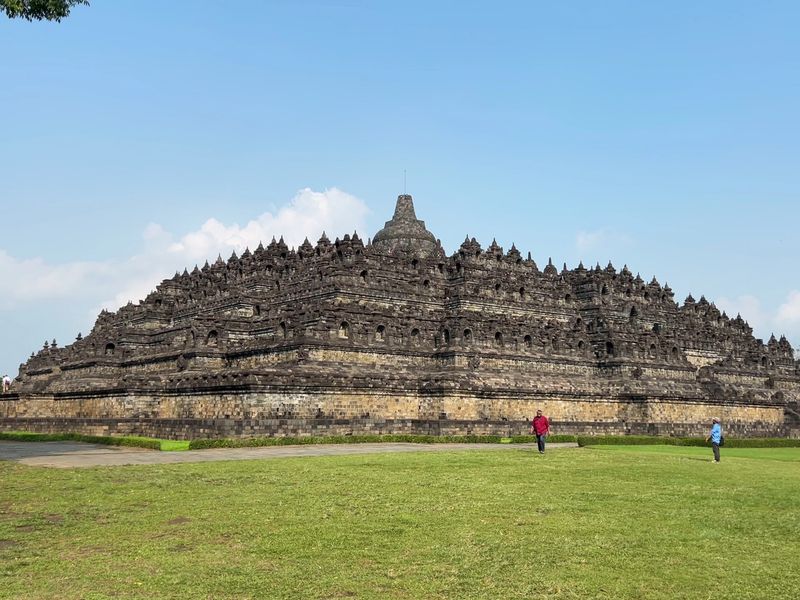
Some places earn gold stars, and Borobudur holds a big one. It is listed as a UNESCO World Heritage Site, joined with a major restoration effort in the 1970s and 1980s.
That project saved the monument from sinking and decay.
Workers removed stones, built a stronger base, improved drainage, and put everything back. It was like surgery on a mountain of rock.
The result is the temple you see today.
Visitors often mention how well kept the grounds are. Lawns are tidy, paths are clean, and staff are helpful.
One traveler called the whole area roomy, modern, and spotless.
The UNESCO status also means protection rules. You may be asked to follow set paths and wear special footwear.
These rules are not there to annoy you. They keep this treasure standing for the next generation of travelers, and that is something worth cheering for.
Guided Climbs That Keep Things Calm
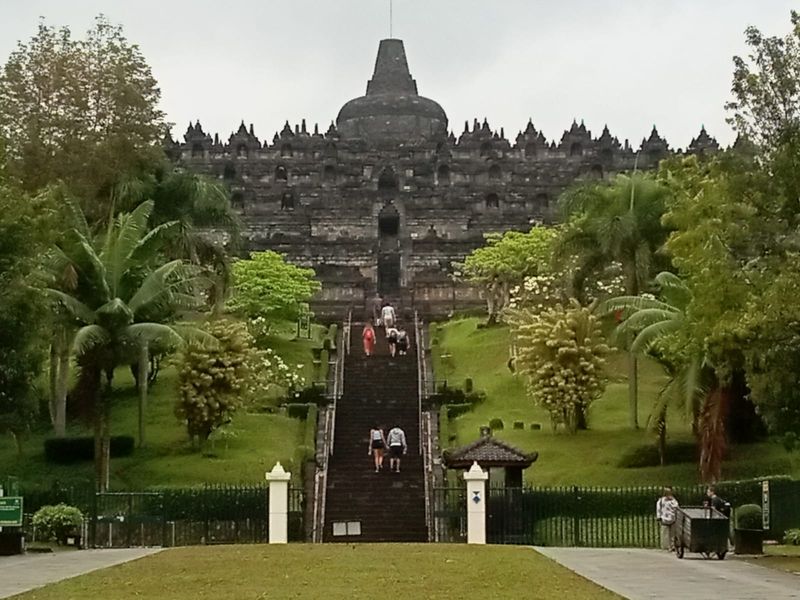
Forget the elbow-to-elbow crowds you find at other famous sites. At Borobudur, visitors who climb the upper levels go in small groups with a guide.
Reviewers say the system feels organized and well spaced.
Guides speak local languages or English, and several travelers praised their friendliness. They explain the stories, point out hidden details, and even take photos.
One visitor mentioned a guide named Fita who did all of that with a smile.
The trade-off is less free time. One traveler wished for more time to wander on their own.
That is the price of protecting the stones.
Daily visitor limits also keep the structure safe. A guide who grew up nearby told one visitor that these limits are good for preserving the monument.
Arrive early for your slot, since the check-in system is strict. Showing up late may cost you your place in line.
Special Sandals Called Upanat
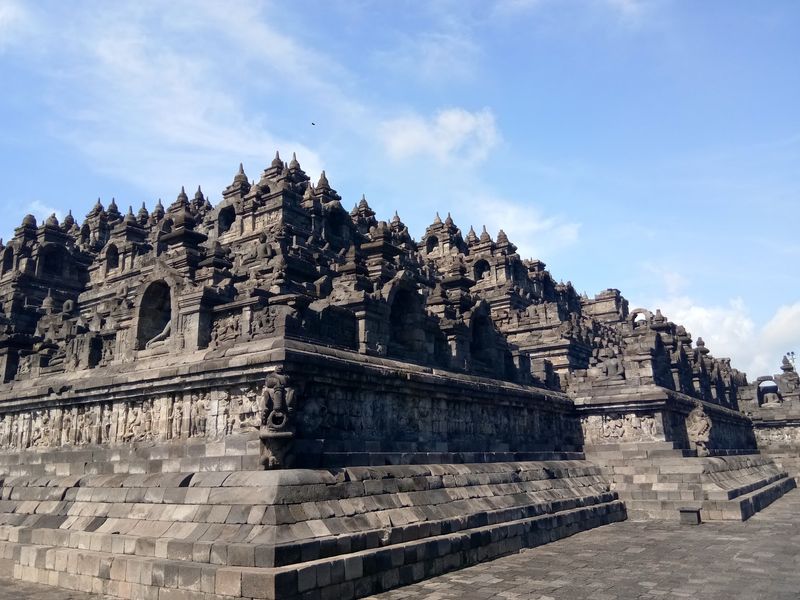
Here is a fashion rule you will not forget: no regular shoes on the stones. When you buy a climbing ticket, you get a pair of special sandals called Upanat.
Visitors say the package also includes a small bottle of water.
These sandals protect the ancient steps from the wear of everyday soles. You change into them at a waiting area before heading to the temple.
They are simple, but they do the job.
Fit can vary, so be ready for a slightly different feel underfoot. Socks are not always a perfect match, so think about what is comfortable for you.
Keep your own shoes safe in the place provided.
Wearing them adds to the sense that you are doing something special. It is a small ritual, and it shows respect.
Plus, it makes for a funny photo of everyone walking in matching footwear on a very old monument.
Mountain Views in Every Direction
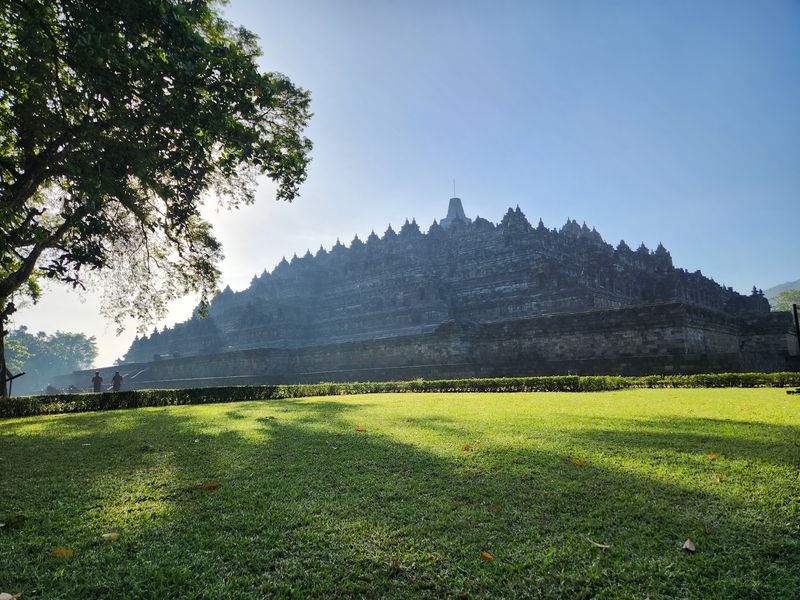
Turn around at the top and the scenery steals the show. Green fields stretch out around the temple, and the Menoreh Hills roll along the edge of the valley.
On a clear day, Mount Merapi stands up in the distance.
Weather decides how much you see. One visitor arrived in heavy rain and could not spot Merapi at all, but still enjoyed the mountain views.
Clouds add a moody look that photographers love.
The grounds are lovely too, with trees, lawns, and walking paths. If you have time after the climb, wander slowly and listen to the birds.
The setting is part of what makes the site feel peaceful.
Morning light gives the clearest and softest views. Mist can hang over the hills early on, which looks magical.
Pack a camera with a good zoom if you have one, because the stupas against the far peaks make a classic shot.
Easy Access for More Visitors
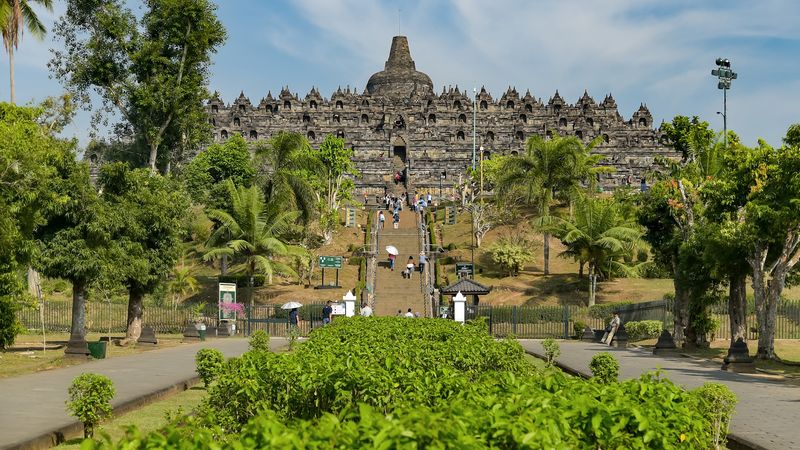
Great news for tired legs: the site has gotten much friendlier. Free electric shuttles carry guests from the parking area toward the temple grounds.
Reviewers call the service new, helpful, and a big time saver.
Strollers and wheelchairs are available for rent, and staff offer special help for those who need it. One family with toddlers said the little ones climbed to the top with no trouble.
Another visitor said the place is more accessible than you might think.
Do keep in mind that the steps up the temple are steep. The walk from the waiting area to the monument can take around five to ten minutes.
Plan for some walking even with the shuttle.
Food is not allowed inside the temple area, so eat before you go. Water comes with the climbing ticket.
With a bit of planning, almost any traveler can find a comfortable way to enjoy the visit.
Smart Tips for a Smooth Visit
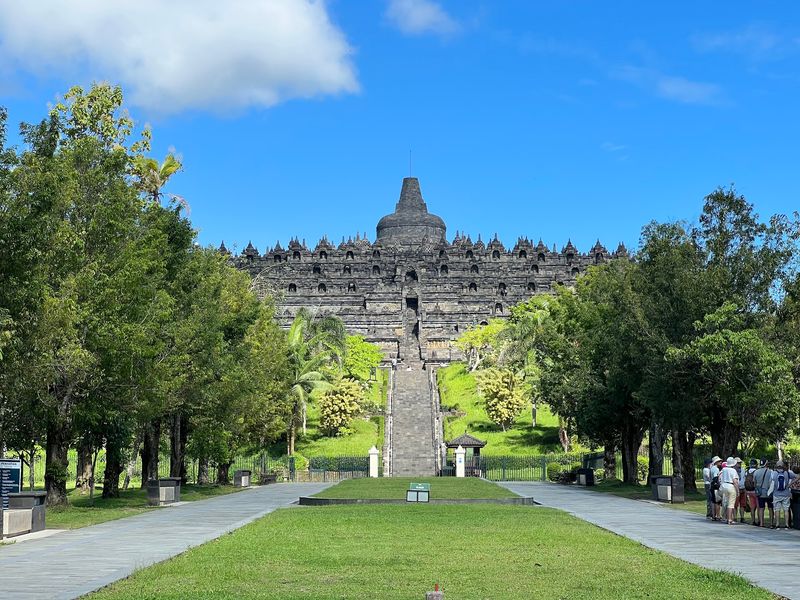
A little prep goes a long way here. Buy your tickets on the official website ahead of time, then scan the QR code and collect them.
Reviewers say this saves time, and some slots sell out.
Pick an early slot, around 8:30 or 9:30, if you can. One visitor found plenty of parking in the morning, but the lot was full by noon.
Mornings are also cooler, and the light is softer.
Shade is rare on the temple, so bring a hat, sunscreen, or an umbrella. Sellers near the parking area offer umbrellas if you forget.
Rain can also pop up, so a light raincoat is smart.
Remember your assigned exit gate, since a couple of travelers found the signs confusing. Opening hours run from 6:30 AM to 4:30 PM.
Give yourself plenty of time, stay curious, and treat the monument with respect. You will head home with great stories.
Share this story