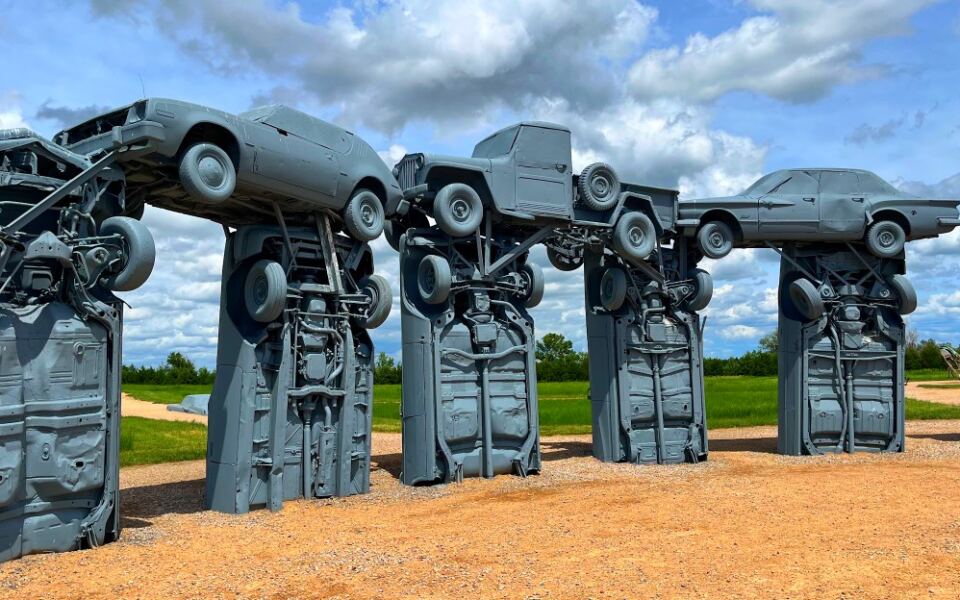
Nebraska has its own version of Stonehenge, except this one is built from 39 old cars. It’s called Carhenge, and you can visit it for free just outside Alliance.
That’s only the beginning. Across the state, you can stand with one foot in Nebraska and the other in Iowa, see two enormous locomotives above Interstate 80, and walk past 20-million-year-old fossil burrows shaped like corkscrews.
Some stops take just 15 minutes, while others offer enough to fill an afternoon. There are free museums, wildlife viewing areas, historic landmarks, and even a road that passes through Nebraska’s only three vehicular tunnels.
Here are 12 stops worth adding to your Nebraska road trip without spending money on admission.
1. Sunken Gardens, Lincoln, Nebraska
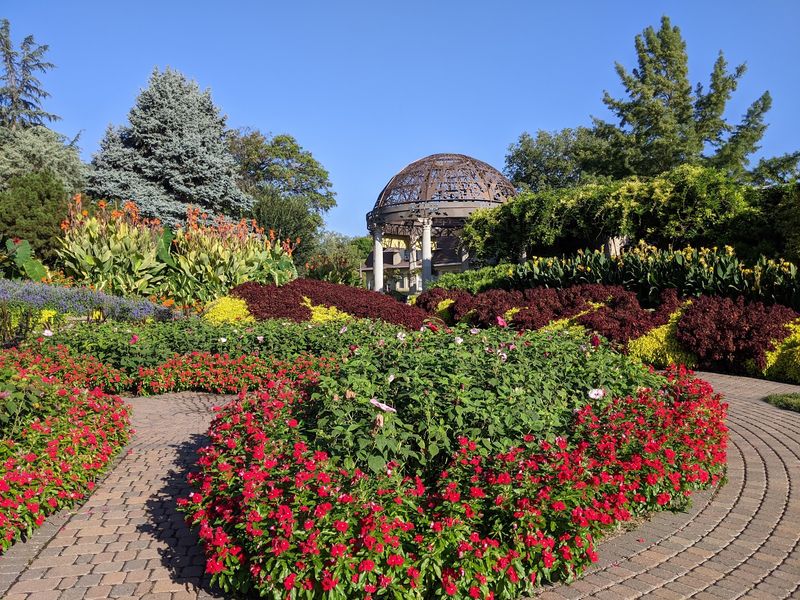
Back in the 1930s, a dumping area in Lincoln got a big makeover. Workers during the Great Depression turned it into a garden set below street level, which explains the name.
Today, Sunken Gardens fills about 1.5 acres with flower beds, ponds, and paths. Gardeners pick a new design theme each year, so the plantings change from one season to the next.
You’ll see koi ponds, small sculptures, and stone steps that lead down into the garden. Benches make it easy to rest your legs after hours behind the wheel.
The garden sits next to Lincoln’s Rose Garden in Antelope Park. That means you can see two free gardens in one stop without moving your car.
Late spring through early fall gives you the most color. Even a quick 20-minute stroll can feel like a real break, and you won’t spend a cent.
Bring a camera, since the bright flower beds make fun backgrounds for family photos.
Address: 2740 A Street, Lincoln, NE 68502
2. Scotts Bluff National Monument, Gering, Nebraska
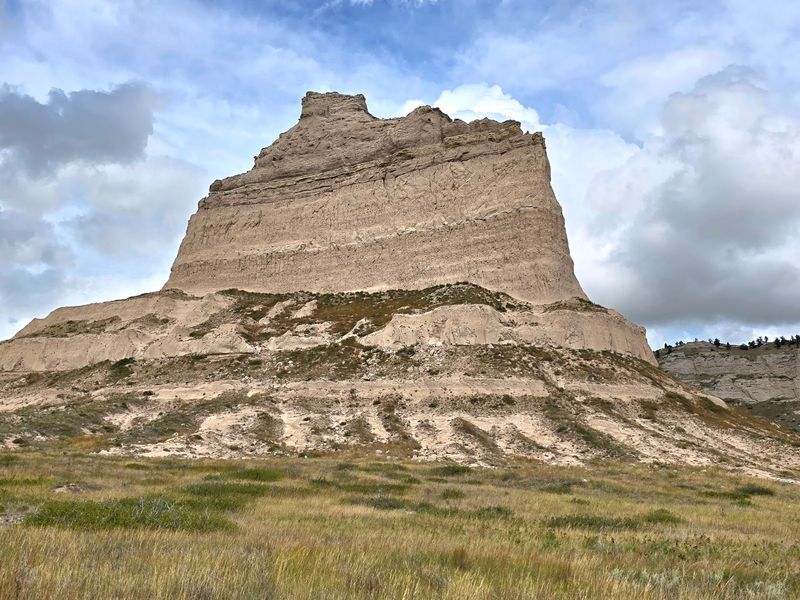
How many people know Nebraska has a rock tower around 800 feet tall? Scotts Bluff rises over the North Platte River valley, and pioneers on the Oregon Trail used it as a landmark.
The visitor center shows trail history and paintings by William Henry Jackson, a famous photographer and artist. You can also see old wagon ruts along a short path near the bluff.
Summit Road climbs to the top and passes through three tunnels. These are the only road tunnels in Nebraska, which makes the drive a fun bit of trivia for the kids.
Prefer walking? The Saddle Rock Trail climbs about 1.6 miles one way from the visitor center to the summit.
Up top, short paths lead to viewpoints over the valley and nearby Chimney Rock area. Entry is free, though weather sometimes closes the summit road.
Check road conditions before you go, especially in winter.
Address: 190276 Old Oregon Trail, Gering, NE 69341
3. Homestead National Historical Park, Beatrice, Nebraska
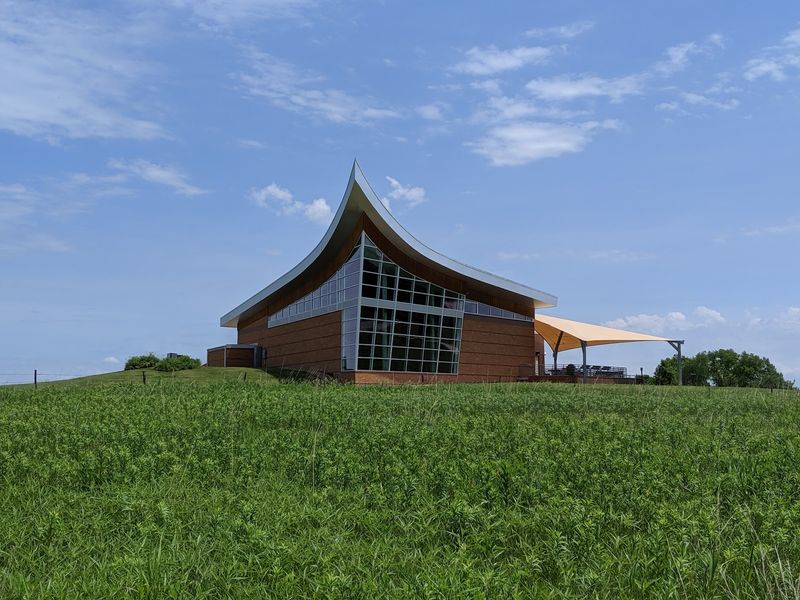
Daniel Freeman filed one of the first claims under the Homestead Act on January 1, 1863. His land near Beatrice is now a national park that tells the story of free land in the West.
The Homestead Act gave people up to 160 acres if they lived on it and farmed it. Millions of acres changed hands over the next several decades.
Inside the free Heritage Center, exhibits explain who came and why. The park also shares how homesteading took land from Native nations, giving a fuller picture.
Outside, trails wind through one of the oldest restored tallgrass prairies in the country. A short walk can show you what much of the region looked like before plows arrived.
Don’t skip the Palmer-Epard Cabin, a log home moved here from another county. The Freeman School, a brick one-room schoolhouse, sits a short drive away.
Address: 8523 West State Highway 4, Beatrice, NE 68310
4. Bob Kerrey Pedestrian Bridge, Omaha, Nebraska
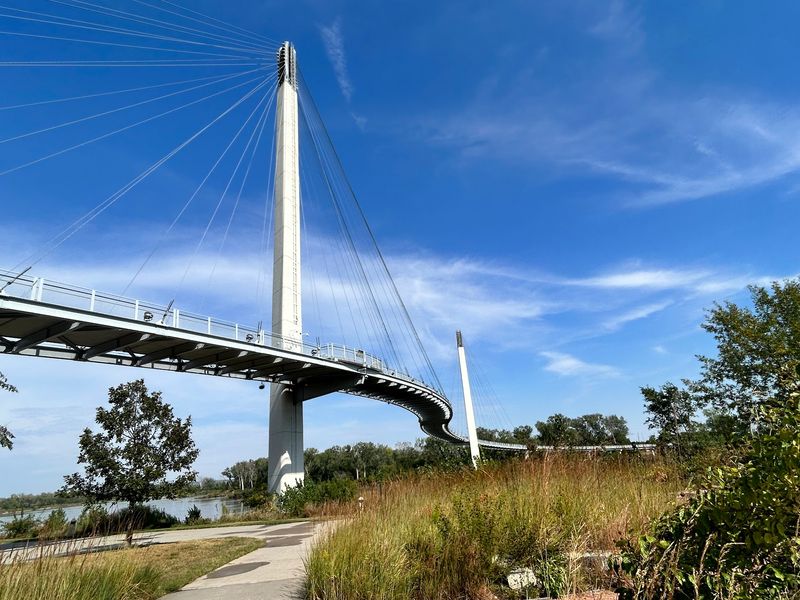
A painted line on this bridge marks where Nebraska ends and Iowa begins. Put one foot on each side, and you’re officially in two states at once.
The bridge opened in 2008 and stretches about 3,000 feet across the Missouri River. It connects Omaha’s riverfront with Council Bluffs, Iowa, and it’s only for walkers and bikers.
Its tall towers and curved shape make it easy to spot from the river trails. The deck sits high above the water, so you get wide views of the river and downtown Omaha.
Sunset is a smart time to go. The bridge also lights up at night, which adds a little extra flair for evening strolls.
Bikers can link up with trails on both sides of the river. Walkers usually finish the round trip in under an hour, making it a handy leg stretch.
Address: 705 Riverfront Drive, Omaha, NE 68102
5. Pioneers Park Nature Center, Lincoln, Nebraska
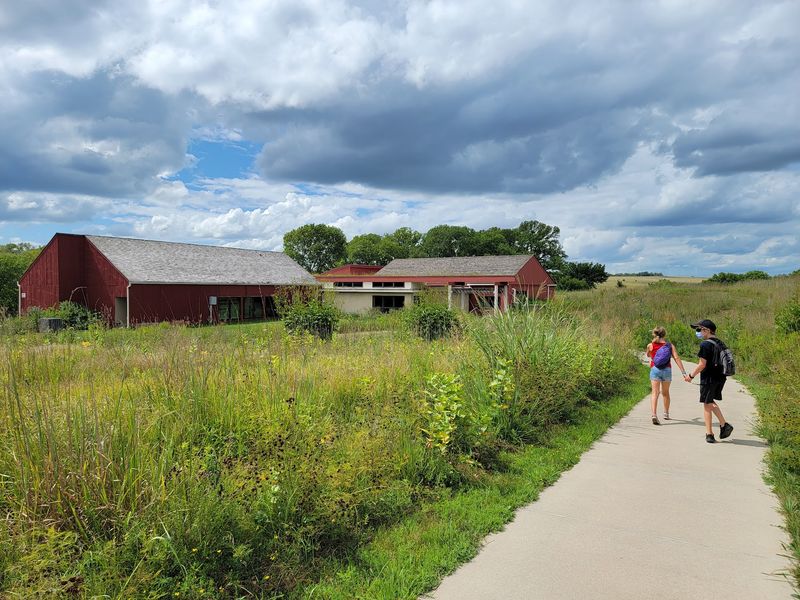
Bison graze right on the edge of Lincoln at this free nature center. The herd gives you a prairie sight without a long detour into the countryside.
The center covers hundreds of acres of prairie, wetland, and woods. More than eight miles of trails loop through it, so you can pick a short walk or a longer hike.
Elk live here too. You can also see birds of prey, like owls and hawks, that were hurt and can’t survive in the wild.
Two buildings hold indoor exhibits about local plants and animals. Kids can explore Chickadee’s Corner, an outdoor nature play area made for climbing and digging.
The center sits inside the larger Pioneers Park, which has picnic spots and sculptures. Look for the big bison statue near the park entrance on your way in.
Trails are open daily, while buildings keep set hours, so plan ahead if you want to see indoor exhibits.
Address: 3201 South Coddington Avenue, Lincoln, NE 68522
6. Kenefick Park, Omaha, Nebraska
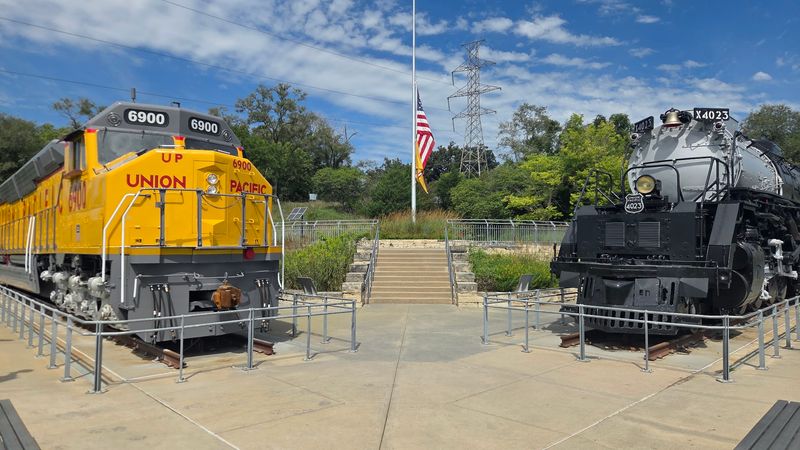
Drivers on Interstate 80 sometimes do a double take near Lauritzen Gardens. Two huge Union Pacific locomotives sit on a hill above the highway like giant toys on a shelf.
Big Boy No. 4023 is one of the largest steam locomotives ever built. Only 25 Big Boys were made, and they hauled heavy freight over the mountains of Wyoming and Utah.
Next to it sits Centennial No. 6900, a yellow diesel-electric engine. Union Pacific’s Centennial class ranks among the largest diesel locomotives ever made.
Signs around the display explain how each engine worked and why Omaha matters to railroad history. Union Pacific has its headquarters in the city.
The park is free and sits next to Lauritzen Gardens, which charges for its own entry. Park at the gardens lot and follow the path up to the trains.
Train fans of any age will want photos standing next to those massive wheels.
Address: 100 Bancroft Street, Omaha, NE 68108
7. Carhenge, Alliance, Nebraska
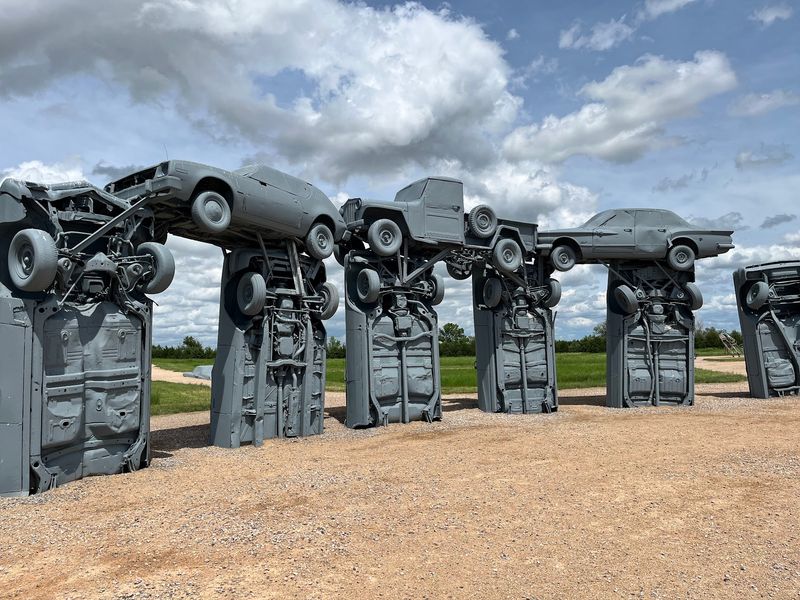
Thirty-nine old cars stand in a field north of Alliance, painted gray and arranged like England’s Stonehenge. Jim Reinders built it in 1987 with help from his family, and he matched the size of the real thing.
Reinders had studied Stonehenge while living in England. He built Carhenge partly as a tribute to his father, and the family dedicated it during a summer solstice gathering.
Some cars are planted trunk-first in the ground, while others rest on top to form arches. Look closely and you can still spot old fenders and bumpers under the gray paint.
The nearby Car Art Reserve adds more sculptures built from vehicles and parts. One favorite is a spawning salmon made from cars, which feels right at home in this strange little corner of the plains.
Admission is free, and the grounds are open year-round. A small gift shop runs in warmer months if you want a souvenir to prove you really saw it.
Address: 2151 County Road 59, Alliance, NE 69301
8. Pony Express Station Museum, Gothenburg, Nebraska
The Pony Express lasted only about 18 months, from 1860 to 1861. Yet people still talk about those young riders racing mail from Missouri to California.
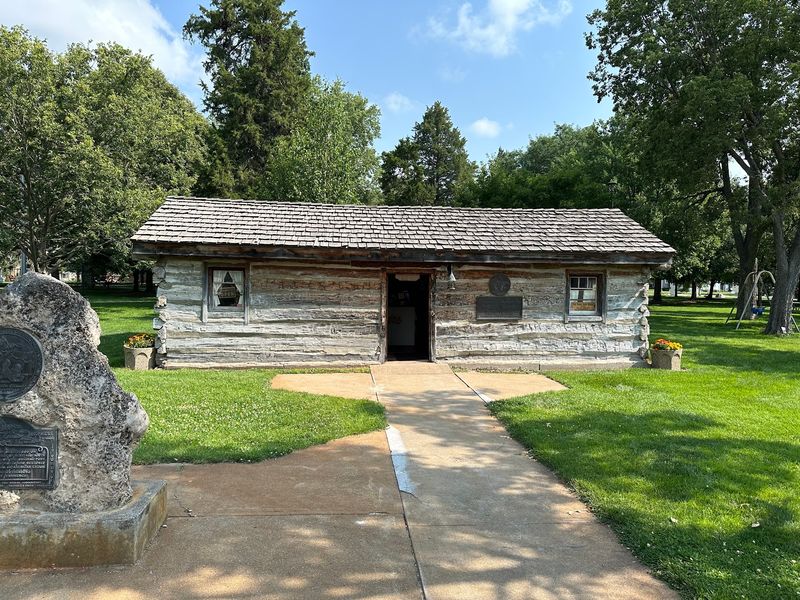
In Gothenburg, a small log building inside Ehmen Park ties you to that story. It is believed to have served as a fur trading post and a Pony Express station before being moved to town.
Inside, you’ll find artifacts and displays about the riders and the route. Riders swapped horses at stations every 10 to 15 miles to keep up their speed.
The telegraph ended the service once messages could zip across wires instead. Still, the riders became legends of the frontier.
The museum is free and usually open from spring through fall. Outside the season, the cabin still makes a quick photo stop, and the park offers shady spots for a picnic.
It sits just a few minutes off Interstate 80, so the detour stays short.
Address: 1500 Lake Avenue, Gothenburg, NE 69138
9. Agate Fossil Beds National Monument, Harrison, Nebraska
Spiral-shaped fossils once puzzled scientists so much that they called them devil’s corkscrews. Experts later learned they were burrows dug by an ancient beaver called Palaeocastor.
You can see these twisty burrows on the Daemonelix Trail, which runs about one mile round trip. Signs along the path explain how the strange shapes formed.
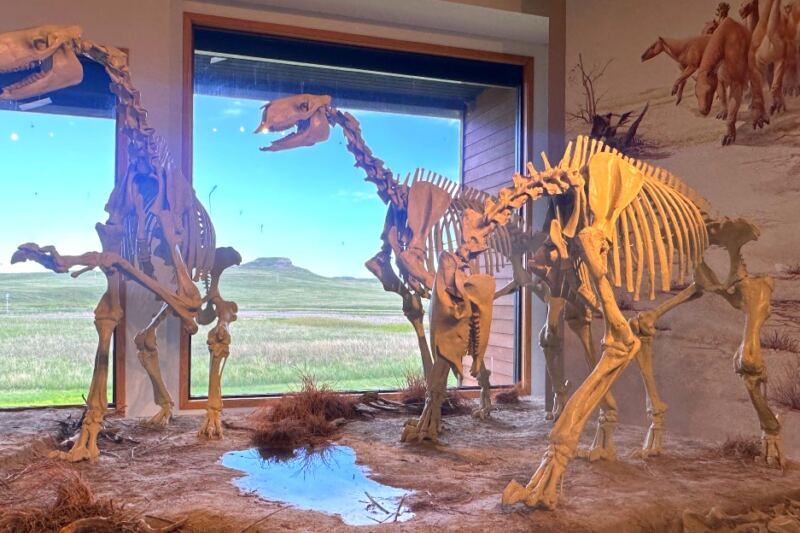
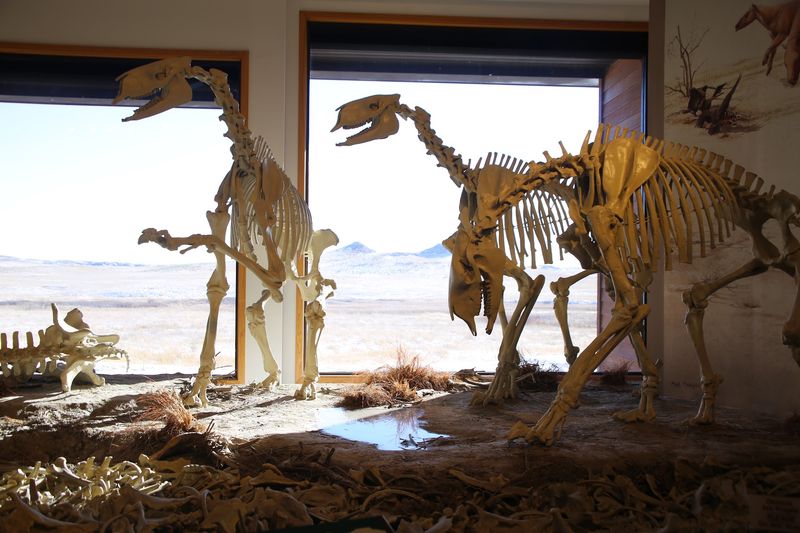
The visitor center displays fossils of animals that lived here around 20 million years ago. Some looked like small rhinos, while others resembled odd horse-like creatures with claws.
The museum also holds the Cook Collection of Lakota items. Many were gifts from Chief Red Cloud to rancher James Cook, who became his friend.
A longer trail leads toward the fossil hills where scientists once dug. Entry is free, but the monument is remote, so fill your gas tank first.
Address: 301 River Road, Harrison, NE 69346
10. Joslyn Art Museum, Omaha, Nebraska
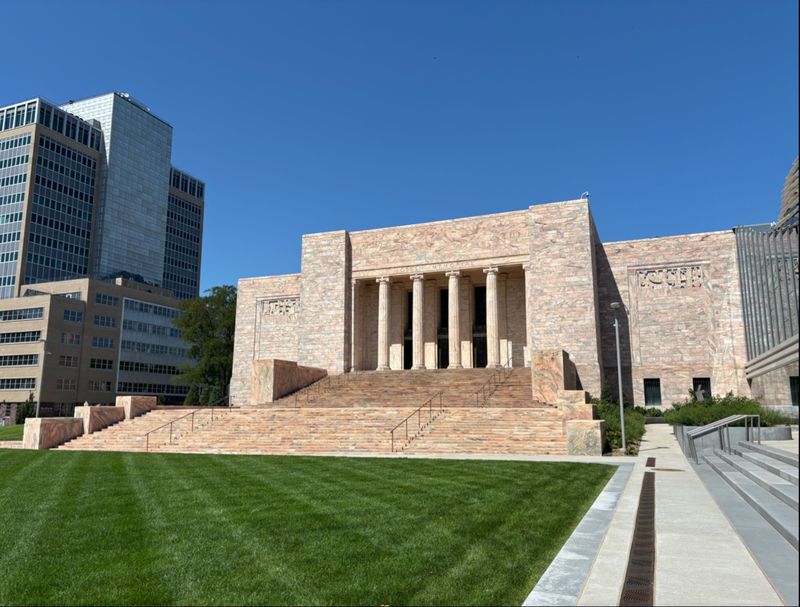
Pink Georgia marble covers the outside of this 1931 Art Deco museum. Sarah Joslyn built it in memory of her husband, George, a wealthy Omaha businessman.
A new wing called the Rhonda and Howard Hawks Pavilion opened in 2024. It added more gallery space, so the museum now shows more of its collection than before.
The art covers a huge span of time and places. You can see ancient pieces, European paintings, and American art, including works from the American West.
One highlight is the collection tied to Karl Bodmer, a Swiss artist who traveled up the Missouri River in the 1830s. His art shows Native American life and river landscapes from that era.
General admission is free, though some special exhibits may need tickets. On a rainy or very hot day, it’s a smart indoor stop, and the sculpture garden adds a little fresh air when the weather clears.
Address: 2200 Dodge Street, Omaha, NE 68102
11. Gene Leahy Mall at The RiverFront, Omaha, Nebraska
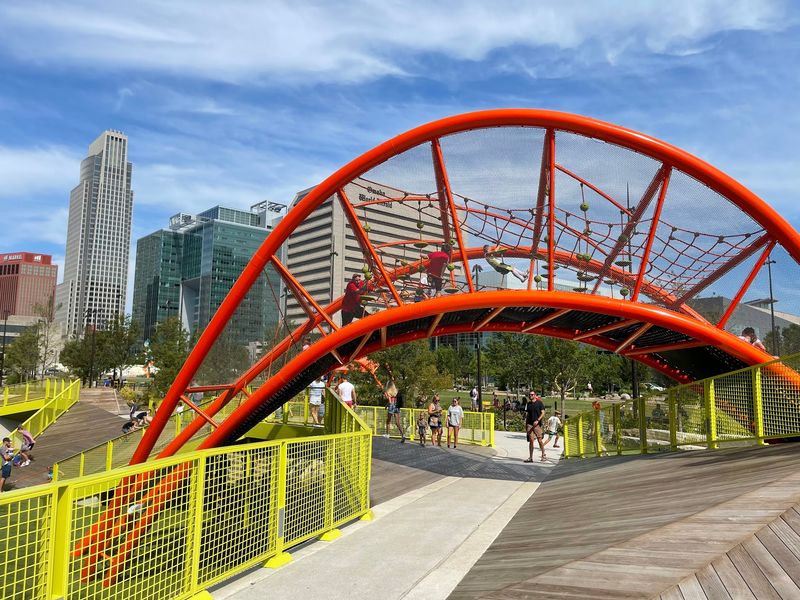
Adults have been known to race kids down the slides at this downtown park. Omaha kept its famous slides during a big redesign, and they now sit beside new playgrounds.
The park reopened in 2022 after a major makeover. It’s part of The RiverFront, a group of connected parks that includes Heartland of America Park and Lewis and Clark Landing.
Walking paths, lawns, and art spread across the space. A large performance pavilion hosts events, and splash areas run during warm months.
You can stroll from here toward the Missouri River in a few minutes. That makes it easy to pair with the Bob Kerrey Pedestrian Bridge for a longer outing.
Entry is free, and the park sits right in the middle of downtown. Nearby streets have places to grab a snack before you hit the road again.
Need a break from sitting in the car? Those slides might do the trick.
Address: 1302 Farnam Street, Omaha, NE 68102
12. Nebraska State Capitol, Lincoln, Nebraska
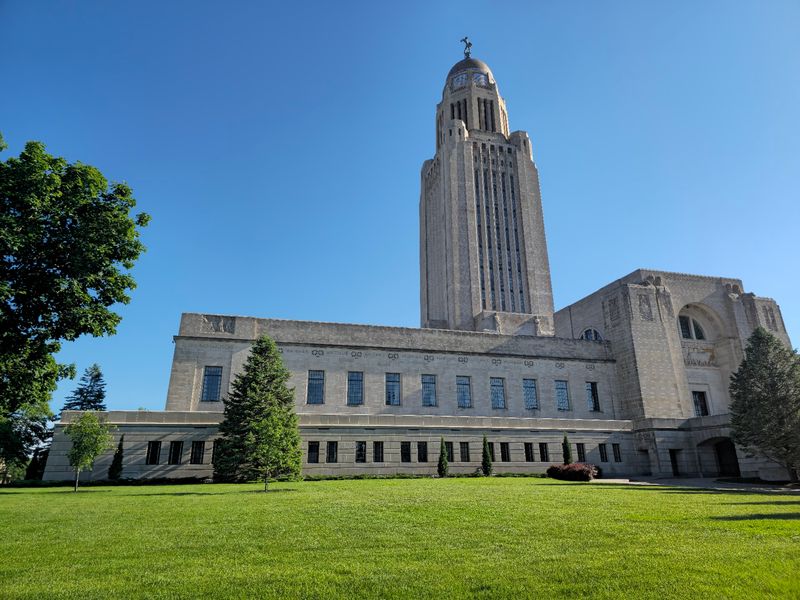
A bronze farmer called The Sower stands about 400 feet above Lincoln, scattering seeds from the top of the Capitol tower. The statue fits a state built on farming.
Architect Bertram Goodhue designed the building, and construction ran from 1922 to 1932. Instead of a wide dome, it has a tall tower, which was a bold change from most capitols back then.
Inside, tile mosaics and murals cover floors, walls, and ceilings. Many show scenes from Nebraska history, nature, and ideas about good government.
Free guided tours run most days and last about 45 minutes. Guides point out details you might walk right past on your own.
Nebraska also has the only one-house state legislature in the country, called the Unicameral. You can see its chamber during your visit.
When open, the 14th-floor observation decks give wide views across the city.
Address: 1445 K Street, Lincoln, NE 68508
Share this story