Somewhere in the Sandhills, a farmer once stacked old cars into a copy of Stonehenge. He painted them gray, and people still drive hours to stand among them.
I love that kind of stubborn creativity.
That same corner of the map hides rhinos buried in volcanic ash about 12 million years ago. Scientists left many of the skeletons right where they were found.
You can stand a few feet away and see them in the ground.
Nebraska keeps surprising people who only know it from the interstate. The state has a 63-foot waterfall, mushroom-shaped rocks, and a tower above one of the largest rail yards on Earth.
Each spring, huge flocks of cranes crowd a shallow river.
So which adventure belongs first on your list? The answer probably depends on whether you prefer fossils, trains, birds, or a good old pioneer landmark.
1. Watch the Sandhill Crane Migration, Kearney, Nebraska
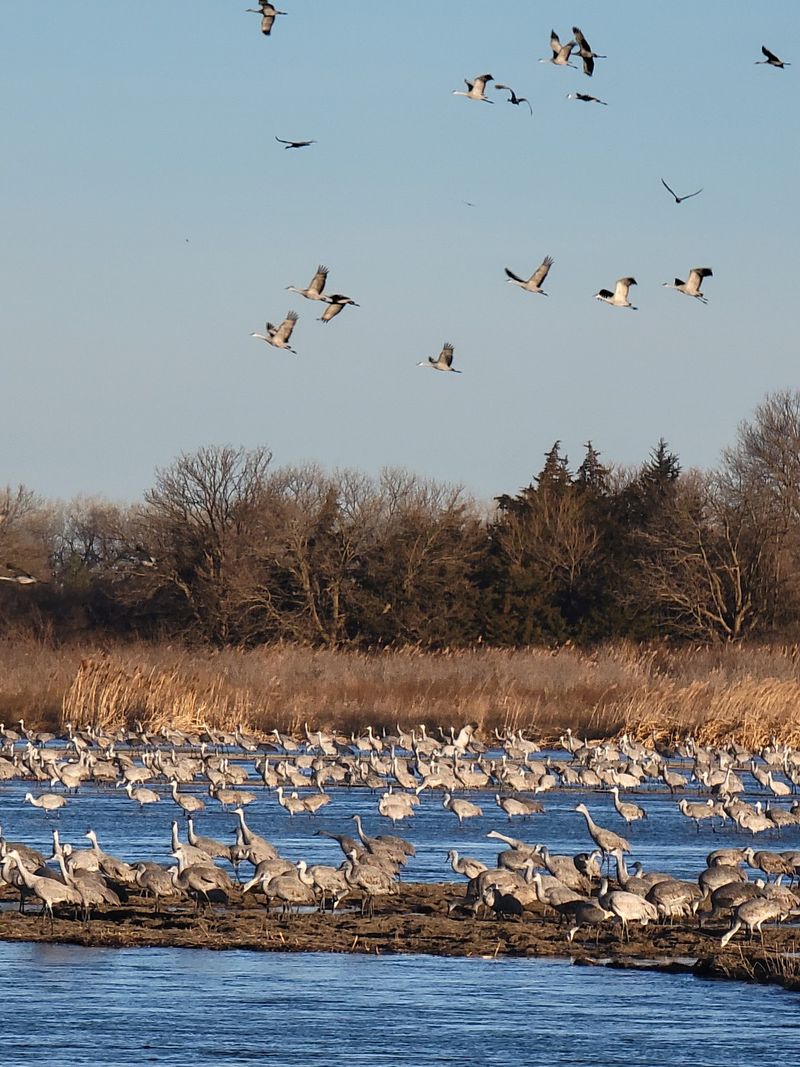
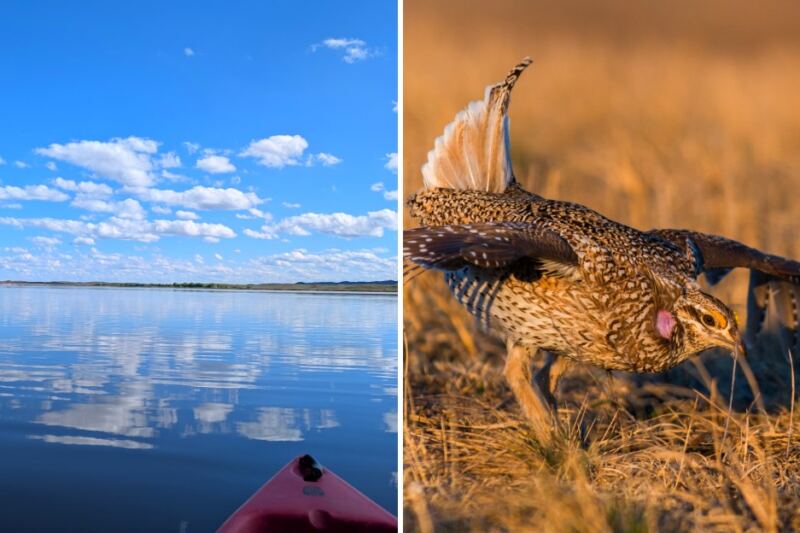
Roughly a million sandhill cranes pass through central Nebraska each spring, and the Platte River is their favorite rest stop. The birds pause here from about late February into early April.
They refuel in nearby cornfields before heading north to nest.
Timing matters if you want the full show. At sunset, the cranes return to the river to roost on shallow sandbars.
At sunrise, they lift off again in noisy, swirling groups that can fill the sky.
The Iain Nicolson Audubon Center at Rowe Sanctuary sits right on the river south of Kearney. It offers guided viewing blinds during the season, and spots usually need to be reserved ahead of time.
Those blinds let you watch without spooking the flocks.
Dress in layers, since March mornings on the Platte can be chilly. Binoculars help, and so does patience.
Leave the bright flashlights and flash photography behind, because the cranes startle easily.
2. Stand Beneath Chimney Rock, Bayard, Nebraska
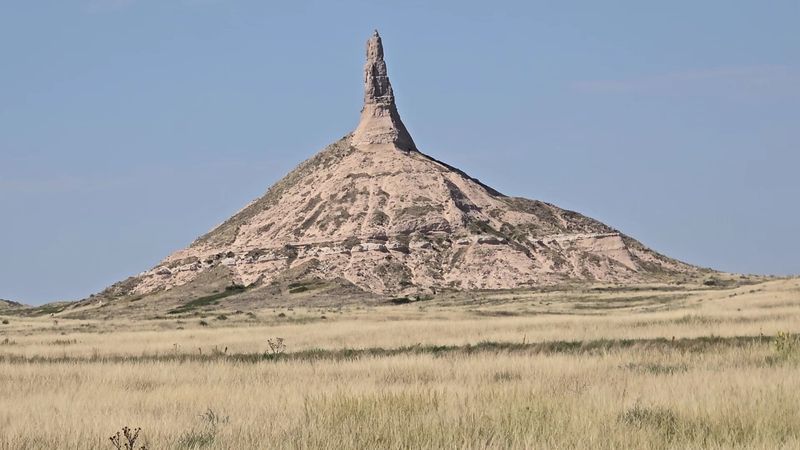
Pioneer diaries mention Chimney Rock more than almost any other landmark on the westward trails. Travelers on the Oregon, California, and Mormon Pioneer trails used its slender spire as a signpost.
Seeing it meant the hardest flat stretch of the journey was nearly done.
The formation is made of clay, volcanic ash, and sandstone layers. Wind and rain have been slowly wearing it down for centuries.
Its tip rises roughly 300 feet above the surrounding valley floor.
Chimney Rock National Historic Site is managed by History Nebraska. The visitor center has exhibits about trail life, wagons, and what emigrants carried.
A short film explains why this single spire mattered so much to weary families.
You can’t climb the rock itself, and that’s a good thing for such a fragile landmark. Instead, enjoy the view from the grounds and snap photos from the paved paths.
Fun fact: Chimney Rock appears on the back of Nebraska’s state quarter.
3. Explore the Otherworldly Landscape of Toadstool Geologic Park, Crawford, Nebraska
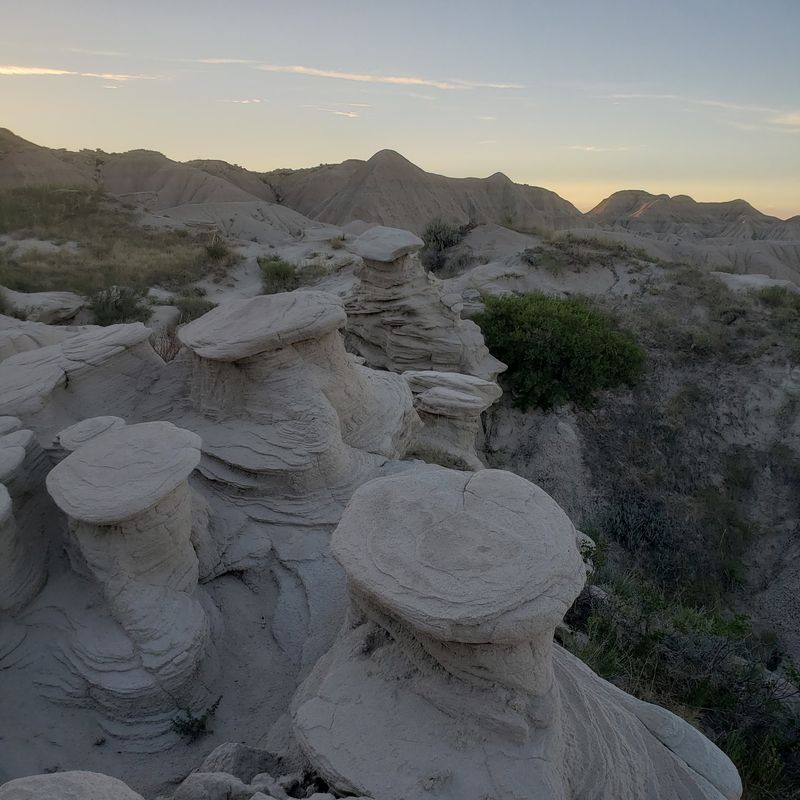
Ever seen a rock wearing a hat? At Toadstool Geologic Park, soft clay columns hold up harder sandstone caps, creating shapes that look like giant mushrooms.
Erosion removed the softer layers faster, leaving these odd stone toadstools behind.
The park sits in the Oglala National Grassland in the far northwest corner of the state. A one-mile loop trail winds past the best formations.
It climbs and dips through gullies, so sturdy shoes are a smart choice.
Scientists value this place for more than its looks. Fossil trackways and bones from ancient mammals have been found in the rock layers here.
Remember that collecting fossils on federal land is not allowed.
A longer trail connects to the Hudson-Meng Education and Research Center about three miles away. The area has a small campground and a replica sod house.
Bring water and sunscreen, since shade is almost impossible to find on these pale, open badlands.
4. See the Vintage Car Monument at Carhenge, Alliance, Nebraska
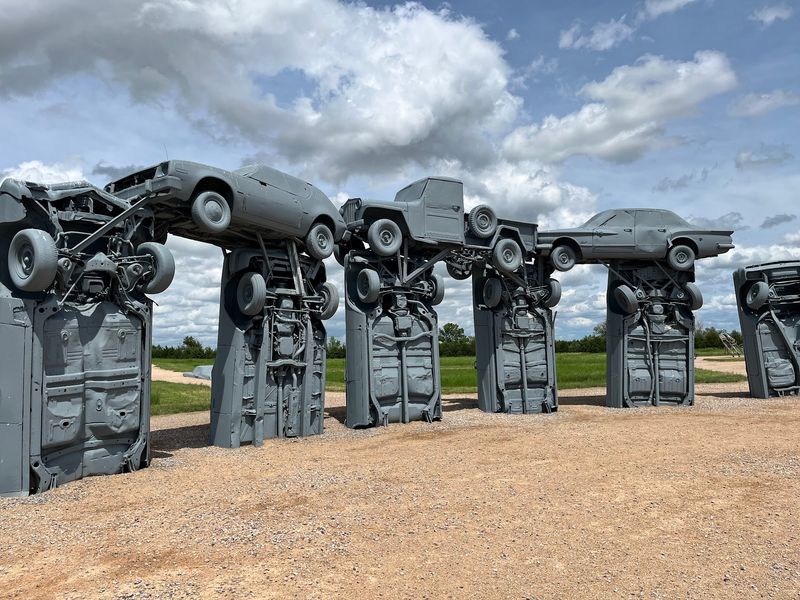
Jim Reinders studied Stonehenge while living in England. In 1987, he gathered family members on his farm near Alliance and built a copy using 39 old American cars.
Each one was painted gray to mimic ancient stone.
The layout follows the original monument’s circle surprisingly closely. Some cars stand upright, buried trunk-first in pits.
Others rest across the tops like the famous stone lintels.
The site is now owned by the city of Alliance. Admission is free, and the grounds stay open year-round.
A visitor center with a gift shop operates during the warmer months.
Wander a bit farther and you’ll spot the Car Art Reserve. That area holds other sculptures built from vehicles and auto parts.
One favorite is a spawning salmon made from car pieces.
Plan for golden hour if photos are your goal. The long shadows make the gray cars pop against the prairie.
It’s hard to stand there without grinning at the sheer creativity of it all.
5. Discover Prehistoric Animals at Ashfall Fossil Beds State Historical Park, Royal, Nebraska
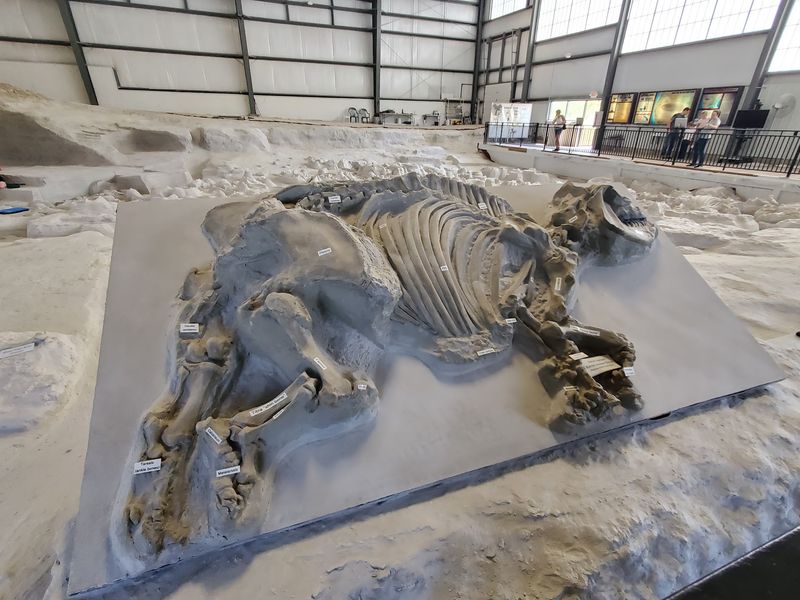
About 12 million years ago, a supervolcano in what is now Idaho blasted ash across the plains. A watering hole in northeast Nebraska was buried under that gray powder.
The animals there were preserved in remarkable detail.
Rhinos are the stars of this site. Barrel-bodied rhinos called Teleoceras are found here in large numbers, along with ancient horses, camels, and birds.
Some mother rhinos were even found with their young.
The Hubbard Rhino Barn covers part of the dig. You can walk on raised walkways and look down at skeletons still resting in the ash.
During summer, paleontologists often work right below you.
A fossil lab lets you watch staff clean and prepare specimens. The visitor center explains how the ash fall happened and what scientists have learned.
Kids can also try hunting for small fossils in a sandbox area.
The park runs seasonally, usually from May through mid-October. Check hours before you go, since it’s a fair drive from larger towns.
6. Explore the Dramatic Cliffs of Scotts Bluff National Monument, Gering, Nebraska
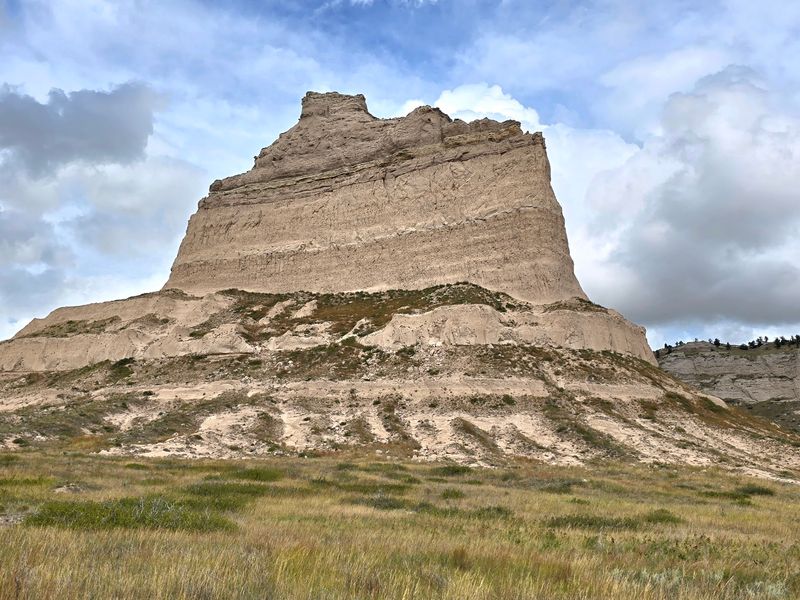
Here’s a fun detail: the bluff rises about 800 feet above the North Platte River. For trail families, it marked a welcome milestone and a tricky obstacle.
Wagons eventually squeezed through Mitchell Pass, where faint ruts are still visible today.
The monument is run by the National Park Service. Its visitor center displays paintings by William Henry Jackson, a photographer and artist who traveled the trail in 1866.
His work shows what this valley looked like to early travelers.
Getting to the top is half the fun. The Summit Road climbs through three tunnels, and it was built in the 1930s.
A shuttle sometimes runs when the road is closed to private cars.
Prefer to walk? The Saddle Rock Trail climbs about 1.6 miles each way with tunnels of its own.
Up top, you can see Chimney Rock on clear days. Stay on the paths, as the edges drop off quickly.
7. Experience the Old West at Fort Robinson State Park, Crawford, Nebraska
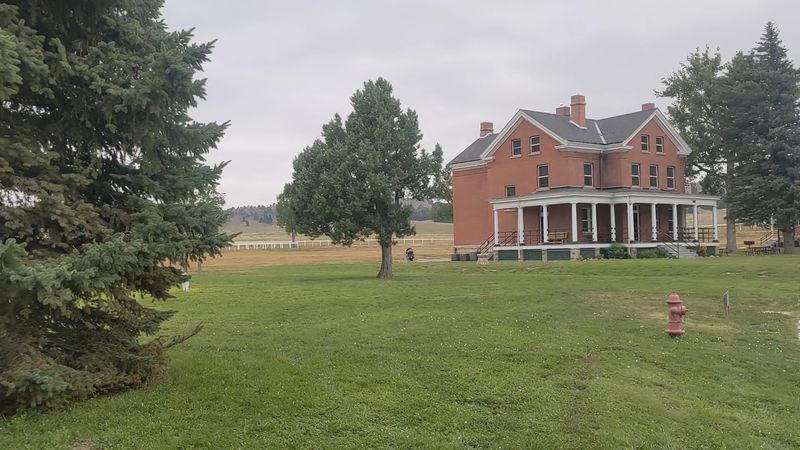
Few state parks let you sleep in historic officers’ quarters. Fort Robinson does, with lodging in buildings that once housed soldiers and their families.
The park covers over 22,000 acres of buttes, pine ridges, and grassland.
The fort served the U.S. Army from 1874 until 1948.
Its story includes the Lakota leader Crazy Horse, who was fatally wounded here in 1877. A marker on the grounds notes the site.
Buffalo Soldiers were also stationed here, and the fort later trained horses and war dogs. The Fort Robinson Museum, run by History Nebraska, explains these chapters in detail.
The complicated history makes it a thoughtful stop, not just a scenic one.
Summer brings the most activities. Depending on the season, you might find trail rides, jeep tours, cookouts, and a buffalo herd viewing tour.
Hiking and fishing are available too.
Check the park schedule before arriving, since many programs run only in warmer months. A park entry permit is required for vehicles.
8. Visit Nebraska’s Tallest Waterfall at Smith Falls State Park, Valentine, Nebraska
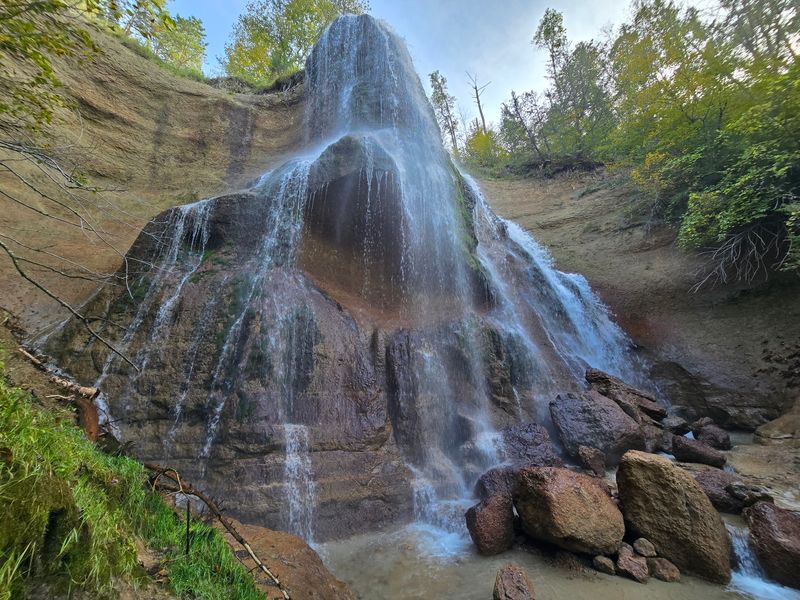
A 63-foot waterfall in Nebraska sounds like a trivia trick question. Smith Falls is real, though, and it’s the tallest in the state.
Spring water spills over a rocky ledge into a shady, fern-filled canyon.
Reaching it is part of the adventure. You’ll cross a restored steel truss bridge over the Niobrara River first.
Then a wooden boardwalk leads to the base of the falls.
The canyon holds a surprising mix of plants. Paper birch and other species normally found farther north survive here thanks to the cool, damp setting.
Scientists consider the area a kind of leftover from colder times.
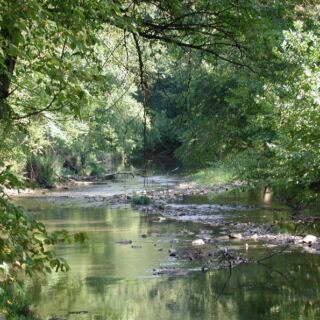
The Niobrara is a designated National Scenic River. Many people float it by canoe, kayak, or tube during summer, and outfitters near Valentine rent gear.
The park itself serves as a popular takeout point.
Camping is available at the park, though sites fill up on summer weekends. A state park entry permit is required.
Bring bug spray, as the shady canyon can get buggy.
9. Explore Giant Aircraft at Strategic Air Command & Aerospace Museum, Ashland, Nebraska

Strategic Air Command was headquartered at Offutt Air Force Base near Omaha for decades. That connection explains why this museum holds such a serious lineup of Cold War aircraft.
Many planes come from SAC’s own history.
The collection includes giants like the B-52 Stratofortress and the B-36 Peacemaker. You’ll also find an SR-71 Blackbird, a spy plane famous for its speed.
Two large hangars keep most aircraft indoors and out of the weather.
Space fans have plenty to explore too. The museum features rockets, missiles, and space-related exhibits.
Rotating displays add variety between visits.
Families often enjoy the hands-on areas and flight simulators. Educational programs focus on science, technology, and engineering for kids.
The museum also hosts special events throughout the year.
Because everything is indoors, the museum works well on rainy or freezing days. It sits just off Interstate 80 between Omaha and Lincoln.
That makes it an easy stop on a road trip.
10. Watch the Trains at Golden Spike Tower, North Platte, Nebraska
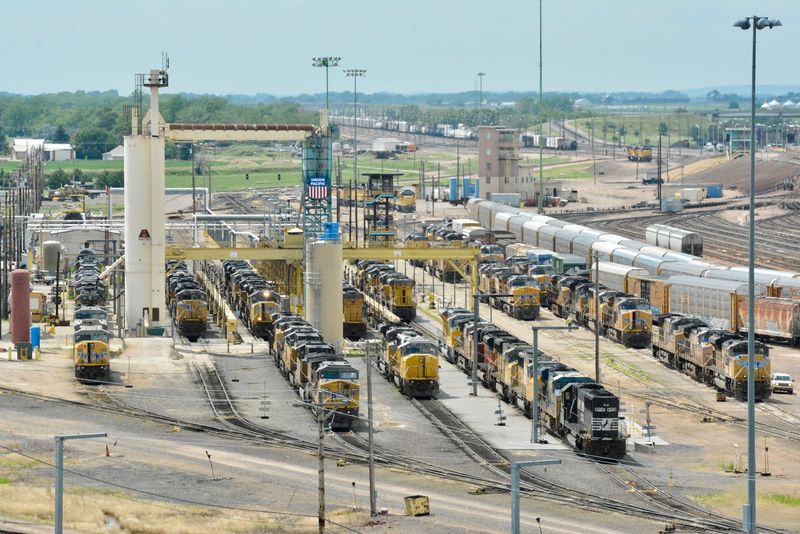
Union Pacific’s Bailey Yard stretches about eight miles long. It’s recognized by Guinness World Records as the largest railroad classification yard on Earth.
Thousands of railcars are sorted there every day.
Golden Spike Tower gives you a bird’s-eye view of the action. The eight-story building has an open-air deck and an enclosed deck for windy or cold days.
Both look straight down on the busy tracks.
From above, you can watch the hump yard in motion. Cars are pushed over a small hill and roll by gravity onto the correct tracks.
It’s a clever system that’s oddly relaxing to watch.
Exhibits explain how the yard works and why North Platte became a railroad town. Guided tours are offered at times, often led by retired railroaders.
Their stories add a personal touch to the steel and engines.
A gift shop sells train-themed souvenirs for young rail fans. Bring binoculars if you have them, since the yard spreads far toward the horizon.
11. Spend a Day at Omaha’s Henry Doorly Zoo and Aquarium, Omaha, Nebraska
Deserts and rainforests rarely share a zip code. At Omaha’s Henry Doorly Zoo and Aquarium, they sit just a short walk apart.
The zoo covers about 130 acres of habitats from around the world.
The Desert Dome is one of the largest indoor deserts anywhere. Its glazed geodesic dome shelters landscapes from Africa, Australia, and North America.
Below it, the Kingdoms of the Night exhibit shows animals that are active after dark.
Then there’s the Lied Jungle, an indoor rainforest that opened in 1992. Walkways let you explore at ground level and up in the treetops.
Monkeys, birds, and reptiles share the space.
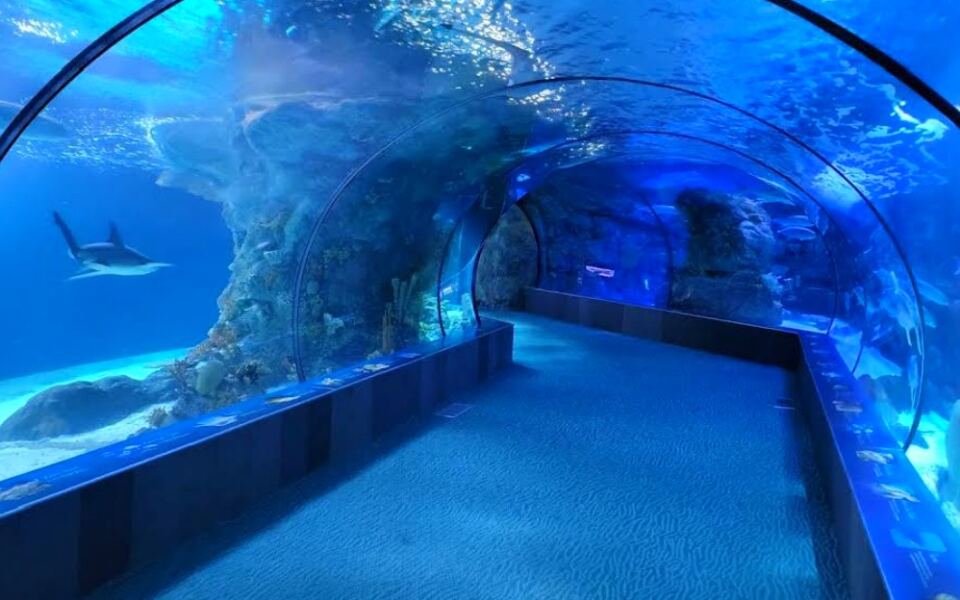
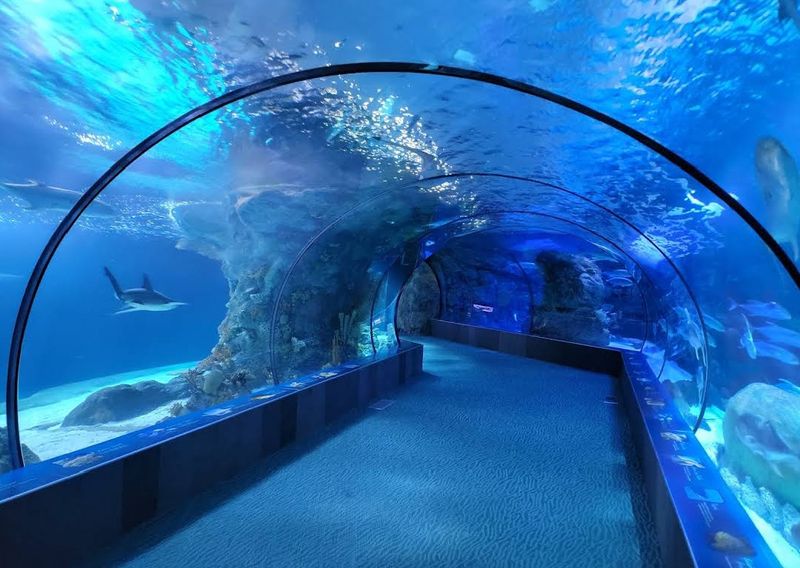
The aquarium features a walk-through shark tunnel. Penguins, jellyfish, and coral reef fish round out the underwater exhibits.
Outdoors, areas like the African Grasslands host elephants and giraffes.
Wear comfortable shoes, because covering everything takes a full day. Arriving early helps you see more before afternoon heat sets in.
Even repeat visitors usually find a new exhibit to explore.
Share this story