A bright red ship docked in a small Delaware town once did the job of a lighthouse. It had no tower and no rocky perch.
It simply anchored in risky waters and flashed its light for passing ships.
That floating beacon is only part of the story. Near the mouth of Delaware Bay, two lighthouses stand on stone walls built right in the water.
Down the coast, a station once sent crews rowing into rough surf to rescue stranded sailors.
I like that this small state packs so much ocean history into a short drive. You can climb aboard old vessels, walk through 1940s coastal defenses, and look at treasure pulled from sunken ships.
A few spots even require a boat ride to reach.
The coastline here kept sailors safe for generations. So who were the people doing that work, and where can you still see the clues they left behind?
1. Lightship Overfalls, Lewes, Delaware
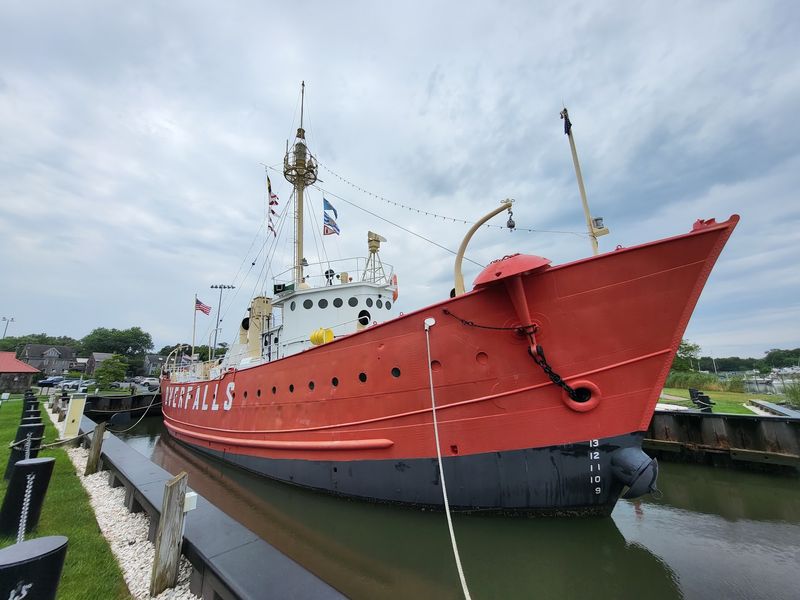
Where do you put a lighthouse when the dangerous spot is miles from land? The Coast Guard’s answer was a lightship, a vessel that anchored in tricky waters and carried a beacon on its mast.
The Lightship Overfalls was built in 1938 and served at several stations along the East Coast before retiring in 1972. Today it rests along the Lewes Canalfront, painted bright red with its name in big white letters on the side.
Crews lived aboard these ships for weeks at a time. On a guided tour, you can see the tight sleeping quarters, the galley, and the equipment that kept the light and fog signal running.
The ship was named a National Historic Landmark in 2011, and a volunteer foundation keeps it in shape. Tours run seasonally, so look up open dates before you go.
Kids tend to enjoy climbing around a real ship, and adults usually leave with a new respect for those crews.
Address: 219 Pilottown Road, Lewes, DE 19958
2. Harbor of Refuge Lighthouse, Lewes, Delaware
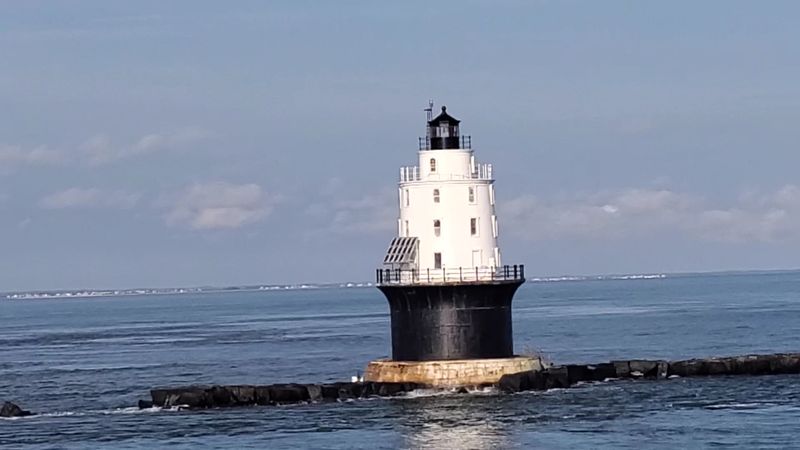
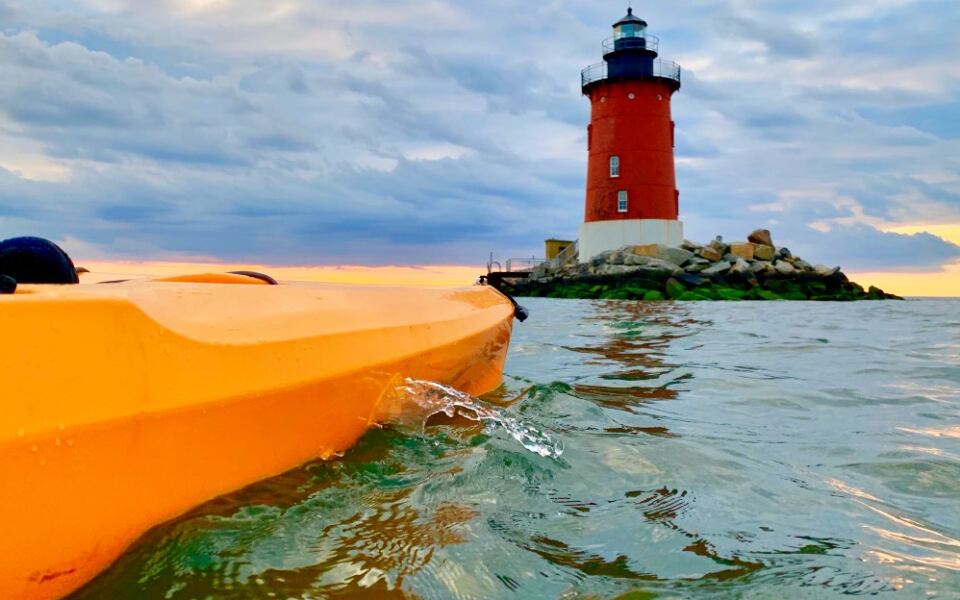
A breakwater over a mile long sits off Cape Henlopen, piled from massive stones to protect ships from rough Atlantic waves. At its southern end stands the Harbor of Refuge Lighthouse.
The current tower dates to 1926, replacing earlier lights that storms battered over the years. It sits on a round iron base and still works as an active aid to navigation, so its light keeps doing its old job.
The lighthouse isn’t generally open for public entry. That’s fine, because its real appeal is the setting, with nothing around it but water and the long gray line of stones.
For the best look, watch from the beaches near Cape Henlopen or catch a boat tour that heads toward the mouth of the bay. Riding the Cape May-Lewes Ferry also gives you a decent view as the boat leaves the harbor.
Bring a camera with a zoom lens. On a clear day, you can capture both breakwater lighthouses in the same trip.
Address: Offshore, best viewed from Cape Henlopen State Park, 15099 Cape Henlopen Drive, Lewes, DE 19958
3. Indian River Life-Saving Station Museum, Rehoboth Beach, Delaware
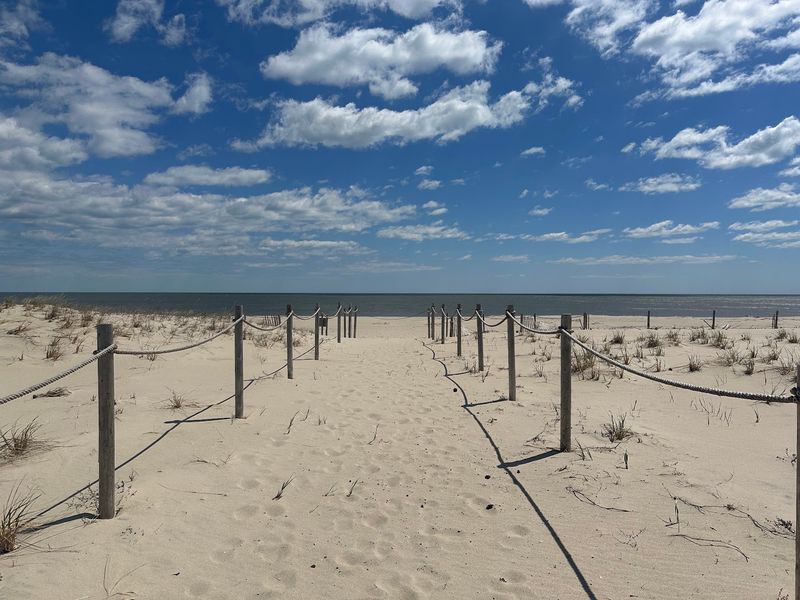
Rowing a wooden boat straight into crashing surf sounds like a terrible idea. For the surfmen at the Indian River Life-Saving Station, it was part of the job.
The station opened in 1876 along a lonely stretch of coast south of Rehoboth Beach. Crews watched the water day and night, ready to launch boats or fire rescue lines to ships stuck on sandbars.
Their record is impressive. Over the years, crews here helped rescue hundreds of people from stranded vessels.
Today the building has been restored to look as it did around 1905. Inside, exhibits explain the gear surfmen used, including lifeboats and the equipment for sending lines out to wrecked ships.
The museum is part of Delaware Seashore State Park, so you can pair a history stop with a beach day nearby. Hours change by season, and some special programs show how rescue drills once worked.
Check the schedule ahead of time so you don’t miss a demonstration.
Address: 25039 Coastal Highway, Rehoboth Beach, DE 19971
4. Fenwick Island Lighthouse, Fenwick Island, Delaware
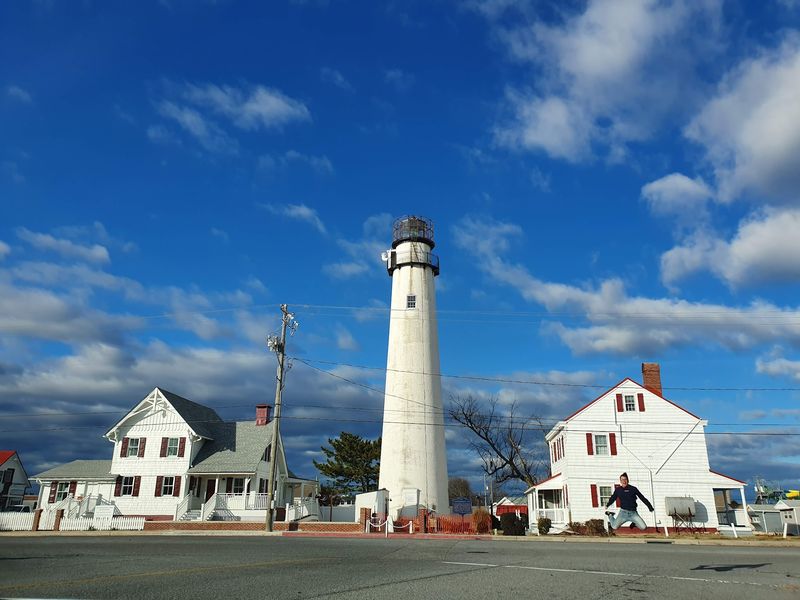
Eighty-seven feet of white brick rises just a short walk from the Maryland line. Fenwick Island Lighthouse first lit up in 1859 to warn ships about the Fenwick Shoals, a dangerous sandy area offshore.
The Coast Guard turned off the light in 1978. Local residents pushed back, and the beacon was relit in 1982 as a private aid to navigation.
That community effort is a big part of the story. Today a nonprofit group helps care for the tower and the grounds.
The lighthouse sits in a neighborhood, so you might be surprised by how close the houses are. Its keeper’s buildings once housed the families who kept the lamp burning through long nights.
Don’t skip the small stone marker near the base. It’s part of the Transpeninsular Line, surveyed in 1751 to settle a border fight between the Penn and Calvert families.
Few places let you check out a lighthouse and a colonial boundary stone in five minutes.
Address: Lighthouse Lane and 146th Street, Fenwick Island, DE 19944
5. Cannonball House Maritime Museum, Lewes, Delaware
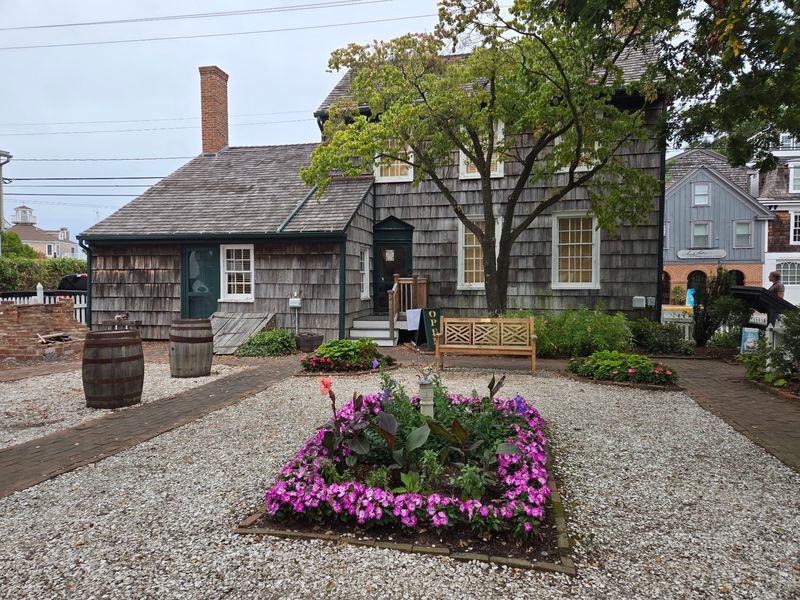
A cannonball is still lodged in the foundation of a house on Front Street. It’s a leftover from April 1813, when British ships bombarded Lewes for about a day.
The town held its ground, and the damage turned out to be limited. Lewes residents still remember the event, and this house became its most famous survivor.
Today the building serves as a maritime museum run by the Lewes Historical Society. Exhibits focus on Delaware Bay pilots, the skilled guides who steered ships through the bay’s shifting sandbars.
You’ll also learn about local shipwrecks, navigation tools, and the seafaring families who shaped this town. The space is small, so it works well as a quick stop during a walk downtown.
Front Street has several other historic buildings, and the society manages a few of them. Ask about combo tours if you’d like to see more.
And yes, you’re allowed to look for the cannonball before going inside, since it’s on the outside wall.
Address: 118 Front Street, Lewes, DE 19958
6. Delaware Breakwater East End Lighthouse, Lewes, Delaware
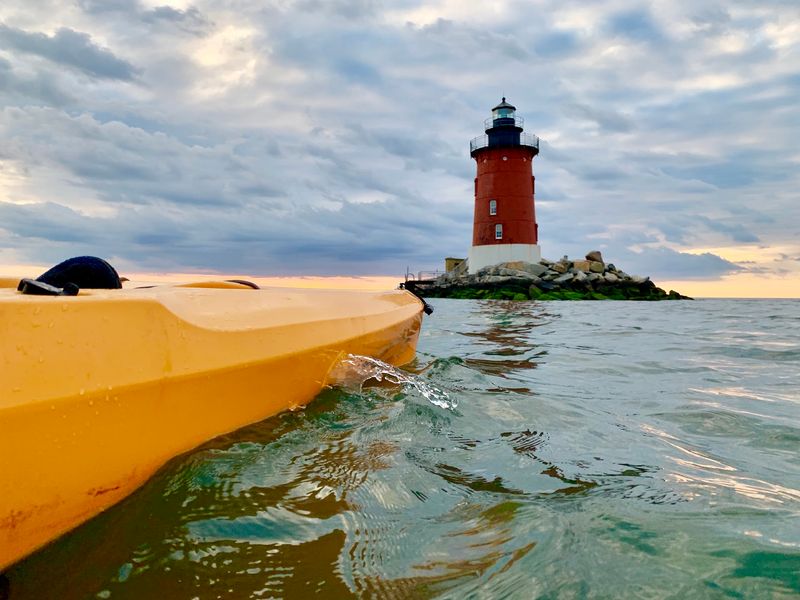
Back in 1885, builders set a cast-iron tower at the end of a stone wall in the middle of the water. That wall, the Delaware Breakwater, was built to give ships a calm place to wait out storms near Lewes.
The lighthouse has a cone shape and sits on a sturdy base, so it looks a bit like a giant chess piece guarding the bay. It was decommissioned in 1996, which means its light no longer guides ships.
Retirement hasn’t made it any less photogenic, though. Photographers love the way it stands alone with open water on every side.
You can spot it from the shoreline at Cape Henlopen State Park, especially near the beaches facing the bay.
Want a closer view? Seasonal boat cruises out of Lewes sometimes pass by, so check local tour schedules before your trip.
Bring binoculars if you plan to watch from land, since the tower sits well offshore.
Address: Offshore, best viewed from Cape Henlopen State Park, 15099 Cape Henlopen Drive, Lewes, DE 19958
7. Fort Miles Historical Area, Lewes, Delaware
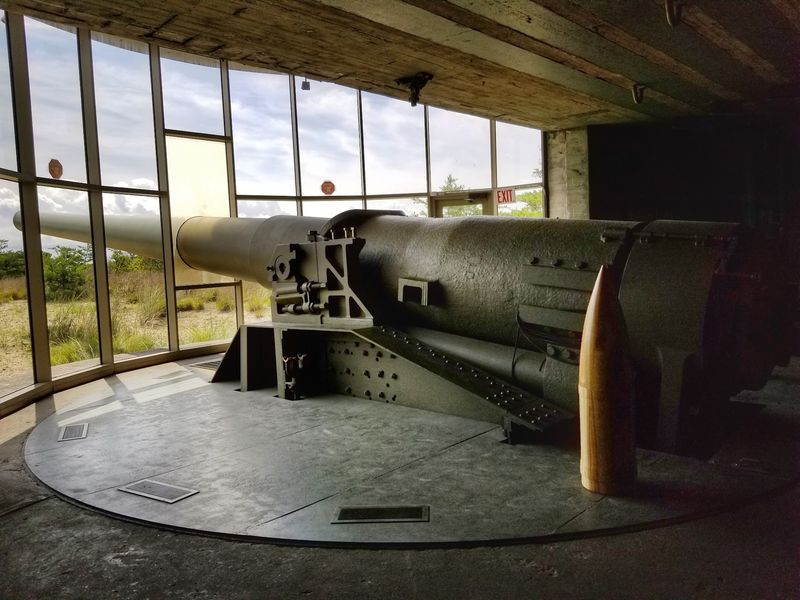
Tall concrete towers poke out of the dunes at Cape Henlopen State Park. They were built in the 1940s so soldiers could spot ships approaching Delaware Bay and help aim the big guns at Fort Miles.
The fort guarded the bay entrance, which led to busy ports and factories upriver. Thousands of soldiers were stationed here during the peak years.
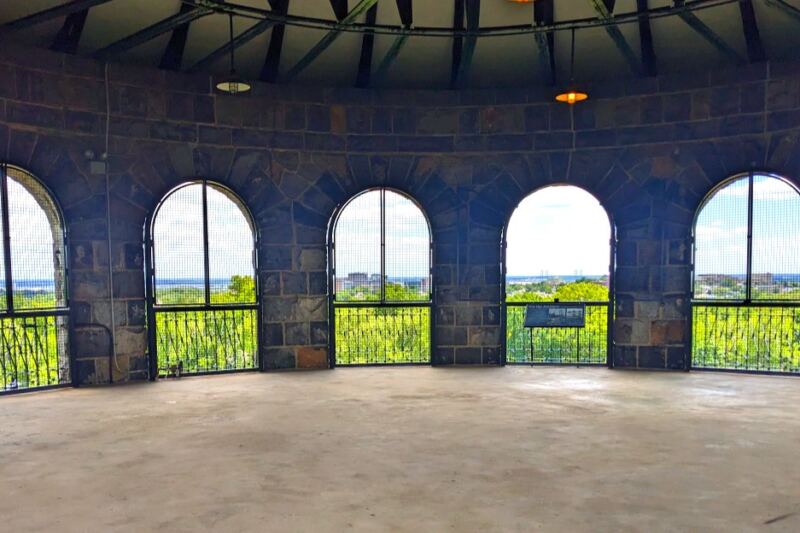
You can climb one of the restored towers for a wide view of the coast. It’s a great way to understand why this spot mattered.
Battery 519 is the main museum stop. This former gun emplacement was dug into a dune, and it now holds exhibits about life at the fort and the region’s coastal defenses.
Outside, you’ll see large artillery pieces on display, including a massive gun barrel that once sat on a battleship. Volunteers from the Fort Miles Historical Association often lead programs.
Museum hours vary, so check before you go, and remember the park charges an entry fee in season.
Address: Cape Henlopen State Park, 15099 Cape Henlopen Drive, Lewes, DE 19958
8. DiscoverSea Shipwreck Museum, Fenwick Island, Delaware
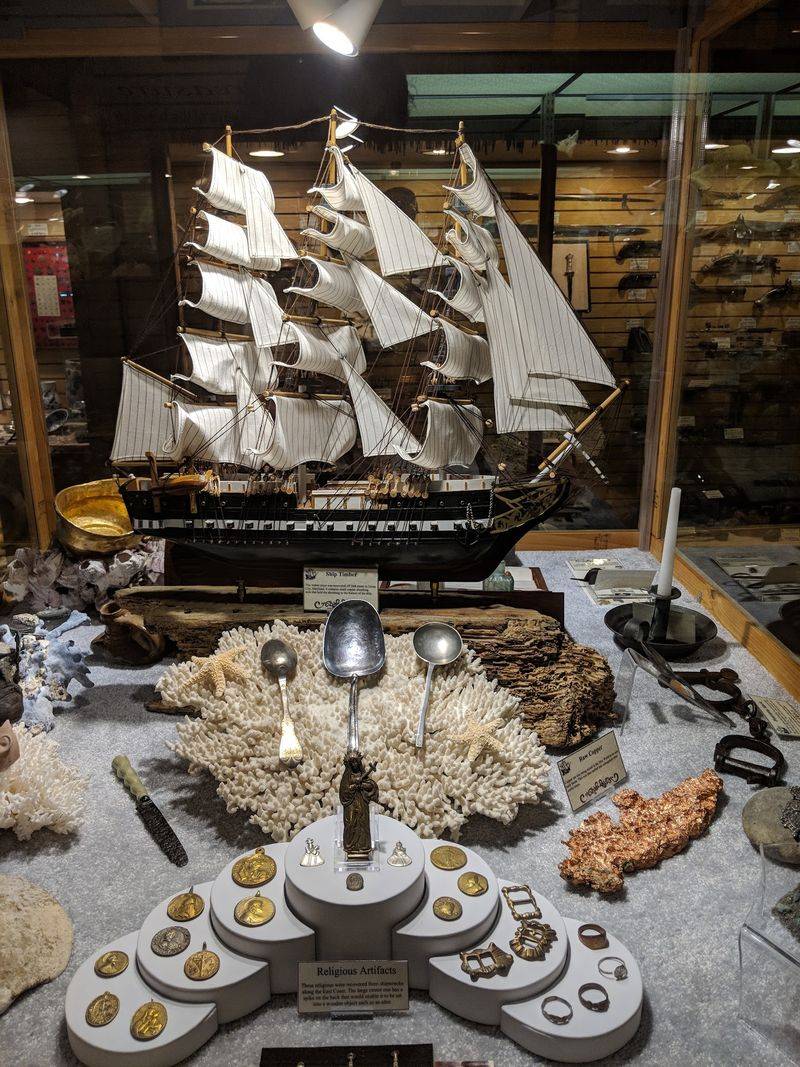
Gold coins, old bottles, and pieces of lost ships sit upstairs from a beach shop in Fenwick Island. DiscoverSea Shipwreck Museum displays thousands of artifacts tied to wrecks along the Delmarva coast and beyond.
The collection grew from the work of founder Dale Clifton, a diver and shipwreck researcher. Many items came from wrecks found near the Delaware and Maryland shoreline.
That’s a good reminder of how dangerous these waters once were. The same shoals that led to the lighthouse nearby also trapped plenty of ships.
Exhibits show cargo, coins, ship parts, and everyday objects sailors carried. Each piece helps explain trade routes and the kinds of goods that once crossed the ocean.
Admission has traditionally been free, though donations help support the museum. Hours change with the season, so confirm before planning around it.
It’s a handy rainy-day stop, and it pairs nicely with a visit to the lighthouse just down the road.
Address: 708 Coastal Highway, Fenwick Island, DE 19944
9. Kalmar Nyckel Foundation and Copeland Maritime Center, Wilmington, Delaware
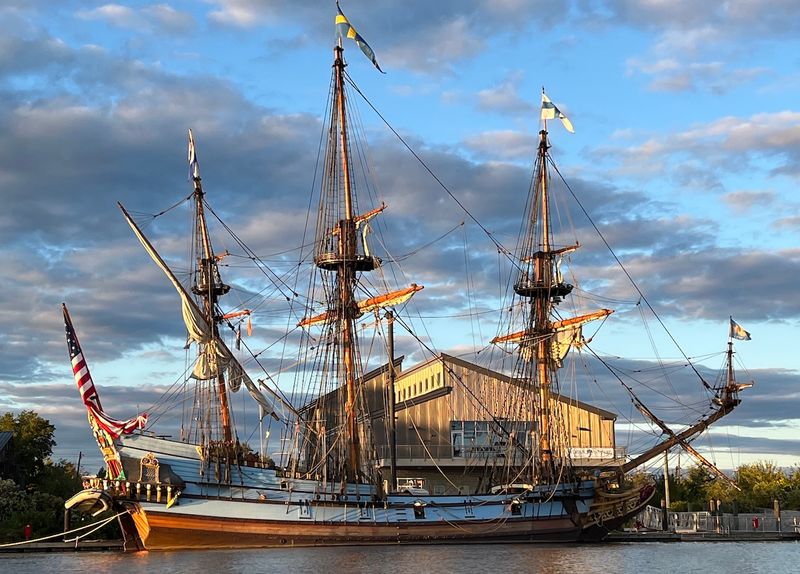
In 1638, a Swedish ship called the Kalmar Nyckel sailed up the Christina River and helped found New Sweden. Settlers landed near where Wilmington stands today.
The original ship is long gone, but Delaware built a full-scale replica that launched in 1997. Its towering masts and brightly carved stern make it hard to miss on the waterfront.
The Kalmar Nyckel serves as Delaware’s tall ship ambassador. It travels to ports and festivals, and it also offers public sails when the schedule allows.
Back on land, the Copeland Maritime Center tells the ship’s story. You’ll learn about 17th-century sailing, how crews handled the rigging, and the shipyard where the replica was built.
Volunteers train to crew the ship, which says a lot about local pride. Check the sailing calendar before you visit, since the ship isn’t always in port.
Catching it at the dock is a treat, but riding along on a sail is even better.
Address: 1124 East 7th Street, Wilmington, DE 19801
10. Fort Delaware State Park, Delaware City, Delaware
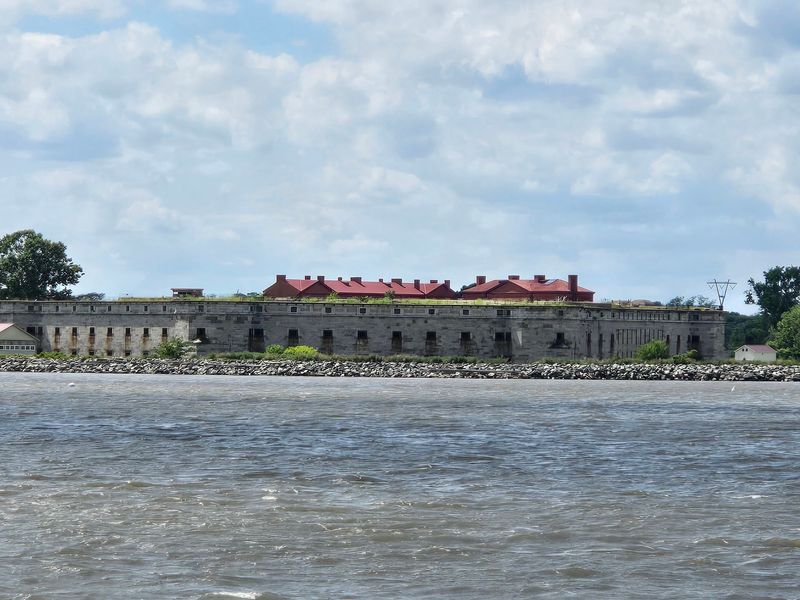
Getting there takes a ferry ride, which makes the trip feel like an adventure right away. Fort Delaware sits on Pea Patch Island in the middle of the Delaware River.
The huge granite and brick fort was finished in 1859 to protect the river and the ports upstream. During the 1860s, it became a prison camp that held thousands of Confederate soldiers.
Today, costumed interpreters bring that era to life. You might meet a blacksmith at work, a soldier explaining daily routines, or a laundress talking about life on the island.
The thick walls, moat, and drawbridge are worth a slow walk. Inside, rooms are set up to show how officers and prisoners lived.
Ferries leave from Delaware City during the warmer months, and the season usually runs from spring into fall. The island is also known for its heron rookery, so bird fans should bring binoculars.
Plan for a few hours to see everything without rushing.
Address: Ferry departs from 45 Clinton Street, Delaware City, DE 19706
11. Cape May-Lewes Ferry Terminal, Lewes, Delaware
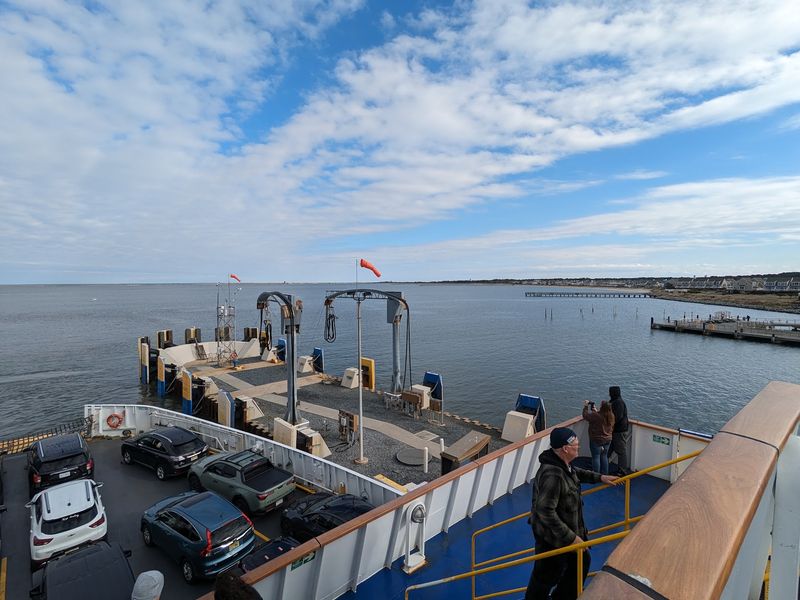
Since 1964, big ferries have carried cars and passengers across the mouth of Delaware Bay. The trip links Lewes with Cape May, New Jersey, and takes about 85 minutes each way.
The Lewes terminal sits close to Cape Henlopen, so you can watch the boats glide in and out of the harbor. Plenty of people stop just to see the ships dock.
Taking the ride is an easy way to see several landmarks from this list. As the ferry heads out, you pass near both breakwater lighthouses.
Keep your eyes on the water during the crossing, too. Dolphins are often spotted in the bay during warmer months, and the ferry sometimes offers special sightseeing cruises.
You can bring your car or walk on as a passenger, which suits day-trippers well. Schedules shift by season, so check departure times before heading over.
Even if you stay on land, the terminal is a relaxed spot to end a day exploring Delaware’s coast.
Address: 43 Cape Henlopen Drive, Lewes, DE 19958
Share this story